I keep a small jar of Chinese Five Spice within arm’s reach whenever I’m cooking. It’s a compact, powerful blend that lifts simple weeknight proteins and vegetables into something celebratory. The mix is fragrant and bold—sweet, warm, and a little bright—so a little goes a long way. If you make your own, you’ll notice a fresher, cleaner top note than what most store jars give you.
This post walks you through a straightforward, reliable method for making Chinese Five Spice at home, with tips on tools, storage, and how to use it. I’ve written the steps so you can work quickly: toast and grind, then combine with the ground aromatics. No fuss, no special equipment required beyond a spice grinder or a good mortar and pestle.
I’ll also cover common mistakes to avoid, dietary swaps, and how to bring this blend into your cooking without overpowering a dish. Whether you’re using it on pork, roasted vegetables, or in a marinade, you’ll get more nuanced flavor from homemade spice than from any pre-mixed jar.
The Essentials
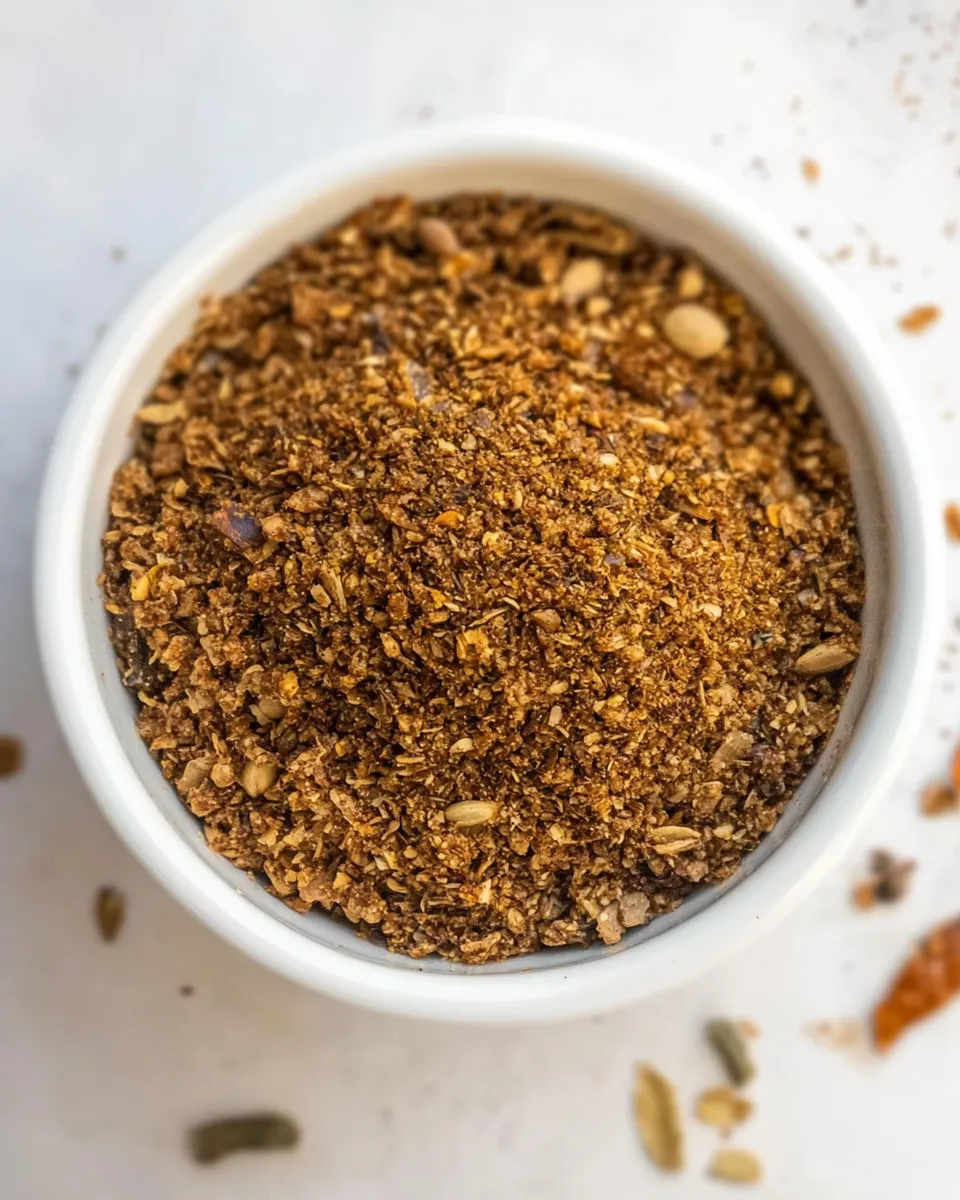
What this blend does: it balances numbing citrus notes, star anise sweetness, fennel’s aniseed, cinnamon warmth, and clove’s pungency. The result is a seasoning that’s equal parts aromatic and assertive. Make it fresh, taste as you go, and store small batches—spices lose their punch over time.
Quick tips before you begin: measure before you toast, grind until fine, and keep the mixture away from heat and light. If you’re new to Sichuan peppercorns, start conservatively in dishes. They add a tingling, citrusy lift that’s not spicy in the chili sense but very distinct.
Ingredients
- 2 tablespoons Sichuan peppercorns — brings the citrusy, numbing “ma” note; toast lightly if you prefer a deeper aroma.
- 6 whole star anise seeds — provide sweet, licorice-like complexity; use whole so you control texture when grinding.
- 1 tablespoon fennel seeds — adds sweet-anise backbone; pairs with star anise for aniseed depth.
- 1 teaspoon ground cinnamon — supplies warm sweetness; measured ground for even blending.
- ½ teaspoon ground cloves — offers pungent, floral spice; a little goes a long way so keep it modest.
Mastering Chinese Five Spice: How-To
- Place 2 tablespoons Sichuan peppercorns, 6 whole star anise seeds, and 1 tablespoon fennel seeds into a spice grinder. Grind until the mixture is a fine, uniform powder with no large pieces remaining.
- Empty the freshly ground mixture into a small bowl.
- Add 1 teaspoon ground cinnamon and ½ teaspoon ground cloves to the bowl.
- Stir or whisk the spices together until evenly combined.
- Transfer the blended Chinese five spice to a small airtight container and seal.
- Store at room temperature away from direct heat or sunlight. This spice is strong—start with a conservative amount in recipes and adjust to taste.
Why Cooks Rave About It
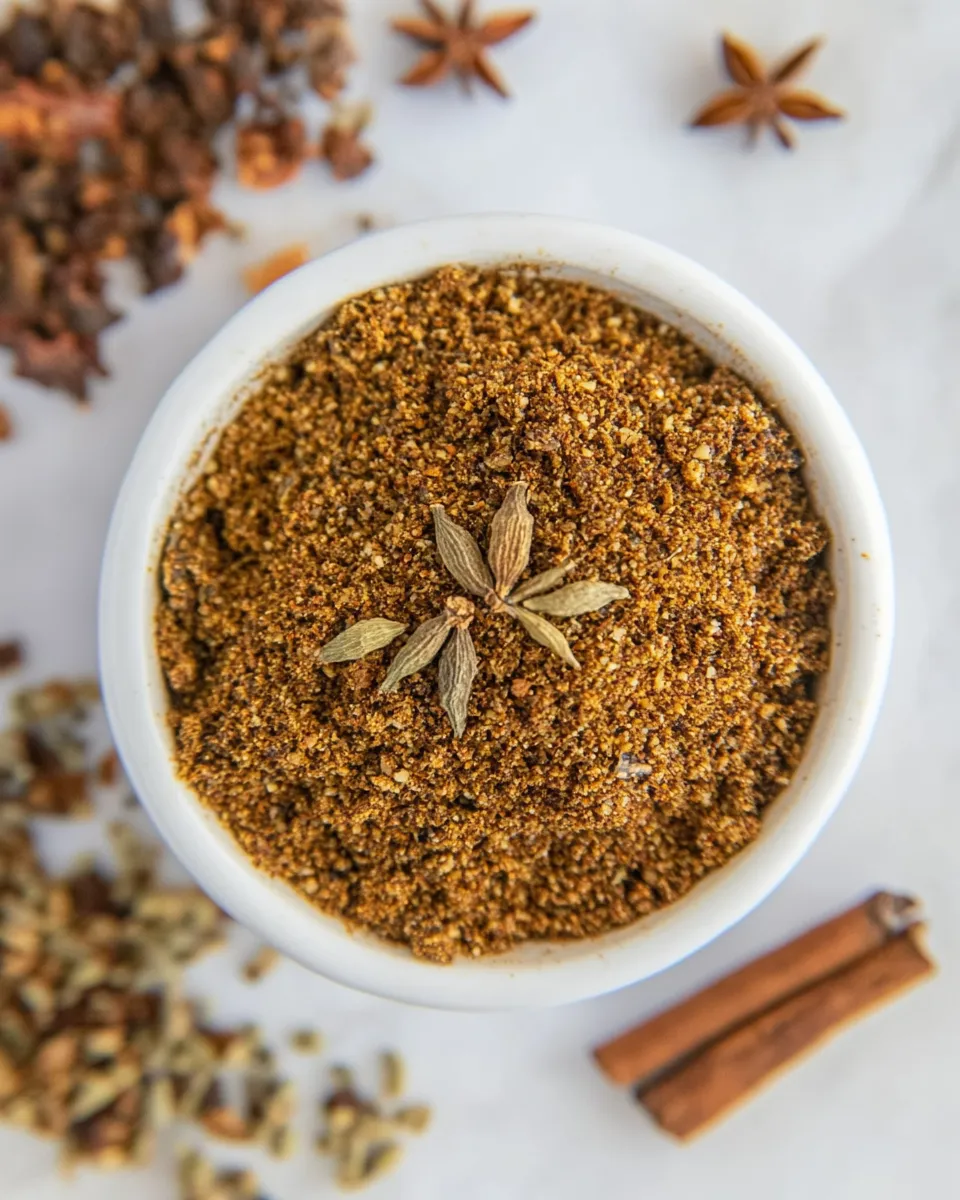
Chinese Five Spice works like a seasoning shorthand. Instead of reaching for five separate jars, you have a blend that brings a full spectrum of aromatics in one spoonful. It pairs particularly well with fatty proteins—pork, duck, and lamb—because the sweetness and warmth cut through richness and brighten the palate.
It’s also versatile. Use it dry-rubbed on roasted vegetables, stirred into braising liquids, or mixed into a sweet glaze for a glossy finish. Home-made blends have fresher top notes; the difference shows in finishes and clean aromatics rather than only raw spice heat.
Finally, it’s economical: a small jar made at home will season many meals, and because you control the quantities, you can tailor the blend to your tastes—more fennel for licorice shine, more cloves for spice intensity.
Low-Carb/Keto Alternatives
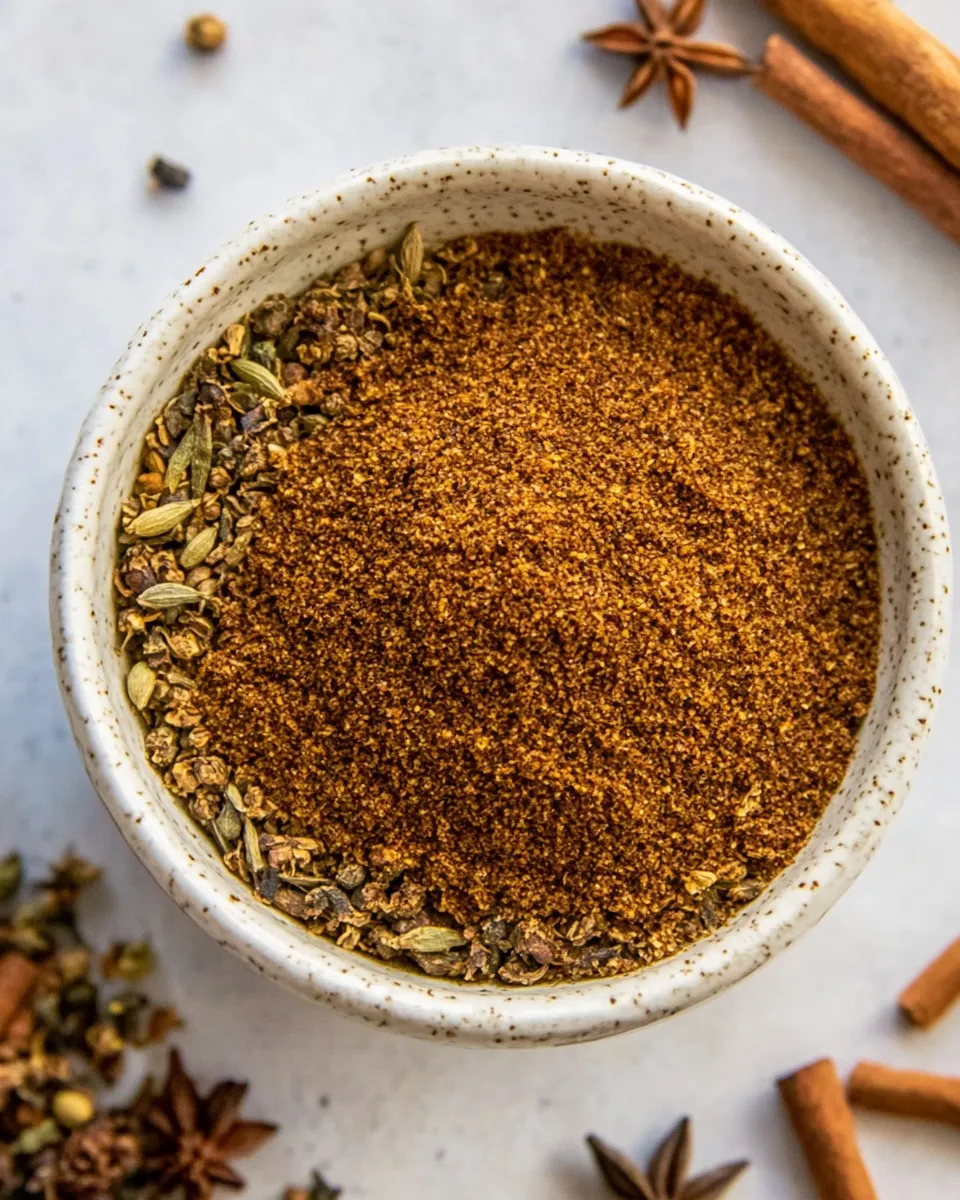
Chinese Five Spice itself is carb-free and keto-friendly—spices are essentially zero-carb. That makes it a convenient way to add complex flavor without adding sugars or starches. Use it liberally in rubs for grilled or roasted proteins, or fold into high-fat sauces like a butter or mayo-based glaze for a flavorful, keto-compliant finishing touch.
A note on prepared sauces: if you combine Five Spice with store-bought sauces, check labels for added sugars. For low-carb cooking, pair the blend with sugar-free condiments, coconut aminos instead of sweet soy, or mix into olive oil and lemon for a quick dressing.
Hardware & Gadgets
Good results come from simple tools. A small spice grinder gives you the quickest, most uniform powder and is my go-to for home blends. If you don’t have one, a sturdy mortar and pestle works fine; it takes longer but gives you control over texture and coarser particles if you like them.
Other helpful items: a fine-mesh sieve to catch any unground larger bits, a small whisk or fork for blending the ground and pre-ground spices, and a small airtight jar for storage. For toasting whole spices, use a dry skillet—short bursts of heat until fragrant, but don’t let them burn.
Don’t Do This
Don’t over-toast the Sichuan peppercorns, star anise, or fennel—burnt spices taste bitter and will overshadow the blend’s balance. Toast only until fragrant and then let them cool before grinding. Don’t grind to a paste unless your recipe calls for it; a fine powder is what yields even distribution.
Don’t add extra ground cloves or cinnamon beyond the amount specified until you test the blend. These are strong flavors; a little too much can tip the whole profile toward cloying sweetness or medicinal notes. And don’t store the blend in a warm, sunny spot—heat and light accelerate flavor loss.
Substitutions by Diet
Because the recipe uses whole and ground spices only, it’s naturally gluten-free, vegan, and paleo-friendly. If you need to adjust for allergies or preferences, consider these swaps:
- Reduce or omit Sichuan peppercorns if you’re sensitive to the numbing sensation; increase fennel slightly for balance, but not more than 1/2 tablespoon since it’s potent.
- If you can’t source star anise, use an extra 1/2 teaspoon of fennel and a small pinch of ground anise seed, though note the flavor will be milder and less complex.
- For low-FODMAP cooking, this blend is safe as-is; it contains no onion or garlic. Use standard amounts and taste in your dish.
Cook’s Commentary
How I Adjust the Blend
I often make a base batch following this recipe and then tweak slightly for the meal. For a sweeter, pastry-friendly version I’ll nudge the cinnamon up by ¼ teaspoon. For savory braises, I keep it as written—this gives a great balance without stealing the show.
Using It in Recipes
When using Chinese Five Spice in marinades, mix it with an acid (rice vinegar or citrus) and oil to help distribute the flavors. When rubbing meats, pat the meat dry first so the spice adheres. For vegetables, toss them in a little oil and then sprinkle the blend so you get even coating and caramelization on roast.
Remember: because this blend contains aromatic notes that are strong, start with 1/4 to 1/2 teaspoon per portion and increase to taste. It’s always easier to add than to remove.
Shelf Life & Storage
Store the finished blend in a small, airtight container at room temperature, away from direct heat or sunlight. Spices don’t go “bad” quickly, but they do lose volatile oils that give aroma and flavor. For best results, use homemade Chinese Five Spice within 3 to 6 months.
If you make larger batches, label the jar with the date. For maximum freshness, keep batches small—enough to use within a couple of months. If you ever notice a dull, flat scent instead of a bright aromatic profile, it’s time to make a new batch.
Chinese Five Spice Q&A
Q: Can I grind everything together at once?
A: You can, but the recipe’s approach—grinding the whole spices first, then adding ground cinnamon and cloves—ensures even distribution and avoids over-processing the already-ground spices.
Q: Can I substitute regular black pepper for Sichuan peppercorns?
A: Not really. Black pepper has a different heat profile and lacks the citrusy, numbing quality of Sichuan peppercorns. If you can’t find Sichuan peppercorns, the blend will still work but won’t have its characteristic “ma” note.
Q: How much should I use in a pork roast?
A: Start with 1 to 2 teaspoons for a 2–3 pound roast as part of a rub that includes salt and oil. Adjust upward next time if you want stronger aromatics.
Q: Is this blend suitable for baking?
A: Yes. Use sparingly in baked goods where anise-citrus-warmth is welcome, such as spice cookies or quick breads. Reduce the amount compared with savory use, since the flavors are concentrated.
In Closing
Making Chinese Five Spice at home is one of those small efforts that pays dividends across many meals. It’s quick, inexpensive, and yields brighter, fresher flavor than most commercial jars. Follow the steps, store it properly, and start small when seasoning to find the balance that suits your palate.
If you want to experiment, try adjusting the fennel and cinnamon in future batches to customize the profile for your favorite dishes. Above all, have fun with it—this blend is forgiving and hugely rewarding in both simple and elaborate cooking.
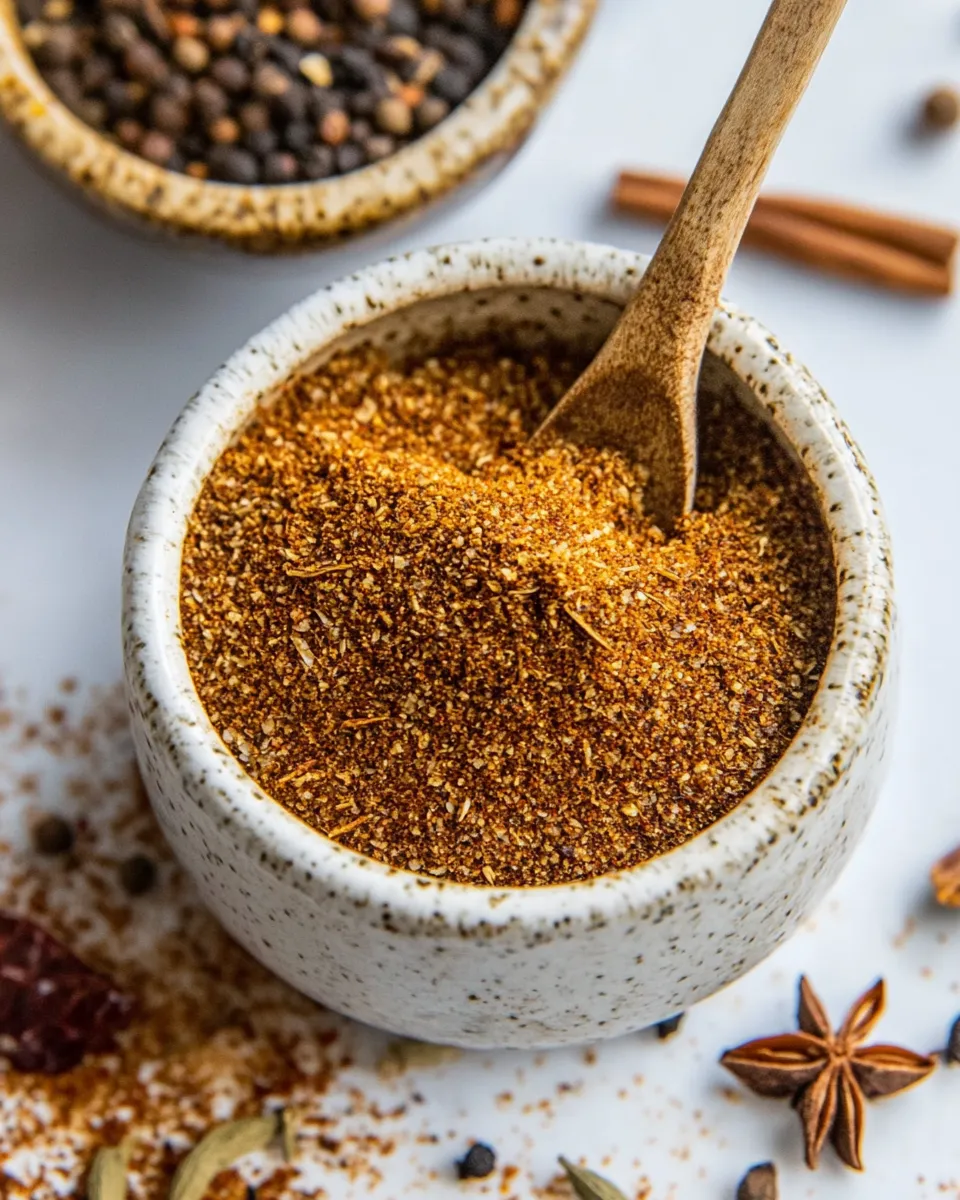
Chinese Five Spice
Equipment
- Spice grinder
- Small Bowl
- Whisk or Spoon
- Airtight container
Ingredients
Ingredients
- 2 tablespoonssichuan peppercorns
- 6 whole star anise seeds
- 1 tablespoonfennel seeds
- 1 teaspoonground cinnamon
- 1/2 teaspoonground cloves
Instructions
Instructions
- Place 2 tablespoons Sichuan peppercorns, 6 whole star anise seeds, and 1 tablespoon fennel seeds into a spice grinder. Grind until the mixture is a fine, uniform powder with no large pieces remaining.
- Empty the freshly ground mixture into a small bowl.
- Add 1 teaspoon ground cinnamon and ½ teaspoon ground cloves to the bowl.
- Stir or whisk the spices together until evenly combined.
- Transfer the blended Chinese five spice to a small airtight container and seal.
- Store at room temperature away from direct heat or sunlight. This spice is strong—start with a conservative amount in recipes and adjust to taste.
Notes
This spice is strong—start with a conservative amount in recipes and adjust to taste.