This Gluten-Free Baked Breaded Chicken is the kind of weeknight dinner that feels special without a lot of fuss. Crisp, golden breading hugs tender, thin chicken filets while a tangy-sweet mustard glaze brings everything together. It’s light enough for a simple salad and sturdy enough to tuck into a pita or sandwich for a portable lunch. The method is approachable: a quick dredge, a short bake, and a drizzle of a zippy dressing. If you love crunchy coatings and bright flavors, this will become a go-to.
Why you’ll love this recipe
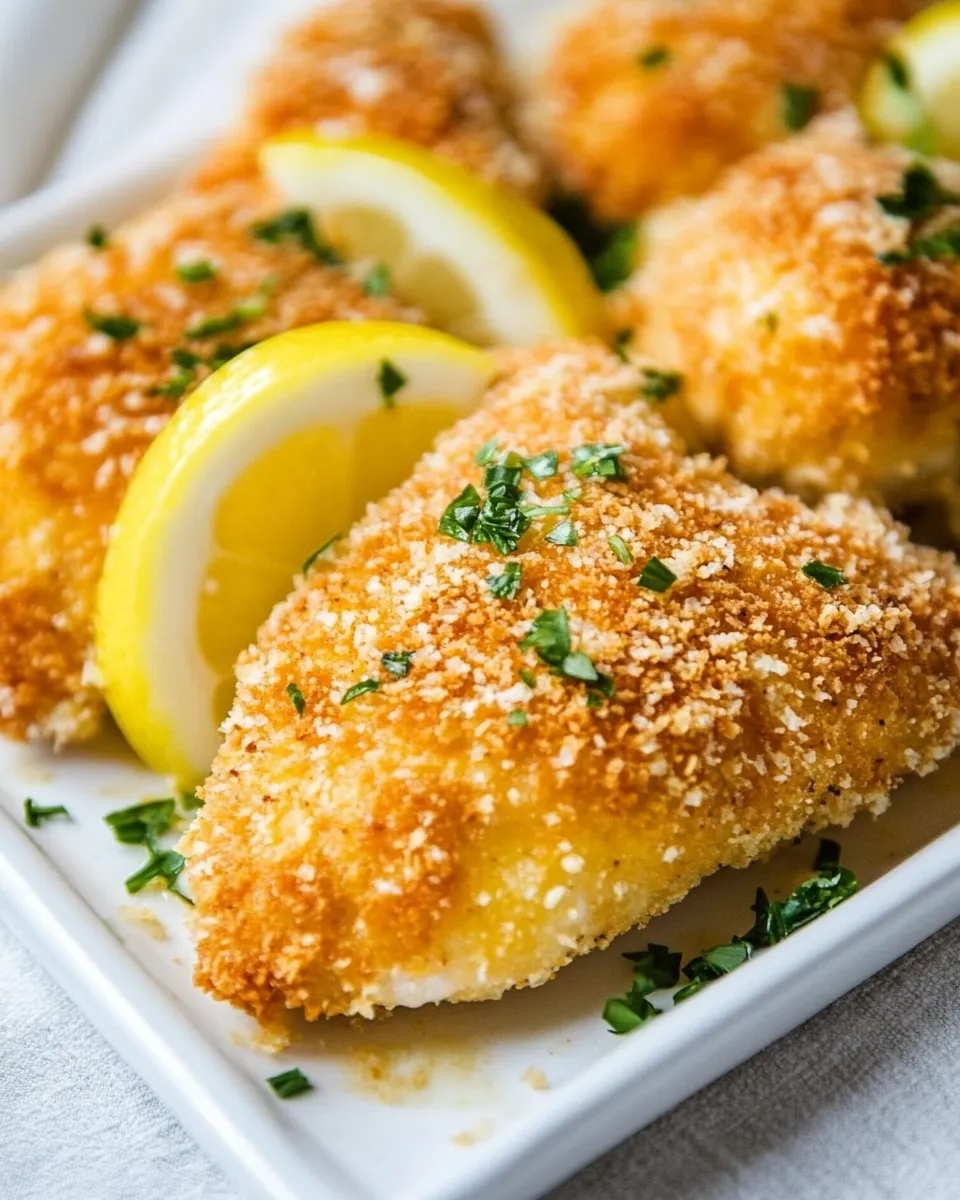
- Crispy on the outside, juicy on the inside — without frying.
- Quick to prep: the chicken is sliced thin so it cooks fast and evenly.
- Flexible — the crumb mixture works with gluten-free or regular breadcrumbs, and the simple glaze can be doubled for sandwiches or salads.
- Made with ingredients you likely already have in the pantry.
Ingredients
Makes 4 servings
- 2 large chicken breasts, cut into four thin filets
- 1 large egg
- 2/3 cup gluten-free breadcrumbs** or regular breadcrumbs
- ½ cup freshly grated parmesan cheese, optional
- 3 Tbsp gluten-free all-purpose flour*** or regular flour
- 1 tsp garlic powder
- ½ tsp sea salt
- ¼ tsp black pepper
- 1/3 cup olive oil or avocado oil
- 3 Tbsp Dijon mustard
- 2 Tbsp cider vinegar
- 3 Tbsp honey
- 1/4 tsp sea salt to taste
Equipment
- Baking sheet
- Parchment paper or a silicone mat
- Shallow bowls for dredging
- Whisk and small bowl for the glaze
- Measuring cups and spoons
- Tongs or a fork for flipping
Taste and texture notes
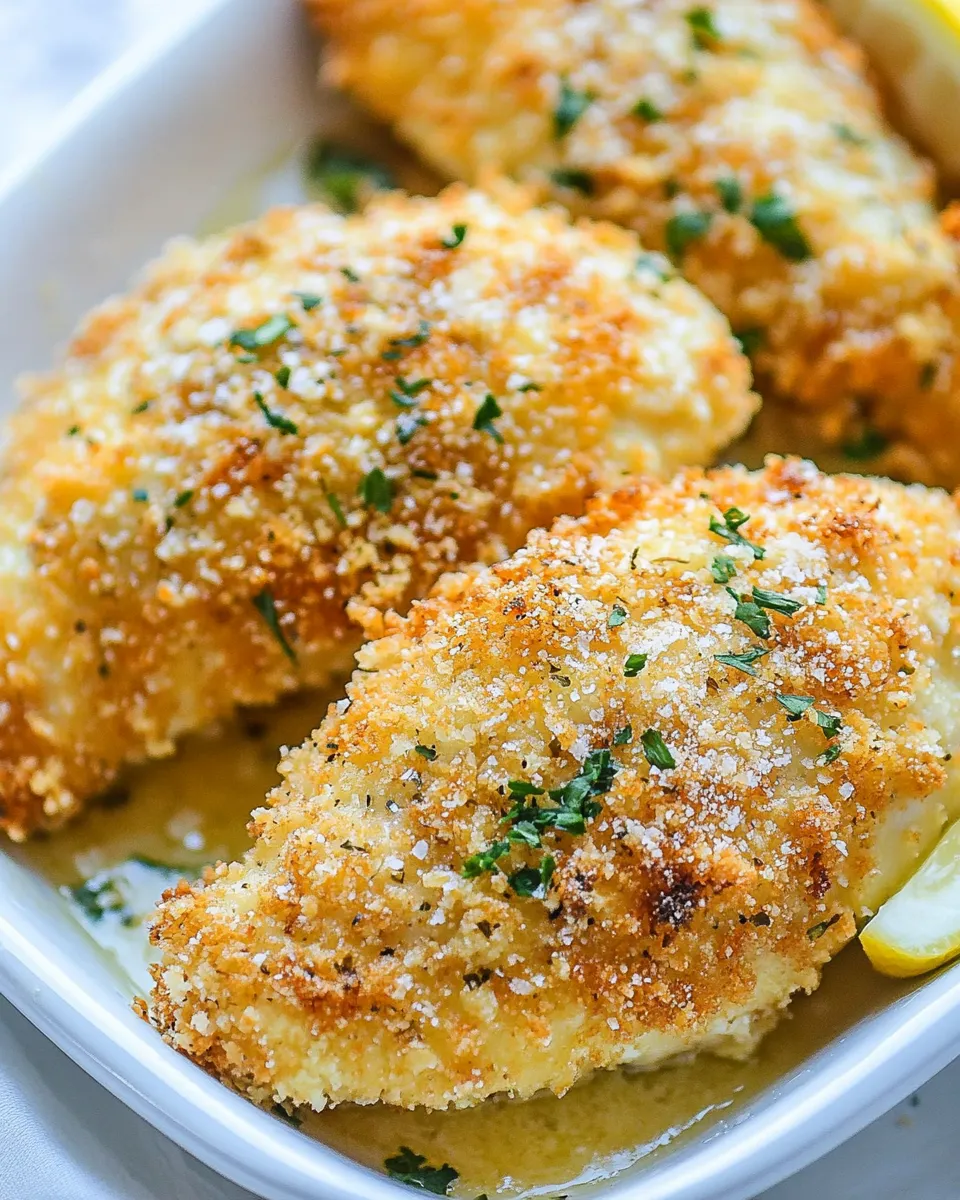
The breadcrumb and parmesan mixture gives an irresistible crunch. Baking with oil brushed over the top delivers that fried texture without a deep fryer. The Dijon-cider-honey glaze is bright and slightly sweet — it’s designed to complement the savory breading without overpowering the chicken. If you skip the parmesan, the coating will still be delicious, but the cheese does add a savory, slightly nutty richness.
Prep tips
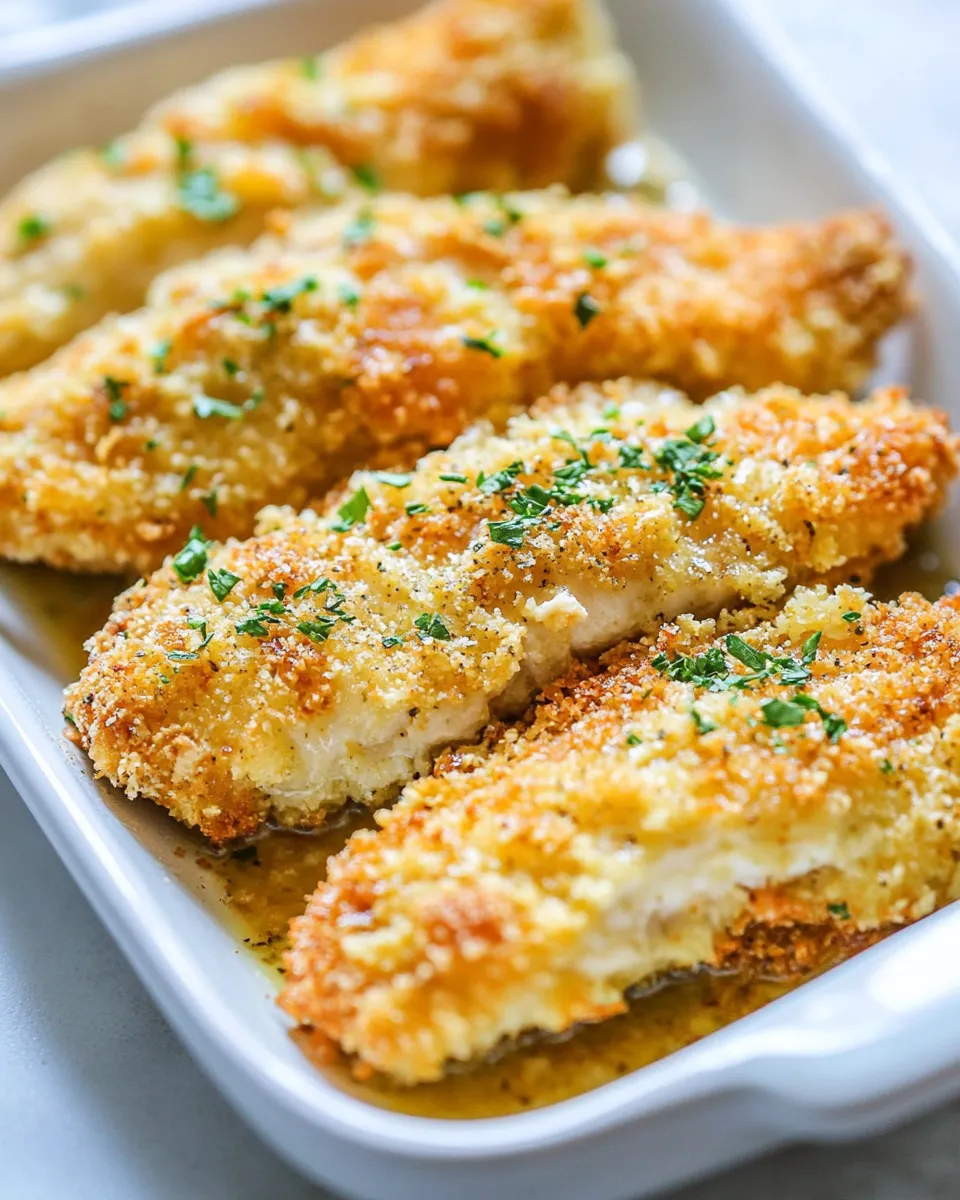
- For even cooking, cut the chicken breasts into four thin filets. If they’re uneven, pound gently between plastic wrap to about ¼-inch thickness.
- Use a shallow bowl for the egg and another for the breadcrumb mixture so you can dip and press easily.
- Line the baking sheet with parchment or a silicone mat to prevent sticking and make cleanup easier.
- Leftovers keep well refrigerated for 3–4 days and reheat nicely in a 350°F oven for about 10 minutes to restore crispness.
Step-by-step Instructions
- Preheat the oven to 425°F and position a rack in the center. Line a baking sheet with parchment paper or a silicone baking mat.
- Prepare the chicken: Take the 2 large chicken breasts and cut them into four thin filets. If any pieces are noticeably thicker, place between two pieces of plastic wrap and gently pound to even thickness so each filet is about the same thickness for uniform cooking.
- Set up your dredging stations: In a shallow bowl, crack and whisk 1 large egg until smooth. In a second shallow bowl, combine 2/3 cup gluten-free breadcrumbs or regular breadcrumbs, ½ cup freshly grated parmesan cheese (if using), 3 Tbsp gluten-free all-purpose flour or regular flour, 1 tsp garlic powder, ½ tsp sea salt, and ¼ tsp black pepper. Mix these dry ingredients so the seasoning is evenly distributed.
- Coat the chicken: One at a time, dip each chicken filet into the whisked egg, letting any excess drip off. Immediately press the egg-coated filet into the breadcrumb mixture, turning and pressing so the breadcrumbs adhere well and form an even coating on both sides. Set each breaded filet on the prepared baking sheet, spaced at least an inch apart so the air can circulate during baking.
- Add oil to the tops: Pour 1/3 cup olive oil or avocado oil into a small measuring cup or use a brush. Drizzle or brush the oil evenly over each breaded chicken filet. This step helps the crust crisp and brown in the oven without frying.
- Bake the chicken: Place the baking sheet in the preheated oven. Bake for 12–14 minutes, then flip each filet using tongs or a spatula and bake for an additional 6–8 minutes, or until the coating is golden and an instant-read thermometer inserted into the thickest part of a filet reads 165°F. Cooking times can vary slightly based on thickness, so use the thermometer for accuracy.
- Make the glaze while the chicken bakes: In a small bowl, whisk together 3 Tbsp Dijon mustard, 2 Tbsp cider vinegar, 3 Tbsp honey, and 1/4 tsp sea salt to taste. Taste and adjust the salt as needed. The glaze should be bright and balanced — a little tang from the mustard and vinegar, tempered by honey.
- Finish and serve: When the chicken reaches 165°F, remove the baking sheet from the oven. Brush each hot breaded filet with the Dijon-honey glaze, coating evenly. Let the chicken rest on the sheet for 2–3 minutes so the glaze sets slightly. Serve immediately with extra glaze on the side if desired. This chicken is excellent on a bed of greens, alongside roasted vegetables, or tucked into warm pita or sandwich bread.
Serving ideas
- Simple plate: Serve with a crisp green salad, lemon wedges, and roasted baby potatoes.
- Sandwich: Spread extra Dijon-honey glaze on toasted bread or a gluten-free bun, add sliced chicken, lettuce, and pickles.
- Salad topping: Slice the breaded chicken and serve over mixed greens with cherry tomatoes, cucumber, and a light vinaigrette.
- Meal prep bowl: Pair with quinoa or rice, steamed broccoli, and a drizzle of the glaze for a ready-to-go lunch.
Ingredient swaps and variations
- Breadcrumbs: Use panko for extra crunch or crushed cornflakes for a different texture. The recipe amount remains 2/3 cup.
- Cheese: Omit the parmesan for a dairy-free option, or swap in a grated hard vegan cheese if you prefer.
- Flour: Any all-purpose flour works for the coating; use gluten-free all-purpose flour when needed, maintaining the 3 Tbsp amount.
- Glaze: Swap the Dijon for whole-grain mustard for texture, or add a pinch of cayenne for heat.
- Oil: Olive oil gives a mellow fruitiness; avocado oil has a neutral flavor and high smoke point — both work well in the 1/3 cup quantity called for.
Make-ahead and storage
You can bread the chicken and place the coated filets on the baking sheet covered with plastic wrap in the fridge for up to 24 hours before baking. If you plan to freeze, flash-freeze the breaded filets on a sheet until firm, then transfer to a freezer bag for up to one month. Bake from frozen, adding 8–12 minutes to the total cook time and checking doneness with a thermometer.
Troubleshooting
- Coating falling off: Make sure the egg wash is well beaten and press the breadcrumb mixture onto the chicken so it adheres. A light dusting of the 3 Tbsp flour on the chicken before the egg can help the egg stick better if you find the coating slipping.
- Not crispy enough: Increase the oven temperature by 25°F and reduce total time slightly or finish under the broiler for 1–2 minutes while watching carefully to avoid burning.
- Dry chicken: If filets are over-thin, they can dry out. Aim for an even thickness and remove from the oven as soon as the internal temperature hits 165°F.
Nutrition (approximate per serving)
Calories, fat, and protein will vary slightly based on whether you use regular or gluten-free breadcrumbs and whether you include the parmesan. Expect a satisfying balance of protein and carbs with a moderate amount of healthy fats from the oil.
Final thoughts
This Gluten-Free Baked Breaded Chicken is proof that you don’t need to compromise flavor to keep dinner simple and wholesome. The crunchy, golden crust and tangy-sweet glaze make each bite memorable, and the method is forgiving: even home cooks who shy away from breading will find success with these clear steps. Keep the glaze on the side if serving kids or those who prefer a milder bite, and double it when making sandwiches or meal-prep bowls. Enjoy — and don’t be surprised if this becomes your new weeknight favorite.
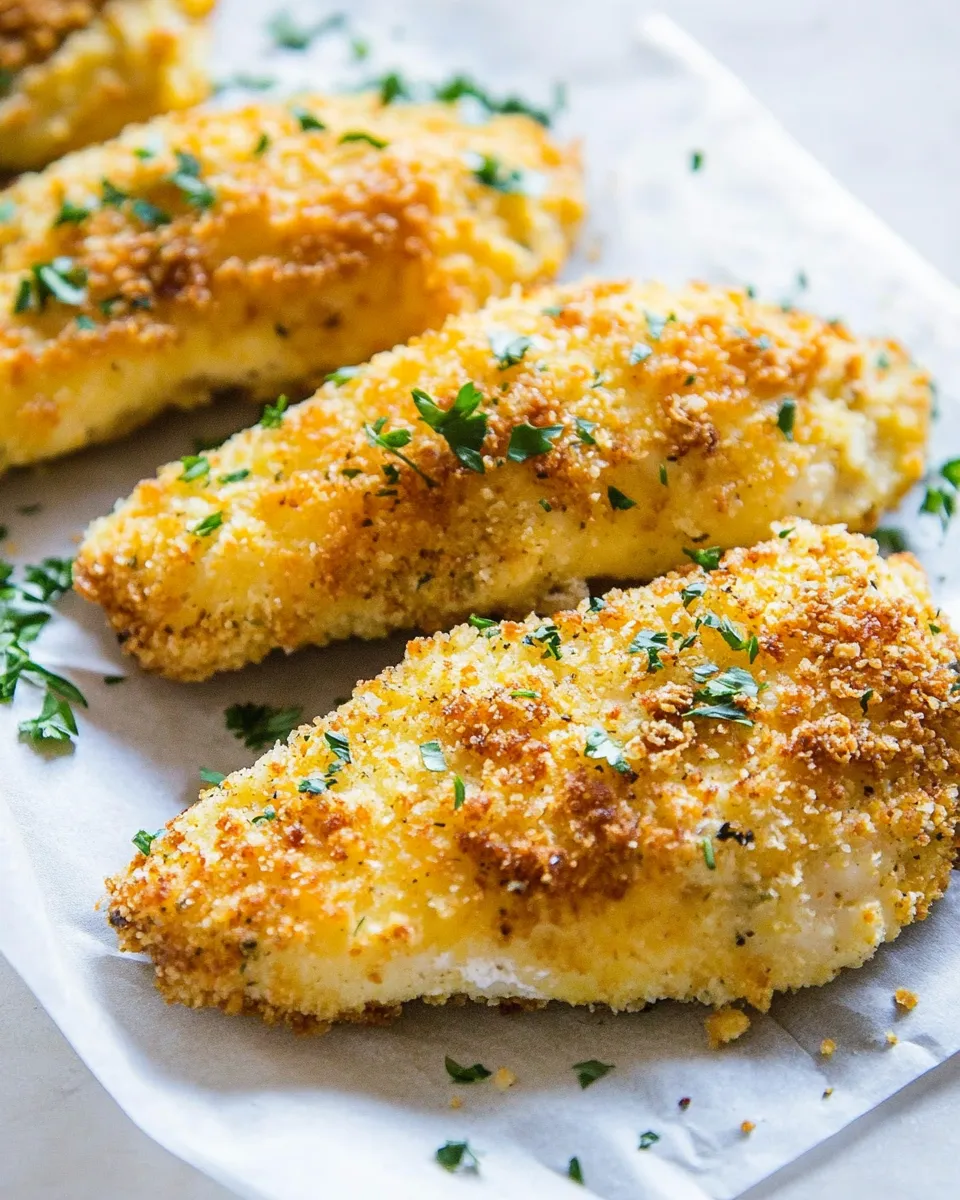
Gluten-Free Baked Breaded Chicken
Equipment
- Large baking sheet
- Mixing Bowls
- shallow bowl or plate for breading
- Whisk or fork
- Meat Thermometer
- Cutting Board
- Sharp Knife
Ingredients
- 2 large chicken breasts cut into four thin filets
- 1 large egg
- 2/3 cup gluten-free breadcrumbs or regular breadcrumbs
- 1/2 cup freshly grated parmesan cheese optional
- 3 Tbsp gluten-free all-purpose flour or regular flour
- 1 tsp garlic powder
- 1/2 tsp sea salt
- 1/4 tsp black pepper
- 1/3 cup olive oil or avocado oil
- 3 Tbsp Dijon mustard
- 2 Tbsp cider vinegar
- 3 Tbsp honey
- 1/4 tsp sea salt to taste (for sauce)
Instructions
- Preheat the oven to 400°F (200°C) and lightly spray or oil a large baking sheet or casserole dish.
- Pat the chicken breasts dry with paper towels. Slice each breast horizontally into two thin filets to make four pieces total, or use pre-sliced cutlets.
- Crack the egg into a shallow bowl and whisk until well beaten.
- On a large plate or shallow bowl, combine the breadcrumbs, parmesan (if using), gluten-free flour, garlic powder, 1/2 tsp sea salt, and black pepper; mix until evenly distributed.
- Dip one chicken filet into the beaten egg, coating both sides, then press both sides into the breading mixture to fully coat. Place the breaded filet on the prepared baking sheet; repeat with remaining pieces.
- Drizzle or brush the 1/3 cup oil evenly over the breaded chicken pieces to help them brown in the oven.
- Bake on the center rack for 12 to 15 minutes, until golden and the internal temperature reaches 165°F (74°C). Use a meat thermometer inserted into the thickest part to check doneness.
- While the chicken bakes, combine the Dijon mustard, cider vinegar, honey, and 1/4 tsp sea salt in a small bowl or blender and mix until smooth to make the honey-Dijon sauce.
- Serve the baked breaded chicken hot with the honey-Dijon sauce as a drizzle or dipping sauce.
Notes
- Slice breasts horizontally or pound to 1/2 inch for even cooking.
- Use regular breadcrumbs and flour if not gluten-free.
- For grain-free, substitute almond flour and increase parmesan as noted in the original recipe.
- Optional parmesan adds extra crispness and flavor.