I make heart shaped eggs when I want breakfast to feel intentional without a lot of fuss. This trick is simple, requires one egg and a few household items, and yields a small, sweet detail that transforms a plate. It’s perfect for a quick Valentine’s morning, a lunchbox surprise, or a themed brunch where presentation matters more than complexity.
The technique is practical: hard-boil, press, cool, and slice. You don’t need specialty molds or gadgets. The method depends on timing and a gentle hand, not culinary magic. Follow the steps once, and you’ll be able to repeat it reliably.
Below you’ll find the exact ingredients and step-by-step directions, followed by gear lists, troubleshooting, serving ideas, and storage notes. If you’re short on time, the “No-Store Runs Needed” and “Insider Tips” sections will get you ready with items already in your kitchen.
What Goes Into Heart Shaped Eggs
Ingredients
- 1 egg — the single egg becomes the whole project; fresher eggs can be harder to peel, so use one you’re comfortable peeling warm.
Heart Shaped Eggs Made Stepwise
- Prepare a mold: cut a rectangle from an empty egg carton and fold it in half so the folded piece will cover and press the sides of one egg.
- Hard-boil the egg: place the egg in a saucepan, cover with water, bring to a boil, then simmer and cook for 9 minutes.
- Remove and handle safely: use a spoon or tongs to take the hot egg from the pot. Peel the shell while the egg is still warm.
- Position the egg: place the peeled, warm egg inside the folded carton so the long axis of the egg is perpendicular to the fold.
- Create the heart indentation: lay a chopstick or skewer across the top middle of the egg (aligned with the fold) and press down so it makes a clear groove.
- Secure the shape: hold the carton closed around the egg and fasten the ends with rubber bands so the chopstick maintains pressure on the egg.
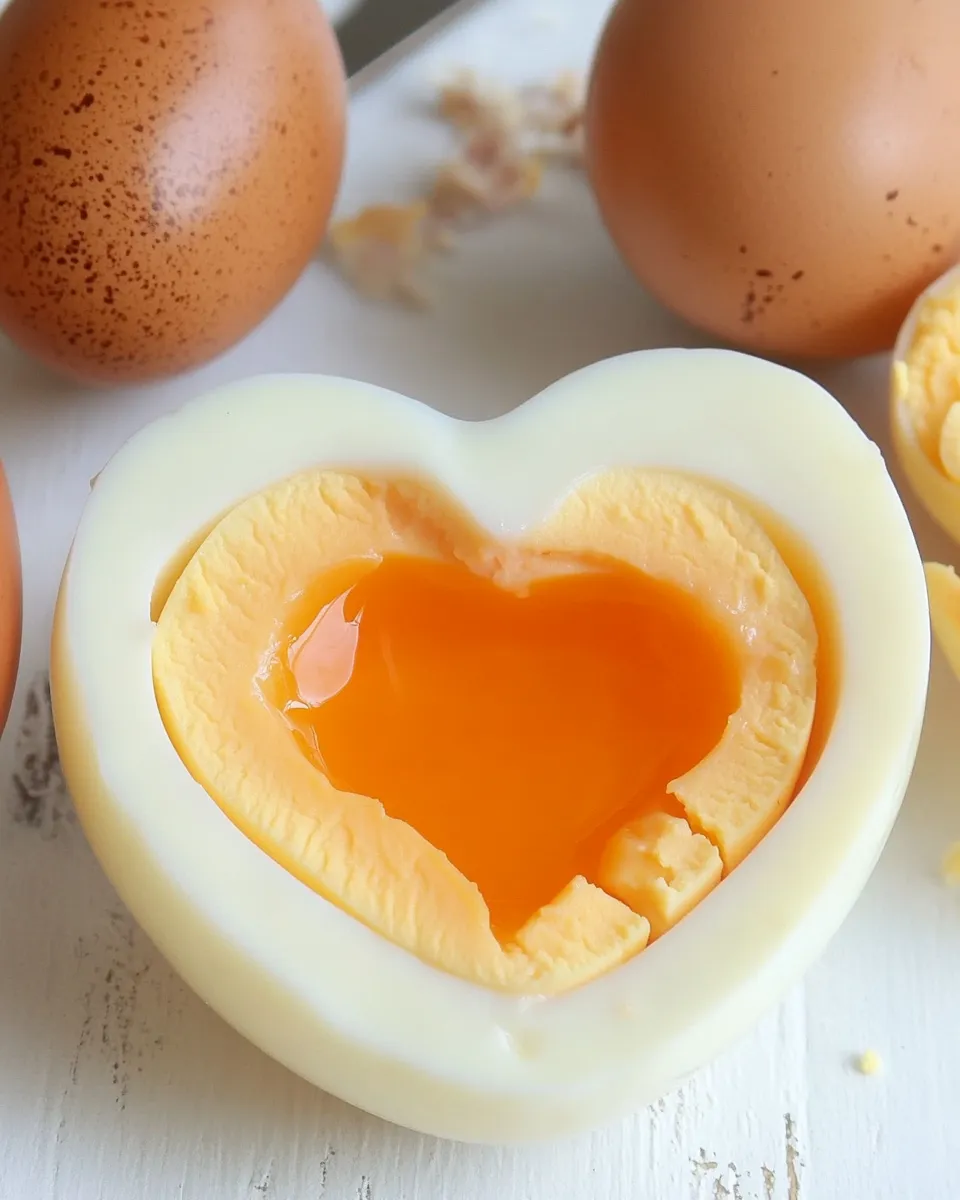
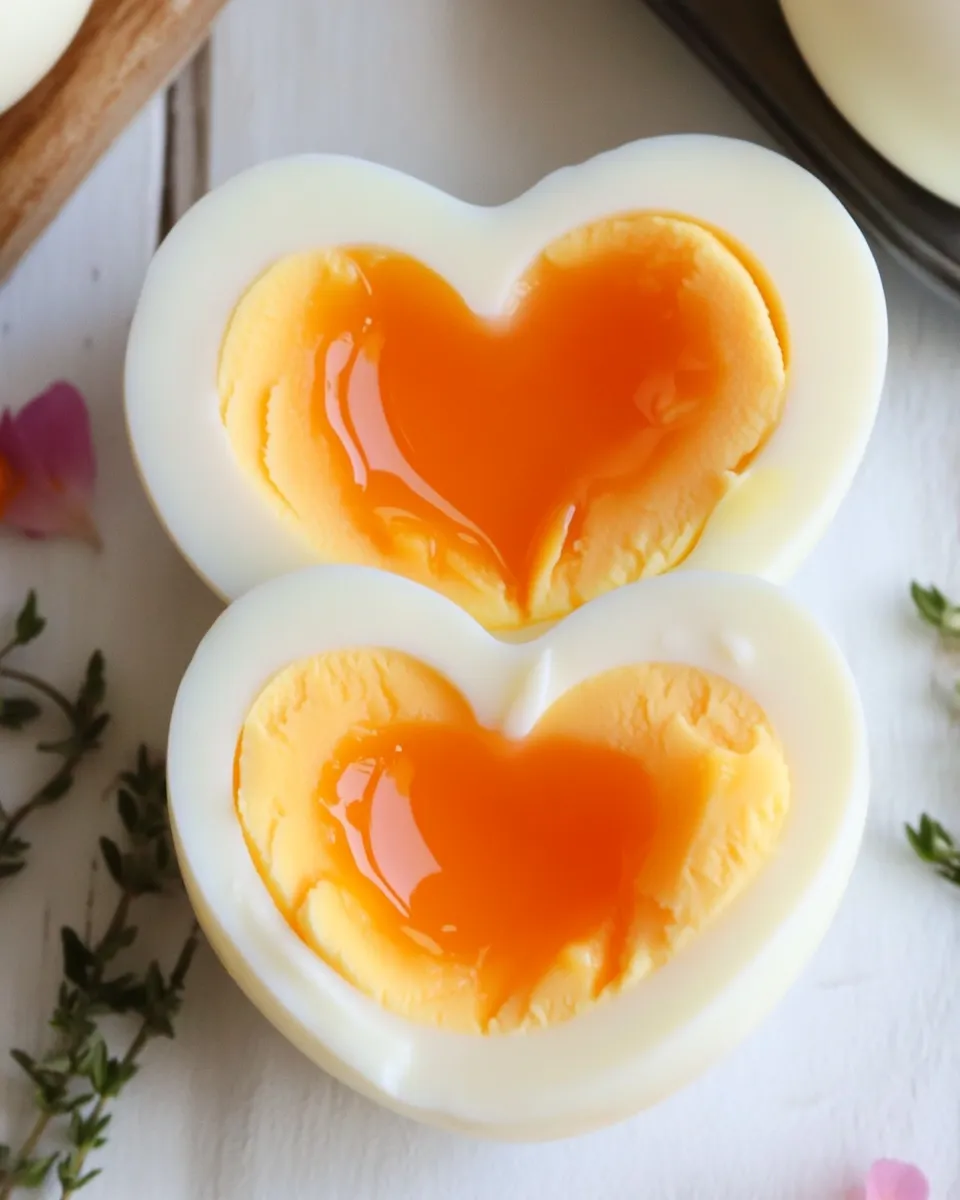
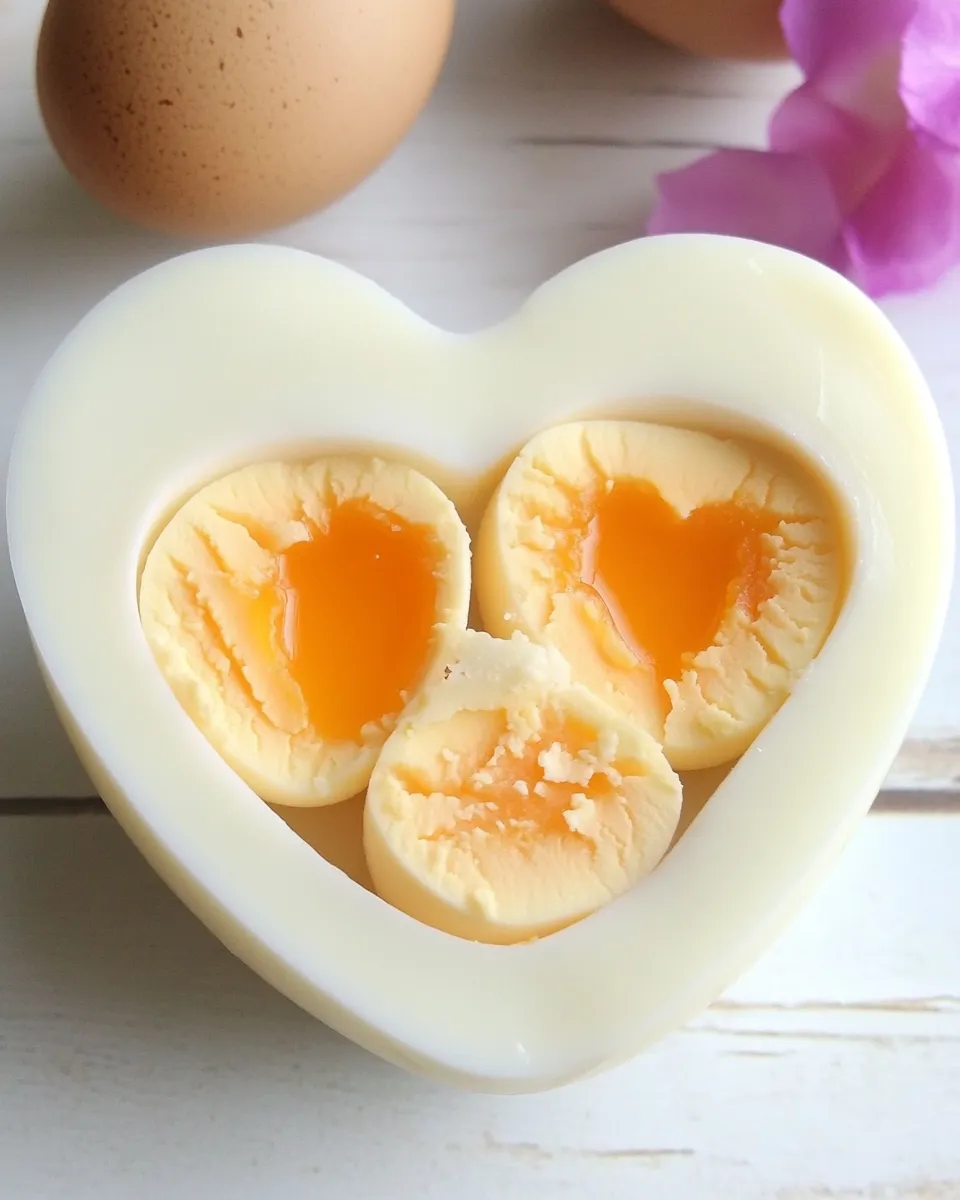
- Cool and finish: leave the egg in the secured carton until it has cooled (about 10 minutes). Remove the rubber bands and carton, then cut the egg in half through the indentation to reveal the heart shape.
Why It’s My Go-To
This technique instantly elevates an ordinary hard-boiled egg into something playful and thoughtful. It’s low-effort and high-impact. I reach for Heart Shaped Eggs when I want to add charm without adding time to the morning routine. They require no fancy tools, and the visual payoff is immediate.
Beyond aesthetics, the process hides a few useful benefits. Pressing the egg while warm encourages the white to set in a defined shape, which slices cleanly once cooled. The method is forgiving: small variations in pressure or cooling time change the depth of the heart, not whether it works at all. That means quick practice sessions will have you making consistent results by the second or third try.
No-Store Runs Needed
You likely already have everything needed. An empty egg carton, a rubber band, and a chopstick or skewer are common household items. The only true ingredient is the egg. If you don’t have a chopstick, a smooth wooden spoon handle or the smooth end of a wooden skewer works. The carton provides a simple mold and clamping surface. No specialty molds, cookie cutters, or kitchen gadgets are required.
If you don’t have an empty carton, improvise with a small box or fold a piece of sturdy cardboard. The goal is to form a cradle that presses the egg sides inward along a central axis. If you use cardboard, make sure to wrap it with clean parchment or plastic wrap where it touches the egg to keep things sanitary.
What You’ll Need (Gear)
- Saucepan — to boil the egg.
- Empty egg carton or folded cardboard — the mold that shapes the egg as it cools.
- Chopstick or skewer — makes the central indentation that becomes the heart tip.
- Rubber bands — secure the carton so pressure remains constant while cooling.
- Spoon or tongs — safely remove the hot egg from the pot.
- Sharp knife — to slice the egg cleanly through the indentation and reveal the heart.
- Small bowl of cold water or ice bath (optional) — to speed cooling if you prefer.
Things That Go Wrong
Peeling fails when the egg is too fresh. Very fresh eggs cling to the shell and to the membrane, making it hard to peel cleanly while warm. If your eggs are new from the farm, consider aging them a few days or using a pinch of baking soda in the boiling water to help separation.
Uneven or shallow hearts happen when pressure is inconsistent. If the chopstick slips or you don’t fasten the carton tightly, the groove won’t form deeply enough and the heart shape will be faint. Make sure the chopstick is centered and the rubber bands hold the carton firmly closed without crushing the egg flat.
Hot handling risks burns. Use a spoon or tongs to remove the cooked egg, and peel while it’s warm but not scalding. If you prefer not to handle very hot eggs, cool briefly until you can touch them comfortably before peeling; the shape will still form, though the white sets differently when cooler.
Sliced hearts that look ragged usually mean the knife wasn’t sharp or the egg was too warm and soft. Use a sharp knife and a steady sawing motion rather than pressing down hard. Cool the egg long enough (about 10 minutes in the mold) to firm up the white, or pop it briefly in an ice bath to set it faster.
Seasonal Serving Ideas
Valentine’s Day: Serve halves over buttered toast, add a sprinkle of flaky salt and a drizzle of olive oil, and top with microgreens. The heart pair is decorative and concise — a small plate that reads “I made breakfast.”
Spring brunch: Arrange Heart Shaped Eggs on a platter with radish slices, snap pea tendrils, and a smear of herbed cream cheese. The eggs add a playful note among seasonal vegetables.
Winter cozy mornings: Serve them with soldiers — toasted strips of bread — and a pot of strong tea. The heart halves are comfortable and comforting, and they pair well with salty, browned toast.
Kids’ lunchboxes: Nestle a heart egg half into a bento-style container alongside fruit, cucumber stars, and a mini sandwich. It’s a simple gesture that can brighten a school day.
Insider Tips
- Peel while warm: The method calls for peeling the egg when it’s still warm. Warm peeling lets the white deform slightly so the mold yields a cleaner heart.
- Center the chopstick: Alignment matters. Place the chopstick directly over the fold so the groove splits the egg evenly into the two lobes of the heart.
- Even pressure over time: Fasten rubber bands snugly. Maintain pressure without crushing the egg flat; you want shape, not a pancake.
- Sharp knife, gentle cut: A sharp blade and a slow, steady cut through the indentation will give a crisp heart outline.
- Practice with one: Use a single egg for trial runs before scaling up for a platter. It’s the quickest way to learn the feel of the press and the timing.
Meal Prep & Storage Notes
Store shaped hard-boiled eggs in the refrigerator in a covered container for up to one week. Keep them uncut if you plan to store them, as the shape holds better. If you’ve already sliced them, place the halves cut-side down on a small plate or wrap tightly to prevent drying.
If you want to prep ahead for a brunch, shape the eggs and chill them fully in the mold or remove and store whole; slice just before serving for the best appearance. Rewarming isn’t necessary unless you want warm eggs on the plate — a minute in hot water will take the chill off without losing shape.
Reader Q&A
Q: Can I use multiple eggs at once?
A: Yes. Work one at a time for the pressing step, but you can boil several eggs together. Prepare multiple folded carton molds and fasten them so all the eggs can cool simultaneously.
Q: What if I don’t have an egg carton?
A: Use sturdy cardboard folded into a cradle or a small clean box. Line it with plastic wrap or parchment that touches the egg for hygiene. The principle is the same: fold, press, secure.
Q: Will the heart show on soft-boiled eggs?
A: The method is designed for fully set whites, so hard-boiled eggs work best. Soft-boiled whites don’t set firmly enough and will deform unpredictably when pressed.
Q: Can I dye the eggs first?
A: You can dye them after boiling and peeling, but handle them gently. Dye may make the shell-staining step trickier; if color is key, dye before pressing if you use food-safe dyes that won’t run when the egg is warm.
See You at the Table
Heart Shaped Eggs are one of those tiny gestures that go a long way. The method is straightforward, the tools are everyday items, and the result brings a little warmth to whoever sits down to eat. Try one the next time you want a small, meaningful touch on a plate.
If you try this, tell me how it went: subtle groove or dramatic heart? I love hearing which small tweaks made it perfect for you. See you at the table soon.
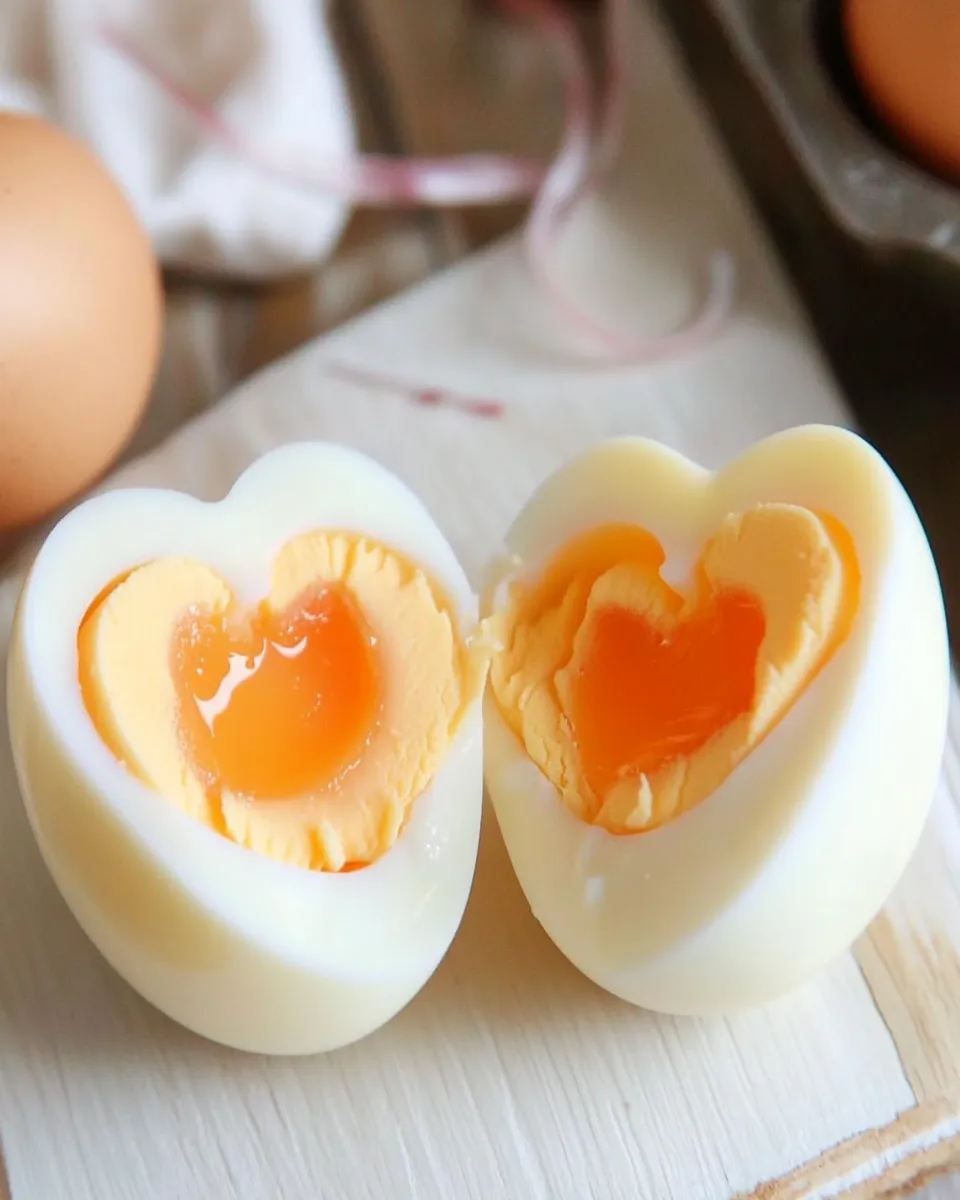
How to make Heart Shaped Eggs
Equipment
- 1 piece of cardboard
- 1 skewer
- 2 rubber bands
Ingredients
Ingredients
- 1 egg
Instructions
Instructions
- Prepare a mold: cut a rectangle from an empty egg carton and fold it in half so the folded piece will cover and press the sides of one egg.
- Hard-boil the egg: place the egg in a saucepan, cover with water, bring to a boil, then simmer and cook for 9 minutes.
- Remove and handle safely: use a spoon or tongs to take the hot egg from the pot. Peel the shell while the egg is still warm.
- Position the egg: place the peeled, warm egg inside the folded carton so the long axis of the egg is perpendicular to the fold.
- Create the heart indentation: lay a chopstick or skewer across the top middle of the egg (aligned with the fold) and press down so it makes a clear groove.
- Secure the shape: hold the carton closed around the egg and fasten the ends with rubber bands so the chopstick maintains pressure on the egg.
- Cool and finish: leave the egg in the secured carton until it has cooled (about 10 minutes). Remove the rubber bands and carton, then cut the egg in half through the indentation to reveal the heart shape.