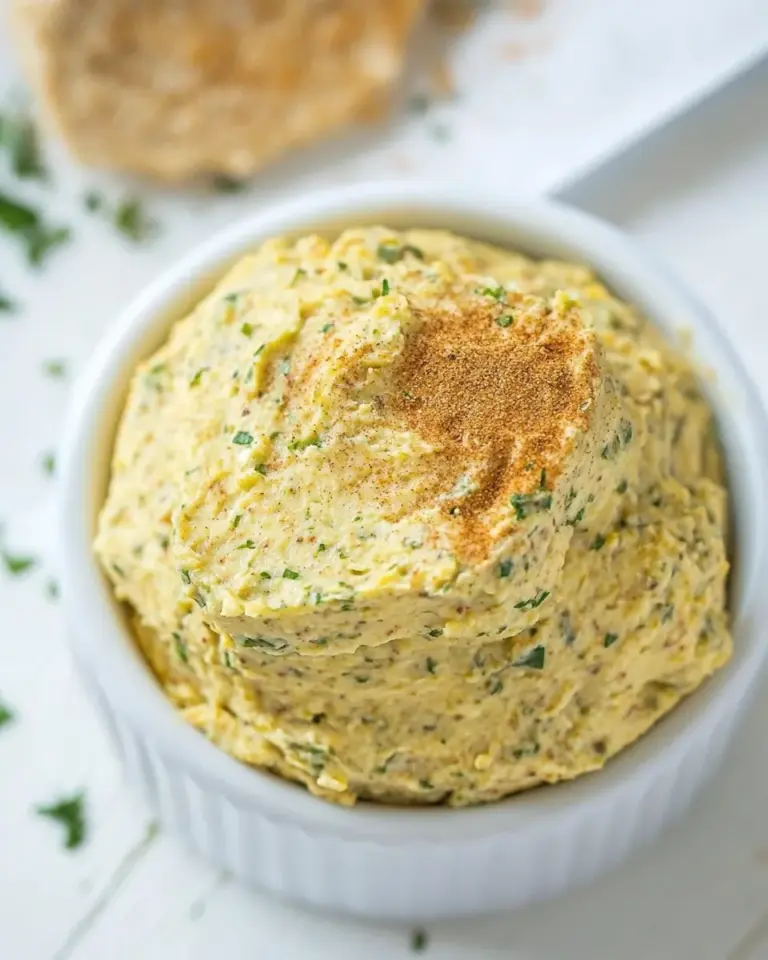
Hummus is a beloved Middle Eastern dip that has found its way into kitchens and hearts worldwide. While traditional recipes often call for tahini, this version eliminates it while still delivering a creamy, flavorful result. In this recipe, we use simple ingredients that come together to create a deliciously smooth hummus that’s perfect for dipping, spreading, or simply enjoying by the spoonful. Let’s dive into the world of Hummus without Tahini!
Why You’ll Love This Recipe
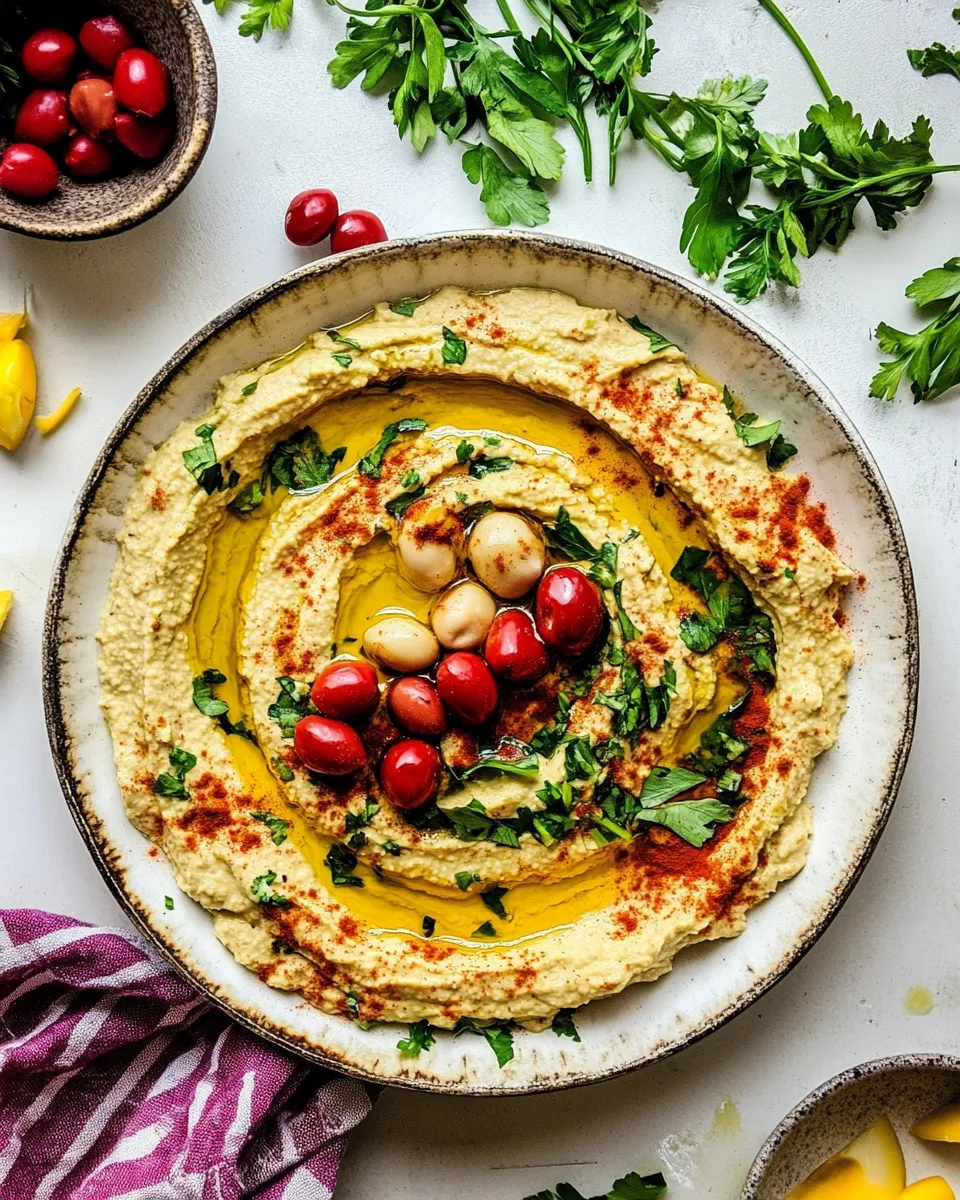
This hummus without tahini is not only easy to make but also incredibly versatile. The absence of tahini makes it lighter and allows the flavors of the other ingredients to shine through. The creaminess from the cashew butter provides a unique twist, while the garlic, lemon, and olive oil add that essential zing. It’s perfect for gatherings, snacks, or even a healthy meal prep option. Plus, it’s gluten-free, dairy-free, and packed with protein!
What Goes Into Hummus without Tahini
To create this scrumptious dip, you’ll need the following ingredients:
- 1 (15-ounce) can chickpeas, drained and rinsed
- 2 cloves garlic, minced
- 1 lemon, zested
- 1 lemon, juiced
- 1/4 cup cashew butter
- 2 tablespoons water
- 2 tablespoons olive oil, plus more for topping
- Kosher salt, to taste
- Minced fresh parsley, for topping
- Pomegranate seeds, for topping
- Toasted pine nuts, for topping
Setup & Equipment
Before you start blending up your Hummus without Tahini, gather these essential tools:
- Food Processor: For blending all the ingredients into a creamy consistency.
- Measuring Cups and Spoons: To ensure accurate ingredient measurements.
- Spatula: To help scrape down the sides of your food processor.
- Citrus Juicer or Zester: For extracting maximum juice and zest from your lemons.
Cooking Hummus without Tahini: The Process
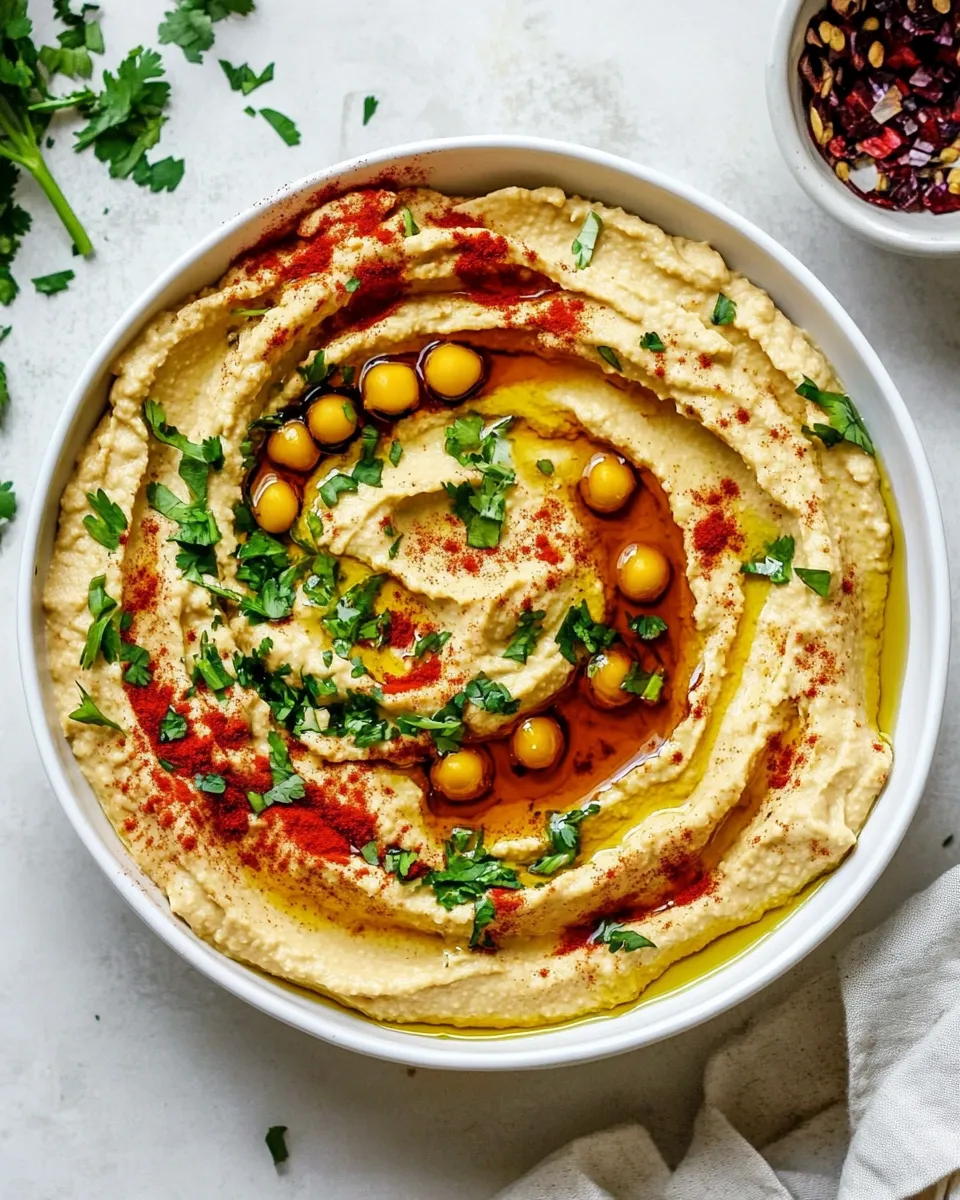
Now that you have your ingredients and equipment ready, let’s get started on making this delightful dip!
Step 1: Prepare the Ingredients
Begin by draining and rinsing the chickpeas thoroughly under cold water. This helps to remove excess sodium and any canning liquid that could affect the taste of your hummus.
Step 2: Blend the Base
In your food processor, combine the drained chickpeas, minced garlic, lemon zest, lemon juice, and cashew butter. Pulse these ingredients together until they start to break down.
Step 3: Incorporate Liquid
Add the water and olive oil to the mixture. This will help achieve that creamy texture you’re looking for. Blend until smooth, occasionally stopping to scrape down the sides with a spatula.
Step 4: Season to Taste
Taste your hummus and add kosher salt to your liking. If you desire a thinner consistency, feel free to add a bit more water or olive oil until you reach your preferred texture.
Step 5: Serve and Garnish
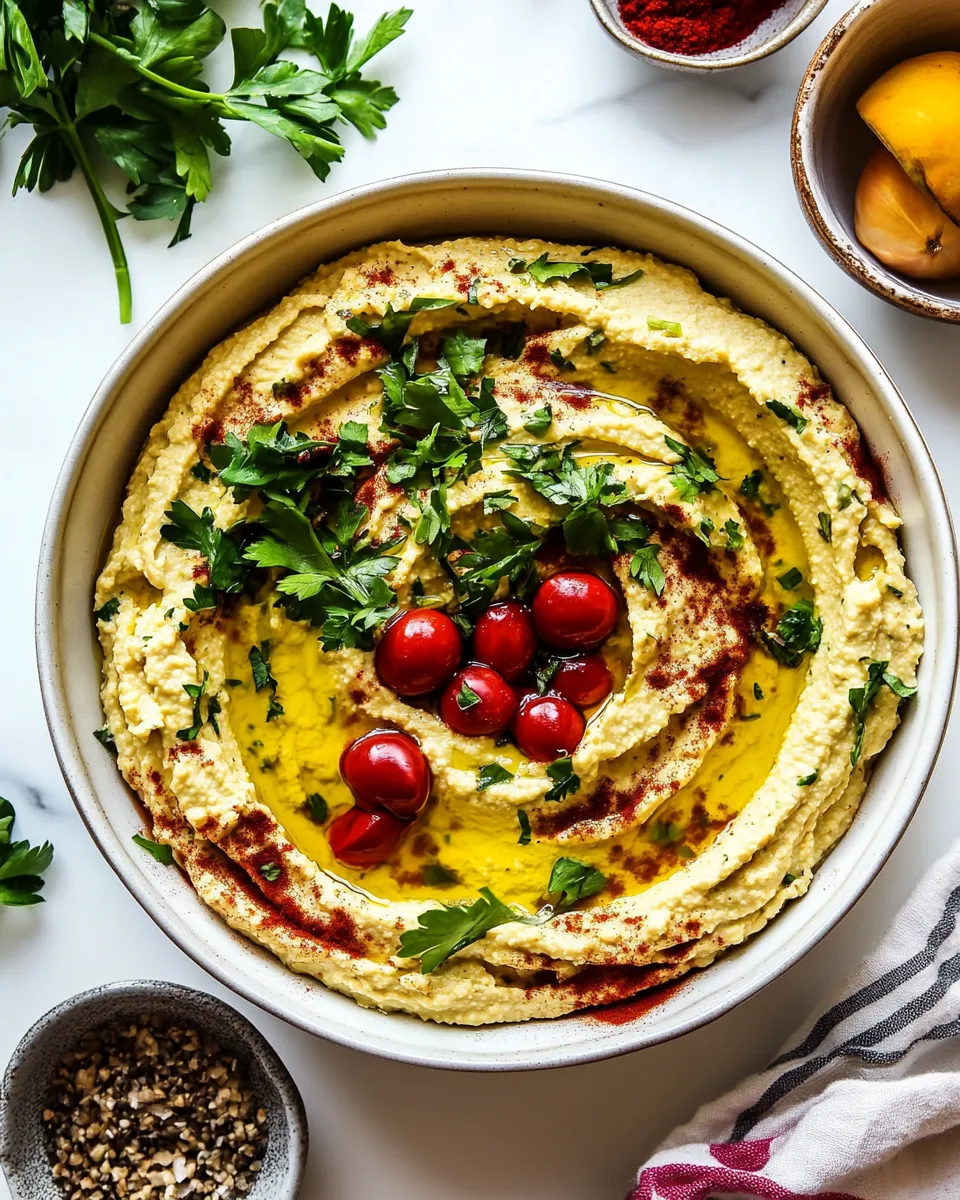
Transfer your hummus to a serving bowl. Drizzle with additional olive oil and top with minced fresh parsley, pomegranate seeds, and toasted pine nuts for a stunning presentation and added flavor.
In-Season Swaps
If you want to customize your hummus or use what’s in season, consider these swaps:
- Roasted Red Peppers: Blend in some roasted red peppers for a sweet, smoky flavor.
- Herbs: Fresh herbs like basil or cilantro can add a fresh twist.
- Spices: Experiment with spices like cumin or paprika for an extra kick.
- Other Nut Butters: Almond or sunflower seed butter can be substituted for cashew butter.
Errors to Dodge
Making hummus is fairly straightforward, but there are a few common mistakes to avoid:
- Not Rinsing the Chickpeas: This can lead to a gritty texture and overly salty flavor.
- Skipping the Lemon Zest: Zest adds a beautiful depth of flavor that enhances the overall taste.
- Overprocessing: Blend just until smooth; over-mixing can make the hummus too runny.
- Underseasoning: A little salt goes a long way in bringing out the flavors of your ingredients.
Refrigerate, Freeze, Reheat
To enjoy your Hummus without Tahini longer, follow these tips:
You can refrigerate your hummus in an airtight container for up to one week. If you want to keep it longer, freeze it for up to three months. When ready to use, thaw in the refrigerator overnight and stir well before serving. You may need to add a little olive oil or water to regain the creamy texture.
Reader Questions
Can I use dried chickpeas instead of canned?
Absolutely! If you prefer using dried chickpeas, soak them overnight and cook them until tender before blending. Just make sure to cool them before adding to the processor.
What can I serve with hummus without tahini?
This hummus pairs wonderfully with pita bread, fresh veggies like carrots and cucumbers, or even as a spread in sandwiches or wraps.
Is this hummus recipe gluten-free?
Yes, this Hummus without Tahini is naturally gluten-free, making it a great option for those with gluten sensitivities.
Can I make this hummus in advance?
Yes! This hummus can be made a few days in advance. Just store it in an airtight container in the refrigerator, and it will stay fresh and delicious.
If you love this , you might also enjoy these healthy recipes:
The Last Word
This Hummus without Tahini recipe is a game-changer for anyone looking for a quick, healthy, and delicious dip. It’s easy to customize, perfect for any occasion, and packed with flavor. Whether you’re hosting a gathering or just enjoying a quiet night in, this hummus is sure to impress.
Get ready to dip, spread, and savor every bite of this delightful creation!
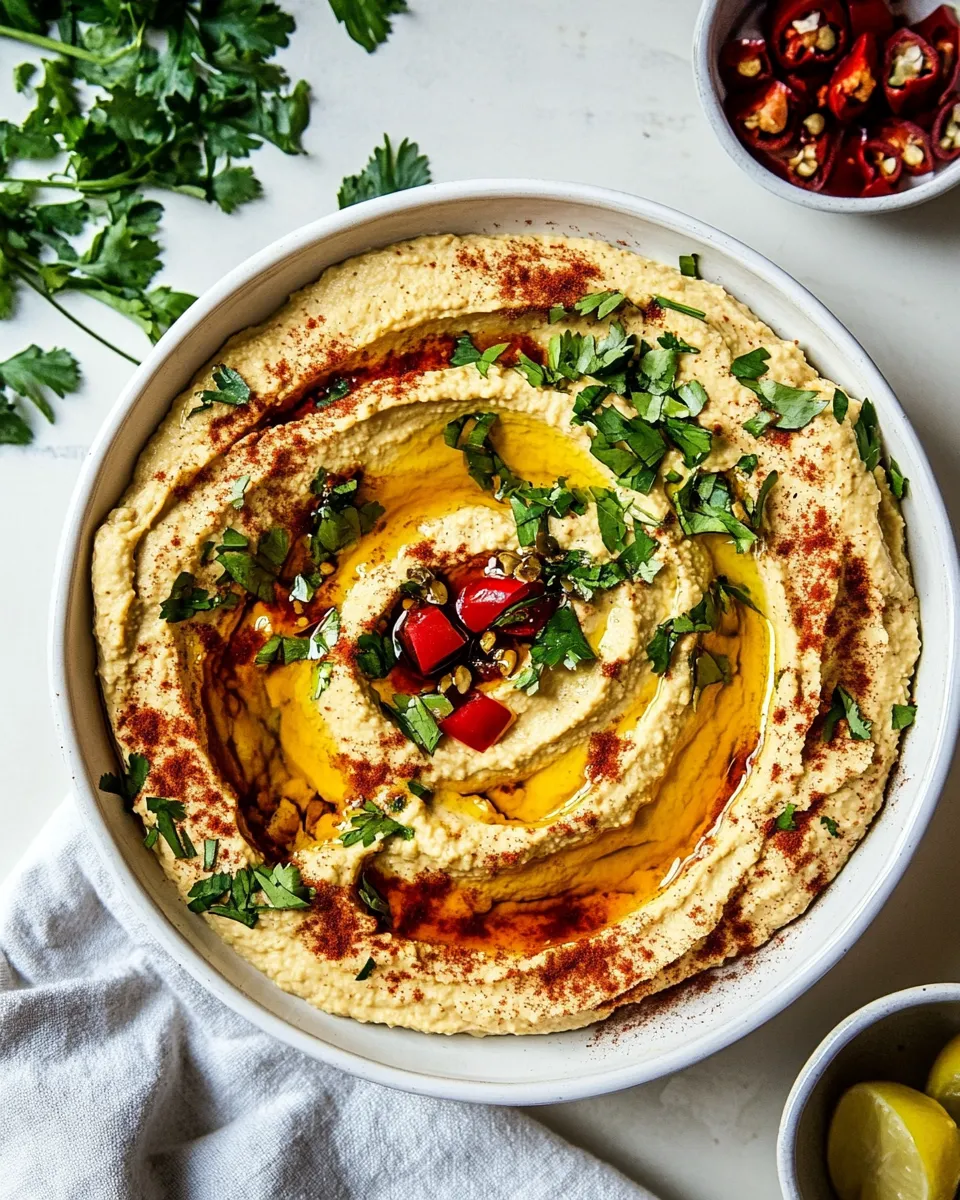
Hummus without Tahini
Equipment
- Food Processor
- Measuring cups and spoons
- Spatula
- Citrus Juicer or Zester
Ingredients
- 1 can (15-ounce) chickpeas drained and rinsed
- 2 cloves garlic minced
- 1 lemon zested
- 1 lemon juiced
- 1/4 cup cashew butter
- 2 tablespoons water
- 2 tablespoons olive oil plus more for topping
- Kosher salt to taste
- minced fresh parsley for topping
- pomegranate seeds for topping
- toasted pine nuts for topping
Instructions
Making Hummus without Tahini
- Begin by draining and rinsing the chickpeas thoroughly under cold water to remove excess sodium and canning liquid.
- In your food processor, combine the drained chickpeas, minced garlic, lemon zest, lemon juice, and cashew butter. Pulse until they start to break down.
- Add the water and olive oil to the mixture. Blend until smooth, occasionally stopping to scrape down the sides with a spatula.
- Taste your hummus and add kosher salt to your liking. Adjust consistency with more water or olive oil if desired.
- Transfer hummus to a serving bowl. Drizzle with additional olive oil and top with minced fresh parsley, pomegranate seeds, and toasted pine nuts.
Notes
- Refrigerate hummus in an airtight container for up to one week or freeze for up to three months.
- Use roasted red peppers, fresh herbs, or spices like cumin for flavorful variations.
- Ensure to rinse chickpeas well to avoid gritty texture and overly salty flavor.