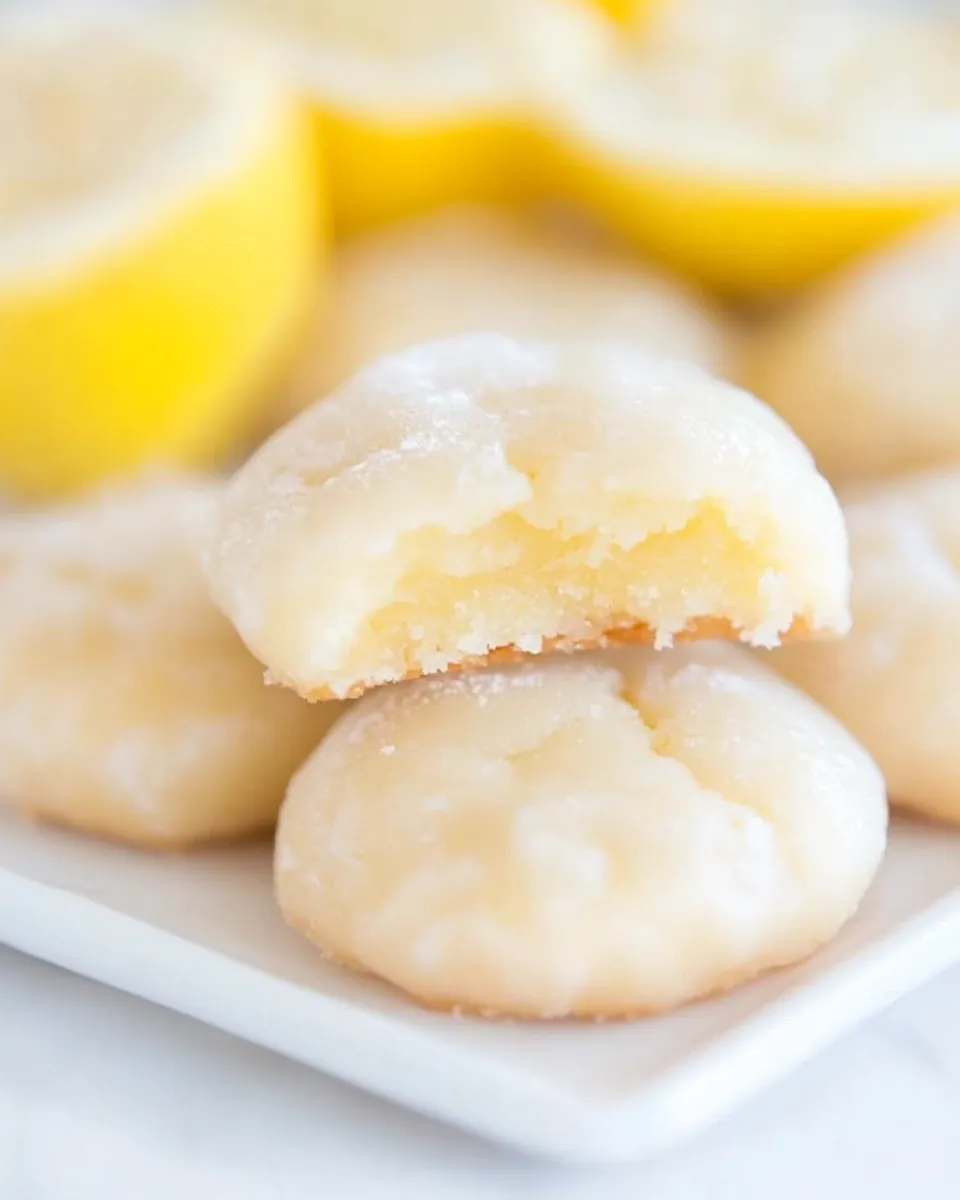
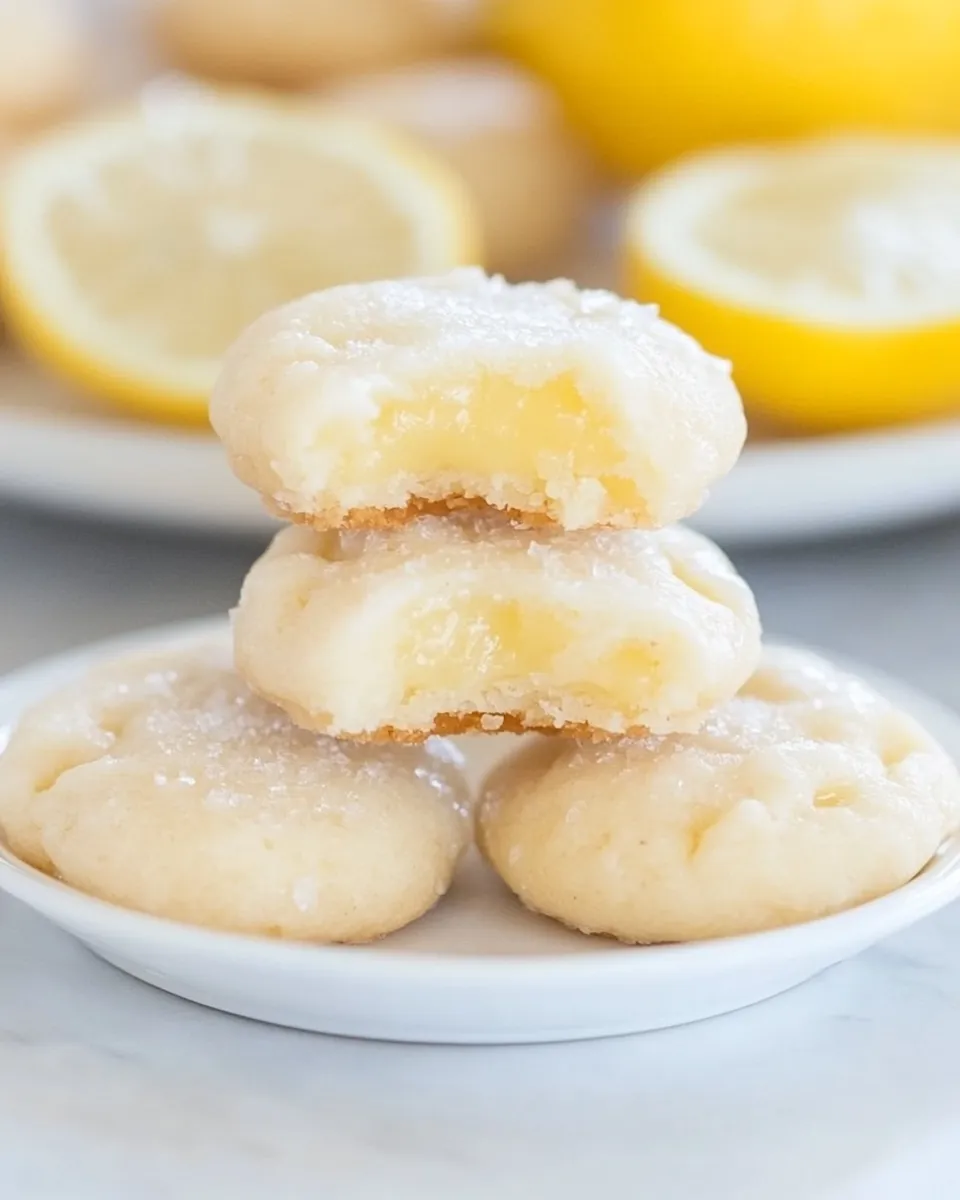
These Lemon Meltaway Cookies are one of those simple bakes that look delicate but deliver a big, clean lemon note. They’re buttery, tender, and finished with a bright, glossy lemon glaze that balances sweetness without overwhelming the shortbread-like texture. I turn to this recipe when I want something pretty for guests that doesn’t require fussy technique.
The dough comes together quickly — a few minutes of creaming, a bit of folding, then a short bake. The cookies hold their pale color and soft centers, which is exactly the point: they should barely color and practically dissolve on your tongue. The glaze sets to a thin shell that gives a slight snap before the cookie melts.
I’ll walk you through the exact ingredient notes, the step-by-step directions, and practical troubleshooting based on tests I ran in my kitchen. There are a few simple swaps and storage tricks that keep these cookies fresh for gifting or for keeping by the coffee station.
Ingredient List
- 1 cup butter, softened — provides richness and the tender, melt-in-your-mouth texture; soften to easily cream with sugar.
- ¾ cups sugar — sweetens and helps create a light, airy creamed base when beaten with butter.
- 1 egg, large — binds the dough and adds a little lift and structure.
- zest of 1 lemon — concentrated lemon oils give the flavor lift; zest finely to distribute evenly.
- 2 cups flour, all purpose — the main structure for the cookie; measure by spooning into the cup and leveling for accuracy.
- ½ tsp baking powder — a touch of leavening so the cookies set with a slightly tender crumb rather than dense.
- ½ tsp salt — balances sweetness and highlights the butter and lemon.
- 1½ cups powdered sugar — for the glaze; sift if lumpy so the glaze is smooth.
- 2 tbsp lemon juice — fresh juice brightens the glaze; adjust slightly for desired consistency.
- 1 tbsp heavy cream, or milk — thins the glaze and adds a touch of richness; heavy cream yields a silkier finish.
- ⅛ tsp salt — a pinch in the glaze sharpens the lemon and prevents it from tasting flat.
Directions: Lemon Meltaway Cookies
- Preheat oven to 375°F (190°C). Line one or more baking sheets with parchment paper and position an oven rack in the center.
- In a large bowl, cream 1 cup softened butter and 3/4 cup sugar until light and fluffy (about 2–3 minutes with a mixer or longer by hand).
- Add 1 large egg and the zest of 1 lemon; mix until fully incorporated.
- In a separate bowl, whisk together 2 cups all-purpose flour, 1/2 tsp baking powder, and 1/2 tsp salt.
- Add the flour mixture to the butter mixture in two or three additions, mixing after each addition until just combined and no streaks of flour remain. Do not overmix.
- Use a small cookie scoop or a tablespoon to portion the dough. Roll each portion into a ball, slightly flatten with your palm, and place on the prepared baking sheet about 1 inch apart.
- Bake at 375°F for 8–9 minutes, or until the cookie centers are just set and the cookies remain light in color.
- Remove the baking sheet from the oven and let the cookies rest on the sheet for 2 minutes, then transfer them to a cooling rack to cool completely.
- While the cookies cool, make the glaze: whisk together 1 1/2 cups powdered sugar, 2 tbsp lemon juice, 1 tbsp heavy cream (or milk), and 1/8 tsp salt until smooth.
- When the cookies are fully cool, turn each cookie upside down and dip the top into the glaze. Lift the cookie, return it to the cooling rack or a parchment-lined sheet with the glazed side up, and allow the glaze to set before serving.
What Sets This Recipe Apart
These cookies strike a balance most lemon cookies miss: flavor without heaviness. The dough is rich from the butter but intentionally pale and tender. That shortbread-like crumb is what gives them the “meltaway” quality—soft in the center and delicate against the teeth.
The glaze is not a decorative afterthought. It’s lemon-forward and thin so it doesn’t overwhelm texture. Because you dip cooled cookies upside down, every cookie gets a uniform top glaze that sets with a faint sheen rather than a sugary shell. The overall effect is refined and very giftable.
Quick Replacement Ideas
- Butter — swap for unsalted butter if preferred; if using salted, omit or reduce the ½ tsp salt in the dough and taste the glaze carefully.
- Lemon zest and juice — if you lack fresh lemons, use bottled lemon juice for the glaze and a ¼–½ tsp lemon extract in the dough very sparingly to preserve authenticity.
- Heavy cream — milk works fine in the glaze; heavy cream makes a slightly richer, silkier finish.
- All-purpose flour — for a slightly more tender cookie, try replacing up to ¼ cup flour with cake flour, but keep total dry volume the same.
- Powdered sugar in glaze — if it’s clumpy, sift before measuring for a smooth dip.
Kitchen Gear Checklist

- Stand mixer or hand mixer — for efficient creaming of butter and sugar (makes texture consistent).
- Mixing bowls — at least two: one for wet, one for dry ingredients.
- Baking sheets — non-warping, rimmed sheets give even baking.
- Parchment paper — prevents sticking and makes cleanup easy.
- Cookie scoop (small) or tablespoon — for uniform cookies so they bake evenly.
- Cooling rack — essential so the glaze sets properly and cookies cool without steaming underneath.
- Whisk and small bowl — to mix the glaze smooth and lump-free.
Troubles You Can Avoid
Cookies spreading too much
- Don’t over-soften the butter. If the butter is greasy or warm, the cookies will spread. Chill the dough briefly (10–15 minutes) before scooping if your kitchen is warm.
- Measure flour correctly. Too little flour yields a loose dough that spreads; spoon and level your cups or weigh if possible.
Cookies too dense or dry
- Do not overmix after adding the flour. Mix until just combined. Overworking develops gluten and makes cookies tough.
- Bake until centers are just set. They continue to firm as they cool; overbaking dries them out.
Glaze problems
- Glaze too thin — add a bit more powdered sugar, 1 tbsp at a time.
- Glaze too thick — add a drop or two more lemon juice or cream; whisk until smooth. Do not add too much liquid or it won’t set.
In-Season Flavor Ideas
When lemons are at their peak, keep the glaze simple to let that brightness shine. In late spring and early summer, add a sprinkle of finely chopped fresh herbs (like thyme or basil) very sparingly to the glaze for an elegant twist. In autumn, a pinch of ground ginger in the dough pairs well with the citrus.
For winter holidays, brush the cooled glazed cookies with a thin striping of melted white chocolate for contrast, or press a tiny piece of candied lemon peel into the glaze before it sets for visual interest.
Notes from the Test Kitchen
Timing and temperature
I tested batches at 8 and 9 minutes. At 8 minutes the centers were slightly soft and the edge set — that’s my preferred timing for maximum tenderness. If your oven runs cool, the cookies may need the full 9 minutes but watch color closely. The goal is to keep them light.
Glaze technique
Dip upside down while cookies are fully cool. If they’re even a touch warm the glaze will run and look uneven. After dipping, let excess glaze drip briefly before setting on the rack so you don’t get puddles underneath.
Batch size and spacing
I bake dozen-sized batches on a single sheet. Leave about 1 inch between cookies as the recipe notes. They bake into small, neat rounds — close spacing will yield joined cookies, which is sometimes fine but not the look you want for delicate sandwiches or gifts.
Storage Pro Tips
- Room temperature — store in an airtight container layered with parchment for up to 3 days. The glaze will keep the tops slightly firmer while centers stay tender.
- Refrigeration — only if extremely warm where you live. Chill can make the butter firm and the texture denser; allow cookies to come to room temperature before serving.
- Freezing — freeze baked, unglazed cookies in a single layer on a sheet until firm, then transfer to a sealed freezer bag for up to 3 months. Thaw fully and glaze just before serving for the freshest finish.
- Glaze later — you can make the glaze and refrigerate in a sealed container for 2–3 days. Whisk before using; if it thickened, add a few drops of lemon juice or cream to loosen.
Quick Q&A
- Can I make the dough ahead? Yes. Wrap the formed dough balls and refrigerate up to 24 hours or freeze for longer. Bake from chilled, adding a minute or two if frozen.
- Can I skip the egg? The egg contributes structure and a bit of lift. For an egg-free version you’d need to re-balance fat and possibly add a binder; I don’t recommend skipping it without a tested egg-free formula.
- Do these cookies need decorating? No. The glaze gives them a finished look. If you want extra flair, zest a little lemon over the glaze while it’s wet or add a sprinkle of finely grated lemon peel.
Hungry for More?
If you liked these Lemon Meltaway Cookies, try my other citrus-forward treats next: lemon bars with a shortbread base or orange-scented sugar cookies. Same bright citrus idea, different textures — good for when you want a plate variety.
And if you plan to gift them, package cooled cookies in layers separated by parchment, tie with a simple ribbon, and include a label that they’re best eaten within three days or frozen after baking for longer shelf life.
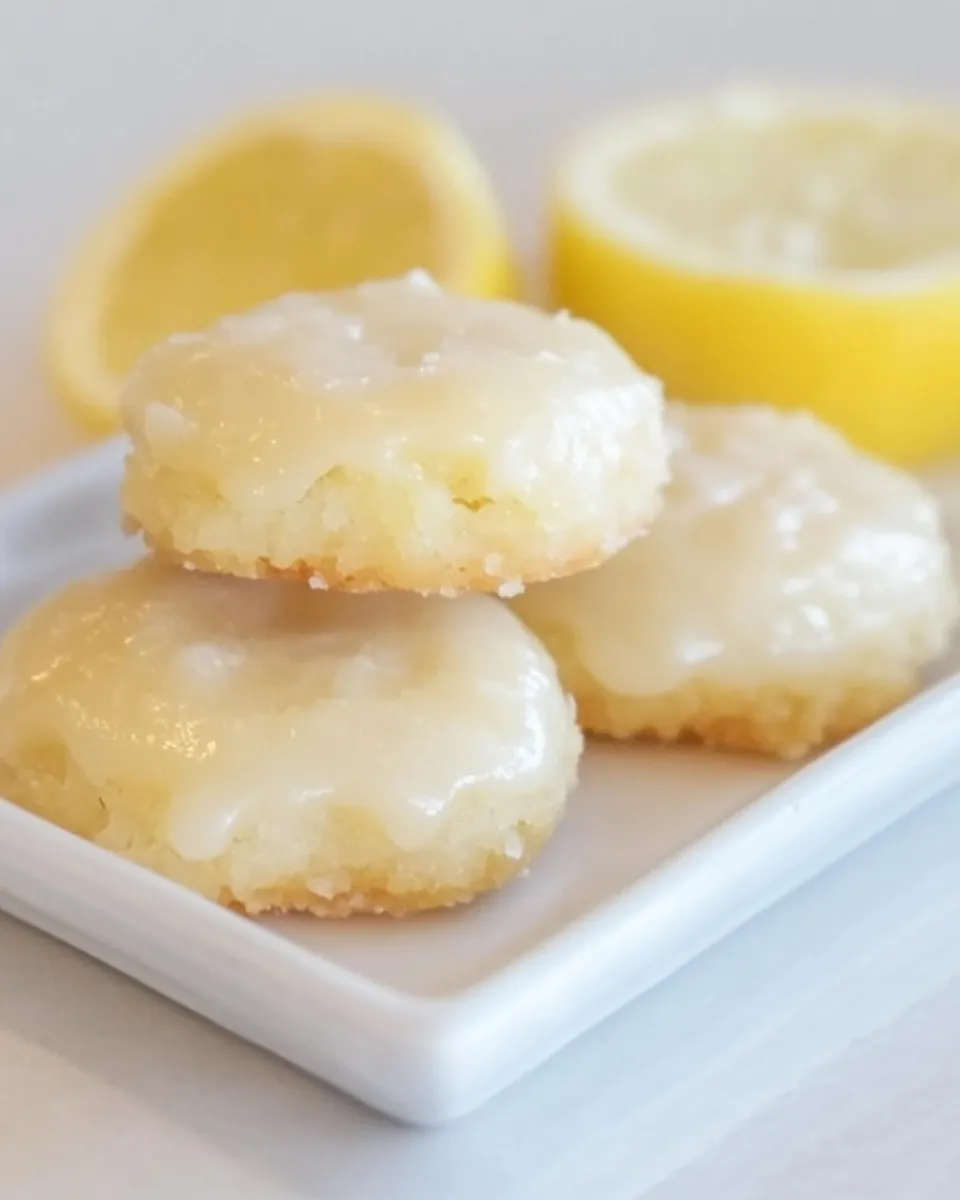
Lemon Meltaway Cookies
Equipment
- Baking Sheet
- Parchment Paper
- Mixing Bowl
- Mixer
- Whisk
- Cooling rack
Ingredients
Ingredients
- 1 cupbutter softened
- 3/4 cupsugar
- 1 egg large
- 1 lemon , zest of
- 2 cupsflour all purpose
- 1/2 tspbaking powder
- 1/2 tspsalt
- 1 1/2 cupspowdered sugar
- 2 tbsplemon juice
- 1 tbspheavy cream or milk
- 1/8 tspsalt
Instructions
Instructions
- Preheat oven to 375°F (190°C). Line one or more baking sheets with parchment paper and position an oven rack in the center.
- In a large bowl, cream 1 cup softened butter and 3/4 cup sugar until light and fluffy (about 2–3 minutes with a mixer or longer by hand).
- Add 1 large egg and the zest of 1 lemon; mix until fully incorporated.
- In a separate bowl, whisk together 2 cups all-purpose flour, 1/2 tsp baking powder, and 1/2 tsp salt.
- Add the flour mixture to the butter mixture in two or three additions, mixing after each addition until just combined and no streaks of flour remain. Do not overmix.
- Use a small cookie scoop or a tablespoon to portion the dough. Roll each portion into a ball, slightly flatten with your palm, and place on the prepared baking sheet about 1 inch apart.
- Bake at 375°F for 8–9 minutes, or until the cookie centers are just set and the cookies remain light in color.
- Remove the baking sheet from the oven and let the cookies rest on the sheet for 2 minutes, then transfer them to a cooling rack to cool completely.
- While the cookies cool, make the glaze: whisk together 1 1/2 cups powdered sugar, 2 tbsp lemon juice, 1 tbsp heavy cream (or milk), and 1/8 tsp salt until smooth.
- When the cookies are fully cool, turn each cookie upside down and dip the top into the glaze. Lift the cookie, return it to the cooling rack or a parchment-lined sheet with the glazed side up, and allow the glaze to set before serving.
Notes
These cookies can be stored at room temperature or in the refrigerator for up to 3-5 days after baking.