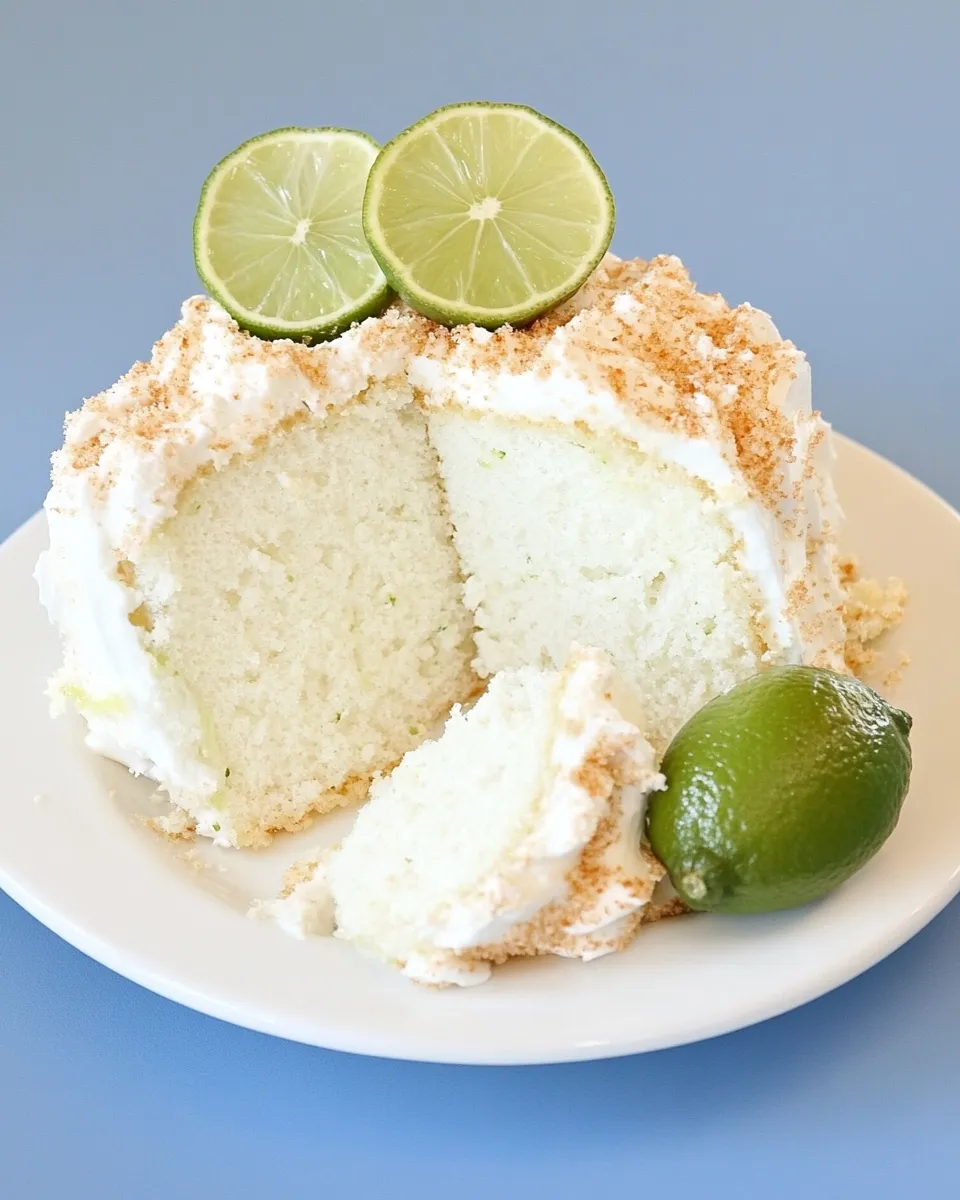
I love a recipe that looks elegant but is essentially made from air and patience. This Lime Angel Food Cake is light, bright, and impossibly tender — the kind of dessert that finishes a meal without weighing anyone down. The lime zest and juice wake up the egg-white base, giving it fresh citrus notes that feel perfect any time of year.
The method is simple but strict: sift, whip, fold, bake, and cool inverted. Follow those steps and you’ll have a cloudlike cake with a pale golden top and a fine crumb. I’ll walk you through the exact ingredients and the exact steps so there’s no guesswork.
Below you’ll find the ingredient list with short notes, the step-by-step instructions as written, troubleshooting tips, tool recommendations, and a few practical swaps. Treat this as your go-to blueprint for successfully making Lime Angel Food Cake every time.
Gather These Ingredients
- 1 1/2 cups powdered sugar, sifted — Adds sweetness and helps stabilize the egg whites; sifting removes lumps for a smooth batter.
- 1 cup unbleached all-purpose flour — Provides the structure for the cake; it’s sifted into the batter in stages to avoid deflating the whites.
- 1 1/2 cups egg whites at room temperature (10–12 egg whites) — The primary lift mechanism; room-temperature whites whip to a higher volume.
- 4 teaspoons lime zest — Concentrated citrus flavor; zest the limes before juicing them.
- 4 1/2 teaspoons fresh lime juice — Adds brightness and a touch of acid to balance the sweetness.
Mastering Lime Angel Food Cake: How-To
- Preheat the oven to 350°F. Place an oven rack in the lower-middle position. Have a 10-inch angel food (tube) pan ready — do not grease or spray it.
- Sift the 1 cup unbleached all-purpose flour into a bowl and set aside.
- Sift the 1 1/2 cups powdered sugar and keep it nearby for adding.
- In a large mixing bowl, combine the 1 1/2 cups egg whites (see ingredient list: 10–12 egg whites), the 4 teaspoons lime zest, and the 4 1/2 teaspoons fresh lime juice. Using the whisk attachment on a stand mixer or an electric hand mixer, beat on medium speed until the mixture is foamy.
- With the mixer running, gradually add the sifted powdered sugar a little at a time (about 1–2 tablespoons per addition) until all the sugar is incorporated. Continue beating until the egg whites are glossy and hold stiff peaks (this can take about 8–12 minutes).
- Place the sifted flour into a fine-mesh sieve or sifter. Add the flour to the whipped egg whites in three equal additions: sift the first third over the whites, then gently fold it in with a rubber spatula using a low, under-and-over motion. Repeat with the second and third additions, folding just until each addition is incorporated. Stop as soon as there are no visible dry streaks; do not deflate the batter.
- Gently transfer the batter into the ungreased 10-inch angel food pan, spreading evenly. Lightly tap the pan on the counter a few times to settle the batter and remove any large air pockets. Do not spray or grease the pan.
- Bake at 350°F for about 40 minutes, or until the top is light golden brown and the cake springs back when lightly touched.
- Immediately after removing the cake from the oven, invert the pan and set it upside down on a bottle, the pan’s feet, or a cooling rack so the cake is suspended while cooling. Leave the cake inverted and cool completely in the pan.
- Once completely cool, run a thin spatula or knife around the center tube and outer edge if needed to loosen, then remove the cake from the pan, slice, and serve.
What Makes This Recipe Special
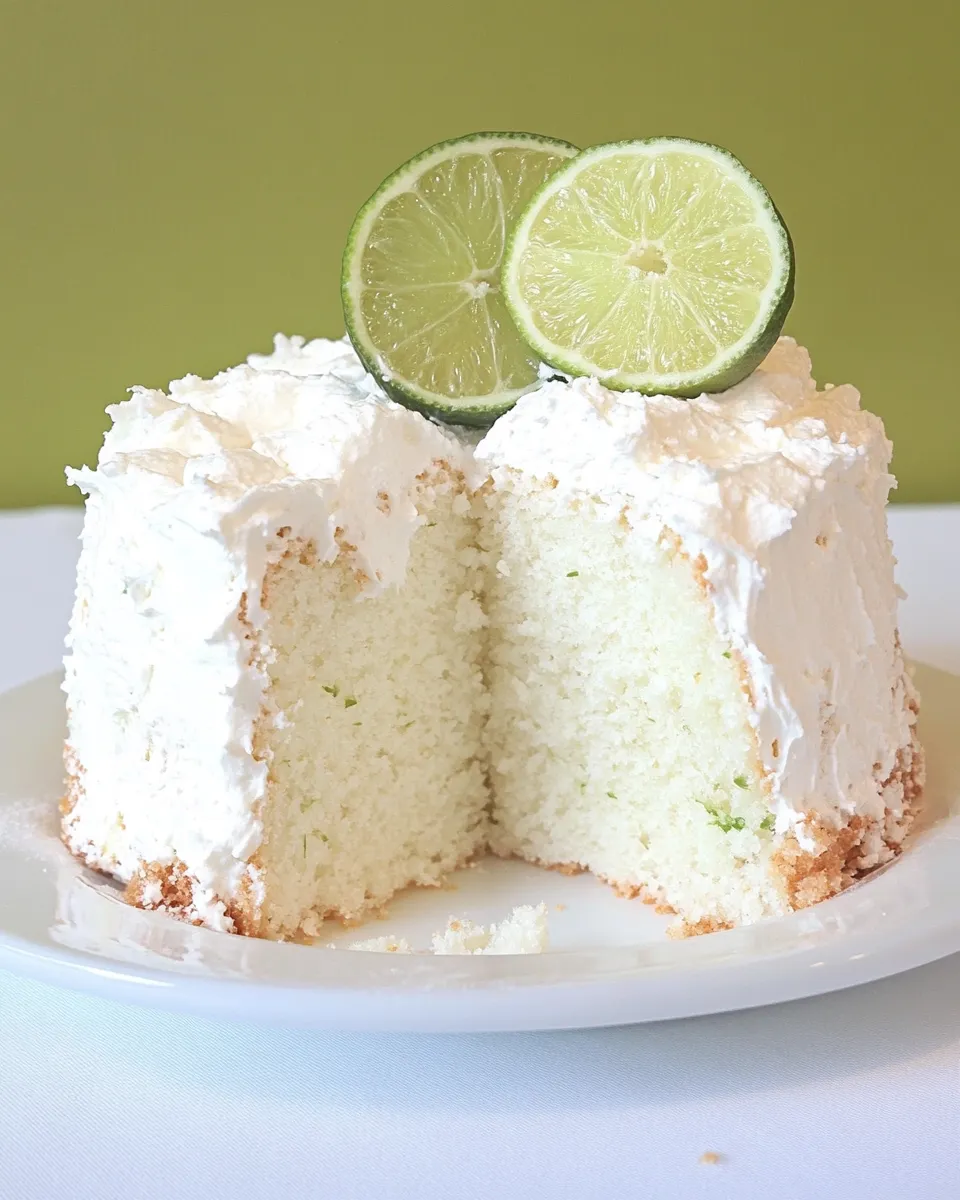
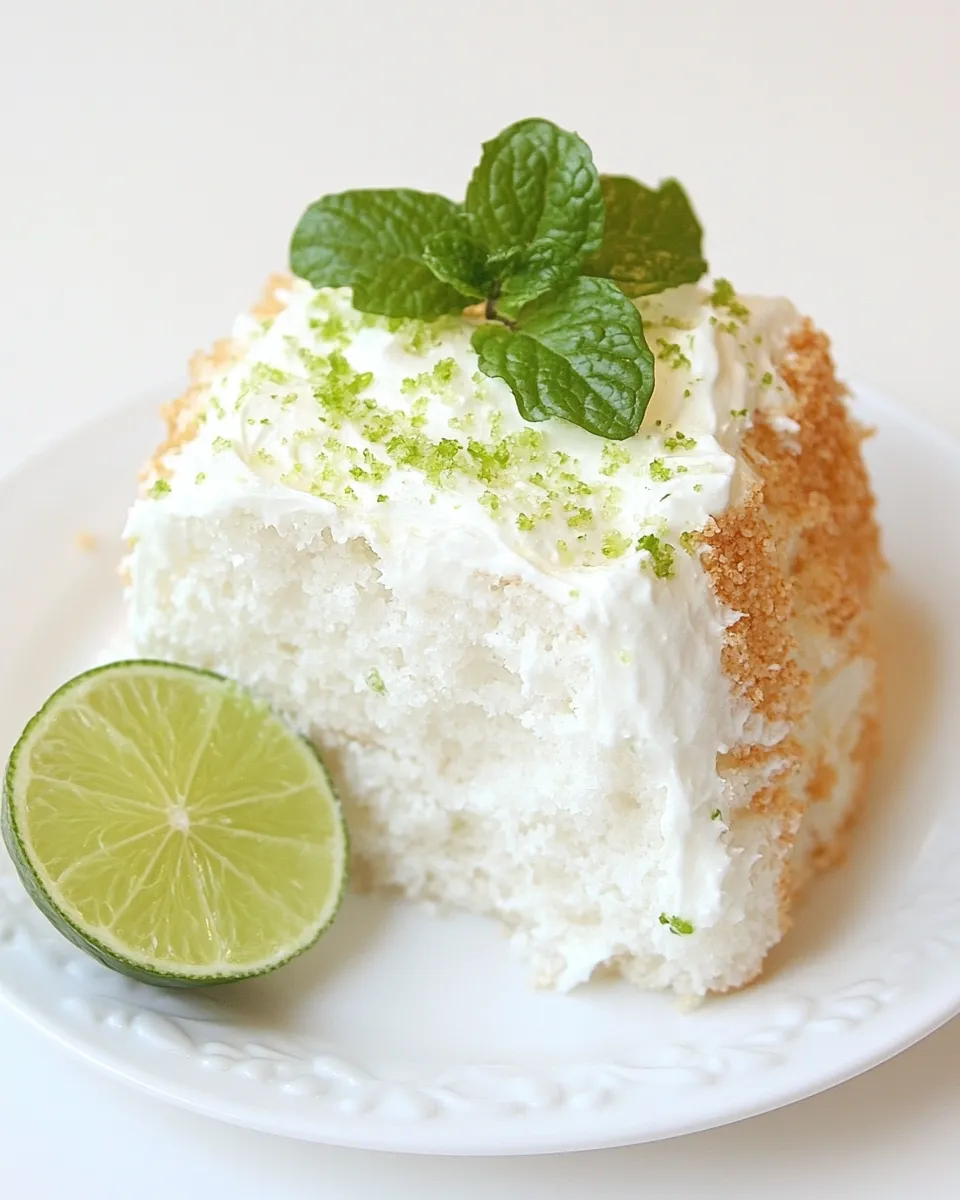
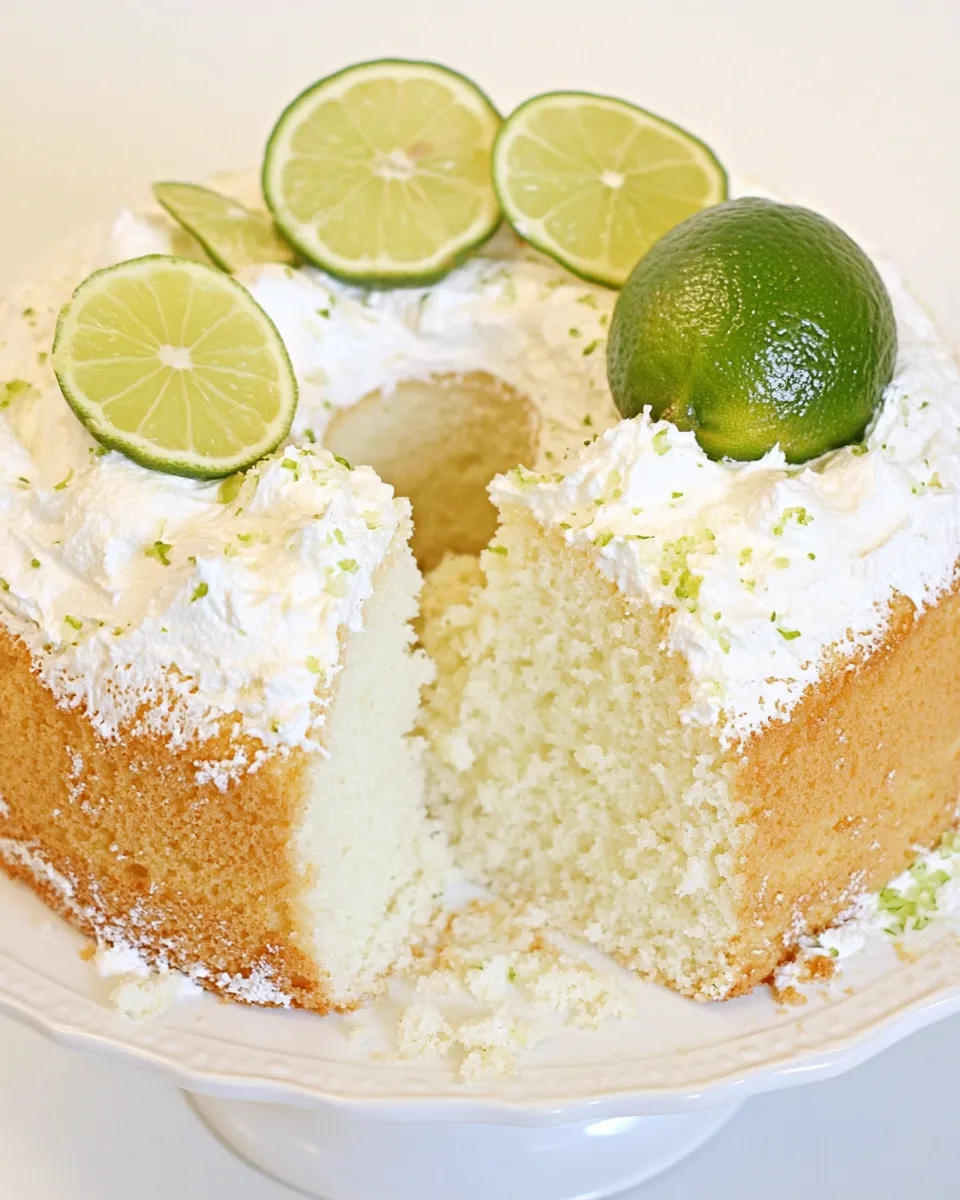
This cake relies on aerated egg whites rather than butter or oil, which creates that signature feather-light texture. Lime does two jobs here: its zest offers concentrated aromatic oils, and the fresh juice lends a subtle tang that balances the powdered sugar. The procedure — especially not greasing the pan and cooling inverted — preserves volume and gives the cake its fine crumb and tall profile.
Because the base is mostly egg whites and sugar, it has a clean, delicate flavor that pairs well with a simple dusting of extra powdered sugar, a lime-scented glaze, or a bowl of fresh berries. It’s elegant without being fussy.
Easy Ingredient Swaps
If you’re out of lime or want a different citrus note, swap lemon zest and lemon juice in the same proportions. Orange will work too, but use slightly less juice as it’s milder. You can also replace up to half of the powdered sugar with superfine granulated sugar if you prefer; just ensure it’s fully incorporated into the whites during whipping.
For flour, unbleached all-purpose is the preferred choice for structure. If you must, you can use cake flour, but reduce the quantity by about 2 tablespoons and handle the batter even more gently — cake flour produces a softer crumb and can collapse more easily if overworked.
Recommended Tools
Essentials
- 10-inch angel food (tube) pan — The recipe is written for this pan size; do not grease it.
- Stand mixer or electric hand mixer with whisk attachment — Needed to whisk the egg whites to stiff peaks reliably.
- Fine-mesh sieve or sifter — For sifting flour and powdered sugar directly over the whites to avoid lumps.
- Rubber spatula — Gentle folding is key to preserving air in the batter.
Helpful Extras
- Citrus zester or microplane — For bright lime zest without the bitter pith.
- Cooling rack or sturdy bottle — For suspending the pan upside down while the cake cools.
Common Errors (and Fixes)
Here are the mistakes I see most often and how to fix or avoid them.
- Underwhipped or overwhipped egg whites — If underwhipped, the cake won’t rise properly; if overwhipped, they’ll become dry and grainy. Aim for glossy, stiff peaks and stop there.
- Adding dry ingredients too aggressively — Sifting the flour and folding in three additions prevents deflation. Use a low under-and-over motion and stop as soon as streaks disappear.
- Greasing the pan — Greasing prevents the batter from “gripping” the pan and rising. Do not grease or spray the angel food pan.
- Not cooling inverted — If you cool the cake upright, it will collapse. Invert the pan immediately after baking and leave it until completely cool.
- Using cold egg whites — They whip better at room temperature; let them sit out briefly before starting.
Dietary Swaps & Alternatives
This recipe is naturally low in fat since it uses egg whites instead of whole eggs or butter. For a lower-sugar option, you can experiment with a powdered sugar substitute formulated for baking, but expect a slightly different texture and a possible reduction in stability. If you need an egg-free version, this technique won’t translate — angel food cake depends entirely on whipped egg whites for structure.
For those avoiding citrus, vanilla extract (about 1 teaspoon) can be added in place of lime for a different but still delicate flavor profile. Remember that changing the acid level can affect how the whites whip, so make substitutions sparingly and test the results.
Cook’s Commentary
I make a lot of cakes, and angel food is deceptively simple. It doesn’t require many ingredients, but it rewards careful technique. I like to zest the limes first, then measure the juice so nothing is wasted. When whipping, I watch the whites closely: there’s a moment when glossy peaks appear and you know the cake will have lift. That moment is everything.
One little tip: if your kitchen is humid, the sugar can clump and the whites will take longer to hold peaks. Patience matters. Have your sifter and spatula within reach before you start whipping so you can move smoothly through the steps.
Save It for Later
Store slices in an airtight container at room temperature for up to two days for the best texture. If you keep it in the refrigerator, cover the cake tightly; it can last up to five days but may dry a bit. For longer storage, freeze slices individually wrapped in plastic and placed in a freezer-safe bag for up to two months. Thaw in the refrigerator or at room temperature before serving.
Lime Angel Food Cake FAQs
Q: Can I use frozen egg whites?
A: Yes. Thaw them completely and bring them to room temperature before whipping for best volume.
Q: Why didn’t my cake rise?
A: Common causes are underwhipped whites, overfolding the batter, or greasing the pan. Check those steps first.
Q: How do I remove the cake from the pan cleanly?
A: Run a thin spatula or knife around the center tube and outer edge, then invert the pan and gently coax the cake out. The ungreased surface will allow the cake to cling as it rises and release when loosened.
Q: Can I make this ahead of time?
A: Yes. Bake and cool completely, then wrap well and store as described above. If you plan to serve with whipped cream or fresh berries, add those just before serving.
Q: How can I tell when the cake is done?
A: The top should be light golden brown and spring back when lightly touched. Baking time is about 40 minutes at 350°F, but ovens vary; rely on the spring-back test as well as color.
See You at the Table
Angel food cake feels celebratory and homey at the same time. Make this Lime Angel Food Cake when you want a dessert that’s light, citrusy, and dependable. Follow the steps closely, treat the whites gently, and you’ll have a cake that slices beautifully and leaves room for seconds.
If you try it, tell me how you served it — a dusting of powdered sugar, a swirl of lime-scented whipped cream, or a mound of raspberries all work beautifully. I’ll be at my counter, ready to bake another.
Lime Angel Food Cake Recipe
Equipment
- 10-inch angel food (tube) pan
- stand mixer or electric hand mixer
- whisk attachment
- Sifter or fine mesh sieve
- Rubber spatula
- Cooling rack
Ingredients
Ingredients
- 1 1/2 cupspowdered sugarsifted
- 1 cupunbleached all purpose flour
- 1 1/2 cupsegg whites at room temperature10-12 egg whites
- 4 teaspoonslime zest
- 4 1/2 teaspoonsfresh lime juice
Instructions
Instructions
- Preheat the oven to 350°F. Place an oven rack in the lower-middle position. Have a 10-inch angel food (tube) pan ready — do not grease or spray it.
- Sift the 1 cup unbleached all-purpose flour into a bowl and set aside.
- Sift the 1 1/2 cups powdered sugar and keep it nearby for adding.
- In a large mixing bowl, combine the 1 1/2 cups egg whites (see ingredient list: 10–12 egg whites), the 4 teaspoons lime zest, and the 4 1/2 teaspoons fresh lime juice. Using the whisk attachment on a stand mixer or an electric hand mixer, beat on medium speed until the mixture is foamy.
- With the mixer running, gradually add the sifted powdered sugar a little at a time (about 1–2 tablespoons per addition) until all the sugar is incorporated. Continue beating until the egg whites are glossy and hold stiff peaks (this can take about 8–12 minutes).
- Place the sifted flour into a fine-mesh sieve or sifter. Add the flour to the whipped egg whites in three equal additions: sift the first third over the whites, then gently fold it in with a rubber spatula using a low, under-and-over motion. Repeat with the second and third additions, folding just until each addition is incorporated. Stop as soon as there are no visible dry streaks; do not deflate the batter.
- Gently transfer the batter into the ungreased 10-inch angel food pan, spreading evenly. Lightly tap the pan on the counter a few times to settle the batter and remove any large air pockets. Do not spray or grease the pan.
- Bake at 350°F for about 40 minutes, or until the top is light golden brown and the cake springs back when lightly touched.
- Immediately after removing the cake from the oven, invert the pan and set it upside down on a bottle, the pan’s feet, or a cooling rack so the cake is suspended while cooling. Leave the cake inverted and cool completely in the pan.
- Once completely cool, run a thin spatula or knife around the center tube and outer edge if needed to loosen, then remove the cake from the pan, slice, and serve.
Notes
Cool the cake inverted in the pan until completely cool before removing.