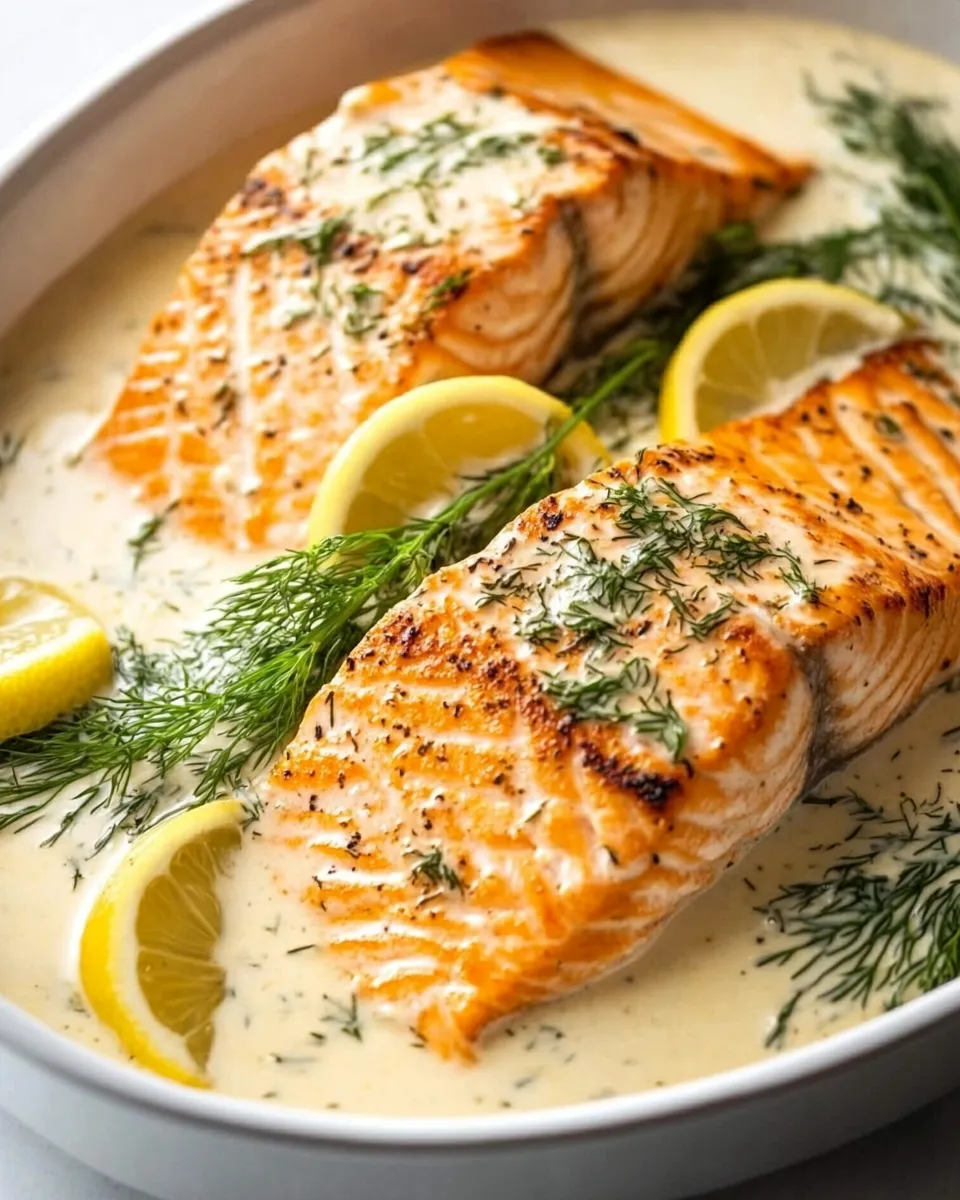
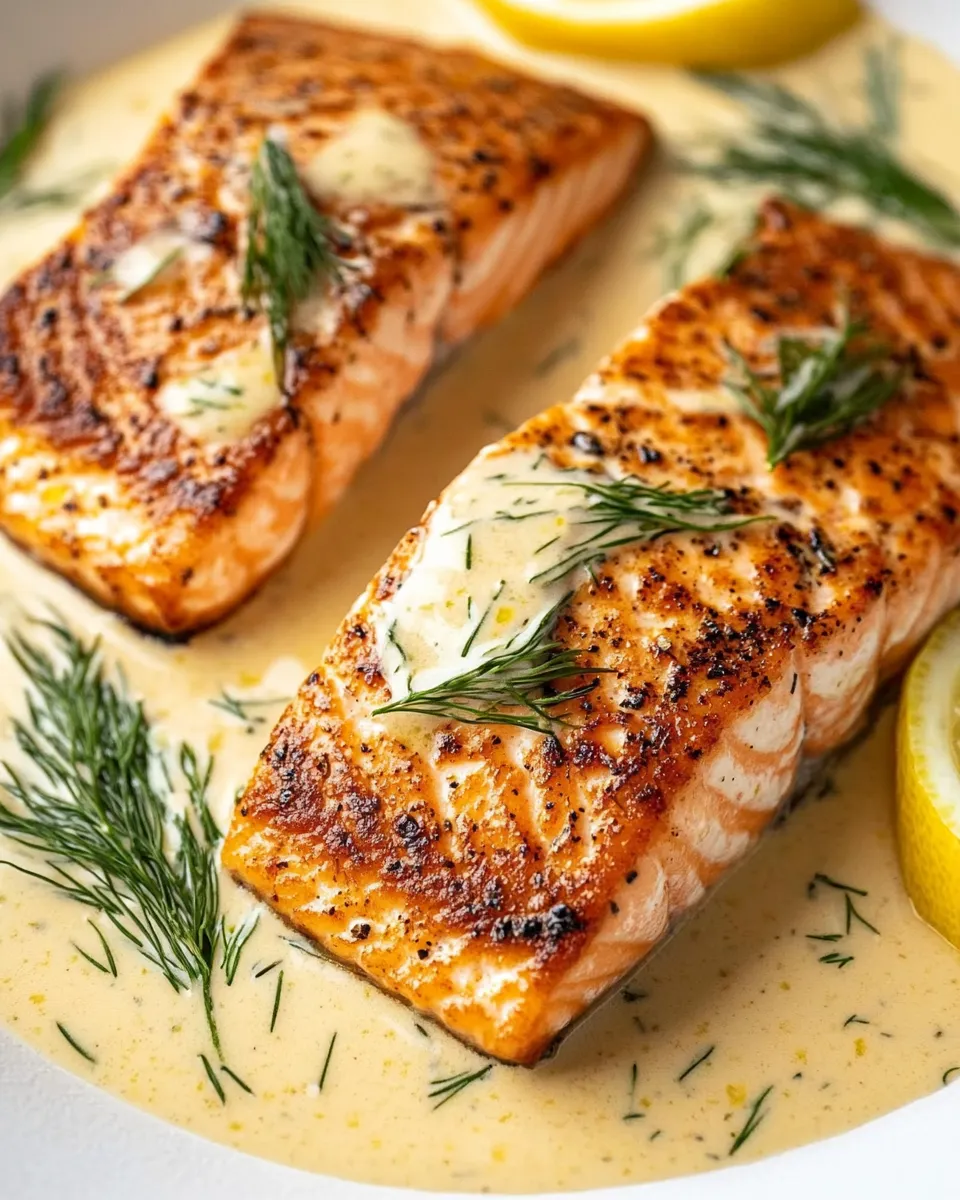
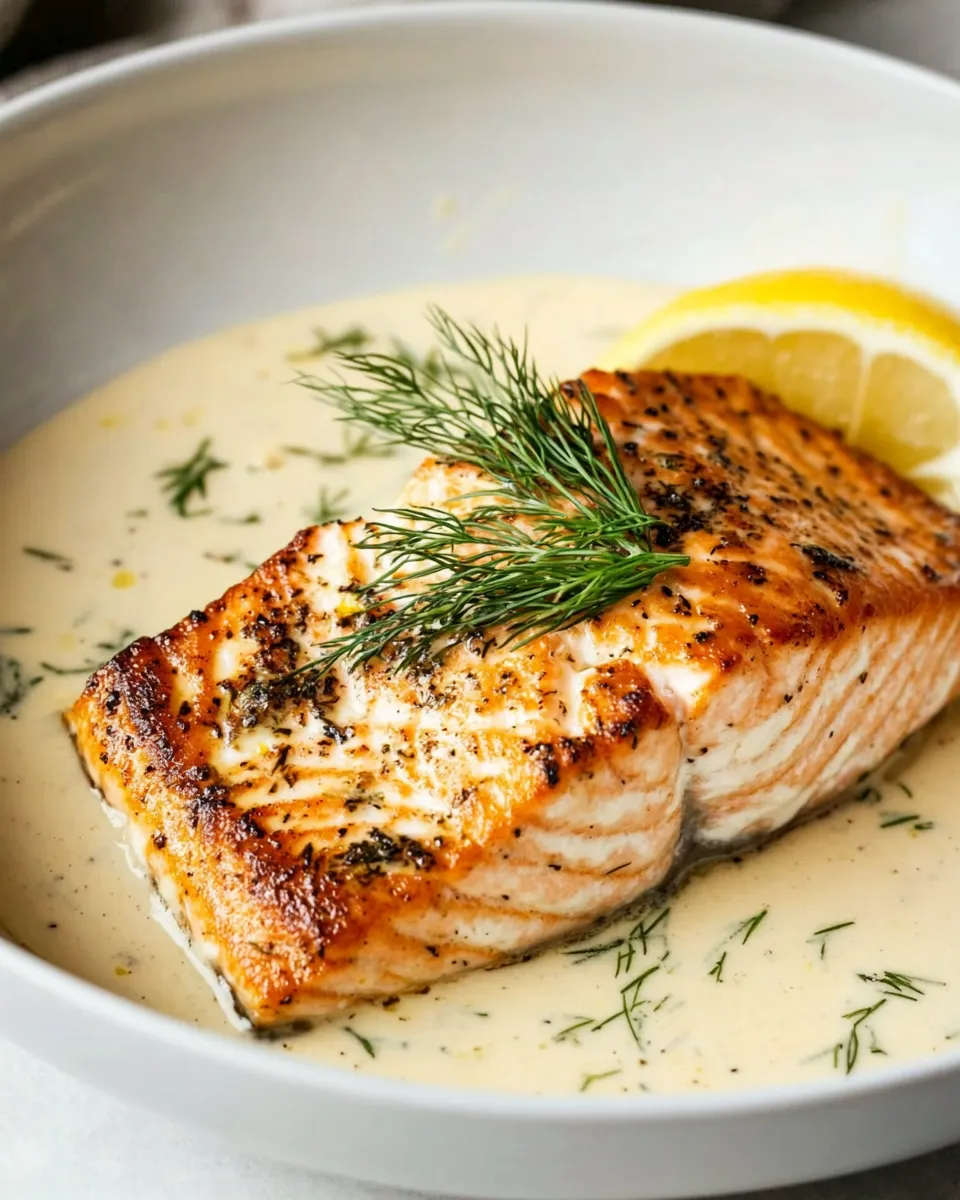
This is a weeknight recipe I reach for when I want something that looks and tastes special without a lot of fuss. Crisp, golden salmon outside, tender and just pink inside, finished with a bright, silky lemon dill sauce — it’s the kind of meal that feels restaurant-worthy but comes together in about 20–30 minutes.
There’s a balance here: simple technique up front (dry the fish, hot pan, don’t fuss), then a short sauce that pulls everything together. The sauce is forgiving — a touch of cornstarch thickens it gently while the lemon and dill keep it fresh. This makes the dish reliable for both busy nights and casual dinner guests.
Ingredient Breakdown
Ingredients
- 1 tablespoon olive oil — for a hot, nonstick sear and flavor; use an oil with a medium-high smoke point.
- salt and pepper to taste — seasons both the fish and the sauce; start light and adjust at the end.
- 4 (6-ounce) salmon fillets — the main ingredient; skin-on or skinless both work but skin-on gives a nicer sear.
- 3 cloves minced garlic — builds savory depth in the sauce; add at low heat so it doesn’t burn.
- 1 cup heavy cream — creates the creamy body of the sauce and carries the lemon flavor.
- ½ cup chicken broth — thins the sauce and adds savory balance; can be swapped for vegetable broth if needed.
- juice of one lemon — brightens and cuts through the richness; add to taste if your lemon is small or large.
- ½ teaspoon salt — for the sauce; combine with the salt on the fish and taste before serving.
- 1 teaspoon cornstarch — a small thickener that avoids over-reducing the cream; mix with water first to prevent lumps.
- 1 tablespoon water — used to dissolve the cornstarch into a slurry.
- 1 tablespoon chopped fresh dill — the finishing herb; adds freshness and the signature dill note.
Cooking (Pan Seared Salmon With Creamy Lemon Dill Sauce): The Process
- Pat the 4 (6-ounce) salmon fillets dry with paper towels and season both sides with salt and pepper to taste.
- Heat 1 tablespoon olive oil in a medium skillet over medium heat until shimmering.
- Add the salmon fillets to the skillet, skin-side down if they have skin, leaving space between fillets. Cook undisturbed about 5 minutes, until the bottom is browned.
- Gently flip the salmon and cook about 5 more minutes, until the exterior is browned and the center is slightly pink. Transfer the salmon to a plate and set aside.
- Reduce the heat to medium-low. Add 3 cloves minced garlic to the skillet and cook, stirring, about 30 seconds to 1 minute, until fragrant.
- Add 1 cup heavy cream, ½ cup chicken broth, the juice of one lemon, ½ teaspoon salt, and 1 tablespoon chopped fresh dill to the skillet. Stir to combine and bring the sauce to a gentle simmer.
- In a small bowl, whisk together 1 teaspoon cornstarch and 1 tablespoon water until smooth. Whisk this mixture into the simmering sauce.
- Simmer the sauce 3–4 minutes, stirring occasionally, until it has thickened.
- Return the salmon to the skillet, spoon sauce over the fillets, and heat through for 1–2 minutes. Serve immediately.
Why It Deserves a Spot
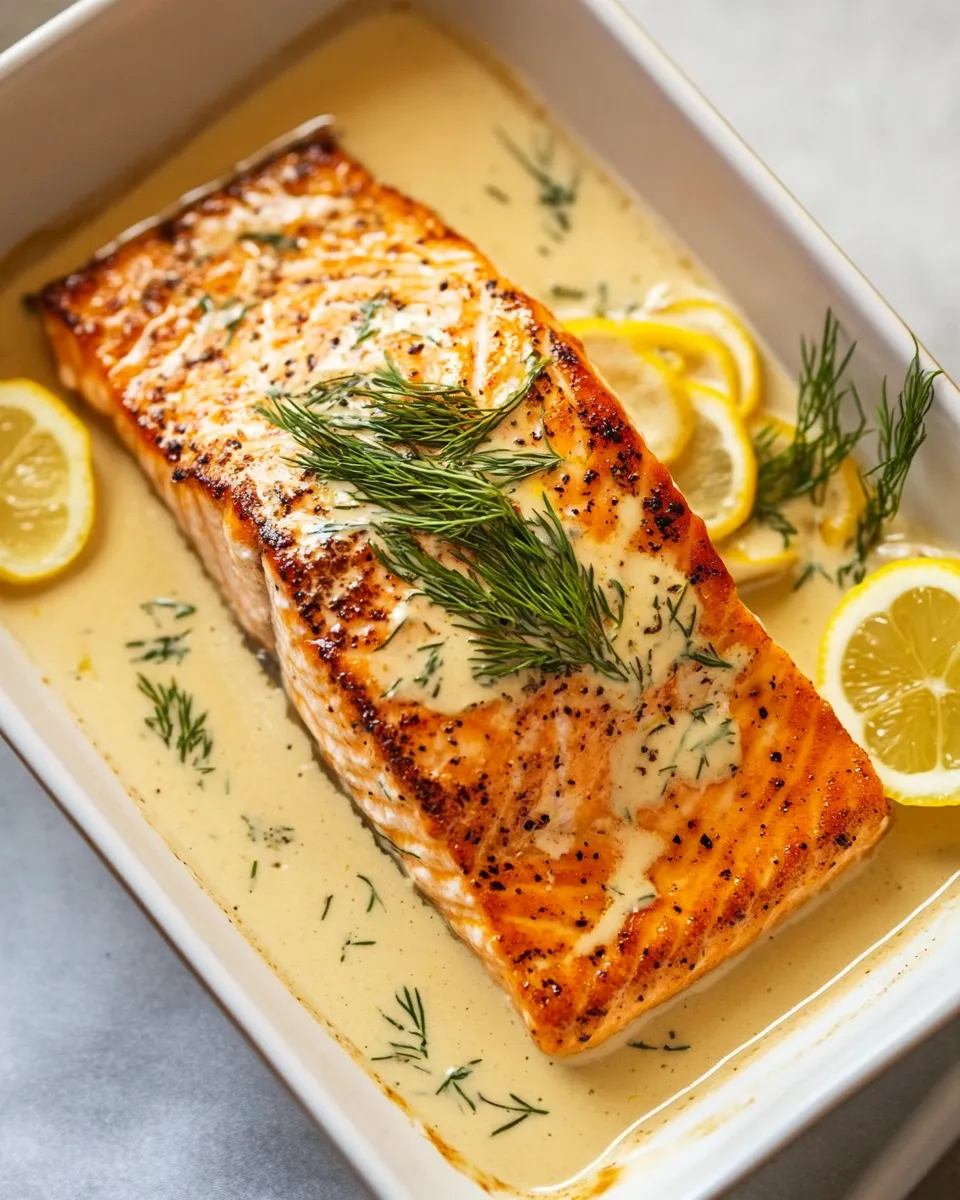
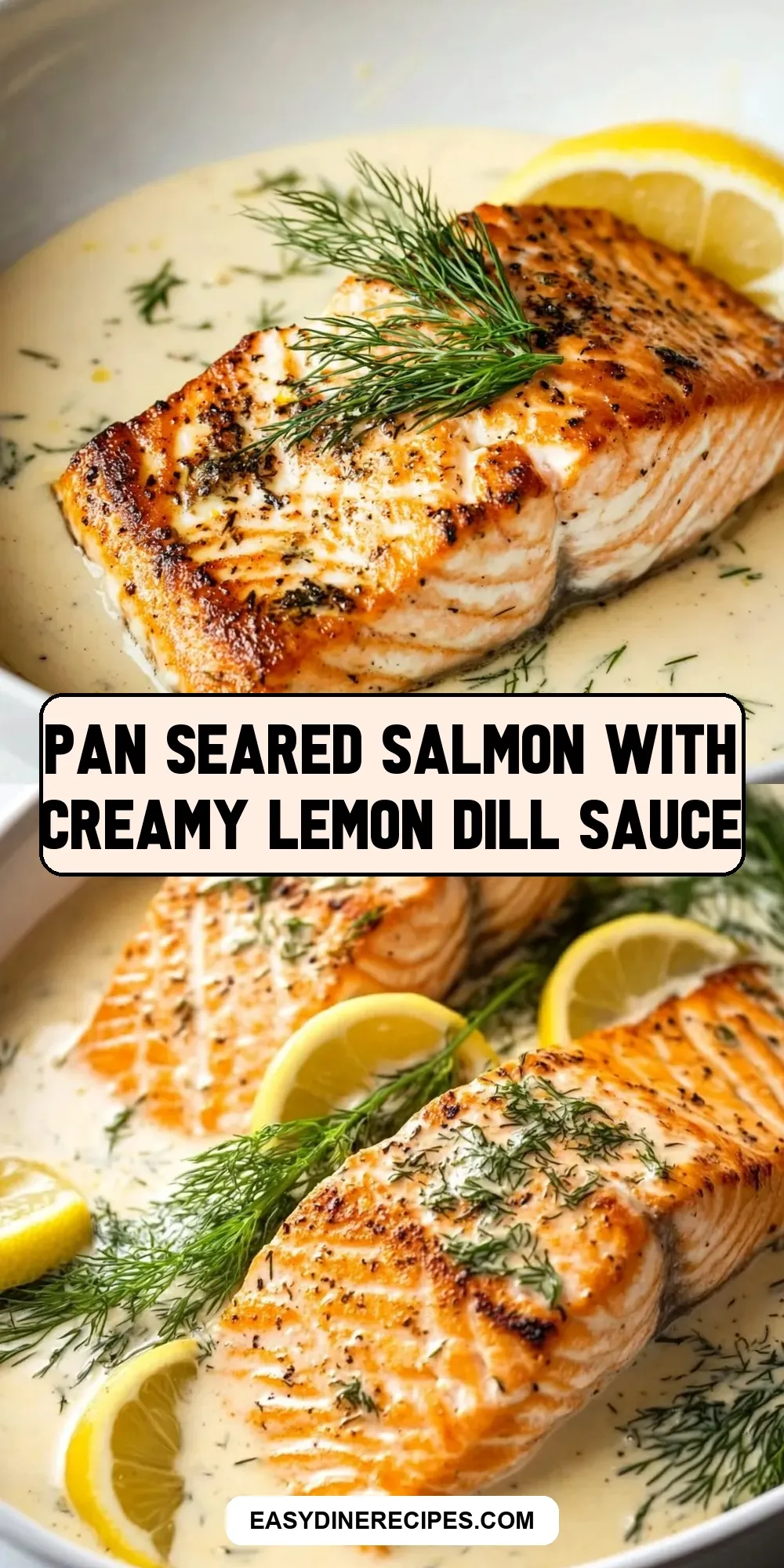
This recipe earns a permanent spot in the rotation because it delivers on three fronts: speed, reliability, and flavor. The pan-sear technique is straightforward and produces a pleasing contrast of texture — a caramelized crust with a silky center. The lemon dill sauce elevates the fish without masking it; it’s bright, creamy, and tied together with garlic and a touch of herb.
It’s versatile too. Serve it over rice, buttered noodles, or a bed of greens. The components are pantry-friendly and the technique teaches a useful skill: how to finish delicate protein in a pan with a fast sauce. For anyone building confidence in the kitchen, this is a rewarding one to master.
Budget & Availability Swaps
Stretching the budget or adapting to what’s available is easy here:
- Salmon — buy frozen fillets and thaw overnight in the fridge; they sear almost as well as fresh. For a less expensive fish, try trout or a firm white fish cooked slightly less time.
- Chicken broth — use low-sodium or dilute a bouillon if that’s what you have; vegetable broth is a fine substitute for a vegetarian option.
- Heavy cream — if you’re looking to cut richness, a mixture of half-and-half and a touch more cornstarch can work (reduce heat and simmer gently). For the lightest option, plain Greek yogurt whisked in off-heat can give creaminess but watch for curdling.
- Fresh dill — if fresh dill isn’t available, dried dill will work; use about one-third the amount and add earlier to allow it to hydrate in the sauce.
Prep & Cook Tools
Setup is part of why this dish is fast. Lay out your tools first:
- Medium skillet (nonstick or well-seasoned cast iron) — big enough to hold fillets without crowding.
- Spatula or fish turner — for flipping the fillets gently.
- Measuring spoons and cups — for the cream, broth, and cornstarch slurry.
- Small mixing bowl and whisk or fork — to combine the cornstarch and water.
- Paper towels and a plate — to pat dry and rest the salmon between searing and saucing.
- Knife and cutting board — for mincing garlic and chopping dill.
Pitfalls & How to Prevent Them
There are a few predictable missteps with pan-seared salmon and a cream sauce. Here’s how to avoid them:
- Fish won’t brown: Don’t overcrowd the pan and make sure the oil is shimmering before adding fillets. Pat the fish very dry — moisture prevents browning.
- Overcooked center: Cook time in the recipe yields a slightly pink center for a 6-ounce fillet. Remove from the pan a touch earlier if your fillets are thinner, and remember they will continue to cook slightly in the sauce.
- Garlic burns: Add garlic after you reduce the heat; it only needs 30–60 seconds to become fragrant. Burnt garlic tastes bitter and will overwhelm the sauce.
- Sauce is lumpy: Always dissolve cornstarch in water first (slurry) and whisk it well into the simmering liquid. If you do get lumps, whisk vigorously or strain quickly through a fine mesh.
- Sauce splits or curdles: Keep heat at medium-low when you add cream and avoid boiling. Gentle simmering keeps the emulsion smooth.
Warm & Cool Weather Spins
Adjust the accompaniments seasonally to keep the dish feeling right for the weather:
- Warm-weather: Serve the salmon over a chilled cucumber-dill salad or a quinoa tabbouleh for freshness. Add a light squeeze of extra lemon and a scattering of fresh herbs.
- Cool-weather: Plate the salmon over mashed potatoes, creamy polenta, or buttered egg noodles so the sauce becomes a comforting gravy. Roast seasonal root vegetables alongside the fish for a hearty plate.
Behind the Recipe
I started making a lemon-dill sauce like this because I wanted something that didn’t require a blender or heavy technique but still felt layered. The cornstarch step is purposeful — it gets you a velvety sauce faster than long reductions and without losing the lemon’s brightness. Fresh dill is the note that turns “good” into “distinct.”
Technique-wise, the two things I emphasize are: (1) dry your salmon well, and (2) don’t rush the sauce. A few extra seconds letting flavors marry on low heat makes the difference between thin and silky.
Storing, Freezing & Reheating
Storage:
- Refrigerate leftover salmon and sauce together in an airtight container for up to 2 days. The texture of cooked salmon softens after refrigeration, so plan to eat within that window for the best quality.
Freezing:
- Cooked salmon and cream-based sauces do not freeze and reheat well together; the cream can separate. If you need to freeze, freeze the salmon alone wrapped tightly for up to 2 months and make a fresh quick sauce when you reheat.
Reheating:
- Reheat gently on the stovetop over low heat. Add a splash of chicken broth or water to the sauce to loosen it, and warm the fillets 1–2 minutes per side until heated through. Avoid high heat or microwave reheating at full power to prevent drying and curdling.
Frequently Asked Questions
Can I use frozen salmon?
Yes. Thaw overnight in the refrigerator, pat dry, and proceed. If you must use partially frozen fillets, increase the cooking time slightly and watch for even searing.
How do I know when salmon is done?
A slight translucence in the center is okay — salmon continues to cook after you remove it from the heat. For a precise check, an internal temperature of 125–130°F (52–54°C) yields medium doneness; 145°F is fully cooked per guidelines but will be firmer.
Can I make the sauce ahead?
You can make the sauce an hour ahead and keep it warm very gently over low heat, whisking occasionally. If it thickens too much, loosen with a little broth.
My sauce is too thin — what now?
Mix another small cornstarch slurry (½ teaspoon cornstarch + 1 teaspoon water) and whisk into the simmering sauce a little at a time until it reaches the desired consistency.
Any garnish suggestions?
A few sprigs of fresh dill, a lemon wedge, or a scattering of chopped chives adds color and a fresh note.
Save & Share
Bookmark this recipe for nights when you want something fast, elegant, and dependable. It scales well — double the sauce for family-style service, or halve it for two. If you make it, leave a note about what you paired with it (potatoes, rice, or salad) — I love hearing how readers make it their own.
If you share the photo, tag it with a note about technique: whether you left the skin on, how you finished the sauce, or which swap you used. Small details help others adapt it quickly and confidently.
Pan Seared Salmon With Creamy Lemon Dill Sauce
Equipment
- Skillet
- Small Bowl
- Paper Towels
Ingredients
Ingredients
- 1 tablespoonolive oil
- salt and pepperto taste
- 4 6-ouncesalmon fillets
- 3 clovesminced garlic
- 1 cupheavy cream
- 1/2 cupchicken broth
- juice of one lemon
- 1/2 teaspoonsalt
- 1 teaspooncornstarch
- 1 tablespoonwater
- 1 tablespoonchopped fresh dill
Instructions
Instructions
- Pat the 4 (6-ounce) salmon fillets dry with paper towels and season both sides with salt and pepper to taste.
- Heat 1 tablespoon olive oil in a medium skillet over medium heat until shimmering.
- Add the salmon fillets to the skillet, skin-side down if they have skin, leaving space between fillets. Cook undisturbed about 5 minutes, until the bottom is browned.
- Gently flip the salmon and cook about 5 more minutes, until the exterior is browned and the center is slightly pink. Transfer the salmon to a plate and set aside.
- Reduce the heat to medium-low. Add 3 cloves minced garlic to the skillet and cook, stirring, about 30 seconds to 1 minute, until fragrant.
- Add 1 cup heavy cream, ½ cup chicken broth, the juice of one lemon, ½ teaspoon salt, and 1 tablespoon chopped fresh dill to the skillet. Stir to combine and bring the sauce to a gentle simmer.
- In a small bowl, whisk together 1 teaspoon cornstarch and 1 tablespoon water until smooth. Whisk this mixture into the simmering sauce.
- Simmer the sauce 3–4 minutes, stirring occasionally, until it has thickened.
- Return the salmon to the skillet, spoon sauce over the fillets, and heat through for 1–2 minutes. Serve immediately.
Notes
Updated April 4, 2025