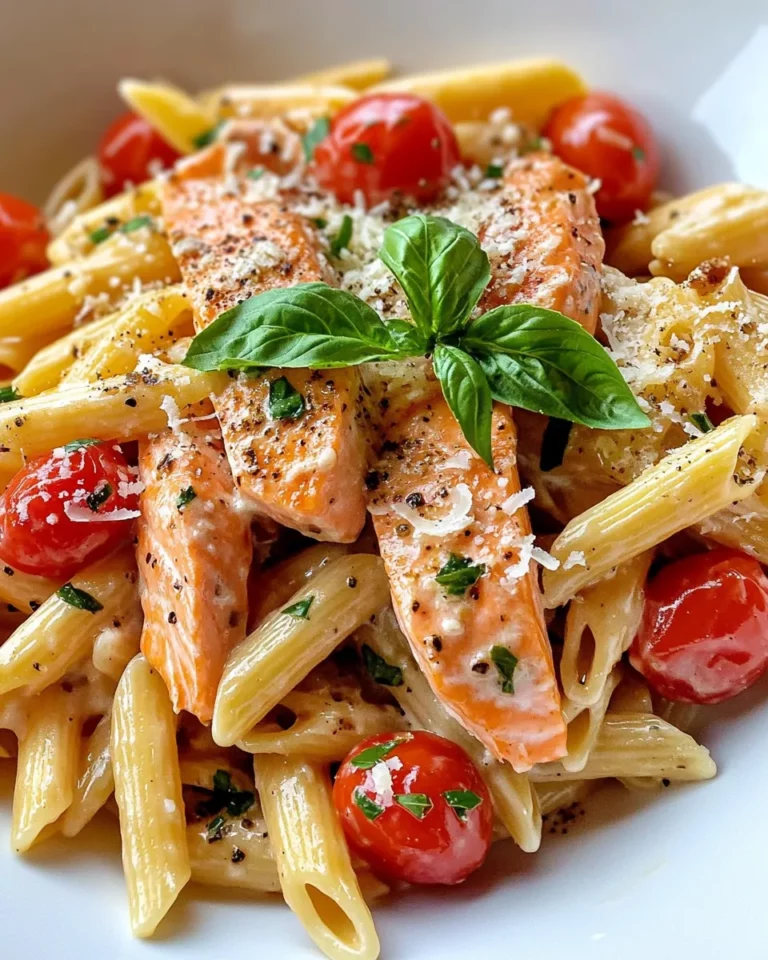
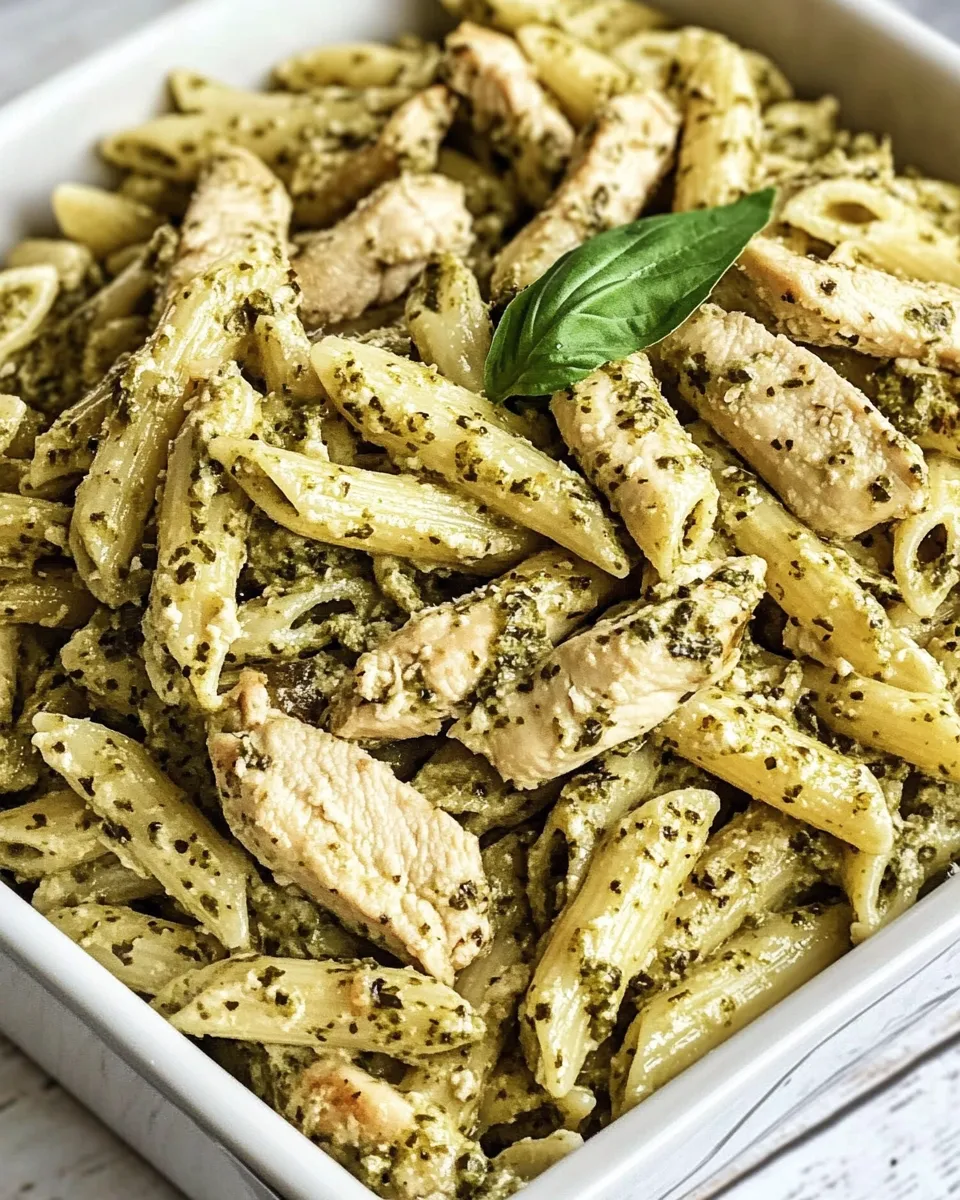
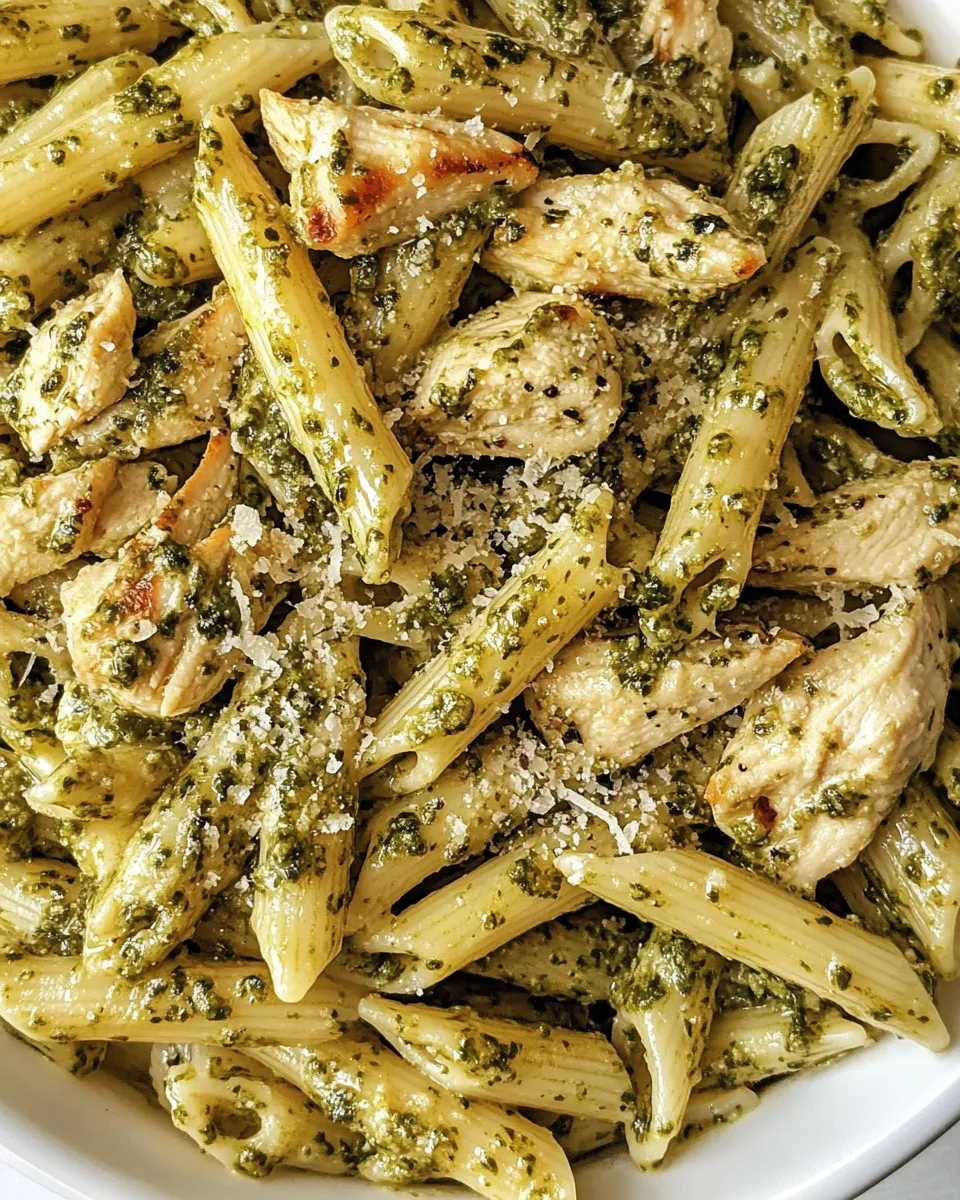
This is the kind of weeknight dinner that feels like a reward. Bright basil pesto, tender pan-seared chicken, and pasta that soaks up every bit of the sauce—simple components that come together fast and taste like effort. I make this when I want dinner on the table in under 30 minutes without cutting corners on flavor.
There’s room to lean on convenience—store-bought pesto works beautifully—while still controlling texture and seasoning. The recipe is forgiving. You can stretch it to feed a crowd or scale it back for two. Little finishing touches, like toasted pine nuts and extra Parmesan, turn it from “quick meal” to “restaurant-level plate.”
Below you’ll find the ingredient list, exact step-by-step instructions, troubleshooting tips, and ideas for swaps and seasonal variations. If you follow the steps, you’ll get consistently good results: chicken that’s golden, pasta that’s al dente, and a glossy pesto sauce that clings to every strand or tube.
What Goes In
- 12 ounces pasta (penne, spaghetti, or your choice) — choose a shape that holds sauce well; tubes and twists work especially nicely.
- salt (for boiling water) — seasons the pasta from the inside; the water should taste like the sea.
- 2 tablespoons olive oil — for searing the chicken and adding flavor to the pan.
- 2 medium chicken breasts (cut into bite-sized pieces) — bite-sized pieces cook quickly and get a nice golden crust.
- salt and black pepper (to taste) — basic seasoning for the chicken and to finish the dish.
- 1 teaspoon Italian seasoning — a simple herb blend that adds depth without overpowering the pesto.
- ¾ cup basil pesto (store-bought or homemade) — the star of the sauce; use high-quality pesto if you’re short on time.
- ¼ cup heavy cream (optional, for creaminess) — smooths and slightly mellows the pesto for a richer sauce.
- 2 cloves garlic (minced) — adds aromatic lift; cook briefly so it doesn’t turn bitter.
- 2 tablespoons Parmesan cheese (grated) — melts into the sauce and boosts umami.
- ¼ teaspoon red pepper flakes (optional, for a kick) — a pinch brightens the flavor and balances the richness.
- 2 tablespoons toasted pine nuts (optional) — add crunch and a nutty contrast; toast briefly in a dry pan.
- fresh basil leaves (for garnish) — gives freshness and a pop of color.
- Parmesan cheese (grated, for serving) — extra for finishing; people appreciate being able to add more at the table.
From Start to Finish: Pesto Chicken Pasta
- Bring a large pot of salted water to a boil. Add 12 ounces pasta and cook according to package instructions until al dente. Before draining, reserve ½ cup of the pasta cooking water, then drain the pasta and set aside.
- While the pasta cooks, heat 2 tablespoons olive oil in a large skillet over medium heat.
- Add the 2 cups bite-sized chicken pieces (from 2 medium chicken breasts) to the skillet. Season with salt, black pepper, and 1 teaspoon Italian seasoning. Cook 5–7 minutes, stirring occasionally, until the chicken is cooked through and golden brown. Remove the chicken from the skillet and set aside.
- Reduce the heat to low. Add the 2 cloves minced garlic to the same skillet and cook 30–60 seconds, stirring, until fragrant (do not let it brown).
- Add ¾ cup basil pesto and, if using, ¼ cup heavy cream to the skillet. Stir to combine and warm the sauce for about 1–2 minutes.
- Stir in 2 tablespoons grated Parmesan cheese and, if using, ¼ teaspoon red pepper flakes. Continue to cook over low heat until the cheese melts and the sauce is smooth.
- Add the cooked pasta and the cooked chicken back into the skillet. Toss everything together to coat evenly. If the sauce is too thick, add reserved pasta water 1–2 tablespoons at a time until you reach the desired consistency. Warm for 1–2 minutes more.
- Divide the pasta among plates and top with, if using, 2 tablespoons toasted pine nuts, fresh basil leaves, and extra grated Parmesan cheese for serving. Serve warm.
Why This Pesto Chicken Pasta Stands Out
It’s a balance of three things: speed, texture, and concentrated flavor. The chicken cooks quickly in bite-sized pieces and develops those golden edges that give each forkful character. Pesto provides a powerful herbal punch, and the optional cream softens the richness just enough so the basil sings without overwhelming the palate.
The reserved pasta water is a small step that makes a big difference. Those starchy tablespoons emulsify the sauce so it clings to the pasta instead of pooling on the plate. Little touches—extra grated Parmesan, toasted pine nuts, fresh basil—add contrast in flavor and texture, making this feel intentional rather than just convenient.
Ingredient Swaps & Substitutions
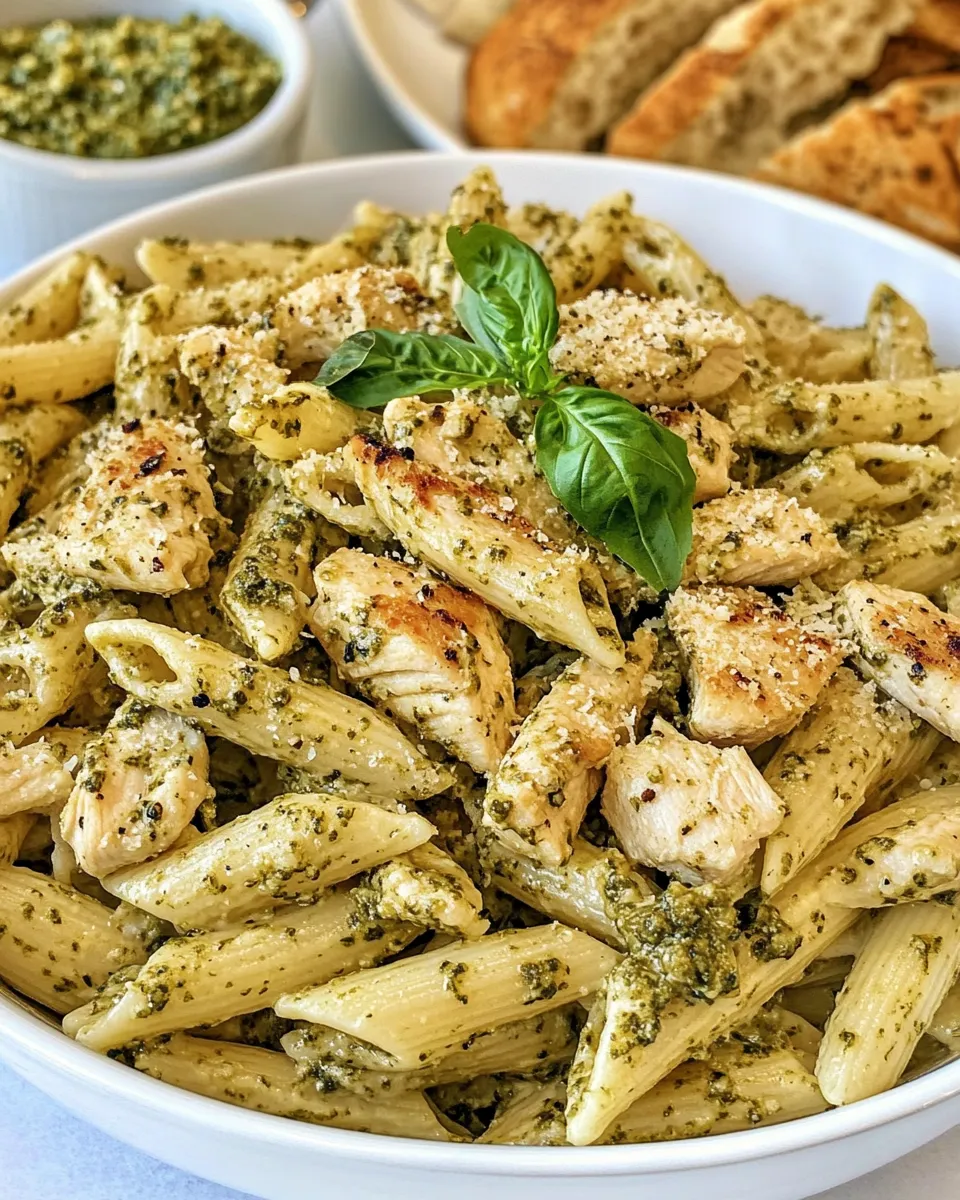
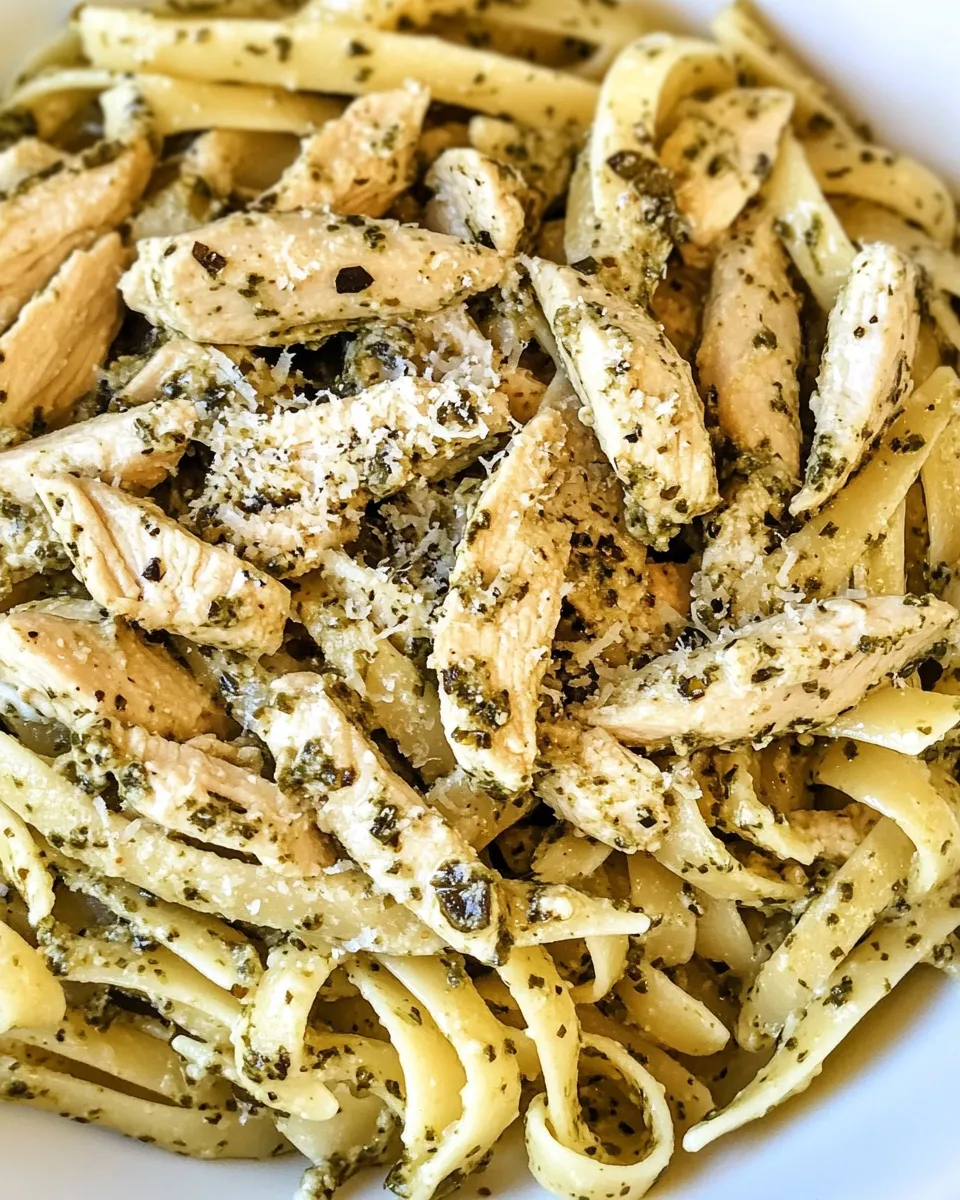
- Pasta: Use any shape you love. Short shapes like penne or fusilli hold pesto well; long pasta like spaghetti works if you prefer twirlable strands.
- Chicken: Swap for thigh meat if you like darker, juicier bites. Cut it similarly so cooking time stays even.
- Pesto: Store-bought is perfectly fine; if you have more time, make a quick blender pesto with basil, Parmesan, garlic, nuts, olive oil, and lemon.
- Heavy cream: Skip it for a lighter dish, or replace with a splash of milk plus an extra tablespoon of Parmesan to maintain creaminess.
- Pine nuts: Substitute toasted walnuts or slivered almonds for a similar crunch if pine nuts are expensive or hard to find.
- Heat: If you don’t have red pepper flakes, a small pinch of cayenne or a few dashes of hot sauce added at the end will do the job.
Appliances & Accessories
- Large pot: for boiling pasta; it gives the pasta room to cook evenly.
- Large skillet (10–12 inch): wide enough to toss pasta and chicken together comfortably.
- Tongs or pasta fork: for mixing and serving without breaking pasta.
- Measuring cups and spoons: to keep proportions consistent, especially with pesto and reserved water.
- Small bowl or jar: to hold reserved pasta water so you can add it gradually.
Troubles You Can Avoid
Overcooking the chicken is an easy misstep: keep pieces bite-sized and cook until just done, then remove them from the pan to prevent drying. Underseasoned pasta is another common issue. Salt the boiling water well; it seasons the inside of the pasta and is the foundation of the whole dish.
A too-thick sauce can leave the pasta clumped and heavy. Use the reserved pasta water sparingly—1–2 tablespoons at a time—until the sauce loosens and becomes glossy. And don’t let the garlic brown; a quick 30–60 seconds on low releases flavor without bitterness.
Seasonal Twists
Spring: Add halved cherry tomatoes and a handful of baby spinach right at the end for color and freshness. The tomatoes will warm but stay bright.
Summer: Use fresh, garden basil in both the pesto (if making your own) and as a garnish. Consider a squeeze of lemon to brighten the plate.
Autumn/Winter: Swap toasted walnuts for pine nuts and fold in roasted mushrooms or kale for earthier flavors and extra heft when you want something comforting.
Pro Perspective
Salt like a chef. Taste the pasta water—if it doesn’t taste well-seasoned, the final dish won’t either. Use the stovetop heat to your advantage: medium-high for searing the chicken to get color, then low heat when you’re combining pesto and cream so nothing splits.
When tossing everything together, work quickly and confidently. The residual heat finishes the dish. Keep a ladle of pasta water within reach; adding small amounts transforms the sauce’s texture. Finish with a final grind of black pepper and a scattering of fresh basil to lift the plate.
Refrigerate, Freeze, Reheat
Refrigerate: Store leftovers in an airtight container for up to 3 days. The pasta will absorb more sauce as it sits, so keep a little extra pesto or olive oil on hand.
Freeze: I don’t recommend freezing once-combined pesto pasta with cream; the texture changes and cream can separate. If you want to freeze, freeze the cooked chicken separately for up to 2 months and the pesto in small portions. Thaw and recombine with freshly cooked pasta when ready.
Reheat: Gently reheat on the stovetop over low heat. Add a splash of water, broth, or a spoonful of cream and stir until warmed through. Microwaving works in a pinch—cover and heat in short bursts, stirring between intervals to keep the sauce even.
Quick Q&A
- Can I use frozen chicken? Yes—thaw it completely and pat it dry before cooking to avoid steaming and to get a good sear.
- Is homemade pesto necessary? No. High-quality store-bought pesto saves time and still tastes great; homemade is worth it if you have fresh basil and a few extra minutes.
- Can I make this dairy-free? Skip the heavy cream and Parmesan; add a tablespoon of nutritional yeast for savory depth and finish with a drizzle of good olive oil.
- What’s the best pasta shape? Any shape you enjoy. I often reach for penne or fusilli because they trap sauce, but spaghetti is lovely when you crave twirlable noodles.
Wrap-Up
Pesto Chicken Pasta delivers on speed, flavor, and comfort. It’s a dependable weeknight recipe that scales and adapts—use what you have, tweak the texture with pasta water, and finish with fresh basil and Parmesan. Follow the steps above and you’ll have a bright, satisfying meal that feels both homey and a little special.
Pesto Chicken Pasta
Equipment
- 12" All-Clad Stainless Skillet
Ingredients
Ingredients
- 12 ouncespasta penne, spaghetti, or your choice
- salt for boiling water
- 2 tablespoonsolive oil
- 2 mediumchicken breasts cut into bite-sized pieces
- salt and black pepper to taste
- 1 teaspoonItalian seasoning
- 3/4 cupbasil pesto store-bought or homemade
- 1/4 cupheavy cream optional, for creaminess
- 2 clovesgarlic minced
- 2 tablespoonsParmesan cheese grated
- 1/4 teaspoonred pepper flakes optional, for a kick
- 2 tablespoonstoasted pine nuts optional
- fresh basil leaves for garnish
- Parmesan cheese grated, for serving
Instructions
Instructions
- Bring a large pot of salted water to a boil. Add 12 ounces pasta and cook according to package instructions until al dente. Before draining, reserve ½ cup of the pasta cooking water, then drain the pasta and set aside.
- While the pasta cooks, heat 2 tablespoons olive oil in a large skillet over medium heat.
- Add the 2 cups bite-sized chicken pieces (from 2 medium chicken breasts) to the skillet. Season with salt, black pepper, and 1 teaspoon Italian seasoning. Cook 5–7 minutes, stirring occasionally, until the chicken is cooked through and golden brown. Remove the chicken from the skillet and set aside.
- Reduce the heat to low. Add the 2 cloves minced garlic to the same skillet and cook 30–60 seconds, stirring, until fragrant (do not let it brown).
- Add ¾ cup basil pesto and, if using, ¼ cup heavy cream to the skillet. Stir to combine and warm the sauce for about 1–2 minutes.
- Stir in 2 tablespoons grated Parmesan cheese and, if using, ¼ teaspoon red pepper flakes. Continue to cook over low heat until the cheese melts and the sauce is smooth.
- Add the cooked pasta and the cooked chicken back into the skillet. Toss everything together to coat evenly. If the sauce is too thick, add reserved pasta water 1–2 tablespoons at a time until you reach the desired consistency. Warm for 1–2 minutes more.
- Divide the pasta among plates and top with, if using, 2 tablespoons toasted pine nuts, fresh basil leaves, and extra grated Parmesan cheese for serving. Serve warm.
Notes
Skip the cream if you prefer it lighter, or double down for extra indulgence.
Add-ins welcome:think spinach, sun-dried tomatoes, or whatever veggies you need to use up.
Use good pesto: whether it’shomemadeor store-bought, the flavor really shines here.