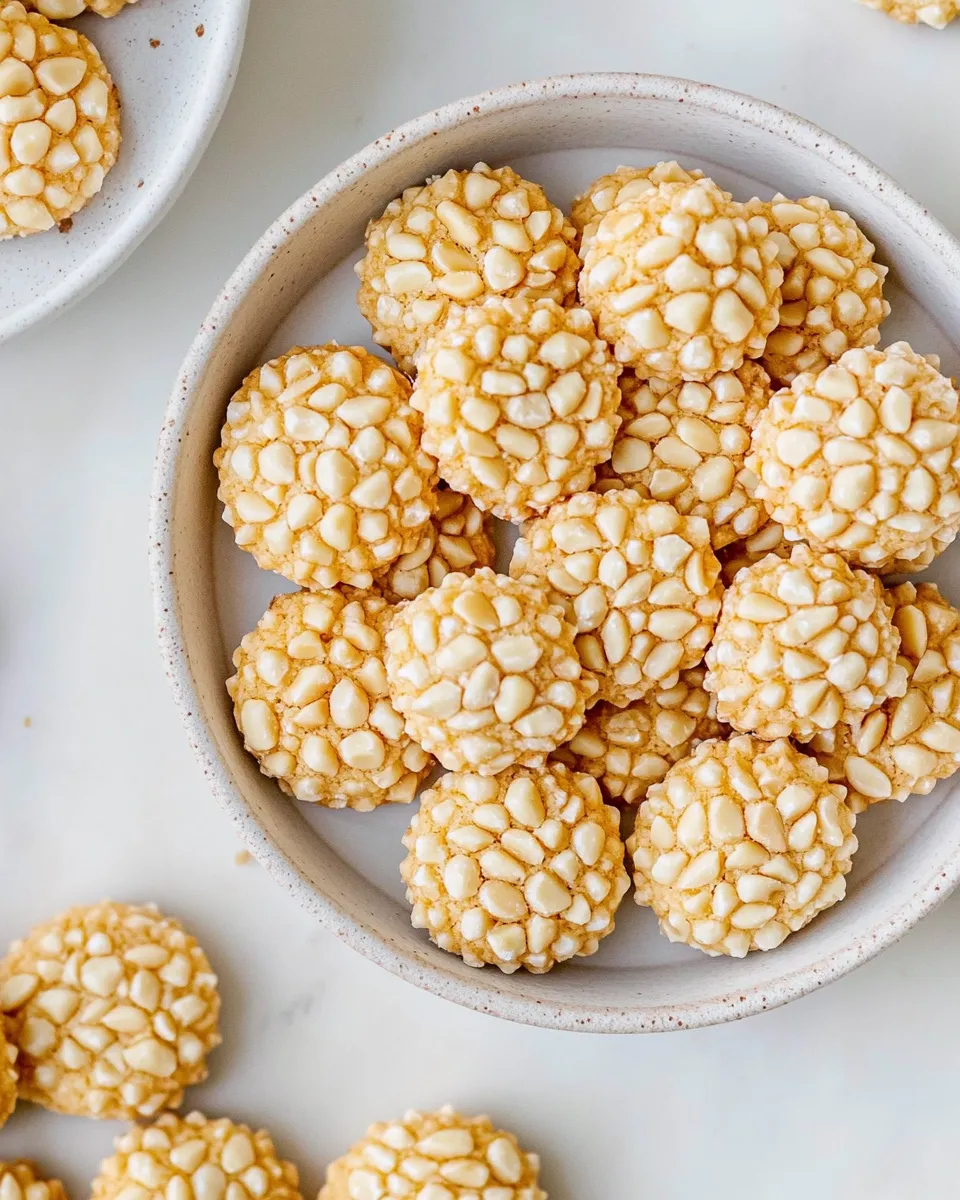
These Pignoli Cookies are the kind of small, perfectly nutty cookies that disappear fast at gatherings. They pair tenderly chewy almond paste with a crisp, toasted outer layer of pine nuts. Simple to make, impossibly satisfying to eat.
I’ve tested this exact method enough times to know where the dough behaves and where it needs a nudge. You don’t need fancy techniques—just a food processor, a little patience, and good pine nuts. The result is reliably tender inside, golden outside, with a kiss of powdered sugar at the end.
Below you’ll find a clear shopping list, the step-by-step method taken straight from the recipe source, detailed tips from the test kitchen, and answers to the questions people always ask about Pignoli. Read the notes before you bake and you’ll avoid the usual mistakes.
Shopping List
- Almond paste (1 standard package, 7 ounces / 198 g)
- Granulated sugar (⅓ cup / 67 g)
- Powdered sugar (¼ cup / 28 g, plus extra for serving)
- Large egg (you’ll need 1 egg white — about 35 g)
- Kosher salt (¼ teaspoon)
- Pine nuts (4 ounces / 113 g)
- Baking parchment or nonstick spray
Ingredients
- 7 ounces almond paste (198 grams), cut into pieces (1 standard package) — the base of the cookie; provides almond flavor and structure.
- ⅓ cup granulated sugar (67 grams) — sweetens and helps the dough bind and brown.
- ¼ cup powdered sugar (28 grams), plus more for serving — keeps the texture tender and adds a fine sweetness; extra for a dusting finish.
- 1 large egg white (35 grams) — the binder that makes the dough workable without adding fat.
- ¼ teaspoon kosher salt — balances the sweetness and enhances almond flavor.
- 4 ounces pine nuts (113 grams) — the defining crunch and nutty top; pressed on to form the classic pignoli exterior.
Stepwise Method: Pignoli Cookies (Almond Cookies)
- Preheat oven to 350°F. Line a baking sheet with parchment paper or spray it with nonstick cooking spray; set aside.
- Place the 7 ounces (198 g) almond paste (cut into pieces), 1/3 cup (67 g) granulated sugar, 1/4 cup (28 g) powdered sugar, 1 large egg white (35 g), and 1/4 teaspoon kosher salt in the bowl of a food processor.
- Process the mixture until smooth and uniform, scraping down the bowl once or twice as needed. The dough should be thick and tacky but not runny.
- Transfer the dough to a small bowl or work surface.
- Put the 4 ounces (113 g) pine nuts in a medium bowl and spread them so they’re easy to roll cookies through.
- Using about 1 tablespoon of dough per cookie, scoop and roll each portion into a roughly 1-inch ball with your hands.
- Roll each dough ball in the pine nuts, pressing gently so the nuts adhere to the top and sides.
- Place the coated cookie balls on the prepared baking sheet, spacing them about 1–2 inches apart.
- Bake for 10–12 minutes, or until the cookies are golden brown.
- Let the cookies cool on the baking sheet for at least 10 minutes to firm up.
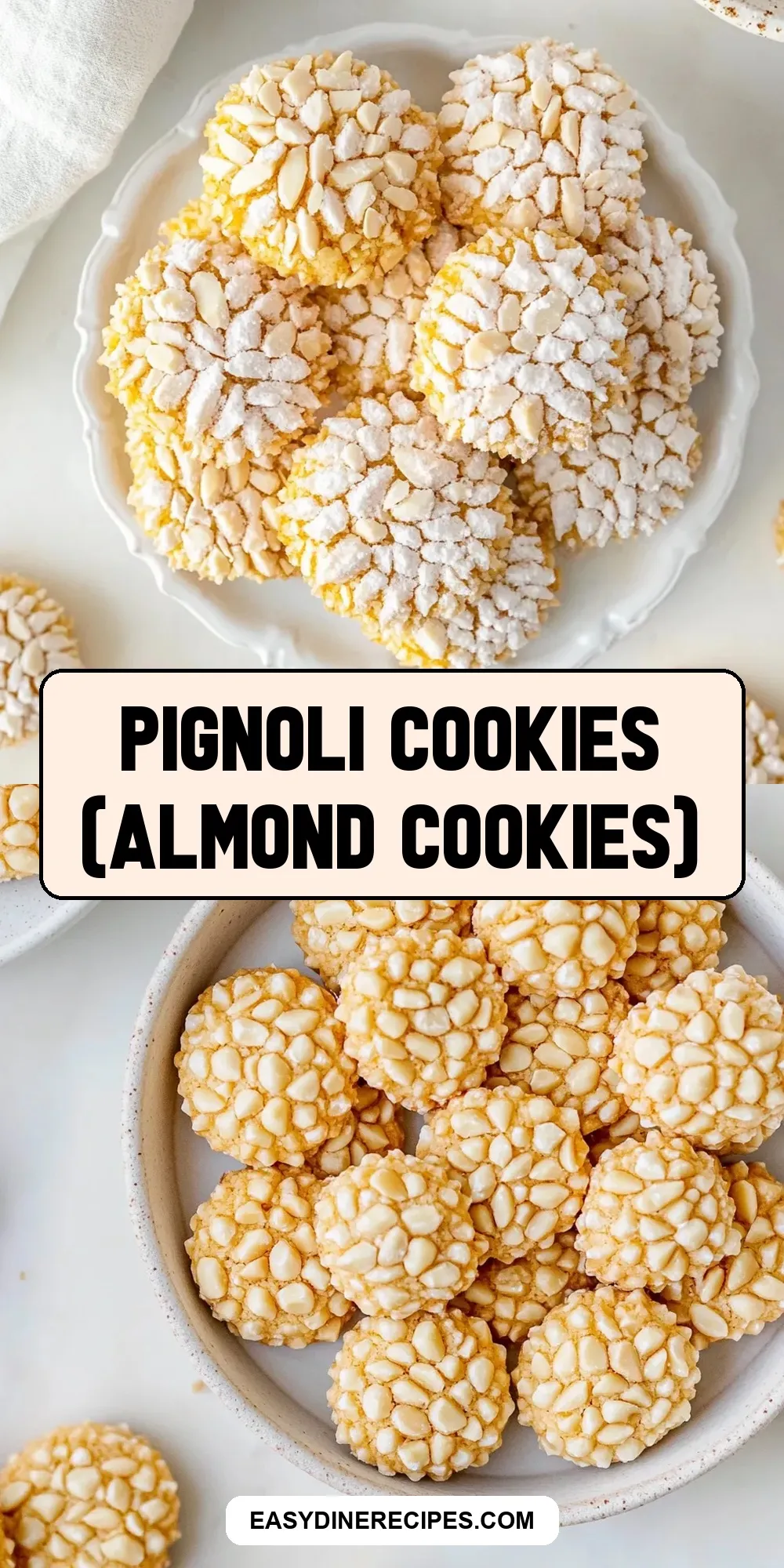
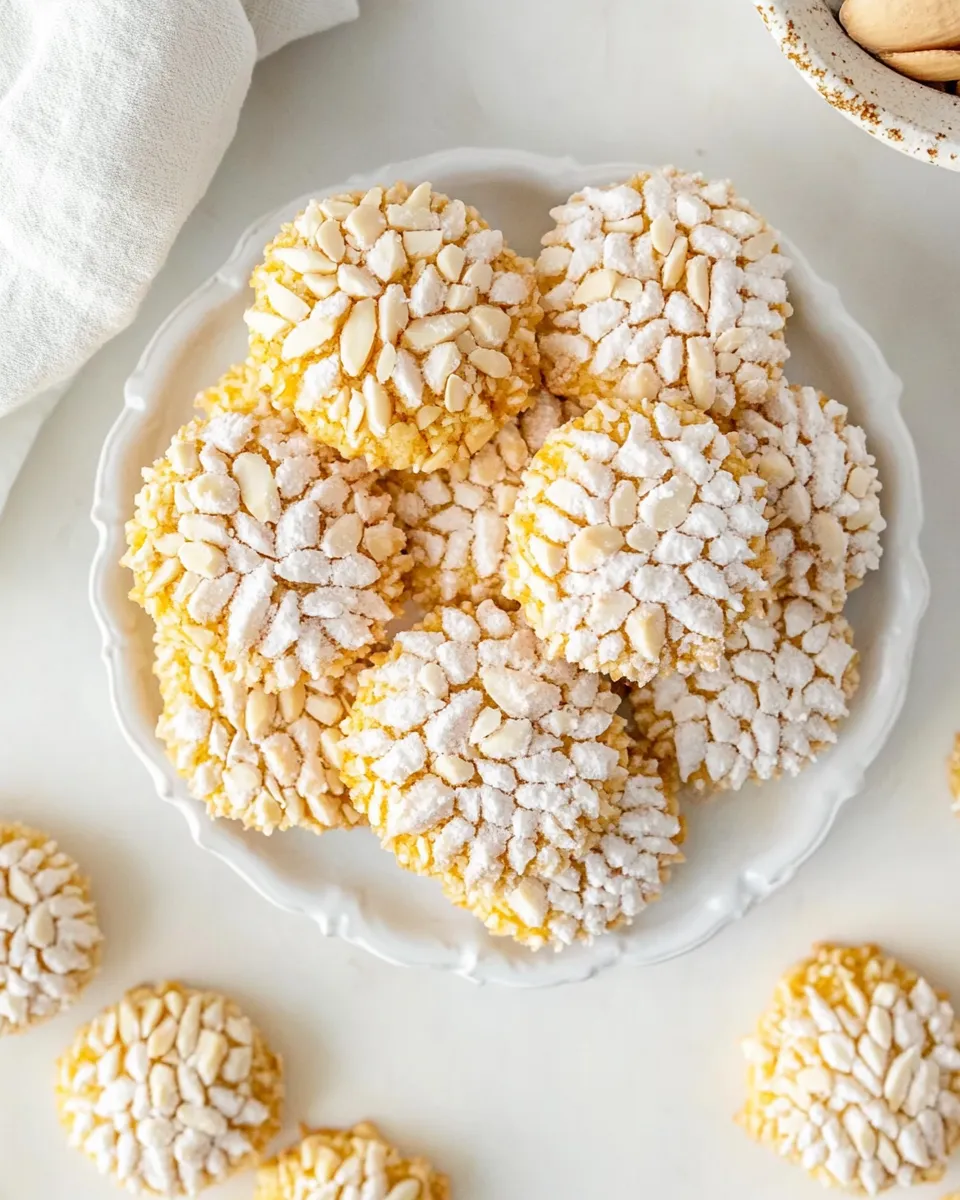
- Dust the cooled cookies with additional powdered sugar and serve.
Why It Works Every Time
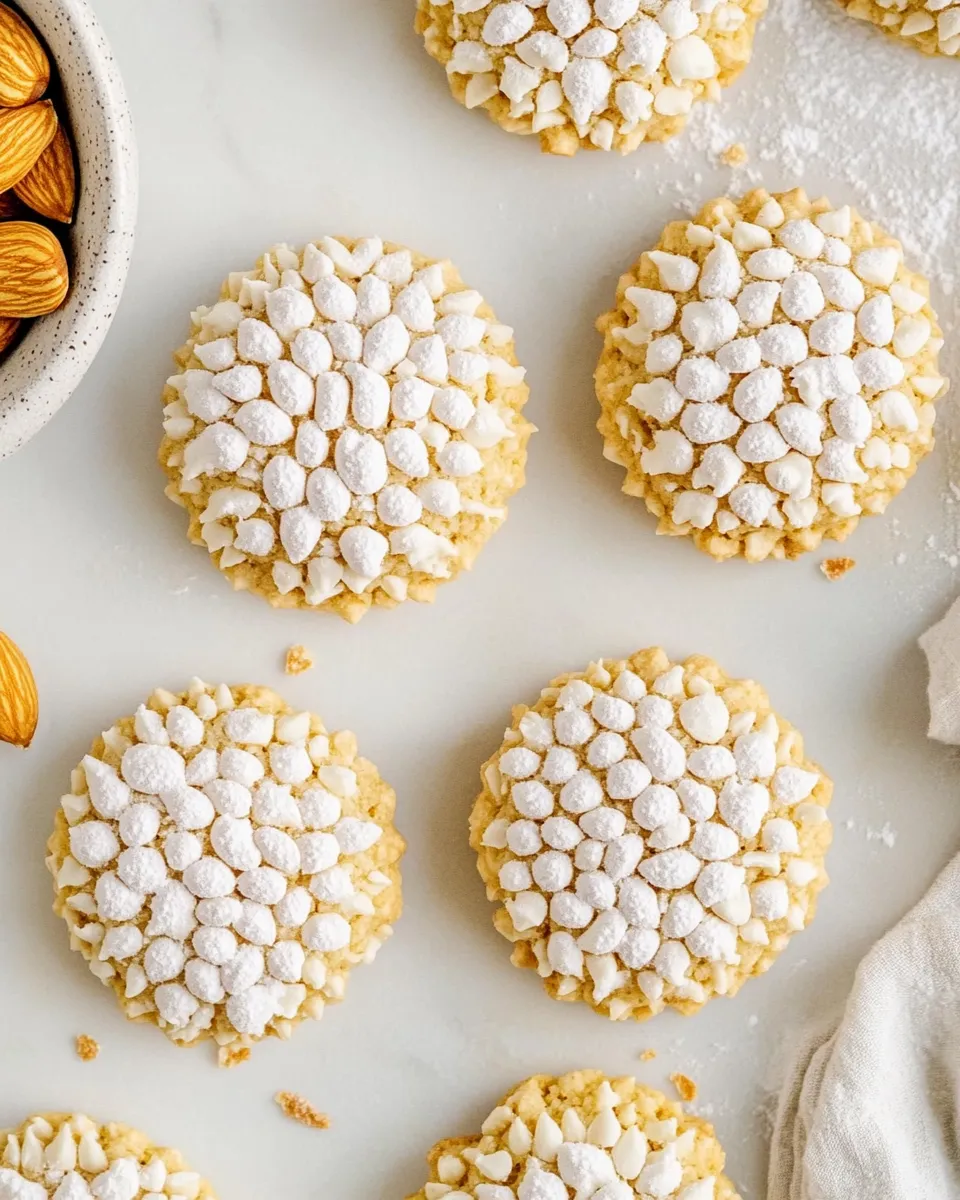
Almond paste is already sweetened and finely textured, so it forms a cohesive, tender dough without extra fat. The egg white binds the paste and sugars while keeping the dough lean, which helps the cookies keep a slightly chewy center rather than turning cakey.
Rolling the cookies in pine nuts serves two structural purposes: the nuts create a protective shell that limits direct heat on the paste, and they provide surface texture that crisps and browns attractively in the oven. The short bake time at 350°F ensures the exterior turns golden while the interior retains a soft chew.
Finally, the finish of powdered sugar mellows the surface sweetness and gives the cookies the dusted look that highlights their rustic charm.
Ingredient Swaps & Substitutions
- Almond paste: If you can’t find almond paste, some bakers use marzipan, though marzipan can be sweeter and denser. Expect slightly different texture and sweetness if you substitute.
- Pine nuts: Substitute with finely chopped blanched almonds for a similar flavor profile if pine nuts are too expensive or hard to find. The look will change, but the cookies will still be pleasing.
- Egg white: For those avoiding eggs, a commercially available egg replacer designed for binding might work, but results vary—these cookies rely on the egg white for structure, so the texture will likely be different.
- Sugars: Keep the granulated and powdered sugars as listed. Replacing granulated sugar with a liquid sweetener or significantly altering sugar amounts will change dough consistency.
Before You Start: Equipment
- Food processor — recommended for smooth, uniform dough; you can use a mixer but a processor makes the job faster.
- Baking sheet(s) — lined with parchment or nonstick spray.
- Small bowl or work surface — for handling dough.
- Medium bowl — to spread pine nuts for rolling.
- Measuring cups and spoons or a kitchen scale — the recipe gives weights for precision (recommended).
- Scoop or tablespoon — to portion dough evenly.
Common Errors (and Fixes)
- Dough is too runny: The dough should be thick and tacky. If it’s runny, the almond paste may be too soft or warm. Chill the paste briefly and reprocess in short bursts, scraping the bowl between pulses.
- Pine nuts won’t stick: Make sure the dough balls are tacky when you roll them. If they’re too dry, press gently on the pine nuts to encourage adhesion. If too wet, chill the dough 10–15 minutes before rolling.
- Cookies spread too much: Use the specified amount of dough (about 1 tablespoon). If your oven runs hot, check temperature with an oven thermometer and reduce heat slightly.
- Undercooked center: Bake the full 10–12 minutes and then let cookies cool on the sheet for at least 10 minutes. The interior continues to set during this rest period.
- Burned pine nuts: Pine nuts toast fast. If you notice the nuts getting dark before the cookie is done, reduce oven temperature by 15–25°F and extend bake time slightly, watching closely.
Seasonal Adaptations
Pignoli cookies are a holiday staple in many kitchens, but you can adapt them to the seasons. In winter, add a touch of finely grated orange or lemon zest to the dough for brightness. In spring and summer, keep the recipe as-is to let the almond and pine nut flavors shine without competing notes.
For festive occasions, press a whole toasted pine nut on top of each cookie before serving instead of rolling fully in nuts—this creates a prettier presentation while still delivering that pine nut aroma.
Notes from the Test Kitchen
Use room-temperature egg whites that are still slightly cool to the touch. They blend easier with the almond paste and sugars and help the processor produce a smooth dough. If your almond paste is very firm, break it into small pieces before processing; this reduces strain on the machine and yields a more uniform mixture.
We tested by making cookies at exactly one-tablespoon portions. Smaller cookies bake more quickly and have a higher pine-nut-to-center ratio, which some people prefer. Larger scoops increase bake time and change the texture balance between crust and chew.
Spacing on the baking sheet matters. Give cookies at least 1–2 inches apart so they don’t touch as they expand slightly. If you’re using multiple sheets, rotate them halfway through the bake if your oven has hot spots.
Cooling, Storing & Rewarming
Let cookies cool on the baking sheet for at least 10 minutes to firm up; then transfer to a wire rack to cool completely. Dust with powdered sugar after they are fully cool to avoid melting the sugar into the nut surface.
Store cookies in an airtight container at room temperature for up to 5 days. Separating layers with parchment prevents sticking. For longer storage, freeze baked cookies in a single layer on a sheet until firm, then transfer to a freezer-safe container for up to 3 months. Thaw at room temperature and re-dust with powdered sugar before serving.
To rewarm, place cookies on a baking sheet and heat at 300°F for 5–7 minutes—just enough to revive the aroma and slightly crisp the pine nuts. Watch closely so they don’t overbrown.
Questions People Ask
- Can I make the dough ahead of time? — You can prepare and chill the dough for a day. If chilled, let it soften slightly before rolling so the pine nuts adhere easily.
- Do I have to use a food processor? — A food processor produces the smoothest dough. You can try mashing the almond paste and whisking vigorously, but expect more effort and less uniform texture.
- Why are my cookies dry? — Overbaking is the usual cause. Stick to 10–12 minutes and lean toward the shorter time if your oven runs hot.
- Are pine nuts necessary? — Pine nuts give the traditional pignoli flavor and texture. Chopped almonds can substitute for a budget-friendly alternative, though the flavor will change.
- Can I add extracts or zests? — Yes. A small amount of citrus zest or a drop of almond extract can enhance flavor. Add sparingly so you don’t upset the dough consistency.
Hungry for More?
If you like these Pignoli Cookies, you might enjoy other almond-forward treats: almond biscotti for dunking, almond tuiles for a delicate crunch, or a simple marzipan tart. Each plays with the same almond flavor in different textures.
Try making a double batch of pignoli for gifts—packaged in a tight tin with parchment, they travel well. And if you experiment with a swap or citrus zest, take note of the timing so you can reproduce what you loved next time.
Pignoli Cookies (Almond Cookies)
Equipment
- Kitchen Scale(optional)
- Baking Sheet
- Food Processor
Ingredients
Ingredients
- 7 ouncesalmond paste198 grams cut into pieces (1 standard package)
- 1/3 cupgranulated sugar67 grams
- 1/4 cuppowdered sugar28 grams plus more for serving
- 1 largeegg white35 grams
- 1/4 teaspoonkosher salt
- 4 ouncespine nuts113 grams
Instructions
Instructions
- Preheat oven to 350°F. Line a baking sheet with parchment paper or spray it with nonstick cooking spray; set aside.
- Place the 7 ounces (198 g) almond paste (cut into pieces), 1/3 cup (67 g) granulated sugar, 1/4 cup (28 g) powdered sugar, 1 large egg white (35 g), and 1/4 teaspoon kosher salt in the bowl of a food processor.
- Process the mixture until smooth and uniform, scraping down the bowl once or twice as needed. The dough should be thick and tacky but not runny.
- Transfer the dough to a small bowl or work surface.
- Put the 4 ounces (113 g) pine nuts in a medium bowl and spread them so they’re easy to roll cookies through.
- Using about 1 tablespoon of dough per cookie, scoop and roll each portion into a roughly 1-inch ball with your hands.
- Roll each dough ball in the pine nuts, pressing gently so the nuts adhere to the top and sides.
- Place the coated cookie balls on the prepared baking sheet, spacing them about 1–2 inches apart.
- Bake for 10–12 minutes, or until the cookies are golden brown.
- Let the cookies cool on the baking sheet for at least 10 minutes to firm up.
- Dust the cooled cookies with additional powdered sugar and serve.
Notes
Dough should be slightly sticky and tacky, and quite thick.
Don’t overbake, or you’ll get a tough center. Take them out just as they start turning golden on the outside.