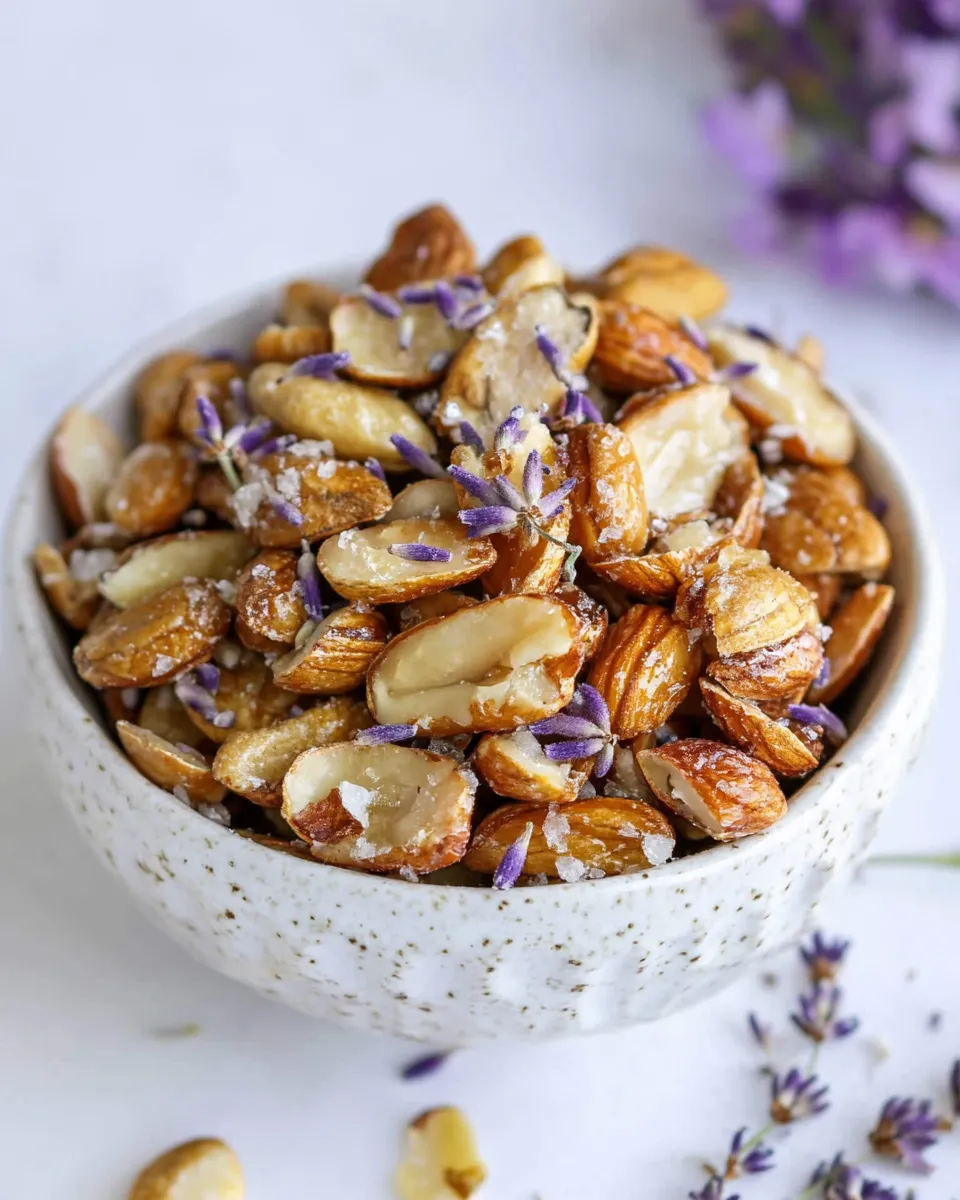
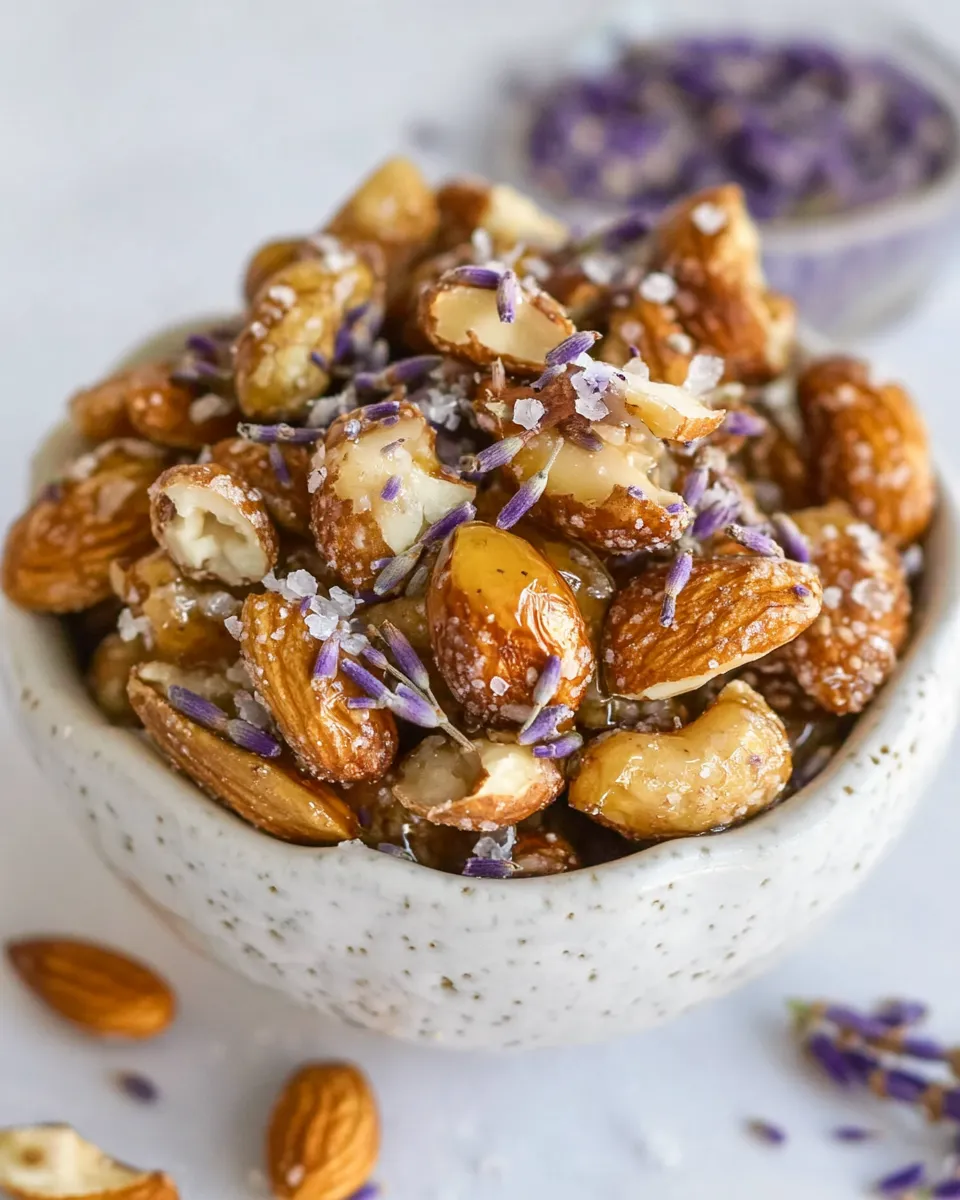
I fell in love with these the first time I tasted the gentle floral note weaving through crunchy, toasted nuts. It puts a grown-up twist on classic candied nuts—subtle, not cloying—and the flaked sea salt brings the whole thing into balance. They are the kind of snack that travels well to parties, sits beautifully in jars for gifts, and disappears quickly from a bowl on the coffee table.
This recipe is straightforward and forgiving, but it rewards attention in a few small moments: warming the honey just enough to bloom the lavender, toasting the nuts until fragrant, and working quickly so the honey coats evenly. No candy thermometer, no deep frying—just a skillet, a little patience, and good ingredients.
Below you’ll find a clear ingredient checklist, the exact step-by-step directions to follow from start to finish, and practical notes on storage, small swaps with items already in the list, gear, and troubleshooting. Read through once, then gather your tools and get started—the process moves briskly once you begin.
Ingredient Checklist
- 1/4 cup honey — the sweet binder and flavor base; warmer honey coats more evenly.
- 1 1/2 teaspoons dried culinary lavender petals — the floral accent; use culinary-grade lavender only for a clean flavor.
- 8 ounces raw almonds — provides crunch and a toasty backbone; toasts quickly and holds up well.
- 8 ounces raw cashews — adds creaminess and a softer bite to contrast the almonds.
- 8 ounces raw Brazil nuts — large, buttery pieces that make the mix feel special and substantial.
- 1/2 teaspoon flaked sea salt — finishing salt to amplify sweetness and bring out the lavender notes.
From Start to Finish: Salted Honey Lavender Nuts
- Line a baking sheet with parchment paper and set it nearby.
- In a small saucepan, combine 1/4 cup honey and 1 1/2 teaspoons dried culinary lavender petals. Warm over low heat, stirring, until the honey becomes thinner and the lavender is fragrant (about 2–3 minutes). Do not boil. Remove from the heat and let the honey-lavender mixture cool slightly (about 1 minute).
- In a large skillet or saucepan, combine 8 ounces raw almonds, 8 ounces raw cashews, and 8 ounces raw Brazil nuts. Heat over medium-low, tossing or stirring constantly until the nuts are fragrant and lightly toasted (about 6–8 minutes). Remove the pan from the heat.
- Immediately pour the warmed honey-lavender mixture over the hot nuts. Stir continuously with a heatproof spatula or spoon until all the nuts are evenly coated (about 1–2 minutes), working quickly while the honey is fluid.
- Spread the coated nuts in a single layer on the prepared parchment-lined baking sheet, separating any clumps. Sprinkle evenly with 1/2 teaspoon flaked sea salt.
- Let the nuts cool and dry at room temperature until the honey has set and the nuts are cool to the touch, about 1–2 hours. Break into pieces if needed and serve or package for storage.
What You’ll Love About This Recipe
- Simple technique: no candy thermometer or special equipment—just heat, toast, coat, and cool.
- Balanced profile: floral lavender, rounded honey sweetness, crunchy nuts, and a hit of flaked sea salt.
- Versatile use: serve as a snack, give in jars as a gift, or scatter over salads and grain bowls for texture and flavor.
- Quick active time: most hands-on time happens in one skillet and one small saucepan; total active time is short.
Budget & Availability Swaps
- If one of the nuts is pricey or hard to find where you are, increase the quantity of the other two nuts from the recipe amounts so the total weight stays similar—this keeps texture and bulk while staying within the listed ingredients.
- If culinary lavender is limited, use the full 1 1/2 teaspoons sparingly—lavender can read strong; the recipe already calls for a small amount to keep the flavor delicate.
- Honey is central here for texture and flavor; if you must stretch it, you can slightly reduce the honey and increase the toasting time to emphasize nutty aroma, but note the coating will be less glossy.
Gear Up: What to Grab
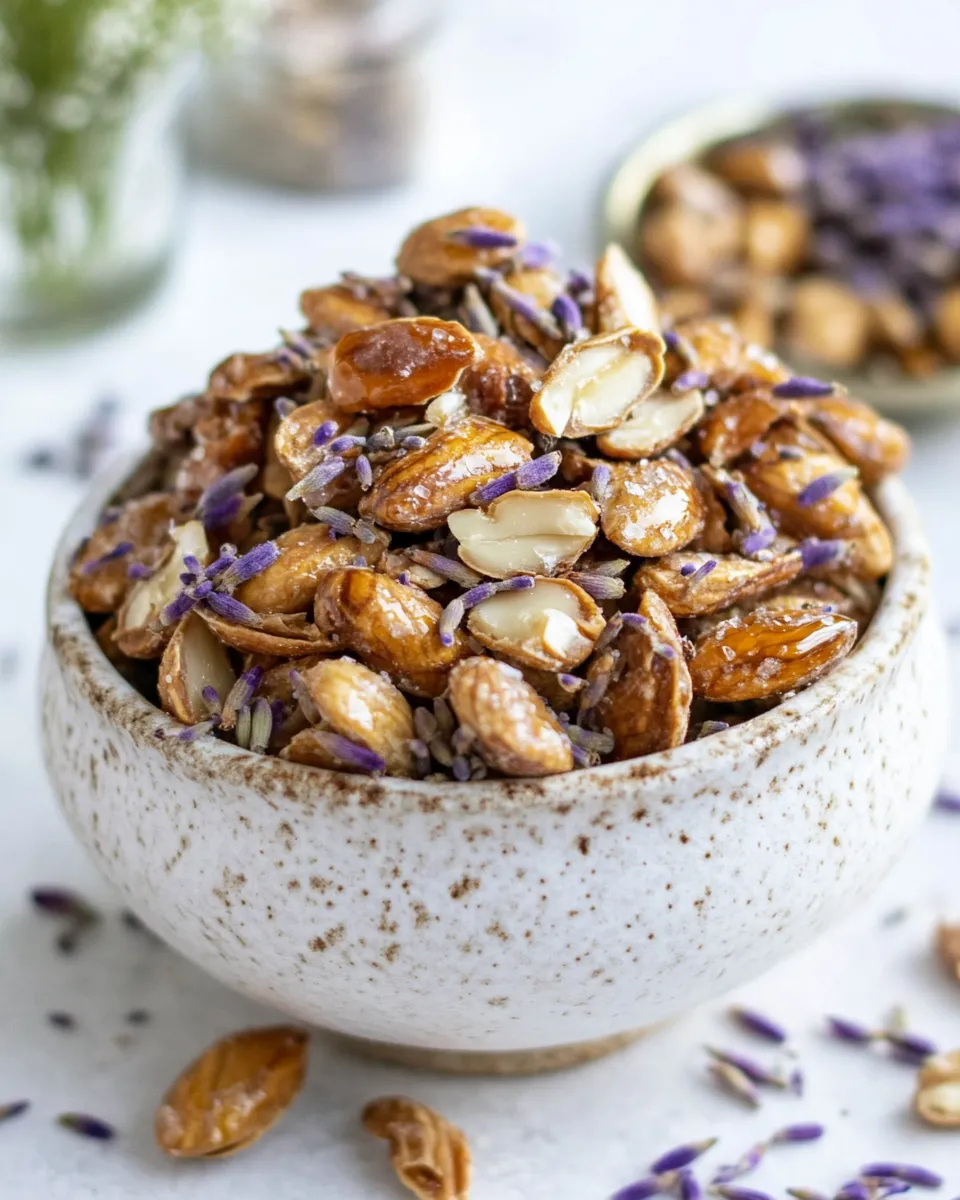
Essentials
- Large skillet or heavy-bottomed saucepan — for even toasting of the nuts.
- Small saucepan — to warm and infuse the honey with lavender.
- Heatproof spatula or wooden spoon — to stir and coat the nuts quickly.
- Baking sheet and parchment paper — for cooling and preventing sticking.
- Measuring spoons and a 1/4-cup measure — for accurate amounts.
Nice-to-have
- Rubber spatula for scraping the pan clean — keeps sticky honey from wasting.
- Kitchen timer — helpful for the short toasting and warming windows.
- Glass jars or airtight tins — for gifting or long-term storage.
Easy-to-Miss Gotchas
- Don’t overheat the honey. The step calls for warming on low and specifically says not to boil. Overheating burns the floral notes and can make the honey taste bitter.
- Toast the nuts only until fragrant. The difference between toasted and burned can be a minute or less, especially toward the end—stay present and stir constantly.
- Work quickly when coating. The recipe hinges on pouring warmed honey over hot nuts so the honey flows and covers; wait too long and the honey sets, which makes even coating impossible.
- Separate clumps before the honey sets on the tray. Once it hardens, clumps are harder to break apart neatly.
- Measure the salt carefully. The recipe finishes with 1/2 teaspoon flaked sea salt—add it evenly while the coating is still tacky so it sticks in a measured way.
Season-by-Season Upgrades
- Spring: lean into the floral note—use the lavender amount exactly and present in lighter packaging with a small sprig of dried lavender tucked alongside (packaging detail only, not an ingredient addition).
- Summer: serve with iced beverages where the contrast of cold drink and warm, nutty crunch is very pleasing; the nuts also travel well to warm-weather gatherings.
- Autumn: emphasize the toasting stage—toast a touch longer (watch carefully) to bring a deeper roasted flavor that pairs with crisp air and cozy evenings.
- Winter: these pack well into holiday gift jars and the floral note pairs surprisingly well with seasonal spiced teas—no extra spices are required in the recipe itself.
Chef’s Rationale
I chose equal weights of three nuts to create a balance of textures: almonds for snap, cashews for creaminess, and Brazil nuts for buttery heft. Equal amounts keep the mix feeling balanced and allow the honey-lavender coating to distribute evenly among varied shapes and sizes.
Warming the honey with dried culinary lavender is about extraction: low heat releases the lavender’s essential oils into the honey without volatilizing them away. A very brief rest after removing from heat cools the honey just enough so it remains pourable but not aggressively hot—this preserves aroma and makes handling safer.
Toasting the nuts in a dry pan before coating does two things: it deepens nutty flavors and removes surface moisture so the honey adheres immediately. Pouring hot honey over hot nuts creates a momentary window where the honey is thin and tacky, which is ideal for an even, glossy coat before it sets.
Prep Ahead & Store
- Make ahead: You can make these up to a week in advance. Let them cool completely, then store in an airtight container at room temperature.
- Longer storage: For up to a month, keep them in an airtight jar or tin in a cool, dark place. If your home is very warm, brief refrigeration is okay—bring to room temperature before serving to restore flavor and texture.
- Gifting: Let them cool fully and then portion into small airtight jars or tins. A label with the date and “best within one month” is helpful for recipients.
Frequently Asked Questions
- How crunchy will these be? The nuts stay crunchy thanks to the toasting and the honey coating setting into a thin shell. The mix has both crisp and tender bites because of the different nuts used.
- Can I use fresh lavender instead of dried? This recipe is designed for dried culinary lavender, which is more concentrated and dry. Fresh lavender has water content and may not infuse the honey the same way.
- Will the lavender be overpowering? The recipe uses a modest 1 1/2 teaspoons for 24 ounces of nuts and 1/4 cup honey, which keeps the lavender as a gentle floral accent rather than the dominant flavor.
- What if my honey crystallizes later? If the honey in the jar crystallizes over time, you can gently warm the sealed jar in a warm water bath before using the honey elsewhere; the nuts themselves will keep their texture.
- Can I scale this up or down? Yes—maintain the ratio of honey and lavender to the total weight of nuts for the same coating effect, and keep an eye on timings when working with larger batches.
See You at the Table
These Salted Honey Lavender Nuts are a small, elegant snack that’s easy to make and even easier to love. The recipe is forgiving enough for a weekday batch and refined enough for a gift. When you make them, trust your nose on the toasting and your hands when separating clumps on the tray—those are the small, practical moments that create the best results.
If you package a few in jars for friends, include a note about the lavender so they know it’s culinary grade, and suggest enjoying them by hand or sprinkled over a simple green salad. I can guarantee they’ll ask for the recipe.
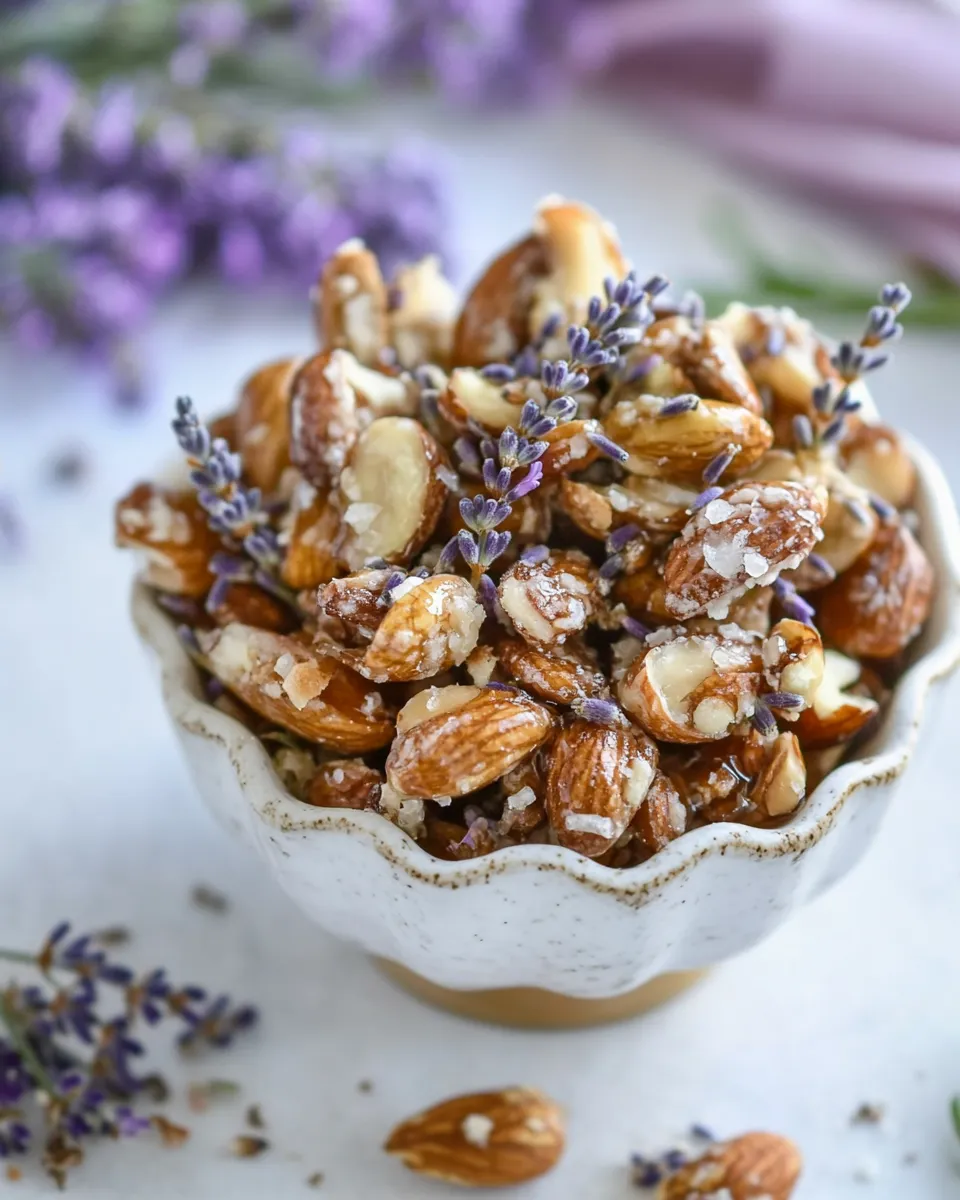
Salted Honey Lavender Nuts.
Equipment
- Small saucepan
- Large Skillet
- Baking Sheet
- Parchment Paper
- heatproof spatula or spoon
Ingredients
Ingredients
- 1/4 cuphoney
- 1 1/2 teaspoonsdried culinary lavender petals
- 8 ouncesraw almonds
- 8 ouncesraw cashews
- 8 ouncesraw brazil nuts
- 1/2 teaspoonflaked sea salt
Instructions
Instructions
- Line a baking sheet with parchment paper and set it nearby.
- In a small saucepan, combine 1/4 cup honey and 1 1/2 teaspoons dried culinary lavender petals. Warm over low heat, stirring, until the honey becomes thinner and the lavender is fragrant (about 2–3 minutes). Do not boil. Remove from the heat and let the honey-lavender mixture cool slightly (about 1 minute).
- In a large skillet or saucepan, combine 8 ounces raw almonds, 8 ounces raw cashews, and 8 ounces raw Brazil nuts. Heat over medium-low, tossing or stirring constantly until the nuts are fragrant and lightly toasted (about 6–8 minutes). Remove the pan from the heat.
- Immediately pour the warmed honey-lavender mixture over the hot nuts. Stir continuously with a heatproof spatula or spoon until all the nuts are evenly coated (about 1–2 minutes), working quickly while the honey is fluid.
- Spread the coated nuts in a single layer on the prepared parchment-lined baking sheet, separating any clumps. Sprinkle evenly with 1/2 teaspoon flaked sea salt.
- Let the nuts cool and dry at room temperature until the honey has set and the nuts are cool to the touch, about 1–2 hours. Break into pieces if needed and serve or package for storage.