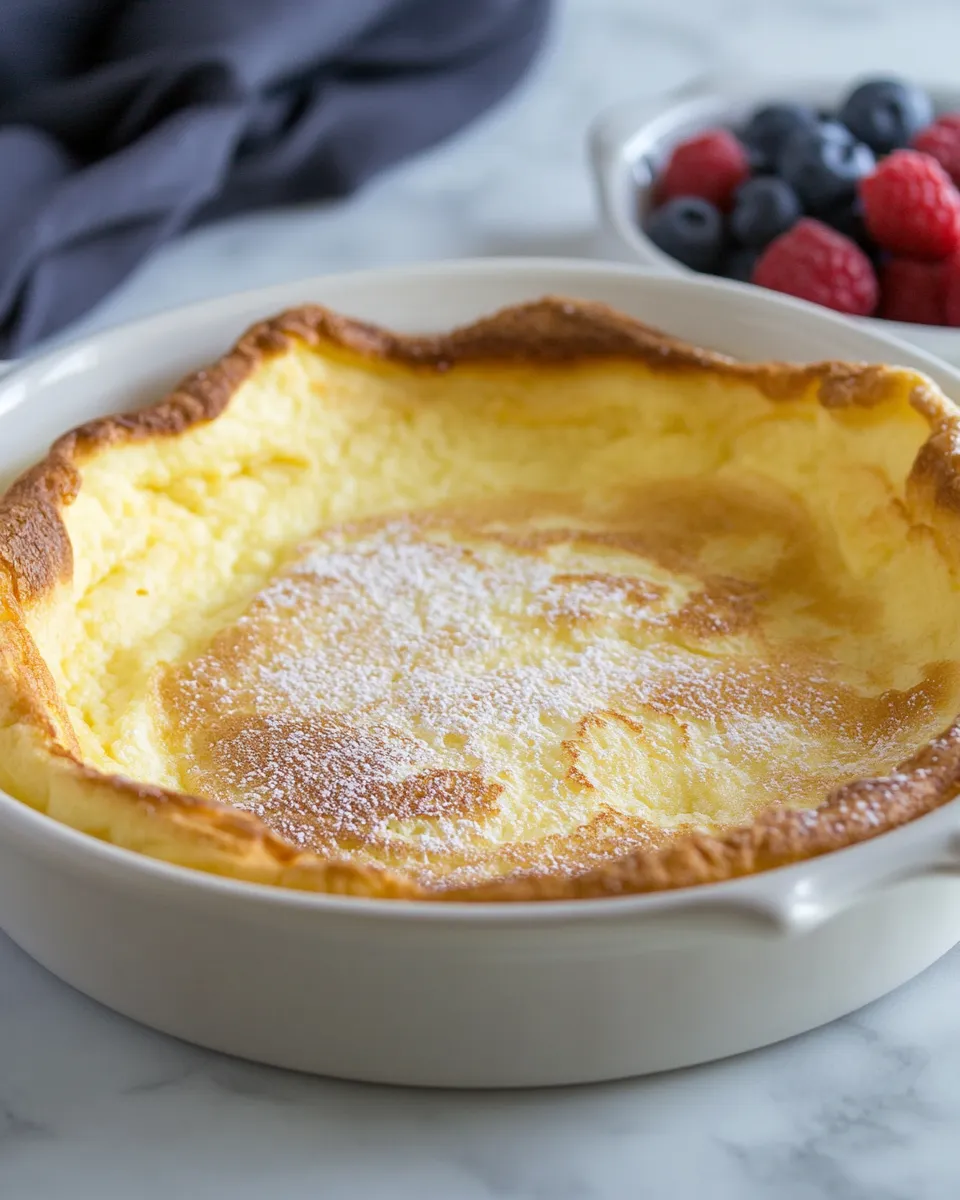
I keep a cast iron skillet seasoned and ready because this Dutch baby is my go-to when I want something impressive with almost no fuss. It puffs up in the oven, fills the kitchen with browned butter aroma, and finishes in under 30 minutes. The texture is a cross between a fluffy pancake and a delicate popover—crispy edges, tender center—and it responds well to simple toppings.
This recipe is straightforward: a blender makes the batter silky smooth, a hot skillet gives the dramatic rise, and a short bake time delivers golden edges. You don’t need special techniques or exotic ingredients—just what’s below. Read through the ingredient notes, follow the steps in order, and pay attention to the small timing details. They make the difference between “meh” and “wow.”
If you’re feeding guests or just treating yourself, the Dutch baby is forgiving and fast. I’ll cover why each ingredient matters, what equipment helps, smart swaps if you’re missing something, and how to store leftovers. By the end you’ll feel confident enough to make this tonight, no drama.
Ingredient Breakdown
Ingredients
- 3 large eggs — provide structure and lift; room temperature eggs blend more smoothly.
- 3/4 cup milk — thins the batter; use whole or 2% for best richness.
- 3/4 cup all-purpose flour — the base; sift or tap the cup for consistent measurement.
- 2 tbsp granulated sugar — a little sweetness helps browning without making it too sweet.
- 1 tsp vanilla extract — adds warmth and depth; optional but recommended.
- pinch salt — balances flavor and enhances the batter.
- 3 tbsp butter — browns in the hot skillet and creates the crispy, savory edge.
- Powdered Sugar — traditional finish; dust lightly right before serving.
- Fresh berries — bright contrast to the warm pancake; strawberries, blueberries, or raspberries work well.
- Whipped Cream — optional but adds a silky, cool contrast.
- Honey or Syrup — drizzle to taste for added sweetness and shine.
Build Dutch Baby Pancake Step by Step
- Preheat the oven to 425°F (220°C). Place a 10-inch cast iron skillet in the oven while it heats to get hot.
- In a blender, combine 3 large eggs, 3/4 cup milk, 3/4 cup all-purpose flour, 2 tablespoons granulated sugar, 1 teaspoon vanilla extract, and a pinch of salt.
- Blend the mixture for 10 seconds, scrape down the sides of the blender, then blend again until the batter is completely smooth.
- Let the batter rest at room temperature for at least 15 minutes.
- When the batter has rested and the oven is preheated, carefully remove the hot skillet from the oven using oven mitts and set it on a heatproof surface or trivet.
- Add 3 tablespoons butter to the hot skillet. Allow the butter to melt fully and swirl the skillet so the butter coats the bottom and sides.
- Quickly pour the rested batter into the hot, buttered skillet and immediately return the skillet to the oven.
- Bake for 15–20 minutes, until the Dutch baby is puffed and golden brown at the edges.
- Remove the skillet from the oven, transfer the Dutch baby to a serving plate or serve from the skillet, and dust with powdered sugar.
- Top with fresh berries, whipped cream, and drizzle honey or syrup as desired. Cut into slices and enjoy.
The Upside of Dutch Baby Pancake
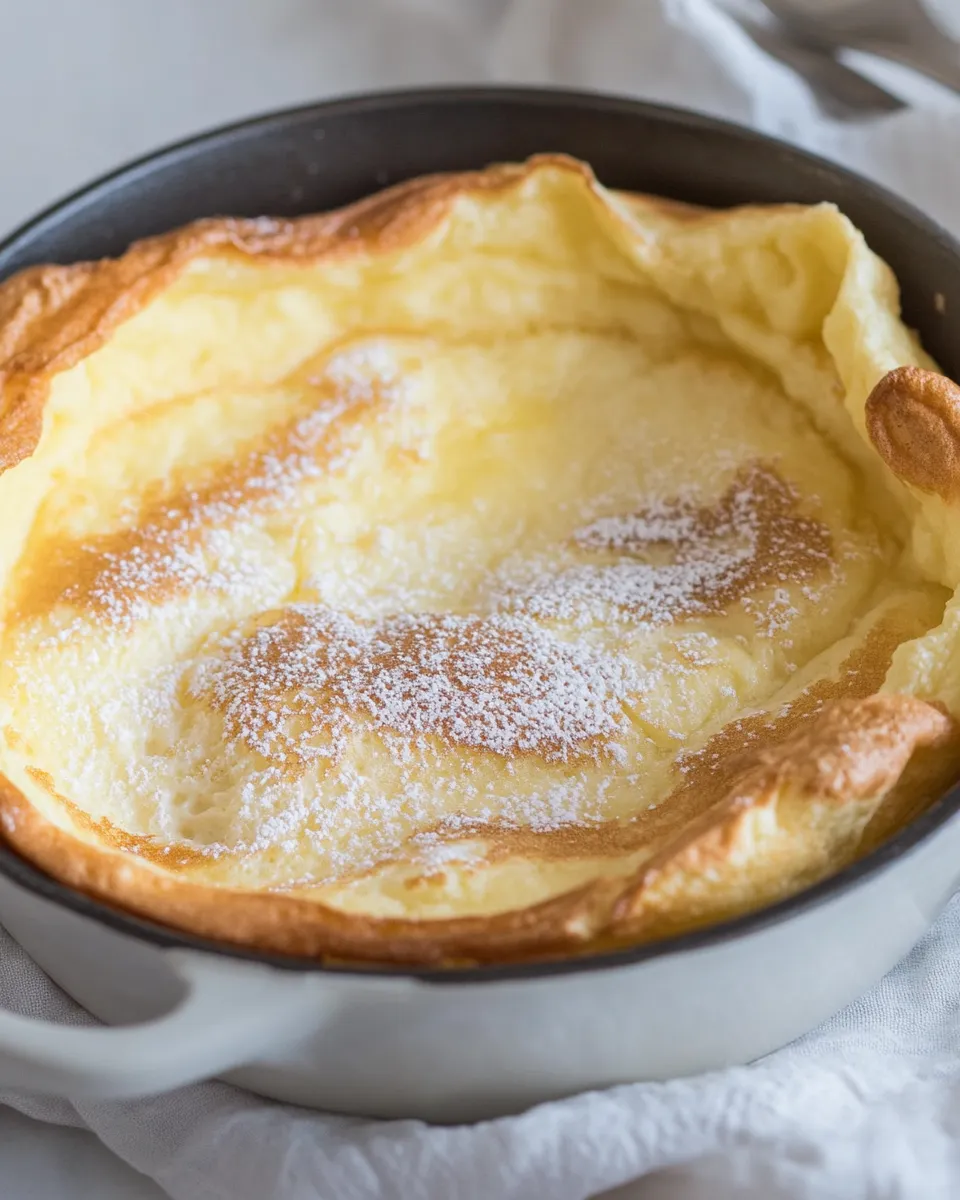
This dish punches above its weight. It looks and tastes special, yet it comes together with pantry basics and a few minutes of active work. The dramatic oven rise gives a bakery-style presentation without complicated folding or flipping. It’s also extremely flexible: serve it sweet for breakfast or dessert, or use savory toppings for a brunch main.
Because it cooks in one skillet, cleanup is quick. If your skillet is well-seasoned, the browned butter adds complexity without sticking. The batter rests briefly rather than requiring long fermentation, so you can pull it together even on a busy morning. And the texture—airy center with crisp edges—is unique enough to make a simple meal feel celebratory.
Smart Substitutions
Milk and dairy
If you’re out of whole milk, 2% works fine. For a dairy-free version, use an unsweetened plant milk like almond or oat; expect a slightly different texture and flavor. Do not substitute the butter with oil in the skillet—the butter browns and flavors the edges in a way oil won’t replicate.
Flour options
All-purpose flour gives the classic structure. If you need gluten-free, a 1:1 gluten-free baking blend can work, but expect a bit less puff and a different crumb. Measure by spooning the flour into the cup and leveling it to avoid a dense batter.
Sugar and flavor
The 2 tablespoons of granulated sugar are modest; you can reduce it by half if you prefer less sweetness. Vanilla can be omitted or swapped for a pinch of cinnamon or lemon zest depending on your topping choices.
Equipment at a Glance
Minimal equipment keeps this achievable in any kitchen. You need a blender (or a whisk and a bowl if you prefer to mix by hand, though the blender yields a smoother batter), a 10-inch cast iron skillet, oven mitts, and a measuring set. A trivet or heatproof surface is essential for setting the hot skillet down when you remove it from the oven.
Why cast iron? It holds and transfers heat evenly, which helps the batter rise and the edges brown. If you don’t have cast iron, use an oven-safe heavy-bottomed skillet or baking dish of similar size; results will be close, but the crisp edges might be less pronounced.
Avoid These Traps
Don’t skip preheating the skillet. Pouring batter into a cold skillet will prevent that dramatic oven puff and crisp edge. Also, avoid opening the oven door during baking. A sudden temperature drop can deflate the Dutch baby.
Resist the urge to overmix. Blend briefly until smooth; overbeating can incorporate too much air and lead to uneven texture. Finally, don’t skip the brief rest. Fifteen minutes allows the flour to hydrate and helps produce a smoother, more cohesive rise.
Better Choices & Swaps
Use unsalted butter so you control the salt level. If your butter is very salty, it can throw off balance. Opt for fresh eggs and real vanilla extract for cleaner flavor. For toppings, fresh berries add acidity and brightness—frozen berries can be used in a pinch, but thaw and drain them to avoid watery spots.
If you want to make it more substantial, add a side of thick-cut bacon or sautéed mushrooms and herbs for a savory twist. For a lighter finish, skip whipped cream and use a squeeze of lemon plus a dusting of powdered sugar.
If You’re Curious
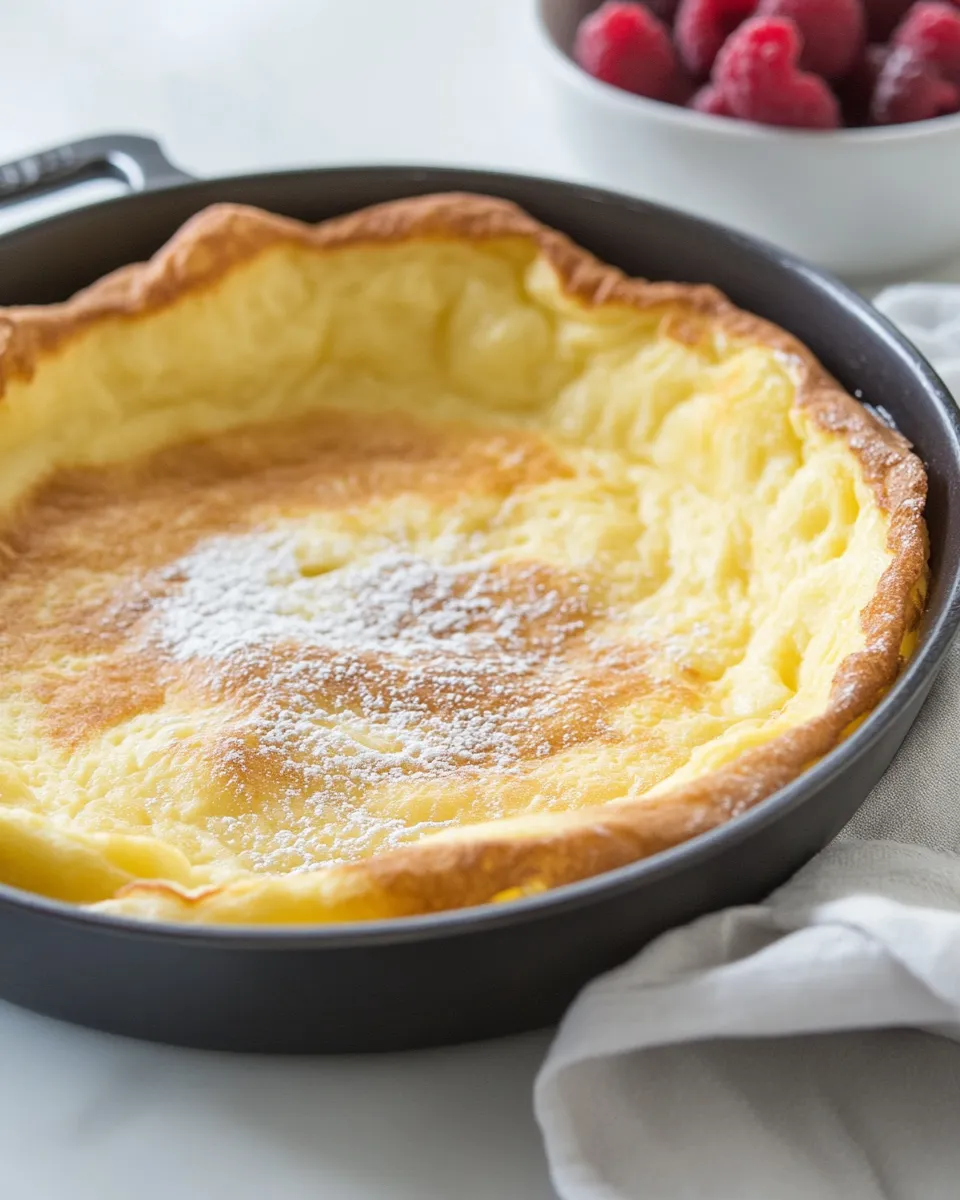
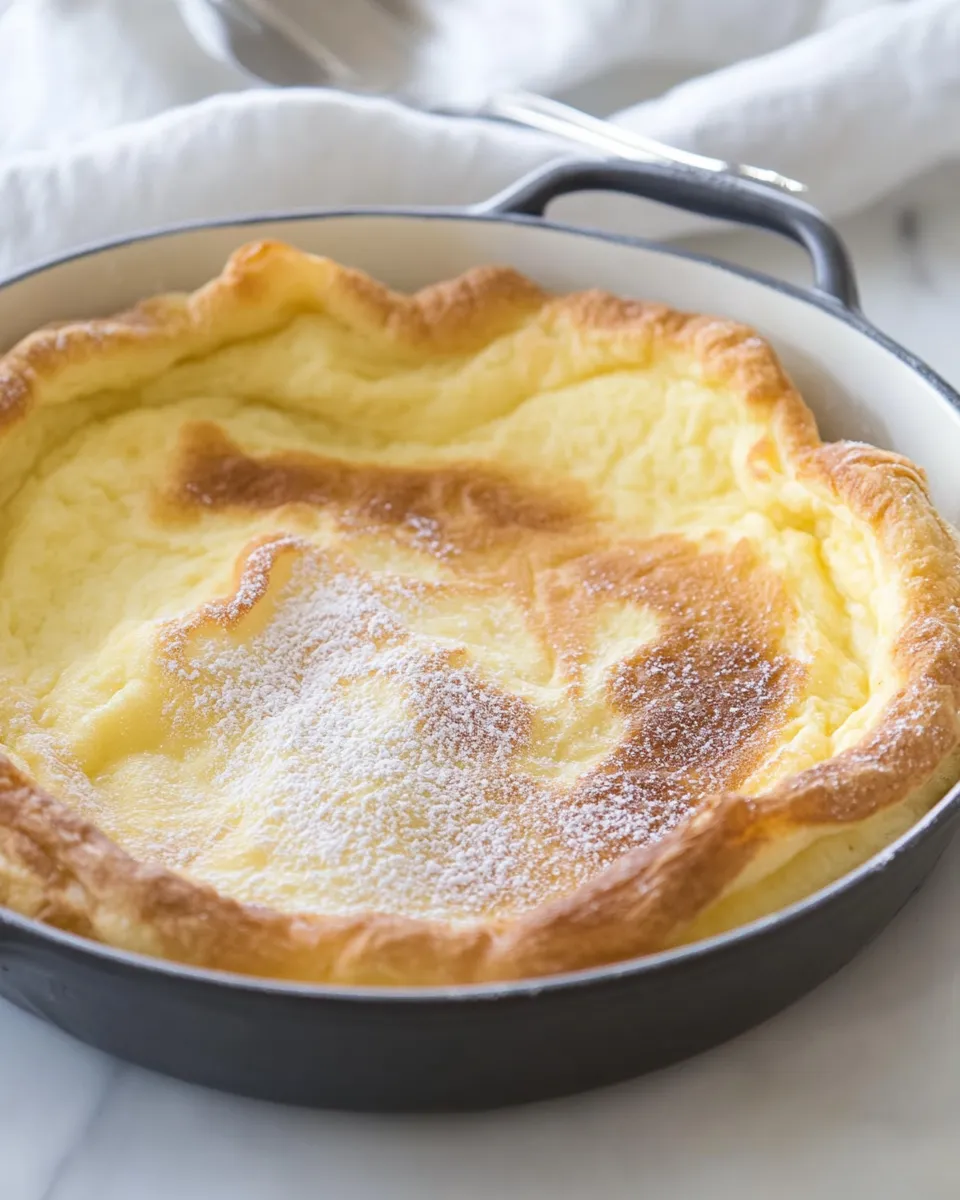
The Dutch baby has roots in German pancakes and popovers; it’s essentially a batter that puffs when hot air expands inside it during baking. The high oven temperature and hot skillet combine to create steam and lift. Once out of the oven, gravity wins and the center settles slightly while the edges remain tall and crisp.
Texture-wise, think of it as an oven pancake that’s part soufflé, part popover. It’s best enjoyed the same day it’s made for peak puffiness. The simplicity of ingredients means small adjustments—temperature, skillet heat, or resting time—can noticeably change the final result, so stick to the method the first few times.
Storage Pro Tips
Leftovers store well for a day or two in the refrigerator. Cool the Dutch baby completely, then wrap tightly or place in an airtight container. Reheat gently in a 350°F (175°C) oven for 5–8 minutes to revive some crispness—avoiding the microwave helps prevent sogginess.
For longer storage, you can freeze slices flat between sheets of parchment in a freezer bag. Reheat from frozen in a preheated oven at 350°F until warm. Note: frozen and reheated pieces won’t regain the original puff but will still taste good.
Common Qs About Dutch Baby Pancake
Q: Can I make the batter ahead of time?
A: You can refrigerate the batter for a few hours, but I prefer letting it rest at room temperature for at least 15 minutes right before baking. If chilled, bring it back to room temperature and give it a quick stir.
Q: Why didn’t mine puff?
A: The most common reasons are a skillet that wasn’t hot enough, oven temperature too low, or opening the oven during baking. Make sure the skillet is in the oven while it preheats and don’t disturb the oven until the timer is done.
Q: Can I make multiple Dutch babies at once?
A: You can double the recipe and use two skillets if your oven holds them both without crowding. Alternatively, bake in a larger shallow pan—just watch the bake time closely, as depth affects rise.
Q: Is a blender necessary?
A: No, but it helps achieve a perfectly smooth batter quickly. Whisking vigorously by hand works too; aim for a lump-free batter and let it rest as directed.
Make It Tonight
Gather the ingredients, preheat the oven with your skillet inside, and blend the batter while the oven comes up to temperature. The whole process from prep to table takes less than 30 minutes. Serve warm with a sprinkle of powdered sugar, a handful of fresh berries, and a drizzle of honey or syrup. It’s an easy recipe that reads like a special occasion—perfect for a weekday treat or an impromptu brunch with friends.
Have fun with toppings and timing. Once you get comfortable with the rhythm—blend, rest, pour, bake—you’ll find this Dutch Baby becomes a reliable, impressive dish in your repertoire. Make it tonight and enjoy the simple, buttery lift.
Super Easy Dutch Baby Pancake Recipe
Equipment
- 10-inch cast iron skillet
- Blender
- Oven
- Oven mitts
- heatproof surface or trivet
Ingredients
Ingredients
- 3 large eggs
- 3/4 cupmilk
- 3/4 cupall-purpose flour
- 2 tbspgranulated sugar
- 1 tspvanilla extract
- pinchsalt
- 3 tbspbutter
- Powdered Sugar
- Fresh berries
- Whipped Cream
- Honey or Syrup
Instructions
Instructions
- Preheat the oven to 425°F (220°C). Place a 10-inch cast iron skillet in the oven while it heats to get hot.
- In a blender, combine 3 large eggs, 3/4 cup milk, 3/4 cup all-purpose flour, 2 tablespoons granulated sugar, 1 teaspoon vanilla extract, and a pinch of salt.
- Blend the mixture for 10 seconds, scrape down the sides of the blender, then blend again until the batter is completely smooth.
- Let the batter rest at room temperature for at least 15 minutes.
- When the batter has rested and the oven is preheated, carefully remove the hot skillet from the oven using oven mitts and set it on a heatproof surface or trivet.
- Add 3 tablespoons butter to the hot skillet. Allow the butter to melt fully and swirl the skillet so the butter coats the bottom and sides.
- Quickly pour the rested batter into the hot, buttered skillet and immediately return the skillet to the oven.
- Bake for 15–20 minutes, until the Dutch baby is puffed and golden brown at the edges.
- Remove the skillet from the oven, transfer the Dutch baby to a serving plate or serve from the skillet, and dust with powdered sugar.
- Top with fresh berries, whipped cream, and drizzle honey or syrup as desired. Cut into slices and enjoy.