This is the version I turn to when I want something fast, punchy, and deeply satisfying. Ribbons of wide rice noodles pick up a glossy, salty-sweet sauce while seared ribeye and a handful of Thai basil give the dish its characteristic hit of umami and herbaceous heat. It comes together in about the time your rice cooker would take to finish—only better.
I keep the method straightforward so the flavors shine: a quick sauce you whisk in a bowl, high heat in a hot skillet or wok, and a final toss with fresh Thai basil. The steps are practical, the timing tight, and the payoff is restaurant-level Drunken Noodles at home.
What Goes In
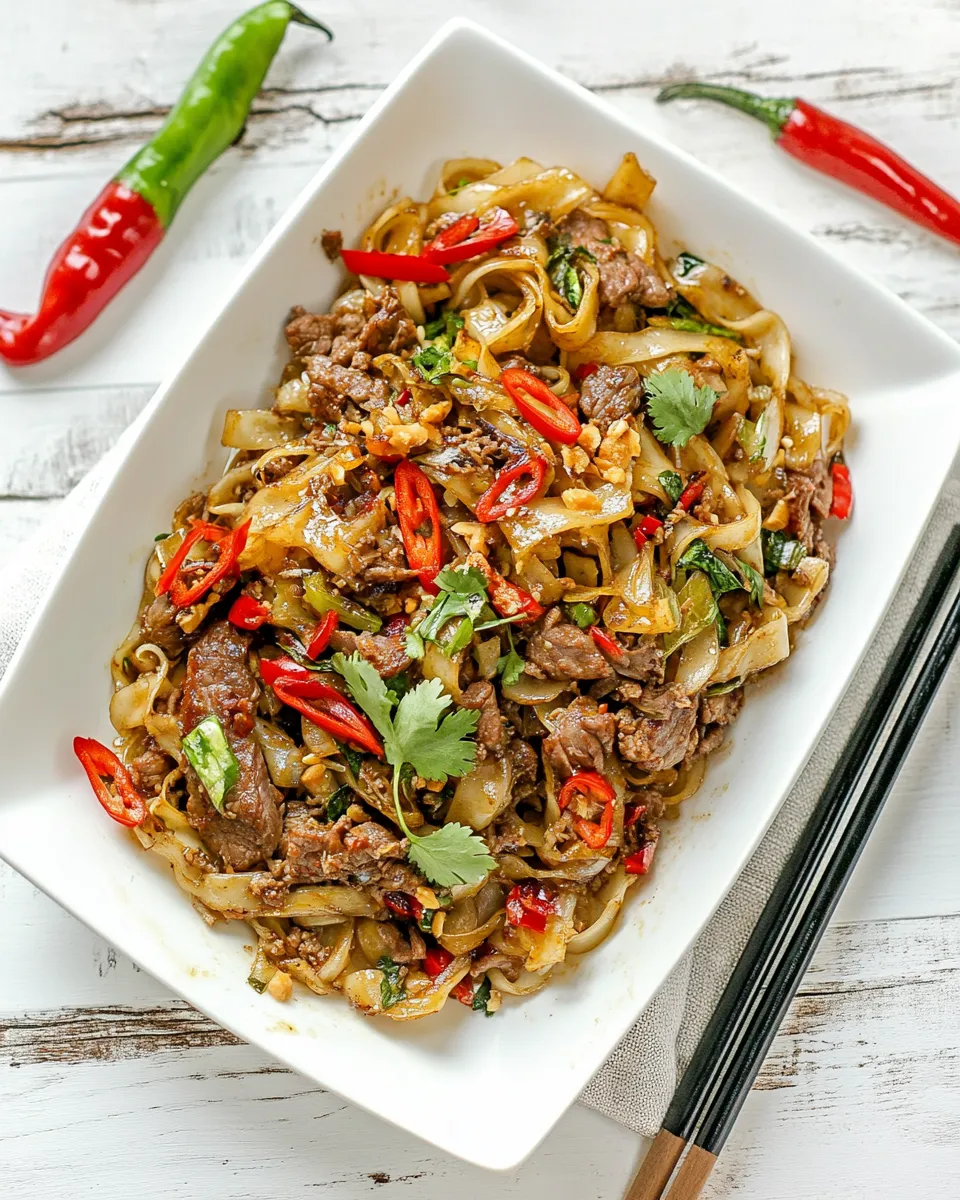
Ingredients
- 8 ounces wide rice noodles — the backbone of the dish; wide noodles hold sauce and char quickly.
- 1/4 cup low sodium soy sauce — provides savory saltiness without overpowering; low-sodium keeps the balance with fish and oyster sauces.
- 1/4 cup water — thins the sauce so it coats the noodles smoothly.
- 3 tablespoons oyster sauce — deep umami and a touch of sweetness; key to the savory backbone.
- 1 tablespoon dark brown sugar — balances the salt and adds a rounded caramel note.
- 1 tablespoon fish sauce — concentrated savory flavor; a little goes a long way.
- 2 tablespoons olive oil — used for searing the beef and quick stir-frying; it tolerates high heat and gives a clean sear.
- 1 pound thinly sliced ribeye steak — rich, quick-cooking beef that stays tender when sliced thin.
- 2–4 Thai red chilies, seeded and thinly sliced — control heat level here; seed them for less fire.
- 1 red bell pepper, cored and thinly sliced — adds color, crunch, and a touch of sweetness.
- 1 small yellow onion, peeled and thinly sliced — softens quickly under high heat and adds savory depth.
- 4 cloves garlic, minced — quick hit of aromatic flavor; add at the right moment to avoid burning.
- 1 cup Thai basil leaves, roughly chopped — the signature herbal finish; tear or chop just before serving.
- 2 green onions, thinly sliced, green parts only — bright finish and color; use the green tops for mild onion flavor.
Thai Beef Drunken Noodles — Do This Next
- Cook the 8 ounces wide rice noodles according to the package instructions until al dente. Drain, rinse under cold water to stop cooking, and set aside.
- In a medium bowl, whisk together 1/4 cup low sodium soy sauce, 1/4 cup water, 3 tablespoons oyster sauce, 1 tablespoon dark brown sugar, and 1 tablespoon fish sauce until the sugar is dissolved. Set the sauce aside.
- Prepare remaining ingredients: seed and thinly slice 2–4 Thai red chilies; core and thinly slice the red bell pepper; peel and thinly slice the small yellow onion; mince 4 cloves garlic; roughly chop 1 cup Thai basil leaves; thinly slice the green parts of 2 green onions only.
- Heat a large, high-sided skillet or wok over high heat until very hot. Add 2 tablespoons olive oil and swirl to coat the pan.
- Add 1 pound thinly sliced ribeye steak in a single layer and sear, stirring as needed, until the beef is mostly browned (about 1–2 minutes).
- Add the sliced Thai red chilies, red bell pepper, and yellow onion to the pan. Stir-fry quickly, moving the ingredients so they don’t burn, until the vegetables are just starting to soften and the beef is cooked through (about 1–2 minutes).
- Add the minced garlic and sauté for about 30 seconds until fragrant.
- Pour in the prepared sauce and add the cooked rice noodles. Use tongs or a spatula to toss and combine, continuing to cook until the sauce reduces and begins to coat the noodles and a little browning appears on the noodles (about 2–3 minutes).
- Remove the pan from the heat, stir in the chopped Thai basil and the green parts of the sliced green onions, toss to combine, and serve immediately.
What Sets This Recipe Apart
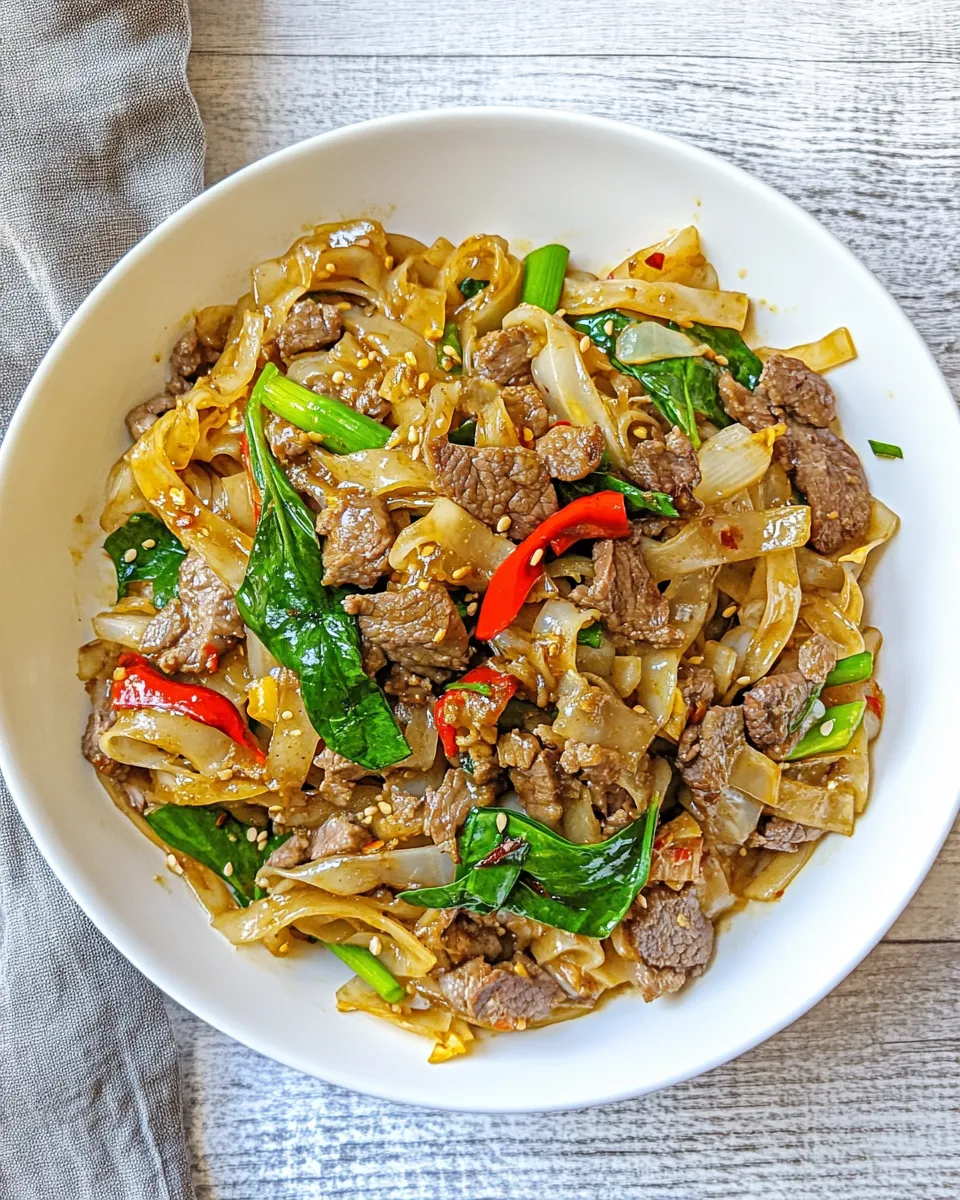
- High-heat searing for beef: quick cooking preserves tenderness and gives quick caramelization.
- Balanced three-part sauce: soy, oyster, and fish sauce layer savory, sweet, and umami instead of relying on a single seasoning.
- Wide rice noodles with char: the recipe intentionally browns the noodles slightly so you get a mix of soft and smoky textures.
- Fresh Thai basil at the end: adding it off-heat preserves the aromatic oils, which is essential to the dish’s authentic fragrance.
- Speed without shortcuts: from prep to plate this is a true stir-fry—fast, but not rushed—so the textures stay bright.
Allergy-Friendly Substitutes
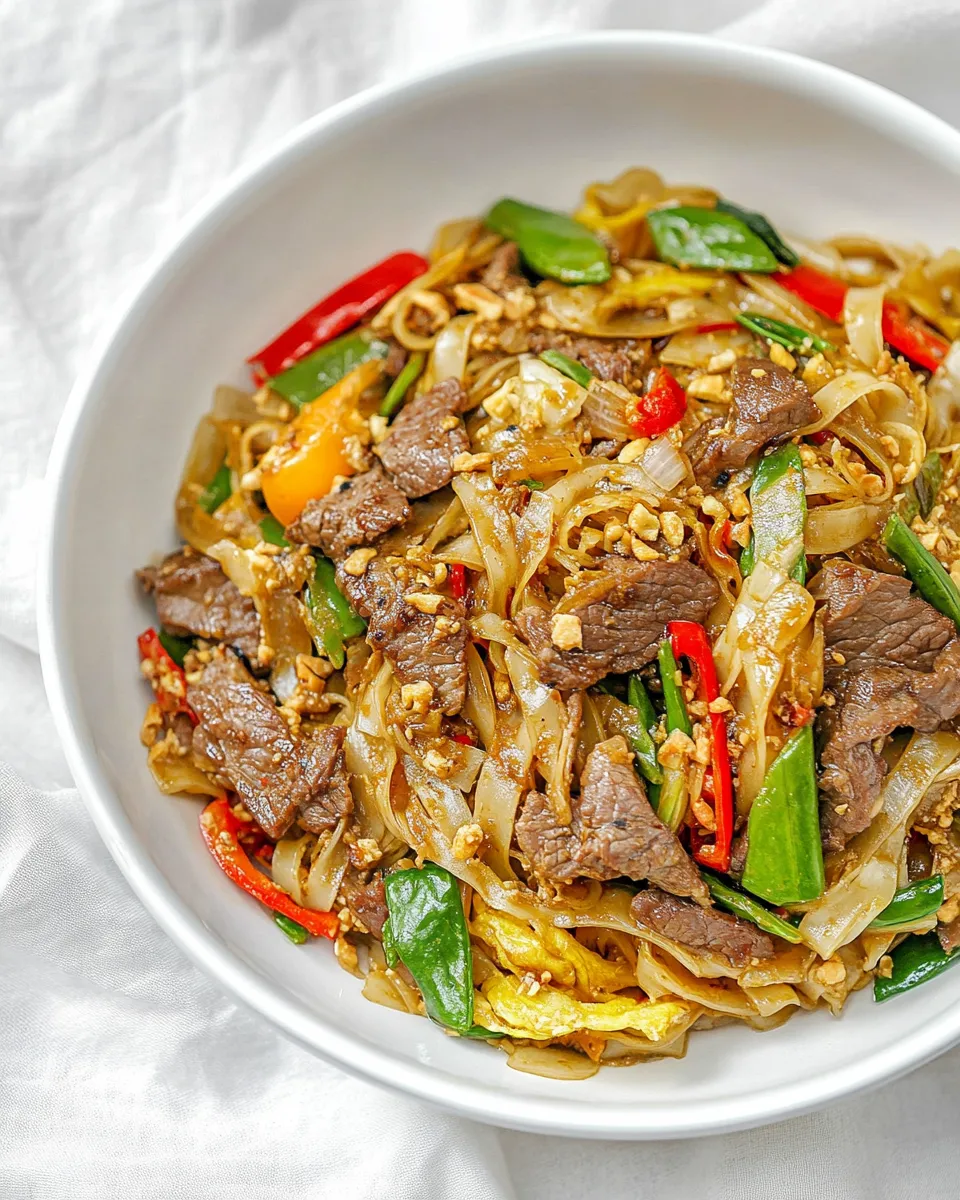
- Gluten: swap low sodium soy sauce for tamari or a certified gluten-free soy alternative like coconut aminos.
- Shellfish (oyster sauce): use a mushroom-based stir-fry sauce or a gluten-free vegetarian oyster sauce made from mushrooms.
- Fish sauce: if you must avoid fish, try a combination of tamari and a splash of seaweed-infused water for some marine umami, or use a commercial vegan fish sauce alternative.
- Beef: substitute thinly sliced chicken breast or thighs, or firm tofu pressed, sliced, and pan-seared for a vegetarian option.
- Oil sensitivity: swap olive oil for a neutral high-heat oil like canola or sunflower if you prefer a lighter sear flavor.
Equipment & Tools
- Large, high-sided skillet or wok — high heat and room to toss make this essential.
- Tongs or a sturdy spatula — for turning and tossing noodles without breaking them.
- Medium bowl and whisk — to mix the sauce so the sugar dissolves evenly.
- Cutting board and sharp knife — quick, even slicing keeps the beef tender and the veg uniform.
- Measuring cups and spoons — precise in this recipe keeps the salt-sweet balance right.
- Colander — for draining and rinsing the noodles to stop the cooking.
Frequent Missteps to Avoid
- Not heating the pan enough — if the pan isn’t very hot, you won’t get that quick sear and the beef can stew instead of caramelize.
- Overcooking the noodles — follow package timings and rinse in cold water immediately to prevent mushiness.
- Adding garlic too early — garlic burns fast; add it after the veg have started to soften.
- Too much sauce at once — the recipe’s liquid is balanced for these noodle and veg amounts; adding more will steam the dish instead of producing a glaze.
- Using thick-cut steak — slice the beef thinly against the grain for tenderness and quick cooking.
In-Season Flavor Ideas
- Summer: toss in thin slices of zucchini or summer squash alongside the bell pepper for extra veg and freshness.
- Late summer/early fall: add halved cherry tomatoes at the end off-heat for sweet acidity that brightens the dish.
- Winter: swap the bell pepper for thin strips of carrot or snap peas to keep crunch when tomatoes aren’t available.
- Herb variations: if Thai basil is unavailable, a mix of sweet basil and a little mint can approximate the aromatic lift, though it’s not identical.
Notes from the Test Kitchen
- Rice noodles: different brands vary in cook time and thickness. Check a minute early and taste for al dente; the final toss will finish them.
- Sauce balance: the combo of low sodium soy, oyster, fish sauce, and brown sugar is deliberately layered. Taste the sauce before adding if you prefer more sweetness or salt, but change in small increments.
- Staging prep: have everything chopped and bowls set out before you heat the pan. Stir-fries move quickly and you don’t want to be chopping over a blazing wok.
- Searing tip: spread the beef in as much of a single layer as possible when you add it. Work in two quick batches if needed to avoid steaming.
- Final toss: remove from heat before adding the basil to preserve its bright perfume; residual heat is enough to wilt it gently.
Prep Ahead & Store
- Make-ahead prep: slice beef and vegetables up to a day ahead and keep them refrigerated in separate containers. Mix the sauce and store in the fridge as well; whisk before using.
- Noodles ahead: cook and rinse noodles, toss lightly with a teaspoon of oil, and refrigerate up to a day. Bring to room temperature or briefly blanch before stir-frying if they stick together.
- Leftovers: keep in an airtight container in the refrigerator for up to 2 days. Flavors intensify; you may wish to add a splash of water or soy when reheating to loosen the sauce.
- Reheating: gently reheat over medium-high in a skillet, tossing until warmed through. Avoid microwaving for best texture—pan reheating keeps the noodles from getting soggy.
Thai Beef Drunken Noodles Q&A
- Can I substitute another protein? Yes. Thinly sliced chicken, pork, or firm tofu all work. Adjust sear time: chicken and pork may need a little longer.
- Are the chilies mandatory? No. Use fewer chilies or omit them for a milder dish. You can add chili flakes or a drizzle of chili oil at the table if diners want more heat.
- What noodle width is best? Wide rice noodles are traditional and take the sauce well. If you only have narrower rice noodles, reduce cook time and watch for breakage while tossing.
- Why does the recipe rinse the noodles? Rinsing stops carryover cooking and removes excess starch so the noodles don’t clump in the wok.
- Can I double this recipe? Yes, but work in batches when searing the beef and stir-frying so you maintain high heat and good color.
Wrap-Up
This Thai Beef Drunken Noodles recipe is about smart timing and bold, layered flavors. Keep your prep organized, your pan very hot, and add the basil at the end—those three steps make a deceptively simple dish taste like you spent hours on it. It’s speedy, flexible, and consistently satisfying on weeknights or when you want a quick, impressive meal.
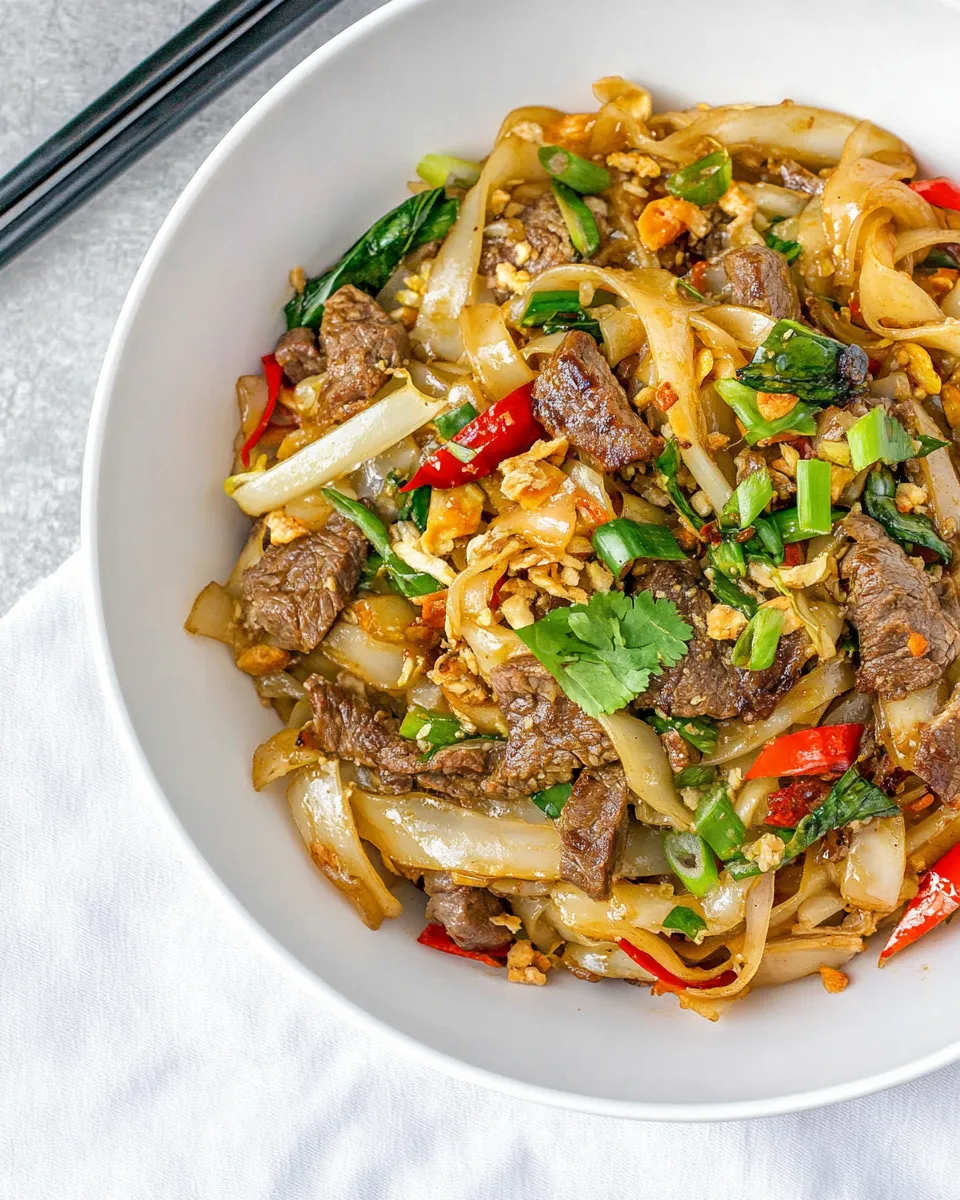
Thai Beef Drunken Noodles
Equipment
- Less Sodium Soy Sauce
- Fish Sauce
- Oyster Sauce
Ingredients
Ingredients
- 8 ounceswide rice noodles
- 1/4 cuplow sodium soy sauce
- 1/4 cupwater
- 3 tablespoonsoyster sauce
- 1 tablespoondark brown sugar
- 1 tablespoonfish sauce
- 2 tablespoonsolive oil
- 1 poundthinly sliced ribeye steak
- 2-4 Thai red chilies seeded and thinly sliced
- 1 red bell pepper cored and thinly sliced
- 1 smallyellow onion peeled and thinly sliced
- 4 clovesgarlic minced
- 1 cupThai basil leaves roughly chopped
- 2 green onions thinly sliced, green parts only
Instructions
Instructions
- Cook the 8 ounces wide rice noodles according to the package instructions until al dente. Drain, rinse under cold water to stop cooking, and set aside.
- In a medium bowl, whisk together 1/4 cup low sodium soy sauce, 1/4 cup water, 3 tablespoons oyster sauce, 1 tablespoon dark brown sugar, and 1 tablespoon fish sauce until the sugar is dissolved. Set the sauce aside.
- Prepare remaining ingredients: seed and thinly slice 2–4 Thai red chilies; core and thinly slice the red bell pepper; peel and thinly slice the small yellow onion; mince 4 cloves garlic; roughly chop 1 cup Thai basil leaves; thinly slice the green parts of 2 green onions only.
- Heat a large, high-sided skillet or wok over high heat until very hot. Add 2 tablespoons olive oil and swirl to coat the pan.
- Add 1 pound thinly sliced ribeye steak in a single layer and sear, stirring as needed, until the beef is mostly browned (about 1–2 minutes).
- Add the sliced Thai red chilies, red bell pepper, and yellow onion to the pan. Stir-fry quickly, moving the ingredients so they don’t burn, until the vegetables are just starting to soften and the beef is cooked through (about 1–2 minutes).
- Add the minced garlic and sauté for about 30 seconds until fragrant.
- Pour in the prepared sauce and add the cooked rice noodles. Use tongs or a spatula to toss and combine, continuing to cook until the sauce reduces and begins to coat the noodles and a little browning appears on the noodles (about 2–3 minutes).
- Remove the pan from the heat, stir in the chopped Thai basil and the green parts of the sliced green onions, toss to combine, and serve immediately.
Notes
If you cannot find Thai basil you can use Italian basil as a substitute.
Rice noodles can often be found in the International section of your supermarket.