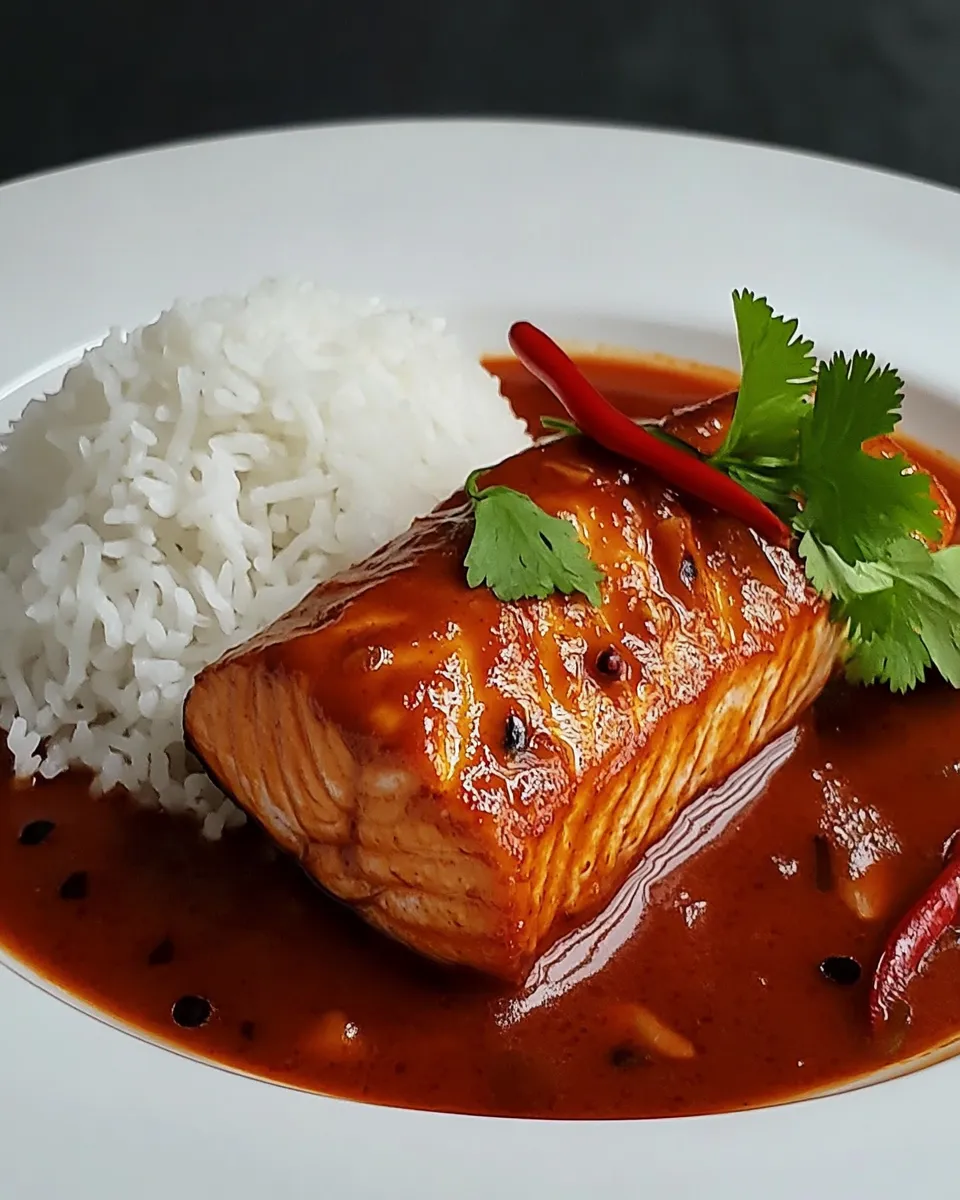
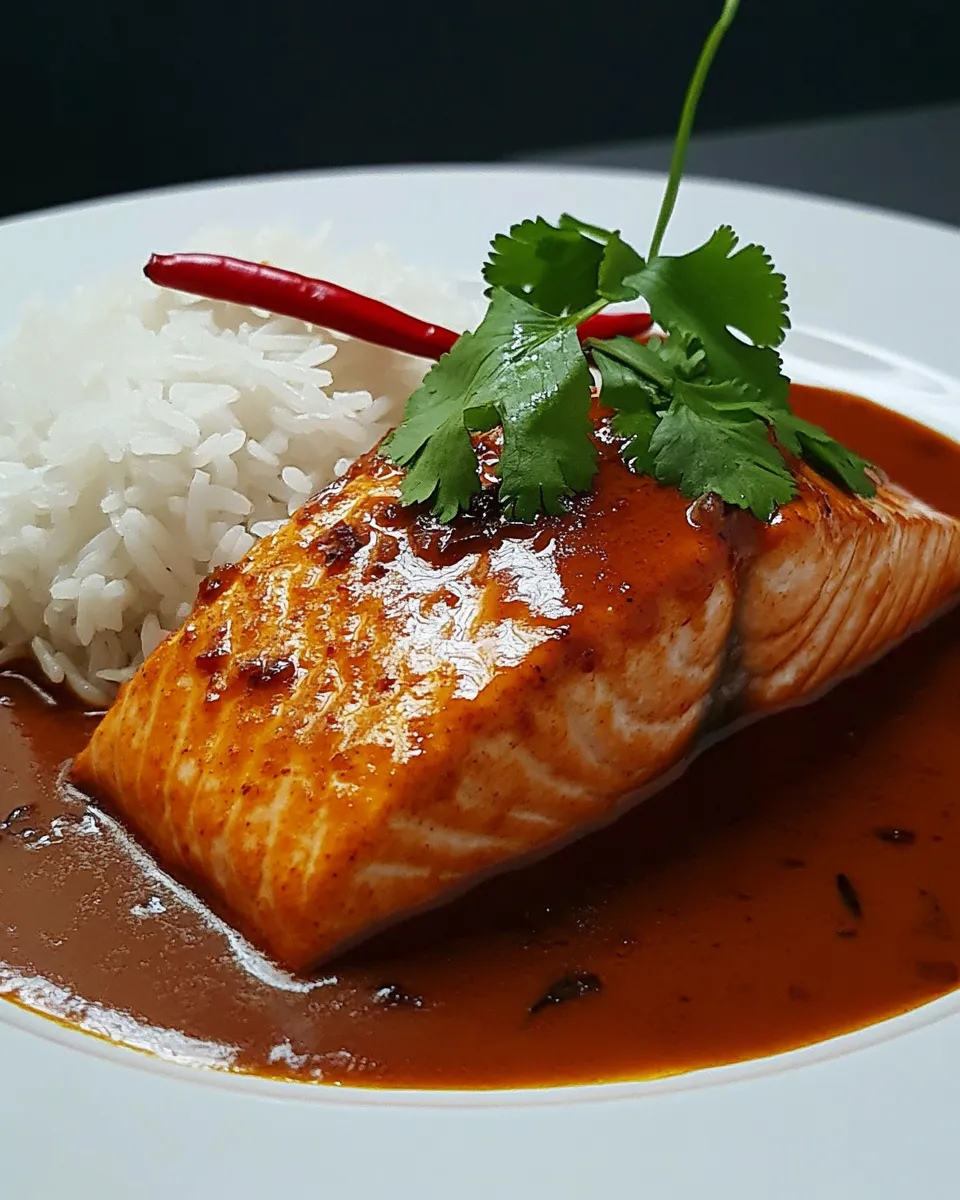
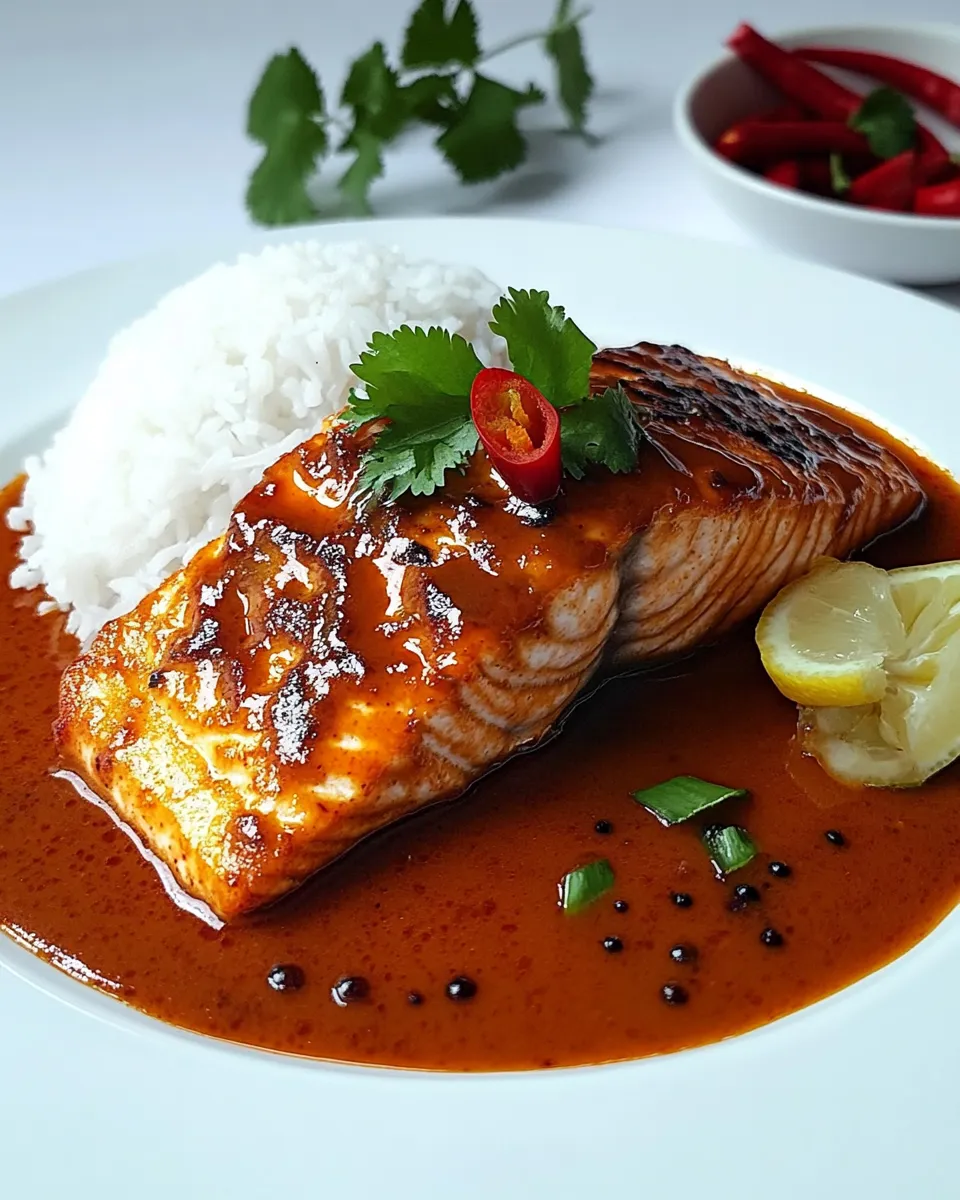
This is a straightforward, restaurant-style Choo Chee Pla you can make at home without fuss. Crisp-skinned salmon meets a silky, fragrant red curry sauce that clings to every bite. The recipe balances richness and aromatics in a way that feels indulgent but effortless.
You’ll find the method below laid out step by step, with clear notes on ingredients, substitutions, and common pitfalls. I write recipes I want in my kitchen: practical, precise, and reliable. Read through once, then cook with confidence.
Ingredients
- 1 whole salmon fillet — cut into portions; portioning first makes even cooking easier.
- 100g red curry paste — the flavor base; use a good-quality Thai paste for depth.
- 200ml coconut milk — gives the sauce its creamy body and balances heat.
- 1 tbsp fish sauce — primary salty/umami seasoning; add to taste.
- 1 tbsp sugar — rounds out acidity and heat; palm sugar if you have it.
- red chili — for garnish; adds color and a fresh snap of heat.
- Kaffir lime leaves — for garnish; tear or slice thinly to release fragrance.
- 1 tsp chicken bouillon powder — optional; boosts savory depth if desired.
- oil — for cooking; a neutral oil with a high smoke point works best.
Shopping List
- Salmon fillet — buy a whole fillet and ask the fishmonger to leave the skin on if you want crisp skin.
- Red curry paste (100g) — look for Thai brands like Mae Ploy, Maesri, or a trusted local maker.
- Coconut milk (200ml) — full-fat gives the best texture and flavor.
- Fish sauce (1 tbsp) and sugar (1 tbsp) — keep both on hand to balance seasoning.
- Red chili and kaffir lime leaves — small items but they matter for garnish and aroma.
- Chicken bouillon powder (1 tsp) — optional; skip if keeping it simple.
- Neutral cooking oil — sunflower, grapeseed, or light vegetable oil.
Thai Red Curry Salmon (Choo Chee Pla) Cooking Guide
- If the salmon fillet is not already portioned, cut it into individual portions and pat each portion dry with paper towels.
- In a pan over medium heat, add a little oil and then the 100g red curry paste. Stir-fry the paste until fragrant (about 1–2 minutes).
- Pour in half of the 200ml coconut milk and stir, cooking until the mixture thickens slightly. Add the remaining coconut milk, 1 tbsp fish sauce, 1 tbsp sugar, and 1 tsp chicken bouillon powder (optional). Reduce heat and simmer gently until the sauce is well combined and slightly thickened. Taste and, if desired, adjust using the fish sauce or sugar listed.
- While the sauce simmers on low, heat a little oil in a separate pan over medium heat. Place the salmon portions skin-side down and cook undisturbed for 5–7 minutes to crisp the skin.
- Flip the salmon and cook the other side for 2–3 minutes, or until the salmon is just cooked through to your liking. Remove from the pan and keep warm.
- Spoon the curry sauce over the salmon portions. Garnish with sliced red chili and kaffir lime leaves before serving.
Reasons to Love Thai Red Curry Salmon (Choo Chee Pla)
- Speed: It comes together quickly—most of the work is hands-off simmering and a single pan sear.
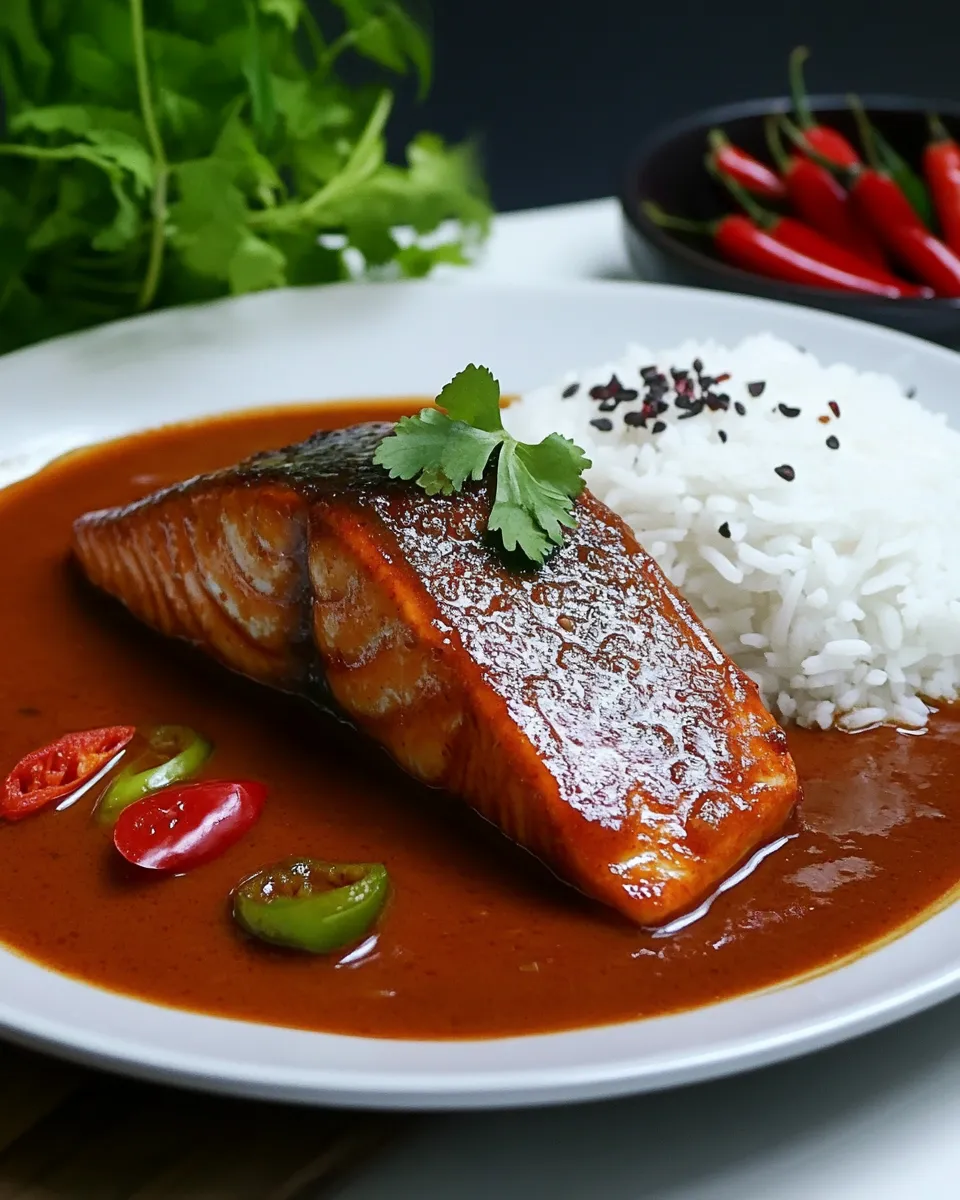
- Texture contrast: Crisp skin paired with a silk-smooth curry sauce is deeply satisfying.
- Flavor balance: Sweet, salty, coconut-rich, and fragrant from lime leaves and curry paste—complex without complicated technique.
- Impressive on the plate: It looks and tastes like something from a good Thai restaurant but is doable at home.
- Flexible for sides: Rice, steamed greens, or a simple salad all pair beautifully.
What to Use Instead
- If you don’t have a whole salmon fillet: Buy pre-portioned salmon but keep the skin on if possible for crisping.
- If red curry paste is too spicy or unavailable: Use a milder Thai red curry paste and reduce the amount to taste; the recipe calls for 100g, so start with less and add more into the sauce during step 3.
- If you don’t have kaffir lime leaves: Use a thin strip of lime zest as a last resort—it’s not identical, but it brightens the sauce.
- If you prefer another oil: Use any neutral, high smoke point oil for searing. Olive oil will work in a pinch but has a stronger flavor.
- If you skip chicken bouillon powder: The fish sauce provides umami; the bouillon is purely optional for extra depth.
Cook’s Kit
Essential tools
- Two heavy-bottomed frying pans or a pan and a skillet — one for the curry sauce, one for searing the salmon.
- Sharp chef’s knife — for portioning the fillet cleanly.
- Paper towels — drying salmon before searing is critical for crisp skin.
- Spoon or ladle — for spooning sauce over the fish when plating.
Nice-to-have
- Fish spatula — helps flip delicate fillets without breaking them.
- Thermometer — if you like to track doneness precisely (salmon is safe at 63°C/145°F, but many prefer slightly less).
Avoid These Traps
- Don’t crowd the pan when searing. Overcrowding steams the fish and prevents crisp skin—work in batches if needed.
- Don’t skip drying the salmon. Moisture is the enemy of a crisp sear.
- Don’t burn the curry paste. Stir-frying it briefly releases aroma; if it browns too much it turns bitter. Moderate heat and constant stirring for 1–2 minutes is enough.
- Don’t over-thicken the sauce. The sauce should coat the back of a spoon but still flow; too thick and it feels heavy on the fish.
- Don’t assume more fish sauce is always better. Add, taste, adjust. Fish sauce is powerful and can quickly overpower a balanced curry.
How to Make It Lighter
- Use light coconut milk or dilute the coconut milk with a little water—this reduces fat but keeps flavor.
- Reduce oil for searing to just what’s needed to prevent sticking; a non-stick pan helps for less oil usage.
- Serve with steamed vegetables or a big green salad instead of heavy sides to keep the meal balanced.
- Cut portions slightly smaller if you want fewer calories per serving; the sauce is rich so a smaller fillet still satisfies.
Recipe Notes & Chef’s Commentary
This Choo Chee Pla stays true to classic flavors while remaining accessible. The red curry paste is the hero here—it gives the sauce its red color, aromatic lift, and spice. I recommend tasting the paste before cooking so you know its heat level and saltiness; pastes vary widely between brands and homemade batches.
When frying the paste in step 2, use medium heat and stir constantly for about 1–2 minutes. This wake-up call for the paste releases its essential oils and deepens flavor. Adding half the coconut milk first (step 3) helps the paste bloom and prevents lumps. Once it thickens, add the rest of the coconut milk and the seasonings.
For the salmon, keep skin-on and pat very dry. Heat the pan until the oil shimmers, then lay the fish away from you to prevent splatter. Resist moving the fillet while the skin sears; this is how you get that satisfying crisp. Cooking times in step 4 and 5 are guides—thickness and pan heat change exact times. If you like your salmon medium-rare, err toward the lower time; if you prefer well done, give it an extra minute or two after flipping.
Garnishes are simple but important. Thinly sliced red chili adds color and a fresh pop of heat. Kaffir lime leaves are aromatic—torn or sliced thinly they perfume the dish when scattered on top just before serving.
How to Store & Reheat
- Refrigeration: Store leftover salmon and sauce in an airtight container for up to 2 days. The texture of the skin will soften in the fridge.
- Reheating on the stove: Reheat the sauce gently in a small pan over low heat until warm. Warm the salmon briefly in a separate pan (skin-side down for 1–2 minutes) and spoon hot sauce over it.
- Microwave: Not ideal for the skin, but you can microwave gently at 50% power in short bursts, then re-crisp the skin in a hot pan for 30–60 seconds if desired.
- Freezing: I don’t recommend freezing once cooked—the texture of both salmon and sauce degrades. If you must, freeze the sauce separately for up to 1 month and add to freshly cooked salmon.
Troubleshooting Q&A
- Q: My paste burned when I stir-fried it. What happened?
A: The pan was too hot. Red curry paste should be cooked over medium heat for only 1–2 minutes with constant stirring. If it begins to darken rapidly, reduce heat and add half the coconut milk sooner to cool the pan. - Q: The sauce tastes flat. How do I fix it?
A: Adjust with small amounts of fish sauce for salt/umami and sugar for sweetness. A little more coconut milk can mellow it if it’s too intense. Remember to add and taste incrementally. - Q: My salmon stuck to the pan and tore. Tips?
A: Make sure the pan and oil are properly heated before adding fish. Pat the skin very dry. Give the fillet time to form a crust before flipping; if it resists, it’s not ready to flip yet. - Q: The skin isn’t crisp after searing.
A: You likely had too much moisture or the pan temperature was too low. Dry the skin thoroughly and make sure the oil is hot. Use medium to medium-high heat and avoid moving the fish while searing. - Q: The curry is too thin.
A: Simmer gently to reduce and thicken the sauce. Stir occasionally to prevent sticking. If you need faster thickening, remove a small amount of sauce, mash a little paste (or a pinch of cornstarch mixed with cold water) and whisk it back in—though cornstarch is not in the original ingredient list, so use sparingly and only if you accept the change.
Wrap-Up
Choo Chee Pla is a joyful weeknight or weekend dish: fast, impressive, and full of classic Thai flavors. Follow the steps in order—bloom the paste, build the sauce, and crisp the skin—and you’ll end up with a dish that’s balanced and restaurant-worthy. Keep the ingredients list tight and taste as you go. Enjoy it with steamed jasmine rice and something green to offset the richness.
Make it once, and you’ll find small ways to adapt it to your pantry: a little less paste for milder heat, or a touch more coconut for extra creaminess. Either way, the essentials stay the same: good salmon, fragrant paste, and simple, confident cooking.
Thai Red Curry Salmon (Choo Chee Pla)
Equipment
- Pan
- Paper Towels
Ingredients
Ingredients
- 1 whole salmon filletcut into portions
- 100 gred curry paste
- 200 mlcoconut milk
- 1 tbspfish sauce
- 1 tbspsugar
- red chilifor garnish
- Kaffir lime leavesfor garnish
- 1 tspchicken bouillon powder optional
- oilfor cooking
Instructions
Instructions
- If the salmon fillet is not already portioned, cut it into individual portions and pat each portion dry with paper towels.
- In a pan over medium heat, add a little oil and then the 100g red curry paste. Stir-fry the paste until fragrant (about 1–2 minutes).
- Pour in half of the 200ml coconut milk and stir, cooking until the mixture thickens slightly. Add the remaining coconut milk, 1 tbsp fish sauce, 1 tbsp sugar, and 1 tsp chicken bouillon powder (optional). Reduce heat and simmer gently until the sauce is well combined and slightly thickened. Taste and, if desired, adjust using the fish sauce or sugar listed.
- While the sauce simmers on low, heat a little oil in a separate pan over medium heat. Place the salmon portions skin-side down and cook undisturbed for 5–7 minutes to crisp the skin.
- Flip the salmon and cook the other side for 2–3 minutes, or until the salmon is just cooked through to your liking. Remove from the pan and keep warm.
- Spoon the curry sauce over the salmon portions. Garnish with sliced red chili and kaffir lime leaves before serving.