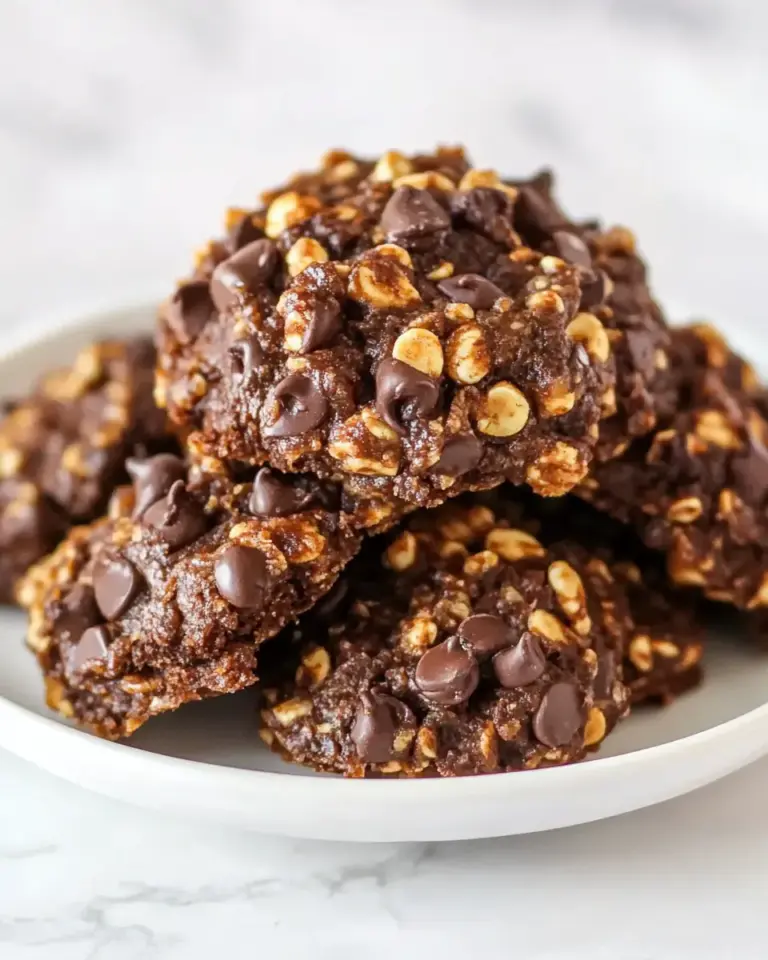
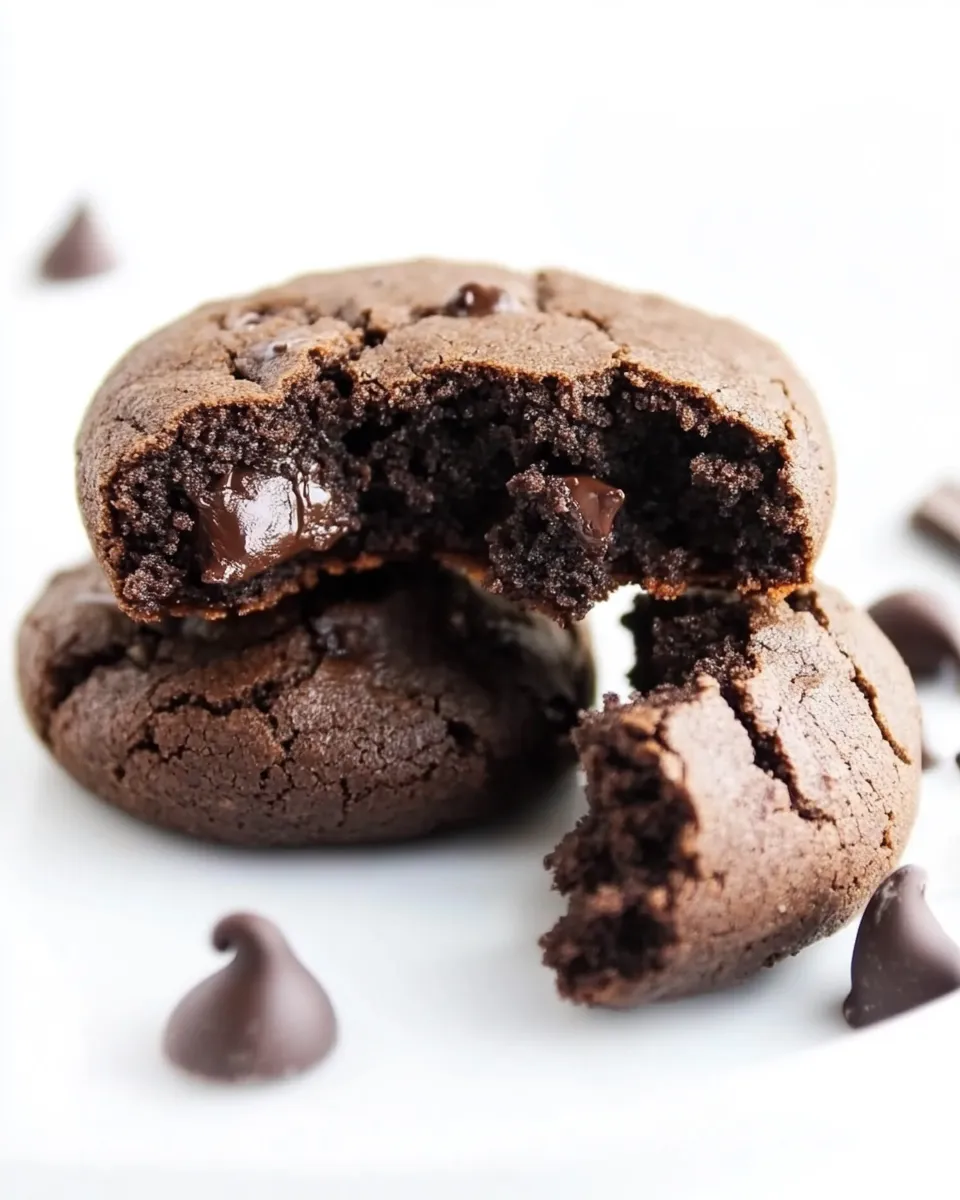
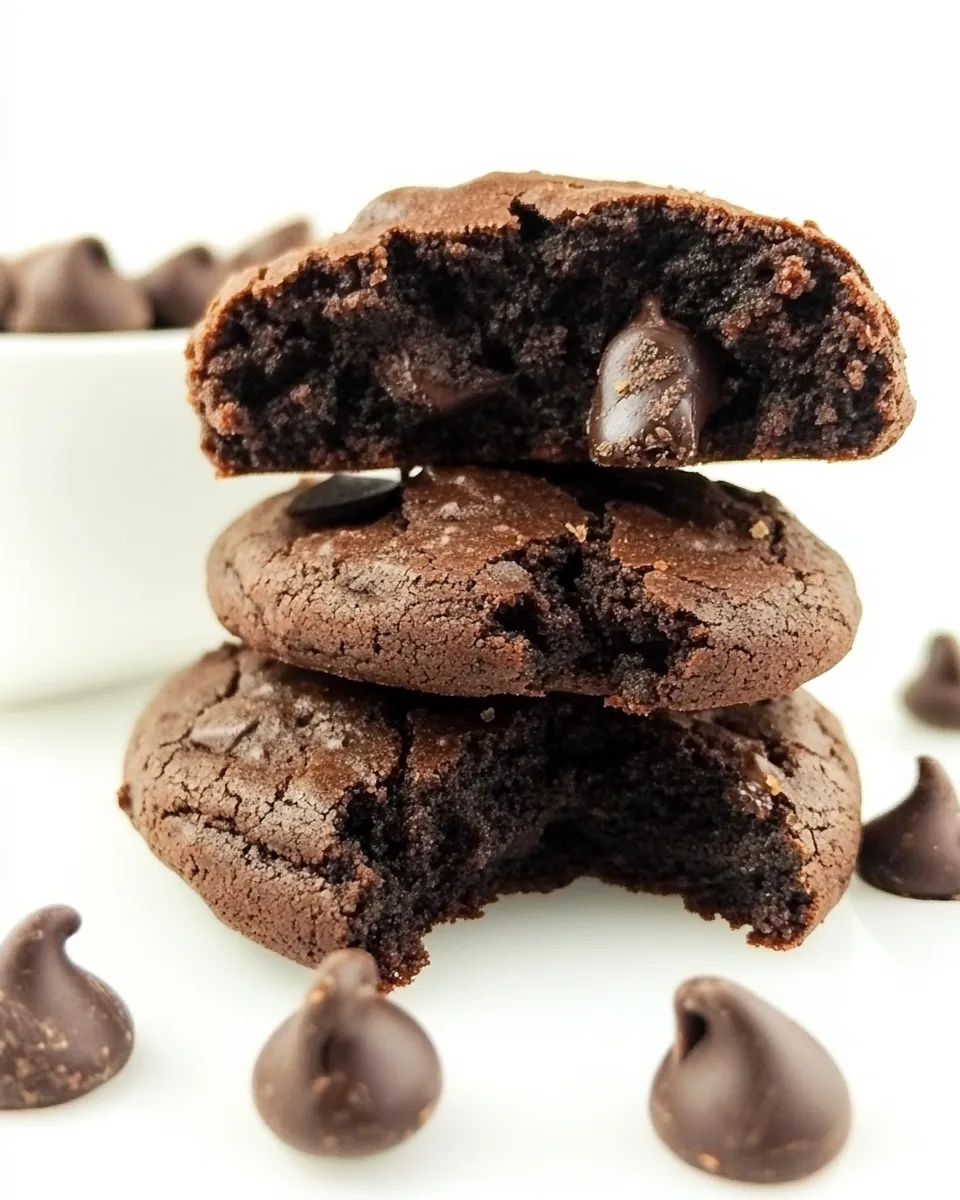
These cookies are the kind of recipe I make when I want chocolate, simplicity, and something I can feel good about eating. They’re vegan, gluten-free, and forgiving — great for a quick bake when the pantry is sparse. Expect soft centers, slightly crisp edges, and a deep chocolate flavor from cocoa and a touch of coconut sugar.
I designed this version around pantry staples: oat flour, almond butter, a little maple syrup, and a handful of vegan chips. The dough comes together fast, and the bake time is short. If you’ve never worked with oat flour in cookies, this is a gentle introduction — the texture is tender without being cake-like.
Gather These Ingredients

- 1/3 cup coconut sugar — adds sweetness and a subtle caramel note while keeping the cookies lightly brown.
- 1/3 cup almond butter — provides fat, structure, and a nutty base that helps bind the dough.
- 2–3 Tbsp pure maple syrup — liquid sweetener and binder; start with the lower amount and add if the dough needs looseness.
- 3 Tbsp dairy-free milk (more if needed) — hydrates the dough; add a touch more only if the dough is too dry.
- 1 tsp pure vanilla extract — rounds and deepens the chocolate flavor.
- 1/4 tsp. almond extract (optional) — a little goes a long way; enhances the nutty notes if you choose to use it.
- 1 cup oat flour — the gluten-free base; use certified gluten-free oat flour if you need strict GF.
- 1/3 cup cocoa powder — gives the cookies their chocolate character; Dutch-processed or natural both work.
- 1 tsp cornstarch — tenderizes the crumb and helps with structure without gluten.
- 1 tsp baking powder — a bit of lift so the cookies aren’t flat.
- 1/2 tsp baking soda — works with the baking powder for proper rise and to balance acidity.
- 1/4 tsp salt — enhances all the flavors; don’t skip it.
- 1/4 cup vegan chocolate chips (or carob chips) — pockets of melty chocolate; add more or less to taste.
Stepwise Method: Vegan Chocolate Cookies (Gluten-Free!)
- Preheat oven to 350°F (180°C). Line a baking sheet with parchment paper and set aside.
- In a medium bowl, whisk together the dry ingredients: 1/3 cup coconut sugar, 1 cup oat flour, 1/3 cup cocoa powder, 1 tsp cornstarch, 1 tsp baking powder, 1/2 tsp baking soda, and 1/4 tsp salt until evenly combined.
- In a large bowl, combine the wet ingredients: 1/3 cup almond butter, 2–3 Tbsp pure maple syrup, 3 Tbsp dairy-free milk, 1 tsp pure vanilla extract, and 1/4 tsp almond extract (optional). Beat with a hand mixer or stir vigorously with a spatula until smooth. (Start with 2 Tbsp maple syrup and add up to 3 Tbsp if the mixture needs more sweetness or looseness.)
- Gradually add the dry mixture to the wet mixture, mixing until just combined. The dough should hold together but be slightly soft.
- If the dough is too dry and crumbly, add additional dairy-free milk 1/2 Tbsp at a time until it comes together (you may use a little more than the 3 Tbsp listed if needed). If the dough is overly sticky, sprinkle in small amounts of oat flour until manageable.
- Stir in 1/4 cup vegan chocolate chips (or carob chips).
- Scoop about 1.5 tablespoons of dough per cookie, roll into balls with lightly wet hands if sticky, place on the prepared baking sheet about 1½–2 inches apart, and gently flatten each ball.
- Bake for 10–12 minutes at 350°F (180°C), until the edges are set (centers will still be soft).
- Remove the baking sheet from the oven and let the cookies cool on the sheet for 10–15 minutes to firm up. Transfer cookies to a wire rack to finish cooling.
- Makes about 12 small/medium cookies.
Why I Love This Recipe
This recipe hits the sweet spot between simplicity and reliable results. The ingredient list is short and pantry-friendly, and the method is straightforward: mix dry, mix wet, combine, scoop, and bake. No chilling required, no complex creaming steps, and it still produces cookies that are tender with a satisfying chew.
The use of oat flour is central. It creates a soft, slightly crumbly texture that feels indulgent without gluten. Almond butter keeps these cookies rich and moist without needing vegan butter or eggs. And because the dough is forgiving, small measurement variances rarely ruin the batch.
Finally, the flavor is honest chocolate. The combination of cocoa and coconut sugar gives a rounded, not overly sweet chocolate profile that pairs well with coffee, plant milk, or a scoop of dairy-free ice cream if you want to elevate dessert time.
Budget & Availability Swaps

If you can’t find one of the pantry items, there are practical approaches that don’t require a trip to the specialty store. For almond butter, use a comparable nut or seed butter of similar oil content and texture — something that will bind the dough in the same way. If you’re out of vegan chips, omit them or chop a small bar of vegan chocolate if you have it on hand.
For oat flour, you can make a quick substitute by grinding certified gluten-free oats in a blender until fine. If you don’t have cornstarch, a small amount of arrowroot or potato starch (used sparingly) can provide similar tenderness — but stick to similar volume so the texture stays right. If maple syrup isn’t available, use a syrupy, neutral liquid sweetener you already have; start with the lower amount called for in the recipe and adjust only if needed.
Tools & Equipment Needed
Minimal tools are required, which is part of this recipe’s appeal:
- Mixing bowls — one medium for dry, one large for wet.
- Hand mixer or sturdy spatula — for smoothing the wet mixture. A hand mixer speeds things up but isn’t necessary.
- Measuring cups and spoons — accuracy helps here, especially with oat flour and cocoa.
- Baking sheet and parchment paper — parchment prevents sticking and makes cleanup easier.
- Cookie scoop or tablespoon — for even-sized cookies.
- Wire rack — for cooling so cookies finish firming up without getting soggy.
Avoid These Mistakes
Watch the moisture balance. Oat flour behaves differently than wheat flour: it soaks up liquid but can also leave a crumbly dough if you skimp on fat or binder. If your dough cracks and won’t hold, add dairy-free milk in 1/2 Tbsp increments until it comes together. Conversely, if the dough is sticky and impossible to shape, dust with small amounts of oat flour.
Bake time matters. These cookies are meant to be slightly soft in the center when you pull them from the oven. Removing them too early will leave them crumbly when cooled; baking too long dries them out. Aim for set edges and soft centers and allow the 10–15 minute cooling on the pan to finish the process.
Don’t overmix once the dry ingredients go in. Mix until just combined. Overworking the dough can change the texture and make the cookies denser.
Warm & Cool Weather Spins
In warm weather, almond butter can soften or separate. If your almond butter is runny, reduce the added dairy-free milk slightly and chill the dough briefly (10–15 minutes) to make scooping easier. If the kitchen is cold and the dough firms up too much, let it sit a few minutes at room temperature before scooping so it’s pliable.
For a summer treat, serve slightly warm with a scoop of dairy-free vanilla ice cream. In cooler weather, these cookies are excellent with a hot mug of plant-based latte. Both serveings require no recipe changes; they’re simply nice ways to enjoy the finished cookie.
Behind-the-Scenes Notes
Texture comes from balance: almond butter brings fat and structure, while oat flour brings tenderness and a little chew. Cornstarch is a small but purposeful addition — it keeps the crumb tender since there’s no gluten to do that job. Baking powder and baking soda together provide the gentle lift that prevents flat, greasy cookies.
The dough’s slightly soft consistency is intentional. Because there’s no egg to set the interior, the cookies firm as they cool. That 10–15 minute rest on the baking sheet is crucial; it finishes the bake and helps the cookies hold together when transferred to a rack.
Storage Pro Tips
Store cooled cookies in an airtight container at room temperature for up to 3 days. If your kitchen is warm, keep them in the fridge to prevent the almond butter from making them overly soft; bring them to room temperature before serving for best texture.
For longer storage, freeze baked cookies in a single layer until firm, then transfer to a freezer-safe bag or container for up to 2 months. Thaw at room temperature. You can also freeze unbaked scoops on a tray, then transfer to a bag; bake from frozen, adding an extra minute or two to the bake time.
Popular Questions
Are these cookies truly gluten-free? Yes, when you use certified gluten-free oat flour. Oats are naturally gluten-free, but cross-contamination can occur in processing. If you need a strict gluten-free bake, check the packaging.
Can I make these nut-free? If you require nut-free, use a seed butter with comparable oil and texture and follow the same liquid adjustments. Keep in mind seed butters vary, so adjust dairy-free milk or oat flour as needed to achieve a slightly soft dough.
Can I double the recipe? Yes. Double the ingredient amounts and mix in a larger bowl. Bake on multiple sheets, keeping an eye on spacing so cookies don’t spread into each other.
Why is the dough soft rather than firm? The recipe relies on almond butter and a small amount of dairy-free milk to bind. The cookies will firm up during the cooling period on the baking sheet, which is part of the intended texture development.
Next Steps
If you liked this straightforward, pantry-friendly cookie, try varying the chip amount or stirring in a few chopped nuts if you eat them. Keep notes on the dough texture that works best for your almond butter brand — different brands can change moisture needs. And if you bake a double batch, freeze half of the scoops for quick cookies whenever the craving hits.
Want more vegan, gluten-free baking that’s practical and forgiving? Stay tuned to the blog for more simple recipes that use pantry staples and honest techniques. Happy baking — and enjoy these cookies warm or cool, with or without a glass of plant milk.
Vegan Chocolate Cookies (Gluten-Free!)
Equipment
- Mixing Bowls
- hand mixer or spatula
- Baking Sheet
- Parchment Paper
- Wire Rack
- Measuring cups and spoons
- Spoon or cookie scoop
Ingredients
Ingredients
- 1/3 cupcoconut sugar
- 1/3 cupalmond butter
- 2-3 Tbsp.pure maple syrup
- 3 Tbsp.dairy-free milk more if needed
- 1 tsp.pure vanilla extract
- 1/4 tsp.almond extract optional
- 1 cupoat flour
- 1/3 cupcocoa powder
- 1 tsp.cornstarch
- 1 tsp.baking powder
- 1/2 tsp.baking soda
- 1/4 tsp.salt
- 1/4 cupvegan chocolate chips or carob chips
Instructions
Instructions
- Preheat oven to 350°F (180°C). Line a baking sheet with parchment paper and set aside.
- In a medium bowl, whisk together the dry ingredients: 1/3 cup coconut sugar, 1 cup oat flour, 1/3 cup cocoa powder, 1 tsp cornstarch, 1 tsp baking powder, 1/2 tsp baking soda, and 1/4 tsp salt until evenly combined.
- In a large bowl, combine the wet ingredients: 1/3 cup almond butter, 2–3 Tbsp pure maple syrup, 3 Tbsp dairy-free milk, 1 tsp pure vanilla extract, and 1/4 tsp almond extract (optional). Beat with a hand mixer or stir vigorously with a spatula until smooth. (Start with 2 Tbsp maple syrup and add up to 3 Tbsp if the mixture needs more sweetness or looseness.)
- Gradually add the dry mixture to the wet mixture, mixing until just combined. The dough should hold together but be slightly soft.
- If the dough is too dry and crumbly, add additional dairy-free milk 1/2 Tbsp at a time until it comes together (you may use a little more than the 3 Tbsp listed if needed). If the dough is overly sticky, sprinkle in small amounts of oat flour until manageable.
- Stir in 1/4 cup vegan chocolate chips (or carob chips).
- Scoop about 1.5 tablespoons of dough per cookie, roll into balls with lightly wet hands if sticky, place on the prepared baking sheet about 1½–2 inches apart, and gently flatten each ball.
- Bake for 10–12 minutes at 350°F (180°C), until the edges are set (centers will still be soft).
- Remove the baking sheet from the oven and let the cookies cool on the sheet for 10–15 minutes to firm up. Transfer cookies to a wire rack to finish cooling.
- Makes about 12 small/medium cookies.
Notes
For oil-free:
Prepare the recipe as is, without adding the optional chocolate chips.
Chilling the dough:
For convenience, you can prepare the cookie dough ahead of time, then chill it in a sealed container in the refrigerator for up to 1-2 days before baking.
Storing:
Allow the cookies to cool completely, then store in a sealed container on the countertop or refrigerator. I find they keep for about 4-5 days. (Anything past that I'm not sure because they never last long!)