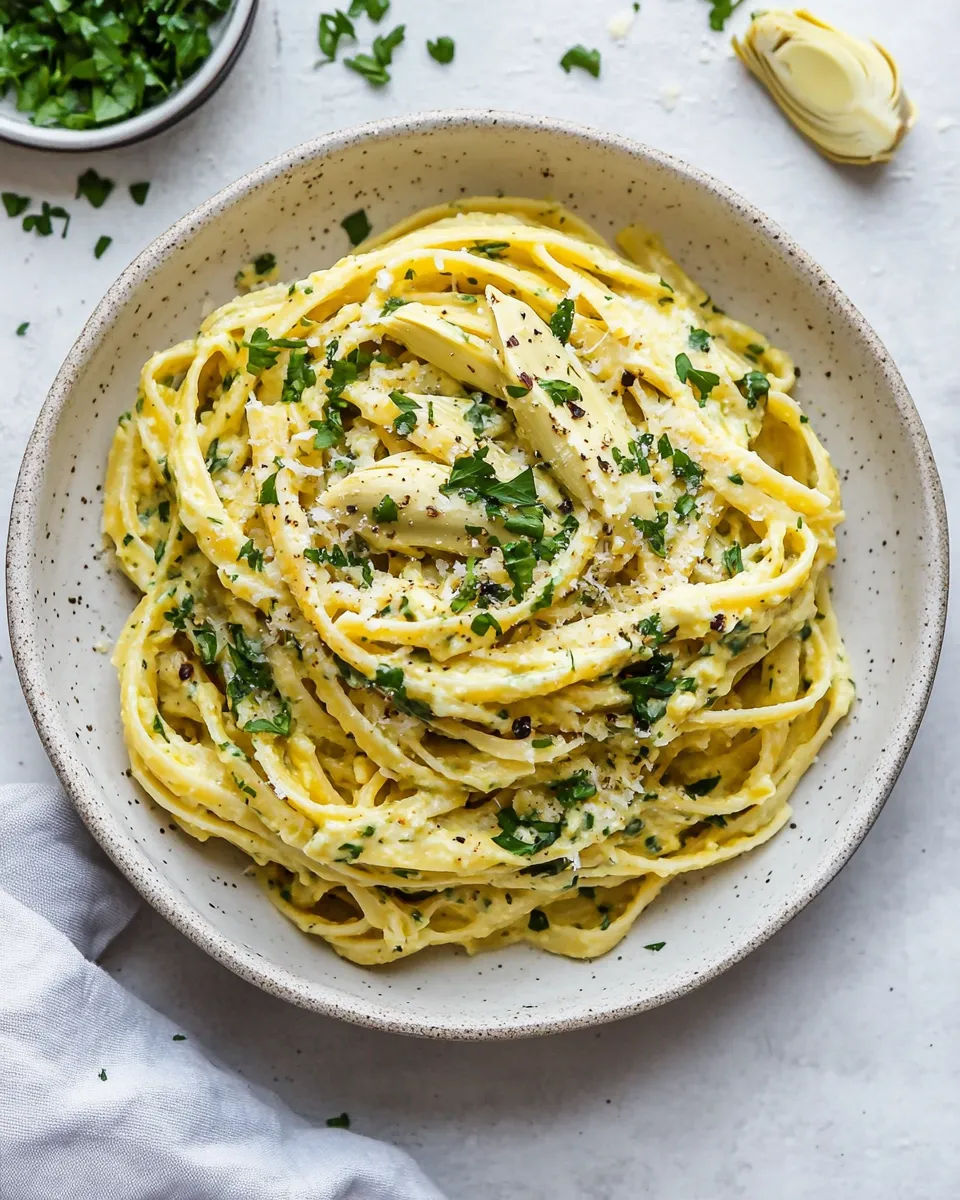
On busy weeknights I want food that tastes like I spent more time on it than I actually did. This pasta does exactly that — bright, creamy, and anchored by tangy artichokes and lemon. It comes together fast and plays nicely with whatever you have in the fridge for a simple, satisfying dinner.
I cook this when I want something comforting but not heavy: the artichoke sauce is rich from Parmesan and olive oil, but the lemon and parsley keep it lively. It’s forgiving — a few technique notes make the difference between “fine” and “really good,” and I’ve included them below.
Ingredient Checklist
- 1 (14 ounce) can artichoke hearts, drained — the base of the sauce; drain thoroughly if packed in oil or brine.
- ½ cup freshly grated Parmesan cheese, plus more for topping — gives savory creaminess and helps bind the sauce to the pasta.
- 1 lemon, zest freshly grated and juiced — adds brightness and keeps the sauce from tasting flat.
- 4 garlic cloves, minced — provides aromatic backbone; mince finely so it blends into the sauce.
- 4 tablespoons olive oil — emulsifies the sauce and carries flavor.
- ½ teaspoon salt — seasons the sauce; taste before adding more.
- ½ teaspoon pepper — a little heat and depth.
- 8 ounces spaghetti or bucatini, cooked — long pasta works best to catch the slightly textured sauce.
- ¼ cup reserved starchy pasta water — essential for loosening and glossy coating of the sauce.
- ¼ cup chopped fresh parsley, for topping — fresh herb lift and color at the end.
Method: Weeknight Pasta with Artichoke Sauce
- Bring a large pot of salted water to a boil for the pasta.
- If using artichokes marinated in oil or packed in brine, drain them thoroughly. Place the drained artichoke hearts (1 14‑ounce can), 1/2 cup freshly grated Parmesan, the zest and juice of 1 lemon, 4 minced garlic cloves, 4 tablespoons olive oil, 1/2 teaspoon salt, and 1/2 teaspoon pepper in a food processor.
- Pulse/blend the artichoke mixture until combined and creamy but still slightly textured — it should be sauce-like, not completely smooth. Taste and add more salt or pepper only if needed.
- Cook 8 ounces spaghetti or bucatini according to package directions. Before draining, scoop out and reserve 1/4 cup of the starchy pasta water. Then drain the pasta (do not rinse).
- Return the hot drained pasta to the pot off the heat (or over the lowest burner). Immediately add the artichoke sauce and toss to combine.
- Add the reserved 1/4 cup starchy pasta water a little at a time while tossing, until the sauce coats the noodles and comes together to your liking.
- Sprinkle additional Parmesan (to taste) and 1/4 cup chopped fresh parsley over the pasta, toss briefly to distribute, and serve immediately.
Why This Recipe is a Keeper
This dish hits a sweet spot: it’s quick, uses mostly pantry items, and ends up tasting like something from a neighborhood trattoria. The artichokes give body and flavor without needing cream; Parmesan and olive oil form a creamy emulsion with the reserved pasta water, so you get a silky coating without heaviness.
It’s also versatile and consistent. The steps are straightforward and repeatable: make the sauce, cook the pasta, marry them with pasta water. Once you understand that last step — adding starchy water to loosen and bind — your weeknight pasta will reliably come out glossy and well-coated.
Smart Substitutions
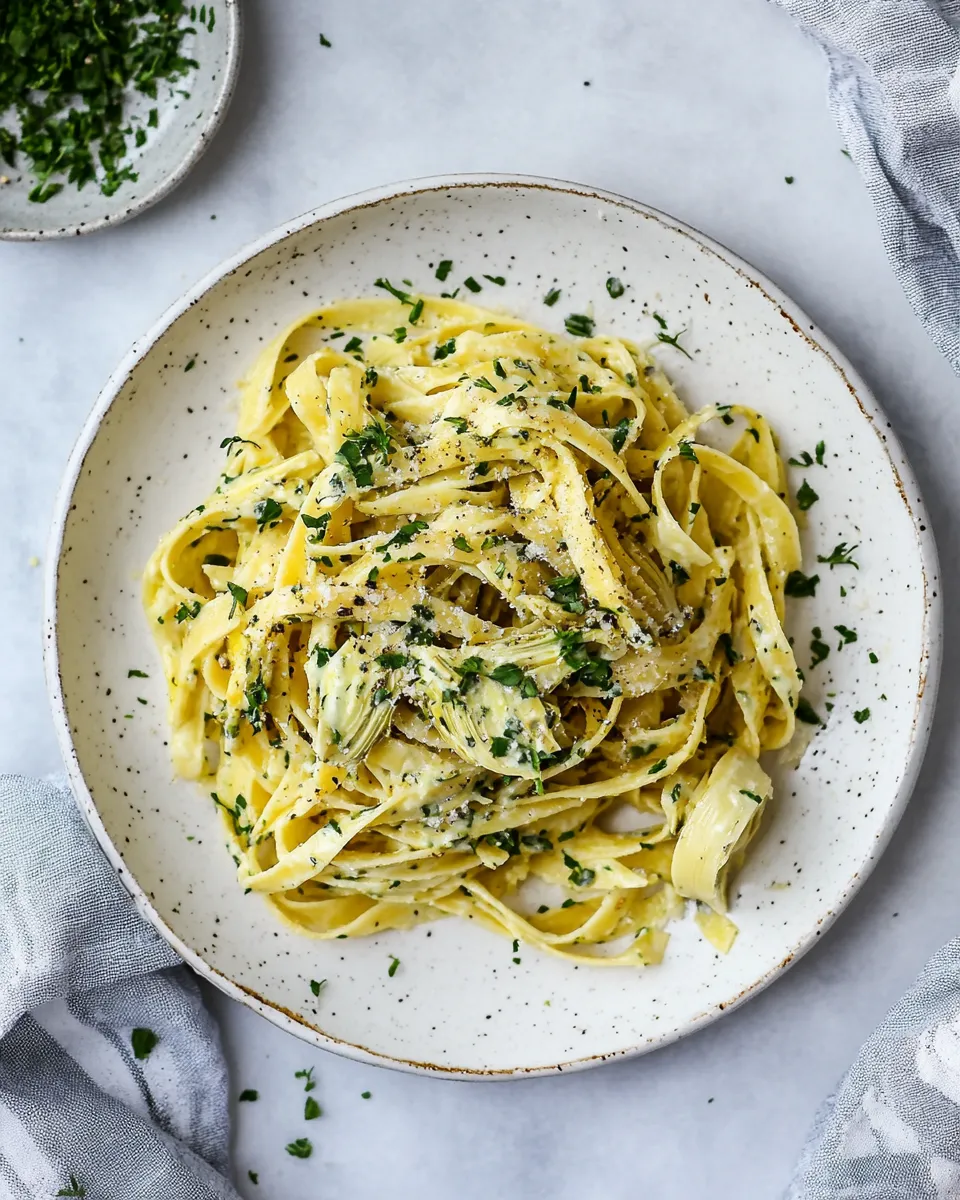
If you want to tweak the dish without changing the core idea, focus on texture and seasoning rather than swapping entire categories of ingredients. A few sensible options:
- Use whichever long pasta you have on hand — spaghetti, bucatini, or another similar shape — the method doesn’t depend on a specific brand.
- If your Parmesan is very salty, reduce the added salt slightly and taste before adjusting.
- Adjust lemon and garlic to taste: more lemon brightens, more garlic deepens the savory note. Add these gradually and taste.
- For a looser sauce, add a splash more of the reserved pasta water while tossing; for a thicker coating, use the amount listed or a little less.
Prep & Cook Tools
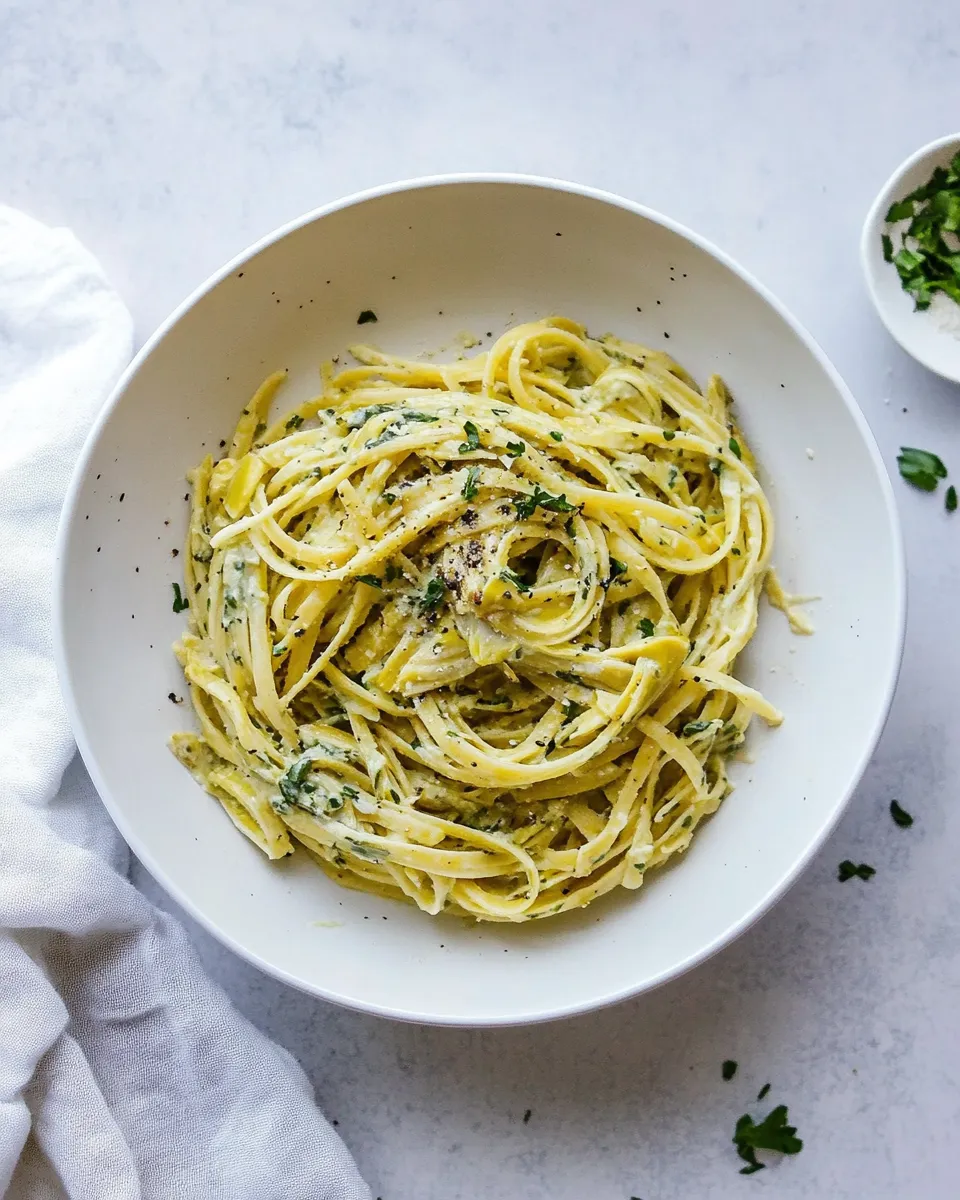
Keep the gear simple. You don’t need specialized cookware to make this successful:
- Large pot for boiling pasta.
- Colander to drain the pasta.
- Food processor (or sturdy blender) to make the artichoke sauce.
- Tongs or a pasta fork for tossing.
- Microplane or grater for fresh lemon zest and Parmesan.
- Measuring spoons and cups for quick accuracy.
Easy-to-Miss Gotchas
There are a few small things I always watch for because they change the result more than you’d expect:
- Drain the artichokes well. Excess oil or brine will water down the sauce and can make it greasy or overly salty.
- Reserve the pasta water before draining. That quarter cup is the bridge that brings the sauce together; skipping it often yields a dry, clumpy finish.
- Don’t blend the artichokes into a perfectly smooth purée. The sauce should be creamy but slightly textured — that texture holds on the pasta.
- Turn the heat off or down when you add the sauce to the pasta. High heat can cause the cheese to clump rather than melt into a glossy emulsion.
- Always taste before adding extra salt — Parmesan and canned artichokes may already contribute saltiness.
Spring to Winter: Ideas
This pasta dresses up or down depending on the calendar. In spring and summer, rely on the lemon and parsley as bright finishes; they keep the dish feeling light. In cooler months, serve it with a simple warm grainy bread or let the pasta sit alongside a roasted vegetable you already have — the sauce stands up to heartier flavors.
Think of the recipe as a base: the artichoke-Parmesan-lemon framework supports both a light, zippy meal and a cozier plate depending on how you plate and what you pair it with.
If You’re Curious
Why does pasta water matter? The starch released into the cooking water acts like glue; when mixed with oil and cheese it creates a silky emulsion that clings to the noodles. That glossy, clingy coating is what makes the dish feel professionally sauced.
Why not just use cream? The artichoke, cheese, oil, and pasta water produce a rich mouthfeel without cream. You get that luxurious texture while keeping the flavors cleaner and brighter, thanks to the lemon.
Leftovers & Meal Prep
If you have leftovers, store them in an airtight container in the fridge for up to 2 days. The sauce will thicken as it cools because the starch tightens and the cheese firms up.
To reheat: warm gently in a skillet over low heat with a splash of water or a few teaspoons of olive oil to loosen the sauce and revive its gloss. Toss gently until heated through and serve immediately with a quick sprinkle of fresh parsley and extra Parmesan if you like.
Your Top Questions
Can I use fresh artichokes instead of canned? Yes, but prepare them fully first: remove tough leaves, trim, and cook until tender before using in the food processor. The recipe assumes drained, ready-to-use artichoke hearts.
What if I don’t have a food processor? A blender can work in a pinch. You may need to pulse and scrape more frequently to maintain slight texture rather than a totally smooth purée.
Can I make the sauce ahead? You can make the artichoke mixture a few hours ahead and keep it chilled. Bring it to room temperature before tossing with warm pasta and use reserved pasta water to adjust the consistency.
Bring It to the Table
Serve this right away while it’s glossy and warm. Plate it simply in warmed bowls, finish with a scatter of chopped parsley and an extra grating of Parmesan. If you like, pass a small bowl of additional lemon wedges so people can add brightness to taste.
For a weeknight, I set bowls on the table with a simple side salad or a few slices of bread for sopping up any residual sauce. It’s quick to pull together, looks and tastes like effort, and hits that comfortable balance between bright and indulgent — exactly what I want on a busy night.
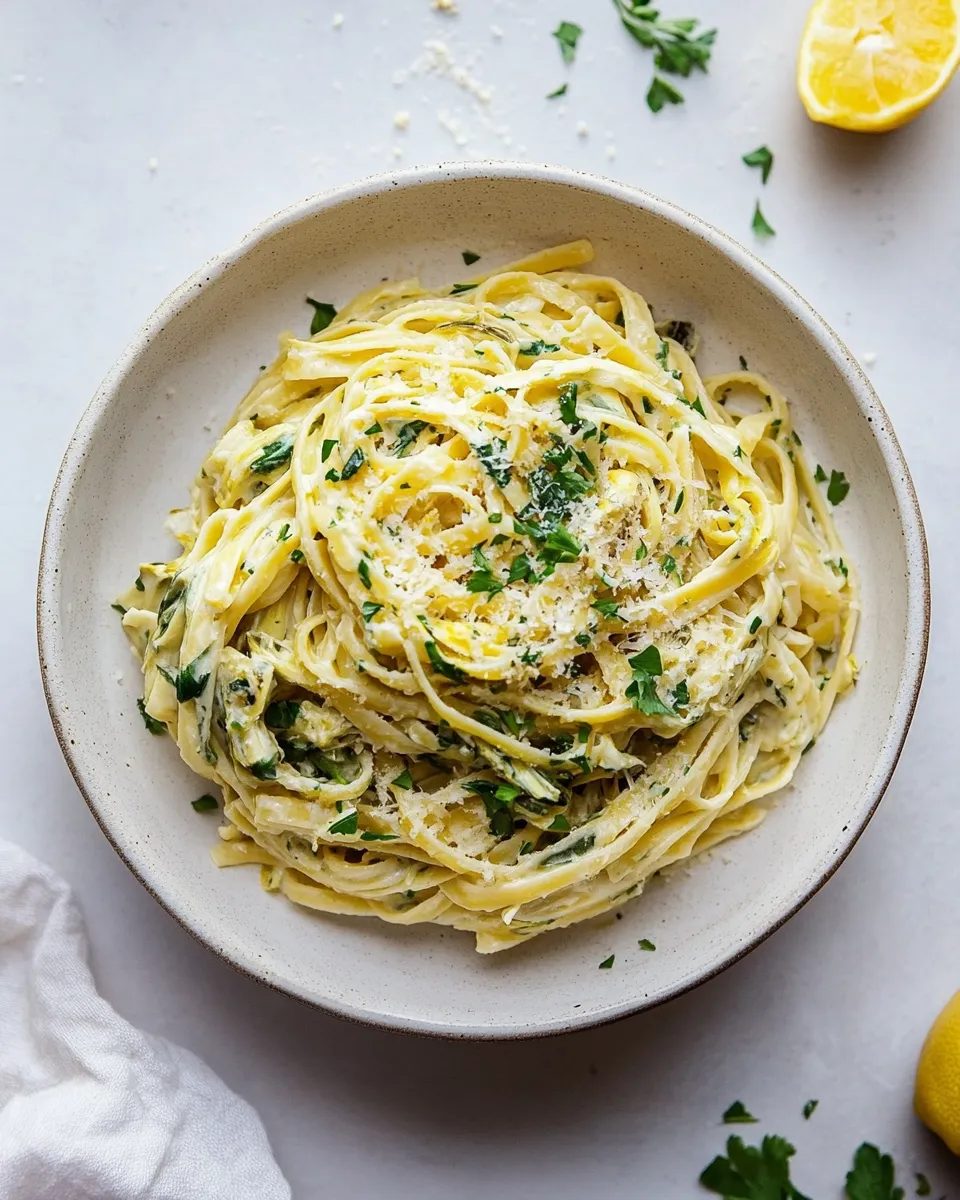
Weeknight Pasta with Artichoke Sauce.
Equipment
- Large Pot
- Food Processor
- Colander
- Tongs or pasta fork
Ingredients
Ingredients
- 1 14 ouncecan artichoke hearts, drained
- 1/2 cupfreshly grated parmesan cheese plus more for topping
- 1 lemon zest freshly grated and juiced
- 4 garlic cloves minced
- 4 tablespoonsolive oil
- 1/2 teaspoonsalt
- 1/2 teaspoonpepper
- 8 ouncesspaghetti or bucatini cooked
- 1/4 cupreserved starchy pasta water.
- 1/4 cupchopped fresh parsley for topping
Instructions
Instructions
- Bring a large pot of salted water to a boil for the pasta.
- If using artichokes marinated in oil or packed in brine, drain them thoroughly. Place the drained artichoke hearts (1 14‑ounce can), 1/2 cup freshly grated Parmesan, the zest and juice of 1 lemon, 4 minced garlic cloves, 4 tablespoons olive oil, 1/2 teaspoon salt, and 1/2 teaspoon pepper in a food processor.
- Pulse/blend the artichoke mixture until combined and creamy but still slightly textured — it should be sauce-like, not completely smooth. Taste and add more salt or pepper only if needed.
- Cook 8 ounces spaghetti or bucatini according to package directions. Before draining, scoop out and reserve 1/4 cup of the starchy pasta water. Then drain the pasta (do not rinse).
- Return the hot drained pasta to the pot off the heat (or over the lowest burner). Immediately add the artichoke sauce and toss to combine.
- Add the reserved 1/4 cup starchy pasta water a little at a time while tossing, until the sauce coats the noodles and comes together to your liking.
- Sprinkle additional Parmesan (to taste) and 1/4 cup chopped fresh parsley over the pasta, toss briefly to distribute, and serve immediately.
Notes
slightly adapted from
delicious mag