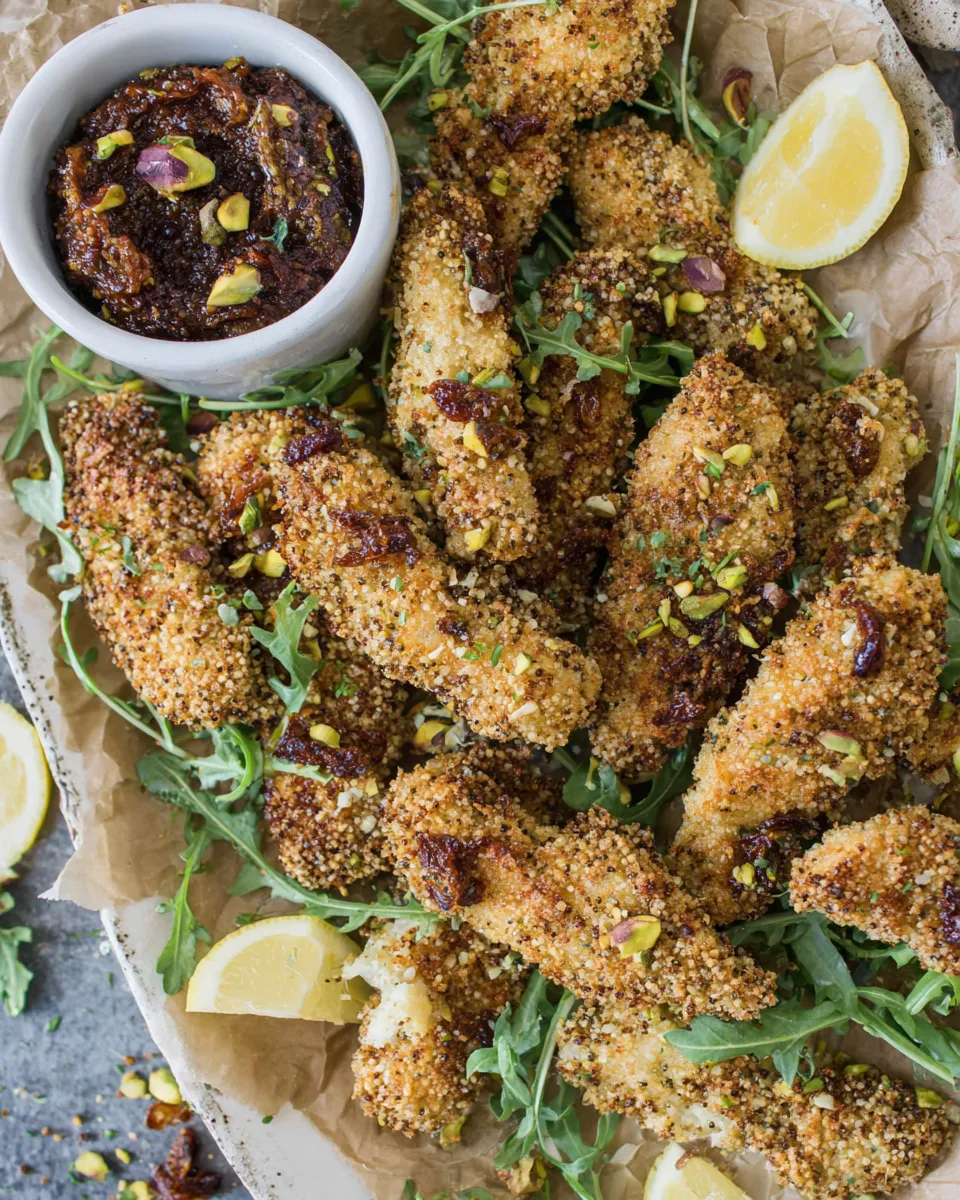
Pistachio Quinoa Dukkah Crusted Chicken Fingers with Sun-dried Tomato Pesto.
Crispy, nutty dukkah-crusted chicken fingers served with a bright sun-dried tomato and basil pesto.
Equipment
- Baking Sheet
- Foil
- Large Bowl
- Heavy skillet
- Blender or Food Processor
- Shallow bowl
- Kitchen tongs
Ingredients
- 1 1/2 pound boneless skinless chicken tenders
- 1/2 cup buttermilk
- 1 cup uncooked quinoa
- 1 tablespoon coriander seeds
- 1 tablespoon cumin seeds
- 1/4 cup toasted sesame seeds
- 3 tablespoons unsweetened shredded coconut
- 1/2 cup roasted pistachios
- 1 teaspoon salt plus 1/2 teaspoon pepper listed together in source
- 1/2 teaspoon black pepper
- 1/3 cup Parmesan cheese, grated
- 1 ounce sun-dried tomatoes packed in olive oil from an 8.5-ounce jar (use contents and oil)
- 1 cup fresh basil
- 2 tablespoons balsamic vinegar
- juice of 1 lemon
- salt and pepper to taste (for pesto)
- 1/2 cup Parmesan cheese
Instructions
- Preheat the oven to 475°F (245°C). Line a baking sheet with foil and brush or spray lightly with olive oil.
- Place the chicken tenders in a large bowl and pour the buttermilk over them; toss to coat and set aside to marinate while you prepare the dukkah.
- Make the dukkah: heat a heavy skillet over medium-high heat. Add the quinoa, coriander seeds, cumin seeds, toasted sesame seeds, and shredded coconut. Dry-toast, stirring frequently, until the quinoa and seeds are golden and fragrant; remove from heat and let cool completely.
- Transfer the cooled toasted mixture to a blender or food processor. Add the roasted pistachios, 1 teaspoon salt, and 1/2 teaspoon pepper, then pulse until finely ground but not paste-like. Reserve half of this dukkah mixture for coating and keep the rest for later use.
- In a shallow bowl, combine half the dukkah with 1/3 cup grated Parmesan. Remove each chicken piece from the buttermilk, dredge in the dukkah-Parmesan mixture, pressing gently to adhere, and place on the prepared baking sheet. Do not crowd the pan; use a second sheet if necessary. Lightly spray or brush the tops with oil.
- Bake for 10–12 minutes, then flip the chicken pieces with tongs, spray or brush the other side with oil, and bake another 10–12 minutes, until the crust is golden and the chicken reaches an internal temperature of 165°F (74°C).
- While the chicken bakes, make the sun-dried tomato pesto: add the sun-dried tomatoes with their oil to a blender or food processor. Add balsamic vinegar, lemon juice, basil, and salt and pepper to taste. Blend until the tomatoes are finely chopped but still spreadable. Transfer to a bowl and stir in the remaining 1/2 cup Parmesan.
- Serve the baked dukkah-crusted chicken fingers immediately with the sun-dried tomato pesto on the side.
Notes
- Reserve half of the dukkah for another use.
- Dukkah stores in a sealed jar for up to 1 month in a cool place.
- Keep the pesto refrigerated and use within 1 week.
- Do not over-process the dukkah to avoid a paste.