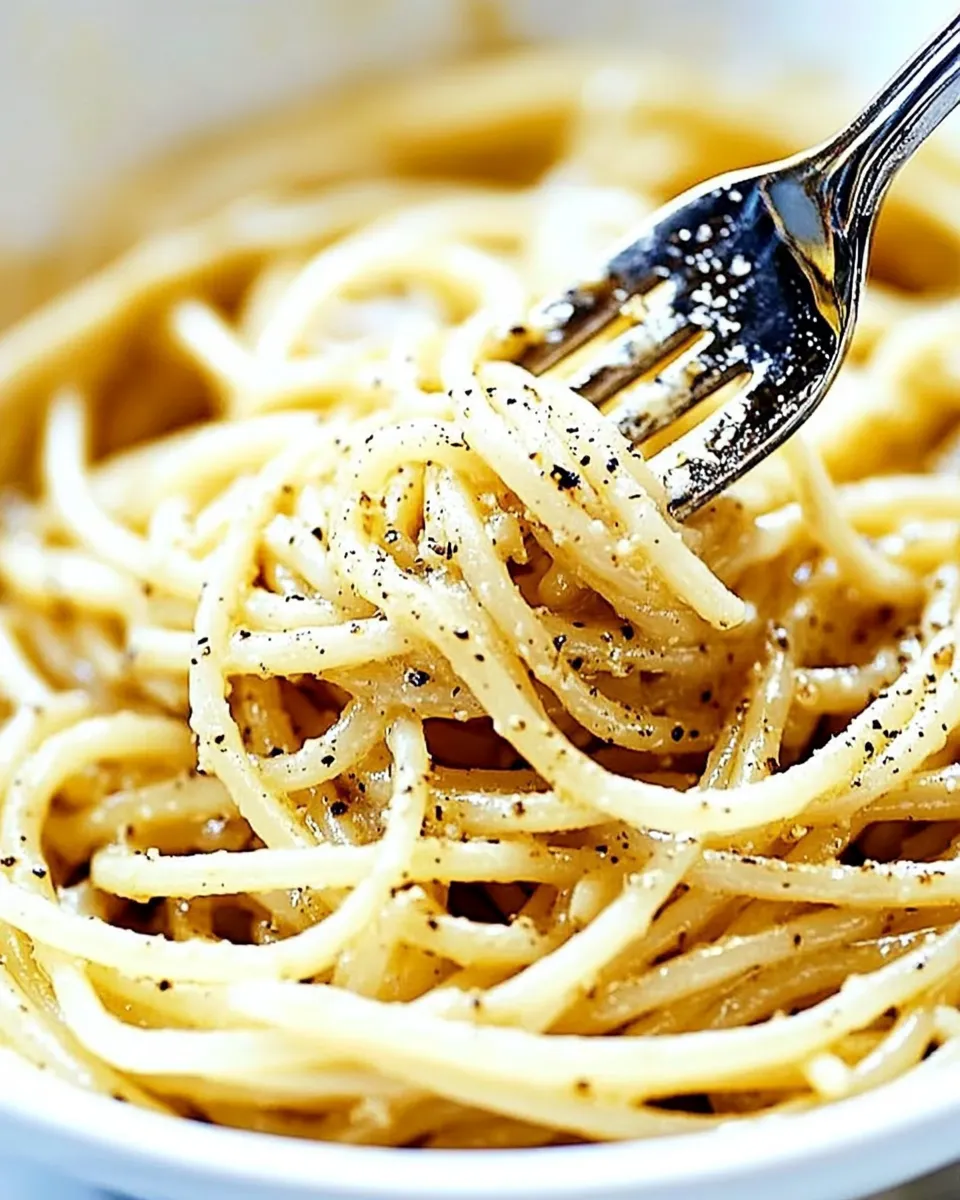
The Best Cacio e Pepe Recipe
If you’re looking for a dish that embodies simplicity and bold flavors, look no further than…
Equipment
- Dutch oven or wide stockpot
- Large Skillet
- Colander
- Whisk
Ingredients
Ingredients
- 8 ouncesspaghettimay sub bucatini
- 1 teaspoonsalt for pasta water
- 3 tablespoonsunsalted butter
- 1 tablespoonextra virgin olive oil
- 50 turns freshly-cracked coarse black pepper 1 teaspoon
- 1 1/2 cupsfinely freshly-grated Pecorino RomanoNOT Parmesan
Instructions
Instructions
- Bring 2 quarts (8 cups) water to a boil in a Dutch oven or a wide stockpot. Uncover, stir in 1 teaspoon salt (for the pasta water), then add 8 ounces spaghetti (you may substitute bucatini). Cook, stirring often, until the pasta is just barely al dente (usually a few minutes less than the package directions).
- While the pasta cooks, melt 3 tablespoons unsalted butter with 1 tablespoon extra virgin olive oil in a large skillet over medium heat. Add 50 turns freshly-cracked coarse black pepper (1 teaspoon) and cook, stirring, for 1 minute to bloom the pepper. Remove the skillet from the heat and set it aside until the pasta is done.
- When the pasta is just al dente, reserve 1 1/4 cups of the cooking water, then drain the pasta in a colander and keep the pasta warm.
- Off the heat, slowly whisk 1 cup of the reserved pasta water into the butter–pepper mixture in the skillet. Let the mixture stand for 3 minutes.
- Gradually whisk in 1 1/2 cups finely freshly-grated Pecorino Romano (NOT Parmesan), a little at a time, until combined. Return the skillet to the lowest heat and whisk constantly until the cheese is fully melted and the sauce is smooth. If the sauce is too thick, add more reserved pasta water a few tablespoons at a time to loosen.
- Add about half of the drained pasta to the skillet and stir or toss to coat the pasta evenly. Add the remaining pasta and continue tossing until all strands are evenly coated and the sauce is creamy, adding any remaining reserved pasta water as needed to achieve the desired consistency.
- Taste and adjust seasoning if desired (more freshly-cracked coarse black pepper or a bit more salt). Serve immediately.
Notes
Use Pecorino Romano cheese.Quality, aged Pecorino Romano is quintessential to Cacio e Pepe and results in superior flavor and silkiness AKA far superior pasta. Cacio e Pepe is literally named after Pecorino Romano (“Cacio” is the local Roman dialect for Pecorino Romano andnotParmesan) – they should not be used interchangeably. In fact, Pecorino Romano is 3X as flavorful as Parmesan! Pecorino Romano can be found with the specialty cheeses at your grocery store. Use the best imported Pecorino Romano that you can afford. You will need 3 oz. which equals 1 ½ cups.
Grate cheese yourself.Freshly-grated Pecorino Romano is a MUST in this Cacio e Pepe recipe. If you use pre-grated cheese, your sauce will by clumpy. Pre-packaged cheeses are coated with anti-clumping chemicals which inhibit them from melting beautifully.
Grate cheese first.The freshly grated cheese needs to be added to the hot water/butter mixture minutes after the water is added – there is no time to stop and grate your cheese, so take care to grate your cheese before you begin cooking. You can grate the cheese while the pasta water is coming to a boil but that’s as close as I’d cut it.
Use finely grated cheese.Grate your cheese on the finest holes of your cheese grater, the small, prickly side of the box grater. We want to produce powdery Pecorino Romano that looks like what comes in the store-bought containers with the green lid. Cheese that’s grated on larger holes will clump because it takes the cheese longer to melt and the larger amount of surface area allows for more clinging potential.
Do NOT adjust the amount of water for cooking the pasta.The extra starchy pasta water is critical to the success of this Cacio e Pepe recipe. Do NOT increase the amount of water or it will become less starchy.
Don’t reserve pasta water early.The pasta water will become increasingly starchy as it cooks with the pasta so it is critical to not reserve the water before the pasta is done cooking and releasing starch.
Salt water.Salting the pasta water infuses the pasta and the water with flavor which translates to more flavorful Cacio e Pepe.
Stir pasta frequently while it cooks.Because we are cooking the pasta in less water than normal, make sure to stir the pasta frequently while cooking so that it doesn’t stick to the pot, this includes multi-tasking while you melt the butter and sauté the pepper.
Don’t overcook pasta.Just like clumpy cheese can ruin Cacio e Pepe, so can mushy pasta. Make sure to cook your pasta just until barley al dente, meaning it has a bite, this is usually a couple minutes before the box says – so set your timer accordingly. You want to avoid over-cooking the pasta because it will continue to cook a little when combined with the sauce.
How do you know when pasta is done?The only way to know when your pasta is done is to taste it! I remove a strand of pasta with a slotted spoon, rinse it in cool water and then taste. Don’t be tempted to bite into pasta straight from the boiling pot-you will burn your tongue!
Let pasta water cool.Allowing the pasta water to cool for 3 minutes before adding it to the butter prevents it from being too hot when the cheese is added which can cause the cheese to seize. Instead, resting the water and then gradually melting the cheese over low heat provides a seamless, gradual melting process.
Use a large enough pan.Use a pan that is large enough to eventually hold all of the ingredients, including the pasta, with wiggle room to comfortable twirl and toss without whipping sauce everywhere.
Use freshly cracked pepper.Please do NOT use pre-ground pepper. Unlike pre-ground pepper, freshly coarsely ground pepper has not been oxidized, or exposed to oxygen, which means it has a richer flavor and tastes worlds better than ground pepper. Its coarse texture also adds the peppery heat we love in Cacio e Pepe.
Toast pepper first, don’t add after.The pepper should be added directly to the butter and olive oil. Toasting the pepper infuses the sauce with even pepper flavor whereas adding pepper after will not result in as deep of flavor and it will seem like an unevenly distributed after thought as opposed to being one with the sauce.
Don’t add cheese all at once.Slowly whisking the cheese into the sauce a little at a time will help the cheese melt more evenly because it has more liquid to surround it instead of being slammed against surrounding cheese.
Don’t confuse cheese not melting with clumping.Your cheese will not magically, instantaneously melt into glossy seduction as soon as it hits the butter/water which is perfectly okay – it will not stay this way. The cheese will gradually melt as you whisk constantly over low heat.
Continue to whisk until cheese is melted.Your cheese might take more or less than 5 minutes to melt depending on the actual heat of the sauce, quality of cheese and size of pan. The important thing is to continue to whisk until the cheese has melted – as long or as little time as required.
Thin sauce if needed.If the pasta seems dry after it is combined with the sauce, stir in additional pasta water just a little at a time.
Thicken sauce if needed.If the sauce is still too wet/runny after you add the pasta, gently simmer just until it has reduced enough to cling to the pasta.
Let the pasta rest before serving.Letting the dish rest briefly before serving allows he flavors to develop and the sauce to thicken.
Grate cheese yourself.Freshly-grated Pecorino Romano is a MUST in this Cacio e Pepe recipe. If you use pre-grated cheese, your sauce will by clumpy. Pre-packaged cheeses are coated with anti-clumping chemicals which inhibit them from melting beautifully.
Grate cheese first.The freshly grated cheese needs to be added to the hot water/butter mixture minutes after the water is added – there is no time to stop and grate your cheese, so take care to grate your cheese before you begin cooking. You can grate the cheese while the pasta water is coming to a boil but that’s as close as I’d cut it.
Use finely grated cheese.Grate your cheese on the finest holes of your cheese grater, the small, prickly side of the box grater. We want to produce powdery Pecorino Romano that looks like what comes in the store-bought containers with the green lid. Cheese that’s grated on larger holes will clump because it takes the cheese longer to melt and the larger amount of surface area allows for more clinging potential.
Do NOT adjust the amount of water for cooking the pasta.The extra starchy pasta water is critical to the success of this Cacio e Pepe recipe. Do NOT increase the amount of water or it will become less starchy.
Don’t reserve pasta water early.The pasta water will become increasingly starchy as it cooks with the pasta so it is critical to not reserve the water before the pasta is done cooking and releasing starch.
Salt water.Salting the pasta water infuses the pasta and the water with flavor which translates to more flavorful Cacio e Pepe.
Stir pasta frequently while it cooks.Because we are cooking the pasta in less water than normal, make sure to stir the pasta frequently while cooking so that it doesn’t stick to the pot, this includes multi-tasking while you melt the butter and sauté the pepper.
Don’t overcook pasta.Just like clumpy cheese can ruin Cacio e Pepe, so can mushy pasta. Make sure to cook your pasta just until barley al dente, meaning it has a bite, this is usually a couple minutes before the box says – so set your timer accordingly. You want to avoid over-cooking the pasta because it will continue to cook a little when combined with the sauce.
How do you know when pasta is done?The only way to know when your pasta is done is to taste it! I remove a strand of pasta with a slotted spoon, rinse it in cool water and then taste. Don’t be tempted to bite into pasta straight from the boiling pot-you will burn your tongue!
Let pasta water cool.Allowing the pasta water to cool for 3 minutes before adding it to the butter prevents it from being too hot when the cheese is added which can cause the cheese to seize. Instead, resting the water and then gradually melting the cheese over low heat provides a seamless, gradual melting process.
Use a large enough pan.Use a pan that is large enough to eventually hold all of the ingredients, including the pasta, with wiggle room to comfortable twirl and toss without whipping sauce everywhere.
Use freshly cracked pepper.Please do NOT use pre-ground pepper. Unlike pre-ground pepper, freshly coarsely ground pepper has not been oxidized, or exposed to oxygen, which means it has a richer flavor and tastes worlds better than ground pepper. Its coarse texture also adds the peppery heat we love in Cacio e Pepe.
Toast pepper first, don’t add after.The pepper should be added directly to the butter and olive oil. Toasting the pepper infuses the sauce with even pepper flavor whereas adding pepper after will not result in as deep of flavor and it will seem like an unevenly distributed after thought as opposed to being one with the sauce.
Don’t add cheese all at once.Slowly whisking the cheese into the sauce a little at a time will help the cheese melt more evenly because it has more liquid to surround it instead of being slammed against surrounding cheese.
Don’t confuse cheese not melting with clumping.Your cheese will not magically, instantaneously melt into glossy seduction as soon as it hits the butter/water which is perfectly okay – it will not stay this way. The cheese will gradually melt as you whisk constantly over low heat.
Continue to whisk until cheese is melted.Your cheese might take more or less than 5 minutes to melt depending on the actual heat of the sauce, quality of cheese and size of pan. The important thing is to continue to whisk until the cheese has melted – as long or as little time as required.
Thin sauce if needed.If the pasta seems dry after it is combined with the sauce, stir in additional pasta water just a little at a time.
Thicken sauce if needed.If the sauce is still too wet/runny after you add the pasta, gently simmer just until it has reduced enough to cling to the pasta.
Let the pasta rest before serving.Letting the dish rest briefly before serving allows he flavors to develop and the sauce to thicken.