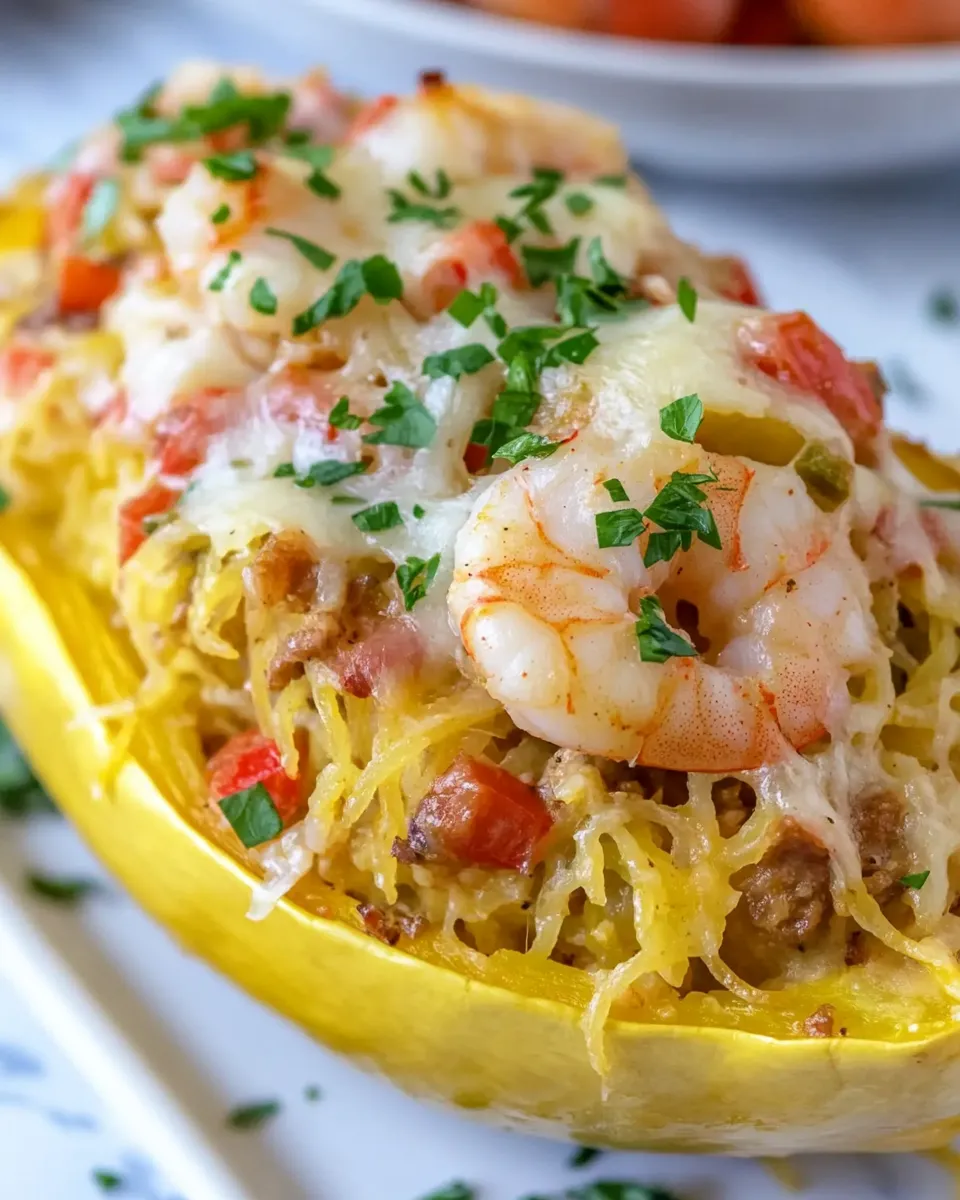
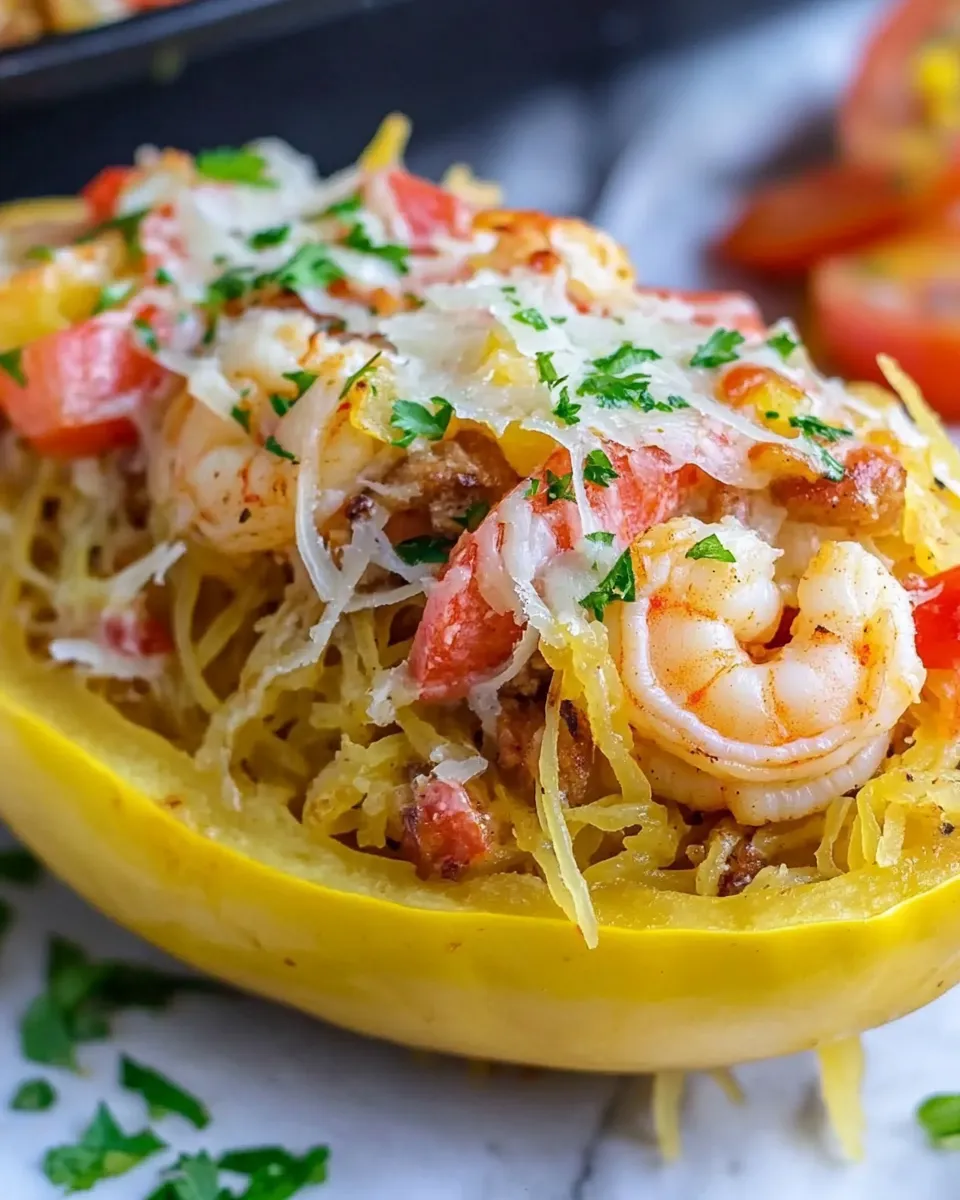
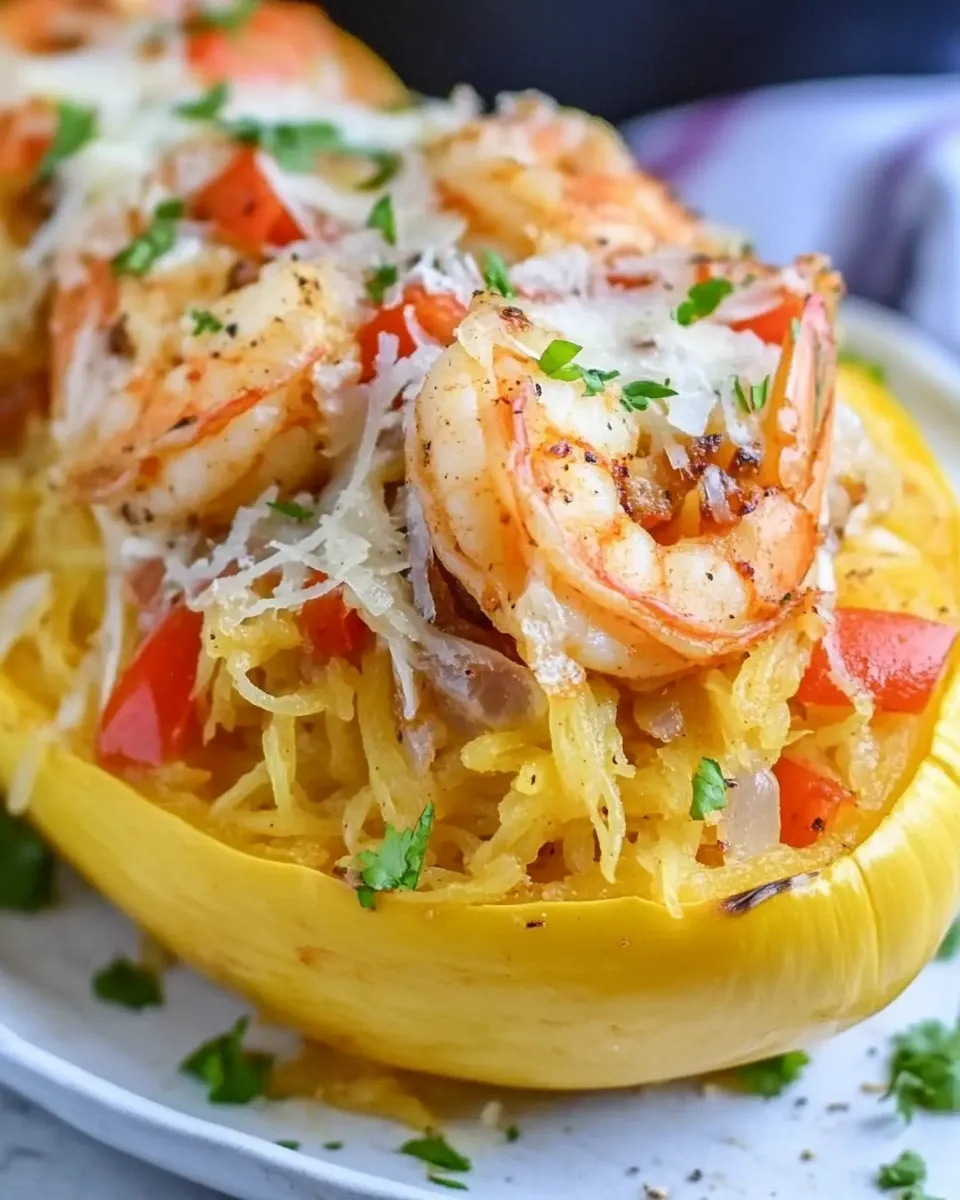
I make this Shrimp Fajita Stuffed Spaghetti Squash on weeknights when I want dinner to feel thoughtful but not fussy. The spaghetti squash becomes a tender, slightly sweet base for quick-cooked, seasoned shrimp and crisp-tender peppers. It takes a little time in the oven, but the active work is short and satisfying.
This dish balances texture and speed: you roast the squash until it loosens into strands, then stir those strands into a skillet of fajita-spiced shrimp and aromatics. A quick melt of shredded cheese on top ties everything together and makes it feel indulgent without extra effort.
Below you’ll find an exact ingredient breakdown and the step-by-step directions I follow every time. I keep the instructions faithful to the recipe so results are consistent. Read the notes for troubleshooting, make-ahead options, and a few small swaps if you want to change the flavor profile.
Ingredient Rundown
Ingredients
- 1 medium spaghetti squash — the “boat” and base; its strands soak up the fajita flavors and provide a low-carb pasta substitute.
- 1 tbsp. olive oil — for brushing the squash and sautéing vegetables; gives browning and prevents sticking.
- ¼ tsp. salt — seasons the squash flesh to bring out its natural sweetness.
- ⅛ tsp. pepper — a light background pepperiness; you can adjust to taste when serving.
- 8 oz. shrimp, peeled and deveined — the protein; cooks quickly and pairs well with fajita seasoning.
- 1 medium bell pepper, sliced — provides crunch, color, and sweetness; works with any color pepper you have.
- ½ medium red onion, sliced — adds sharpness and caramelizes quickly when stir-fried.
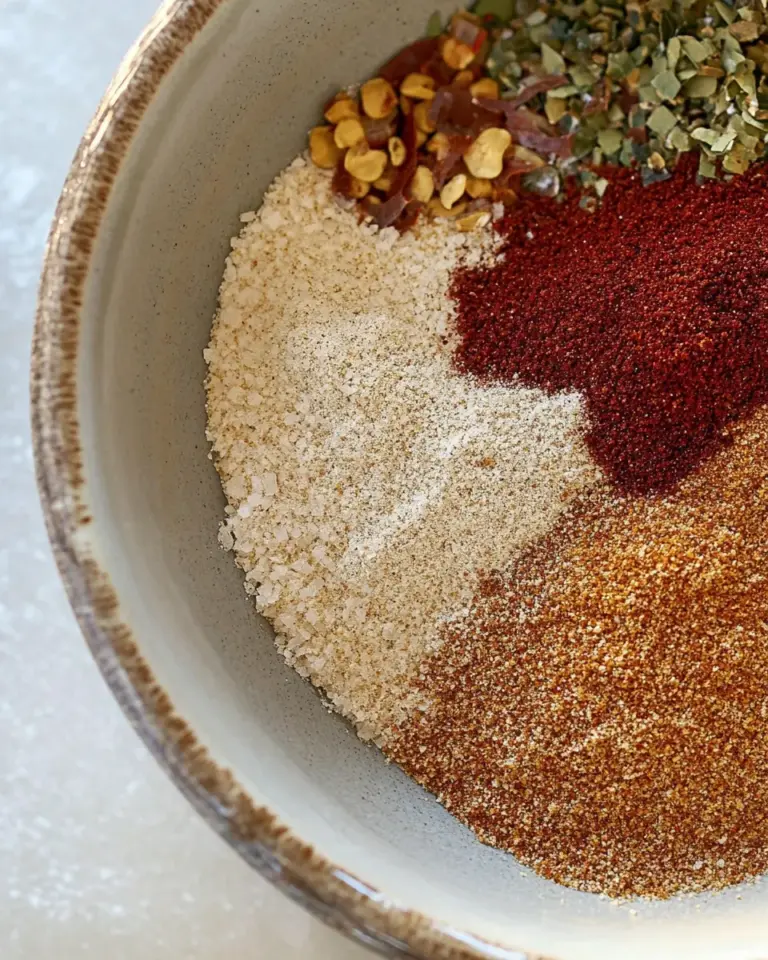
- ½ tbsp. Fajita seasoning — the main flavor driver; coats the shrimp and vegetables for that Tex-Mex profile.
- ½ cup shredded cheese — melts over the top to add richness and a cohesive finish; use your favorite melting cheese.
Shrimp Fajita Stuffed Spaghetti Squash: Step-by-Step Guide
- Preheat the oven to 400°F. Cut the spaghetti squash in half lengthwise and use a spoon to remove and discard the seeds.
- Brush the flesh of each squash half with some of the 1 tbsp olive oil, then sprinkle the flesh evenly with the ¼ tsp salt and ⅛ tsp pepper. Place the halves flesh-side down on a baking sheet. Bake at 400°F until the edges just begin to brown, about 45 minutes.
- About 10 minutes before the squash is finished baking, heat the remaining olive oil in a large nonstick skillet over high heat. Add the sliced bell pepper and sliced red onion and stir-fry for 3–4 minutes, until slightly charred.
- Add the 8 oz shrimp and the ½ tbsp fajita seasoning to the skillet. Cook, stirring occasionally, until the shrimp are opaque and just cooked through, about 3–4 minutes. Remove the skillet from the heat and set aside.
- When the squash is done, remove it from the oven and turn the halves flesh-side up. Use a fork to scrape the flesh into spaghetti-like strands, keeping the shell halves intact to use as boats.
- Transfer the scraped squash strands into the skillet with the shrimp and return the skillet to medium heat. Toss everything together until heated through, about 1–2 minutes.
- Divide the shrimp-and-squash mixture evenly between the two squash boats. Sprinkle the tops with the ½ cup shredded cheese.
- Return the stuffed squash to the oven and bake until the cheese melts and the filling is heated through, about 5 minutes. Remove from the oven and serve.
The Upside of Shrimp Fajita Stuffed Spaghetti Squash
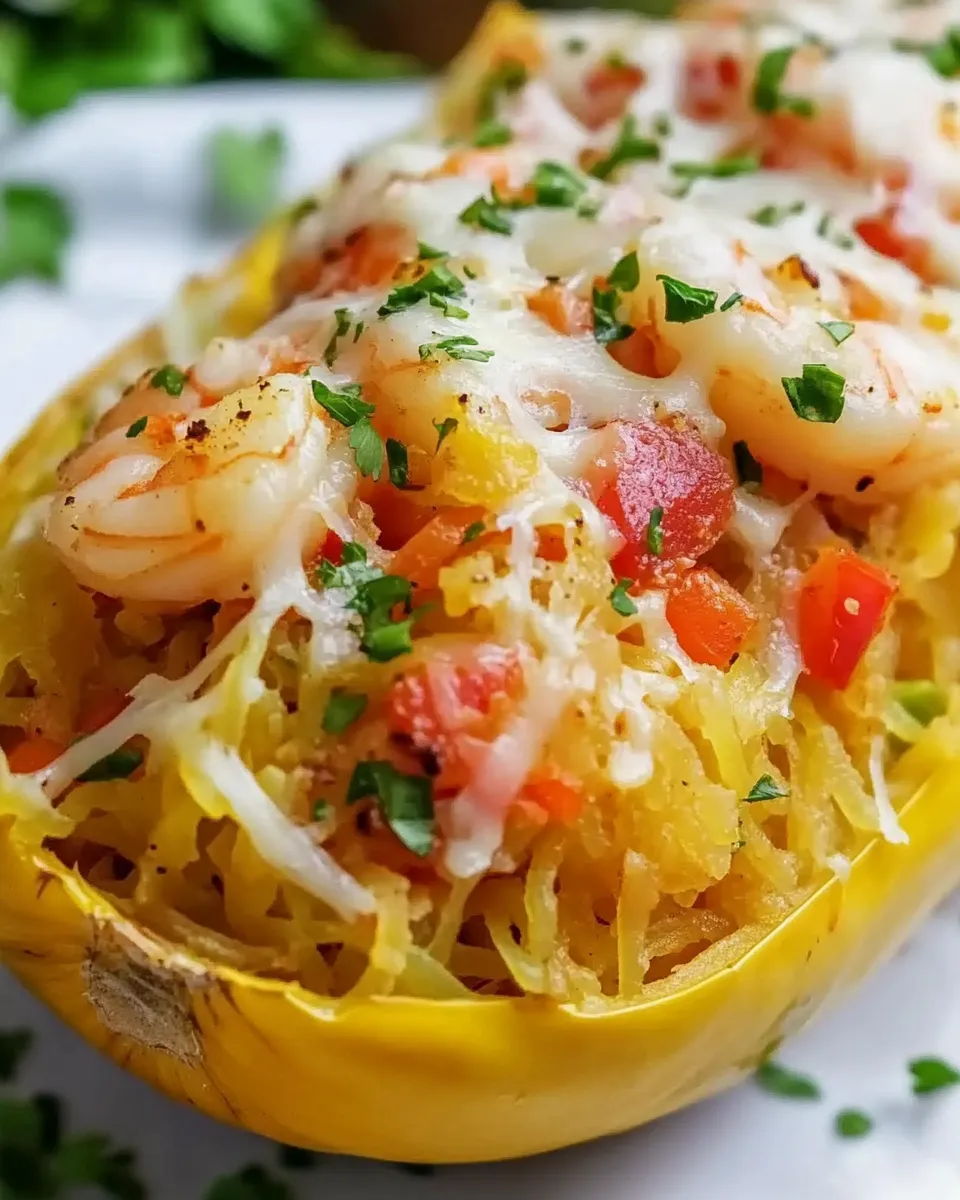
This dish looks impressive but is completely manageable. Roasting the squash mostly happens hands-off, and the shrimp cooks in minutes. The result is a complete meal in a tidy package—protein, veg, and a starchy base all in one vessel.
It’s also adaptable. Use whatever bell pepper color you have, swap cheese types, or double the peppers and onions for more veg. For anyone watching carbs, the spaghetti squash is a satisfying alternative to pasta or tortillas without missing out on texture.
If You’re Out Of…
No bell pepper? Use another crunchy veg you have: thin-sliced zucchini or a few sliced mushrooms will add body. No red onion? A small yellow or white onion will work just as well.
Out of shredded cheese? Top with a handful of crumbled queso fresco or skip it and finish with a squeeze of lime and fresh cilantro for brightness. If you don’t have fajita seasoning, mix a pinch each of smoked paprika, cumin, garlic powder, and onion powder as a quick substitute.
Tools & Equipment Needed
- Baking sheet — to roast the squash halves evenly.
- Sharp knife — to halve the squash safely and cleanly.
- Spoon — for removing seeds from the squash.
- Basting brush or spoon — to brush olive oil on the squash flesh.
- Large nonstick skillet — for stir-frying peppers/onions and cooking the shrimp.
- Fork — to scrape the squash into strands.
- Oven mitts — for safe handling of the hot pan and squash.
Problems & Prevention
Dry, rubbery shrimp: shrimp overcook quickly. Follow the timing—3–4 minutes over high heat—until the shrimp are opaque and just cooked through. Remove from heat promptly. If your skillet runs hot, reduce to medium-high and watch closely.
Soggy squash boats: if the squash retains excess water, let it roast a few minutes longer until the edges just brown. Scraping the flesh while the squash is still warm helps evaporate moisture when you toss with the shrimp.
Under-seasoned filling: the recipe relies on the ½ tbsp fajita seasoning for flavor. Taste as you go when you toss the strands with shrimp—if it needs more punch, add a pinch more seasoning or a squeeze of lime when serving.
In-Season Flavor Ideas
Summer: Add charred corn kernels and a diced tomato to the skillet with the peppers. A little fresh cilantro at the end brightens the dish.
Fall: Stir in a handful of sautéed diced butternut or a sprinkle of chipotle powder for smokiness.
Winter: Use roasted poblano instead of bell pepper and top with a little warm salsa verde to cut through the richness.
Flavor Logic
Spaghetti squash is mild and slightly sweet. It acts like a neutral canvas, so the shrimp and fajita seasoning drive the dish. The sautéed bell pepper and red onion add sweetness and texture contrast; together, the seasoning and shrimp create a savory, lightly smoky profile that clings to the squash strands.
The shredded cheese melts into the warm filling, adding fat and a creamy mouthfeel that balances the brightness of any finishing lime or fresh herbs you add. The dish works because every component has a clear role: base, seasoning, texture, and finishing richness.
Freezer-Friendly Notes
You can freeze the cooked shrimp-and-squash filling, but texture will change slightly. Cool the cooked filling completely, portion into airtight containers, and freeze up to 2 months. Thaw overnight in the refrigerator and reheat gently in a skillet to avoid overcooking shrimp further.
I don’t recommend freezing assembled squash boats with cheese on top—the cheese can become grainy and the squash texture softens. If you want to prep ahead, roast and scrape the squash, store the strands separately, and keep the shrimp mixture in another container. Reheat both and combine just before garnishing and serving.
Reader Q&A
Q: Can I use frozen shrimp?
A: Yes—thaw completely, pat dry, and remove excess liquid before adding to the skillet. Extra moisture will steam the vegetables and shrimp rather than sear them.
Q: Can I make this vegetarian?
A: Swap the shrimp for cubed, firm tofu or a can of drained chickpeas. Press and sear tofu to get a little crust; season the same way.
Q: How do I reheat leftovers without drying them out?
A: Reheat gently in a skillet over low-medium heat with a splash of water or broth, covered briefly to steam through. If using the oven, cover with foil at 350°F until warmed.
The Last Word
Shrimp Fajita Stuffed Spaghetti Squash is one of those dinners that looks like you spent more time than you did. Roast the squash, stir-fry the filling, melt some cheese, and you have a satisfying, weeknight-friendly meal. Follow the steps closely the first time—especially for shrimp timing—and you’ll have a reliable, repeatable dish that’s great for leftovers or for serving when you want something a little special with minimal fuss.
If you try it, tell me what cheese you used or what swap made it yours. I love hearing small twists that make a recipe feel like home.
Shrimp Fajita Stuffed Spaghetti Squash
Equipment
- Oven
- Baking Sheet
- large nonstick skillet
- Fork
Ingredients
Ingredients
- 1 mediumspaghetti squash
- 1 tbsp.olive oil
- 1/4 tsp.salt
- 1/8 tsp.pepper
- 8 oz.shrimp peeled and deveined
- 1 mediumbell pepper sliced
- 1/2 mediumred onion sliced
- 1/2 tbsp.Fajita seasoning
- 1/2 cupshredded cheese
Instructions
Instructions
- Preheat the oven to 400°F. Cut the spaghetti squash in half lengthwise and use a spoon to remove and discard the seeds.
- Brush the flesh of each squash half with some of the 1 tbsp olive oil, then sprinkle the flesh evenly with the ¼ tsp salt and ⅛ tsp pepper. Place the halves flesh-side down on a baking sheet. Bake at 400°F until the edges just begin to brown, about 45 minutes.
- About 10 minutes before the squash is finished baking, heat the remaining olive oil in a large nonstick skillet over high heat. Add the sliced bell pepper and sliced red onion and stir-fry for 3–4 minutes, until slightly charred.
- Add the 8 oz shrimp and the ½ tbsp fajita seasoning to the skillet. Cook, stirring occasionally, until the shrimp are opaque and just cooked through, about 3–4 minutes. Remove the skillet from the heat and set aside.
- When the squash is done, remove it from the oven and turn the halves flesh-side up. Use a fork to scrape the flesh into spaghetti-like strands, keeping the shell halves intact to use as boats.
- Transfer the scraped squash strands into the skillet with the shrimp and return the skillet to medium heat. Toss everything together until heated through, about 1–2 minutes.
- Divide the shrimp-and-squash mixture evenly between the two squash boats. Sprinkle the tops with the ½ cup shredded cheese.
- Return the stuffed squash to the oven and bake until the cheese melts and the filling is heated through, about 5 minutes. Remove from the oven and serve.
Notes
Cook the shrimp just enough.To avoid rubbery, overcooked shrimp, cook them until they have just turned pink and opaque. This is because they will continue to cook when mixed with the hot squash.
Cut the pepper and onions into strips.Slicing the vegetables lengthwise will make them easier to mix in with the similar shape of the spaghetti squash, giving every bite a little of everything.
Use a fork to scrape out the spaghetti squash.This is the easiest way to pull out the squash while maintaining those spaghetti-like strands. They should be easy to remove with this method.