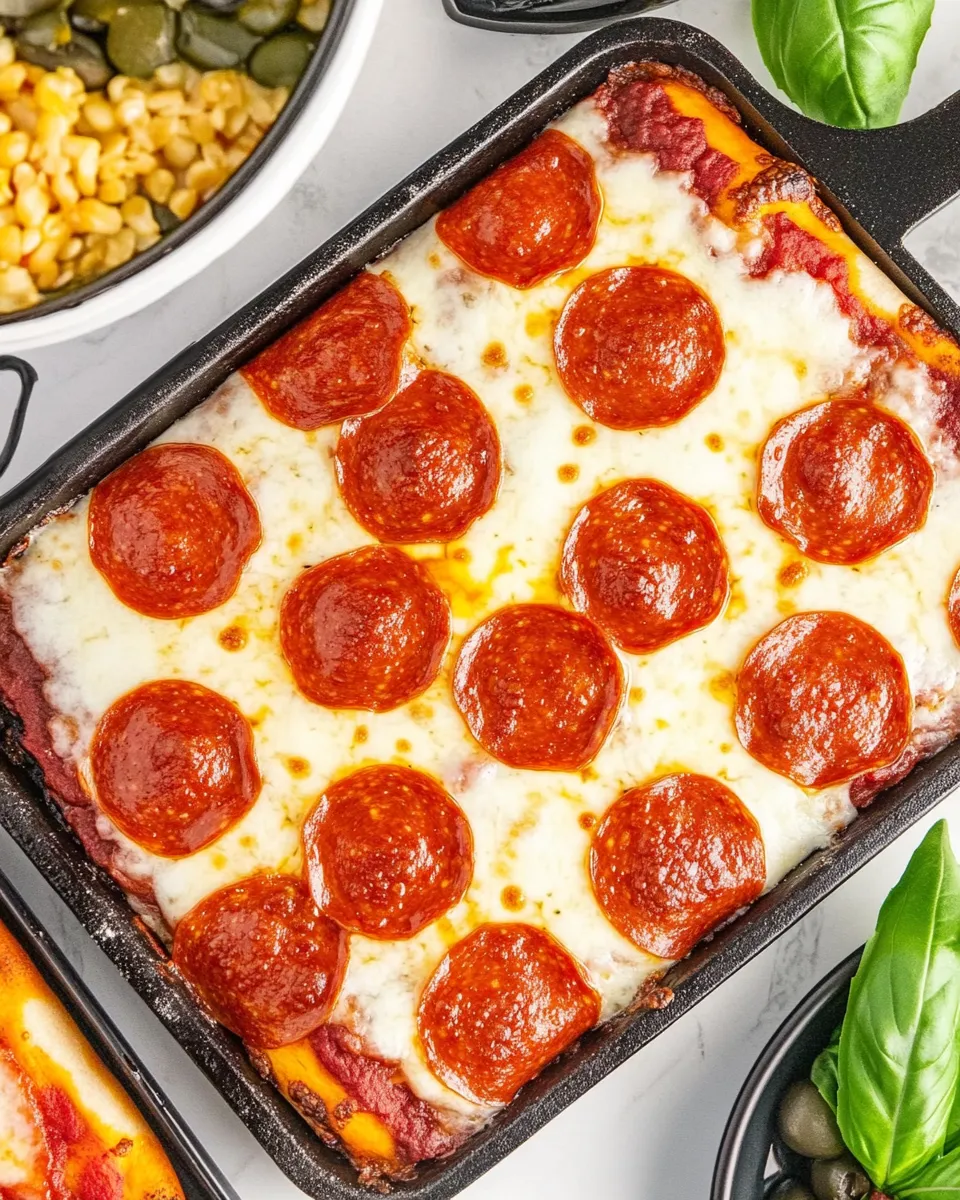
I learned to love Detroit-style pizza for its caramelized, chewy edges and the way cheese bubbles out to form a crisp, savory perimeter. Using a cast-iron skillet gives you much of that magic without needing a special pan. This version is straightforward, focused on technique, and built around a short list of pantry staples.
Expect a dough that crisps on the bottom while staying tender and airy inside, a generous layer of cheese that reaches the edges, and pepperoni that finishes on top so it stays lively. The steps are simple and repeatable, so once you make this once, you’ll know exactly what to do the next time.
Below I walk through the exact ingredient notes you need, a stepwise baking sequence you can follow without guessing, sensible gear, common mistakes to avoid, and practical make-ahead ideas. No fluff — just clear, useful direction so your skillet pizza comes out great every time.
The Ingredient Lineup
Ingredients
- 2 cups shredded Muenster cheese — the workhorse for melt and that rich, slightly tangy flavor that browns well at the edges.
- 1 cup shredded mozzarella cheese — adds stretch and milder milky notes; helps balance the Muenster.
- 1 Tbsp vegetable oil — coats the skillet so the dough crisps and releases cleanly.
- 1 lb ball pizza dough — the base; room temperature dough stretches easiest.
- 1/2 tsp Italian Seasoning — split in half for subtle herb layers above and below the cheese.
- Pepperoni slices — for salty, crisped pockets of flavor; place some under cheese and some on top.
- 1/2 cup pizza sauce — spooned in dollops over the cheese, creating the classic Detroit look with pockets of sauce.
Cast Iron Detroit-Style Pizza Made Stepwise
- Preheat the oven to 500°F and place a rack in the bottom position.
- Brush a 12-inch cast-iron skillet with the 1 tablespoon vegetable oil, coating the bottom and sides.
- On a lightly floured surface, stretch the 1 lb ball of pizza dough into a 12-inch circle.
- Transfer the dough to the oiled skillet and press it to fill the pan, pressing the dough up the sides to form a rim.
- Pierce the dough thoroughly all over with a fork to prevent large bubbles.
- Sprinkle half of the Italian seasoning (1/4 tsp) evenly over the dough.
- Place the skillet on the stovetop over high heat and cook 2–3 minutes, until the dough slightly puffs and the bottom begins to set.
- Remove the skillet from the heat. Arrange some pepperoni slices in a single layer over the dough, reserving additional slices for later.
- Evenly top the pizza with both cheeses, using all 2 cups shredded Muenster and 1 cup shredded mozzarella, making sure the cheese reaches the edges.
- Sprinkle the remaining Italian seasoning (1/4 tsp) over the cheese.
- Use a spoon to dollop all of the 1/2 cup pizza sauce in several evenly spaced spoonfuls over the cheese.
- Arrange the remaining pepperoni slices on top of the sauce as desired.
- Transfer the skillet to the preheated oven on the bottom rack and bake 15 minutes, until the cheese is melted and the edges are golden and crisp.
- Remove from the oven, let the pizza rest briefly, then slice and serve.
Why It’s My Go-To
This method is reliable and fast. The initial stovetop step jump-starts crust development so the bottom gets a head start before the oven crisps the edges and finishes the cheese. A cast-iron skillet mimics the heat-retention of the steel trays used in Detroit, giving you that desirable crunchy, caramelized edge.
I also like that the composition — cheese to sauce to pepperoni placement — is forgiving. The cheeses melt into a cohesive layer that seals against the dough, and the spooned sauce avoids a soggy base because it’s distributed in controlled pockets. For weeknight dinners or a lazy weekend pizza for two, this hits the sweet spot of texture and speed.
Quick Replacement Ideas
- Adjust the cheese ratio — increase the mozzarella if you want more elasticity and slightly less browning.
- Reduce or omit pepperoni — you can simply use fewer slices from the same ingredient if someone prefers less meat.
- Italian seasoning placement — if you prefer a single hit of herb flavor, sprinkle the full 1/2 tsp on the cheese instead of splitting it.
- Smaller pizzas — if you have more than 1 lb of dough or want two smaller pans, divide the dough and adjust baking time slightly (watch the edges).
What You’ll Need (Gear)
- 12-inch cast-iron skillet — the main tool; its heat retention creates that crispy, caramelized edge.
- Oven set to 500°F — high heat is essential for rapid browning and crisping.
- Light flouring surface — to stretch the dough without tearing.
- Fork — to pierce dough and release large air pockets before baking.
- Bench scraper or spatula — helpful for transferring stretched dough into the skillet.
- Measuring spoons and cups — to follow the ingredient amounts exactly for consistent results.
Errors to Dodge
- Don’t skip the oil. A thin, even coat of the 1 Tbsp vegetable oil is critical to get a crisp exterior and prevent sticking.
- Avoid cold dough. Stretch room-temperature dough; cold dough resists and tears, which ruins edge formation.
- Don’t overload the cheese. You must use the specified 2 cups Muenster + 1 cup mozzarella and spread it to the edges — too little and you lose the protective cheese ring, too much can lead to overrun and uneven baking.
- Resist opening the oven. The pizza needs the steady, high heat for the full 15 minutes on the bottom rack to caramelize the edges properly.
- Don’t skip the fork piercings. Large bubbles will throw off the shape and create uneven crust thickness.
Spring–Summer–Fall–Winter Ideas
- Spring: Keep it light by reducing pepperoni and letting the cheeses shine; serve with a lemony arugula salad on the side.
- Summer: Make the pizza earlier in the day and enjoy it room temperature outdoors — cheese-forward slices travel well.
- Fall: Use the full pepperoni allocation and pair with roasted vegetables alongside — heavier, comforting eating suits cooler nights.
- Winter: Turn up the oven time a touch if your kitchen is cold and the skillet takes longer to preheat; that little adjustment helps finish the crust and cheese evenly.
Insider Tips
- Let the dough relax. If it snaps back while stretching, let it rest 5–10 minutes so gluten relaxes and it will stretch easier without tearing.
- Edge attention: Pressing the dough up the sides creates the rim that holds cheese and sauce. Do it gently and evenly to avoid thin spots.
- Skillet temperature: Heat the skillet only enough to make the dough puff slightly on the stovetop — you want the bottom to begin setting, not burn. Two to three minutes on high is usually perfect.
- Cheese to edge: Make sure the cheese touches the pan all the way around; that contact is what yields the lacy, browned edge distinctive to Detroit-style pies.
- Rest briefly before slicing: letting the pizza rest 2–4 minutes after the oven helps the cheese set enough to slice neatly without losing shape.
Make Ahead Like a Pro
- Prepare dough in advance: Keep your 1 lb ball of dough refrigerated up to 48 hours. Remove and let it come to room temperature 45–60 minutes before stretching.
- Pre-shred cheeses and stash: Combine the shredded Muenster and mozzarella in the fridge in a covered container for up to 2 days so they’re ready to top.
- Pre-oil the skillet if you like: Coat and cover the skillet for short-term convenience, but oil fresh before placing dough to avoid excess residue buildup.
- Saucing strategy: Measure the 1/2 cup pizza sauce into a small bowl so it’s easy to spoon onto the assembled pizza at bake time.
Common Questions
- Can I use less cheese? — You can, but the texture and the edge caramelization depend on using the full 2 cups Muenster and 1 cup mozzarella as instructed. Reducing cheese will change how the crust forms and how the sauce behaves.
- What if my skillet is smaller or larger than 12 inches? — For a smaller skillet, stretch dough to fit and watch baking time; a larger skillet will spread dough thinner and may bake faster. The recipe is tuned for a 12-inch pan.
- Do I need to preheat the skillet in the oven? — This method calls for oiling the skillet and starting the dough on the stovetop so you don’t need to heat it in the oven first. That stovetop step gives the crust its initial set.
- Why spoon the sauce on after the cheese? — Spoonfuls of sauce over the melted cheese create the classic Detroit look and prevent a soggy bottom. It also keeps distinct flavor pockets rather than a uniform wet layer.
- How do I know when it’s done? — Look for melted cheese, golden-browned edges, and a crisp, caramelized perimeter. The 15-minute bake on the bottom rack at 500°F should achieve that in most home ovens.
The Last Word
This cast-iron approach gives you Detroit-style texture with a minimum of fuss and familiar kitchen tools. Follow the ingredient list and stepwise method exactly the first few times to learn how your particular oven and skillet behave. Once you know that, you can make small, intentional adjustments — but keep the essential elements the same: a well-oiled pan, cheese to the edges, a short stovetop sear, and 15 minutes on the bottom rack at 500°F.
Make it, taste it, and tweak only after you’ve run it once. You’ll be surprised how reliably good a skillet pizza can be when the basic technique is solid.
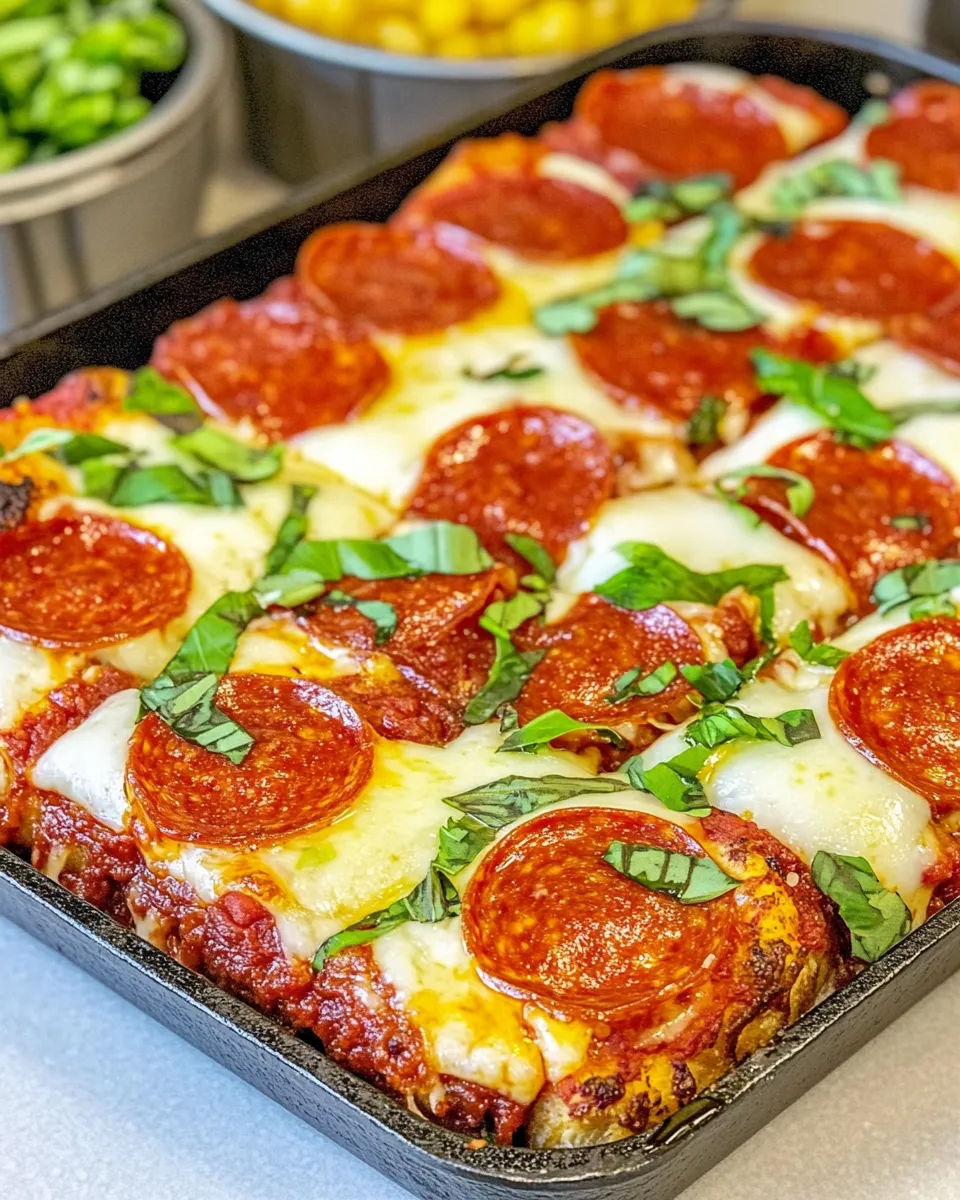
Cast Iron Detroit-Style Pizza
Equipment
- 12-inch Cast Iron Skillet
- Pizza Cutter
- Rotary Cheese Grater
Ingredients
Ingredients
- 2 cupsshredded Muenster cheese
- 1 cupshredded mozzarella cheese
- 1 Tbspvegetable oil
- 1 lbball pizza dough
- 1/2 tspItalian Seasoning
- pepperoni slices
- 1/2 cuppizza sauce
Instructions
Instructions
- Preheat the oven to 500°F and place a rack in the bottom position.
- Brush a 12-inch cast-iron skillet with the 1 tablespoon vegetable oil, coating the bottom and sides.
- On a lightly floured surface, stretch the 1 lb ball of pizza dough into a 12-inch circle.
- Transfer the dough to the oiled skillet and press it to fill the pan, pressing the dough up the sides to form a rim.
- Pierce the dough thoroughly all over with a fork to prevent large bubbles.
- Sprinkle half of the Italian seasoning (1/4 tsp) evenly over the dough.
- Place the skillet on the stovetop over high heat and cook 2–3 minutes, until the dough slightly puffs and the bottom begins to set.
- Remove the skillet from the heat. Arrange some pepperoni slices in a single layer over the dough, reserving additional slices for later.
- Evenly top the pizza with both cheeses, using all 2 cups shredded Muenster and 1 cup shredded mozzarella, making sure the cheese reaches the edges.
- Sprinkle the remaining Italian seasoning (1/4 tsp) over the cheese.
- Use a spoon to dollop all of the 1/2 cup pizza sauce in several evenly spaced spoonfuls over the cheese.
- Arrange the remaining pepperoni slices on top of the sauce as desired.
- Transfer the skillet to the preheated oven on the bottom rack and bake 15 minutes, until the cheese is melted and the edges are golden and crisp.
- Remove from the oven, let the pizza rest briefly, then slice and serve.
Notes
I used fresh pizza dough from the bakery section at the grocery store.
Can use any cheese and pizza toppings you prefer.
Can use more or less sauce – it is up to your personal preference.