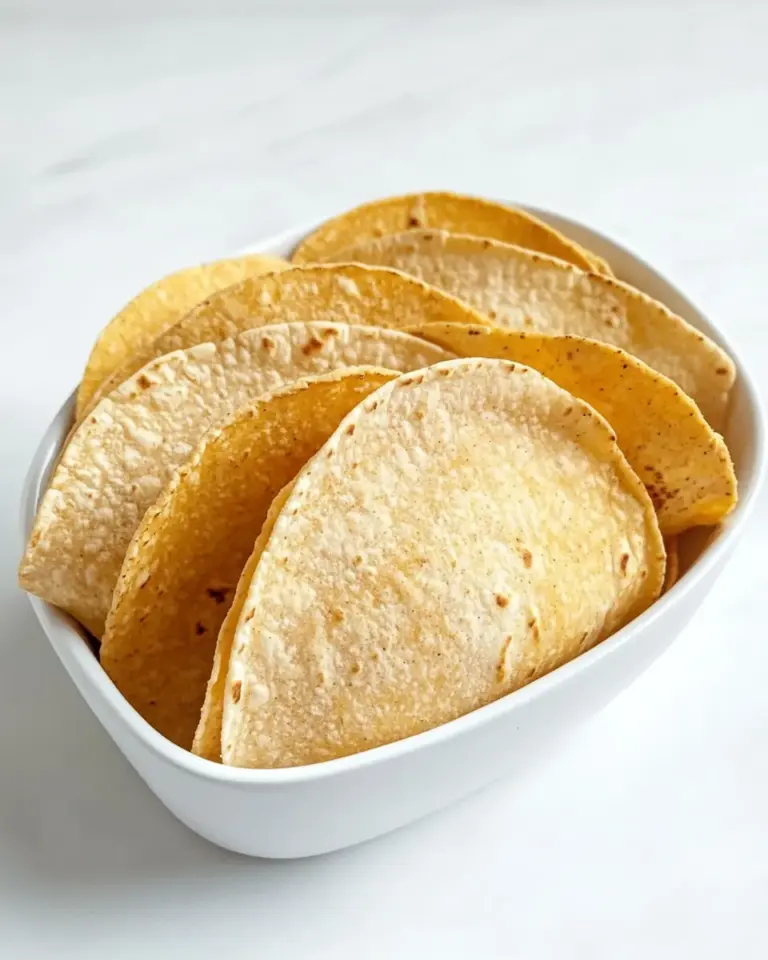
I learned to fry tortillas the way many of us learn anything worth repeating: by doing it wrong a few times, then making small adjustments until it worked every time. This technique gives you blistered, pliable shells for tacos or crisp, golden shells for tostadas. It’s simple, fast and forgiving once you understand the timing and oil temperature.
In this post I walk you through the exact steps I use in my kitchen, the gear I reach for, and the traps to avoid so you get consistent results. No fancy ingredients, no complicated batter—just tortillas, oil, and a watchful eye. You’ll be able to feed a crowd or make a single perfect shell in minutes.
Read through the steps, check the short ingredient list, and scan the Q&A near the end if you’re in a rush. Then dive in: frying tortillas is one of those little skills that raises any weeknight taco or snack to something reliably great.
Ingredient Checklist
- corn oil or vegetable oil — neutral, high-smoke-point oil for frying; enough so the tortilla can float slightly in the skillet.
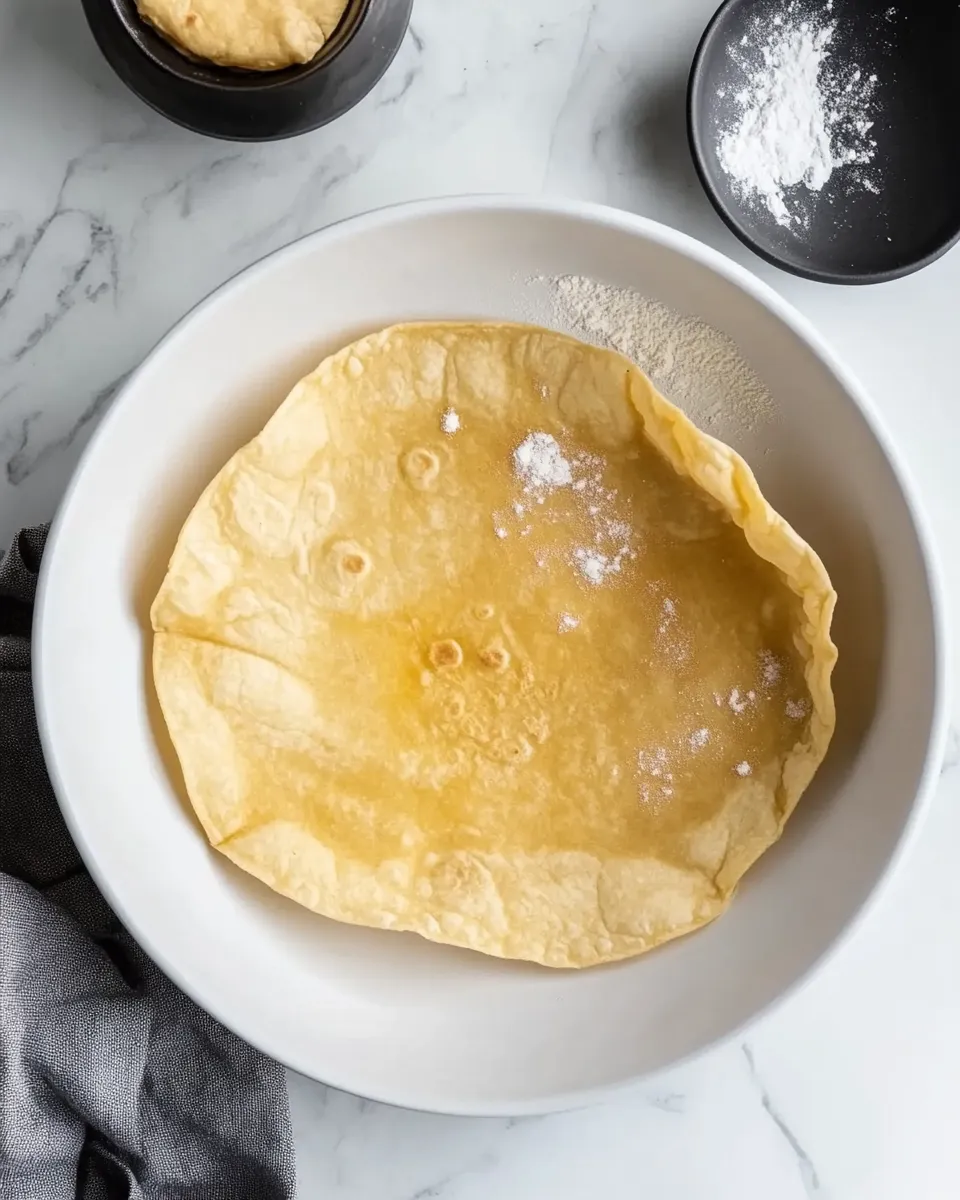
- 8 (8-inch) corn tortillas — the size and style called for; stay within this size for best frying timing and shape.
Fry Tortillas: From Prep to Plate
- Pour corn oil or vegetable oil into a large skillet—enough for the tortilla to float slightly—and heat over medium-high until the oil reaches 350°F or a small scrap of tortilla sizzles immediately when added.
- Using tongs, carefully lower one 8-inch corn tortilla into the hot oil and fry until it is blistering but still soft, about 10–15 seconds.
- Flip the tortilla with the tongs, then immediately fold it in half and hold or pinch the edges to form a taco shell shape.
- Continue frying the folded tortilla, turning as needed, until the shell is crisp and golden all over, about 15–30 seconds longer.
- Transfer the finished shell to a plate and loosely tent with aluminum foil to keep warm. Repeat steps 2–4 with the remaining tortillas.
Short practical notes on those steps: heat control is the single most important part. If the oil is too cold the tortilla absorbs oil and becomes greasy; if it’s too hot the outside will burn before the interior crisps. Use the quick-sizzle test with a small scrap of tortilla if you don’t have a thermometer.
Use tongs with a good grip; you’re flipping and pinching while the tortilla is hot. When folding, be decisive. A quick pinch holds the taco shell shape while you finish crisping. Transfer cooked shells to a single layer or slightly overlapped on a plate; stacking while hot will steam them, softening the crisp you just made.
Why Fry Tortillas is Worth Your Time
Frying tortillas transforms a simple flatbread into something texturally striking—puffed blisters and a toastier corn flavor. For tacos, a fried shell holds fillings better and adds a satisfying contrast to soft salsas and tender proteins. For tostadas or chips, that short fry produces a sturdy, golden base that keeps its crunch even with wet toppings.
The technique is quick: each shell takes under a minute from the oil to the plate. That speed makes frying practical for weeknight dinners or last-minute guests. And because the ingredient list is tiny, it’s an easy skill to keep sharp; once you master the timing and the feel of the oil, the results are repeatable.
Finally, homemade fried shells are almost always better than store-bought when you want that freshly crisped flavor. You control the color, the crunch level, and the size—so the finished dish feels intentional, not thrown together.
Quick Replacement Ideas
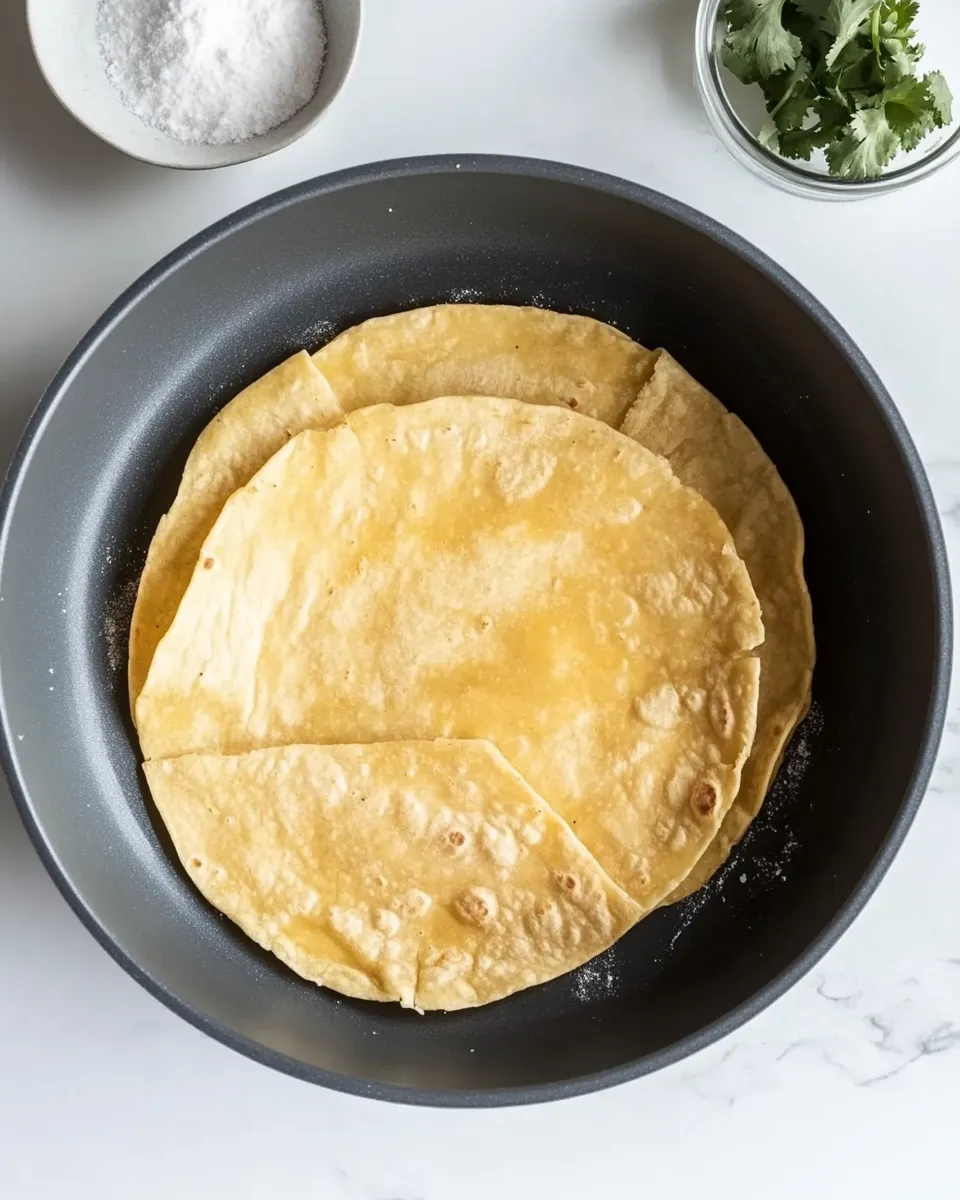
- If you only have one type of oil on hand, use whichever is listed—corn oil or vegetable oil—and make sure it’s fresh and not near its smoke point.
- If you prefer a slightly lighter shell, fry briefly to blister and hinge-fold, then finish for less time so the interior stays a little tender rather than fully brittle.
- Use an appropriately sized pan: a wider skillet lets tortillas float and turn more easily; a very narrow pan can crowd shells and drop the oil temperature.
Kitchen Gear Checklist
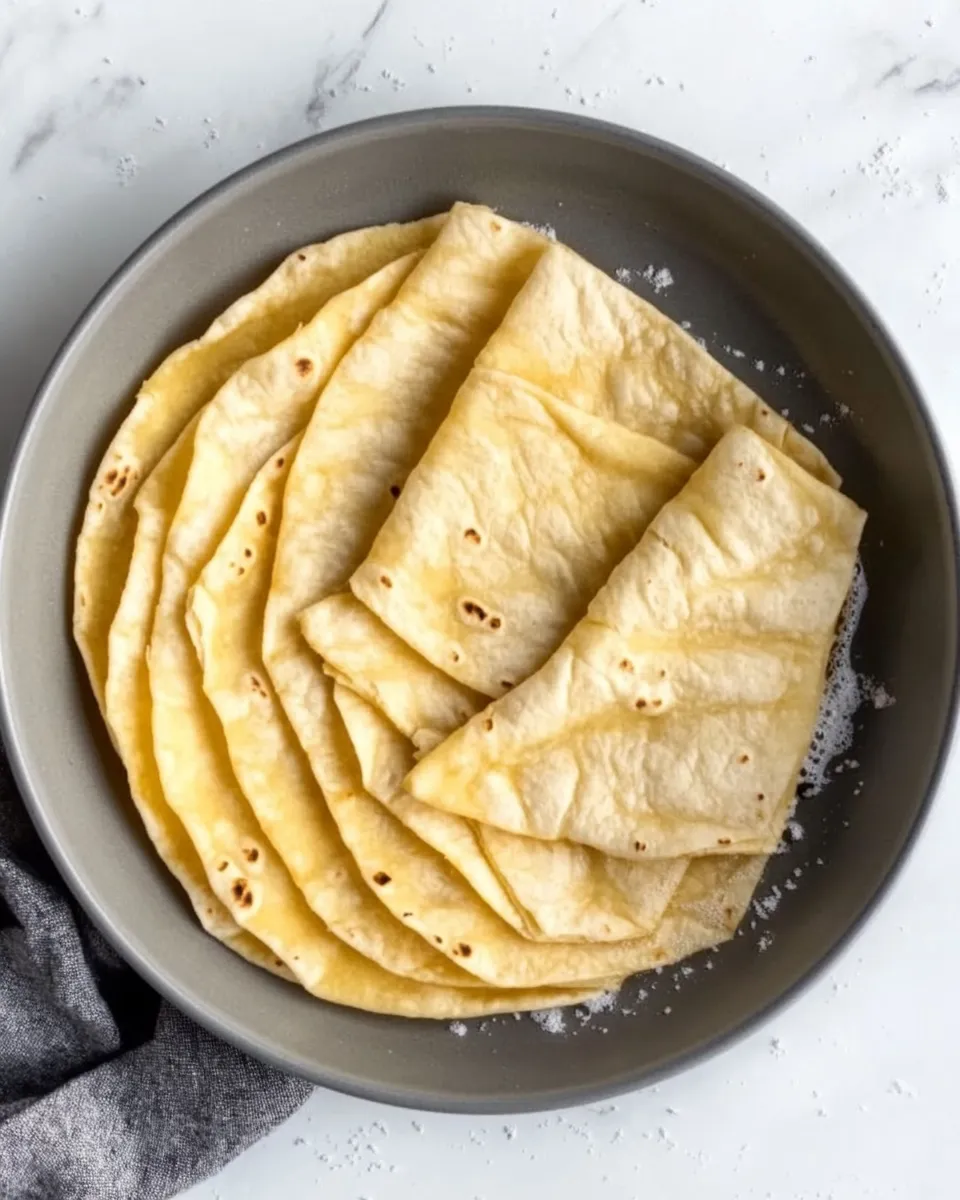
- Large skillet (cast-iron or heavy-bottomed recommended) — holds oil temperature well.
- Tongs with a secure grip — for flipping and folding without burning your fingers.
- Instant-read thermometer (optional) — to verify 350°F if you want precise control.
- Paper towels and a shallow plate — to drain and rest finished shells briefly.
- Aluminum foil — to loosely tent and keep shells warm while you finish the batch.
Avoid These Traps
Cold oil or overcrowded pans. Don’t drop multiple tortillas into oil at once unless you have a very large pot; that causes the temperature to plunge and the shells to soak up oil. Fry in small batches so the oil temperature recovers quickly.
Overcooking. Because the process is measured in seconds, it’s easy to go from blistered to burnt. Watch the tortilla during the initial blistering stage—10–15 seconds is often enough for that first side. Once folded, keep an eye on color and crispness; it can take as little as 15 seconds more.
Pressing or mashing while the shell is hot. Resist the urge to flatten a hot shell against the pan to speed crisping; that squeezes natural air pockets out and can result in an oily, dense shell.
Nutrition-Minded Tweaks
Frying does add fat, but you can make small choices to reduce total oil absorption. Keep the oil well-heated (around 350°F); properly heated oil forms a quick exterior seal and prevents excessive soaking. Drain shells on paper towels and don’t stack them while hot to avoid steam softening, which encourages sogginess that feels greasier.
If you want a crisper but thinner shell, fry to blister and fold briefly, then finish at a slightly lower heat to reduce color development while achieving crispness. This short approach trims the total time in oil without sacrificing crunch.
Chef’s Notes
I prefer corn tortillas for their flavor and structure; they blister differently than flour tortillas and tend to hold shape better when folded. Use tongs to fold immediately after flipping—speed matters because the tortilla will set as it cools. If you like a very even golden color, rotate the folded shell in the oil so both rounded sides contact the surface regularly.
One small habit that helps: keep a dry plate nearby for blotted shells. A single gentle press with paper towel right after removing from the oil lifts excess oil and sharpens the crunch without compromising the shell’s integrity.
Make-Ahead & Storage
Fried shells are best served immediately, but you can cook them ahead for short-term use. Cool completely on a rack to avoid trapping steam, then store in an airtight container at room temperature for up to a day. For longer storage, layer shells between parchment and freeze in a resealable bag; reheat in a hot oven (375°F) for 3–6 minutes until crisp.
To refresh shells that have softened, a quick 1–2 minute re-fry in hot oil or a 3–5 minute stint in a hot oven will bring back crispness. Avoid microwaving; it makes fried shells chewy and limp.
Top Questions & Answers
- Q: Can I reuse the frying oil? — Yes, you can reuse oil once or twice if it wasn’t overheated or heavily soiled. Strain it through a fine sieve or cheesecloth and cool completely before storing in a sealed container in a cool, dark place.
- Q: How do I know the oil is the right temperature without a thermometer? — Drop a small scrap of tortilla into the oil; it should sizzle immediately and start to bubble around the edges. If it browns too fast, lower the heat. If it sinks and soaks oil, increase the heat.
- Q: Will flour tortillas work the same way? — Flour tortillas fry differently; they can puff and become very crispy but may require slightly different timing and more attention to oil temperature. The source recipe uses 8-inch corn tortillas specifically.
- Q: Can I make baked shells instead for less oil? — Baked shells are an option to reduce oil, but they won’t have the same immediate blistered texture you get from frying. For the classic effect, frying is preferred.
Final Thoughts
Frying tortillas is a small technique with big payoff. It’s fast, economical and elevates simple fillings into something memorable. Focus on oil temperature, quick folding, and single-layer resting to keep shells crisp. With a little practice you’ll get consistent results and a few minutes of reliable satisfaction each time you cook.
Make a batch, try a few fillings, and notice how the texture changes the whole dish. Once you’ve done it a couple of times, you’ll know exactly how long to hold each tortilla, how hot your oil runs, and what level of golden you prefer. That’s the joy of this simple skill.
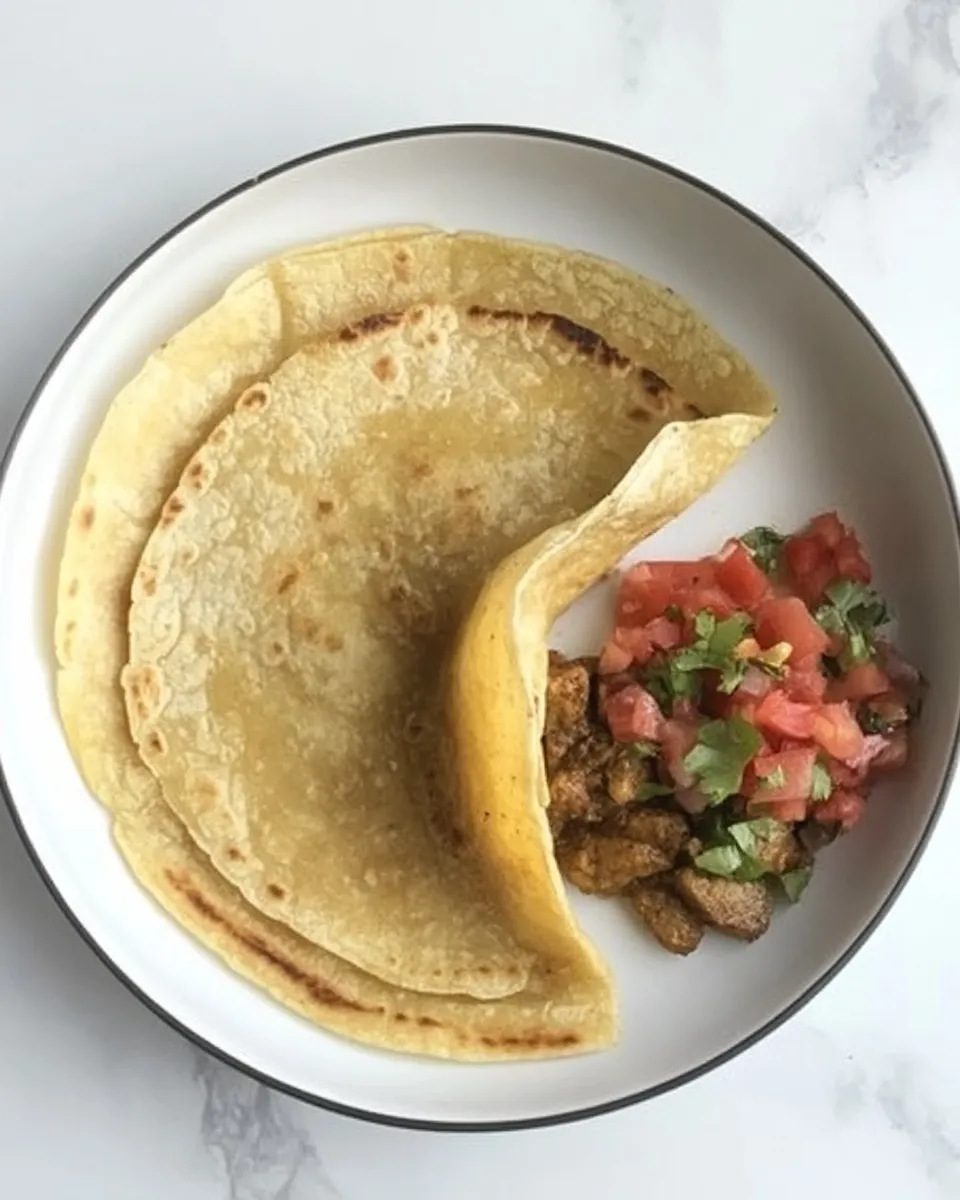
How to Fry Tortillas
Equipment
- Large Skillet
- Tongs
- Aluminum Foil
Ingredients
Ingredients
- corn oilor vegetable oil
- 8 8-inchcorn tortillas
Instructions
Instructions
- Pour corn oil or vegetable oil into a large skillet—enough for the tortilla to float slightly—and heat over medium-high until the oil reaches 350°F or a small scrap of tortilla sizzles immediately when added.
- Using tongs, carefully lower one 8-inch corn tortilla into the hot oil and fry until it is blistering but still soft, about 10–15 seconds.
- Flip the tortilla with the tongs, then immediately fold it in half and hold or pinch the edges to form a taco shell shape.
- Continue frying the folded tortilla, turning as needed, until the shell is crisp and golden all over, about 15–30 seconds longer.
- Transfer the finished shell to a plate and loosely tent with aluminum foil to keep warm. Repeat steps 2–4 with the remaining tortillas.
Notes
Make sure the oil is hot enough.Use a thermometer to gauge the temperature of the oil accurately. If you don’t have one, wet the tip of your finger with water and dripjust onedrop of water into the oil. If it sputters and crackles, the oil is ready.
But not too hot.Cooking with oil can be tricky. If the oil starts smoking, that means you’ve passed the point and should let the oil cool down a bit.
Don’t crowd the pot.Too many chips or tortillas in the oil cools the oil down and prevents things from getting super crispy. It’s better to work slowly than rush.
Add more oil as you go.Depending on how many tortillas you’re cooking, you may need to add more oil. Just let the oil heat up again before adding more tortillas.
Paper towels are your friend.Paper towels really soak up extra oil (and extra calories) so feel free to break them out. When I make chips, I’ll layer them between batches of fried chips as I work. Not into paper towels? I keep a stack of clean wash clothes in my kitchen in my kitchen just for situations like this. Use them, then wash them!
Seasoning and salt.Once the tortillas are crispy, salt and season them while they’re still warm. Use a coarse salt or any other seasoning you like. A sprinkle ofchili seasoning, a squirt of lime juice, or maybe even a dusting ofhomemade fajita seasoning.
Shelf life:Use what you make right away, or all your hard work may become chewy (humidity causes the chewiness). You can store them in a paper bag folded over and kept out at room temperature. Leftovers can be reheated in the oven to crisp them up again.