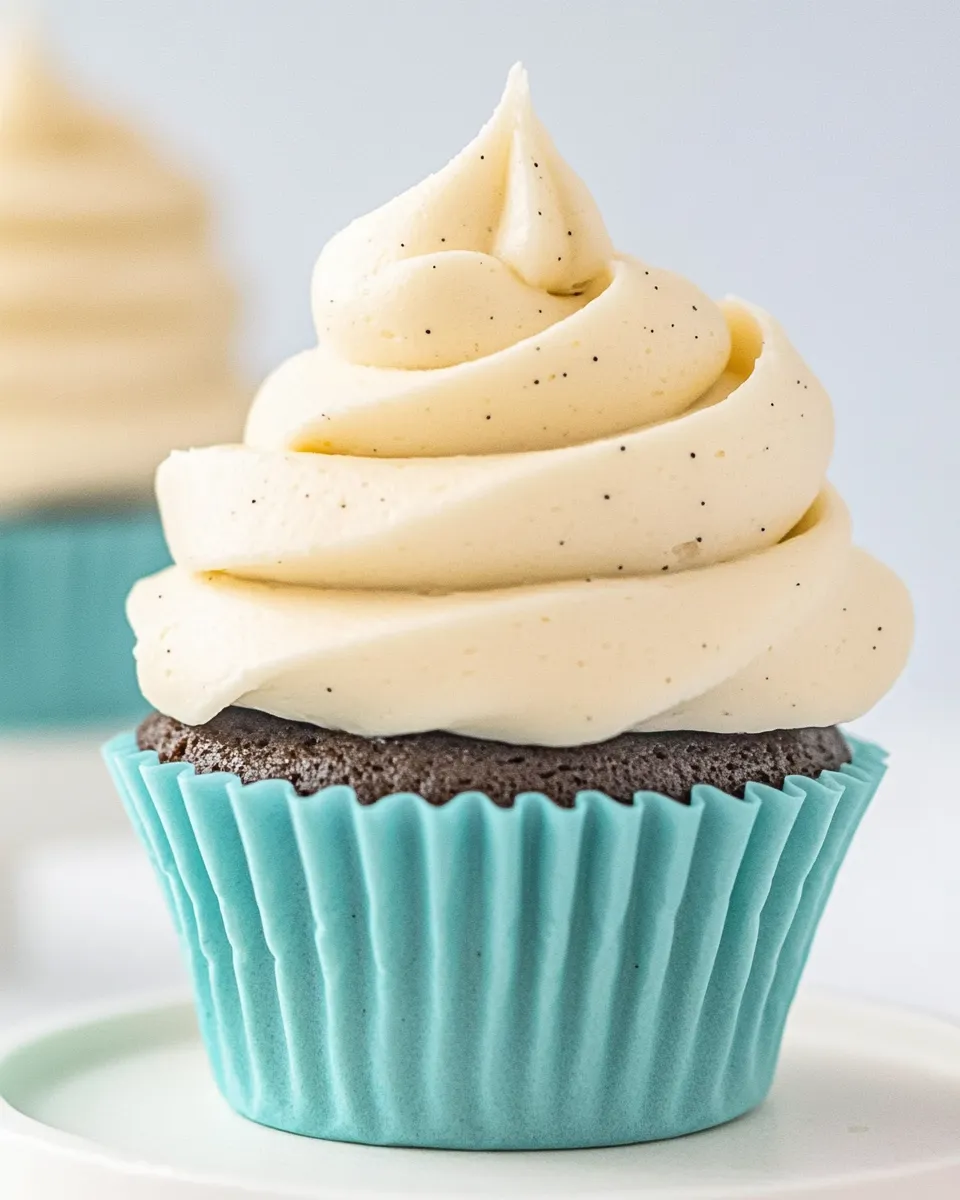
This is a straightforward, dependable white buttercream that I reach for whenever I need a clean, classic finish on a cake or a quick frosting for cupcakes. It’s bright, smooth, and forgiving — and it comes together in minutes with ingredients you probably already have in the pantry. I like it for its ease and the way it holds a soft peak without being heavy.
No frills, no fuss. The recipe gives you a spreadable icing perfect for smoothing over layers or giving cupcakes a tidy top. If you want to pipe, be aware there’s a note about quantity in the directions. Read that before you decide how many cupcakes you’ll decorate.
Below you’ll find a precise ingredient breakdown, the step‑by‑step method exactly as written, and practical tips from my kitchen so you get consistent results every time. I keep things practical: what to watch for, useful swaps, and how to freeze or rescue your frosting if something goes a little sideways.
The Ingredient Lineup
Ingredients
- One 16-ounce package powdered sugar — the sweet structure of the icing; sift if lumpy for a super-smooth texture.
- 6 tablespoons (¾ a stick) butter, softened — provides richness and spreadability; should be soft but not melted.
- 3 to 4 tablespoons milk — controls the consistency; start with 3 and add the extra if needed for spreading.
- 1½ teaspoons vanilla extract — flavor backbone; use pure vanilla for the cleanest taste.
- ⅛ teaspoon salt — balances the sweetness and brightens the vanilla.
White Buttercream Icing: From Prep to Plate
- Place the 16-ounce package of powdered sugar and the 6 tablespoons (¾ stick) softened butter in a medium mixing bowl.
- Using an electric mixer on low speed, beat the sugar and butter just until they begin to combine and the sugar is incorporated.
- Add 1½ teaspoons vanilla extract, 1/8 teaspoon salt, and 3 tablespoons milk. Increase the mixer to medium speed and beat, scraping the sides and bottom of the bowl as needed.
- If the icing is too thick for spreading, add up to 1 additional tablespoon of milk, a little at a time, until the icing reaches an easy-spreading consistency.
- Beat the icing until smooth and homogenous, scraping the bowl once or twice to ensure even mixing.
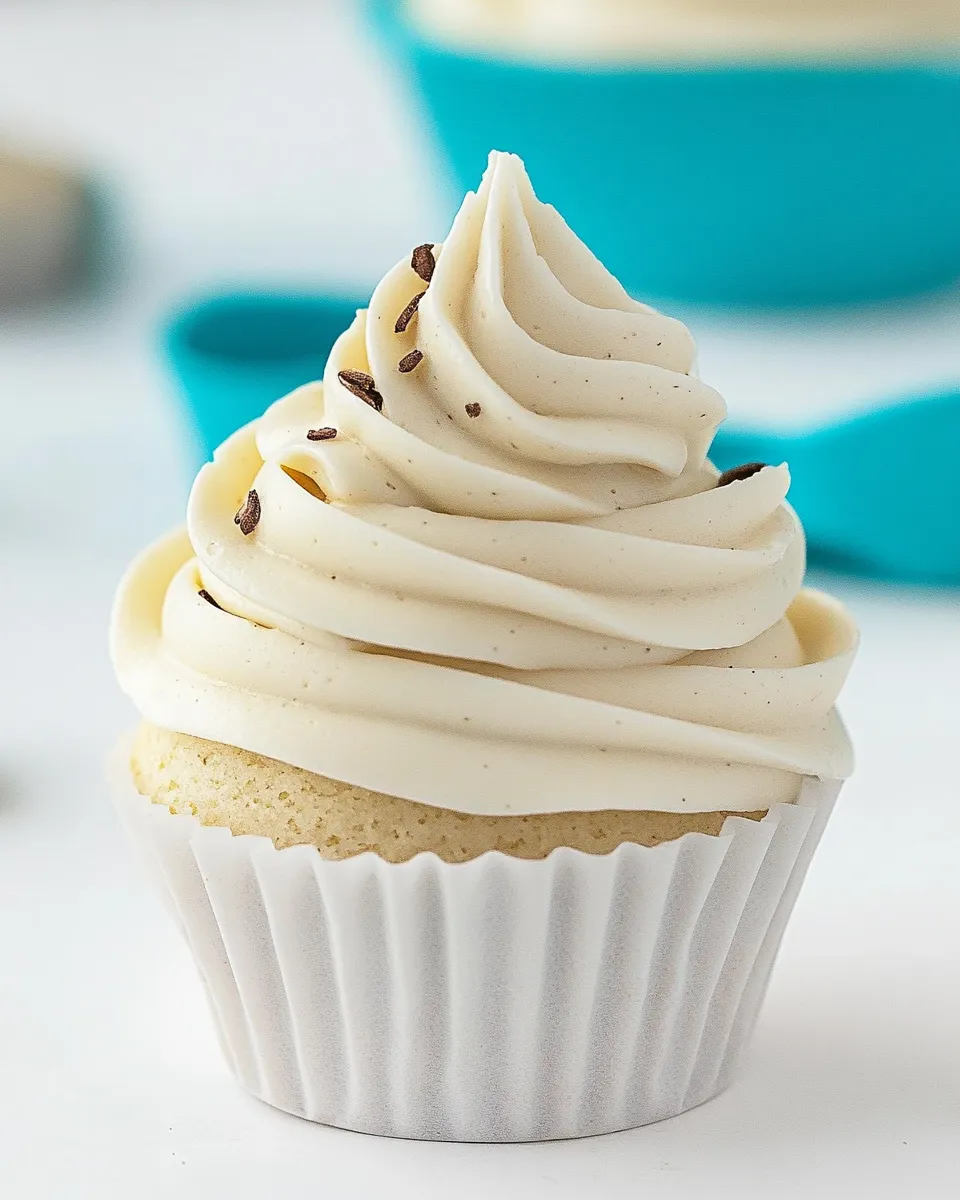
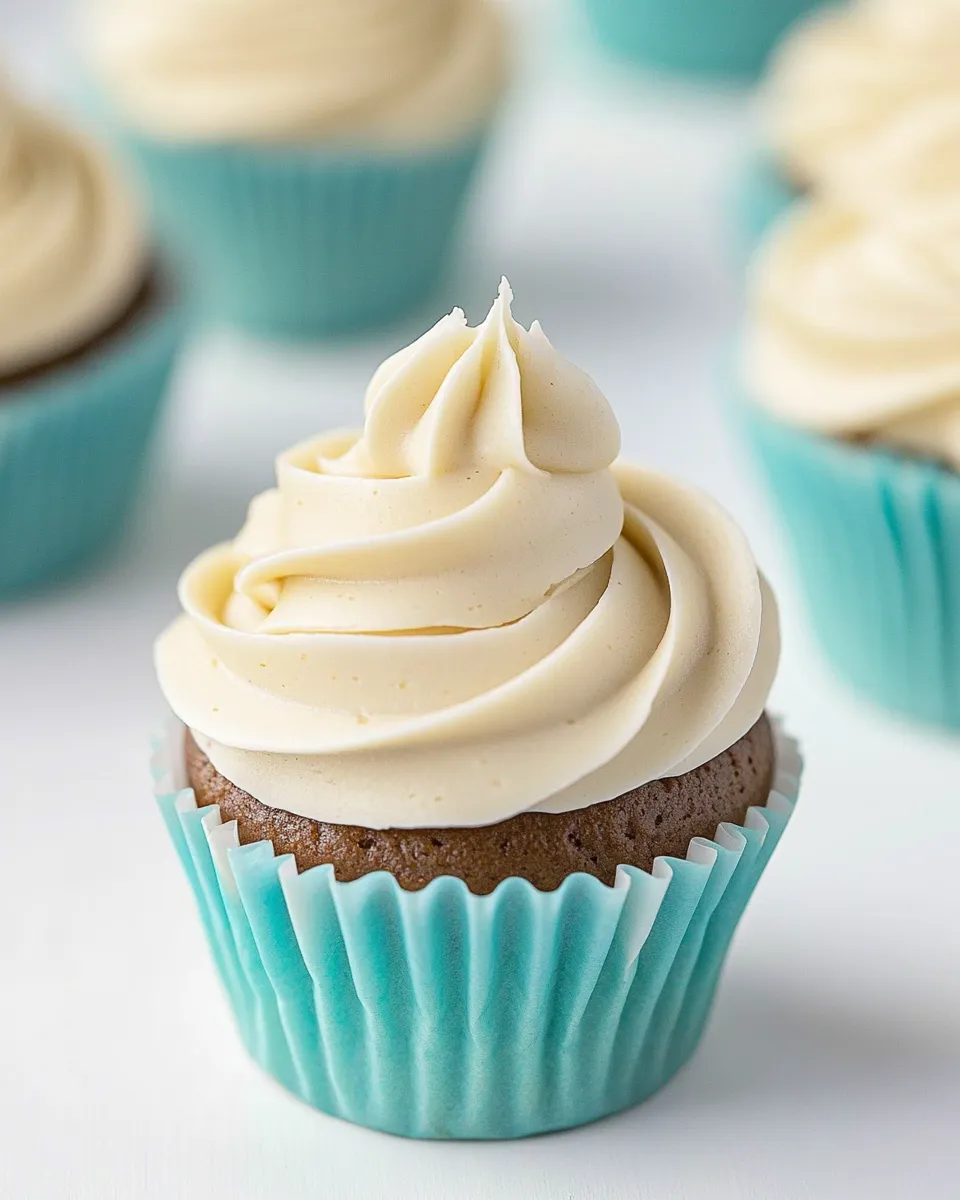
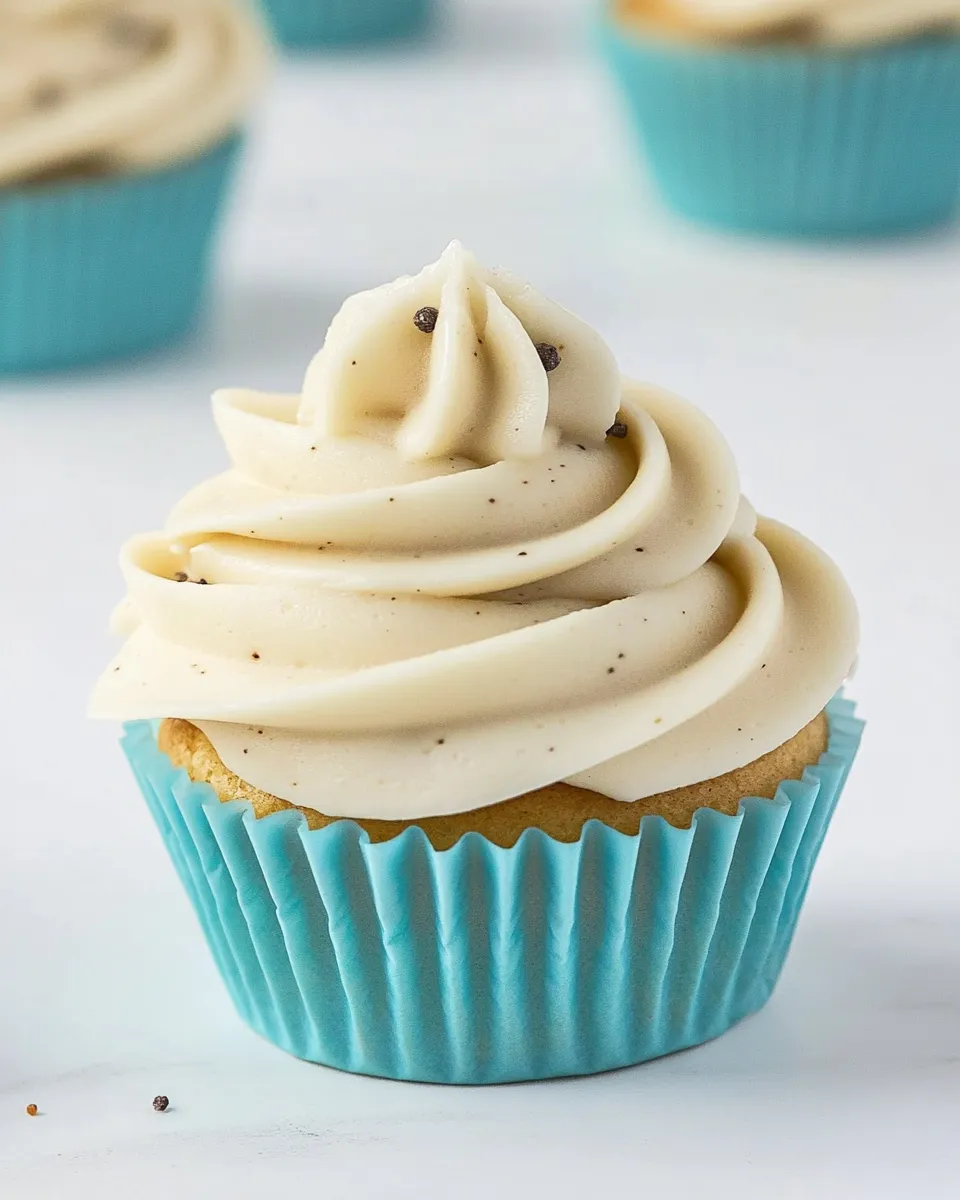
- Use the icing immediately to spread on cakes or cupcakes. Note: if you pipe rather than spread, you may not have enough to ice 24 cupcakes.
Why It Works Every Time
This recipe is intentionally simple and mechanical in how it builds structure. Powdered sugar gives the bulk; butter gives fat and mouthfeel; milk adjusts fluidity; vanilla and salt round the flavor. The order matters: starting with sugar and butter at low speed keeps you from dusting the kitchen with sugar and lets the fat begin to coat the sugar granules, which helps the texture finish silky rather than gritty.
Using an electric mixer lets you control the incorporation gently at first, then build a smooth emulsion. Scraping the bowl is not optional if you want uniform color and consistency — it prevents pockets of unmixed sugar or butter that will show up on your cake surface.
Ingredient Swaps & Substitutions
- Butter — salted butter can be used, but reduce or omit the 1/8 teaspoon salt. Unsalted gives you the most control.
- Milk — you can use any neutral milk (dairy or plant) to reach the desired consistency. Full-fat dairy milk gives a slightly richer mouthfeel.
- Vanilla extract — almond, lemon, or other extracts will change the flavor profile; reduce potency if using a strong extract (start with half the amount and taste).
- Powdered sugar — you must use powdered sugar here for the proper texture; granulated sugar will not work.
Prep & Cook Tools
Keep it minimal. You do not need a stand mixer for this; a handheld electric mixer does the job. Use a medium mixing bowl with enough room to scrape. A rubber spatula is essential for scraping the sides and bottom cleanly. If you plan to pipe, prepare an offset spatula and piping bags with whichever tips you prefer.
Easy-to-Miss Gotchas
Temperature of the butter. If the butter is too cold, it won’t incorporate and you’ll have lumps. If it’s too warm or melted, the icing will be loose and greasy. Aim for softened — yielding to pressure but still holding shape.
Piping quantity. The recipe note says you may not have enough icing to pipe 24 cupcakes. That’s real. Spreading uses less volume than piping rosettes or large swirls. If you plan to pipe many cupcakes, double the recipe or reserve extra for touch-ups.
Overbeating. Beat until smooth and homogenous. Overworking with a high-speed mixer can introduce too much air and make the icing too fluffy for smooth spreading. Moderate speed is your friend.
Seasonal Serving Ideas
This white buttercream is a wonderful blank canvas. In spring, add a drop or two of natural lemon oil to brighten it and pipe tiny flowers for a fresh finish. In winter, a small pinch of ground nutmeg or a splash of orange liqueur adds warmth without overpowering the white base. For holidays, fold in a tiny amount of freeze-dried fruit powder for color and subtle flavor while keeping the texture stable.
If you’re hosting a tea or brunch, thin the icing slightly toward the 4 tablespoon milk mark and spread it thin for a light glaze-like finish on mini cakes or bars. For weddings or celebratory layer cakes, keep it thicker and smooth with an offset spatula for a pristine white finish.
Chef’s Rationale
I keep this formulation tight because it prioritizes reliability and versatility. Powdered sugar handles structure and sweetness consistently from batch to batch, while butter gives that classic mouthfeel diners expect from a buttercream. The small amount of salt tames the sweetness without being noticeable. I chose 3 to 4 tablespoons of milk to give you direct control over spreadability depending on your project.
Why not add more butter or cream? More butter changes mouthfeel and stability; more cream can make it glossy and unstable. This ratio strikes a balance: spreadable, pipeable in small amounts, and easy to flavor or color without collapsing.
Freezer-Friendly Notes
You can freeze buttercream, but do it carefully. Transfer the fully mixed icing to an airtight container, pressing plastic wrap directly onto the surface before sealing to prevent freezer burn and condensation. It will keep for up to one month. Thaw in the refrigerator overnight, then bring to room temperature and re-whip briefly with a mixer to restore loft and smoothness.
Do not refreeze once thawed. If the texture seems slightly separated after thawing, a few seconds on low speed with the mixer will re-emulsify it.
Reader Q&A
Q: Can I make this ahead of time?
A: Yes. Make and store in the fridge for up to 3 days in an airtight container. Bring to room temperature and re-whip before using.
Q: My icing is grainy. Why?
A: Graininess usually means powdered sugar wasn’t fully incorporated or was slightly damp. Beat longer at medium speed and scrape often. If it remains grainy, sift the powdered sugar next time.
Q: I need to color this frosting. Any tips?
A: Use gel or paste colors to avoid thinning the icing. Add a little at a time and mix thoroughly. For the palest tints, use microscopic amounts — color will intensify as you mix.
Final Bite
White buttercream icing like this is a reliable, adaptable choice for many projects. It’s fast, forgiving, and tastes clean enough to highlight the cake underneath while still giving a satisfying finish. Follow the steps in order, mind the butter temperature, and remember the piping note if you plan to decorate a lot of cupcakes. Keep a little extra milk on hand, and don’t be afraid to re-whip if it needs smoothing after chilling or freezing.
Make it once and you’ll have a go-to base for countless cakes and confections. Simple, dependable, and always good to have in your baking toolkit.
White Buttercream Icing
Equipment
- Medium Mixing Bowl
- Electric Mixer
Ingredients
Ingredients
- One16-ounce packagepowdered sugar
- 6 tablespoons 3/4 a stickbutter, softened
- 3 to 4 tablespoonsmilk
- 1 1/2 teaspoonsvanilla extract
- 1/8 teaspoonsalt
Instructions
Instructions
- Place the 16-ounce package of powdered sugar and the 6 tablespoons (¾ stick) softened butter in a medium mixing bowl.
- Using an electric mixer on low speed, beat the sugar and butter just until they begin to combine and the sugar is incorporated.
- Add 1½ teaspoons vanilla extract, 1/8 teaspoon salt, and 3 tablespoons milk. Increase the mixer to medium speed and beat, scraping the sides and bottom of the bowl as needed.
- If the icing is too thick for spreading, add up to 1 additional tablespoon of milk, a little at a time, until the icing reaches an easy-spreading consistency.
- Beat the icing until smooth and homogenous, scraping the bowl once or twice to ensure even mixing.
- Use the icing immediately to spread on cakes or cupcakes. Note: if you pipe rather than spread, you may not have enough to ice 24 cupcakes.