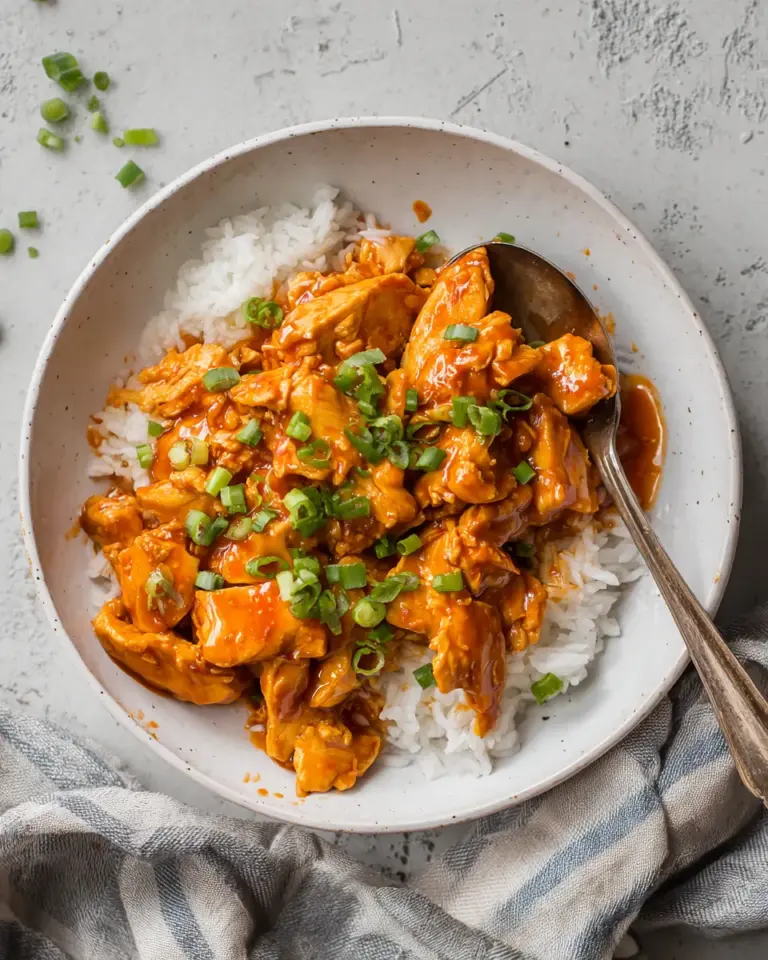
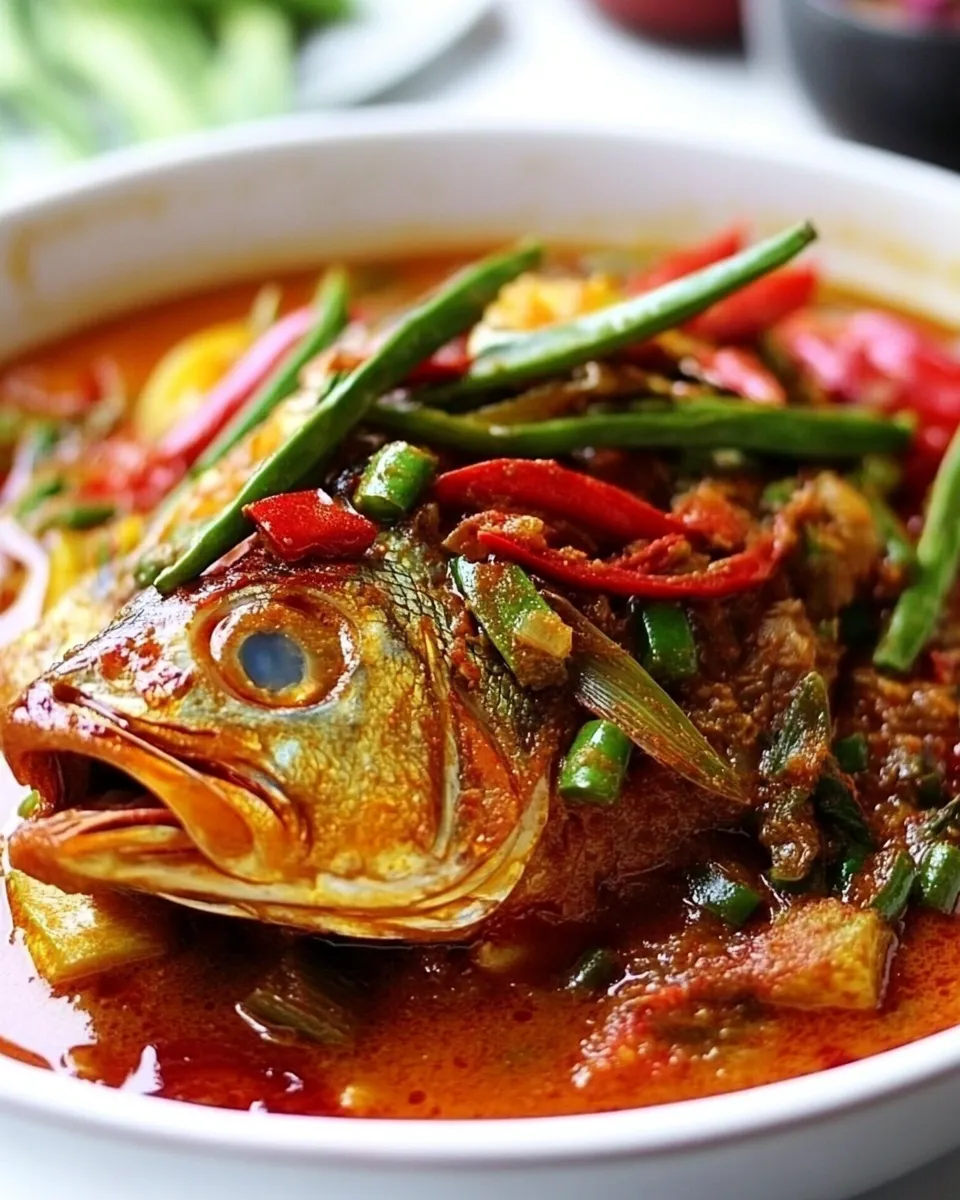
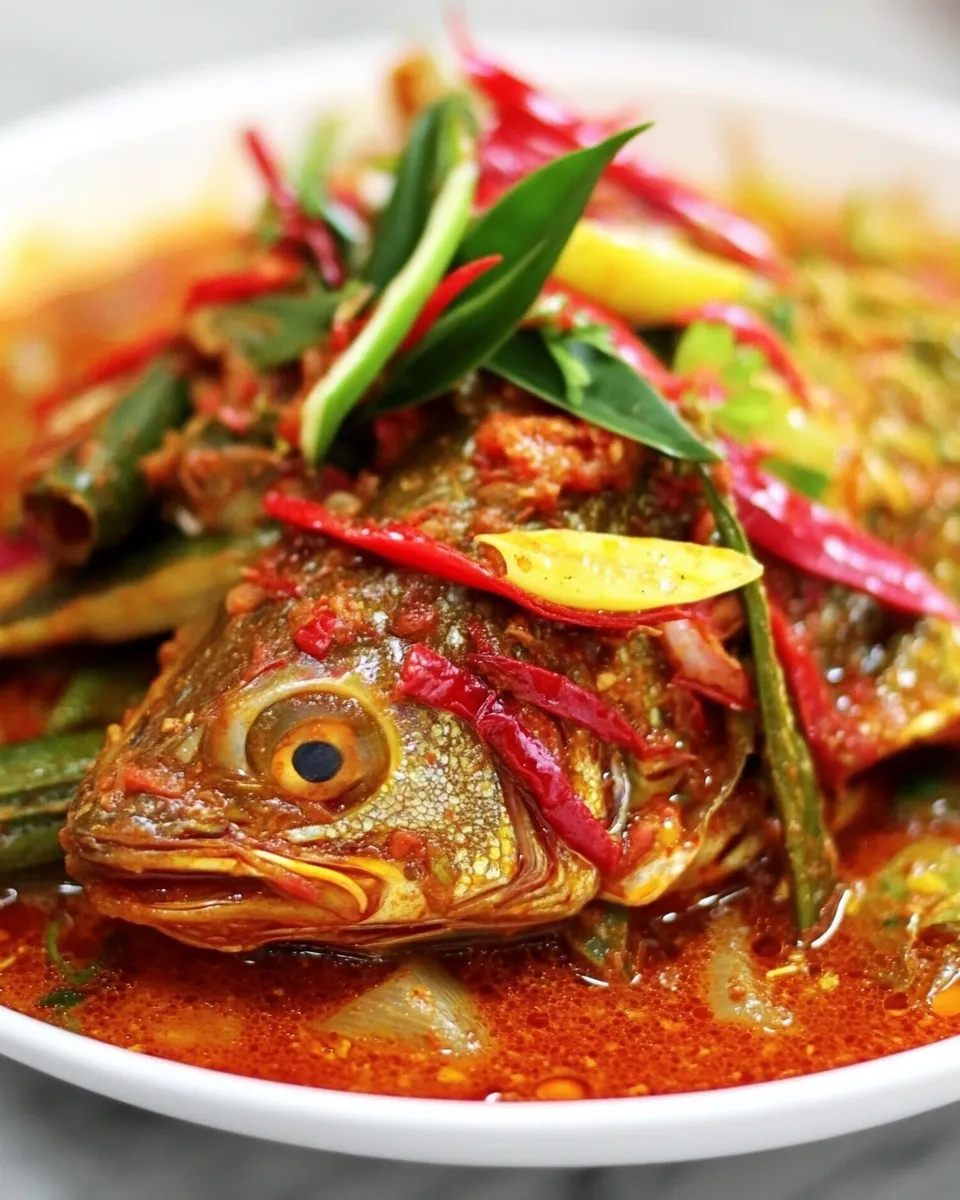
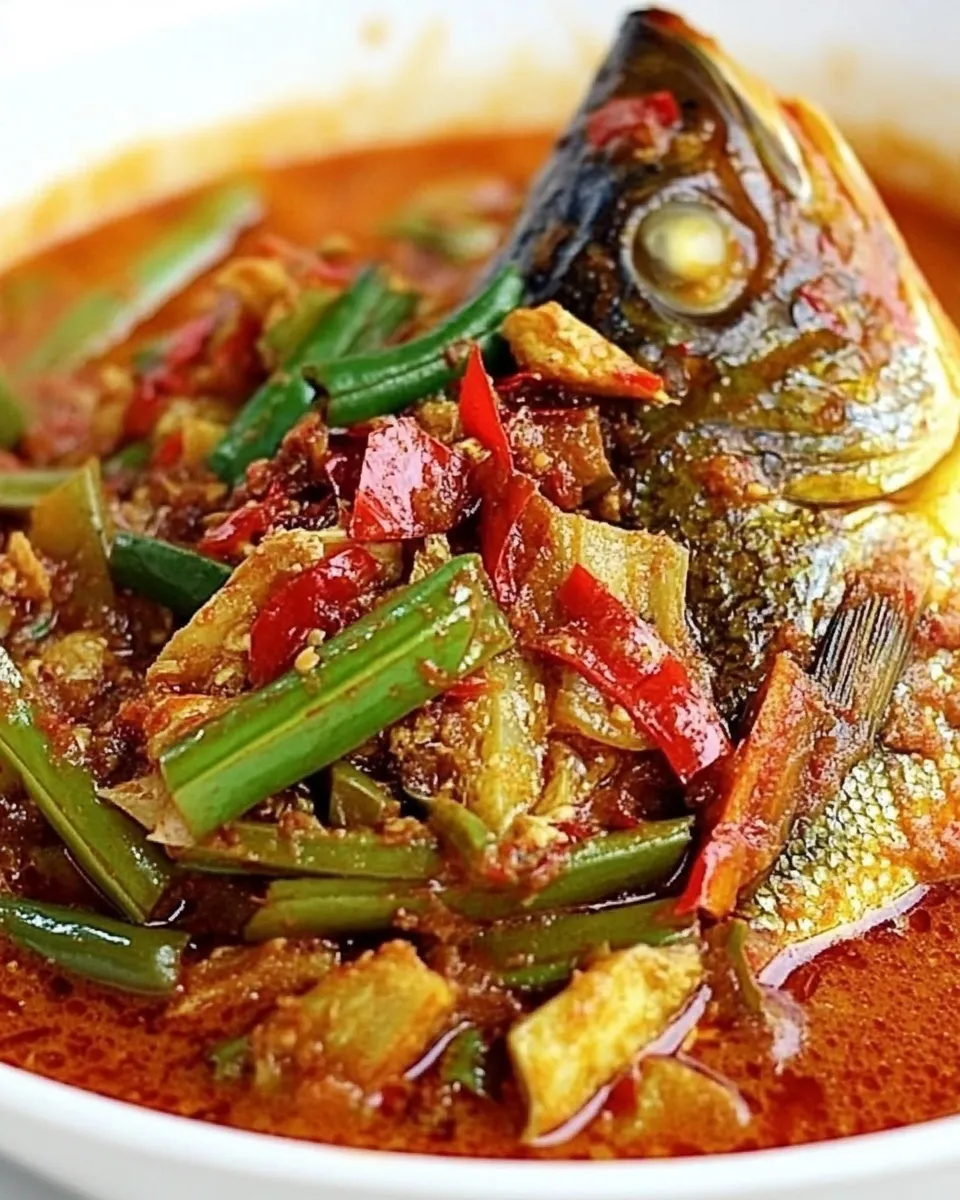
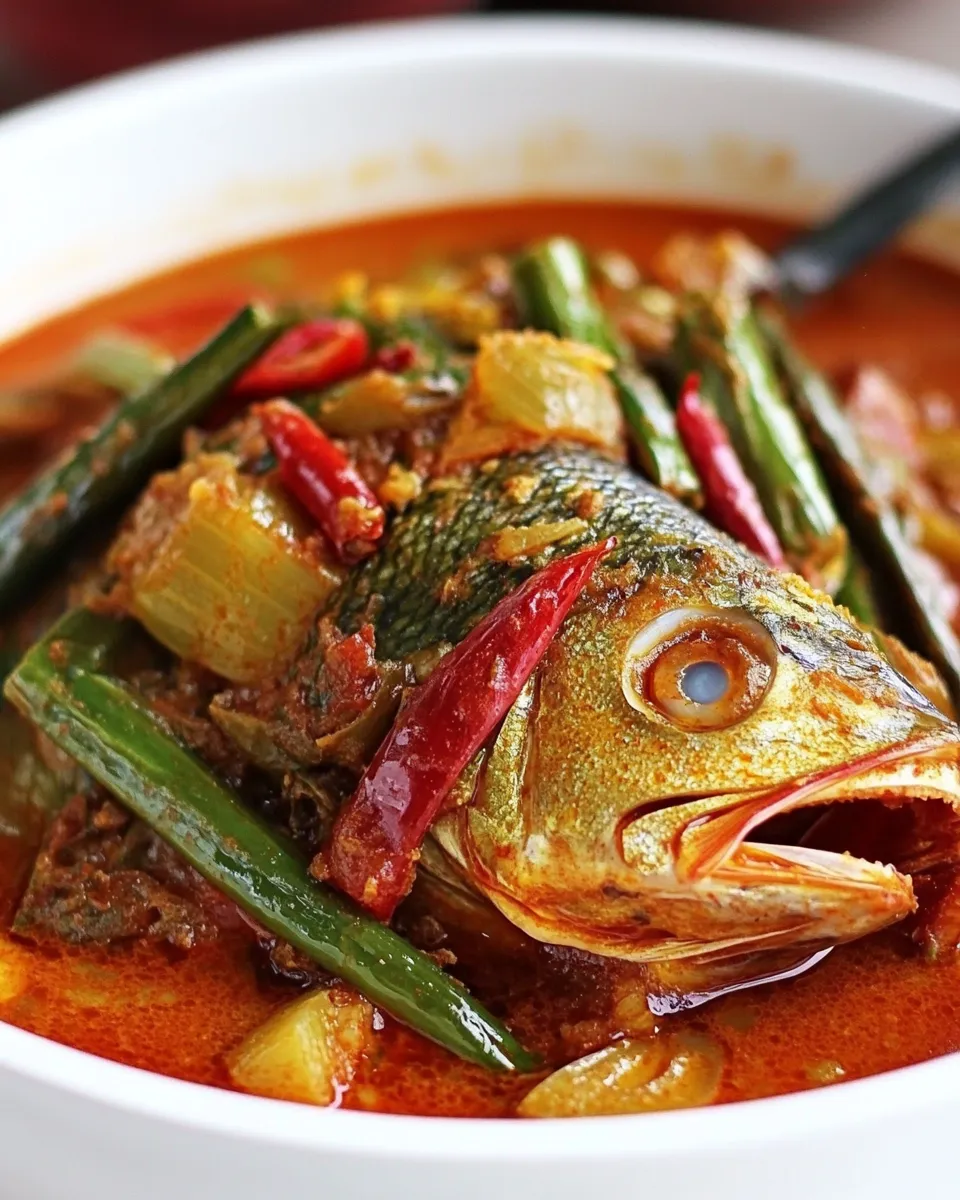
This curry fish head is the kind of dish I turn to when I want something bold, fragrant, and unfussy. It’s built on a simple paste, a bright tamarind finish, and the comforting backbone of laksa (polyganum) leaves—everything comes together quickly once the paste is prepared. The texture of the garoupa pieces, the tender okra, and the aromatic herbs make it a family-style bowl meant for sharing.
I like to keep the flavors balanced: smoky belacan gives depth, dried red chili paste brings heat and color, and the tamarind cuts through with a gentle sourness. It’s forgiving, too—tweak the heat or the herbs to suit your pantry without losing the soul of the dish. You’ll get restaurant-level flavor at home with a modest amount of hands-on time.
Below I walk you through the exact ingredient notes and the step-by-step method I use in my kitchen, plus practical equipment, substitutions, and troubleshooting tips from repeated tests. If you want clear directions and a few smart shortcuts, you’re in the right place.
Ingredient Breakdown
Ingredients
- 600g Garoupa Fish Head, chopped into pieces — the star ingredient; firm-fleshed fish holds up well in simmered broths.
- 1 tablespoon tamarind pulp — provides bright, tangy acidity; extract and taste to control sourness.
- 3-4 tablespoons oil — for sautéing the spice paste; choose a neutral oil with a high smoke point.
- 2.5 cups water — used for the broth; part goes into extracting tamarind, the rest is added later to make the soup base.
- 1 bunch polyganum leaves, laksa leaves — aromatic and slightly citrusy; add for that signature laksa flavor.
- 4-6 okras, cut into halves diagonally — contributes texture and a little thickening to the broth as it cooks.
- Salt to taste — essential for seasoning; add gradually and taste as you go.
- Sugar to taste, optional — a small pinch rounds out the tamarind’s acidity if needed.
- 1-2 stalks lemongrass, white part only, cut into small pieces — aromatic base for the paste; bruise or chop finely for easier pounding.
- 1 small turmeric, skin peeled, sliced into pieces — fresh turmeric gives earthy color and flavor; adjust if it’s very pungent.
- 20-25g dried red chili paste — ready-made paste for heat and color; use the stated amount to match the intended spiciness.
- 50g peeled shallots — sweet and aromatic when pounded into the paste; they mellow during sautéing.
- 5g belacan, shrimp paste — a little goes a long way for savory depth; toast briefly if you prefer milder funk.
- Bunga Kantan, Torch Ginger Flower, sliced into small pieces — garnish with strong floral notes; slice thin for the best mouthfeel.
- 1 bunch mint leaves, optional — bright finishing herb; add if you like a cool contrast to the heat.
Cook Curry Fish Head Like This
- Rinse the 600g Garoupa Fish Head pieces, drain and pat dry; set aside.
- Place the 1 tablespoon tamarind pulp in a small bowl. Add some of the 2.5 cups water and use your fingers to rub and extract the tamarind juice. Strain, discard the solids, and reserve the tamarind juice. Keep the remaining water from the 2.5 cups to add later.
- Using a mortar and pestle, pound together the 1–2 stalks lemongrass (white part only, cut into small pieces), 1 small turmeric (skin peeled, sliced), 50g peeled shallots and 5g belacan (shrimp paste) until they form a smooth paste. Set the paste aside.
- Have the 20–25g dried red chili paste ready (this is already paste and does not need soaking).
- Heat a pot over medium heat and add 3–4 tablespoons oil. When the oil is hot, add the pounded spice paste from step 3 and sauté until aromatic.
- Add the 20–25g dried red chili paste to the pot and stir-fry with the spice paste until the oil separates and the mixture turns a deep red.
- Pour in the reserved tamarind juice and then add the remaining water so that you have used the total 2.5 cups water called for. Bring the broth to a boil.
- Add 1 bunch polyganum (laksa) leaves and the 4–6 okras (cut into halves diagonally). Simmer until the okra is about half-cooked.
- Gently add the 600g Garoupa Fish Head pieces to the pot, cover, and cook until the fish is cooked through and flakes easily.
- Season with salt to taste and sugar to taste (optional). Stir gently to combine.
- Remove from heat, garnish with sliced Bunga Kantan (Torch Ginger Flower) and the 1 bunch mint leaves (optional), and serve immediately.
What You’ll Love About This Recipe
It’s layered and balanced: the punch from belacan, brightness from tamarind, and the floral lift from torch ginger make every spoonful interesting. The method relies on a straightforward spice paste and a short simmer, so you get deep flavor without a multi-hour commitment. Texture-wise, garoupa stays firm and meaty while okra adds a soft, slightly viscous counterpoint that helps the broth cling to rice or noodles.
You’ll also appreciate how adaptable it is. The heat level is controlled by the 20–25g of dried red chili paste—use the lower end if you’re serving children or spice-shy guests, or the higher end for a more assertive bowl. The finishing herbs (Bunga Kantan and mint) are optional but transformative; they add a freshness that contrasts beautifully with the rich broth.
Quick Replacement Ideas
- Fish: If garoupa isn’t available, use another firm white fish head like snapper or sea bass. Keep the same weight.
- Belacan: If you can’t find belacan, a small dab of miso can add umami, but use far less and adjust salt carefully.
- Dried red chili paste: Substitute with sambal or another red chili paste, but start on the lower end of the 20–25g range and taste as you go.
- Laksa leaves: If impossible to source, a few kaffir lime leaves plus a stalk of bruised lemongrass will give a similar aromatic lift.
Equipment at a Glance
- Mortar and pestle — traditional and best for releasing oils from lemongrass and shallots; a small food processor works in a pinch.
- Medium-to-large pot with lid — deep enough to simmer fish pieces without overcrowding.
- Strainer — for tamarind juice extraction.
- Heatproof spatula or wooden spoon — to sauté the paste and prevent sticking.
Avoid These Traps
Overcooking the fish: fish head pieces cook quickly. Covering the pot speeds cooking, but check early—overcooked fish becomes dry and falls apart too much. Salt too early: add salt at the end after the broth concentrates. Tamarind balance: don’t dump all the tamarind extraction in at once without tasting. Extract, add, simmer, and taste. Too much acid can be softened with a pinch of sugar (optional), not more stock.
Poorly pounded paste: if your paste still has large fibrous bits of lemongrass, simmering will soften them, but they can be unpleasant in the mouth. Pound or process until reasonably smooth for the best texture.
Fresh Seasonal Changes
Summer: Use extra mint if you want a cooling finish. If torch ginger is unavailable, thinly sliced young Thai basil adds brightness, though it shifts the aroma.
Autumn/Winter: Swap okra for sliced eggplant if you prefer a more substantial texture; eggplant will soak up the curry flavors and make for a silkier broth. Add eggplant earlier so it softens properly.
Spring: Add a handful of baby spinach at the very end for a bright green boost and extra vitamins—toss just until wilted.
Notes from the Test Kitchen
We tested small and large batches to confirm timing. The 2.5 cups of water yields a broth that is flavorful without being soupy-heavy; increasing liquid will dilute intensity, while decreasing it concentrates flavors. Toasting the belacan briefly in the pan before pounding cuts some of its raw edge and brought a rounder umami in tests. If you lightly fry the shallots before pounding, the paste becomes sweeter and mellower—useful when serving spice-averse guests.
When simmering, brief bursts of boiling can break fish apart. Keep the heat at a gentle simmer once the fish is added. Okra should be half-cooked before adding the fish so it keeps a pleasant bite and doesn’t over-mush.
Make Ahead Like a Pro
You can prepare the spice paste and tamarind extraction up to 24 hours ahead and keep them refrigerated. Sauté the paste and then cool and refrigerate the base; reheat, add chili paste and water, then continue with the recipe when ready. Prepped components speed assembly and improve flavor meld—flavors deepen when the paste rests a bit.
Do not cook fish ahead and refrigerate; it will fall apart and lose texture. If you must assemble the whole pot ahead for convenience, undercook the fish slightly and finish cooking just before serving.
Troubleshooting Q&A
- Q: My curry tastes flat. What now?
A: Taste for three things—salt, acid, and heat. Add a little salt, a splash more tamarind juice for brightness, or a pinch of sugar if it’s too sharp. Adjust in tiny increments and taste after each. - Q: The fish fell apart—how to avoid?
A: Reduce simmering time and check the fish early. Use gentle heat, and avoid stirring vigorously. Larger pieces hold together better than tiny ones. - Q: The paste didn’t brown or separate oil. Why?
A: Increase the heat slightly and continue to sauté, stirring often. Make sure there’s enough oil (3–4 tablespoons) and the paste is relatively dry; excess water slows oil separation.
Serve & Enjoy
Serve the curry hot, straight from the pot with steamed jasmine rice to soak up the broth, or with thick rice noodles for a laksa-like bowl. Scatter the Bunga Kantan and mint over each bowl at the last moment so the herbs taste fresh. A simple side of lightly blanched greens or cucumber slices provides a cooling counterpoint to the spice.
Family-style is best: bring the pot to the table, let everyone help themselves, and keep a bowl of extra tamarind and chili paste nearby for personal adjustments. Enjoy the layers of flavor and the comforting, fragrant warmth this Curry Fish Head brings to the table.
Curry Fish Head
Equipment
- Pot
- Small Bowl
- mortar and pestle
- Strainer
Ingredients
Ingredients
- 600 gGaroupa Fish Head chopped into pieces
- 1 tablespoontamarind pulp
- 3-4 tablespoonsoil
- 2.5 cupswater
- 1 bunch polyganum leaves laksa leaves
- 4-6 okras cut into halves diagonally
- Salt to taste
- Sugar to taste optional
- 1-2 stalks lemongrass white part only, cut into small pieces
- 1 small turmeric skin peeled, sliced into pieces
- 20-25 gdried red chili paste
- 50 gpeeled shallots
- 5 gbelacan shrimp paste
- Bunga Kantan Torch Ginger Flower, sliced into small pieces
- 1 bunch mint leaves optional
Instructions
Instructions
- Rinse the 600g Garoupa Fish Head pieces, drain and pat dry; set aside.
- Place the 1 tablespoon tamarind pulp in a small bowl. Add some of the 2.5 cups water and use your fingers to rub and extract the tamarind juice. Strain, discard the solids, and reserve the tamarind juice. Keep the remaining water from the 2.5 cups to add later.
- Using a mortar and pestle, pound together the 1–2 stalks lemongrass (white part only, cut into small pieces), 1 small turmeric (skin peeled, sliced), 50g peeled shallots and 5g belacan (shrimp paste) until they form a smooth paste. Set the paste aside.
- Have the 20–25g dried red chili paste ready (this is already paste and does not need soaking).
- Heat a pot over medium heat and add 3–4 tablespoons oil. When the oil is hot, add the pounded spice paste from step 3 and sauté until aromatic.
- Add the 20–25g dried red chili paste to the pot and stir-fry with the spice paste until the oil separates and the mixture turns a deep red.
- Pour in the reserved tamarind juice and then add the remaining water so that you have used the total 2.5 cups water called for. Bring the broth to a boil.
- Add 1 bunch polyganum (laksa) leaves and the 4–6 okras (cut into halves diagonally). Simmer until the okra is about half-cooked.
- Gently add the 600g Garoupa Fish Head pieces to the pot, cover, and cook until the fish is cooked through and flakes easily.
- Season with salt to taste and sugar to taste (optional). Stir gently to combine.
- Remove from heat, garnish with sliced Bunga Kantan (Torch Ginger Flower) and the 1 bunch mint leaves (optional), and serve immediately.
Notes
Use one lemongrass if it’s a big lemongrass and two if the lemongrass is thinner. Fish head might sound intimidating to many of you, but it’s definitely one of the best parts of a fish—it’s fleshy, tender, and absolutely delicious. Curry Fish Head is a popular dish in Malaysia and Singapore.