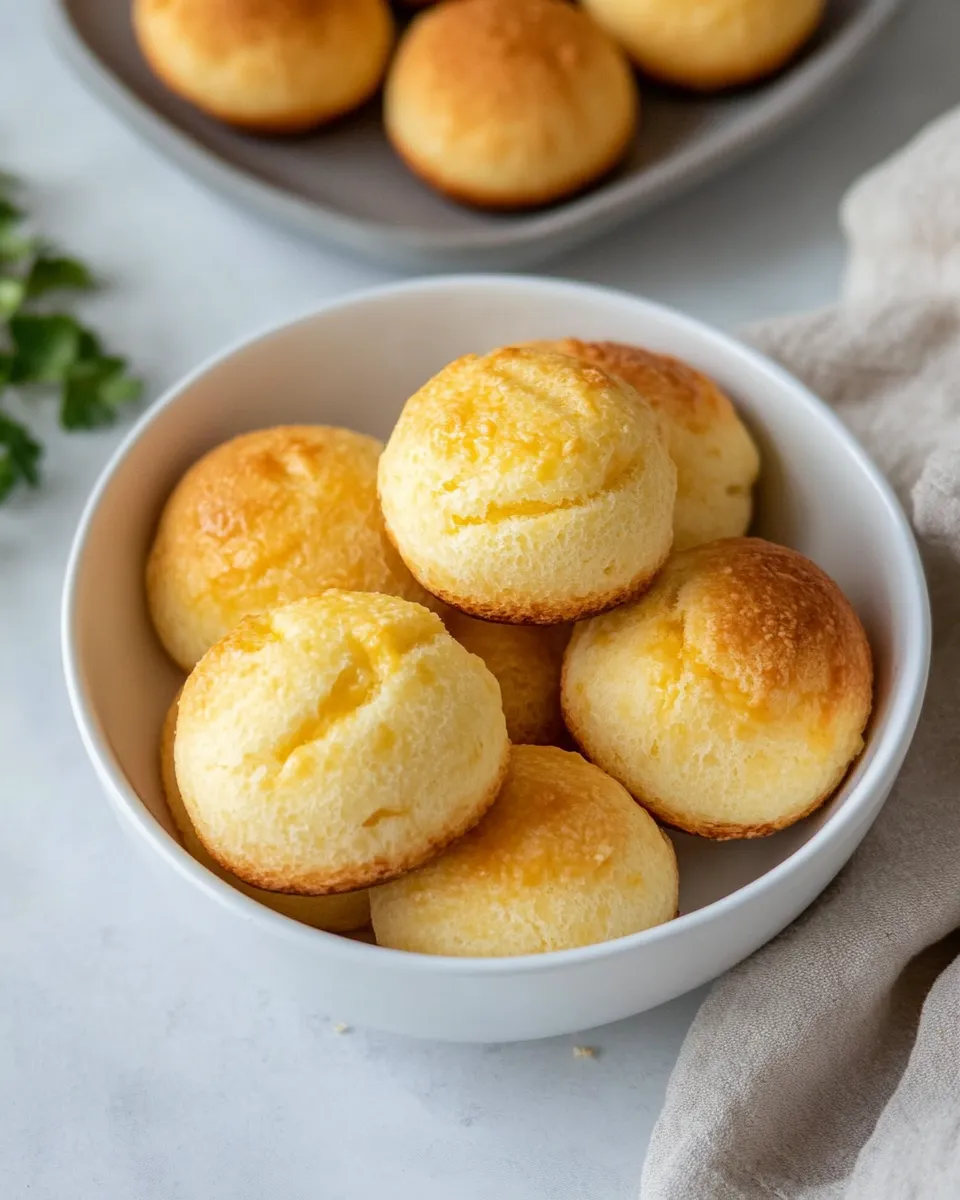
If you’ve ever had the pleasure of tasting Brazilian Cheese Bread, you know it’s nothing short of a culinary delight. These little puffs of joy are not only gluten-free but also incredibly cheesy and utterly addictive. Perfect for breakfast, as a snack, or alongside a hearty soup or salad, Brazilian Cheese Bread is a treat that will keep you coming back for more. With a beautiful golden crust and a soft, chewy interior, these cheesy bites are made with simple ingredients you may already have in your pantry. Let’s dive into the world of Brazilian Cheese Bread and learn how to make these delightful treats right at home.
Why This Recipe Works

This recipe is designed to give you the perfect Brazilian Cheese Bread every time. The combination of tapioca flour creates the signature chewy texture that makes these bread bites so unique. Using a blend of cheeses adds depth of flavor while still keeping the bread light and airy. Plus, the use of baking powder gives them that perfect lift, resulting in puffs that are crusty on the outside and soft on the inside. With just a few steps, you’ll have a batch of freshly baked Brazilian Cheese Bread that will impress everyone at your table.
What Goes In
- 2 large eggs: These provide structure and moisture.
- ½ cup vegetable oil: A neutral oil that gives richness and helps create a tender texture.
- ½ cup milk: Adds moisture and a slight creaminess to the dough.
- 1 cup tapioca flour: Essential for that chewy texture; can also be labeled as tapioca starch.
- ½ cup grated Pecorino Romano or Parmigiano Reggiano cheese: Offers a sharp, savory flavor that complements the bread.
- ½ cup shredded Mozzarella or Cheddar cheese: Adds creaminess and a gooey texture.
- Heaping ½ teaspoon salt: Enhances all the flavors in the bread.
- 1 teaspoon baking powder: Provides lift and helps the bread puff up beautifully.
Gear Checklist
- Mixing bowl: For combining your wet and dry ingredients.
- Whisk: To beat the eggs and mix the ingredients smoothly.
- Measuring cups and spoons: Precision is key for baking.
- Baking sheet: To place the dough before baking; line it with parchment for easy cleanup.
- Oven: Essential for baking your Brazilian Cheese Bread to perfection.
- Silicone spatula: Great for scraping down the sides of your mixing bowl.
Build Brazilian Cheese Bread Step by Step
Step 1: Preheat Your Oven
Begin by preheating your oven to 375°F (190°C). This ensures that your cheese bread will bake evenly and achieve that perfect golden color.
Step 2: Mix Wet Ingredients
In a large mixing bowl, whisk together the 2 large eggs, ½ cup of vegetable oil, and ½ cup of milk until the mixture is smooth and well combined.
Step 3: Combine Dry Ingredients
In a separate bowl, mix together the 1 cup of tapioca flour, ½ teaspoon of salt, and 1 teaspoon of baking powder. This step helps to evenly distribute the leavening agent and salt.
Step 4: Combine Wet and Dry Mixtures
Gradually add the dry ingredient mixture into the wet ingredients. Using a whisk or a silicone spatula, mix until just combined. Be careful not to overmix; it’s okay if there are a few lumps.
Step 5: Add the Cheeses
Fold in the ½ cup of grated Pecorino Romano or Parmigiano Reggiano and ½ cup of shredded Mozzarella or Cheddar cheese. Make sure the cheese is evenly distributed throughout the batter.
Step 6: Shape the Dough
Using a spoon or your hands, scoop out portions of the dough and shape them into small balls, about the size of a golf ball. Place them on a baking sheet lined with parchment paper, leaving space between each ball as they will expand while baking.
Step 7: Bake
Place the baking sheet in the preheated oven and bake for 20-25 minutes, or until the tops are golden brown and puffy. The aroma will fill your kitchen, tempting you to take a peek!
Step 8: Cool and Serve
Once baked, remove them from the oven and let them cool for a few minutes before serving. Brazilian Cheese Bread is best enjoyed warm, so dig in and savor every cheesy bite!
Seasonal Flavor Boosts

- Herbs: Add fresh herbs like rosemary or thyme for an aromatic twist.
- Spices: Incorporate a pinch of smoked paprika or cayenne pepper for a subtle kick.
- Garlic: Mix in minced garlic or garlic powder for a rich flavor.
- Spinach: Fold in some finely chopped cooked spinach for a pop of color and nutrients.
Pro Perspective
Brazilian Cheese Bread is incredibly versatile. You can easily adjust the cheese types based on your preference. If you like a milder flavor, use more Mozzarella or Cheddar. For a stronger kick, add more Pecorino Romano or even try crumbled feta or goat cheese. The dough can also be prepared ahead of time and stored in the refrigerator for a day. Just shape them into balls and bake when you’re ready!
Best Ways to Store
To store any leftover Brazilian Cheese Bread, allow them to cool completely and then place them in an airtight container. They can be kept at room temperature for up to 2 days. For longer storage, you can freeze them in a single layer on a baking sheet, then transfer to a freezer-safe bag or container. They will last in the freezer for up to 3 months. To reheat, simply pop them in the oven for a few minutes until warmed through.
Brazilian Cheese Bread Q&A
Can I use different types of cheese?
Absolutely! Feel free to experiment with various cheeses to suit your taste. Just remember to maintain a balance between creamy and sharper cheeses for the best flavor.
Is tapioca flour the same as cassava flour?
No, tapioca flour is derived from the starch of the cassava root, while cassava flour includes the whole root and has a different texture. For this recipe, stick with tapioca flour for the best results.
Can I make this recipe dairy-free?
Yes! Substitute the milk with a non-dairy alternative, such as almond milk or oat milk, and use dairy-free cheese options to keep it deliciously free of dairy.
How can I tell when my Brazilian Cheese Bread is done baking?
Your cheese bread is ready when the tops are golden brown and they have risen nicely. You can also tap the bottom, and it should sound hollow.
The Last Word
Brazilian Cheese Bread is a delightful dish that brings a taste of Brazil into your kitchen. With its simple ingredients and easy preparation, it’s a perfect recipe for both novice and experienced bakers. The unique combination of tapioca flour and cheese creates a texture and flavor that is simply irresistible. Whether you’re serving them at a party, enjoying them for breakfast, or simply savoring them as a snack, these cheesy puffs are sure to be a hit. So go ahead, give this recipe a try, and enjoy the deliciousness of homemade Brazilian Cheese Bread!

Brazilian Cheese Bread
Equipment
- Mixing Bowl
- Whisk
- Measuring cups and spoons
- Baking Sheet
- Oven
- Silicone spatula
Ingredients
- 2 large eggs
- 0.5 cup vegetable oil neutral oil
- 0.5 cup milk
- 1 cup tapioca flour also called tapioca starch
- 0.5 cup grated Pecorino Romano or Parmigiano Reggiano cheese offers sharp, savory flavor
- 0.5 cup shredded Mozzarella or Cheddar cheese adds creaminess and gooey texture
- 0.5 teaspoon salt heaping
- 1 teaspoon baking powder provides lift
Instructions
- Preheat your oven to 375°F (190°C).
- In a large mixing bowl, whisk together the 2 large eggs, ½ cup vegetable oil, and ½ cup milk until smooth and well combined.
- In a separate bowl, mix together 1 cup tapioca flour, ½ teaspoon salt, and 1 teaspoon baking powder.
- Gradually add the dry ingredient mixture into the wet ingredients. Mix until just combined; a few lumps are okay.
- Fold in ½ cup grated Pecorino Romano or Parmigiano Reggiano and ½ cup shredded Mozzarella or Cheddar cheese evenly throughout the batter.
- Using a spoon or hands, scoop out dough portions about the size of a golf ball. Place on a parchment-lined baking sheet, spacing them apart.
- Bake in the preheated oven for 20-25 minutes until tops are golden brown and puffy.
- Remove from oven and cool for a few minutes before serving warm.
Notes
- For an aromatic twist, add fresh herbs like rosemary or thyme to the dough.
- You can substitute dairy milk and cheese with non-dairy alternatives for a dairy-free version.
- Store leftovers in an airtight container for up to 2 days or freeze for up to 3 months.