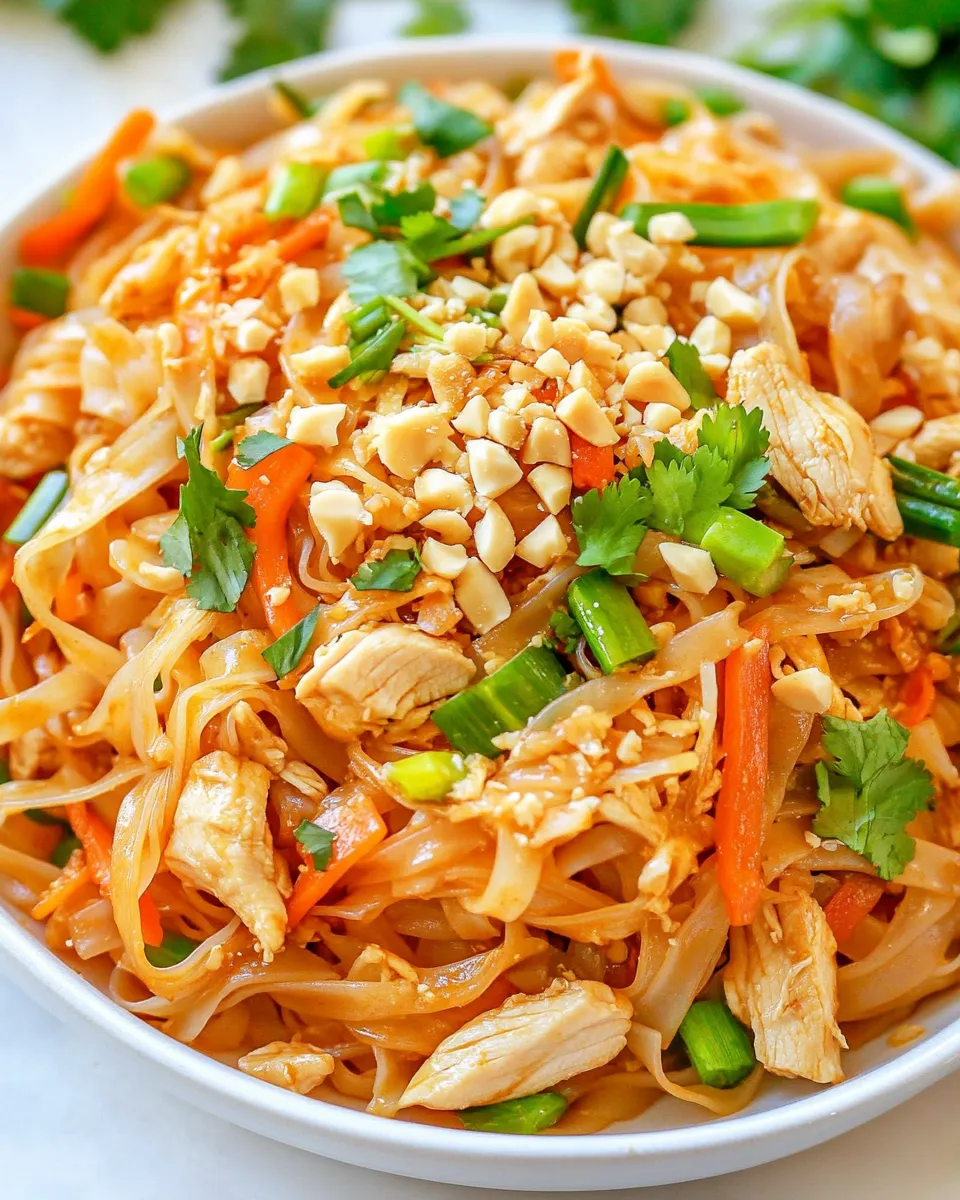
There are some dishes that feel like an occasion every time you make them. This Chicken Pad Thai is one of those recipes: tangy, slightly sweet, a touch of heat, and totally comforting. It’s inspired by street-food simplicity but elevated for a home kitchen. Tender chicken, chewy rice noodles, crunchy bean sprouts, and fresh herbs come together in a glossy sauce made from tamarind, soy, lime, and honey. The recipe is written so you can cook confidently, with clear step-by-step directions and simple ingredient swaps that preserve flavor without fuss.
This version uses one large boneless, skinless chicken breast cut into bite-sized pieces for quick, even cooking. The sauce balances tamarind paste and honey with lime and soy sauce, and a pinch of crushed red pepper flakes gives the dish just enough warmth. Two eggs add silkiness and body, while yellow onion, green onions, cilantro, and fresh bean sprouts provide texture and brightness. Serve it with extra lime wedges and, if you like, crushed peanuts for crunch.
Why this Chicken Pad Thai works
This recipe keeps things approachable without sacrificing authenticity. A few reasons it shines:
- Using a single large chicken breast cut into bite-sized pieces means fast, even cooking and easy portioning.
- Tamarind paste brings the classic sweet-sour backbone of pad thai without needing elaborate ingredients.
- Cooked or soaked flat rice noodles are used according to the package directions so texture is always right.
- Layering flavors (sauce, then eggs, then veggies) yields a glossy, balanced final dish.
Ingredients
- 1 large boneless, skinless chicken breast, cut into bite-sized pieces
- salt and pepper to taste
- 2 tablespoons low-sodium soy sauce
- 1 tablespoon tamarind paste
- 1 tablespoon honey
- 1 teaspoon minced garlic
- 1 tablespoon lime juice
- 1/2 teaspoon crushed red pepper flakes
- 2 large eggs
- 1/4 cup yellow onion, sliced
- 1 cup fresh bean sprouts
- 8 ounces flat rice noodles, cooked or soaked according to package directions
- 1/3 cup green onions, sliced
- 1/3 cup cilantro, thoroughly chopped
Equipment you’ll need
- Large skillet or wok
- Mixing bowl
- Tongs or a spatula
- Small bowl for sauce
- Knife and cutting board
- Colander (if draining noodles)
Prep (10–15 minutes)
Before you turn on the heat, finish these quick prep steps so the cooking process is smooth and speedy:
- Cut the chicken breast into bite-sized pieces and season lightly with salt and pepper.
- Slice the yellow onion and green onions. Chop the cilantro and rinse the bean sprouts, then drain them well.
- Prepare the rice noodles according to the package directions—soak or briefly boil, then drain and set aside. Toss them with a little oil if they’re likely to stick together.
- In a small bowl, whisk together 2 tablespoons low-sodium soy sauce, 1 tablespoon tamarind paste, 1 tablespoon honey, 1 teaspoon minced garlic, 1 tablespoon lime juice, and 1/2 teaspoon crushed red pepper flakes. Set the sauce aside.
Step-by-step Instructions
Follow these rewritten, clear steps in the same order as the original recipe, using the ingredient list as your guide.
- Heat a large skillet or wok over medium-high heat until hot. Add a tablespoon of neutral oil (like vegetable or peanut oil) if desired to prevent sticking.
- Add the seasoned, bite-sized chicken pieces to the hot skillet in a single layer. Let the chicken cook without moving it for 1–2 minutes to get a light sear, then stir or toss and continue cooking for another 3–4 minutes, until pieces are cooked through and no longer pink inside. Remove the chicken from the pan and set aside on a plate.
- Reduce the heat to medium and add the sliced yellow onion to the same skillet. Sauté the onion for 1–2 minutes, stirring occasionally, until it begins to soften and becomes translucent.
- Push the onions to one side of the skillet to make space. Crack the 2 large eggs into the empty side and scramble them gently with a spatula until they are just set but still slightly soft. Break them into bite-sized pieces as they cook.
- Return the cooked chicken to the skillet and pour the prepared sauce (soy-tamarind-honey-lime mixture) over the chicken, onions, and eggs. Stir gently to combine and let the sauce heat through for 30–60 seconds so it coats the ingredients.
- Add the cooked or soaked 8 ounces of flat rice noodles to the skillet. Using tongs or a spatula, toss the noodles with the sauce, chicken, onions, and eggs until the noodles are evenly coated and warmed through. If the noodles seem dry, add a splash of water or a little more lime juice to loosen the mixture.
- Stir in 1 cup fresh bean sprouts and 1/3 cup sliced green onions. Toss briefly for 30–60 seconds—just long enough to slightly wilt the sprouts and warm the green onions but preserve their crunch and brightness.
- Remove the skillet from heat and stir in 1/3 cup thoroughly chopped cilantro. Taste and adjust seasoning with salt and pepper as needed, or a touch more lime juice for extra brightness.
- Plate the Chicken Pad Thai immediately, portioning it among plates or bowls. Garnish with additional cilantro or green onions if you like, and serve with lime wedges on the side for squeezing.
Serving suggestions
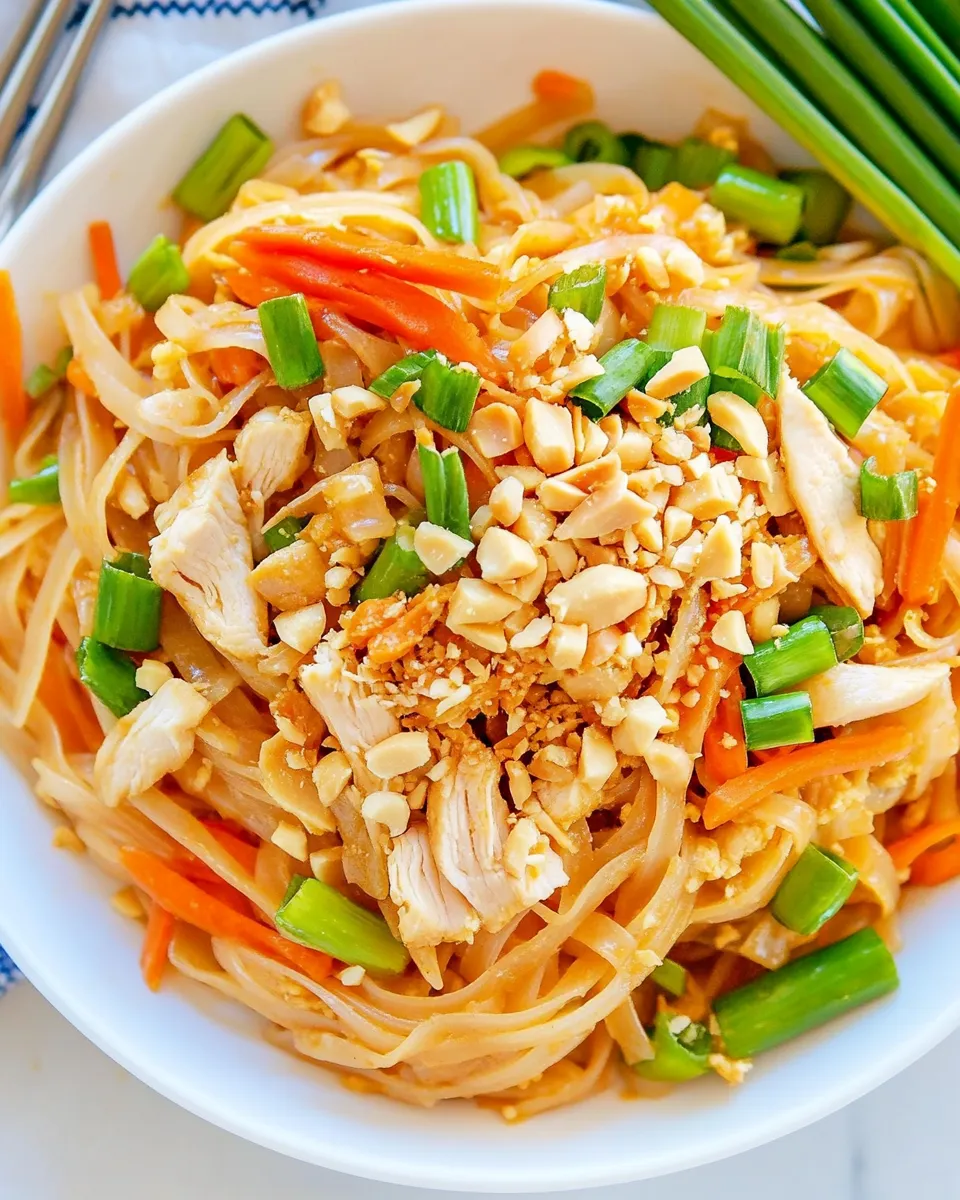
Serve this Chicken Pad Thai hot, right out of the skillet. It’s delicious on its own, or pair it with a light cucumber salad or steamed greens for a balanced meal. If you enjoy contrasting textures, sprinkle crushed roasted peanuts on top for crunch (optional).
Notes and tips
- Chicken: Cutting the chicken into small, uniform pieces ensures quick and even cooking. If your chicken pieces are large, increase the cooking time slightly until the center is no longer pink.
- Noodles: Follow the rice noodle package directions closely—overcooked noodles will get mushy, undercooked ones will be chewy. After cooking, rinse briefly under cold water to stop cooking and prevent sticking, then drain well.
- Sauce balance: The sauce is sweet, tart, and savory. Taste and tweak: add a bit more honey if you prefer sweeter, or an extra splash of lime juice for tartness.
- Spice: The crushed red pepper flakes provide gentle heat. Increase for more kick or reduce if you want a milder flavor.
- Make-ahead: Prepare the sauce and chop veggies up to a day in advance. Cooked noodles can be refrigerated in an airtight container and loosened with a quick splash of hot water when reheating.
Storing and reheating
Store leftovers in an airtight container in the refrigerator for up to 3 days. Reheat gently in a skillet over medium heat with a splash of water or a little oil, tossing until warmed through. Microwave reheating works too—cover loosely and heat in 30–45 second intervals, stirring between each interval.
Flavor variations
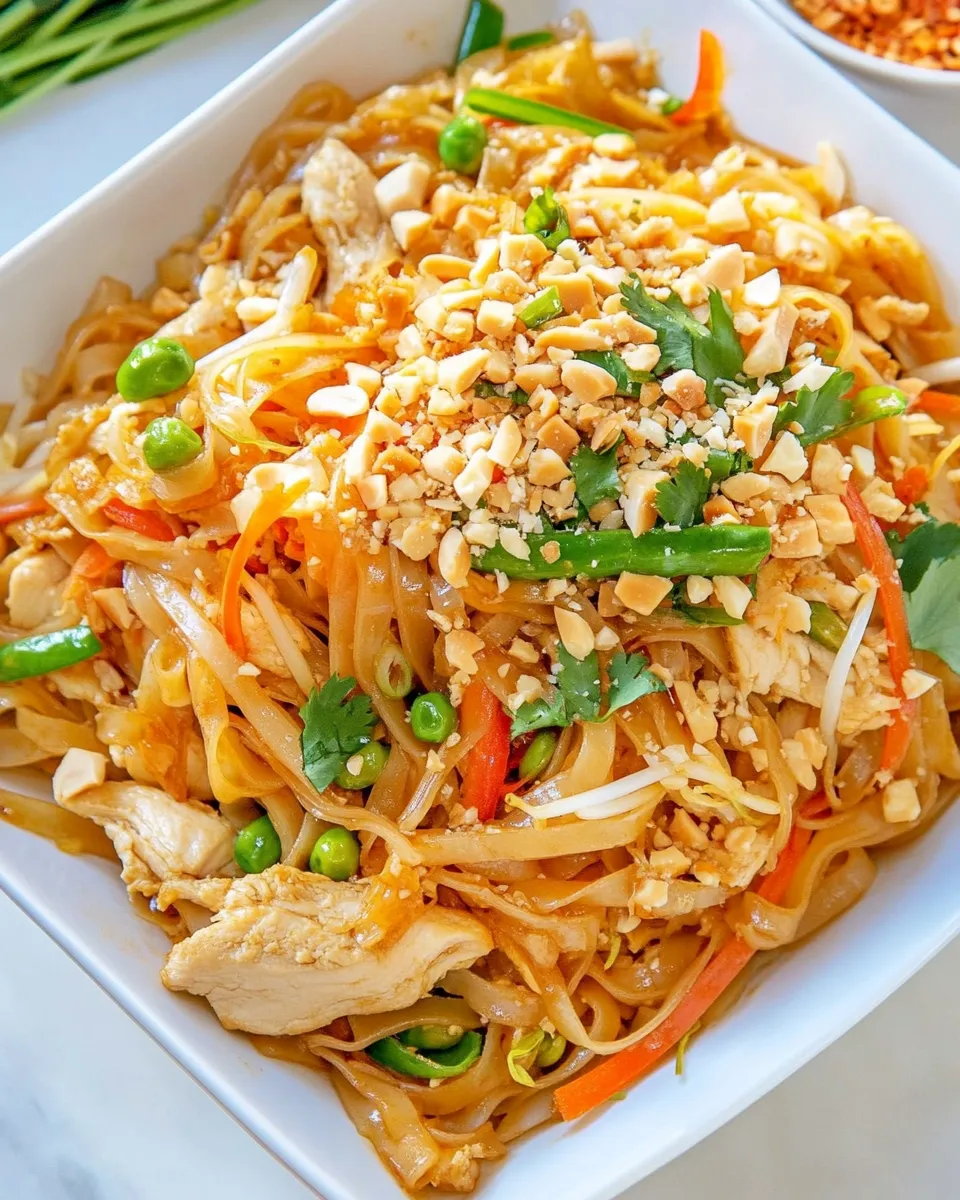
- Vegetable-forward: Add thinly sliced bell pepper, shredded carrot, or snap peas in step 3 for extra color and vitamins—sauté them with the onions so they soften.
- Protein swap: Instead of chicken, try shrimp or firm tofu cut into cubes. Cook times will vary—shrimp cooks quickly, and tofu benefits from a quick sear.
- Nutty crunch: Toasted crushed peanuts make a classic topping if you enjoy additional texture.
Common troubleshooting
- Sticky noodles: Toss drained noodles with a teaspoon of oil after cooking and separate them gently with your fingers or tongs before adding to the pan.
- Saucy or dry: If the finished dish seems dry, stir in a tablespoon or two of water, broth, or extra lime juice until you reach the desired gloss and consistency. If it’s too saucy, cook a bit longer over medium heat to reduce.
- Bland flavor: Adjust by adding more lime juice, a pinch more salt, or a touch more honey to brighten and balance the taste.
Final thoughts
This Chicken Pad Thai is a reliable weeknight winner and great for sharing. The simple, layered technique—searing the chicken, softening onions, scrambling eggs, and finishing with noodles and a zippy sauce—makes the whole process feel intentional and manageable. Whether you’re introducing pad thai to someone for the first time or you need a dependable family favorite, this recipe delivers big flavor without complicated steps.
Enjoy the harmony of tangy tamarind, bright lime, and savory soy with tender chicken and crisp bean sprouts. It’s food that comforts and excites, all in one skillet.
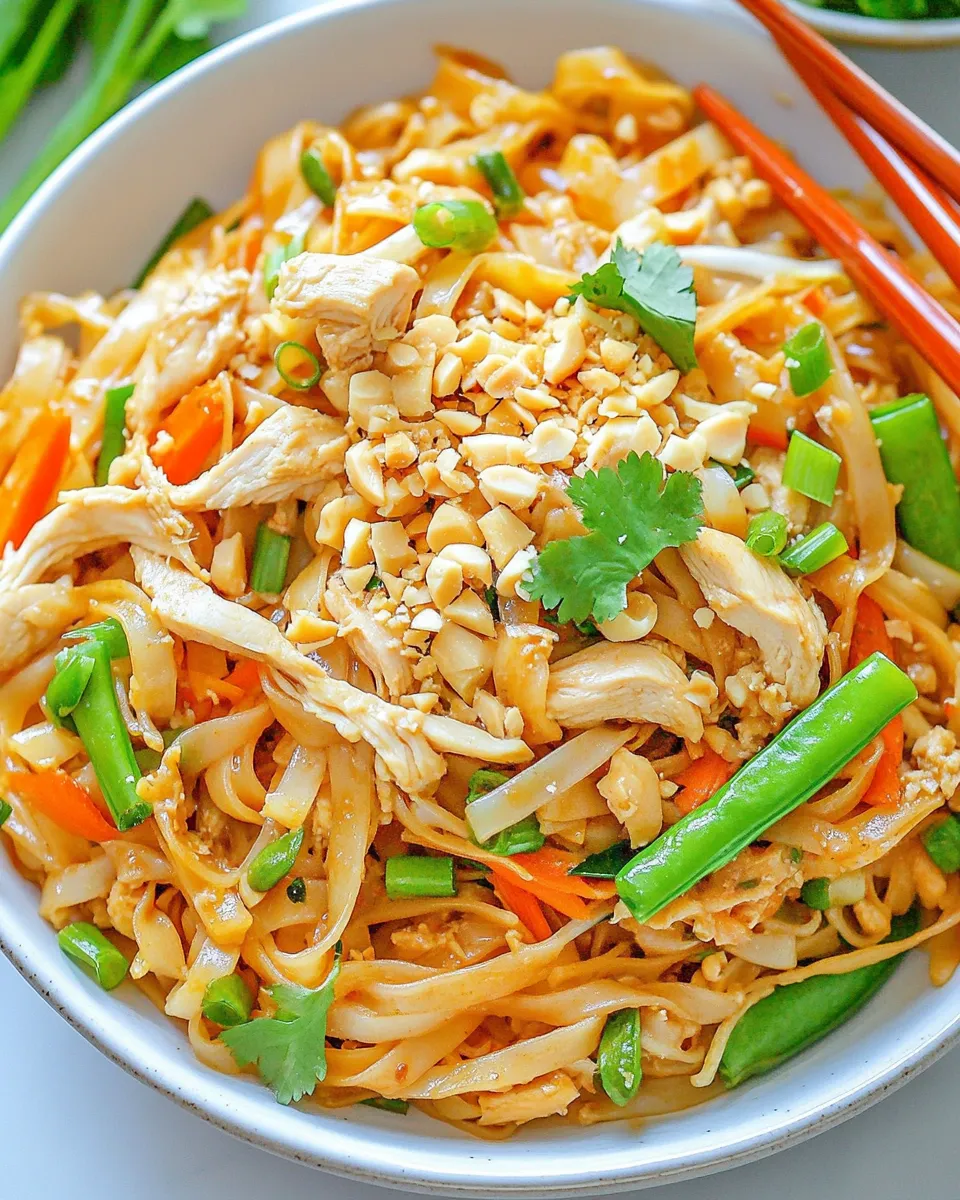
Chicken Pad Thai
Equipment
- large wok or skillet
- Small Bowl
- Spatula or tongs
Ingredients
- 1 large boneless skinless chicken breast cut into bite-sized pieces
- salt to taste
- black pepper to taste
- 2 tablespoons low-sodium soy sauce
- 1 tablespoon tamarind paste
- 1 tablespoon honey
- 1 teaspoon garlic minced
- 1 tablespoon lime juice
- 1/2 teaspoon crushed red pepper flakes
- 2 large eggs
- 1/4 cup yellow onion sliced
- 1 cup fresh bean sprouts
- 8 ounces flat rice noodles cooked or soaked according to package directions
- 1/3 cup green onions sliced
- 1/3 cup cilantro roughly chopped
Instructions
- Season the chicken pieces with salt and pepper.
- Heat a large wok or skillet over medium heat and cook the chicken until fully cooked, about 6–8 minutes; transfer to a bowl and set aside.
- In a small bowl, whisk together the soy sauce, tamarind paste, honey, minced garlic, lime juice, and crushed red pepper flakes to make the sauce.
- In the same wok, add the eggs and scramble for about 1 minute until just set.
- Add the sliced yellow onion and bean sprouts to the wok and cook until the onion is translucent, about 2–3 minutes.
- Return the cooked chicken to the wok, pour in the sauce, then add the cooked or soaked rice noodles; toss everything together until the noodles are evenly coated and heated through, about 2–3 minutes.
- Stir in the sliced green onions and chopped cilantro just before serving.
Notes
- Use soaked rice noodles if you prefer a softer texture.
- Taste the sauce before adding to adjust sweetness or acidity.
- Cook noodles according to package directions to avoid overcooking.