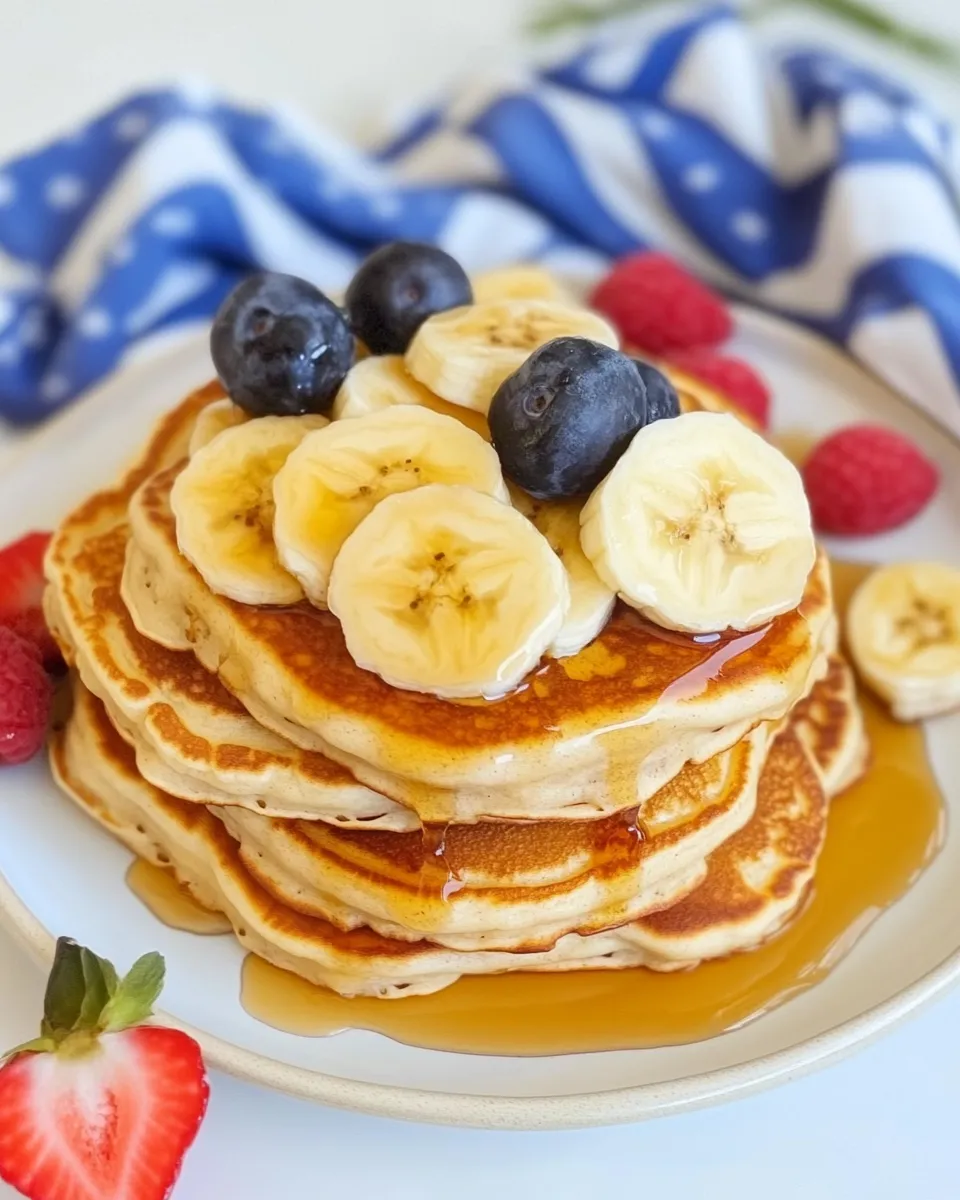
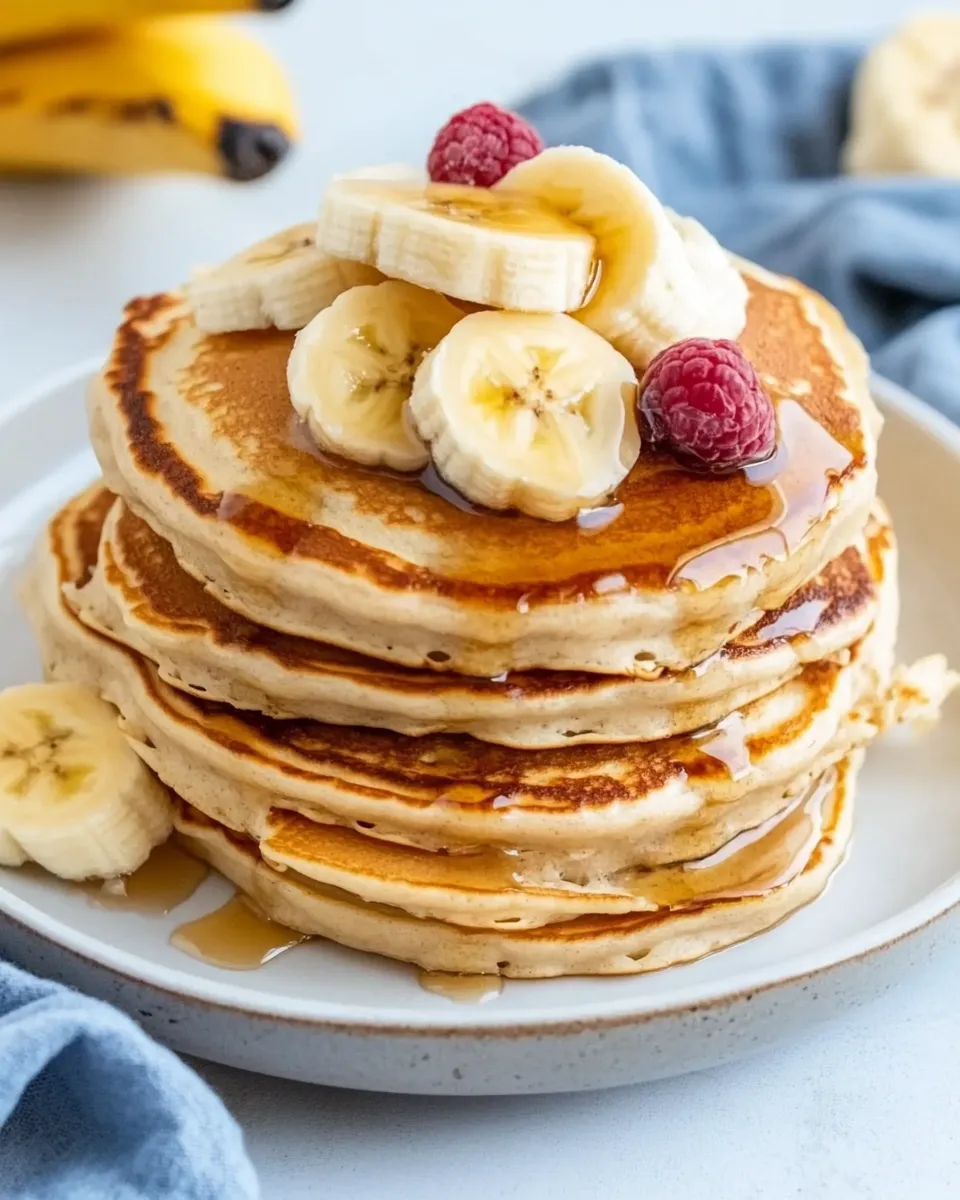
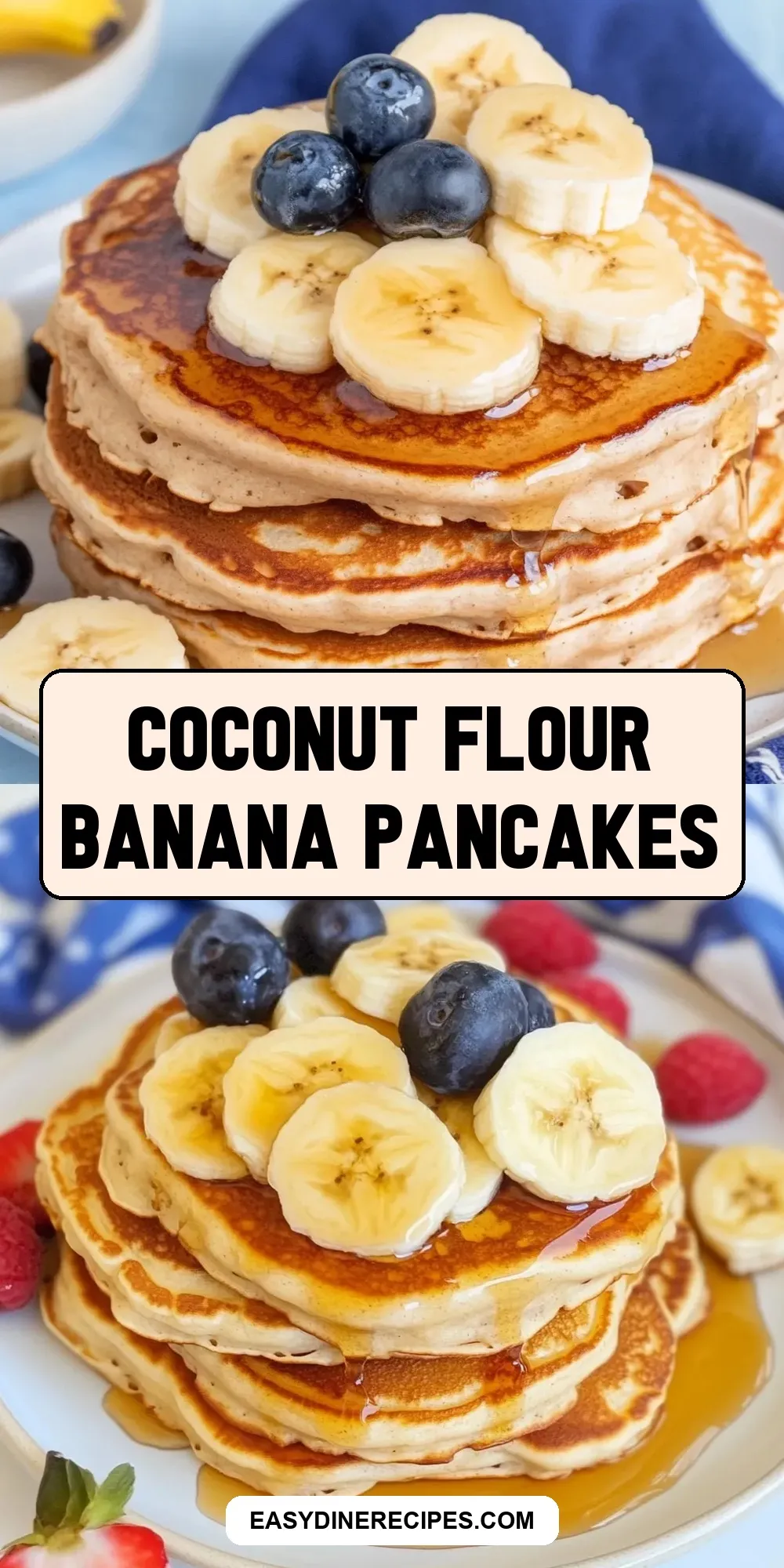
Soft, fragrant, and forgiving—these Coconut Flour Banana Pancakes have become my go-to when I want something quick, grain-free, and satisfying. They use a handful of ingredients, come together fast, and reward you with a tender pancake that holds together thanks to eggs and the absorbing nature of coconut flour. If you keep overripe bananas on hand and a jar of coconut flour in the pantry, you’re ten minutes away from a very good breakfast.
There’s no complicated technique here: mash, whisk, rest briefly, and cook. The texture is different from wheat pancakes—more tender and slightly denser—but they’re light enough when you don’t overwork the batter. Covering the pan as they cook helps trap steam and cooks them through without drying the centers.
I’ll walk you through what I use, exact steps, sensible swaps, and mistakes to avoid so your first batch comes out reliably. No fluff—just practical notes from a kitchen that makes these a few times a month.
What We’re Using
Ingredients
- 3 large bananas overripe — sweetness and moisture; riper = sweeter and easier to mash.
- 1/4 cup coconut flour sifted — primary dry binder; sifted to remove clumps and ensure even absorption.
- 3 large eggs — structure and lift; they help the batter bind and hold shape while cooking.
- 1-2 tablespoon milk of choice — Optional * See notes — only if batter is too thick to drop; add a tablespoon at a time.
Coconut Flour Banana Pancakes — Do This Next
- Peel and mash the 3 large overripe bananas in a large mixing bowl until mostly smooth (or place them in a high-speed blender and blend until mostly smooth).
- Add the 1/4 cup sifted coconut flour and the 3 large eggs to the mashed bananas. Whisk (or pulse in the blender) until fully combined into a thick batter.
- If the batter seems too thick to drop from a spoon, stir in milk of choice 1 tablespoon at a time, up to 2 tablespoons, until the batter is pourable but still thick. (Milk is optional.)
- Let the batter rest 1–2 minutes to allow the coconut flour to absorb the liquid.
- Heat a large non-stick pan over medium heat until hot.
- Drop large spoonfuls of batter onto the hot pan, leaving space between pancakes, and cover the pan immediately.
- Cook the pancakes for 2–3 minutes, until edges appear set and the bottoms are lightly browned, then flip and cook for an additional 2 minutes.
- Repeat steps 6–7 with the remaining batter, adjusting the heat as needed so the pancakes cook through without burning.
Why I Love This Recipe
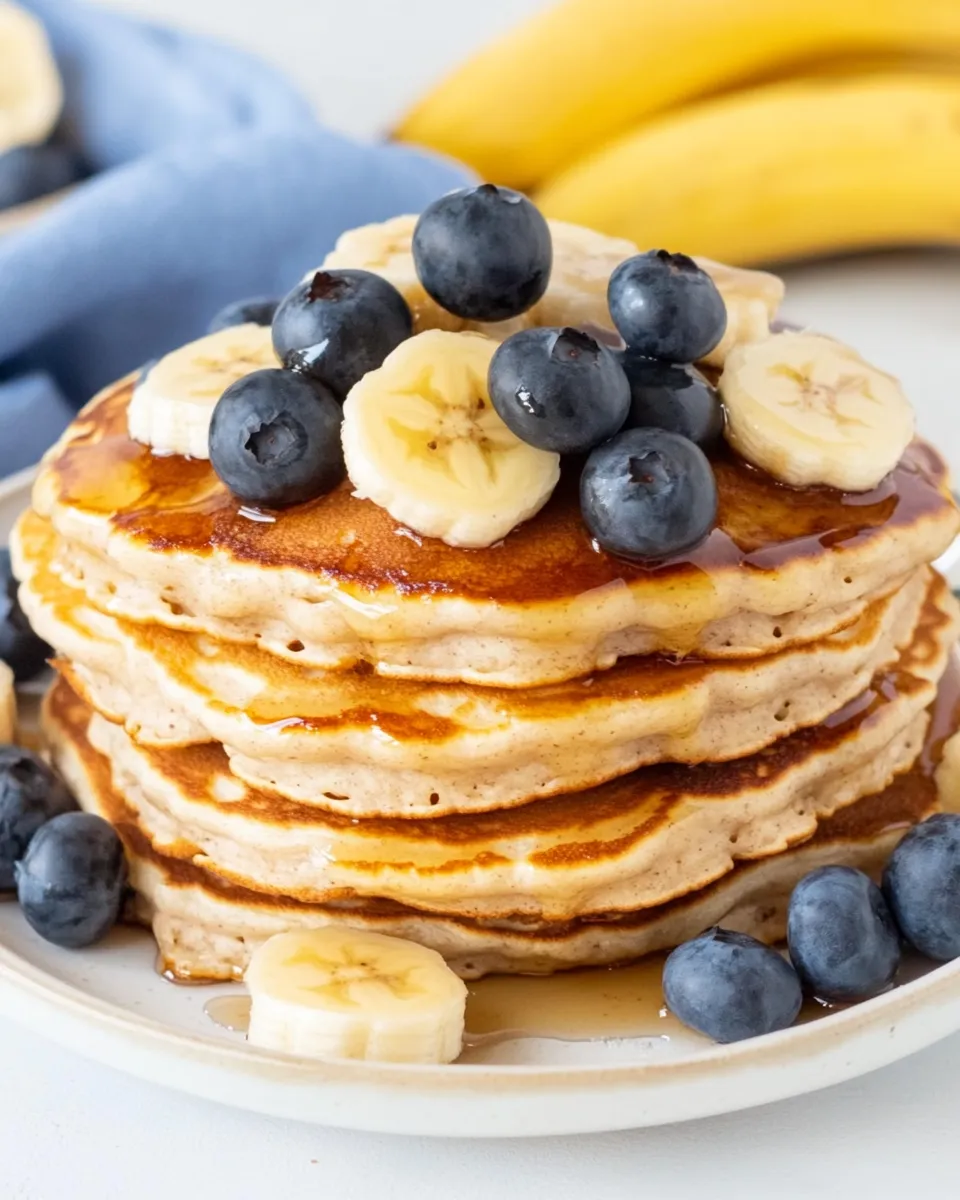
I love how few moving parts there are. No flour sifting drama beyond the coconut flour, no leaveners to worry about, and the bananas do a lot of heavy lifting—naturally sweetening and flavoring without the need for added sugar. The pancakes are forgiving: overripe bananas accommodate variations in sweetness and texture, and the short batter rest gives you a moment to tidy up while the flour hydrates.
They’re also great for mornings when I want something that feels indulgent but not heavy. With a drizzle of honey or a smear of nut butter, they’re filling and kid-approved. And because the ingredients are simple, it’s easy to diagnose what to tweak—too flat? Use riper bananas or check egg size; too dry? Add a splash of milk or cook at a slightly lower heat.
Quick Replacement Ideas
- Eggs — if you’re experimenting, know eggs provide structure here; commercial egg replacers or specialty binders may work, but texture will change.
- Coconut flour — there are other flours, but coconut flour is extremely absorbent; swapping without recalculating will affect texture, so swap cautiously.
- Bananas — ripe pears or applesauce can add moisture, but bananas add sweetness and slight starch structure; expect looser batter if you sub them.
- Milk — use almond, oat, dairy, or any milk of choice if you need to loosen the batter; add sparingly and stop when batter drops easily.
Gear Up: What to Grab
- Large mixing bowl (or a blender) — for mashing or blending the bananas.
- Whisk or fork — to combine eggs and banana if not using a blender.
- Sifter or fine mesh — for the coconut flour to prevent lumps.
- Large non-stick skillet — helps prevent sticking and gives even browning.
- Spatula with a thin edge — easier flipping without tearing.
- Measuring cup and spoons — keep the coconut flour amount accurate; coconut flour is powerful.
Don’t Do This
- Don’t skip sifting or at least breaking up coconut flour lumps. Clumps will hydrate unevenly and leave dry pockets.
- Don’t overload the pan. These are thick spoonful pancakes; overcrowding reduces heat circulation and leads to undercooked centers.
- Don’t skip covering the pan when you place the batter down. Covering traps steam and ensures the thick pancakes cook through before the bottoms burn.
- Don’t expect the same texture as wheat pancakes. If you’re looking for a soufflé-like rise, these won’t mirror that—work with the recipe’s strengths.
Variations for Dietary Needs
Gluten-free: This recipe is naturally gluten-free when made with certified gluten-free coconut flour and care taken with add-ons. No wheat flour required.
Paleo-friendly: The base ingredients align well with paleo principles—coconut flour, bananas, and eggs are typical paleo pantry items. Use a compliant milk if you add any.
Vegan: Converting these to fully vegan is tricky because eggs play a key role in binding and structure. Commercial egg replacers or experimentation with combined binders (e.g., flax plus a bit more banana and a commercial binder) can sometimes work, but texture will be noticeably different. If you need vegan pancakes, consider a recipe designed around that approach rather than adapting this one at scale.
Dairy-free: Easy—use any non-dairy milk or skip the optional milk entirely if the batter drops properly from a spoon.
Notes on Ingredients
Bananas: The riper, the better. Overripe bananas are sweeter and mash more smoothly, which helps with both sweetness and texture. If your bananas are underripe, the pancakes will be less sweet and somewhat firmer.
Coconut flour: It soaks up a lot of liquid. That’s why the batter will look thick after mixing—and why the short rest is important. Measure carefully; a scant 1/4 cup is all you need here. Sifting helps with even distribution and prevents lumps.
Eggs: They act as the primary binder and give the pancakes structure. Room temperature eggs mix more easily and can help the batter come together more uniformly.
Milk (optional): Only add if the batter is too stiff to drop from a spoon. Add 1 tablespoon at a time, up to 2 tablespoons, testing texture as you go. The goal is a pourable but still thick batter.
Storing Tips & Timelines
Cool pancakes completely before storing to avoid sogginess. Stack them with a paper towel between layers to absorb moisture.
Short-term: Store in an airtight container in the refrigerator for up to 3–4 days. Reheat gently in a low oven or on a skillet to restore texture.
Freezing: Lay pancakes flat on a baking sheet to freeze individually, then transfer to a zip-top bag for long-term storage. They freeze well for up to 1 month. Reheat from frozen either in a toaster oven or on a skillet over low heat.
Reheating
Skip the microwave if you can. A low skillet or a 325°F oven will revive texture better—heat just until warmed through so they don’t dry out. A light smear of butter or oil when reheating helps restore a pleasant mouthfeel.
Ask & Learn
Q: Can I make the batter ahead of time?
A: You can mix the batter and refrigerate for a short period, but coconut flour continues to absorb liquid. Expect a thicker batter after refrigeration—be prepared to loosen with small amounts of milk before cooking.
Q: Why are my pancakes falling apart?
A: Possible causes: underripe bananas (less natural binding), not enough eggs, or overcooking. Also check that you’re not flipping too soon—edges should look set before you flip.
Q: Can I add mix-ins like chocolate chips or nuts?
A: Yes—add them sparingly and fold gently. Because the batter is thick, mix-ins won’t sink as much, but they’ll alter the cooking time slightly.
That’s a Wrap
If you want a simple, grain-free pancake that highlights ripe bananas and has a soft, tender bite, this recipe delivers. Keep your bananas ripe, measure the coconut flour carefully, don’t rush the cover-and-cook step, and you’ll have warm pancakes in minutes. They’re a reliable breakfast that feels thoughtful without a lot of fuss—perfect for busy mornings or a slow weekend where you just want something easy and good.
Make a note to try them with a little nut butter, toasted coconut, or a spoonful of yogurt on top. That finishing touch goes a long way and makes these pancakes feel special. Happy cooking—and tell me what topping you loved most.
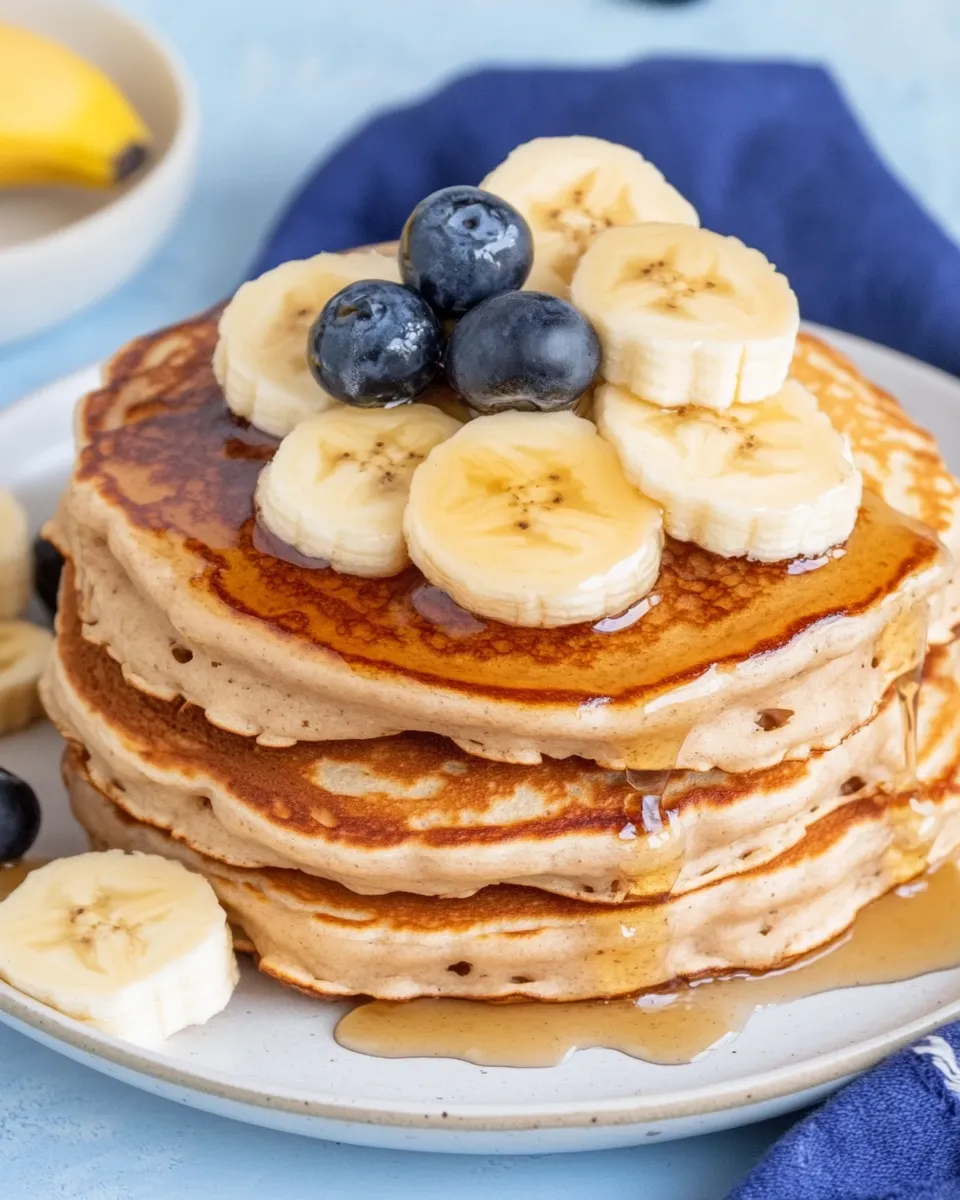
Coconut Flour Banana Pancakes
Equipment
- Mixing Bowl
- high-speed blender (optional)
- non-stick pan
- Spatula
Ingredients
Ingredients
- 3 largebananasoverripe
- 1/4 cupcoconut floursifted
- 3 largeeggs
- 1-2 tablespoonmilk of choiceOptional * See notes
Instructions
Instructions
- Peel and mash the 3 large overripe bananas in a large mixing bowl until mostly smooth (or place them in a high-speed blender and blend until mostly smooth).
- Add the 1/4 cup sifted coconut flour and the 3 large eggs to the mashed bananas. Whisk (or pulse in the blender) until fully combined into a thick batter.
- If the batter seems too thick to drop from a spoon, stir in milk of choice 1 tablespoon at a time, up to 2 tablespoons, until the batter is pourable but still thick. (Milk is optional.)
- Let the batter rest 1–2 minutes to allow the coconut flour to absorb the liquid.
- Heat a large non-stick pan over medium heat until hot.
- Drop large spoonfuls of batter onto the hot pan, leaving space between pancakes, and cover the pan immediately.
- Cook the pancakes for 2–3 minutes, until edges appear set and the bottoms are lightly browned, then flip and cook for an additional 2 minutes.
- Repeat steps 6–7 with the remaining batter, adjusting the heat as needed so the pancakes cook through without burning.
Notes
TO STORE
: Leftover pancakes can be stored in the refrigerator, covered, for up to 1 week.
TO FREEZE
: Place pancakes in a ziplock bag and store them in the freezer for up to 6 months.