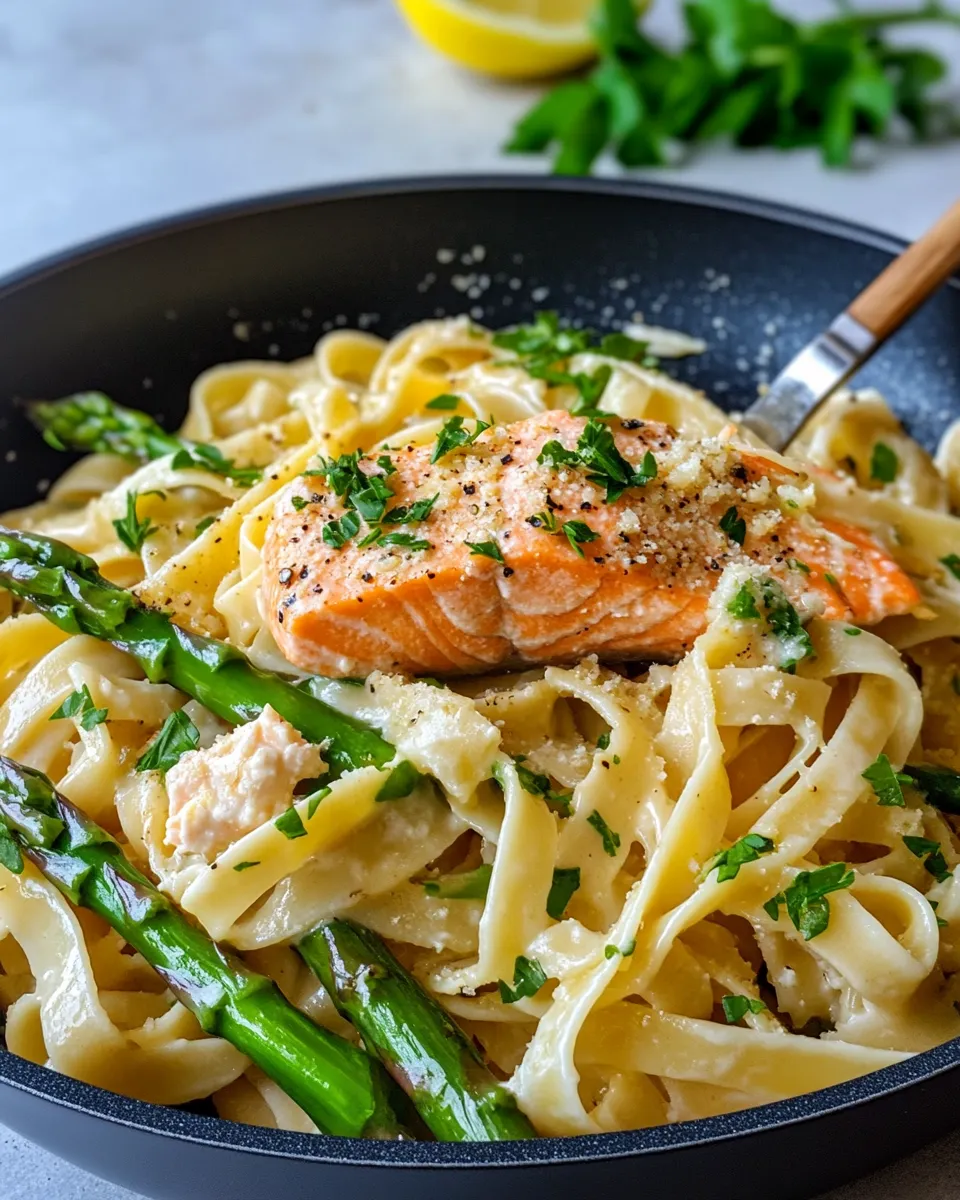
I love a weeknight recipe that feels like a treat without demanding the whole evening. This creamy salmon and asparagus pasta is one of those dinners — bright green asparagus, tender flakes of salmon, and a silky Parmesan-lemon cream that coats every strand of pasta. It comes together quickly and cleans up even quicker, which is why it shows up on my plate more than I’d admit.
The flavors are simple and balanced: lemon cuts through the richness of the cream, Parmesan adds a hit of savory depth, and the salmon gives the dish its satisfying, protein-forward center. The asparagus brings a quick crunch and a fresh color that makes the whole pan look inviting.
Below I walk through exactly what you need, why each ingredient matters, the step-by-step method, and the little tips that make the difference between “good” and “really good.” If you want to swap or skip something, I include ideas for that too.
Ingredient Notes
This section explains choices and small substitutions to help you shop or prep. I focus on what affects texture and timing: pasta type, salmon cut, and how to treat the asparagus. Read it before you start if you want to tweak anything.
Ingredients
- 8 ounces uncooked pasta — Use a short pasta like penne, rigatoni, or farfalle so the sauce clings; cook to al dente so it holds up when tossed with the cream.
- 1 bunch asparagus, ends trimmed — Trim the woody ends; cut into bite-size pieces so they cook quickly and evenly.
- 1 pound fresh salmon — Skin on or off is up to you; a firm fillet works best to hold shape through searing and flaking.
- Salt & pepper, to taste — Season the pasta water and the salmon; both steps are small but critical for balanced flavor.
- 1/4 teaspoon Italian seasoning — A gentle background herb note; don’t overdo it or it will compete with the lemon and Parmesan.
- 1 tablespoon olive oil — For searing the salmon; pick a medium-flavored oil so it complements, not overwhelms.
- 1 tablespoon butter — Adds richness and helps brown the salmon; butter plus olive oil reduces burning risk.
- 3 cloves garlic, minced — Fresh garlic gives a bright aroma; add it after the asparagus to avoid burning.
- 1 tablespoon lemon juice + zest from 1/2 lemon — Lemon brightens the cream and lifts the whole dish; zest packs intense citrus aroma.
- 1/2 cup freshly grated Parmesan cheese — Freshly grated melts smoothly and adds savory umami; pre-grated often won’t blend as well.
- 3/4 cup heavy/whipping cream — Creates the silky sauce; simmer gently so it reduces slightly and thickens without curdling.
How to Prepare (Creamy Salmon and Asparagus Pasta)
- Fill a large pot with water, bring to a boil, and season generously with salt.
- While the water heats, trim the woody ends from 1 bunch asparagus and cut the spears into bite-size pieces. Pat 1 pound salmon dry and season both sides with salt, pepper, and 1/4 teaspoon Italian seasoning.
- When the water is boiling, add 8 ounces pasta and cook until al dente according to the package directions. Before draining, reserve a small amount of the pasta cooking water; then drain the pasta and set it aside.
- Heat 1 tablespoon olive oil and 1 tablespoon butter in a large skillet over medium-high heat until the butter is melted and the pan is hot.
- Add the seasoned salmon to the skillet and cook about 3 minutes on the first side without moving it, then flip and cook about 3 minutes on the second side. Transfer the salmon to a plate and set aside.
- Add the asparagus pieces to the same skillet and cook 2–3 minutes, until bright green and crisp-tender.
- Stir in 3 cloves minced garlic and cook about 30 seconds, until fragrant.
- Pour in 3/4 cup heavy cream, add 1 tablespoon lemon juice and the zest from 1/2 lemon, then stir in 1/2 cup freshly grated Parmesan until the cheese melts and the sauce begins to come together.
- Return the salmon to the skillet and break it into large flakes with a spoon. Simmer gently for a few minutes until the salmon is fully cooked through, the asparagus is tender, and the sauce has reduced slightly. Taste and adjust salt and pepper if needed.
- Add the drained pasta to the skillet and toss to combine, adding a little of the reserved pasta cooking water if you need to thin the sauce. Serve immediately.
What Makes This Recipe Special
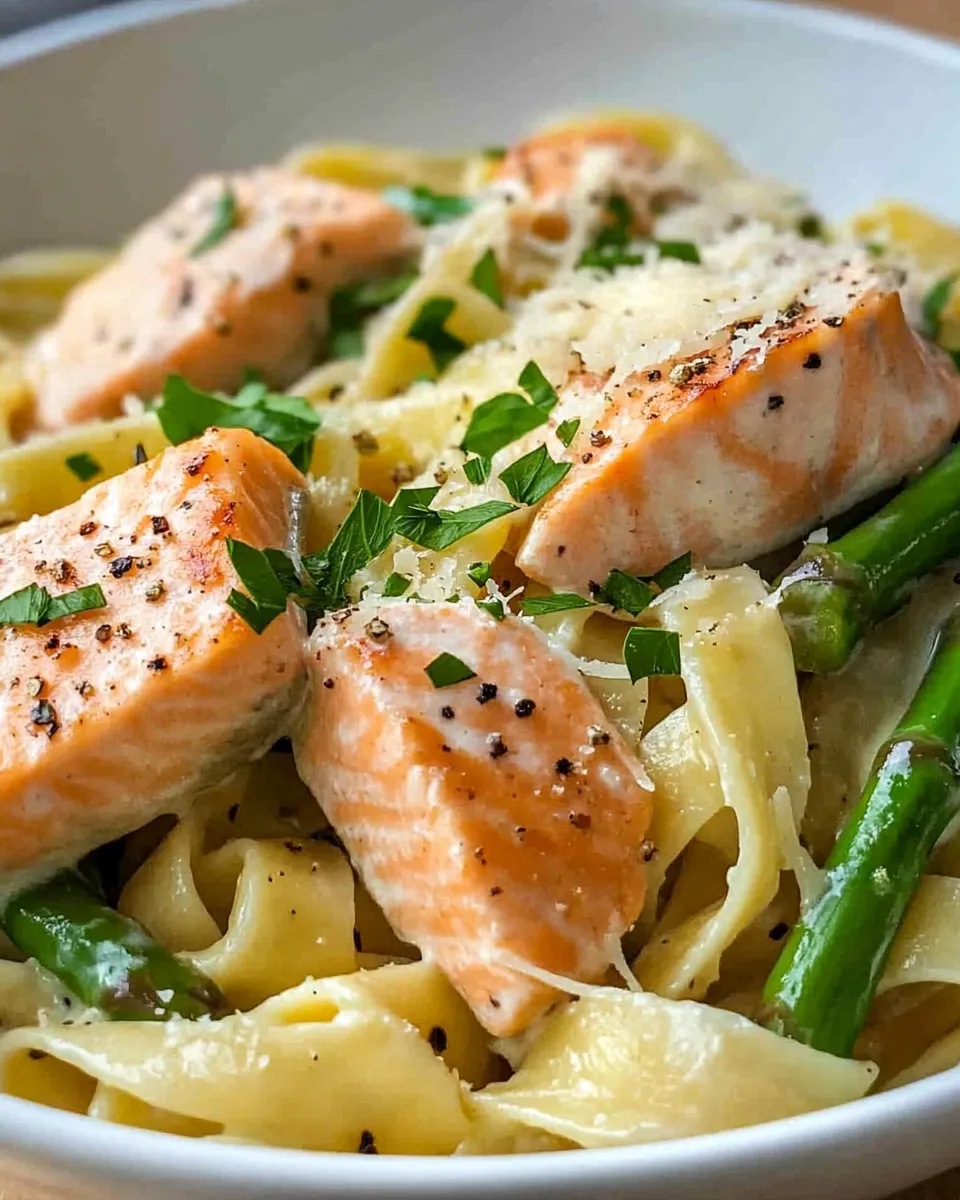
There are three small moves that lift this dish. First, searing the salmon first creates a flavorful crust and keeps the fish intact until you want to flake it into the sauce. Second, finishing the pasta in the sauce (with a splash of reserved cooking water) locks flavor into the noodles and creates a silkier finish than simply pouring sauce over drained pasta. Third, the lemon — both juice and zest — brightens the heavy cream so the dish never feels cloying.
Because everything cooks quickly, timing matters. The asparagus is added after the fish so it stays crisp-tender. The garlic goes in briefly — long enough to be fragrant but not browned. These micro-decisions make the texture contrast pleasant: tender salmon, snappy asparagus, and creamy, clingy sauce.
What to Use Instead
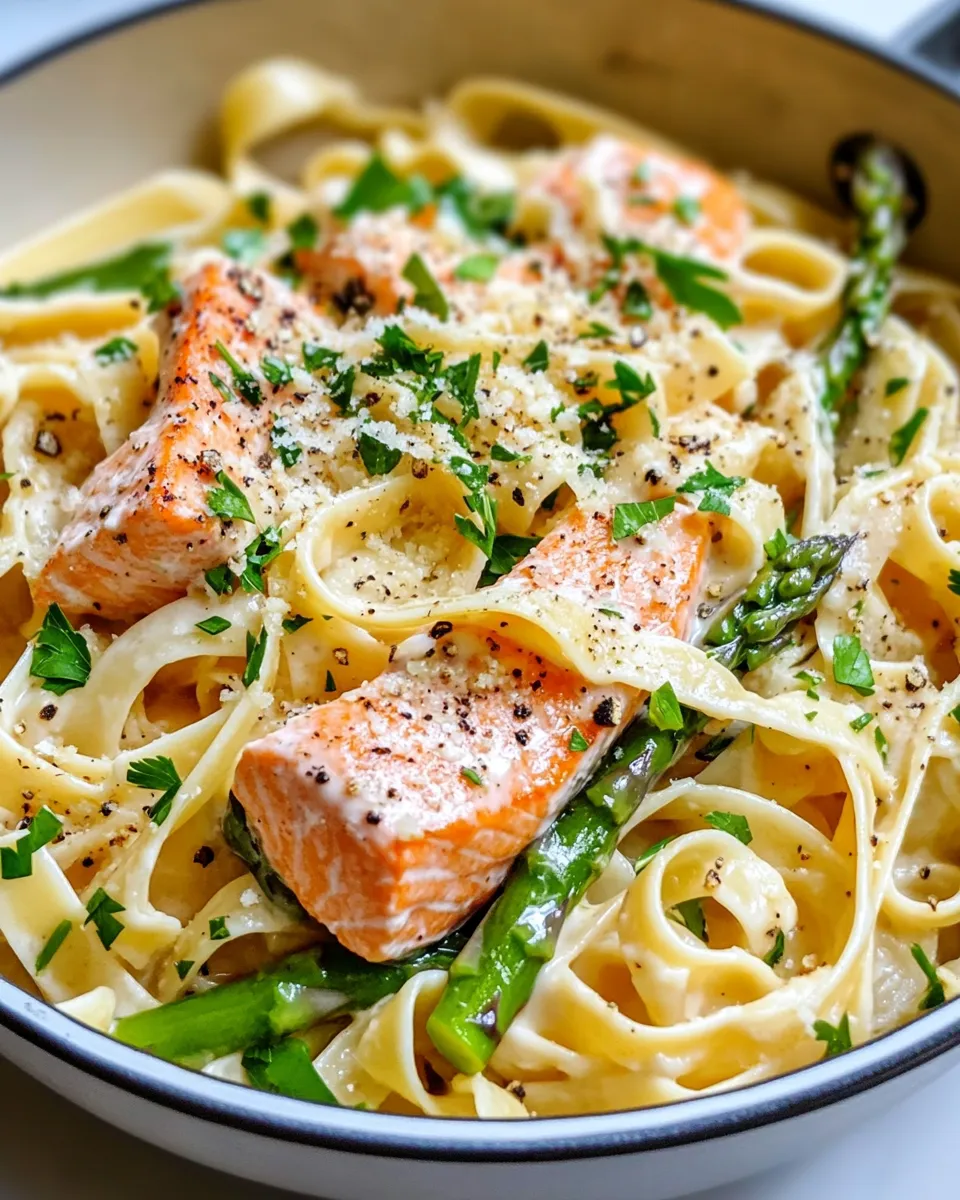
- Pasta: If you don’t have short pasta, long pasta like fettuccine or linguine works fine — just be sure to twirl or toss well so the sauce coats evenly.
- Salmon: Substitute another firm-fleshed fish (like cod or halibut) if you prefer; reduce cooking time for thinner fillets to avoid drying.
- Asparagus: Use peas or broccoli florets if asparagus is out of season; cook times vary—peas need only a minute or two, broccoli slightly longer.
- Cream: Light cream or half-and-half will work in a pinch, but the sauce will be thinner and less rich. You can thicken with a touch more Parmesan if needed.
- Cheese: Pecorino adds a sharper, tangier note. Use it if you like a bolder cheese flavor; keep the quantity similar.
Appliances & Accessories
Keep the equipment minimal. A large pot for the pasta, a roomy skillet (10–12 inches) for searing and sauce, a slotted spoon or spatula to turn the salmon, and a fine grater for the lemon zest and Parmesan are all you need. A microplane makes zesting effortless and keeps the lemon flavor bright without bitter pith.
If you have an instant-read thermometer, aim for an internal salmon temperature of about 125–130°F (51–54°C) for medium and moist flakes; it will rise slightly while resting and simmering in the sauce.
Problems & Prevention
Salmon overcooks
Prevention: Pat the salmon dry and don’t crowd the pan. Sear at medium-high heat and stick to the roughly 3 minutes per side guideline. If your fillet is very thick, check doneness a minute earlier and let carryover heat finish the job.
Sauce separates or feels greasy
Prevention: Keep the heat gentle when you add the cream and the Parmesan. Stir so the cheese melts smoothly; avoid boiling hard. If your sauce looks greasy, add a tablespoon or two of the reserved pasta water and whisk — the starchy water helps emulsify and bring it back together.
Asparagus turns soggy
Prevention: Cut asparagus into bite-size pieces and sauté only until bright green and crisp-tender (2–3 minutes). Overcooking is the most common mistake here.
Seasonal Twists
Spring: Double down on spring veggies — a handful of shelled peas or thinly sliced sugar snap peas add extra pop and color. Fresh herbs like tarragon or dill pair beautifully with salmon; add a small handful of chopped fresh herbs at the end.
Summer: Swap lemon for a touch of lemon verbena or use preserved lemons (rinsed) for an earthy citrus note. Throw in charred cherry tomatoes for a smoky, sweet contrast.
Fall/Winter: If asparagus is out of season, try roasted Brussels sprouts or sautéed fennel for a different texture. A splash of white wine added right before the cream can add warmth and depth in cooler months.
Little Things that Matter
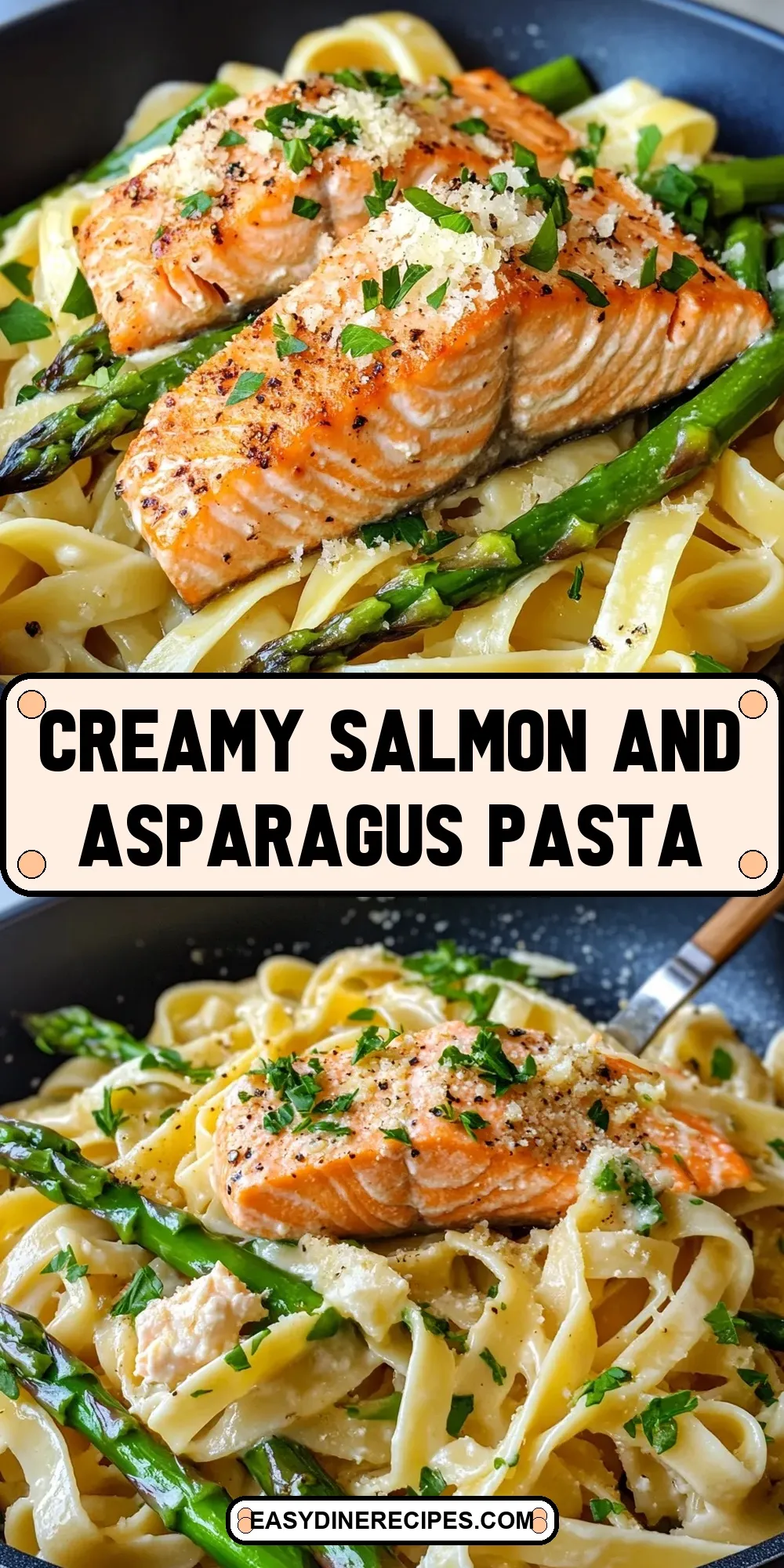
Use fresh Parmesan and grate it yourself. It melts and integrates; pre-shredded cheese often contains anti-caking agents that prevent a smooth sauce. Always reserve some pasta water — that one small habit will save many sauces from being too thick or claggy.
Pat the salmon dry. Moisture equals steam in the pan and you lose that nice sear. Also, zest the lemon before you juice it so you don’t waste those essential oils when you cut into the lemon.
How to Store & Reheat
Refrigerate leftovers in an airtight container for up to 2 days. The cream sauce will firm up and the asparagus and salmon will soften over time. To reheat gently, warm in a skillet over low heat with a splash of water or cream and toss until warmed through. Microwaving is faster but can make the salmon dry and the sauce separate; if you use the microwave, reheat in short bursts at medium power and stir between intervals.
Freezing is not recommended. The cream sauce and texture of the asparagus don’t hold up well to freezing and thawing.
Common Questions
Can I use frozen salmon? Yes. Thaw completely and pat dry before seasoning and searing. Frozen salmon can release more water, so drying it well is crucial for a good sear.
Do I need to remove the salmon skin? No. You can leave the skin on when searing for easier handling; remove it before flaking if you prefer not to eat it. If you want a crisp skin, pat it very dry and start skin-side down.
What pasta shape is best? Short shapes like penne, rigatoni, or farfalle work well because the sauce clings to the ridges and pockets. Long pasta is fine too — just be sure to toss thoroughly so every strand gets sauced.
Can I make this dairy-free? You could try a full-fat coconut milk or a cashew cream as a substitute, but the flavor profile will change noticeably. Use a milder, unsweetened coconut milk and taste carefully when adding lemon and Parmesan alternatives.
That’s a Wrap
This creamy salmon and asparagus pasta is reliable, quick, and forgiving. It’s the kind of recipe you can make on a worknight and still feel proud of — elegant enough for guests, easy enough for a solo dinner. Keep your ingredients simple, pay attention to timing, and use that reserved pasta water; the rest is just joyful, simple cooking.
If you try it, tell me how you tuned it — did you add herbs, use a different fish, or swap in seasonal vegetables? I love hearing little tweaks that become new favorites.
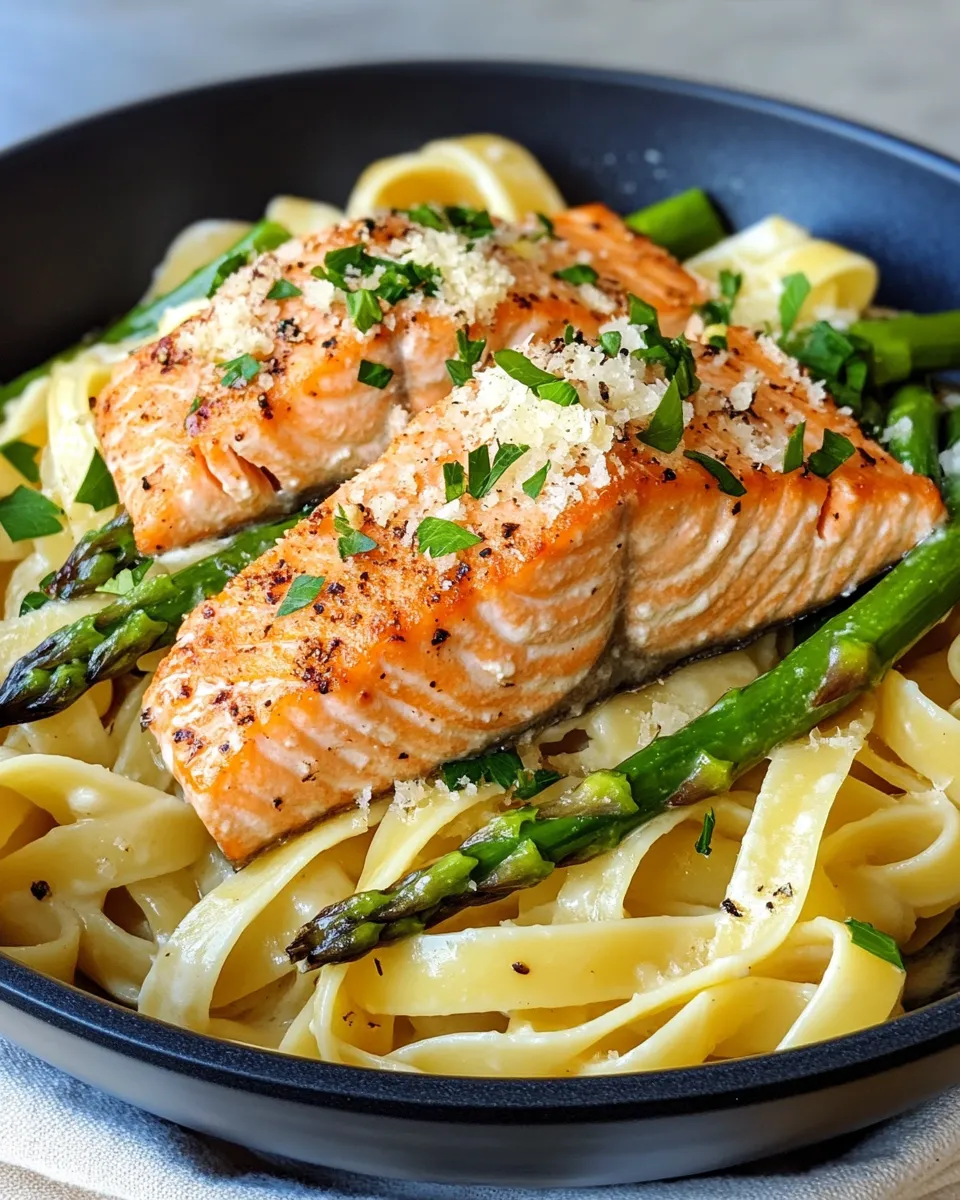
Creamy Salmon and Asparagus Pasta
Equipment
- Large Pot
- Large Skillet
- Spoon
- Colander
Ingredients
Ingredients
- 8 ouncesuncooked pasta
- 1 bunchasparagusends trimmed
- 1 poundfresh salmon
- Salt & pepperto taste
- 1/4 teaspoonItalian seasoning
- 1 tablespoonolive oil
- 1 tablespoonbutter
- 3 clovesgarlicminced
- 1 tablespoonlemon juice + zest from 1/2 lemon
- 1/2 cupfreshly grated parmesan cheese
- 3/4 cupheavy/whipping cream
Instructions
Instructions
- Fill a large pot with water, bring to a boil, and season generously with salt.
- While the water heats, trim the woody ends from 1 bunch asparagus and cut the spears into bite-size pieces. Pat 1 pound salmon dry and season both sides with salt, pepper, and 1/4 teaspoon Italian seasoning.
- When the water is boiling, add 8 ounces pasta and cook until al dente according to the package directions. Before draining, reserve a small amount of the pasta cooking water; then drain the pasta and set it aside.
- Heat 1 tablespoon olive oil and 1 tablespoon butter in a large skillet over medium-high heat until the butter is melted and the pan is hot.
- Add the seasoned salmon to the skillet and cook about 3 minutes on the first side without moving it, then flip and cook about 3 minutes on the second side. Transfer the salmon to a plate and set aside.
- Add the asparagus pieces to the same skillet and cook 2–3 minutes, until bright green and crisp-tender.
- Stir in 3 cloves minced garlic and cook about 30 seconds, until fragrant.
- Pour in 3/4 cup heavy cream, add 1 tablespoon lemon juice and the zest from 1/2 lemon, then stir in 1/2 cup freshly grated Parmesan until the cheese melts and the sauce begins to come together.
- Return the salmon to the skillet and break it into large flakes with a spoon. Simmer gently for a few minutes until the salmon is fully cooked through, the asparagus is tender, and the sauce has reduced slightly. Taste and adjust salt and pepper if needed.
- Add the drained pasta to the skillet and toss to combine, adding a little of the reserved pasta cooking water if you need to thin the sauce. Serve immediately.
Notes
Nutritional information is provided as a courtesy only and should be construed as an estimate rather than a guarantee. Ingredients can vary and Salt & Lavender makes no guarantees to the accuracy of this information.