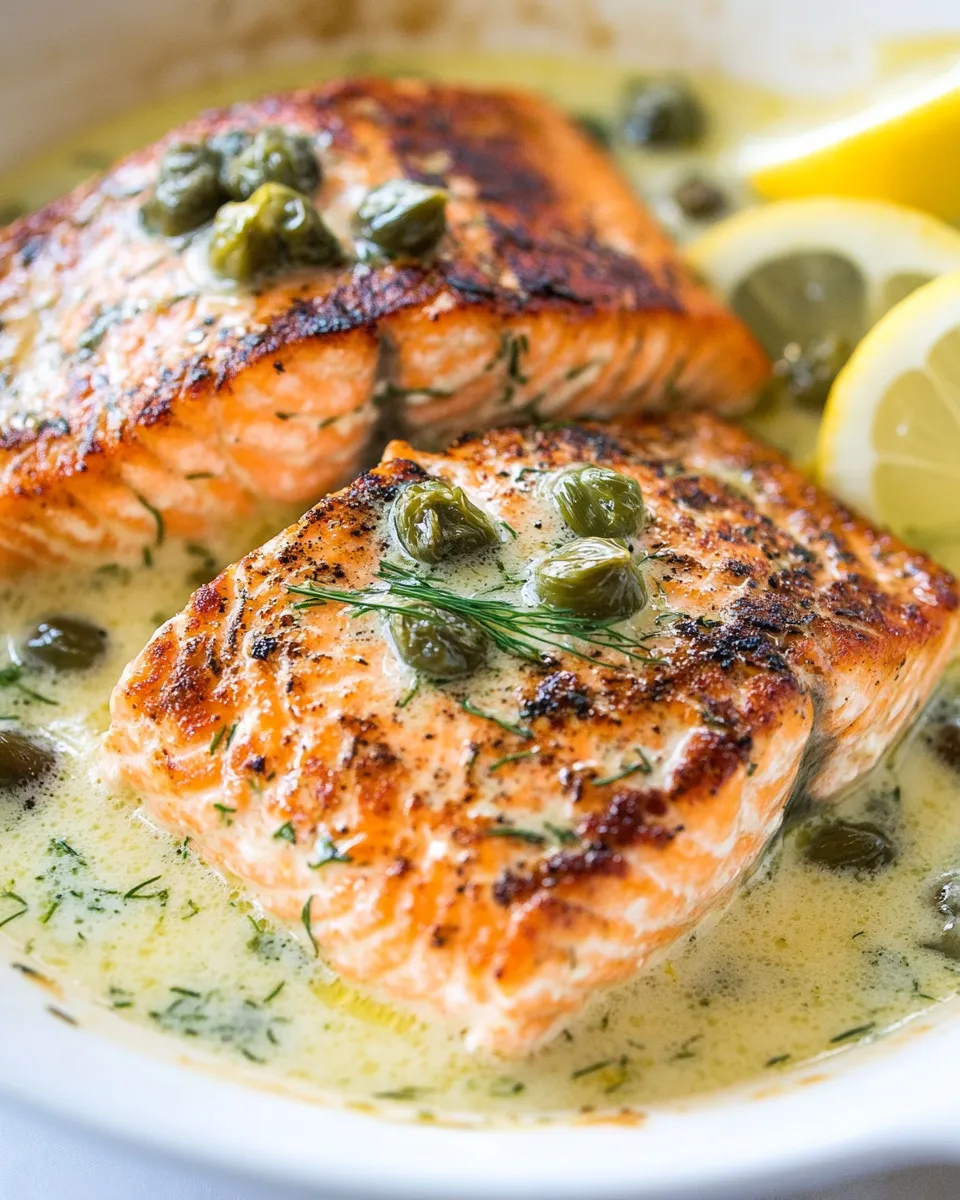
I love simple dinners that feel elevated without a lot of fuss. This salmon does exactly that: a blisteringly crisp skin (or golden sear on skinless fillets) and a bright, punchy sauce that comes together in the pan. It’s the kind of meal you can make on a weeknight and still feel proud of when guests stop by.
The technique is forgiving. You sear the fish, then finish it in a silky lemon-caper-coconut sauce that’s fragrant with dill. The flavors are bright and balanced: citrus, briny capers, and a gentle herbal note from the dried dill. The canned coconut milk adds body and a slightly creamy mouthfeel without heaviness.
I’ll walk you through the exact steps and ingredients I used when testing this recipe, the equipment that matters, swaps if you’re missing something, and the mistakes I see people make with skillet salmon. Read it once, then try it. You’ll get a restaurant-style result at home.
Ingredient Checklist
- 1 to 2 Tbsp avocado oil — for high-heat searing; neutral flavor and high smoke point make it ideal.
- 1 1/2 pounds salmon cut into fillets — the star of the dish; choose even-thickness fillets so they cook uniformly.
- 1 tsp ground paprika — adds color and a subtle sweet-earthy warmth to the crust.
- 2 tsp dried dill — used in two parts; provides the herbaceous backbone to the sauce and seasoning.
- 1/4 tsp sea salt — a baseline seasoning; don’t over-salt before searing or the surface can draw out moisture.
- 1 cup full-fat canned coconut milk — builds the sauce’s body and gives a silky texture.
- 2 tsp lemon zest — concentrated citrus aroma; adds brightness without adding liquid.
- 2 Tbsp lemon juice to taste — acidity to balance richness; start with less and adjust as directed in the steps.
- 3 Tbsp capers — provide savory, briny pops that cut through the richness of the coconut milk.
- 2 tsp dried dill — the remaining portion called for in the sauce, reinforcing the dill flavor.
(Crispy Skillet Salmon with Lemon Caper Dill Sauce) Cooking Guide
- Pat the salmon fillets dry with a paper towel. Season both sides evenly with 1/4 tsp sea salt, 1 tsp ground paprika, and 2 tsp dried dill.
- Heat 1 to 2 Tbsp avocado oil in a large cast-iron or nonstick skillet over medium-high heat until the oil is hot.
- Place the salmon fillets flesh side down in the skillet, pressing lightly so the flesh makes full contact with the pan. Sear undisturbed for 3–4 minutes, until the surface is crispy and golden.
- Flip the salmon and sear the other side for 2–3 minutes.
- Flip the salmon again and cook another 1–2 minutes.
- Add 1 cup full-fat canned coconut milk, 2 tsp lemon zest, 2 Tbsp lemon juice (to taste), 3 Tbsp capers, and the remaining 2 tsp dried dill to the skillet. Reduce heat to medium-low and cook, spooning the sauce over the fillets, until the sauce thickens and the salmon reaches your desired doneness, about 3–4 minutes.
- Taste the sauce and add additional sea salt and/or more lemon juice if needed.
- Check the salmon’s internal temperature with a meat thermometer: the FDA considers salmon fully cooked at 145°F; medium-rare is about 120–125°F. Remove from heat when it reaches your preferred temperature and serve.
What Sets This Recipe Apart
This version pairs a crispy sear with a sauce that isn’t the usual cream-or-butter base. The coconut milk gives the sauce structure and silkiness without dominating the flavor, which lets the lemon, capers, and dill shine. It’s bright but still comforting.
Another distinction: the sauce is finished right in the skillet with the fish. That live-pan technique captures the fond (the tasty browned bits) from searing, folding depth into the sauce without extra steps. It saves time and reduces cleanup.
Swap Guide

If you don’t have one ingredient, here are straightforward swaps that keep the dish honest.
- Avocado oil — any high-smoke-point oil (grapeseed, sunflower) works. Olive oil will do, but keep the heat slightly lower to prevent smoking.
- Full-fat canned coconut milk — a neutral full-fat dairy cream could be used in a pinch, though it will change the flavor profile. If using dairy, reduce heat sooner to prevent splitting.
- Capers — chopped green olives can add briny notes, though capers give a brighter, vinegary pop that’s preferred.
- Dried dill — if you only have fresh dill, use about three times the amount by volume. Add most at the end so it stays bright.
Equipment Breakdown

Good equipment makes this easier and more reliable.
- Large cast-iron or nonstick skillet — a heavy-bottomed pan gives even heat and helps develop a consistent sear. Cast-iron holds heat well; nonstick prevents sticking for skin-on fillets.
- Tongs or a fish spatula — for confident flips without tearing the fish.
- Meat thermometer — the simplest way to avoid overcooked salmon. Aim for your preferred doneness, and remove the fish a few degrees before the target as it will continue to carryover cook.
- Microplane or fine grater — for zesting lemons quickly and evenly.
Frequent Missteps to Avoid
These are the most common errors I see when cooks make pan-seared salmon and how to fix them.
- Too much movement during searing. Don’t flip or prod the fillet while the crust forms. Let it develop undisturbed for a full 3–4 minutes as instructed.
- Salmon not dry enough. Pat fillets thoroughly before seasoning. Moisture creates steam and prevents a crisp surface.
- Overcrowding the pan. If fillets are too close they steam instead of sear. Use a large skillet or cook in batches.
- Adding acid too early. If you add lemon juice at full heat before the sauce has reduced, it can thin the sauce and mute flavor. Follow step 6 timing to balance heat and thickness.
Year-Round Variations
This recipe adapts well to seasonal produce and pantry differences.
- Spring: Toss in blanched asparagus tips or peas at the end and spoon warm sauce over both for a bright plate.
- Summer: Add halved cherry tomatoes to the skillet briefly when cooking the sauce; they’ll blister and add a sweet-tart note.
- Fall/Winter: Serve over roasted root vegetables or a warm grain like farro to make the meal heartier.
What I Learned Testing
When I tested this dish multiple times, a few practical truths rose to the top. First: the oil’s temperature is everything. If the oil is just warm, you’ll get gray, steamed salmon instead of a golden crust. If it’s too hot, the surface can burn before the inside cooks; medium-high and an even layer of oil was the sweet spot.
Second: the sauce needs patience. After adding the coconut milk and lemon, reduce heat to medium-low and spoon the sauce. That gentle simmer coaxes a creamier texture and concentrates flavor. And finally, dried dill works very well here because it releases its flavor over the slow finish; that second addition of dill in the sauce really ties everything together.
Best Ways to Store

Leftover salmon keeps well if you follow a couple of rules. Cool the fish to room temperature (no more than two hours out), then refrigerate in an airtight container. Keep the sauce and fish together if you plan to reheat gently; the sauce helps protect the fish from drying out.
- Refrigerator: 2–3 days in an airtight container.
- Freezing: You can freeze cooked salmon, but texture will change. Wrap tightly and store up to 1 month. Thaw overnight in the fridge before reheating.
- Reheating: Warm gently in a skillet over low heat, spooning sauce over the fillets, or finish in a 300°F oven for 8–10 minutes. Avoid high heat which dries the fish.
Frequently Asked Questions
Can I use skin-on salmon? Yes. If you have skin-on fillets, place them skin-side down first and sear until the skin is crisp. The timing in the steps still applies; adjust slightly if the fillets are especially thick.
Is coconut milk taste obvious? It’s subtle here. Full-fat canned coconut milk lends creaminess more than a distinct coconut flavor, especially once lemon and capers are in the mix. If you want even less coconut presence, use a neutral cream as noted in the swaps.
How do I know when it’s done? Use a thermometer: 120–125°F for medium-rare, 145°F for fully cooked per FDA guidance. The residual carryover heat will raise the internal temperature a degree or two after you remove it from the pan.
Next Steps
Make this tonight. Keep the pan hot, resist poking, and spoon that sauce over the fish as it finishes. Serve with a simple side—steamed green beans, a crisp salad, or roasted potatoes—and you’ve got a meal that’s fast, flavorful, and memorable.
If you enjoyed this approach, try swapping in lemons for limes and fresh herbs for a citrus-herb variation. Then, tell me: did you sear with skin on or off? Did you prefer the medium-rare finish or fully cooked? I love hearing how readers adapt recipes, and I often update tips based on feedback.
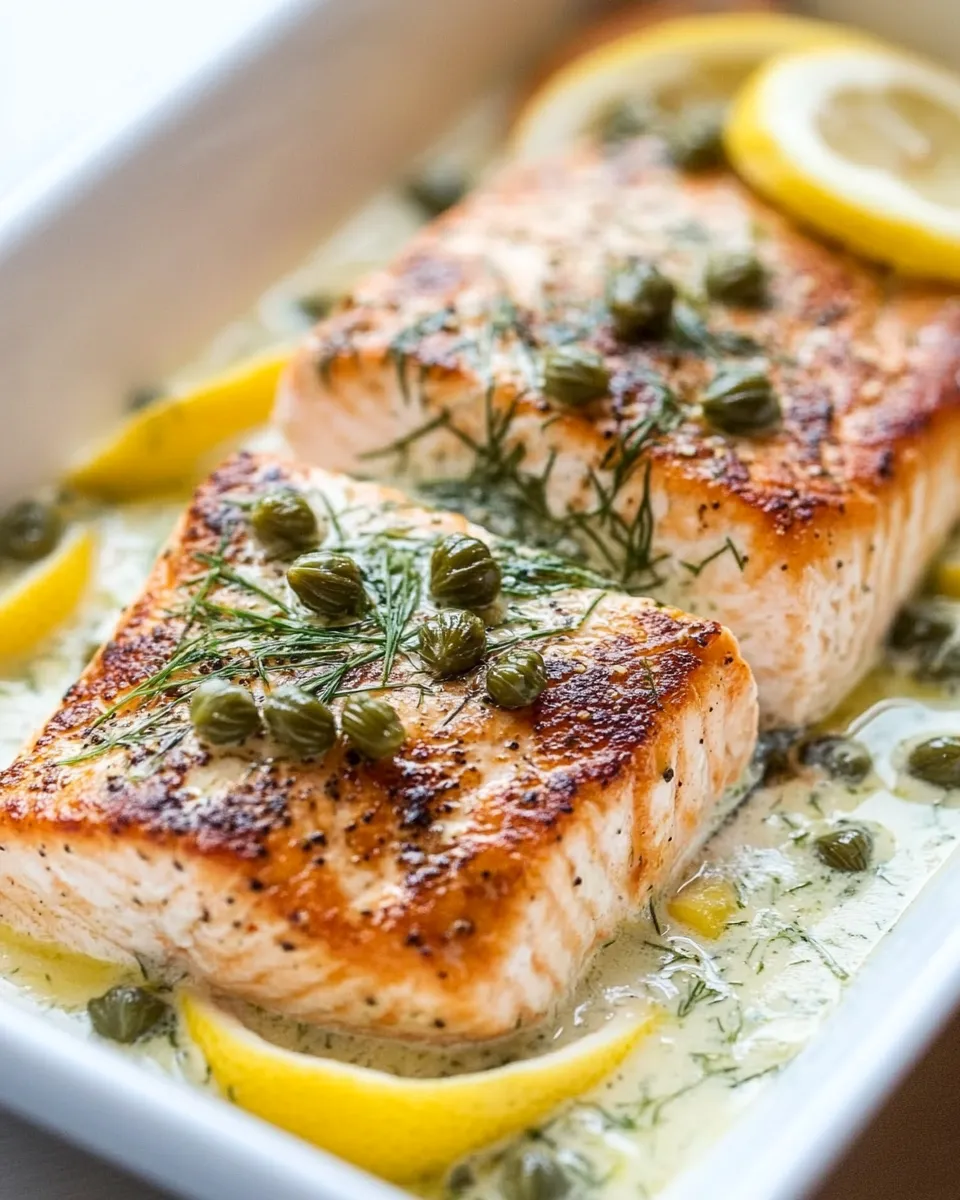
Crispy Skillet Salmon with Lemon Caper Dill Sauce
Equipment
- cast-iron or nonstick skillet
- Meat Thermometer
- Paper Towels
- Spatula
Ingredients
Ingredients
- 1 to 2 Tbspavocado oil
- 1 1/2 poundssalmoncut into fillets
- 1 tspground paprika
- 2 tspdried dill
- 1/4 tspsea salt
- 1 cupfull-fat canned coconut milk
- 2 tsplemon zest
- 2 Tbsplemon juiceto taste
- 3 Tbspcapers
- 2 tspdried dill
Instructions
Instructions
- Pat the salmon fillets dry with a paper towel. Season both sides evenly with 1/4 tsp sea salt, 1 tsp ground paprika, and 2 tsp dried dill.
- Heat 1 to 2 Tbsp avocado oil in a large cast-iron or nonstick skillet over medium-high heat until the oil is hot.
- Place the salmon fillets flesh side down in the skillet, pressing lightly so the flesh makes full contact with the pan. Sear undisturbed for 3–4 minutes, until the surface is crispy and golden.
- Flip the salmon and sear the other side for 2–3 minutes.
- Flip the salmon again and cook another 1–2 minutes.
- Add 1 cup full-fat canned coconut milk, 2 tsp lemon zest, 2 Tbsp lemon juice (to taste), 3 Tbsp capers, and the remaining 2 tsp dried dill to the skillet. Reduce heat to medium-low and cook, spooning the sauce over the fillets, until the sauce thickens and the salmon reaches your desired doneness, about 3–4 minutes.
- Taste the sauce and add additional sea salt and/or more lemon juice if needed.
- Check the salmon’s internal temperature with a meat thermometer: the FDA considers salmon fully cooked at 145°F; medium-rare is about 120–125°F. Remove from heat when it reaches your preferred temperature and serve.