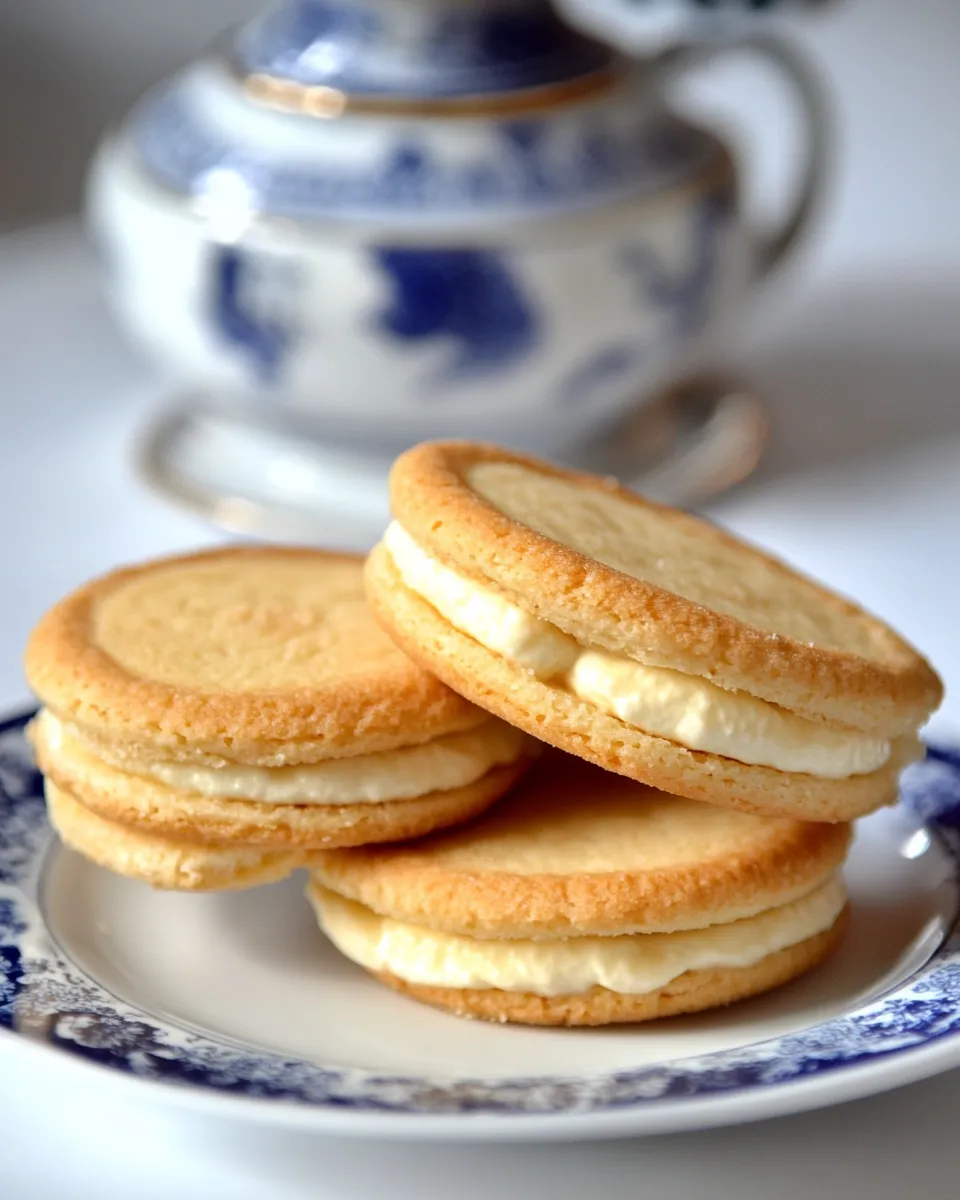
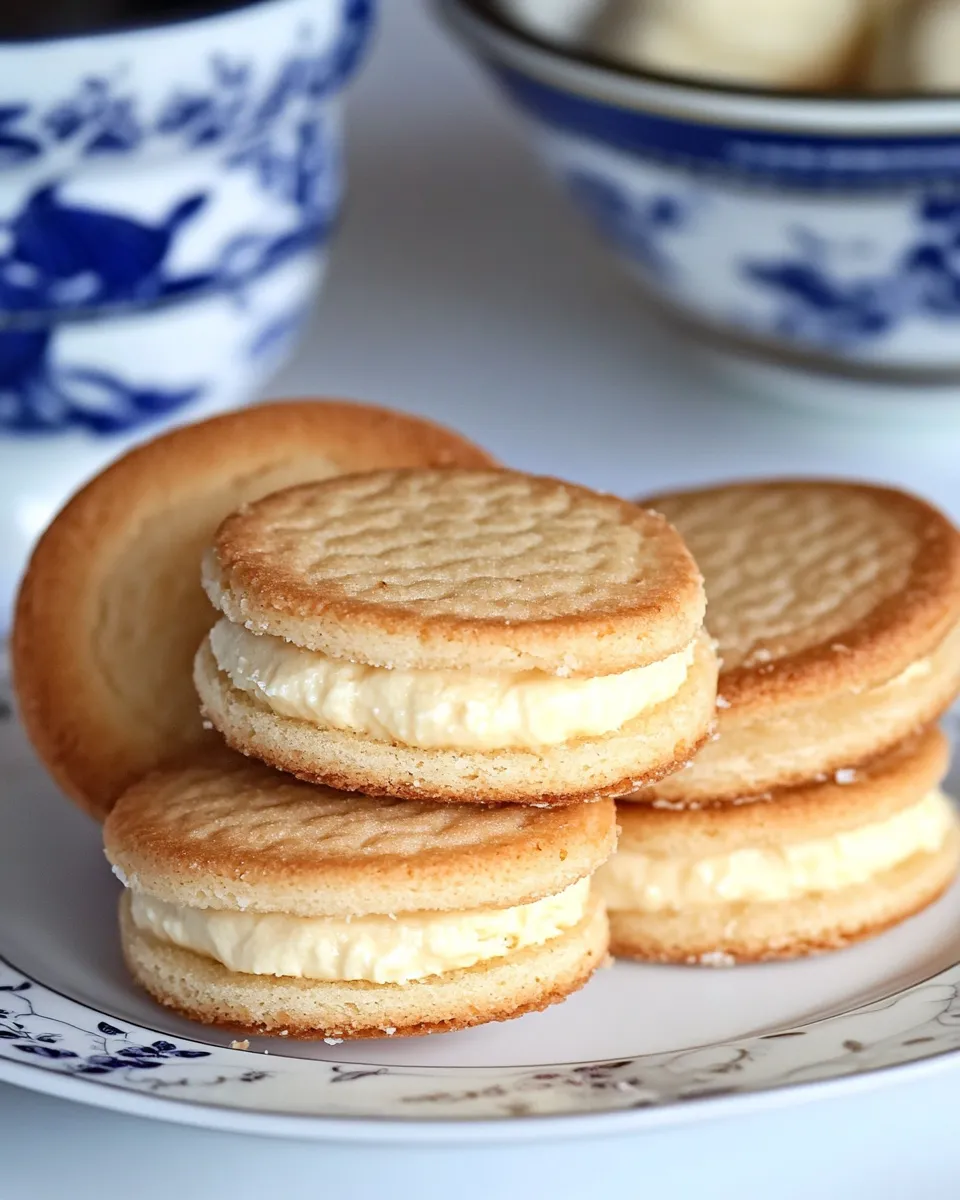
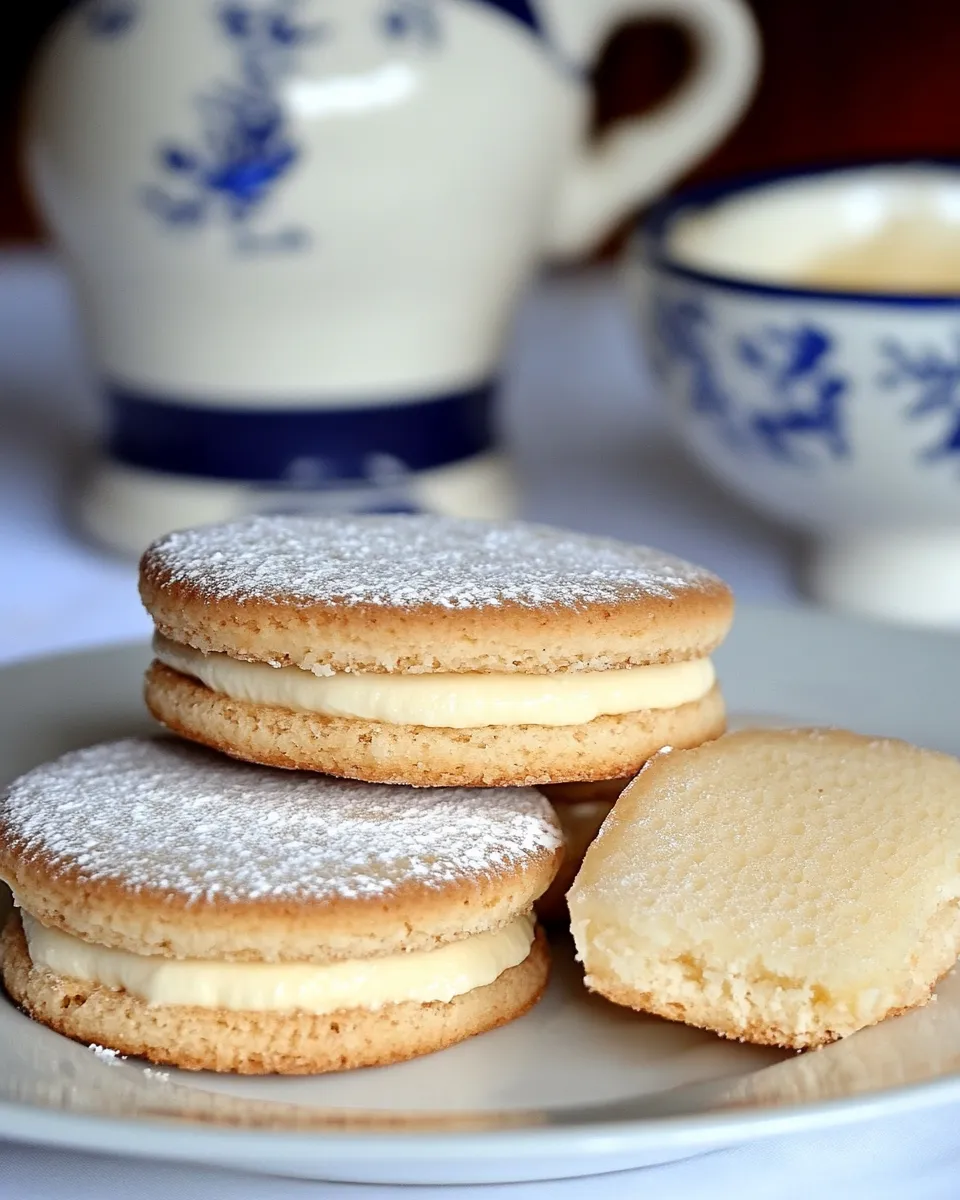
These are the classic sandwich biscuits that feel like comfort in bite-sized form. Crisp, lightly golden cookies with a soft, vanilla-custard buttercream in the middle — simple but endlessly satisfying. I make a batch whenever I want something that will travel well, hold up in a tin, or pair perfectly with a cup of tea.
The recipe is forgiving and quick to pull together. You don’t need special equipment, and the ingredient list is short. Read through the steps once, assemble your mise en place, and you’ll have a tray in the oven in under 30 minutes.
Below I break down the ingredients, walk you step by step through the method provided, and share practical tips to avoid common mistakes. If you’re adapting for allergies or storing these, you’ll find clear, tested guidance so the finished Custard Creams are everything they should be — crisp, creamy, and reliable.
Ingredient Breakdown
For the biscuits
- 1 stick (1/2 cup) unsalted butter — provides richness and structure; chill briefly if dough is sticky.
- 1/3 cup superfine sugar — helps the biscuits be tender and gives a delicate sweetness.
- 1 cup all-purpose flour — the base of the dough; measure by spooning into the cup and leveling off.
- 8 tbsps custard powder (or 8 tbsps corn starch and 1 tsp vanilla extract) — custard powder gives classic flavor and color; corn starch is the functional substitute (see substitution notes below).
- A few drops of vanilla extract — boosts aroma and rounds the flavor.
Filling
- 2/3 stick (1/3 cup) unsalted butter, room temperature — for a smooth, spreadable buttercream; don’t use it straight from the fridge.
- A few drops of vanilla extract — for the filling’s background vanilla note.
- 1 cup powdered sugar — sweetens and stabilizes the buttercream to a pipeable consistency.
- 2 tbsps custard powder (or 2 tbsps corn starch and ½ tsp vanilla extract) — adds the custardy flavor and texture to the filling; follow the provided substitution option if needed.
Build Custard Creams Step by Step
- Preheat the oven to 350°F.
- Make the biscuit dough: In a mixing bowl, cream together 1/3 cup superfine sugar and 1 stick (1/2 cup) unsalted butter until light and fluffy. Add the listed “a few drops of vanilla extract.” If you are using corn starch instead of custard powder for the biscuits, also add the additional 1 tsp vanilla extract listed with that substitution. Sift or whisk together 1 cup all-purpose flour and 8 tablespoons custard powder (or 8 tablespoons corn starch if using the substitution), then fold the dry mixture into the creamed butter and sugar until a workable dough forms. If the dough is very soft or sticky, chill briefly until firm enough to roll.
- Roll and cut: Lightly flour your work surface, roll the dough to a thickness of about 1/4 inch, and cut into shapes. Ensure you cut an even number of each shape so you can make pairs.
- Bake: Place the cut biscuits on a baking tray lined with parchment paper, leaving a little space between them. Bake at 350°F for about 10 minutes, until lightly golden. Remove from the oven and leave on the tray for a couple of minutes, then transfer to a wire rack to cool completely.
- Make the filling: In a bowl, beat 2/3 stick (1/3 cup) unsalted butter (room temperature) with a few drops of vanilla extract until creamy. If you are using corn starch instead of custard powder for the filling, add the additional 1/2 teaspoon vanilla extract listed with that substitution. Gradually add 1 cup powdered sugar and 2 tablespoons custard powder (or 2 tablespoons corn starch if using the substitution), beating until you have a smooth, spreadable buttercream consistency.
- Assemble the custard creams: When the biscuits are completely cool, place a heaped teaspoon of the filling on the flat side of one biscuit and sandwich with a matching biscuit. Press gently so the filling spreads to the edges. Repeat with the remaining biscuits.
Why I Love This Recipe
Custard Creams are comfort food with no pretense. The biscuit has just enough bite to hold the buttercream but is tender enough to melt on the tongue. The filling is simple: butter, powdered sugar, and a tiny amount of custard powder to give that unmistakable vanilla-custard personality. There’s a satisfying rhythm to making them — cream, sift, roll, bake, pipe, sandwich — and the small steps mean you can make a dozen without feeling overwhelmed.
I also love how adaptable the recipe is. Swap custard powder for corn starch where needed. Adjust the shapes for different occasions. They keep well, so you can make them ahead for a party or pack a tin for a picnic. Finally, they invite precision without being fussy; a little practice and you’ll know exactly how thin to roll the dough and how much filling to use.
Allergy-Friendly Substitutes
When allergies or preferences require swaps, be mindful of texture and moisture changes. Here are practical options that won’t upset the method.
- Dairy-free option — Use a solid, block-style plant-based butter substitute measured 1:1 for the unsalted butter. Choose a spread formulated for baking so it creams well.
- Gluten-free — Use a 1:1 gluten-free all-purpose flour blend designed for baking. The dough may be slightly more fragile; chill before rolling if needed.
- Custard powder substitute — The recipe already lists corn starch as an option. If you use corn starch, follow the extra vanilla adjustments noted in the directions so the cookies don’t lose flavor.
- Sugar alternatives — Granulated superfine sugar is preferred for the biscuit texture. If you need a lower-sucrose option in the filling, try a powdered sugar substitute made specifically for baking, but expect a different mouthfeel.
Setup & Equipment
Keep things simple. Here’s what I use every time:
- Mixing bowls — at least two: one for creaming, one for sifting and folding.
- Hand mixer or stand mixer — helpful for creaming butter and for making a smooth filling.
- Sifter or whisk — to combine flour and custard powder without lumps.
- Rolling pin — a small one is fine; I like to roll to about 1/4 inch thickness.
- Cookie cutters — choose one shape and make sure you cut an even number.
- Baking tray and parchment paper — ensures clean bottoms and easy transfer.
- Wire rack — for cooling the biscuits completely before filling.
- Spatula and small spoon or piping bag — for filling and assembling.
Don’t Do This
There are a few small errors that will change the final texture. Avoid them:
- Don’t fill warm biscuits. The filling will melt and leak; always cool completely on a wire rack.
- Don’t overwork the dough. Fold until it just comes together. Overworking develops gluten and makes tough biscuits.
- Don’t skip sifting the dry ingredients. Custard powder especially can clump, and sifting keeps the dough smooth.
- Don’t use cold butter for the filling. The butter should be room temperature so the filling whips silky without lumps.
Make It Year-Round
Custard Creams work in every season. In summer, make them a day ahead and keep them in a cool place. In colder months you can serve them slightly warmed with hot tea. They travel well in a tin, so they’re great for holiday biscuit exchanges or picnic baskets.
To dress them for occasions: cut shapes that match the season (hearts for Valentine’s Day, stars for winter holidays) or lightly dust the tops with sifted powdered sugar for a gentle finish. The filling is neutral enough to accept small flavor lifts — a very light lemon zest or a touch more vanilla — but remember: the strength of these biscuits is their simplicity.
Testing Timeline
Here’s a compact timeline that matches the method and keeps you on track:
- 15 minutes — cream butter and sugar, sift dry ingredients, and bring the dough together. If the dough is sticky, chill briefly; this can add 10–20 minutes.
- 10–15 minutes — roll, cut, and arrange biscuits on trays.
- About 10 minutes — bake each tray at 350°F until lightly golden.
- 2–5 minutes — rest on the tray after baking, then transfer to a wire rack to cool completely (cooling time varies with kitchen temperature; allow at least 20–30 minutes to avoid warm filling issues).
- 10–15 minutes — whip the filling and assemble the sandwiches.
Total active time: roughly 40–60 minutes, depending on chilling and cooling. Plan for a bit more if you need to chill dough or make multiple batches.
Storage & Reheat Guide
Trust these biscuits to keep well, but follow a few rules so they stay crisp and the filling stays firm.
- Room temperature — Store in an airtight tin for up to 5 days. Keep in a cool place away from direct sunlight.
- Refrigeration — You can refrigerate if you used a dairy-based butter and it’s warm where you live. Put them in an airtight container to avoid them drying out; bring to room temperature before serving.
- Freezing — Freeze unfilled biscuits in a single layer on a tray, then transfer to a freezer bag for up to 2 months. Thaw fully and make the filling fresh before sandwiching.
- Reheating — These are best served at room temperature. If you prefer slightly warm biscuits, warm an assembled sandwich for 5–10 seconds in the microwave, but do so cautiously — the filling can soften quickly.
Questions People Ask
- Can I make the biscuits ahead? — Yes. Bake the biscuits and store them unfilled in an airtight container. Make the filling the day you plan to serve and assemble then.
- What if my dough is too sticky to roll? — Chill it briefly (10–20 minutes) until firm enough to roll. Dust your surface lightly with flour.
- Can I use a different cutter shape? — Absolutely. The important bit is to cut an even number of shapes so you have matching tops and bottoms.
- Is custard powder necessary? — It gives the classic flavor. The recipe lists corn starch as a functional substitute; if you use corn starch, follow the vanilla adjustments in the directions to keep the flavor balanced.
- How much filling should I use? — A heaped teaspoon per sandwich is the guideline in the method. Use a little more or less to taste, but don’t overfill or the biscuits will slip and make a mess.
Next Steps
If you enjoyed making these, try a few small variations once you’re comfortable. Experiment with a touch more vanilla in the filling, or pipe a decorative swirl before sandwiching. Make different shapes for gifting. If you need to scale the recipe, double everything and work in batches for rolling and baking. Above all, keep notes on any changes you try so you can reproduce the exact result you like.
Thanks for baking along. These Custard Creams are quick to make, forgiving, and perfect for sharing. Keep a jar of powdered sugar on hand and a spare tray — you’ll want to make another batch.

Custard Creams
Equipment
- Oven
- Mixing Bowl
- sieve or whisk
- Baking tray
- Parchment Paper
- Wire Rack
- Rolling Pin
- Cookie cutters
Ingredients
Ingredients
- For the biscuits:1 stick 1/2 cup unsalted butter1/3 cup superfine sugar1 cup all-purpose flour8 tbsps custard powder (or 8 tbsps corn starch and 1 tsp vanilla extract)A few drops of vanilla extract
- Filling:2/3 stick 1/3 cup unsalted butter, room temperatureA few drops of vanilla extract1 cup powdered sugar2 tbsps custard powder (or 2 tbsps corn starch and 1/2 tsp vanilla extract)
Instructions
Instructions
- Preheat the oven to 350°F.
- Make the biscuit dough: In a mixing bowl, cream together 1/3 cup superfine sugar and 1 stick (1/2 cup) unsalted butter until light and fluffy. Add the listed "a few drops of vanilla extract." If you are using corn starch instead of custard powder for the biscuits, also add the additional 1 tsp vanilla extract listed with that substitution. Sift or whisk together 1 cup all-purpose flour and 8 tablespoons custard powder (or 8 tablespoons corn starch if using the substitution), then fold the dry mixture into the creamed butter and sugar until a workable dough forms. If the dough is very soft or sticky, chill briefly until firm enough to roll.
- Roll and cut: Lightly flour your work surface, roll the dough to a thickness of about 1/4 inch, and cut into shapes. Ensure you cut an even number of each shape so you can make pairs.
- Bake: Place the cut biscuits on a baking tray lined with parchment paper, leaving a little space between them. Bake at 350°F for about 10 minutes, until lightly golden. Remove from the oven and leave on the tray for a couple of minutes, then transfer to a wire rack to cool completely.
- Make the filling: In a bowl, beat 2/3 stick (1/3 cup) unsalted butter (room temperature) with a few drops of vanilla extract until creamy. If you are using corn starch instead of custard powder for the filling, add the additional 1/2 teaspoon vanilla extract listed with that substitution. Gradually add 1 cup powdered sugar and 2 tablespoons custard powder (or 2 tablespoons corn starch if using the substitution), beating until you have a smooth, spreadable buttercream consistency.
- Assemble the custard creams: When the biscuits are completely cool, place a heaped teaspoon of the filling on the flat side of one biscuit and sandwich with a matching biscuit. Press gently so the filling spreads to the edges. Repeat with the remaining biscuits.