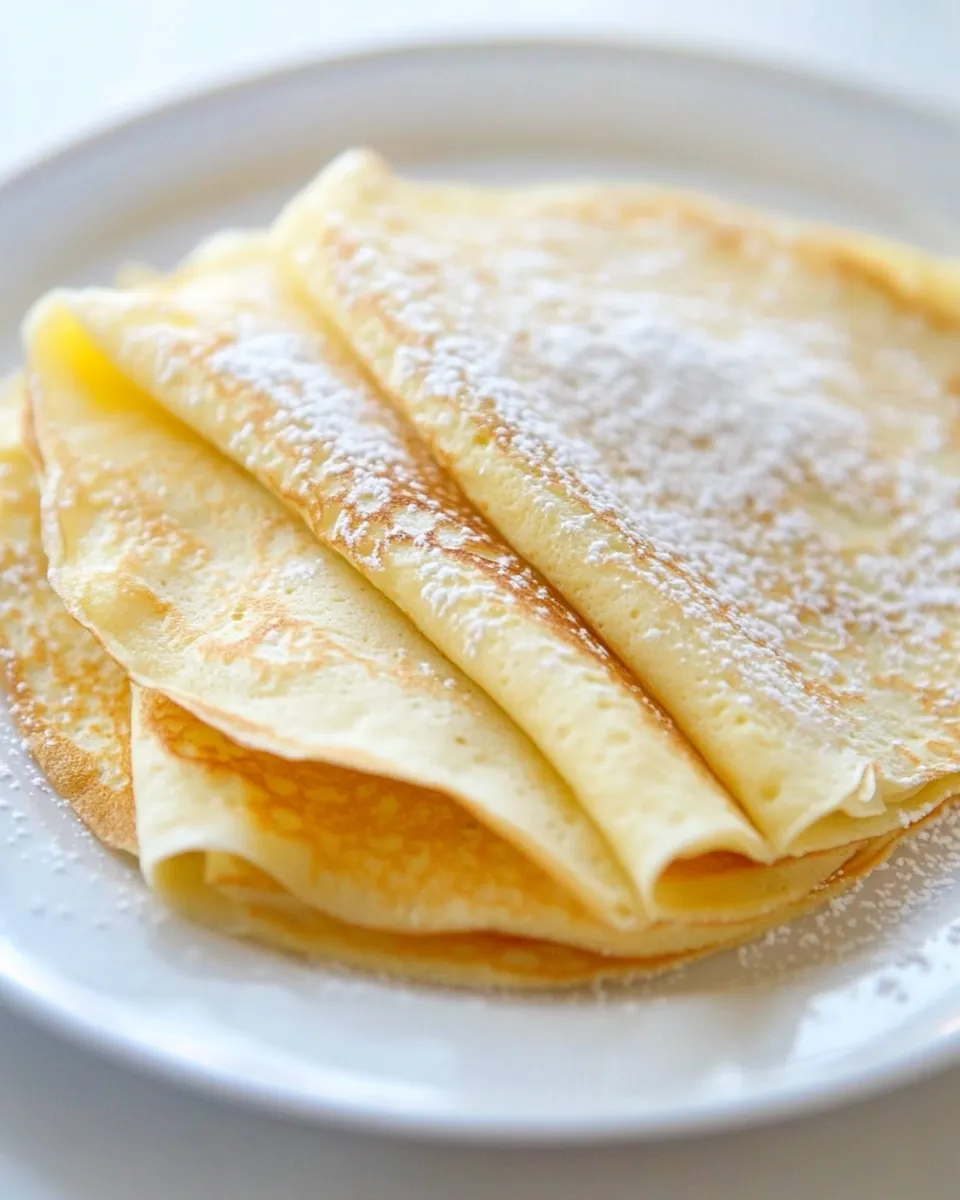
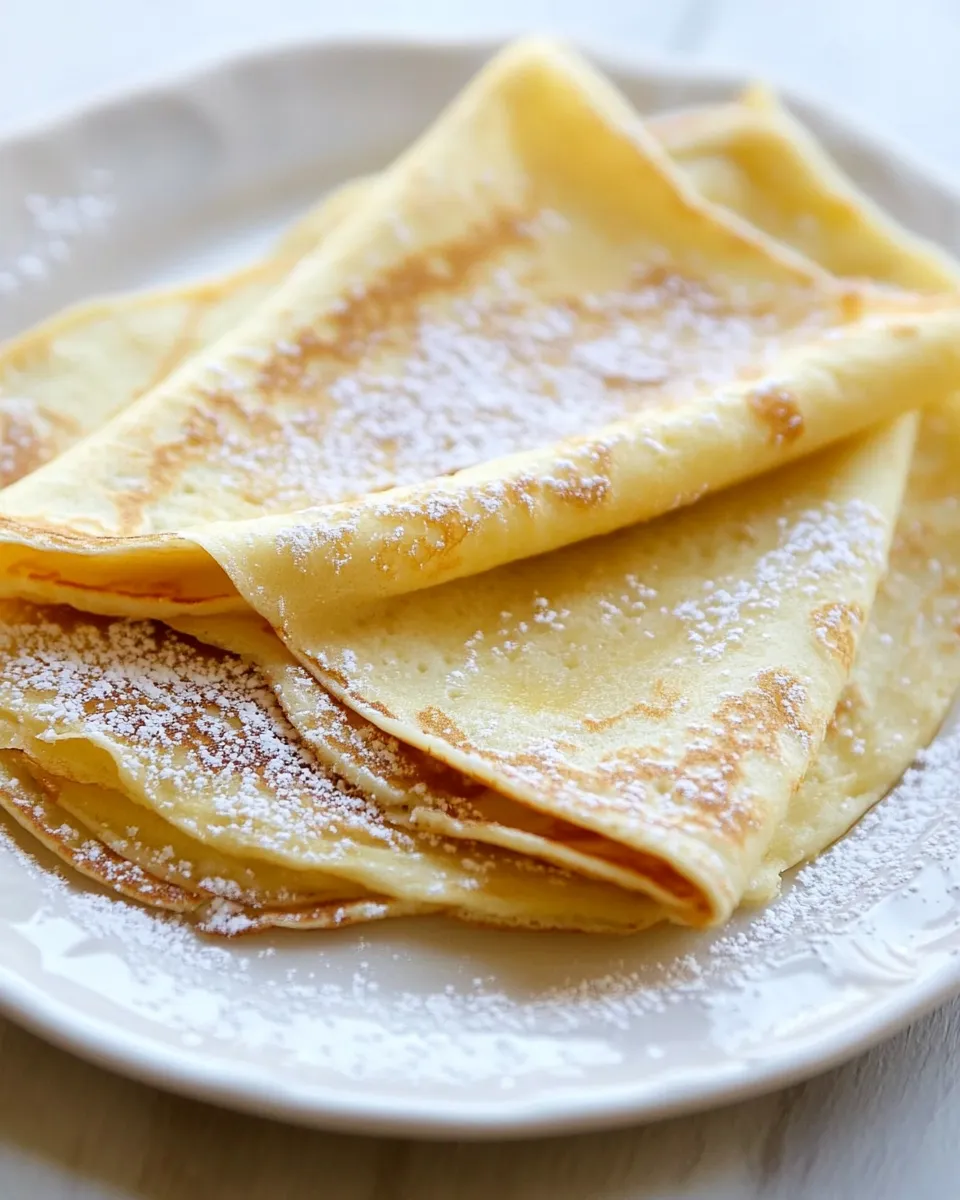
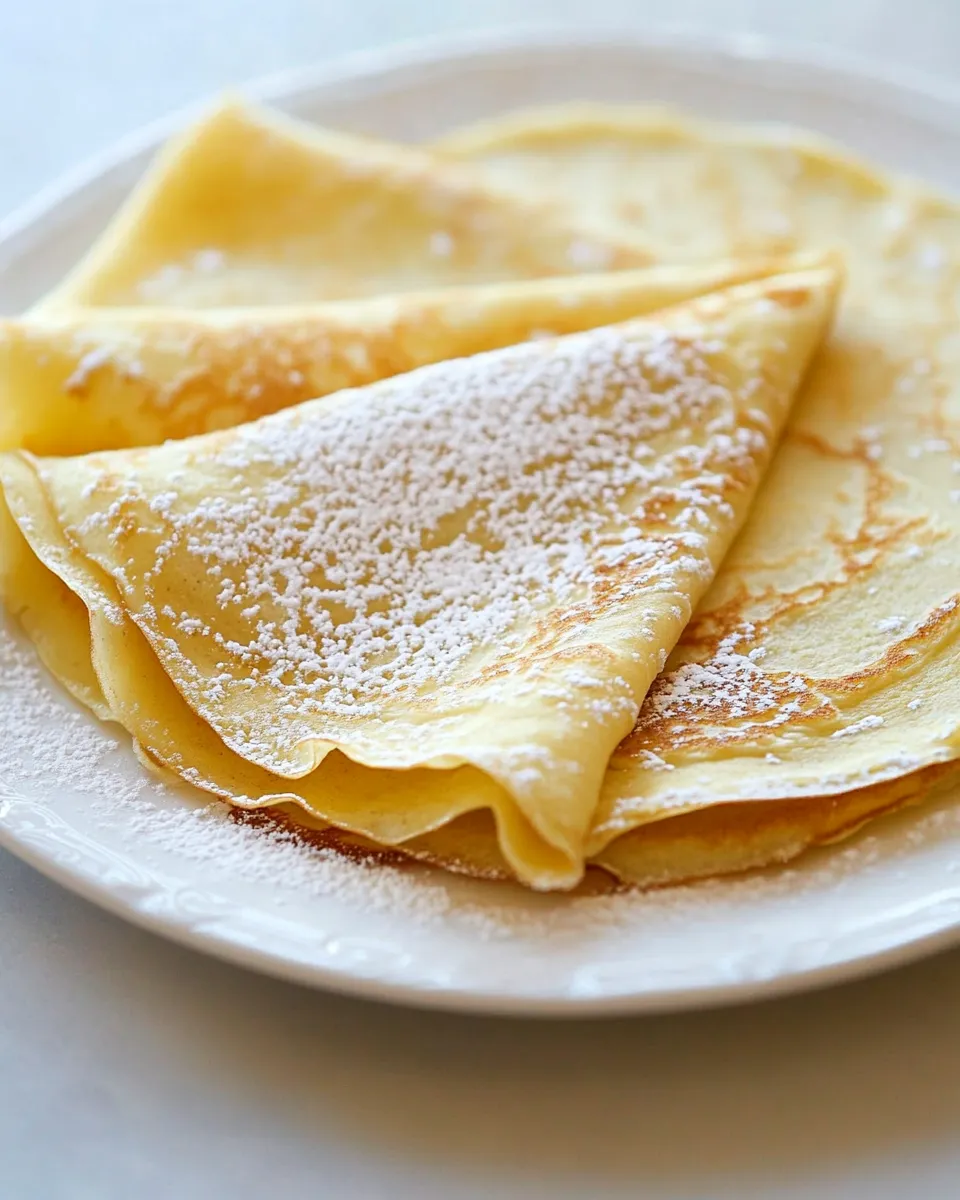
Crepes are one of those humble, miraculous things: few ingredients, lightning-fast technique, and an endless range of ways to serve them. I make a batch when I want breakfast to feel special without a lot of fuss. This recipe consistently makes thin, flexible crepes that fold, roll, and stack beautifully—sweet or savory.
What I love most is how forgiving the batter is when you follow a couple of basic rules: blend well, rest the batter, and keep the pan hot but not scorching. Those steps are small but vital, and they turn a so-so crepe into something almost Parisian in its grace—without the line outside the boulangerie.
Below you’ll find the exact ingredient list and step-by-step directions I use in my kitchen. I also included troubleshooting tips, substitutions for common allergies, equipment notes, and ideas for seasonal fillings. Read through once, then make the batter and get cooking—crepes warm up a weekday or a celebration equally well.
What Goes Into Crepes
Ingredients
- 4 large eggs (room temperature) — Provides structure and helps the batter emulsify; room temp eggs blend more smoothly.
- 2 1/4 cups milk — Thins the batter so crepes are very delicate; whole milk gives richer flavor, but any milk will work.
- 2 cups all-purpose flour — The base that gives body; sift if it’s compacted for a lump-free batter.
- 1 tablespoon granulated sugar — Adds a touch of sweetness (useful even for savory crepes for balance); omit for strictly savory applications if you prefer.
- 1/4 cup melted butter or canola oil — Fats enrich the batter and help crepes release from the pan; reserve a little to grease the skillet while cooking.
- Good pinch of salt — Brings out flavor; essential even in sweet crepes.
Cook Crepes Like This
- Add the ingredients to a blender in this order: 4 large eggs (room temperature), 2 1/4 cups milk, 2 cups all-purpose flour, 1 tablespoon granulated sugar, 1/4 cup melted butter or canola oil, and a good pinch of salt. Blend on high until smooth, about 1 minute. Scrape the sides and blend again briefly so the batter is lump-free.
- Transfer the batter to a covered container and refrigerate at least 1 hour (2 hours is ideal). This resting time helps the flour hydrate and makes thinner, more flexible crepes.
- When ready to cook, give the batter a quick stir or a brief pulse in the blender if it has separated in the fridge and is no longer smooth.
- Reserve a small amount of the 1/4 cup melted butter or canola oil to grease the pan. Preheat a nonstick or well-seasoned cast-iron skillet over medium to medium-high heat until hot.
- Lightly grease the preheated skillet with the reserved butter or oil and swirl to coat. Hold the hot skillet in one hand and the batter container in the other; pour batter slowly into the center of the skillet while immediately tilting and rotating the skillet so the batter spreads into a very thin, even layer across the bottom.
- Cook until the crepe surface is no longer shiny, the edges lift easily, and the bottom is lightly browned (visual cue — typically a few dozen seconds depending on your heat). Flip the crepe with a thin spatula and cook the second side until lightly browned as well (a shorter time than the first side). Remove the crepe to a plate.
- Repeat steps 5–6 with the remaining batter, re-greasing the skillet as needed. Stack finished crepes and keep them warm covered with foil or plastic wrap. Serve immediately.
Why This Recipe Is Reliable
This method is reliable because it focuses on three technical pillars: emulsification (the blender), hydration (the rest in the fridge), and consistent surface temperature (preheated skillet). Using a blender ensures the eggs, milk, flour, and fat become a smooth emulsion so there are no lumps and the batter spreads evenly.
The rest period is not optional if you want paper-thin, flexible crepes. It gives the flour time to absorb liquid—this thins the protein network so the crepes don’t tear when you flip them. Finally, cooking on a hot, evenly heated surface promotes rapid set of the batter on contact. That quick set produces the thin layer we want without overcooking.
Allergy-Friendly Substitutes
- Eggs — For those allergic to eggs, a reliable swap is tricky because eggs provide structure. Use a commercial egg replacer designed for crepe-like batters or experiment with a blend of 1/4 cup silken tofu puréed plus 1 tablespoon ground flaxseed mixed with 3 tablespoons water per egg; results vary, so test one crepe first.
- Milk — Any plant-based milk (soy, oat, almond) will work; oat and soy mimic whole milk best for richness. Use the same volume.
- All-purpose flour — A 1:1 gluten-free flour blend often works, but some blends need xanthan gum to bind; expect a slightly different texture and be sure to rest the batter.
- Butter/canola oil — Use neutral oils like sunflower or light olive oil if avoiding dairy; melted coconut oil is possible but adds coconut flavor.
Equipment & Tools
- Blender — Fastest way to make a silky batter and remove lumps.
- Nonstick skillet or well-seasoned cast-iron — A 9–10 inch pan is ideal for standard crepe size; nonstick is more forgiving.
- Thin spatula or crepe spatula — For flipping gently without tearing.
- Measuring cups and spoons — Accurate liquid and flour measurement matters for consistent batter.
- Covered container — For resting batter in the fridge (a mason jar or plastic container with lid works fine).
- Optional: crepe spreader or ladle — I use the tilt-and-swirl method, but a small ladle helps control volume.
Frequent Missteps to Avoid
- Skipping the rest: Batter that goes straight from blender to pan will be thicker and more likely to tear. Rest at least 1 hour.
- Pan too cold: Batter will pool and cook unevenly, yielding thicker, gummy crepes. Make sure the skillet is hot before you pour.
- Pan too hot: Browning will happen too fast and the interior may stay undercooked. Medium to medium-high is usually right; adjust heat down if crepes brown almost immediately.
- Over-greasing: A very light coat of butter or oil is sufficient; too much creates greasy crepes and dark, uneven cooking.
- Pouring too much batter: The goal is a very thin layer—start with less batter and add more as you dial in your pan size.
Variations by Season
Spring & Summer
- Light fruits: Fill crepes with fresh berries, lemon curd, or a smear of ricotta and drizzle with honey for a bright, fresh finish.
- Herbed savory: Add a little chopped fresh herbs to a savory filling—spring peas, mint, and a squeeze of lemon pair beautifully.
Fall & Winter
- Warm compotes: Cook down apples, pears, or cranberries with a little sugar and spice; spoon warm compote into crepes and top with toasted nuts.
- Comfort savory: Fill crepes with sautéed mushrooms, béchamel, and grated cheese for a cozy, dinner-worthy option.
Recipe Notes & Chef’s Commentary
Measure your flour by spooning it into the cup and leveling it off rather than scooping; overpacked flour makes batter too stiff. If the batter seems too thick after resting, whisk in a tablespoon or two of milk until it reaches a thin, pourable consistency—think heavy cream that flows easily.
The goal is a batter that coats the entire bottom of the pan with a thin sheet when you tilt and swirl. Practice the pour and tilt movement with a little batter first to get a feel for how much to use for your pan size. When flipping, a thin metal spatula slides best under the edge; flip in one confident motion rather than wrestling the crepe.
Keep-It-Fresh Plan
- Short-term (same day): Stack crepes with parchment between them and keep covered with foil at room temperature for up to 2 hours or gently warmed in a low oven (200°F/95°C) covered with foil.
- Refrigerating: Store in an airtight container for up to 48 hours. Reheat briefly in a dry skillet over low heat or microwave covered for 10–15 seconds per crepe.
- Freezing: Freeze stacked crepes separated by parchment in a freezer bag for up to 2 months. Thaw in the refrigerator overnight before reheating.
Top Questions & Answers
- Why rest the batter? Rest lets the flour fully hydrate and the gluten relax, producing thinner, more flexible crepes that don’t tear when you flip them.
- Can I make the batter the night before? Yes. Cover and refrigerate; bring to a quick stir or pulse before using if it’s separated. Two hours is ideal, but overnight is fine.
- My crepes are tearing—what gives? Check the batter consistency (too thick) and the pan temperature (too cool). Also make sure you’re using enough fat to lightly grease the pan between crepes.
- How thin should the batter be? Pourable and thin—similar to heavy cream. It should easily coat and spread across the pan.
- Can I make savory crepes with this batter? Absolutely—omit or reduce the sugar if you prefer and fill with savory ingredients.
Final Bite
This crepe method delivers delicate, flexible crêpes every time if you respect three simple steps: blend well, rest long enough, and cook on a consistent, well-heated surface. Once you’ve made a few, you’ll find the rhythm—pour, tilt, watch for shine to vanish, flip—and it becomes relaxing and fast. Fill them with whatever you love, pile them high or keep them simple, and enjoy a little homemade elegance any day of the week.
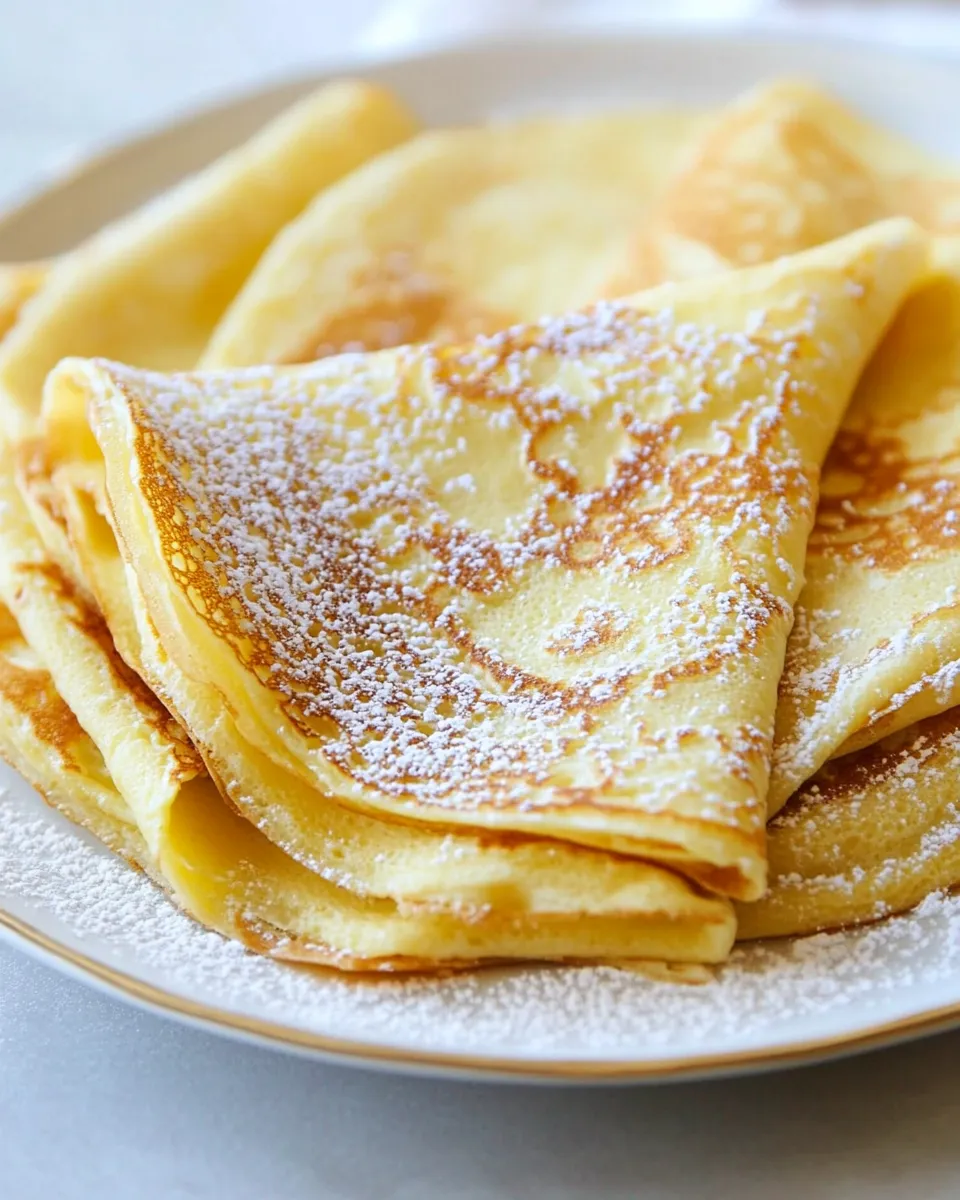
Easy Crepes Recipe (Better Than Paris!)
Equipment
- Blender
- nonstick skillet or cast-iron skillet
- thin spatula
- Measuring cups and spoons
- covered container
Ingredients
Ingredients
- 4 large eggsroom temperature
- 2 1/4 cupsmilk
- 2 cupsall purpose flour
- 1 tablespoongranulated sugar
- 1/4 cupmelted butteror canola oil
- good pinch of salt
Instructions
Instructions
- Add the ingredients to a blender in this order: 4 large eggs (room temperature), 2 1/4 cups milk, 2 cups all-purpose flour, 1 tablespoon granulated sugar, 1/4 cup melted butter or canola oil, and a good pinch of salt. Blend on high until smooth, about 1 minute. Scrape the sides and blend again briefly so the batter is lump-free.
- Transfer the batter to a covered container and refrigerate at least 1 hour (2 hours is ideal). This resting time helps the flour hydrate and makes thinner, more flexible crepes.
- When ready to cook, give the batter a quick stir or a brief pulse in the blender if it has separated in the fridge and is no longer smooth.
- Reserve a small amount of the 1/4 cup melted butter or canola oil to grease the pan. Preheat a nonstick or well-seasoned cast-iron skillet over medium to medium-high heat until hot.
- Lightly grease the preheated skillet with the reserved butter or oil and swirl to coat. Hold the hot skillet in one hand and the batter container in the other; pour batter slowly into the center of the skillet while immediately tilting and rotating the skillet so the batter spreads into a very thin, even layer across the bottom.
- Cook until the crepe surface is no longer shiny, the edges lift easily, and the bottom is lightly browned (visual cue — typically a few dozen seconds depending on your heat). Flip the crepe with a thin spatula and cook the second side until lightly browned as well (a shorter time than the first side). Remove the crepe to a plate.
- Repeat steps 5–6 with the remaining batter, re-greasing the skillet as needed. Stack finished crepes and keep them warm covered with foil or plastic wrap. Serve immediately.
Notes
You only need to add more butter or oil to the hot pan every 3 crepes or so to ensure the crepes flip perfectly, although adding it every time certainly isn’t a bad thing!
*The medium to medium-high heat is an approximation because all stovetops are different. If your crepes are cooking in about 30 seconds total, you are at the right temperature.
Practice makes perfect.