These pancakes are the kind I make when I want something honest: nutty, tender, and quick. Whole wheat often gets a reputation for being dense or dry, but that’s not what we’re aiming for. With a simple mix of whole wheat flour, buttermilk, and a few pantry staples, you’ll get light, slightly sweet pancakes that still taste wholesome.
I keep the method direct because mornings rarely need drama. The batter comes together in two bowls, you don’t overmix, and a hot skillet does the rest. Small lumps are fine—those are better than stretched-out gluten from too much stirring.
Below you’ll find the essentials, the exact ingredients and steps, smart swaps if you need them, and practical tips for storing and serving. No fluff. Just a reliable breakfast you can make any day of the week.
The Essentials
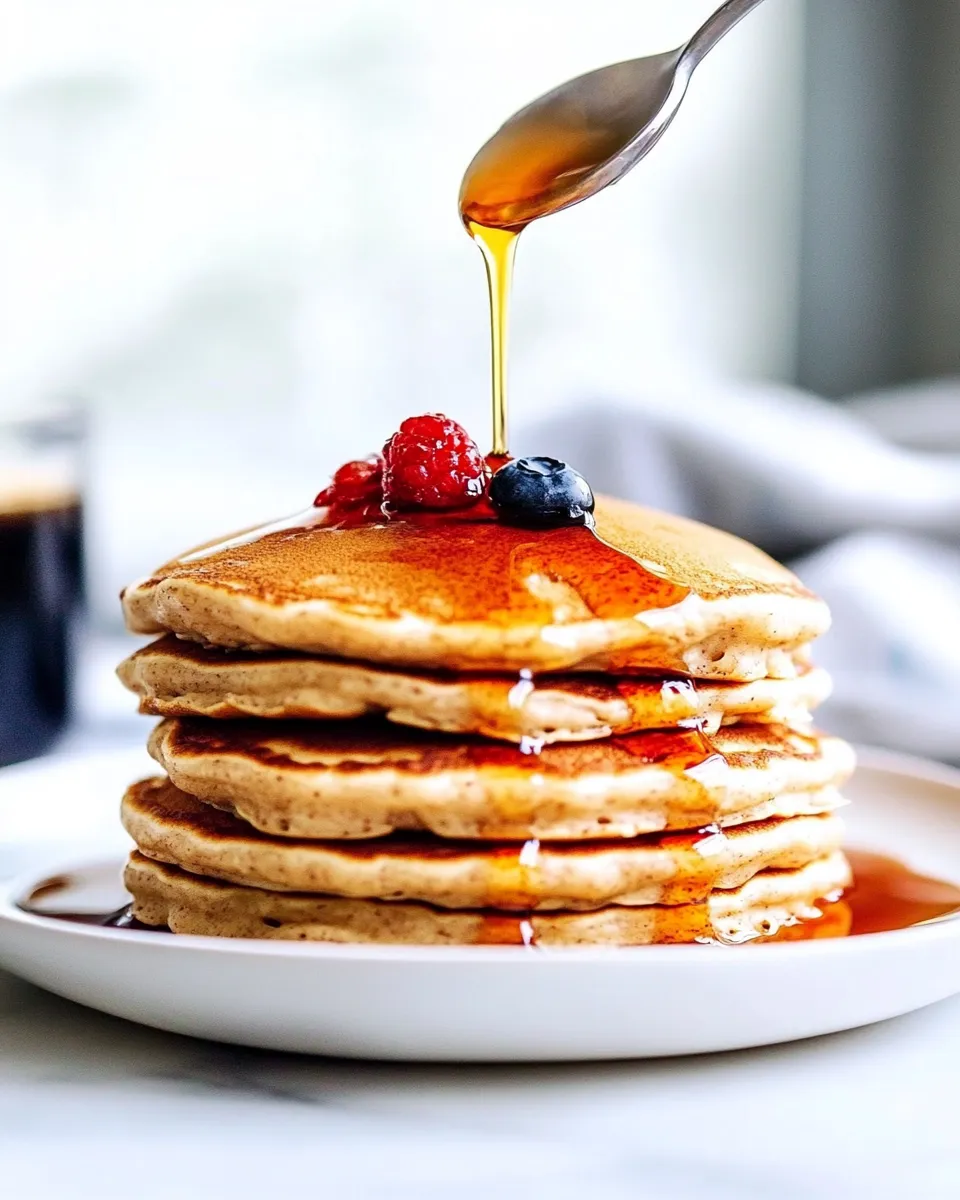
These Fluffy Whole Wheat Pancakes rely on a balance of rising agents (baking soda and baking powder) and acidity from buttermilk to get lift while keeping the crumb moist. The oil in the batter keeps the pancakes tender—no melted butter needed in the mix, which makes the batter forgiving and adaptable.
Key technique: gentle mixing. Once you combine wet and dry, stop. That’s what preserves the fluff. Heat matters too: aim for a hot skillet that isn’t screaming—medium heat that takes 3–5 minutes to preheat is ideal. Cook through without scorching by adjusting the heat as you go.
Ingredients
- 2 cups whole wheat flour — the backbone of the pancakes; use fresh, light-packed for best texture.
- 3 tablespoons granulated sugar — adds a touch of sweetness and helps browning.
- ½ teaspoon baking soda — works with the buttermilk for extra lift.
- 1½ teaspoons baking powder — gives the batter its primary rise; make sure it’s fresh.
- ½ teaspoon salt — balances flavor and enhances the other ingredients.
- 2 ¼ cups buttermilk — provides acidity and moisture; don’t skip it unless you’re swapping (see swaps below).
- 2 large eggs — bind and add structure; room temperature eggs mix more smoothly.
- ¼ cup canola or vegetable oil — keeps the pancakes tender and helps them brown without butter.
Make Fluffy Whole Wheat Pancakes: A Simple Method
- In a large bowl, whisk together 2 cups whole wheat flour, 3 tablespoons granulated sugar, ½ teaspoon baking soda, 1½ teaspoons baking powder, and ½ teaspoon salt.
- In a separate bowl, whisk together 2 ¼ cups buttermilk, 2 large eggs, and 1/4 cup canola or vegetable oil until combined.
- Pour the wet ingredients into the dry ingredients and stir gently with a spatula or spoon just until combined; small lumps are fine—do not overmix.
- Preheat a skillet or griddle over medium heat until hot (about 3–5 minutes). Lightly grease the surface with a little canola or vegetable oil (use a paper towel to spread and remove excess).
- For each pancake, pour about 1/4 cup of batter onto the hot skillet. Cook until bubbles form on the surface and the edges look set, about 2–3 minutes.
- Flip the pancakes and cook until the second side is golden brown, about 1–2 minutes more. Adjust heat as needed so they cook through without burning.
- Transfer cooked pancakes to a plate (keep warm in a low oven if desired) and serve with your favorite toppings.
Why This Recipe Belongs in Your Rotation
It’s fast. The batter comes together in minutes and cooks quickly. For busy mornings, it’s a recipe that behaves.
It’s adaptable. You can add mix-ins—or not—and it still reads as a classic pancake. Because it’s whole wheat, you get more fiber without sacrificing a tender bite. The texture is intentionally light; the buttermilk and two leaveners give it a lift that many whole-wheat recipes miss.
It’s practical. No need for melted butter in the batter, no separating eggs, and no technique that requires special equipment. If you can whisk and wait for bubbles, you’ll have good pancakes.
Vegan & Vegetarian Swaps
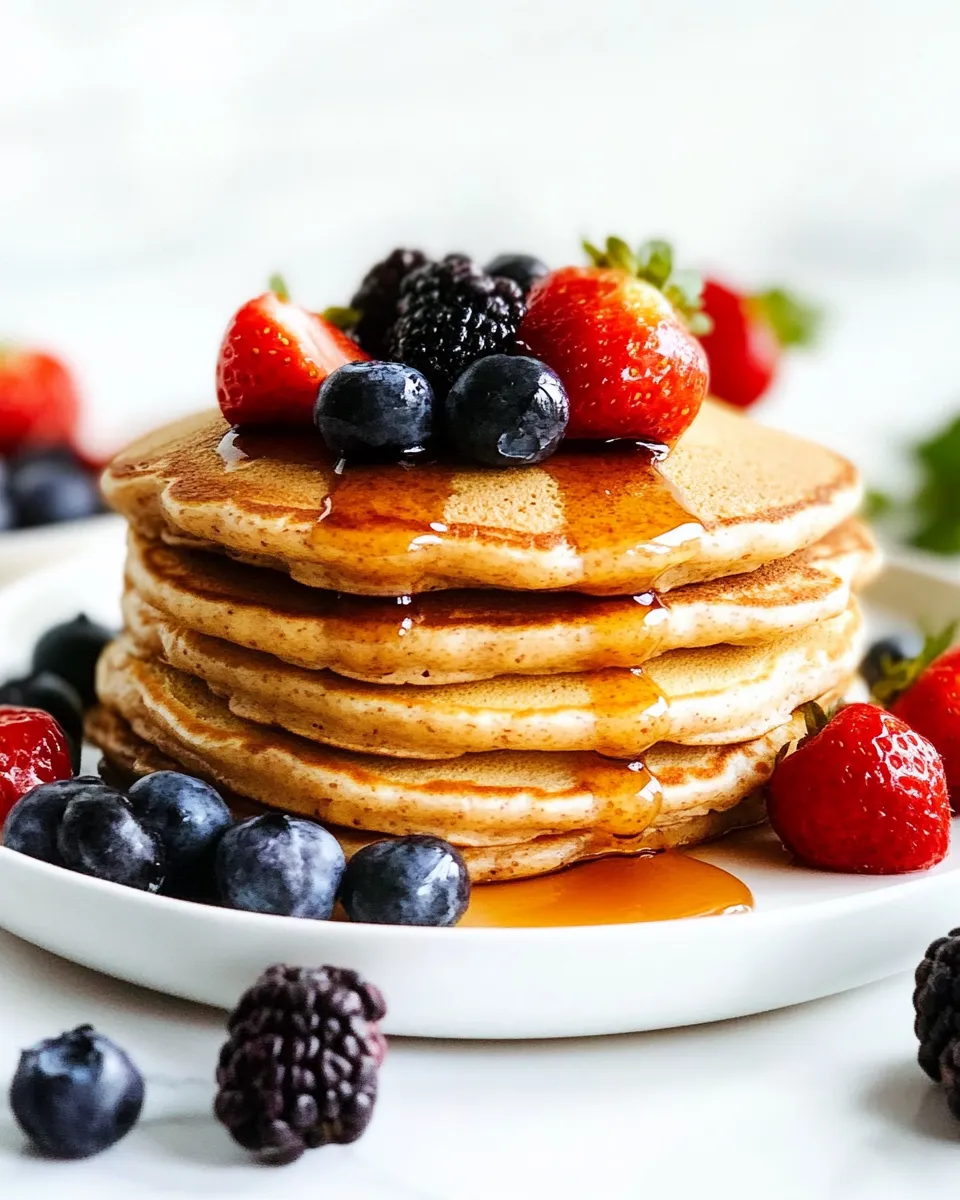
Vegan options
If you need these pancakes to be vegan, replace the buttermilk with a plant-based “buttermilk” (mix plant milk with a bit of vinegar or lemon juice and let it sit for a few minutes). Swap the two large eggs for a binding alternative like a flax or chia egg, or use a commercial egg replacer designed for baking. Use a neutral oil that’s plant-based (same measure).
Vegetarian notes
As written, this recipe is vegetarian. If you want to add more richness without meat or eggs, serve with Greek yogurt or a nut butter on the side.
Equipment Breakdown
- Large mixing bowl — for whisking the dry ingredients together comfortably.
- Medium mixing bowl — for combining wet ingredients so you can pour them into the dry in one go.
- Whisk and spatula — a whisk for the dry and wet, a spatula for folding the batter gently.
- Skillet or griddle — a heavy-bottomed skillet holds heat well; a griddle is convenient for multiple pancakes.
- Measuring cups and spoons — accurate measures matter more here than in some other quick-bread recipes.
- Paper towel — for spreading oil thinly across the pan; it keeps pancakes from frying in excess oil.
Mistakes Even Pros Make
Overmixing the batter. It’s tempting to whisk until perfectly smooth, but that produces gluten and a tight crumb. Stop when the dry streaks are mostly gone and a few lumps remain.
Cooking at too high a heat. Pancakes can burn on the outside and stay raw inside. If they’re browning too fast, lower the heat a notch. Aim for a pan that sizzles gently when batter hits it.
Pouring inconsistent pancakes. Use the same volume for each pancake—about 1/4 cup—to ensure even cooking and a predictably stacked serving.
Using old leaveners. Baking powder or soda that’s past its prime won’t give the rise you expect. If your batter seems flat, check the freshness of the powdered ingredients.
Fresh Seasonal Changes
Spring: fold in a handful of chopped strawberries or top with a bright rhubarb compote.
Summer: add blueberries to the batter for pockets of juicy sweetness, or serve with sliced peaches and a drizzle of honey.
Autumn: stir in a pinch of cinnamon and nutmeg, and top with warm apple slices or pear compote.
Winter: top with slow-roasted citrus or a spoonful of spiced cranberry sauce for a tart contrast to the nutty pancake flavor.
Behind the Recipe
I developed this version because I wanted whole wheat pancakes that didn’t feel like a compromise. Whole wheat flour brings a lovely, toasty flavor, but it needs help staying light. The pairing of buttermilk (for acidity) and both baking soda and baking powder was the solution. The oil keeps them tender and forgiving, which matters on a weekday when exact timing isn’t guaranteed.
I also wanted a method that minimized fuss: one bowl for dry, one for wet, no overthinking, consistent results. Over time, small adjustments—measuring by volume, resting the pan properly, using paper towel to control oil—made this a repeatable, reliable breakfast in my kitchen.
Best Ways to Store
Cool completely on a wire rack before storing. For short-term storage, stack pancakes between layers of parchment in an airtight container in the refrigerator for up to 3 days. To freeze, separate stacks with parchment or freeze on a baking sheet until solid, then transfer to a freezer bag for up to 2 months.
Reheat in a toaster oven or a skillet over low heat to keep edges crisp. If using a microwave, cover and reheat in short bursts to avoid rubberiness.
Quick Q&A
Can I make the batter ahead? You can mix the dry ingredients the night before and keep wet ingredients separate. If you fully mix the batter ahead, give it a gentle stir before cooking; expect a small loss in lift if it sits too long.
Why use both baking powder and baking soda? Baking powder provides general lift while baking soda reacts with the acidity in buttermilk for a quick rise and slightly open crumb.
Can I use white whole wheat flour? Yes. It will yield a slightly milder flavor but keep the same texture.
My pancakes are flat—what happened? Check your leaveners for freshness, don’t overmix, and ensure the pan is hot enough when you pour the batter.
Bring It to the Table
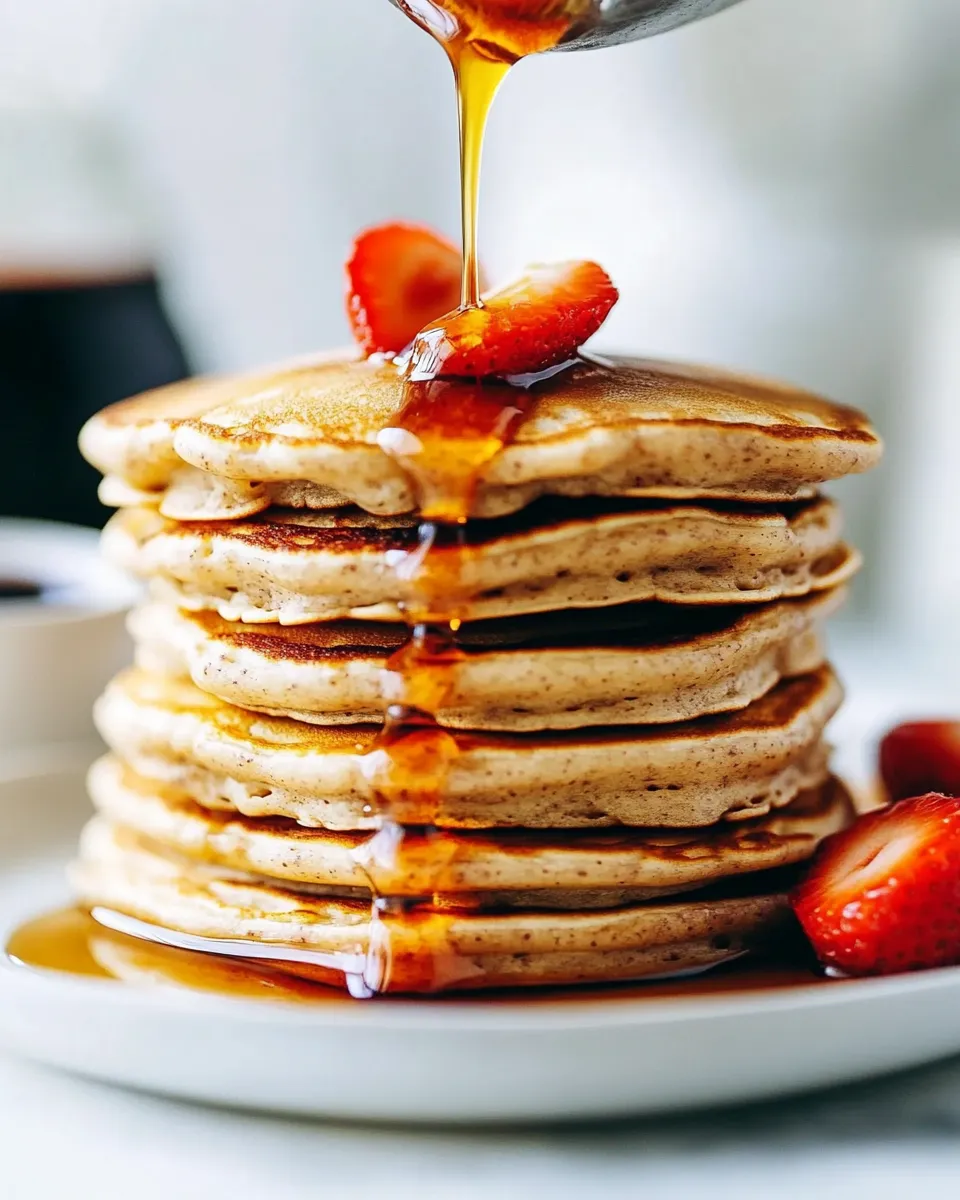
Serve these pancakes stacked and simple: butter (or a dairy-free spread) and maple syrup do the job well. For a heartier brunch, add a side of scrambled eggs, roasted fruit, or smoked salmon for contrast. If you want to dress them up, scatter toasted nuts, a spoonful of ricotta, or a dollop of yogurt with honey and lemon zest.
They keep well, reheat cleanly, and accept both sweet and savory accompaniments. Make a double batch and freeze extras for a weekday win. Practical, nourishing, and consistently good—exactly what a weekday breakfast should be.
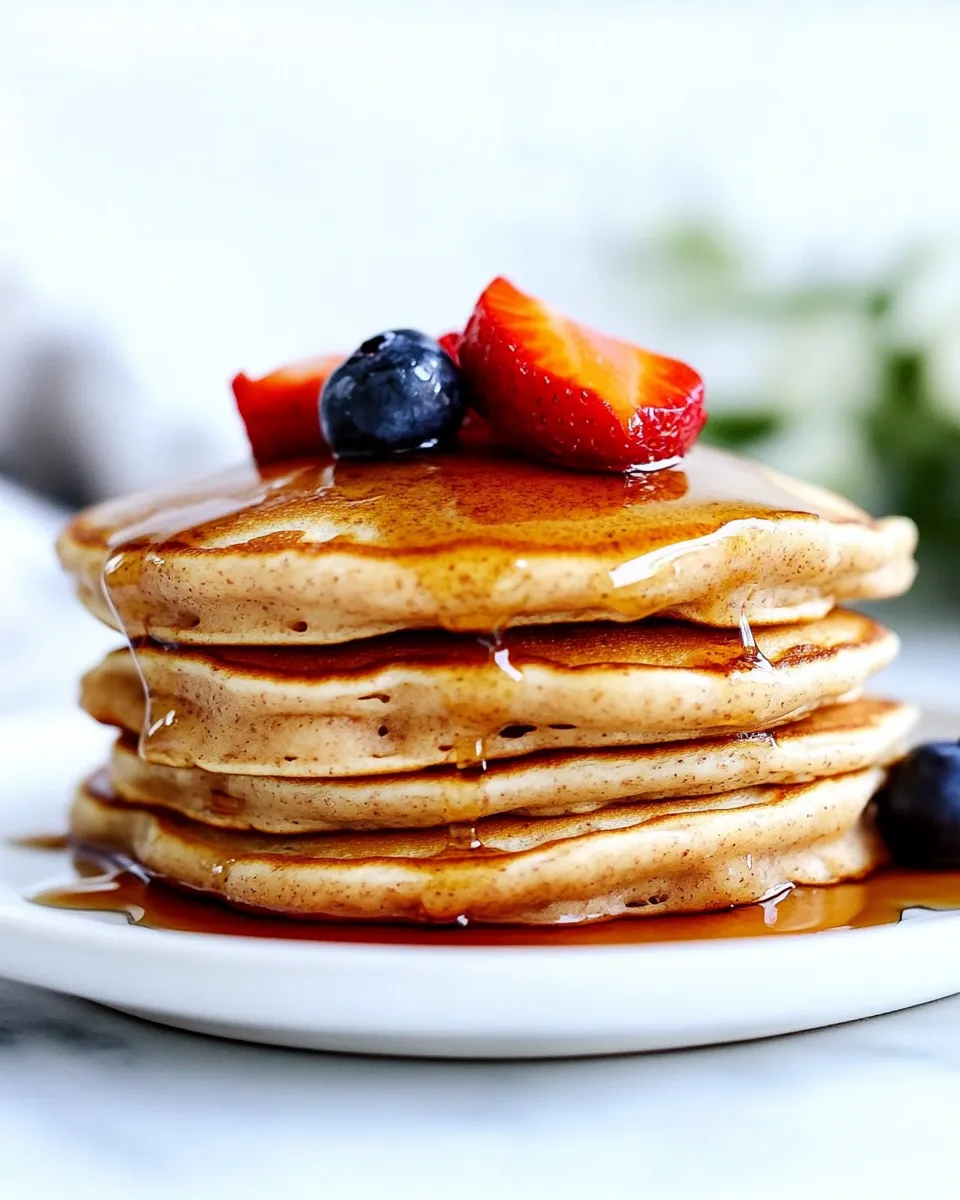
Fluffy Whole Wheat Pancakes
Equipment
- Large Bowl
- Bowl
- Skillet or griddle
- Spatula
- Spoon
- Paper Towel
- Plate
- Oven
Ingredients
Ingredients
- 2 cupswhole wheat flour
- 3 tablespoonsgranulated sugar
- 1/2 teaspoonbaking soda
- 1 1/2 teaspoonsbaking powder
- 1/2 teaspoonsalt
- 2 1/4 cupsbuttermilk
- 2 largeeggs
- 1/4 cupcanola oilor vegetable oil
Instructions
Instructions
- In a large bowl, whisk together 2 cups whole wheat flour, 3 tablespoons granulated sugar, ½ teaspoon baking soda, 1½ teaspoons baking powder, and ½ teaspoon salt.
- In a separate bowl, whisk together 2 1/4 cups buttermilk, 2 large eggs, and 1/4 cup canola or vegetable oil until combined.
- Pour the wet ingredients into the dry ingredients and stir gently with a spatula or spoon just until combined; small lumps are fine—do not overmix.
- Preheat a skillet or griddle over medium heat until hot (about 3–5 minutes). Lightly grease the surface with a little canola or vegetable oil (use a paper towel to spread and remove excess).
- For each pancake, pour about 1/4 cup of batter onto the hot skillet. Cook until bubbles form on the surface and the edges look set, about 2–3 minutes.
- Flip the pancakes and cook until the second side is golden brown, about 1–2 minutes more. Adjust heat as needed so they cook through without burning.
- Transfer cooked pancakes to a plate (keep warm in a low oven if desired) and serve with your favorite toppings.