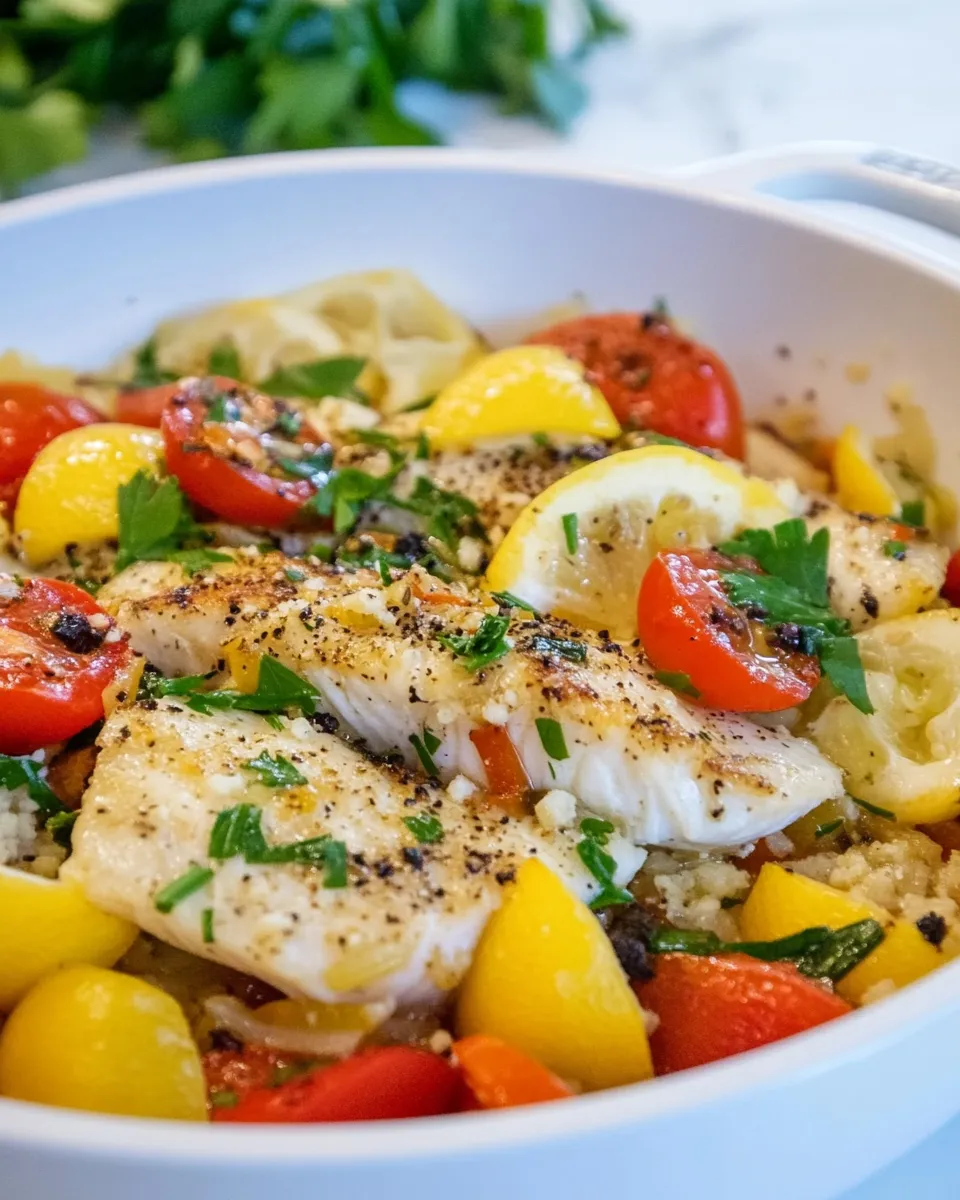
This skillet makes weeknight cooking feel deliberate and nourishing, not rushed. Flaky cod steams in a bit of water and olive oil, aromatic garlic and juicy tomatoes add depth, black olives bring a salty lift, and lemon and cilantro finish the dish bright. It’s a one-pan meal that respects good ingredients and keeps cleanup easy.
I cook this when I want something light that still feels special—no heavy batter, no long oven preheat, just attentive stovetop time. The method preserves the cod’s delicate texture and concentrates the aromatics into a glossy, spoonable sauce. If you like fish that flakes apart and tastes like the sea with a citrus nudge, this is for you.
Below I’ll walk you through the ingredients as given, exact step-by-step directions, and practical notes so you can get it right the first time. I include troubleshooting, seasonal serving ideas, and storage tips so leftovers (if any) still shine.
What Goes Into Healthy Cod Fish Skillet
Ingredients
- 2 lbs fresh cod fillets* — Main protein; pat dry so the seasoning and oil cling and the fish steams instead of stewing.
- 3 tbsp extra virgin olive oil — Flavorful fat for gentle cooking and to carry the garlic and tomato flavors.
- 2 oz water — A small amount of liquid to create steam and keep the cod moist during covered cooking.
- 3 garlic cloves cut into thick slices — Aromatic; sliced garlic softens and mellows as it cooks around the fish.
- 10 pitted black olives cut in half — Briny counterpoint to the mild cod and bright lemon.
- 1 medium tomato cut into bite-sized pieces — Adds sweetness, acidity, and a bit of sauce when it releases juices.
- 6 lemon slices — Layered among the fillets to perfume the pan and lend citrus brightness.
- small bunch of fresh cilantro** — Fresh herb for garnish; some sprigs go on while cooking for aroma, a small handful reserved for finishing.
- salt and pepper to taste — Essential seasoning; add sparingly at first and adjust after cooking.
Directions: Healthy Cod Fish Skillet
- Pat the cod fillets dry and season both sides with salt and pepper. Arrange the 2 lbs cod in a large skillet in a single layer.
- Pour 2 oz water into the skillet (around the fish) and drizzle 3 tbsp extra virgin olive oil evenly over the fillets.
- Scatter the 3 garlic cloves (sliced), the 10 halved pitted black olives, and the bite-sized pieces of 1 medium tomato over and around the fish. Tuck the 6 lemon slices among the fillets.
- From the small bunch of fresh cilantro, reserve a small handful for garnish and place the remaining cilantro sprigs on top of the fish.
- Cover the skillet and cook over medium heat for 12–15 minutes, until the cod is opaque, flakes easily with a fork, and almost no liquid remains.
- Remove the lid, take out and discard the wilted cilantro sprigs, and transfer the fillets to serving plates.
- Spoon the tomatoes, olives, garlic, lemon slices, and pan juices over the fish. Garnish with the reserved cilantro (chopped, if you like) and adjust salt and pepper to taste.
What Sets This Recipe Apart
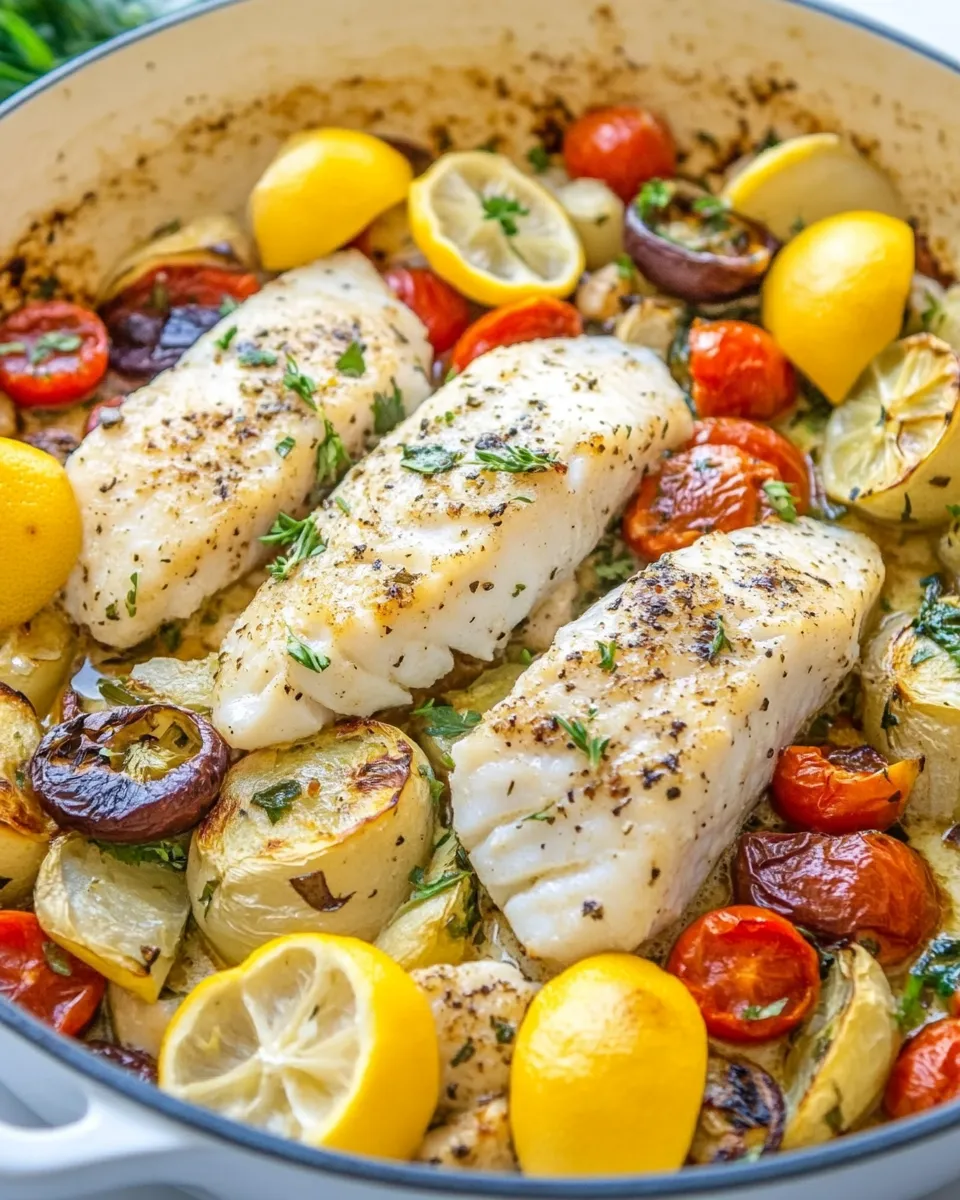
This is a deliberately light approach: the cod isn’t pan-seared hard or drowned in sauce. A small amount of water plus olive oil creates a gentle steam-and-sauté environment that keeps the fish supple. The olives supply salt without needing much extra sodium, and the lemon slices tucked in the pan give a gradual citrus perfume rather than a sharp squeeze at the end.
It’s also pantry-friendly. Aside from fresh cod and cilantro, everything else stores well and comes together fast. The assembly is forgiving: the fish cooks evenly in a single layer, and the cover traps heat so you don’t have to babysit the pan.
Low-Carb/Keto Alternatives
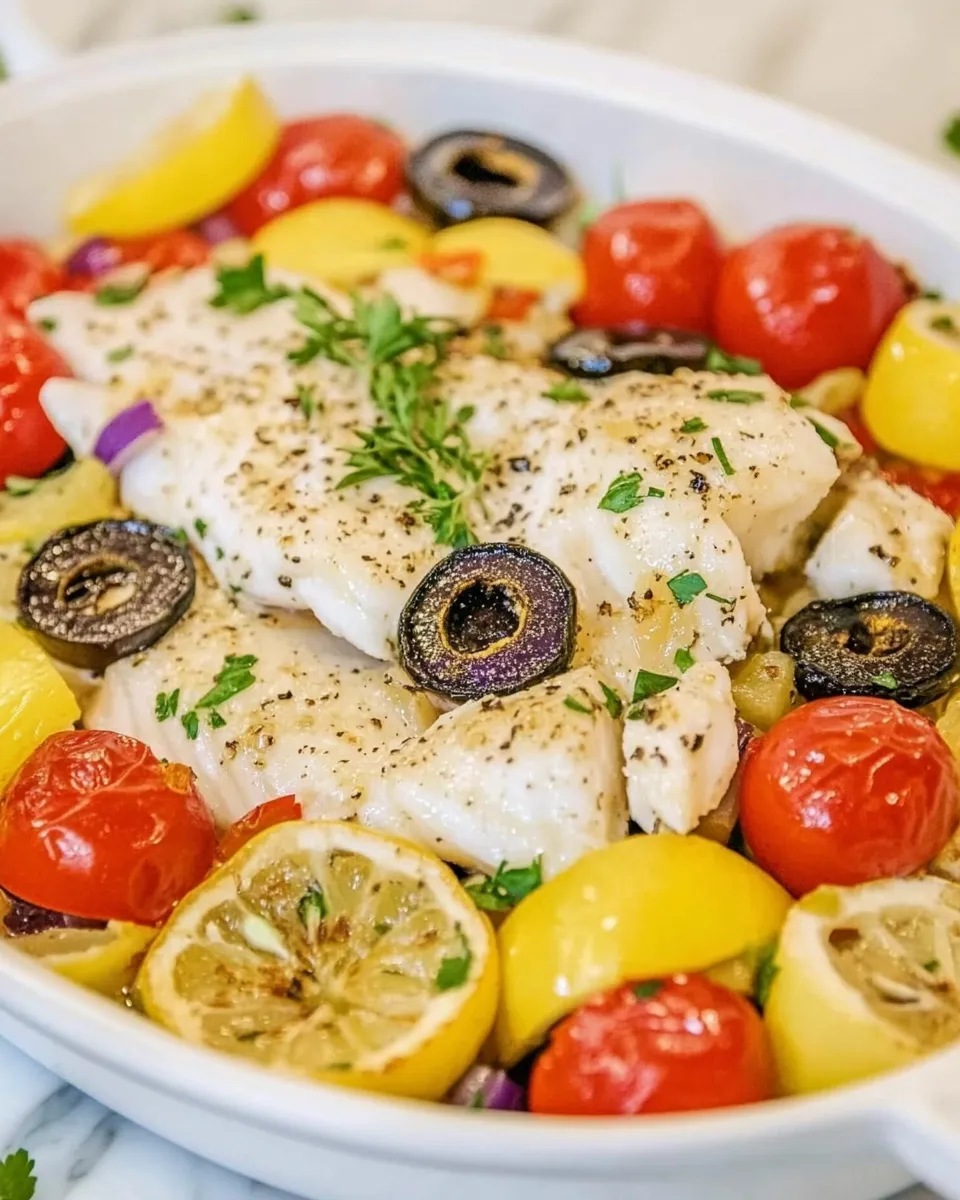
This dish is already low in carbs and well-suited to keto or low-carb diets. If you want to tighten the carbohydrate profile further or make it more substantial for a low-carb plate, consider these non-invasive swaps and serving ideas.
- Serve over a bed of lightly dressed leafy greens or sautéed spinach instead of any grain to keep the plate very low in carbs.
- Replace the medium tomato with fewer pieces or omit it if you want nearly zero carbs and a slightly cleaner pan sauce.
- Pair with cauliflower rice tossed with lemon zest and parsley if you want a rice-like base without the carbs.
Tools of the Trade
- Large skillet with a tight-fitting lid — big enough to hold 2 lbs of fillets in a single layer so they cook evenly.
- Fish spatula or thin metal spatula — for transferring delicate fillets without tearing.
- Sharp chef’s knife and cutting board — for slicing garlic, halving olives, and chopping cilantro.
- Measuring spoons and a small measuring cup — to portion 3 tbsp olive oil and 2 oz water accurately.
- Tongs or a fork — to tuck lemon slices and adjust ingredients under the lid safely.
Learn from These Mistakes
Most issues with skillet fish come from two things: overcrowding and overcooking. Overcrowding forces the fillets to steam in their own juices and can leave parts undercooked, while overcooking makes them dry and stringy. Here’s how to avoid both.
- Don’t stack fillets. Arrange in a single layer so each piece sees even heat.
- Pat the fish dry before seasoning. Moisture on the surface prevents proper contact with the oil and will make the fish stew rather than steam.
- Use the lid. This recipe relies on covered cooking; removing the lid to check too often slows the cooking and changes the liquid reduction.
- Check for doneness starting at 12 minutes. Thick fillets may need the full range, but check early so you don’t overcook.
- Reserve some cilantro for garnish. If you leave all the cilantro in while cooking, it will mostly disintegrate and lose its bright flavor.
Spring–Summer–Fall–Winter Ideas
Spring
Serve the skillet with a quick asparagus salad and new potatoes tossed with parsley. Bright herbs and tender asparagus pair beautifully with the lemon and tomatoes.
Summer
Go lighter: serve the fish over a chilled cucumber and tomato salad dressed simply with olive oil and lemon. The warm fish over cool veggies makes a great contrast.
Fall
Introduce roasted root vegetables on the side—carrots and parsnips carry the olives and garlic well. A small drizzle of pan jus from the skillet over the roots ties flavors together.
Winter
Make it cozy: serve over mashed cauliflower or creamy polenta and add a handful of wilted greens to the plate to absorb the pan juices.
Recipe Notes & Chef’s Commentary
Use fresh cod for the best texture; if you must use previously frozen fillets, thaw completely and pat very dry. Season lightly at the start—because the olives are briny—and taste the pan juices near the end to adjust salt. The lemon slices tucked into the pan will soften and release their oils as they cook; squeeze the slices over the fillets at the table if you want more zip.
Cilantro behaves differently than parsley: it wilts quickly and offers a citrusy lift, so only put a few sprigs on during cooking for aromatics and save the majority for finishing. If you prefer parsley, swap it in at the end for a cleaner herbaceous note.
If the pan has more liquid than you’d like at the end, remove the lid for the last minute or two and let the heat reduce the juices slightly—this concentrates flavor without drying the fish.
Keep-It-Fresh Plan
Refrigerate any leftovers in an airtight container within two hours of cooking. Stored properly, the skillet components will keep for 2–3 days. Reheat gently over low heat in a covered skillet with a splash of water or oil to regain some moisture. Avoid high heat in the microwave—this will dry out the cod.
To freeze: place cooled fillets and the pan mix in a freezer-safe container for up to 2 months. Thaw overnight in the refrigerator and reheat gently. Note: texture of thawed fish will be slightly softer than fresh.
Reader Questions
Q: Can I use a different white fish?
A: Yes. Most firm white fish like halibut, haddock, or sea bass will work, but adjust the cooking time if the fillets are much thicker or thinner than cod.
Q: What if I don’t have black olives?
A: Green olives or capers provide a similarly salty contrast, though they change the flavor profile. If using capers, reduce any extra salt.
Q: Can I bake this instead?
A: You can: arrange everything in an ovenproof skillet or baking dish and bake at 375°F (190°C) for about 12–15 minutes, depending on thickness. The stovetop method gives a slightly more concentrated pan sauce and a bit more control over moisture.
Q: How will I know when the cod is done?
A: The flesh should be opaque and flake easily with a fork. There should be almost no liquid left in the pan as directed. Start checking at 12 minutes and go up to 15 if needed.
The Last Word
This Healthy Cod Fish Skillet is honest, quick, and forgiving. It highlights the cod rather than masking it—olive oil and garlic add richness, olives add salt and character, and lemon and cilantro keep the finish bright. Follow the precise ingredient list and steps above for reliable results, then tweak garnishes and sides to fit the season and your appetite. It’s a simple way to eat well any night of the week.
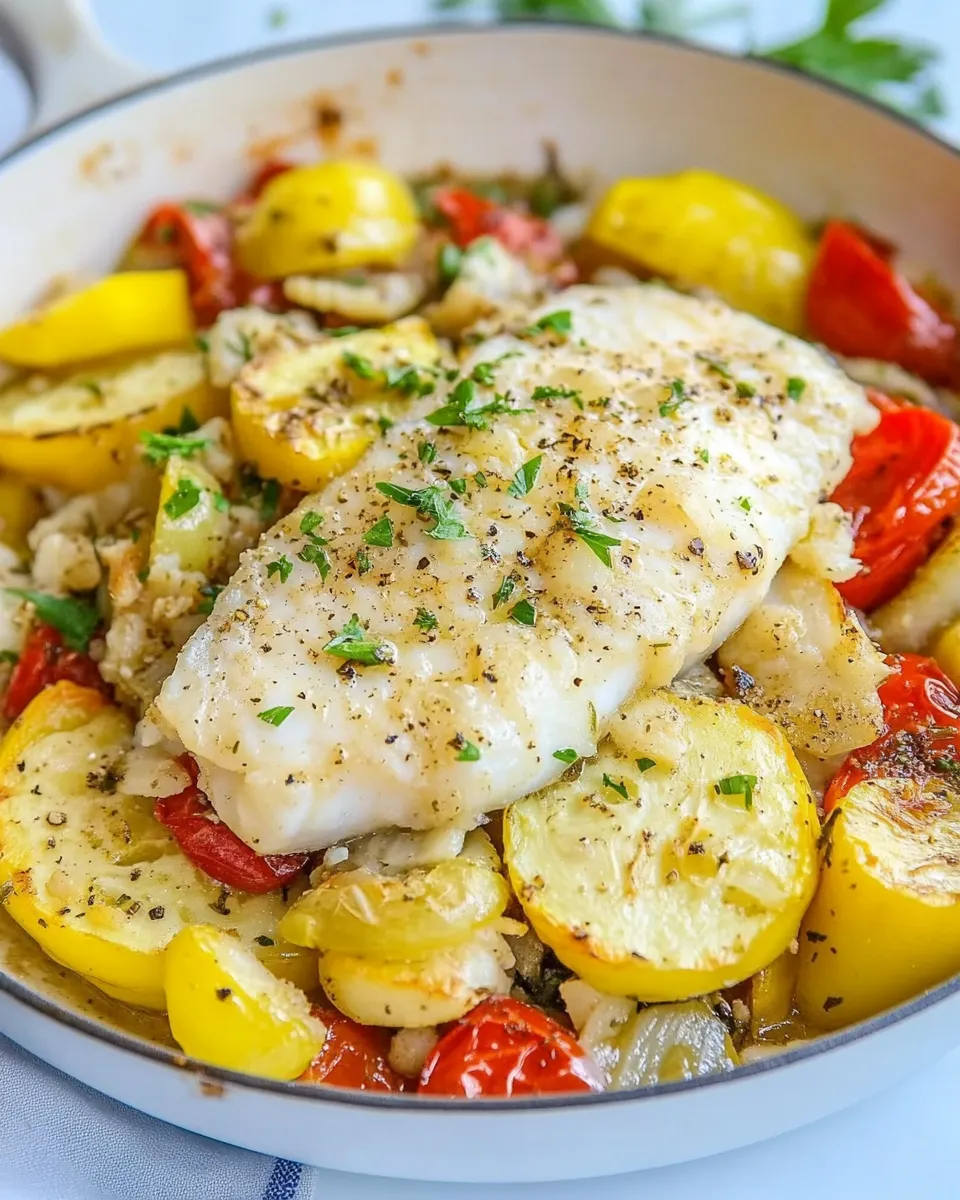
Healthy Cod Fish Skillet
Equipment
- Large Skillet
- Lid
Ingredients
Ingredients
- 2 lbs.fresh cod fillets*
- 3 tbsp.extra virgin olive oil
- 2 oz.water
- 3 garlic clovescut into thick slices
- 10 pitted black olivescut in half
- 1 medium tomatocut into bite-sized pieces
- 6 lemon slices
- small bunch of fresh cilantro**
- salt and pepperto taste
Instructions
Instructions
- Pat the cod fillets dry and season both sides with salt and pepper. Arrange the 2 lbs cod in a large skillet in a single layer.
- Pour 2 oz water into the skillet (around the fish) and drizzle 3 tbsp extra virgin olive oil evenly over the fillets.
- Scatter the 3 garlic cloves (sliced), the 10 halved pitted black olives, and the bite-sized pieces of 1 medium tomato over and around the fish. Tuck the 6 lemon slices among the fillets.
- From the small bunch of fresh cilantro, reserve a small handful for garnish and place the remaining cilantro sprigs on top of the fish.
- Cover the skillet and cook over medium heat for 12–15 minutes, until the cod is opaque, flakes easily with a fork, and almost no liquid remains.
- Remove the lid, take out and discard the wilted cilantro sprigs, and transfer the fillets to serving plates.
- Spoon the tomatoes, olives, garlic, lemon slices, and pan juices over the fish. Garnish with the reserved cilantro (chopped, if you like) and adjust salt and pepper to taste.
Notes
*You can use frozen fish in this recipe. Just increase the cooking time by 5 minutes.
**You can substitute cilantro for parsley, if desired.