Bananas are one of those fruits I always buy in optimistic numbers and then scramble to use before they pass their prime. Freezing them is the simplest way to rescue perfectly good fruit and turn it into a workhorse ingredient for smoothies, baking, and “nice cream.” It takes a little upfront work, but it saves time and cuts down on food waste.
In this post I’ll walk you through a tiny, dependable method that yields individual banana pieces you can grab straight from the freezer. No clumps. No melting into a frozen blob. Just ready-to-use frozen banana slices that blend smoothly every time.
I’ll also cover the gear that makes the process easier, common mistakes to avoid, and how I tested the method so you don’t have to. Practical tips only — nothing fancy, just a reliable way to keep bananas useful longer.
What Goes Into Freeze Bananas
Ingredients
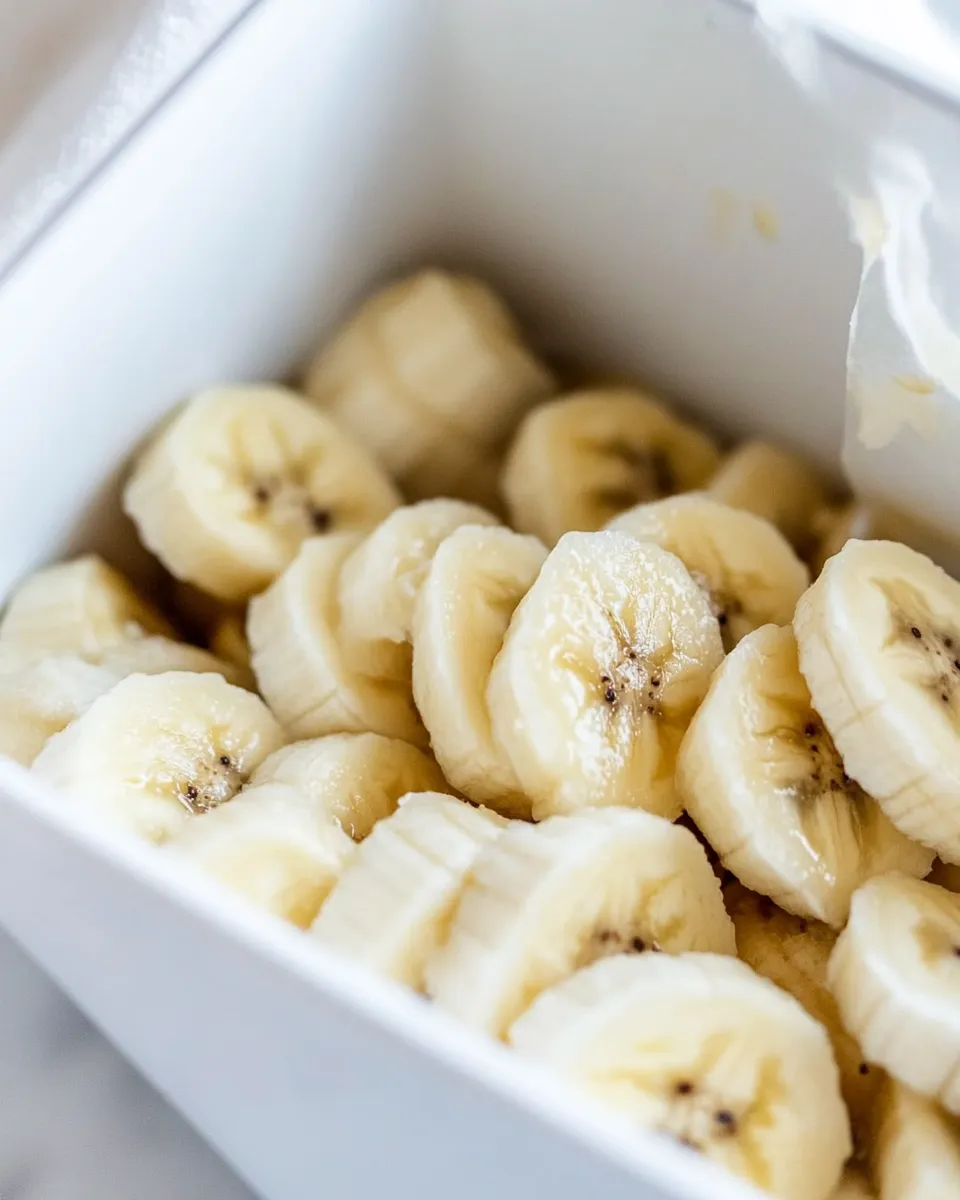
- 3ripebananas(with black spots on the skin for best flavor) — ripe bananas with brown/black spots are sweeter and give the best flavor and texture when frozen; peel before slicing.
From Start to Finish: Freeze Bananas
- Peel all 3 ripe bananas (best if they have black spots on the skin).
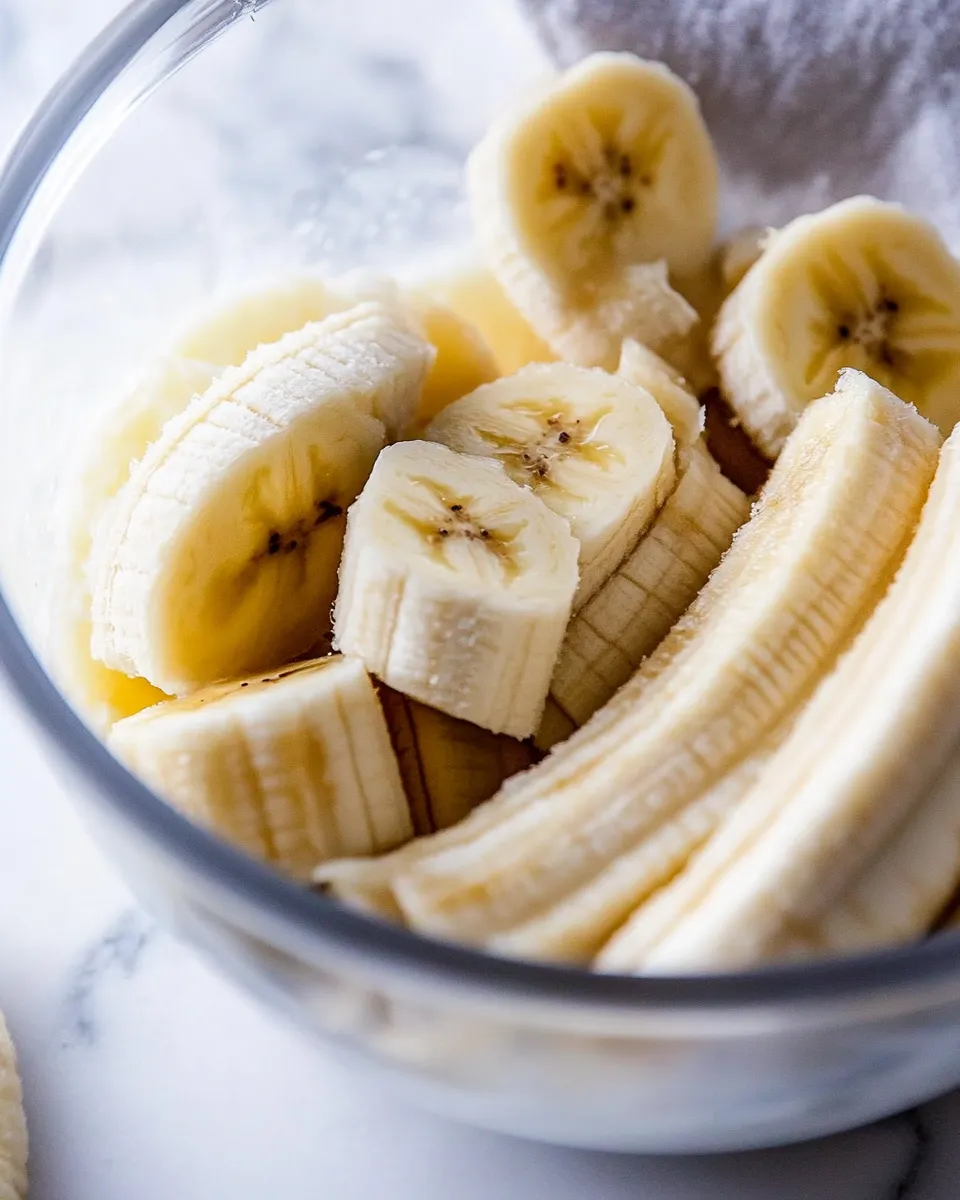
- Slice the bananas into roughly 1-inch chunks.
- Line a large baking sheet with parchment paper and arrange the banana slices in a single layer without touching so they won’t stick together.
- Place the baking sheet flat in the freezer and freeze until the slices are firm, about 1 to 2 hours. If a baking sheet won’t fit flat in your freezer, use a plate instead.
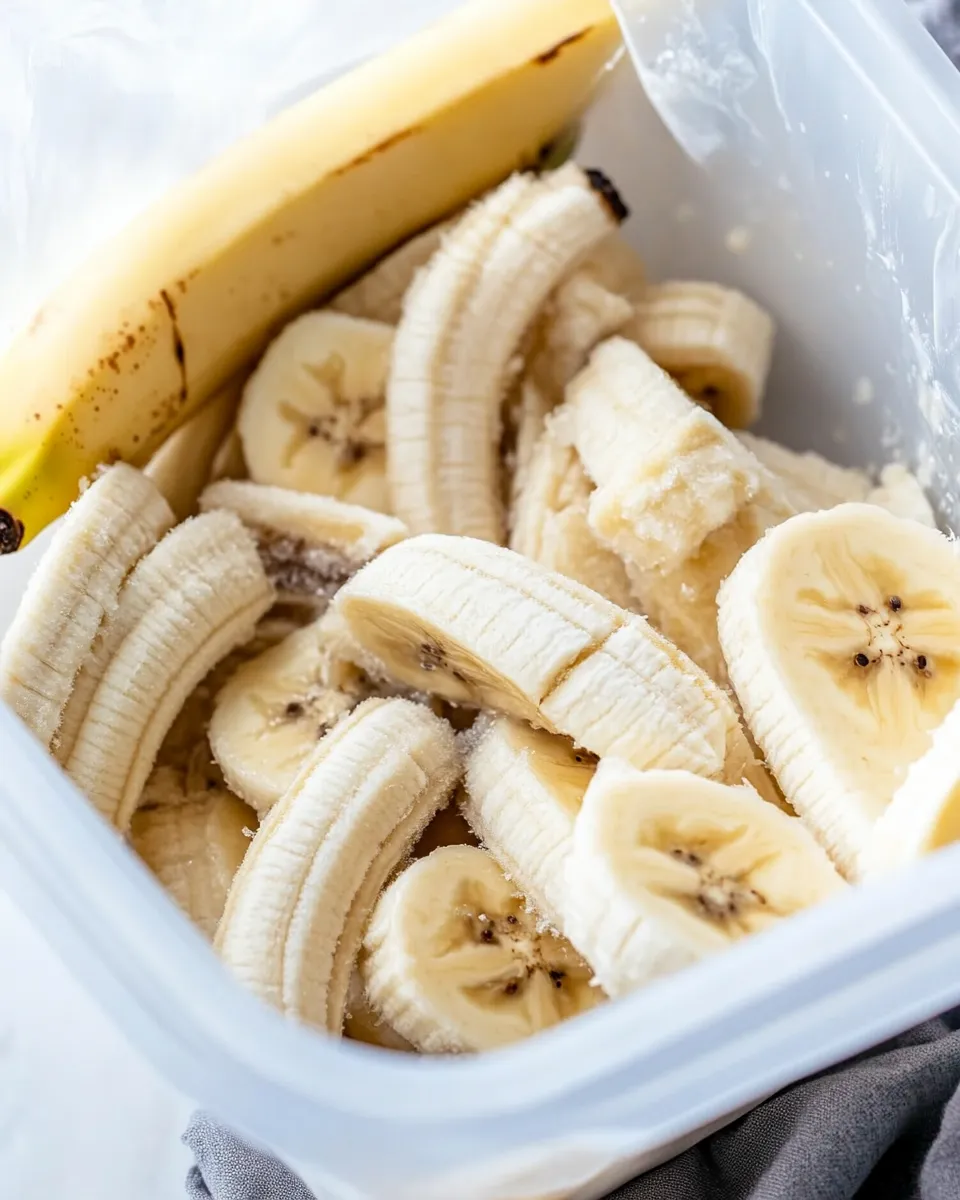
- Transfer the frozen banana slices to a large airtight container, leaving space so the pieces aren’t crushed, and secure the lid.
- Label the container with the date and store in the freezer for up to 3 months; use the frozen bananas as needed for smoothies, nice cream, and other recipes.
Why You’ll Love This Recipe
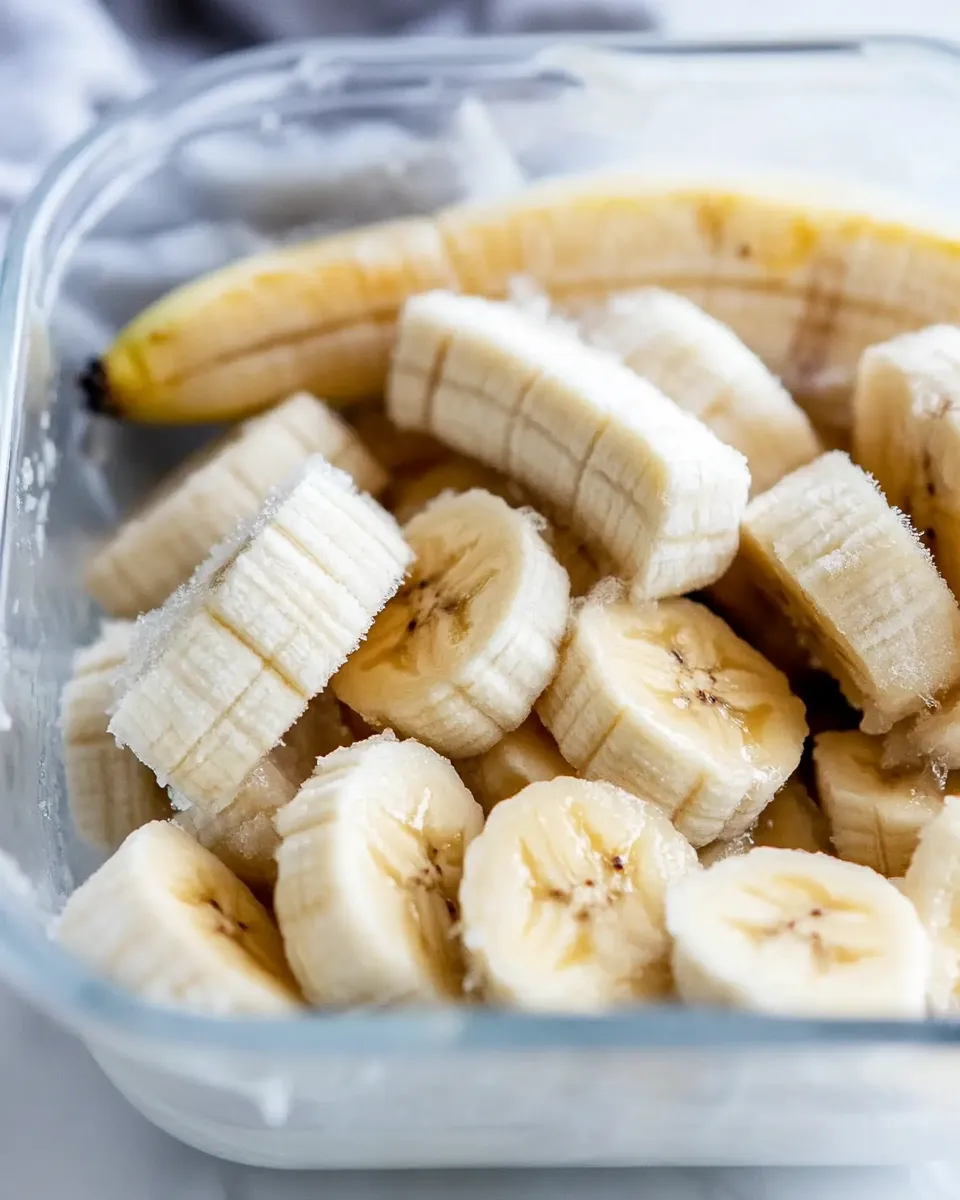
This method is honest and practical. It requires almost no prep time and uses tools most kitchens already have. You get evenly frozen pieces that don’t clump together, which makes portioning predictable and blending smooth.
Frozen bananas are extremely versatile. Add them to morning smoothies for creaminess without ice; mash them for quick banana bread; or pulse them for a one-ingredient “nice cream” dessert. Freezing preserves their sweetness and flavor, so you aren’t chasing texture or extra sugars later.
Finally, it’s a waste-fighting habit. A simple 10-minute routine turns bananas that might otherwise be tossed into something useful and delicious.
What to Use Instead
- Fresh bananas — If you plan to eat them within a day or two, use fresh instead of freezing.
- Mash and freeze in ice cube trays — For baking, you can mash ripe bananas and freeze in measured portions in trays, then transfer to a container.
- Purchase pre-frozen bananas — Some grocery stores sell frozen banana slices or chunks if you prefer to skip prep.
Setup & Equipment
You don’t need fancy gadgets. Here’s what I use every time:
- Large baking sheet — A rimless or shallow sheet gives even airflow and a flat surface so slices freeze quickly.
- Parchment paper — Prevents sticking and makes cleanup effortless.
- Sharp knife — For neat, even slices so pieces freeze at the same rate.
- Airtight container or freezer bag — Choose a rigid container if you’re worried about crushing; a heavy-duty freezer bag also works if you remove excess air.
- Freezer space — Lay the sheet flat. If your freezer is cramped, use a dinner plate as suggested in the instructions.
Troubles You Can Avoid
There are a few simple mistakes that turn a five-minute job into a sticky mess. Here’s what to watch for and how to fix it:
- Banana slices sticking together — Don’t skip the single-layer step. If pieces touch, they fuse into a lump when frozen. Flash-freezing on a sheet fixes this.
- Freezer burn — Use an airtight container and remove as much air as possible. Label the container and eat within the recommended time.
- Crushed or flattened slices — Leave a little headspace in the container and avoid packing heavy items on top; choose a rigid container if transporting.
- Soggy thawed bananas — Thawed frozen bananas will be soft and mushy; that’s normal. Use them for smoothies, baking, or ice cream alternatives rather than eating like a fresh banana.
Better-for-You Options
If you’re trying to keep things as natural and healthy as possible, this frozen-banana method is already a good fit. No syrups, no stabilizers, no added sugar — just fruit.
- No-sugar approach — Freezing the bananas plain keeps added sugars out of your smoothies and desserts.
- Portion control — Freeze on a sheet and then pack into small containers so you can pull just the amount you need for a single smoothie or snack.
- Whole-food boost — Frozen banana slices add fiber, potassium, and natural sweetness to recipes without processed ingredients.
What I Learned Testing
I tried this method with varying ripeness levels, freezer types, and container styles. The sweet spot is obvious: bananas with brown/black spots freeze into the creamiest texture when blended. Slightly green bananas are firmer and less sweet, and they don’t sweeten up after freezing.
Parchment paper is a small but critical detail. It prevents the slices from sticking to the sheet, which makes transfer painless. I also learned that a one- to two-hour flash-freeze removes the “stickiness” and keeps slices separate when you move them to storage.
Different freezers perform differently. A quick-freeze drawer or a deep freezer can speed things up, but the basic method works in any standard home freezer if you give it the time stated in the instructions.
Storing, Freezing & Reheating
Store frozen banana slices in an airtight container and label it with the date; the guideline in the method is up to 3 months. They’re safe beyond that if well-sealed, but flavor and texture can degrade.
Use frozen slices straight from the freezer for smoothies or blend into “nice cream” without thawing. For baking, you can thaw the amount you need on the counter or in the fridge; mashed thawed bananas work great in muffins and quick breads. Remember that thawed banana is very soft and watery — drain excess liquid if a recipe needs a firmer texture.
Reheating isn’t typical for frozen bananas. If you need warm mashed banana (for example, in certain baking recipes), thaw and microwave in short bursts, stirring between intervals, or warm gently in a saucepan.
Questions People Ask
Below are short answers to common questions I get when I post about freezing bananas.
- Can I freeze bananas with the peel on? Yes, you can, but I prefer peeling first. The peel can be harder to remove when frozen, and the flesh chills more evenly without it.
- How long do frozen bananas last? Store them up to 3 months for best quality. Properly sealed, they may last longer but lose flavor over time.
- Do I need to add lemon juice to prevent browning? No. Browning doesn’t matter once frozen — the flavor and texture are what count. Adding acid can change the banana’s taste for some uses.
- Can I refreeze thawed banana slices? It’s not recommended. Thawed banana becomes soft and wet; refreezing results in poor texture. Use thawed bananas in baking or blended recipes.
- Is there a way to portion for single smoothies? Yes. Freeze on the sheet, then pack measured portions (e.g., 1 to 1½ cups) into smaller containers or bags so you can grab one serving at a time.
Ready to Cook?
Freezing bananas is a tiny habit that pays off. With three ripe bananas and a sheet pan, you create a freezer stash that makes breakfasts, snacks, and desserts easier and faster. Follow the simple flash-freeze step to keep pieces separate, store them in an airtight container, and label with the date.
Give it a try next time you spot a bunch getting too ripe. The payoff is immediate — fewer leftovers, richer smoothies, and a freezer full of options. If you have a favorite banana use (banana pancakes? muffins?), try swapping in one or two frozen slices next time to see how they perform. Happy freezing.
How to Freeze Bananas
Equipment
- Baking Sheet
- Parchment Paper
- Freezer
- Plate
- Airtight container
- label or marker
Ingredients
Ingredients
- 3 ripebananas with black spots on the skin for best flavor
Instructions
Instructions
- Peel all 3 ripe bananas (best if they have black spots on the skin).
- Slice the bananas into roughly 1-inch chunks.
- Line a large baking sheet with parchment paper and arrange the banana slices in a single layer without touching so they won't stick together.
- Place the baking sheet flat in the freezer and freeze until the slices are firm, about 1 to 2 hours. If a baking sheet won't fit flat in your freezer, use a plate instead.
- Transfer the frozen banana slices to a large airtight container, leaving space so the pieces aren't crushed, and secure the lid.
- Label the container with the date and store in the freezer for up to 3 months; use the frozen bananas as needed for smoothies, nice cream, and other recipes.
Notes
Nutrition information is an estimate for 1 banana. This information is automatically calculated, and is just an estimate, not a guarantee.
Prevent Browning:
Frozen bananas will turn brown over time if they are not in a tightly sealed container. I learned this because my kids aren’t very disciplined about securing lids when they help themselves, and suddenly, all of our bananas were brown because the lids weren’t on tightly. When the lids are on securely, frozen bananas keep their light yellow color for at least 3 months.
Wondering how to use a frozen banana?
Make my
Peanut Butter Banana Smoothie
or
Banana Ice Cream
with frozen ones, or try
Banana Oatmeal Pancakes
or
Baked Banana Oatmeal
using thawed frozen banana.