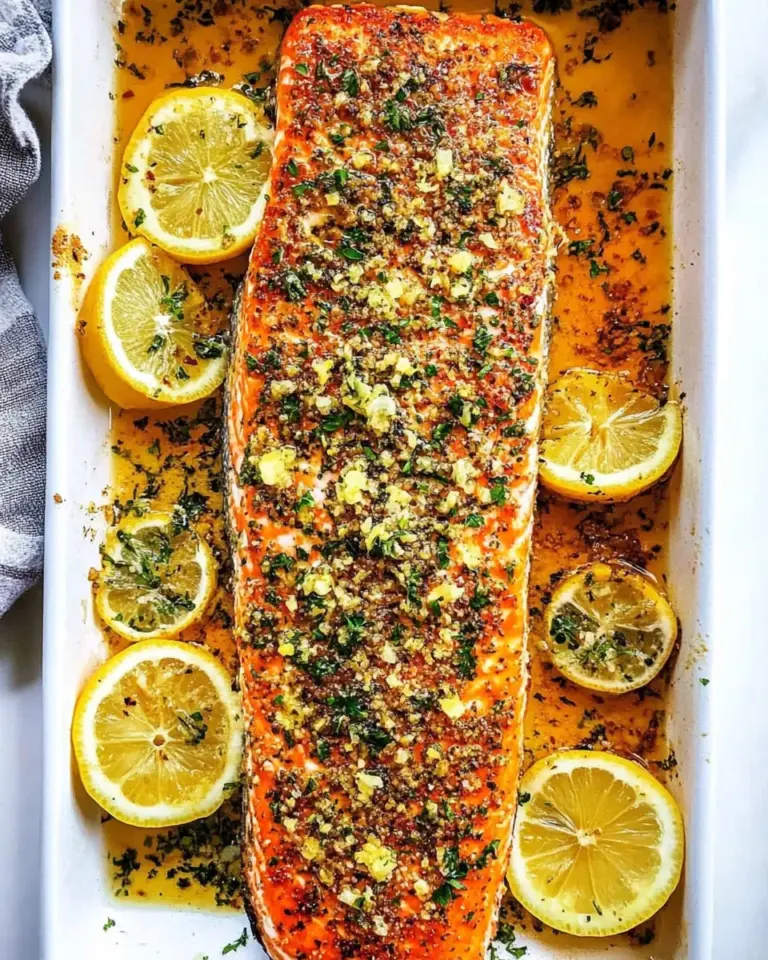
Bright, sticky, and irresistibly simple, this Pan-seared Orange Honey Salmon makes weeknight dinners feel special. The glaze is a perfect balance of sweet honey, bright citrus, and a touch of soy for savory depth. A whisper of ginger and garlic rounds it out so every bite sings. Serve it over a generous cup of quinoa salad for a balanced plate that’s colorful, filling, and ready in under 30 minutes.
Why this recipe works
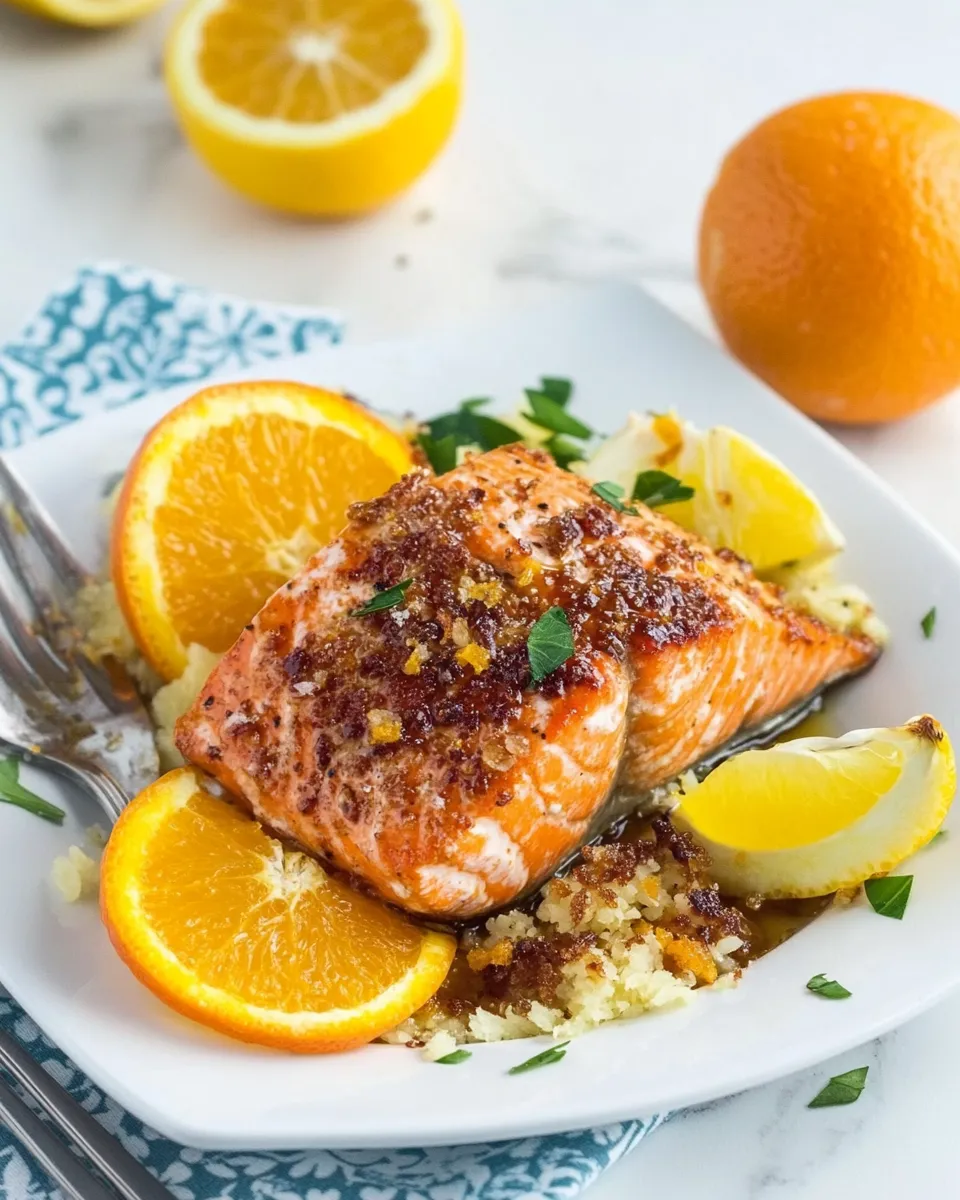
This Pan-seared Orange Honey Salmon is all about contrast: crisp, caramelized edges meet tender, flaky fish; a glossy, citrus-sweet glaze plays against savory soy and a faint warmth from fresh ginger and garlic. Using a hot pan ensures the salmon gets a lovely sear while the quick glaze reduces just enough to cling to the fillet. The quinoa salad adds a cool, nutty counterpoint that soaks up extra sauce and keeps the meal bright and satisfying.
Ingredients
- 300 g fresh salmon fillet
- 1 teaspoon za’atar, optional
- sea salt and pepper
- 1 teaspoon organic honey
- 1 teaspoon soy sauce, I use GF soy sauce
- juice of 1 orange
- 1 teaspoon orange zest
- 1 teaspoon fresh ginger, grated
- 1 teaspoon garlic clove, grated
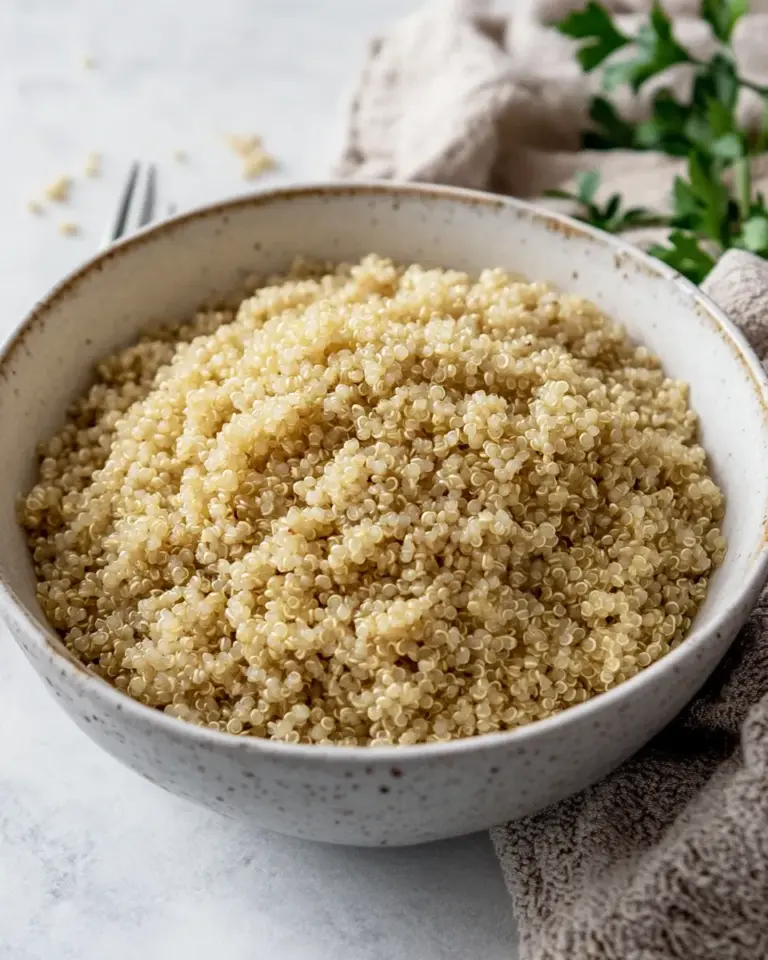
- a large cup of Quinoa Salad
Equipment
- Large nonstick or stainless-steel skillet
- Tongs or fish spatula
- Small bowl for the glaze
- Microplane or fine grater for zest and ginger
- Measuring spoons and a citrus juicer
- Plate lined with paper towel for resting
Prep notes
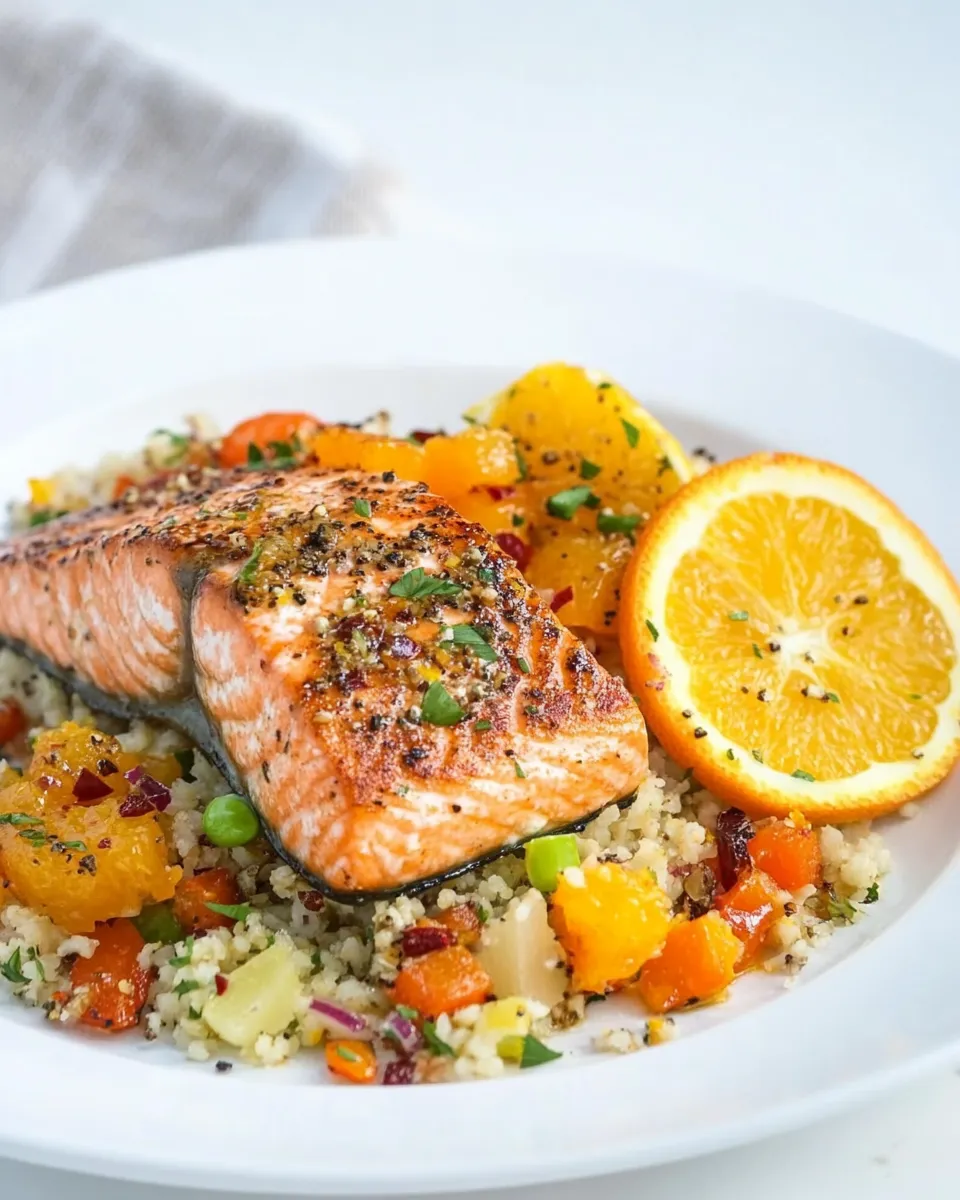
Bring the salmon to room temperature for about 10–15 minutes before cooking so it sears evenly. Pat the fillet dry with paper towel; moisture is the enemy of a good crust. If your salmon has skin, you can leave it on for crisp texture—just make sure the skin is dry. If you like a hint of herbal warmth, sprinkle the optional za’atar on the fish before you season with salt and pepper.
Flavor profile and serving ideas
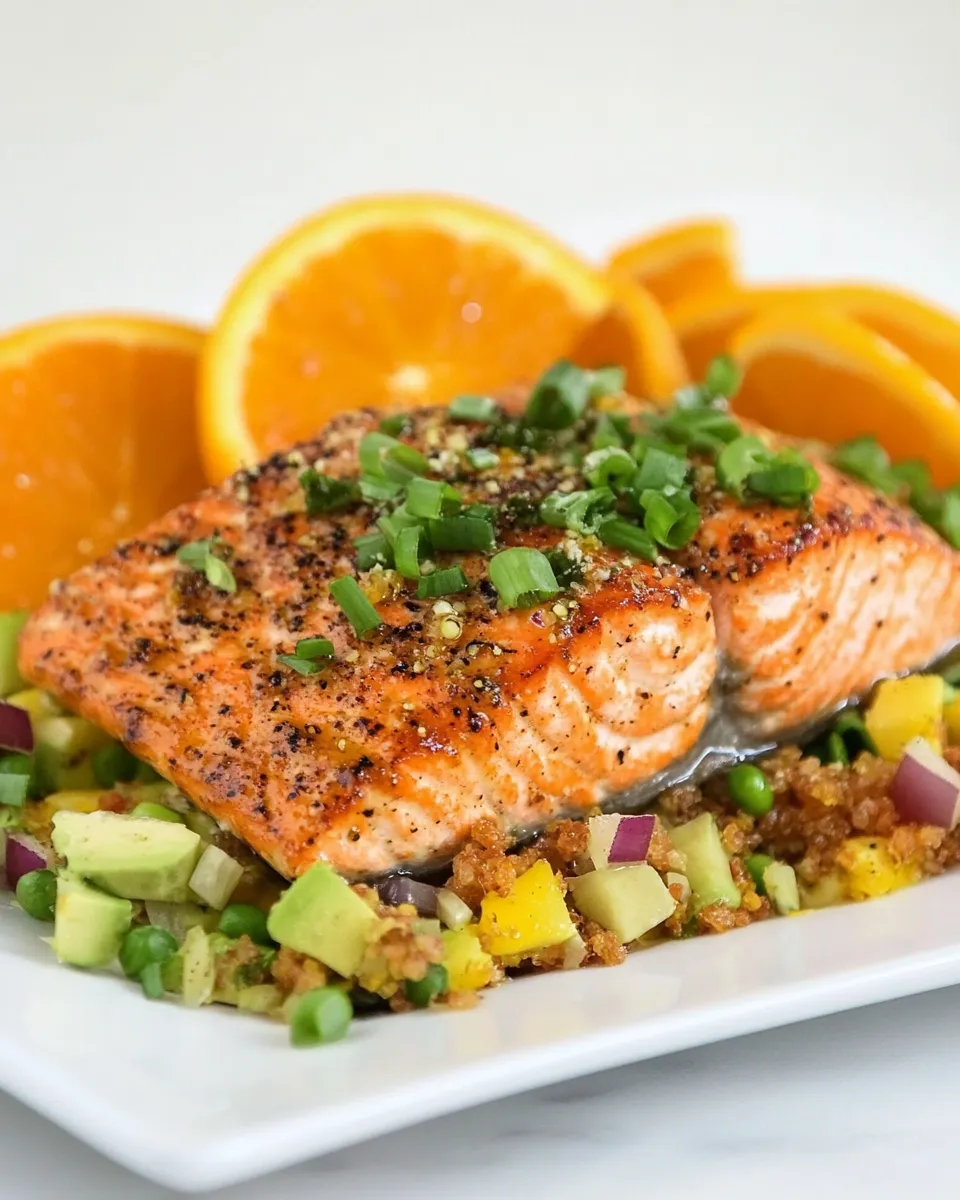
This Pan-seared Orange Honey Salmon balances sweet and savory with citrus brightness. The light ginger and garlic give it an aromatic backbone without overpowering the salmon. Serve it atop a large cup of quinoa salad to add texture, fiber, and a pleasant nutty flavor. Garnish with extra orange zest, a drizzle of the pan glaze, and a few fresh herbs if you like—parsley, cilantro, or dill all work beautifully.
Step-by-step instructions
Follow these clear steps to cook the salmon and finish the sauce. The original directions have been rewritten into a concise, easy-to-follow sequence while keeping ingredient amounts unchanged and the order intact.
- Prepare the salmon: Pat the 300 g fresh salmon fillet dry with paper towel. If using, sprinkle 1 teaspoon za’atar evenly over the fillet. Season both sides with sea salt and pepper to taste. Let the seasoned fillet rest at room temperature for 10–15 minutes while you prepare the glaze and heat the pan.
- Make the glaze mixture: In a small bowl combine 1 teaspoon organic honey, 1 teaspoon soy sauce (GF if you use it), the juice of 1 orange, 1 teaspoon orange zest, 1 teaspoon fresh ginger (grated), and 1 teaspoon garlic clove (grated). Stir well until the honey is mostly dissolved into the liquid. Set aside.
- Heat the skillet: Place a large nonstick or stainless-steel skillet over medium-high heat and let it get hot for a minute or two. A properly heated pan is essential for a good sear. If your pan requires oil for nonstick purposes, add a small amount now and let it shimmer—but you can often rely on the fish’s natural oils.
- Sear the salmon: Lay the salmon fillet in the hot skillet, presentation side down first (skin side down if the skin is on), and press gently with a spatula for a few seconds to ensure full contact with the pan. Cook for 3–4 minutes without moving it, until a golden-brown crust forms.
- Flip and finish cooking: Carefully flip the fillet and reduce the heat to medium. Pour the prepared glaze into the pan around the salmon, not directly over the top to avoid splashing. Spoon a little glaze over the top of the fillet. Cook for an additional 2–4 minutes, spooning the glaze over the salmon occasionally, until the fish reaches your desired doneness (an internal temperature of about 50–55°C / 122–131°F for medium-rare to medium). The glaze should thicken slightly and become glossy.
- Rest the salmon: Transfer the salmon to a plate lined with paper towel and let it rest for two minutes. Resting allows the juices to redistribute and the glaze to set slightly.
- Warm the quinoa salad (optional): If you prefer a warm base, gently warm the large cup of Quinoa Salad in a microwave or in a small pan just until heated through. Otherwise, serve the quinoa salad at room temperature or chilled for a refreshing contrast.
- Plate and finish: Place the warmed or room-temperature quinoa salad on your plate. Set the rested Pan-seared Orange Honey Salmon on top. Spoon any remaining pan glaze over the fillet and around the quinoa. Garnish with additional orange zest or fresh herbs if desired.
- Serve immediately: Enjoy the dish while the salmon is still slightly warm and the glaze is glossy. The quinoa salad will soak up any extra sauce, making each bite bright and satisfying.
Timing
- Preparation: 10 minutes
- Cooking: 6–8 minutes
- Total time: about 20 minutes
Notes and tips
- Salmon thickness matters: Thicker fillets may need an extra minute or two on the second side. Adjust based on thickness for perfect doneness.
- Control the glaze: If your glaze reduces too quickly and begins to burn, lower the heat. The goal is a shiny, slightly thickened sauce—burnt glaze will taste bitter.
- Fresh ingredients: Freshly squeezed orange juice and freshly grated ginger and garlic make a noticeable difference. Pre-grated alternatives work in a pinch but lack brightness.
- Quinoa salad ideas: A simple quinoa salad with cucumber, cherry tomatoes, chopped parsley, lemon juice, olive oil, and a pinch of salt is an ideal partner. The quinoa helps absorb the glaze and balances the richness of the salmon.
- Optional za’atar: If you use the za’atar, it lends a herby, slightly tangy layer that complements the citrus. Use it sparingly so it doesn’t overpower the glaze.
Make-ahead and storage
You can prepare the quinoa salad up to 2 days ahead and keep it chilled. Cooked salmon is best enjoyed the day it’s made, but leftovers stored in an airtight container in the refrigerator will keep for up to 2 days. Reheat gently in a low oven or a skillet over low heat with a splash of water or orange juice to revive moisture. Note that reheating will soften the crisped exterior.
Variations
- Spicy: Add 1/4 teaspoon of red pepper flakes to the glaze for a subtle kick.
- Maple swap: Replace honey with an equal amount of maple syrup for a deeper caramel note.
- Herby finish: Fold chopped dill or cilantro into the quinoa salad for extra freshness.
- Citrus swap: Use blood orange or tangerine in place of the orange for an interesting flavor twist.
How to tell when the salmon is done
Look for an opaque center and flakes that separate easily with a fork. For a more precise measure, aim for an internal temperature of 50–55°C (122–131°F) for a tender, slightly translucent center. If you prefer fully opaque salmon, cook to 60°C (140°F).
Final thoughts
This Pan-seared Orange Honey Salmon is a weeknight hero that manages to feel special without demanding hours in the kitchen. The balance of sweet, savory, and citrus keeps the flavors lively, while the quinoa salad makes it a complete, satisfying meal. It’s adaptable, quick, and reliably delicious—perfect for dinner any night of the week.
Nutrition estimate (per serving)
Approximate values will vary depending on the quinoa salad composition and salmon size. Expect a protein-rich dish with healthy fats from the salmon, a moderate amount of natural sugars from the honey and orange, and fiber from the quinoa salad.
Enjoy your Pan-seared Orange Honey Salmon—bright, sticky, and simple enough to become a staple.
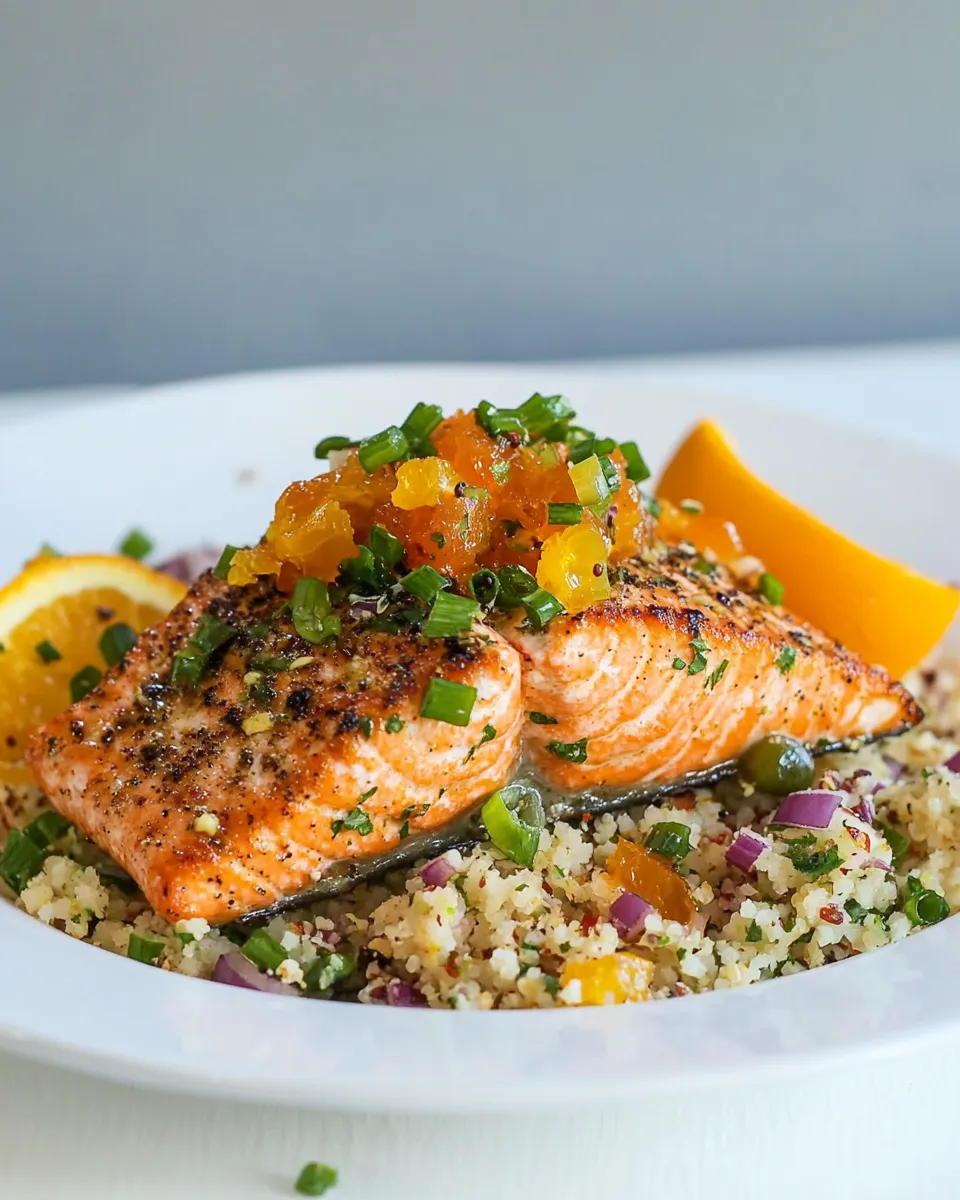
Pan-seared Orange Honey Salmon
Equipment
- Zip-top Bag or Shallow Dish
- Skillet or frying pan
- Spatula or fish turner
- Measuring Spoons
- Grater or microplane
- kitchen paper (paper towels)
Ingredients
- 300 g fresh salmon fillet
- 1 tsp za'atar optional
- sea salt to taste
- black pepper to taste
- 1 tsp organic honey
- 1 tsp soy sauce use gluten-free soy sauce if desired
- juice of 1 orange
- 1 tsp orange zest
- 1 tsp fresh ginger grated
- 1 tsp garlic grated (about 1 clove)
- 1 large cup quinoa salad
Instructions
- In a large zip-top bag or shallow dish, combine the honey, soy sauce, orange juice, orange zest, grated ginger and grated garlic until smooth.
- Add the salmon to the bag or dish, seal or cover, and gently massage the marinade over the fish. Refrigerate for 10 minutes up to 2 hours for stronger flavor.
- When ready to cook, remove the salmon from the marinade and reserve the leftover marinade. Pat the salmon dry with paper towels, then season the flesh or skin side with optional za'atar and salt and pepper to taste.
- Lightly oil a skillet and heat over medium heat until shimmering. Place the salmon skin-side down in the pan.
- Sear the salmon over medium-low heat for about 5 minutes, brushing occasionally with the reserved marinade as it cooks; discard any leftover marinade that has touched raw fish.
- Flip the salmon and cook for an additional 2 minutes, or until the fish flakes easily with a fork and reaches your desired doneness.
- Serve the salmon immediately with the quinoa salad on the side.
Notes
- For a baked version, place skinless salmon on foil and pour over the marinade.
- Arrange orange slices over the fish before baking.
- Bake at 180°C (360°F) for about 5–7 minutes or until it flakes with a fork.