There’s a reason this Perfectly Pan Seared Salmon is on repeat at dinnertime: it’s fast, reliable, and beautifully crisp on the outside while staying tender and juicy inside. With just a few pantry staples and a hot skillet, you’ll get restaurant-level results without stress. Whether you’re feeding a weeknight crowd or cooking for one, this technique is simple to master and reliably delicious.
What you’ll need
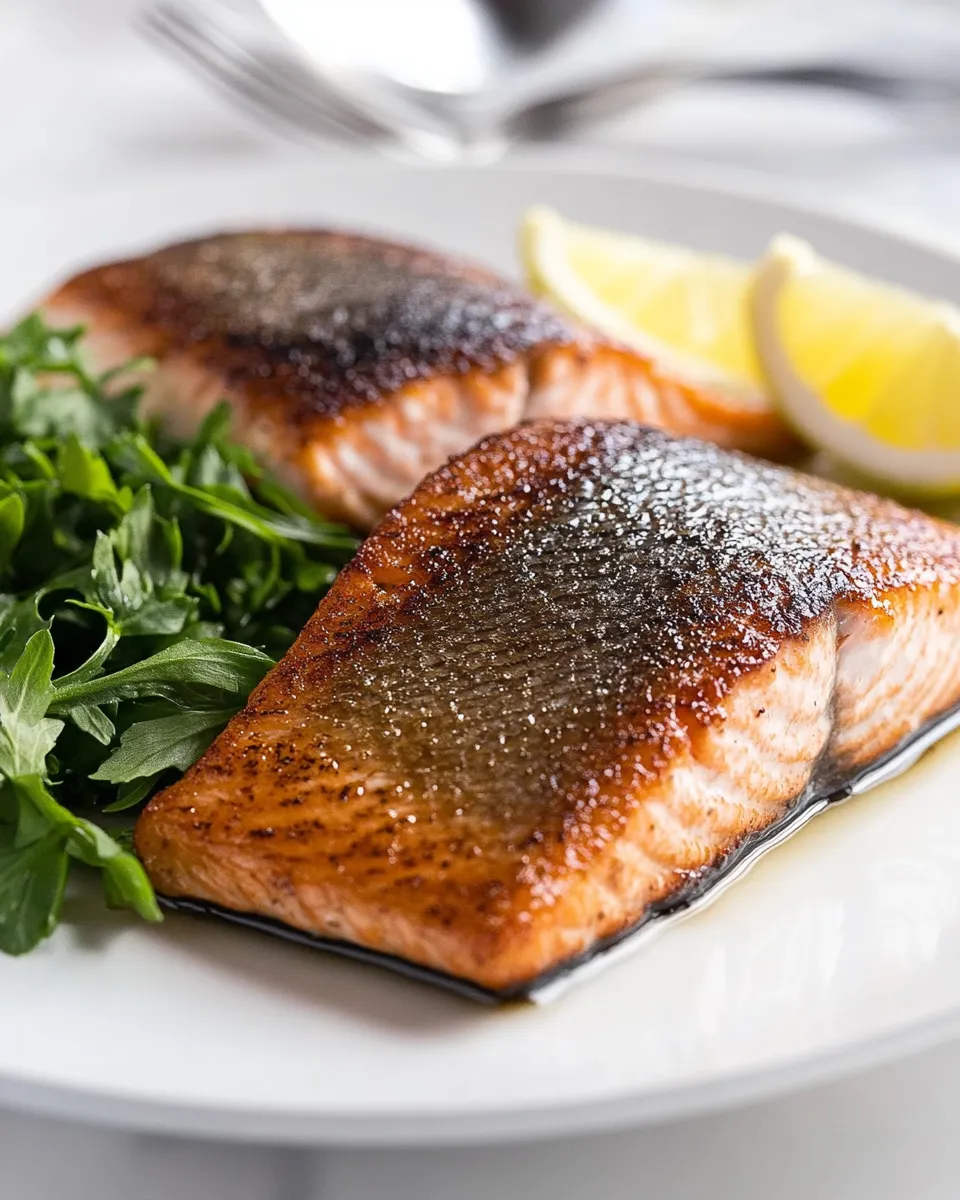
This recipe uses skin-on salmon fillets for the best texture and flavor. Keep your fillets 1 to 1-1/2 inches thick for even cooking.
- 2 skin-on salmon fillets (6 to 8 ounces each, 1 to 1-1/2 inches thick, pin bones removed and skin descaled)
- 1–2 tablespoons neutral, high-smoking point oil, such as canola
- Kosher salt and freshly-ground black pepper
Why skin-on matters
Leaving the skin on helps protect the flesh from the high heat of the pan, producing a deeply golden, crunchy skin while the meat underneath stays moist. If the skin is properly descaled and the pan is hot, you’ll get a satisfying crackle when the fillets hit the surface.
Tools
- Heavy skillet or cast-iron pan (10–12 inches works great)
- Tongs or fish spatula
- Instant-read thermometer (optional but helpful)
Prep: Bring it to room temperature
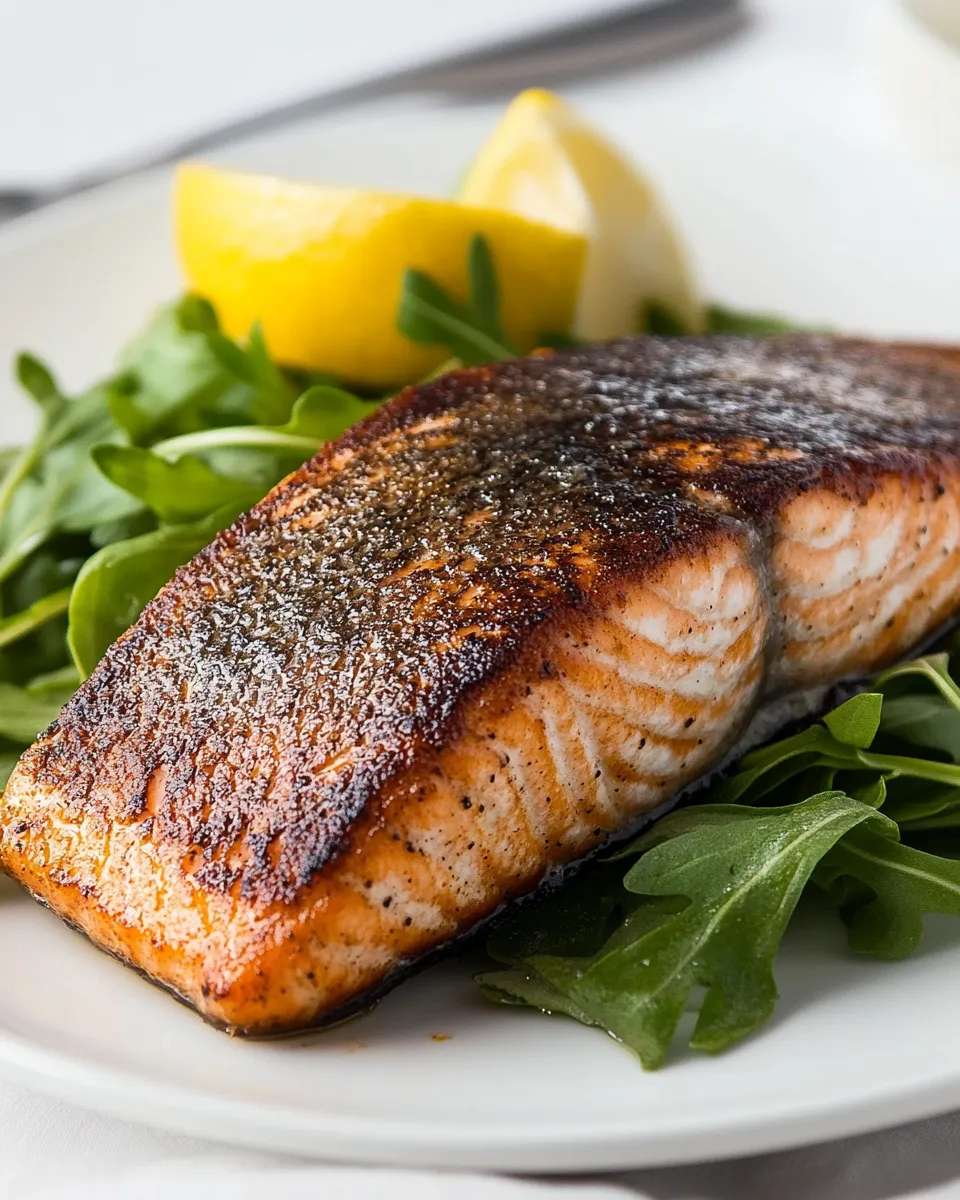
Remove the salmon from the refrigerator 15–20 minutes before cooking so it comes closer to room temperature. This helps the fillets cook evenly from edge to center.
Seasoning
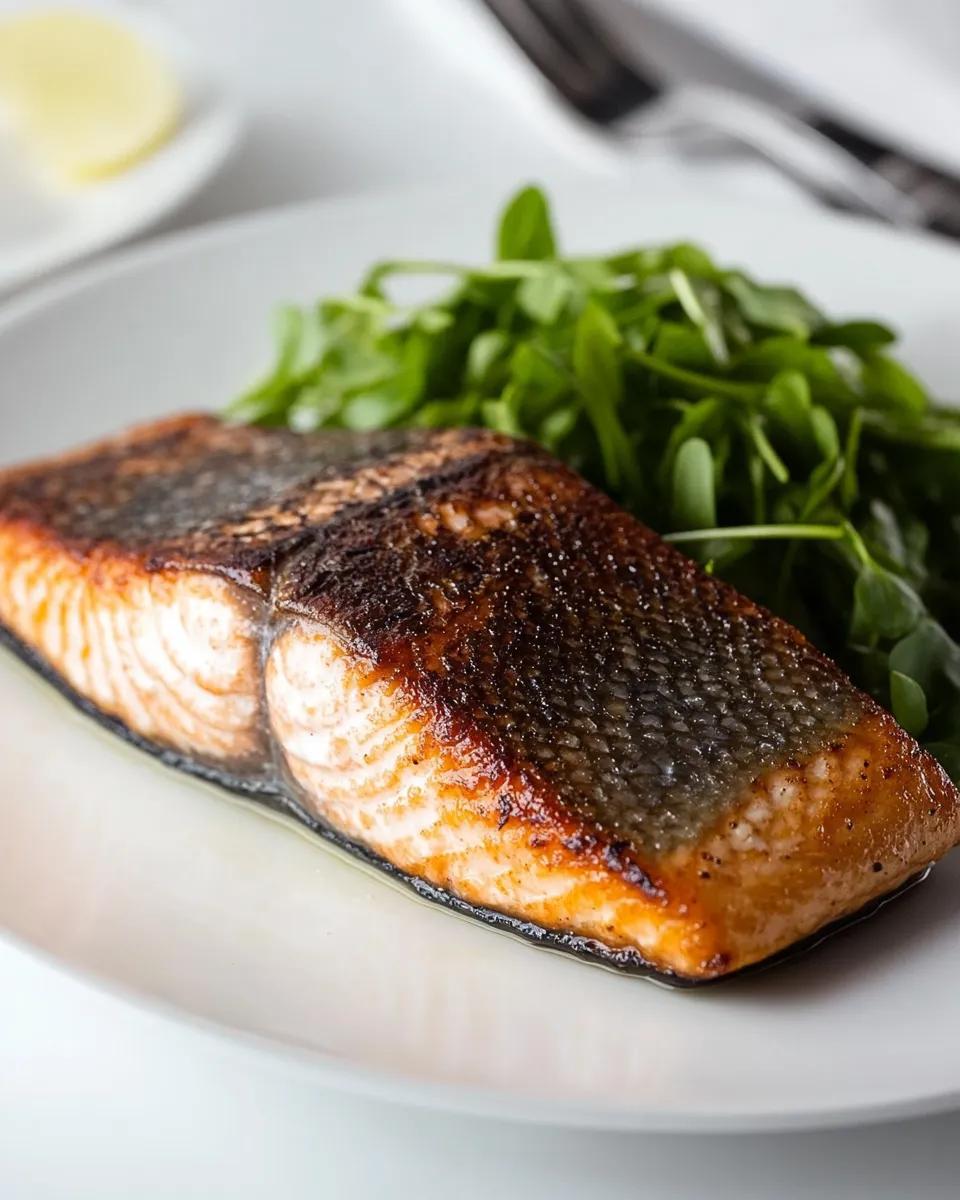
Keep the seasoning simple so the salmon’s flavor shines. Pat the fillets dry with paper towels, then season generously on both sides with kosher salt and freshly-ground black pepper. Dryness at the surface is key to a good sear, so don’t skip patting them down.
Perfectly Pan Seared Salmon — Step-by-step instructions
- Heat the skillet: Place a heavy skillet over medium-high heat and let it get hot for about 2–3 minutes. A properly heated pan is crucial for a good sear.
- Add oil: Pour 1 to 2 tablespoons of neutral, high-smoking point oil (such as canola) into the hot skillet and swirl to coat the bottom.
- Place the fillets skin-side down: Carefully lay the 2 skin-on salmon fillets (6 to 8 ounces each, 1 to 1-1/2 inches thick, pin bones removed and skin descaled) into the pan, skin-side down, placing them away from you to avoid splatter.
- Press to ensure even contact: Using a spatula, gently press each fillet down for the first 10–15 seconds so the skin makes full contact with the pan and doesn’t curl.
- Sear without moving: Cook the fillets skin-side down without moving them for 5–6 minutes, or until the skin is deep golden-brown and releases easily from the pan. The flesh along the side will change color as it cooks; once it’s about two-thirds cooked up the side, it’s time to flip.
- Flip and finish: Carefully flip the fillets and cook for an additional 1–2 minutes for medium doneness. If you prefer your salmon more cooked through, cook 2–3 minutes after flipping. Use an instant-read thermometer if you like: aim for about 125–130°F for medium-rare to medium, or 140°F for well done.
- Rest before serving: Transfer the salmon to a plate and let it rest for 2–3 minutes. Resting lets the juices redistribute so each bite is moist and flavorful.
- Serve: Season lightly with additional kosher salt and freshly-ground black pepper if desired, then serve immediately with your favorite sides.
Timing guide
- Skin-side down: 5–6 minutes
- After flipping: 1–3 minutes depending on thickness and desired doneness
- Rest: 2–3 minutes
Tips for success
- Dry the fish. Moisture is the enemy of a crisp crust—pat the fillets thoroughly with paper towels.
- Don’t overcrowd the pan. Cook in a single layer with space between fillets so the pan temperature doesn’t drop.
- Adjust heat as needed. If the oil smokes heavily right away, reduce the heat slightly. You want a steady sizzle, not smoking fury.
- Avoid fiddling. Let the skin sit and form a crust; flipping too soon will tear the skin and prevent a good sear.
- Use the right oil. A neutral oil with a high smoke point—like canola—is ideal to achieve a clean, even sear without imparting strong flavors.
Serving suggestions
A classic pan-seared salmon pairs beautifully with bright, acidic, and fresh elements. Here are a few quick ideas:
- Simple lemon wedges and a sprinkle of chopped herbs (parsley, dill, or chives).
- A crisp green salad with vinaigrette to cut the richness.
- Steamed vegetables and fluffy rice or roasted fingerling potatoes for a comforting plate.
- A dollop of yogurt-based cucumber sauce or a quick herb chimichurri for extra brightness.
Make-ahead and storage
Cooked salmon can be refrigerated in an airtight container for up to 3 days. Reheat gently in a warm oven (275°F/135°C) for 8–10 minutes to avoid drying it out, or enjoy cold flaked over salads.
Common questions
Can I use a non-stick pan? Yes, but you still want a hot surface and a little oil. A heavy skillet or cast iron will give the best crust, but a good-quality non-stick pan works in a pinch.
How do I know when the salmon is done? The flesh should be opaque on the outside and slightly translucent in the center for medium. An instant-read thermometer inserted into the thickest part should register 125–130°F for medium-rare to medium, or 140°F if you prefer it fully cooked.
What if the skin sticks? If you hear a loud tearing when you try to flip, the fillet likely needs a little more time to develop a crust. Give it another 30–60 seconds and try again. Make sure the skin was fully dried and the pan was hot to begin with.
Why this method works
This technique focuses on surface moisture control, proper pan temperature, and timing. Drying the fillets removes excess water so the surface can brown. High heat gives a quick crust that locks in juices. Skin-first cooking protects the delicate flesh while producing a texture contrast that makes every bite satisfying.
Final thoughts
With just 2 skin-on salmon fillets (6 to 8 ounces each, 1 to 1-1/2 inches thick, pin bones removed and skin descaled), 1–2 tablespoons neutral oil, and a sprinkle of kosher salt and freshly-ground black pepper, you can get a dependable, restaurant-worthy result in under 15 minutes. This Perfectly Pan Seared Salmon is the kind of recipe that becomes a weekday staple because it’s fast, flexible, and always delicious.
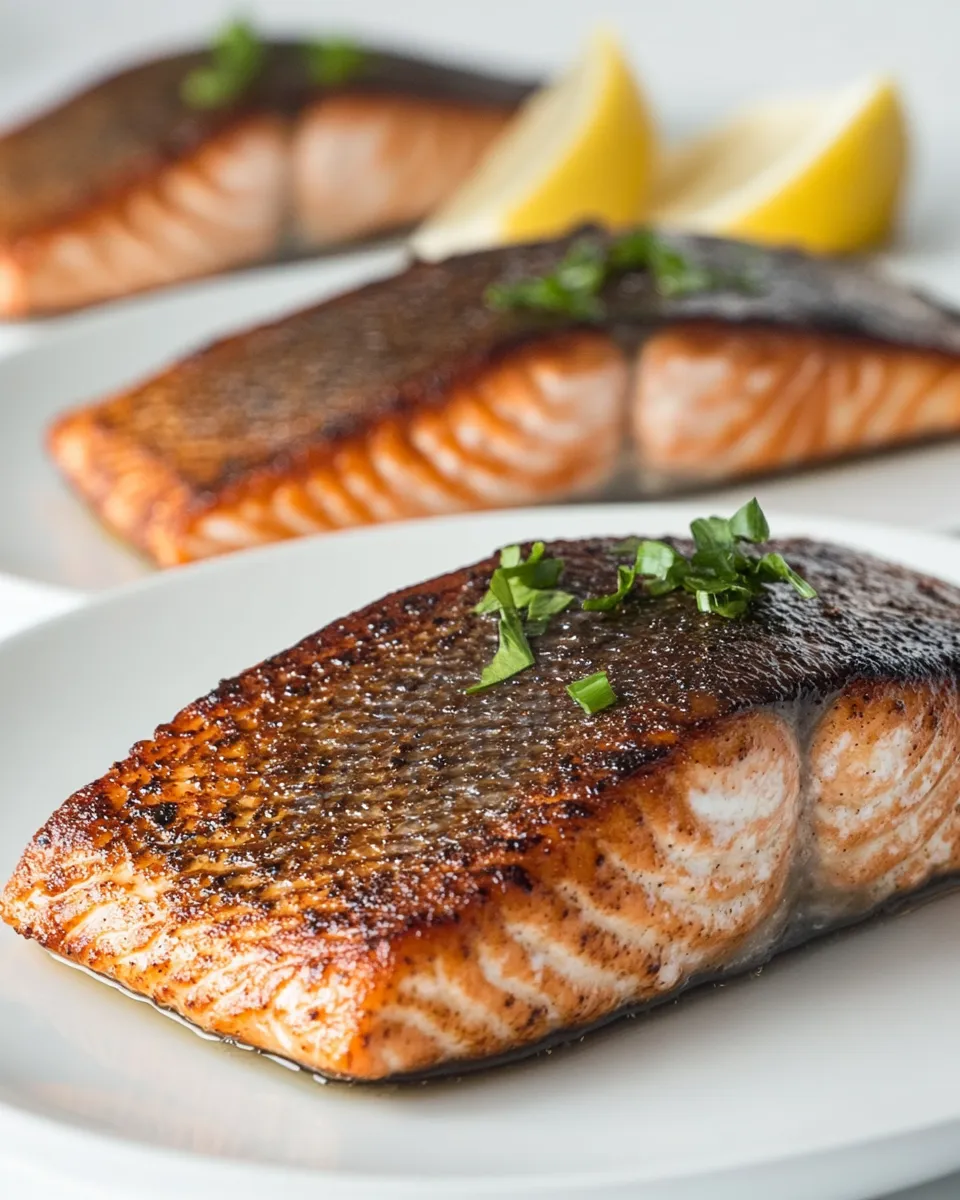
Perfectly Pan Seared Salmon
Equipment
- 10–12 inch frying pan or skillet
- fish spatula or thin flexible spatula
- Paper Towels
- tongs or spatula for flipping
Ingredients
- 2 skin-on salmon fillets 6 to 8 ounces each, 1 to 1½ inches thick, pin bones removed, skin descaled
- 1-2 tablespoons neutral high-smoke-point oil such as canola
- kosher salt to taste
- freshly ground black pepper to taste
Instructions
- Remove the salmon from the refrigerator 15 minutes before cooking to let it come to room temperature.
- Heat a 10–12 inch frying pan over medium-high until very hot. Test by flicking a few drops of water into the pan — they should dance and evaporate quickly.
- Add 1–2 tablespoons of neutral, high-smoke-point oil and swirl to coat the bottom; heat until shimmering but not smoking.
- Pat the fillets dry on all sides with paper towels. Season the flesh side with kosher salt and a few grinds of black pepper.
- Carefully add the fillets to the pan skin-side down, placing them from front to back to avoid splatter toward you. Reduce heat to medium or medium-low.
- When the fillets first hit the pan they may buckle; gently press the flesh with a fish spatula for about 1 minute until the fillets lay flat again.
- Cook skin-side down until the fish is about 3/4 cooked through, watching for the color change from translucent coral to opaque pastel up the sides — about 5–9 minutes depending on thickness and stove.
- Flip the fillets with a fish spatula and cook the flesh side 1–4 minutes more to your desired doneness (120–125°F for medium-rare, 125–130°F medium, 145°F well done per USDA).
- Remove the fillets from the pan and drain briefly on a paper towel–lined plate for 2–3 minutes. Serve skin-side up for crispy skin or loosen and remove the skin if desired.
- Optionally finish with a squeeze of fresh lemon juice or your preferred sauce before serving.
Notes
- Letting the salmon come to room temperature helps it cook evenly.
- Patting the fillets dry ensures a crisp skin.
- Pressing the fillet when it first hits the pan prevents curling.
- Cook times vary with thickness and stove heat.
- Use a fish spatula to flip gently.
- Consuming raw or undercooked seafood may increase your chance of food borne illnesses.