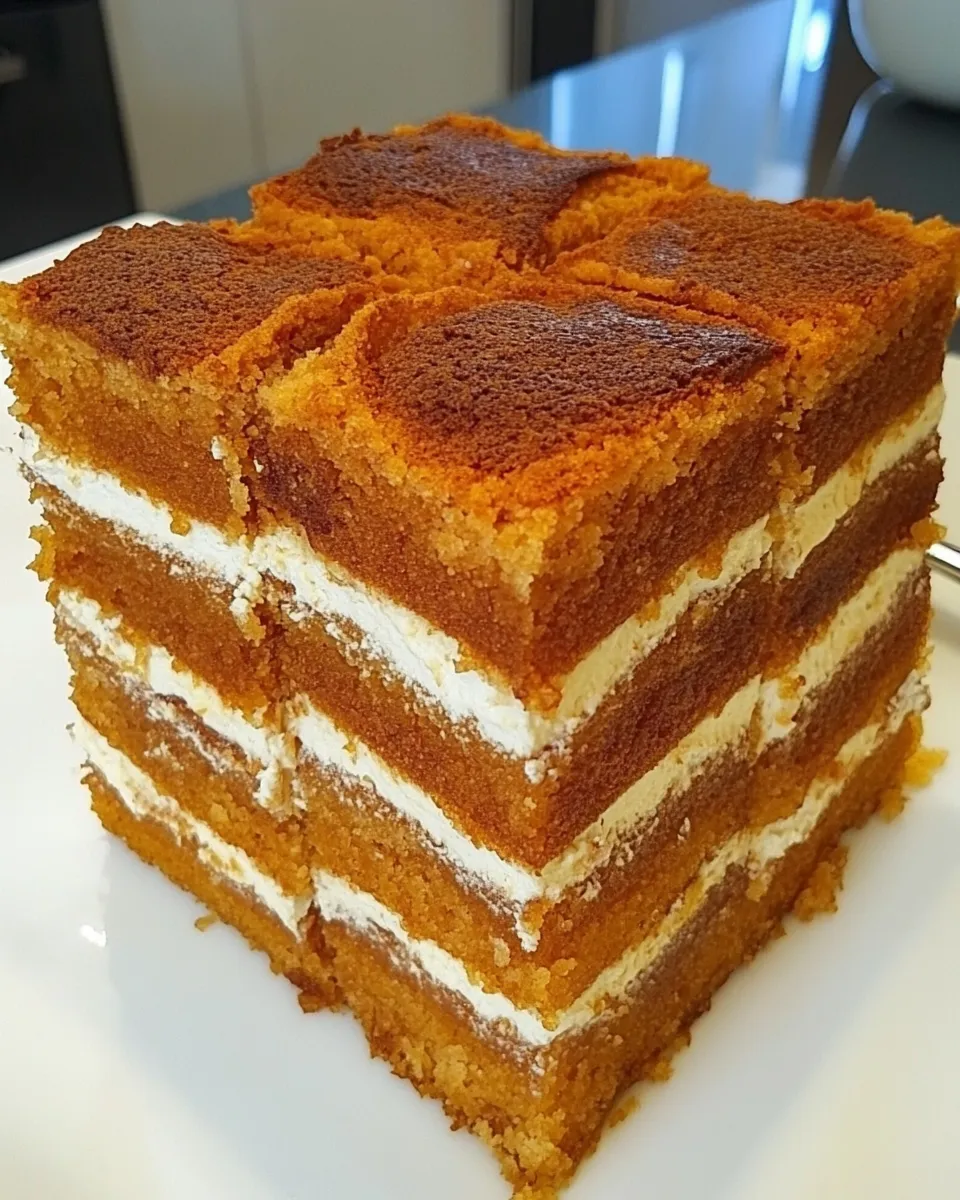
I learned this recipe from a woman in Bucharest who insisted the tomato element is what makes this cake sing — not savory, but warm and bright, a deeply nostalgic texture that reminds you of layered desserts from childhood. It sounds odd on paper: a tomato-based dough supporting cushions of semolina cream, apricot jam, and a Turkish Delight–butter crown. In practice it is balanced, comforting, and surprisingly elegant.
This post walks you through every stage: what the ingredients do, the exact build order, sensible swaps, and storage tips so the cake is perfect the next day when you slice into it. I keep the instructions practical and tested; I also include the small habits that make assembly clean and stress-free, because this cake benefits from patience more than speed.
If you like a dessert that’s hands-on and makes an impressive platter, this is one to try. The layers take time, but the technique is straightforward. Read through the steps once, gather your tools, and give the cake an overnight rest — you’ll be rewarded with a fragrant, sliceable dessert that travels well and keeps nicely in the fridge.
What Goes In
Ingredients
- 12 tbsp oil — provides fat for the dough and keeps the baked sheets tender and pliable.
- 6 tbsp powdered sugar — used to lighten and sweeten the Turkish Delight butter topping.
- 12 tbsp tomato juice — colors and flavors the dough; the tomato element is the cake’s signature.
- 1 tsp ammonium — a leavening agent (dissolve if powdered) that helps the sheets set and lift slightly.
- 450 gr flour — the structure of the dough; add gradually to reach an elastic texture.
- salt — just a pinch to enhance flavor in the dough.
- 700 gr Turkish Delight — chopped or mashed and folded into the butter topping for chew and flavor.
- 2 lemons — zest and juice add brightness; the peel is infused into the semolina milk for aroma.
- 1 pack butter (82% fat) — for the Turkish Delight butter mixture; beat until foamy before adding the candy.
- 1 L milk — the base for the semolina cream; heats with lemon peel and sugar to build flavor.
- 5 tbsp sugar — sweetens the semolina cream; adjust slightly if your jam is tart.
- 250 gr butter (82% fat) — folded into the hot semolina cream to make it glossy and rich.
- 100 gr coconut — stirred into the cooled semolina for texture and a subtle tropical note.
- 200 gr semolina — the thickening, custard-like base for the cream layers.
- 400 gr apricot jam — spread between layers to add fruit brightness and a balancing acidity.
Build Romanian Tomato Paste Cake (Prajitura cu Bulion) Step by Step
- Preheat the oven to 180 °C (356 °F). Lightly dust a baking tray (or the back of a baking tray) with flour and set aside.
- Make the tomato-based dough: in a large bowl combine 12 tbsp oil, 12 tbsp tomato juice, 1 tsp ammonium (dissolved in a tablespoon of the tomato juice if it is powdered), and a pinch of salt. Gradually add 450 g flour and mix until you obtain an elastic dough. Do not add extra ingredients.
- Divide the dough into four equal pieces. Roll each piece thinly to the size of your baking tray. Place each rolled sheet onto the prepared floured tray (one at a time) and bake for about 7 minutes at 180 °C, until the sheet is set and just lightly colored. Cool the baked sheets on a rack.
- Zest and juice the 2 lemons. Reserve the lemon peel (zest) to add to the milk in step 6. Split the lemon juice roughly in half: one half for the Turkish Delight butter mixture (step 5) and the other half for the semolina cream (step 6).
- Prepare the Turkish Delight butter mixture (for the top): beat 1 pack butter (82% fat) with 6 tbsp powdered sugar until light and foamy. Finely mash or chop 700 g Turkish Delight and mix it into the foamed butter along with half of the lemon juice reserved in step 4. Stir until homogenous and set aside at room temperature.
- Make the semolina-coconut cream: in a saucepan combine 1 L milk, 5 tbsp sugar, and the lemon peel (zest) reserved in step 4. Bring to a boil over medium heat. When the milk is boiling, gradually add 200 g semolina while stirring constantly to avoid lumps. Continue to stir and cook until the mixture thickens and comes back to a boil.
- After removing the pan from the heat, while the semolina cream is still warm stir in 250 g butter (82% fat) and the remaining half of the lemon juice reserved in step 4. Mix until the butter is fully incorporated. Let the semolina cream cool completely, then stir in 100 g coconut.
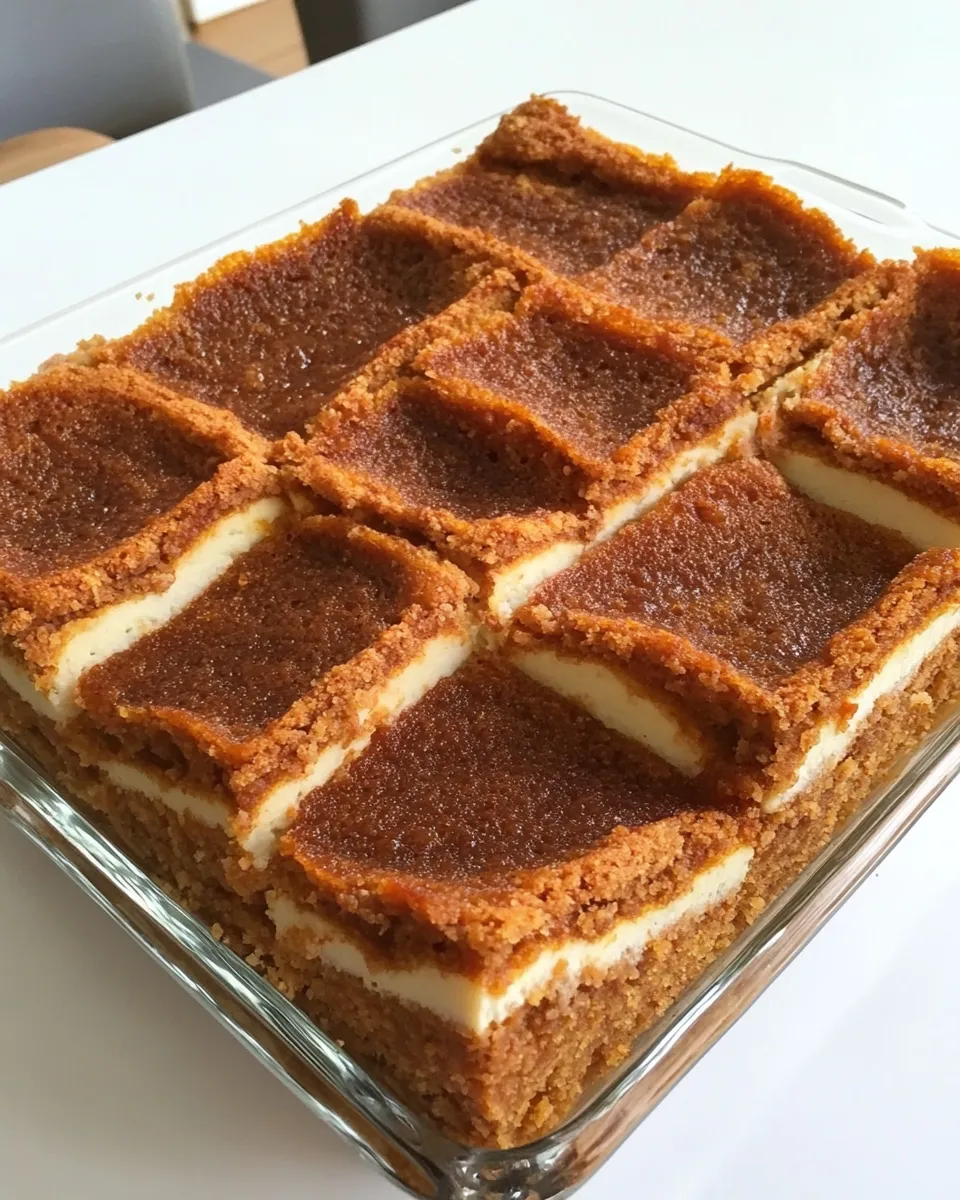
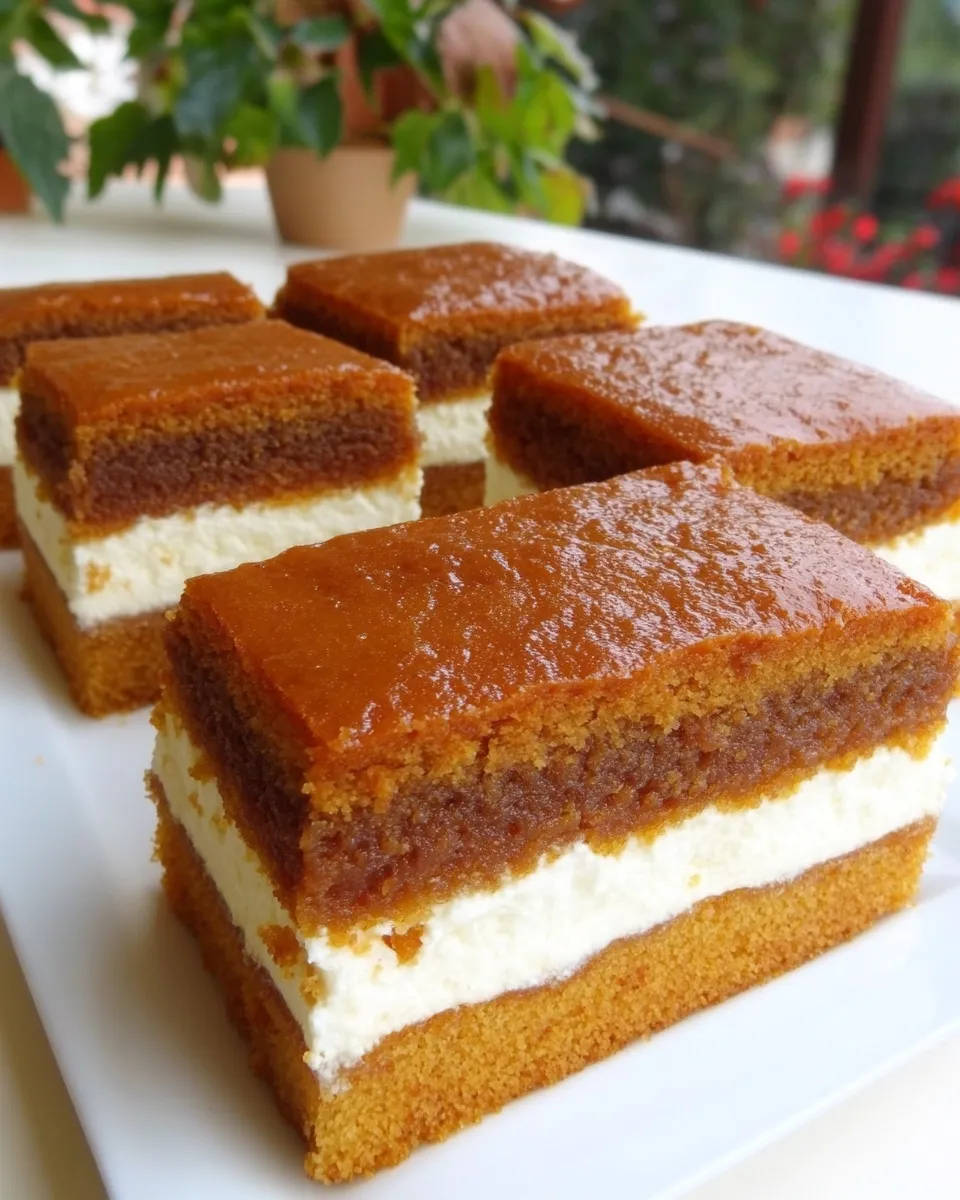
- Assembly: place the first baked sheet on a serving tray. Spread half of the cooled semolina-coconut cream evenly over it. Place the second sheet on top and spread 400 g apricot jam evenly over that layer. Place the third sheet on top and spread the remaining half of the semolina-coconut cream evenly. Finish with the fourth baked sheet.
- Spread the Turkish Delight butter mixture (from step 5) evenly over the top sheet. If you wish, dust lightly with any remaining powdered sugar you have available (note: powdered sugar has already been used in step 5).
- Cover the assembled cake, refrigerate, and leave overnight to set. Slice and serve the next day.
Why This Recipe Belongs in Your Rotation
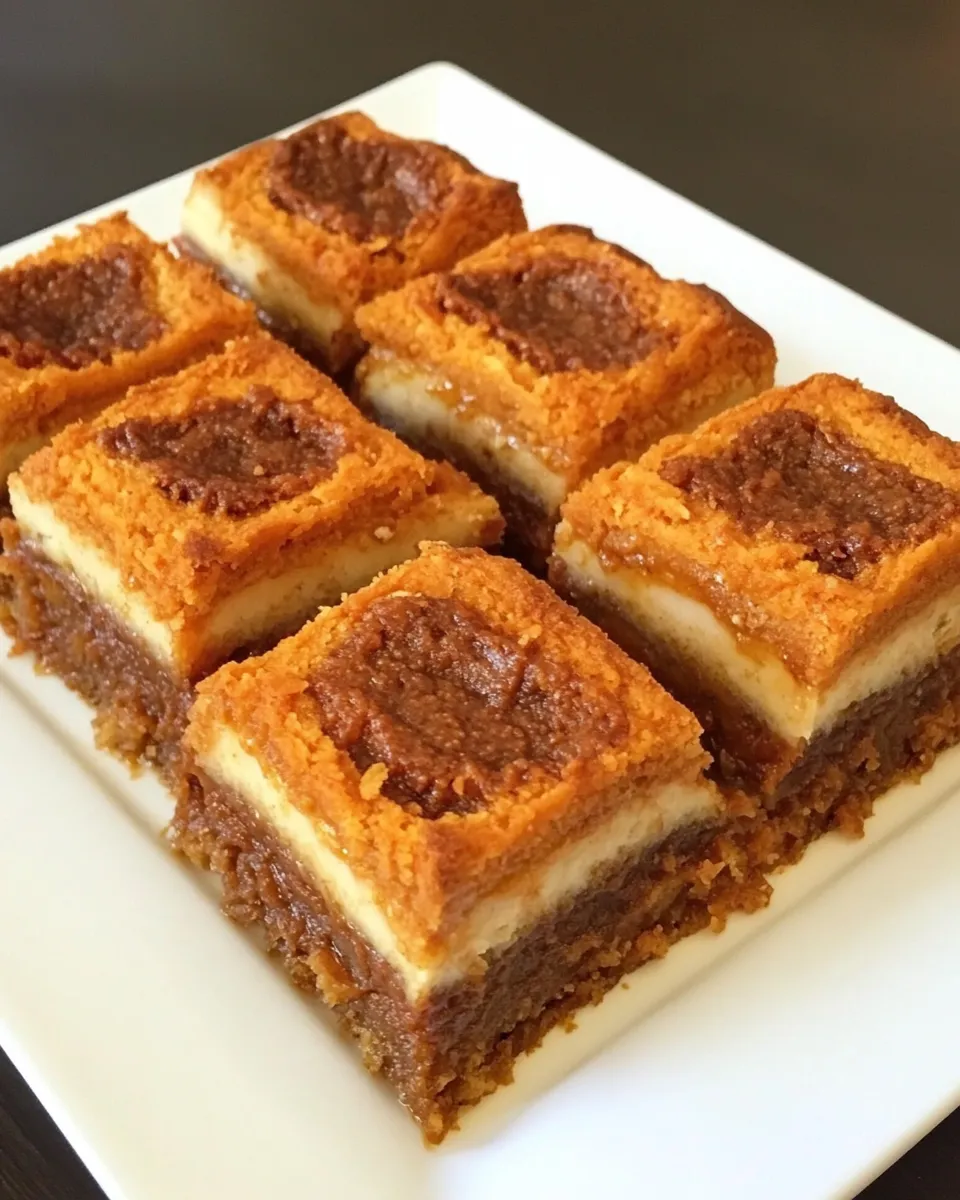
This cake lives at the intersection of show-stopping and sensible. The components are simple — dough, semolina cream, jam, and a fun Turkish Delight topping — yet the result is layered, textured, and special-occasion worthy. It keeps for several days, slices cleanly after chilling, and travels well, which makes it excellent for potlucks or weekend hosting.
Another reason to keep it in your repertoire: it rewards patience. The overnight rest allows flavors to marry and the semolina to stabilize, so the effort invested ahead of time pays off beautifully on the day you serve it. It’s a dessert that feels more complicated than it is once you break the work into stages.
Substitutions by Category
- Dough liquid: Tomato juice is central here. If you must, a mild vegetable juice could work, but the tomato color and flavor are distinctive and worth preserving.
- Sweetener for topping: Powdered sugar lightens the butter. You could use an equal amount of confectioners’ sugar if that’s what you have, but keep the texture powdery to avoid a gritty topping.
- Filling swap: Apricot jam gives a bright, slightly tart layer. If unavailable, use a similar-styled stone fruit jam (peach, plum) — keep the quantity the same.
- Semolina cream additions: The recipe uses coconut for texture. If you don’t like coconut, leave it out — the cream will still set but be less textured.
- Turkish Delight: This is a signature element of the top layer. If you can’t find it, you could finely chop a dense candied fruit or a soft jelly candy, but flavor will vary.
Tools of the Trade
- Baking tray (or the back of a tray) — for rolling and baking each thin sheet.
- Rolling pin — roll the dough thin and even to match your tray size.
- Mixing bowls — one large for dough, one for the butter topping.
- Electric mixer or whisk — to beat the butter and powdered sugar until foamy.
- Saucepan and wooden spoon — for the semolina cream so you can stir continuously to avoid lumps.
- Cooling rack — let baked sheets cool evenly and avoid sogginess.
- Offset spatula or palette knife — helps spread creams and jam in smooth, even layers.
Steer Clear of These
Do not bake the dough sheets too long. They should be just set and lightly colored; overbaking makes them dry and fragile, which makes assembly and slicing messy. Seven minutes is the guideline — ovens vary, so watch the first sheet closely.
Avoid adding extra liquid to the dough. The recipe warns against adding more ingredients. Excess flour or liquid will change the elasticity and baking behavior. Trust the measured amounts and adjust only by small kneading motions until the dough is elastic.
Don’t rush the semolina cream cooling stage. Folding butter into hot semolina creates a silkier result; but the cream must cool before you layer it, or it will melt the sheets and create a runny cake.
How to Make It Lighter
If you want to reduce richness without changing the structure too much, try these approaches:
- Use a lighter butter alternative in the Turkish Delight topping, but keep the texture thick. Reducing fat here changes the mouthfeel considerably.
- Lower the semolina butter from 250 g to 150–200 g to trim richness in the cream. The cream will be less glossy but still stable once cooled.
- Use a lower-fat milk (semi-skimmed) for the semolina, which slightly reduces caloric density. Keep sugar the same to preserve balance.
Notes from the Test Kitchen
In our kitchen we focused on texture and layering order. Rolling each sheet the size of the tray is the simplest way to get even layers. If a sheet shrinks or tears, patch it with a thin scrap of dough and bake; the patch becomes invisible once layered.
When folding Turkish Delight into the foamed butter, finely chopping yields the best distribution — small bits give a pleasant chew in each bite instead of large pockets. If the butter becomes too soft, chill it briefly and then spread; the goal is an even top, not a glaze that slides off.
We found that the lemon zest infused into the milk added a clean counterpoint to the sweet Turkish Delight and jam. Don’t skip splitting the lemon juice — it brightens both topping and cream in different ways.
Meal Prep & Storage Notes
This cake is meant to be assembled and refrigerated overnight. Cover it well with plastic wrap or a cake dome to prevent fridge odors from transferring. It will slice cleanly the next day.
Storage: keep refrigerated up to 4–5 days. The semolina cream and butter topping hold up well. For best texture, serve chilled or at cool room temperature; prolonged exposure to warmth will soften the layers and make slicing harder.
Freezing is not ideal. The dough layers and cream can separate slightly and the texture of Turkish Delight changes when frozen. If you must freeze, wrap tightly and use within a month; thaw in the fridge overnight before serving.
Romanian Tomato Paste Cake (Prajitura cu Bulion) Q&A
Q: Can I make the dough sheets ahead of time?
A: Yes. You can bake the sheets a day in advance, cool completely, and store them wrapped at room temperature. If they soften, re-crisp briefly in a low oven before assembling.
Q: What is ammonium and can I substitute baking powder?
A: Ammonium (often ammonium bicarbonate) acts as a leavening agent that helps thin sheets set and remain slightly tender. Baking powder will work but may alter the texture and rise slightly; if ammonium is called for, it gives the traditional finish.
Q: My semolina cream got lumpy. How to fix?
A: If lumps form while adding semolina to hot milk, whisk vigorously or pass the warm cream through a sieve while still warm. Preventative: add semolina gradually while stirring constantly to avoid lump formation.
Q: Can I substitute the Turkish Delight for another candy?
A: Yes, but expect a different character. Turkish Delight provides soft chew and a floral sweetness. Other soft candies will change flavor and texture; aim for something that won’t fully melt into the butter.
That’s a Wrap
This cake is an exercise in calm, methodical assembly that delivers a complex dessert without exotic techniques. Follow the steps, honor the resting time, and you’ll be rewarded with a multi-layered cake that slices beautifully and tastes like a thoughtful, old-world patisserie treat.
Make it for a weekend crowd or a holiday table. The recipe scales well by doubling portions for larger trays, but keep the layer order the same and allow the same rest time. Enjoy the ritual of making it — and the satisfied silence when your guests take their first bite.
Romanian Tomato Paste Cake (Prajitura cu Bulion)
Equipment
- Oven
- Baking tray
- Mixing Bowl
- Saucepan
- Whisk
- Cooling rack
Ingredients
Ingredients
- 12 tbspoil
- 6 tbsppowdered sugar
- 12 tbsptomato juice
- 1 tspammonium
- 450 grflour content
- salt
- 700 grTurkish Delight
- 2 lemons
- 1 packbutter82% fat
- 1 lmilk
- 5 tbspsugar
- 250 grbutter82% fat
- 100 grcoconut
- 200 grsemolina
- 400 grapricot jam
Instructions
Instructions
- Preheat the oven to 180 °C (356 °F). Lightly dust a baking tray (or the back of a baking tray) with flour and set aside.
- Make the tomato-based dough: in a large bowl combine 12 tbsp oil, 12 tbsp tomato juice, 1 tsp ammonium (dissolved in a tablespoon of the tomato juice if it is powdered), and a pinch of salt. Gradually add 450 g flour and mix until you obtain an elastic dough. Do not add extra ingredients.
- Divide the dough into four equal pieces. Roll each piece thinly to the size of your baking tray. Place each rolled sheet onto the prepared floured tray (one at a time) and bake for about 7 minutes at 180 °C, until the sheet is set and just lightly colored. Cool the baked sheets on a rack.
- Zest and juice the 2 lemons. Reserve the lemon peel (zest) to add to the milk in step 6. Split the lemon juice roughly in half: one half for the Turkish Delight butter mixture (step 5) and the other half for the semolina cream (step 6).
- Prepare the Turkish Delight butter mixture (for the top): beat 1 pack butter (82% fat) with 6 tbsp powdered sugar until light and foamy. Finely mash or chop 700 g Turkish Delight and mix it into the foamed butter along with half of the lemon juice reserved in step 4. Stir until homogenous and set aside at room temperature.
- Make the semolina-coconut cream: in a saucepan combine 1 L milk, 5 tbsp sugar, and the lemon peel (zest) reserved in step 4. Bring to a boil over medium heat. When the milk is boiling, gradually add 200 g semolina while stirring constantly to avoid lumps. Continue to stir and cook until the mixture thickens and comes back to a boil.
- After removing the pan from the heat, while the semolina cream is still warm stir in 250 g butter (82% fat) and the remaining half of the lemon juice reserved in step 4. Mix until the butter is fully incorporated. Let the semolina cream cool completely, then stir in 100 g coconut.
- Assembly: place the first baked sheet on a serving tray. Spread half of the cooled semolina-coconut cream evenly over it. Place the second sheet on top and spread 400 g apricot jam evenly over that layer. Place the third sheet on top and spread the remaining half of the semolina-coconut cream evenly. Finish with the fourth baked sheet.
- Spread the Turkish Delight butter mixture (from step 5) evenly over the top sheet. If you wish, dust lightly with any remaining powdered sugar you have available (note: powdered sugar has already been used in step 5).
- Cover the assembled cake, refrigerate, and leave overnight to set. Slice and serve the next day.