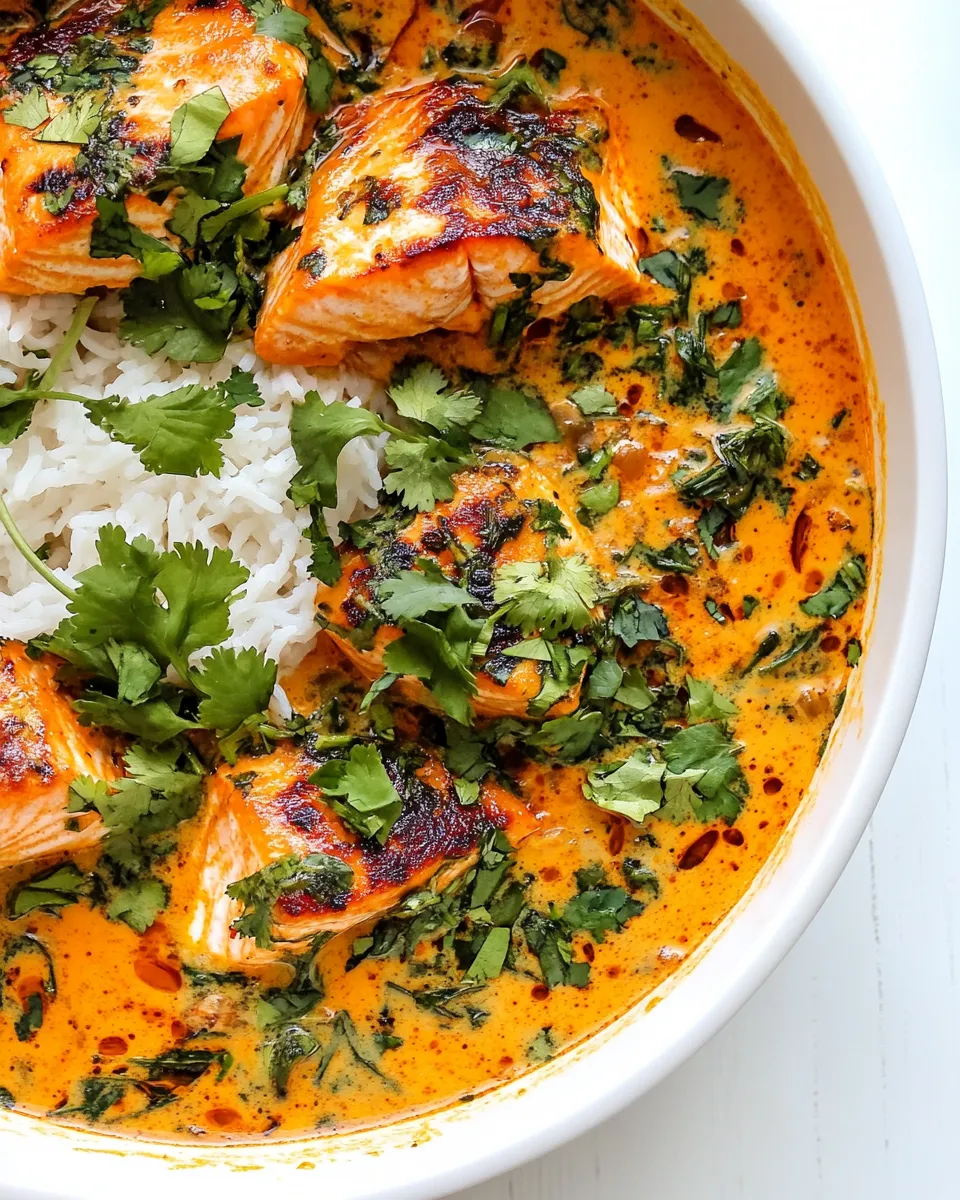
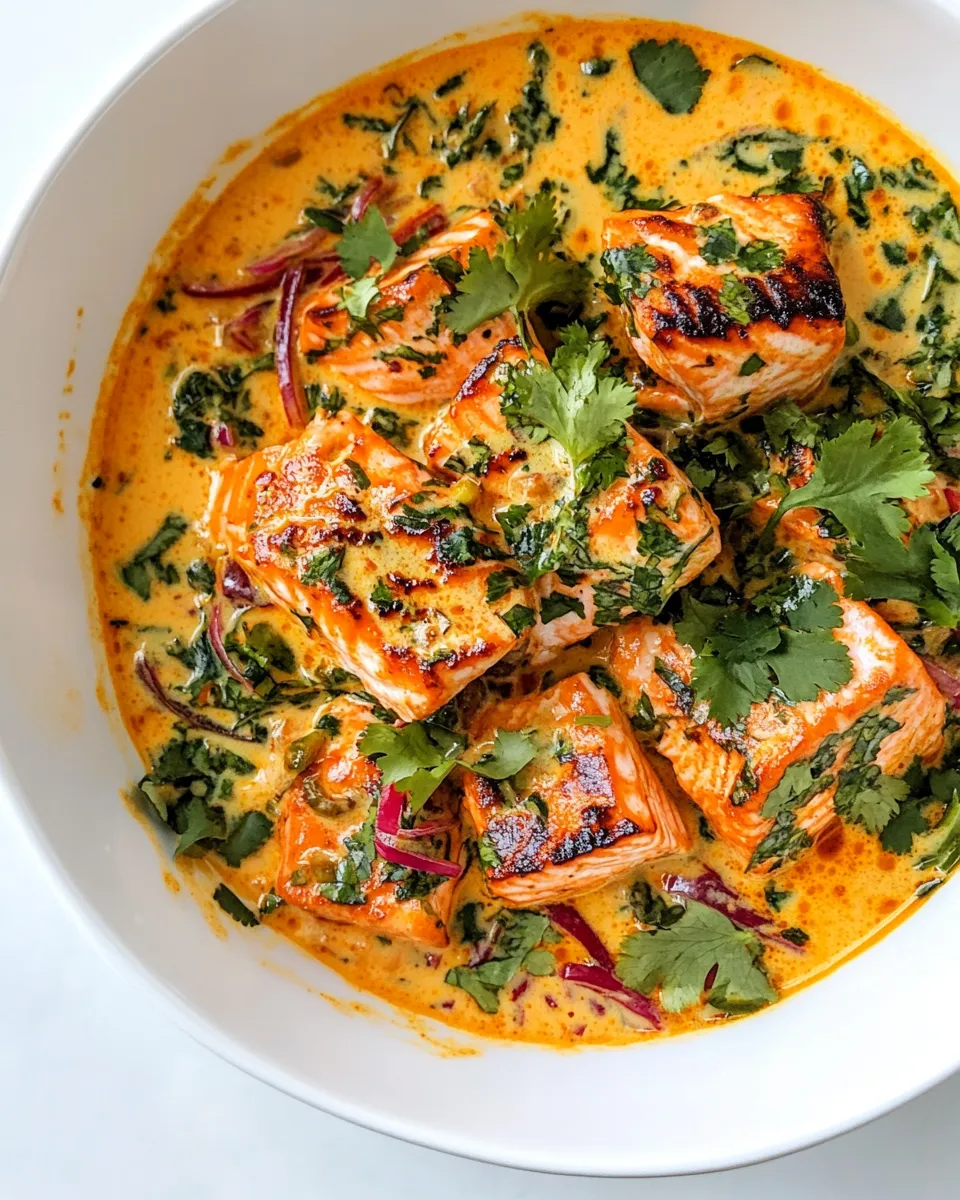
I fell in love with this dish the first time I braided silky coconut milk into a punchy red curry paste and let a simple piece of salmon soak up the flavors. It feels like a restaurant meal but comes together on a weeknight without drama. The balance of rich coconut, salty fish sauce, lime brightness, and fresh herbs is what makes this one a keeper in my rotation.
This recipe is practical and forgiving. It’s built around confident techniques: a fast, hot sear on the salmon, then a short simmer to finish in a fragrant coconut sauce. You’ll get controlled textures — crisp-tender broccolini, matchstick carrots, and salmon that’s moist inside with a little browned surface.
I’ll walk you through exactly what to buy, how to time each stage, substitutions if you need them, tools that make life easier, and how to rescue the sauce if something goes off. If you like bold flavor and a straightforward method, you’re in the right place.
Gather These Ingredients
Ingredients
- 1 pound fresh salmon — the main protein; choose firm, evenly thick fillets for even cooking.
- Salt & pepper to taste — seasons both the fish and the sauce; adjust at the end.
- 1 tablespoon olive oil — for searing; a neutral oil with a decent smoke point works fine.
- 1 tablespoon butter — adds richness to the pan fat and browning on the salmon.
- 1/2 medium onion, chopped — builds savory depth in the sauce.
- 2 cloves garlic, minced — aromatic backbone; add when the onion softens to avoid burning.
- 2 heaping tablespoons Thai red curry paste — concentrated flavor and heat; use your favorite brand.
- 1/2 teaspoon fish sauce (optional but recommended, see note) — provides umami; a little goes a long way.
- 1 (13.5 ounce) can full-fat coconut milk — gives the sauce body and creaminess; full-fat for best texture.
- 1/2 teaspoon brown sugar — balances acid and salt, rounds the curry paste.
- 1/2 cup matchstick-cut carrots — quick-cooking crunch and color.
- 1 heaping cup chopped broccolini — tender stems and florets; holds up in a short simmer.
- 1 teaspoon lime juice — brightens the finished sauce; add at the end for freshness.
- 2 tablespoons torn/chopped fresh basil — aromatic finish; Thai basil if you can find it.
- 2 tablespoons chopped fresh cilantro — herbaceous finish; adds contrast to basil.
Step-by-Step: Salmon Coconut Curry (Thai Inspired)
Sear the salmon
- Cut the 1 pound fresh salmon into 4 equal pieces. Pat both sides dry with paper towels and season both sides with salt and pepper to taste.
- Heat a skillet over medium-high heat. Add 1 tablespoon olive oil and 1 tablespoon butter and let the pan heat for a minute or two, until the butter has melted and the fats are shimmering.
- Place the salmon in the skillet skin-side down (if the fillets have skin). Cook without moving for 5 minutes.
- Flip the salmon and cook for another 2–3 minutes, until the fish is almost cooked through. If the salmon sticks when you try to flip it, give it a little longer to release naturally; do not force it.
- Transfer the salmon to a plate. If you prefer not to eat the skin, slide the skin off now before returning the salmon to the pan later.
Build the curry sauce and finish
- Spoon most of the fat out of the skillet, leaving about 1 tablespoon of oil/butter in the pan.
- Add 1/2 medium chopped onion to the skillet and sauté about 3 minutes, until the onion is softened and beginning to brown. Stir in 2 minced garlic cloves and 2 heaping tablespoons Thai red curry paste and cook, stirring constantly, for 1 minute.
- Pour in 1/2 teaspoon fish sauce (optional), 1 (13.5 ounce) can full-fat coconut milk, and 1/2 teaspoon brown sugar. Add 1/2 cup matchstick-cut carrots and 1 heaping cup chopped broccolini. Stir to combine.
- Bring the sauce to a gentle simmer (small bubbles), then cook about 5 minutes, until the vegetables are tender-crisp (cook a little longer if you prefer softer vegetables).
- Stir in 1 teaspoon lime juice. Nestle the cooked salmon pieces back into the sauce and heat for 2–3 minutes, just until the salmon is warmed through.
- Taste and adjust seasoning with more salt and pepper if needed. Sprinkle 2 tablespoons torn/chopped fresh basil and 2 tablespoons chopped fresh cilantro over the dish and serve immediately.
Why This Recipe Is Reliable
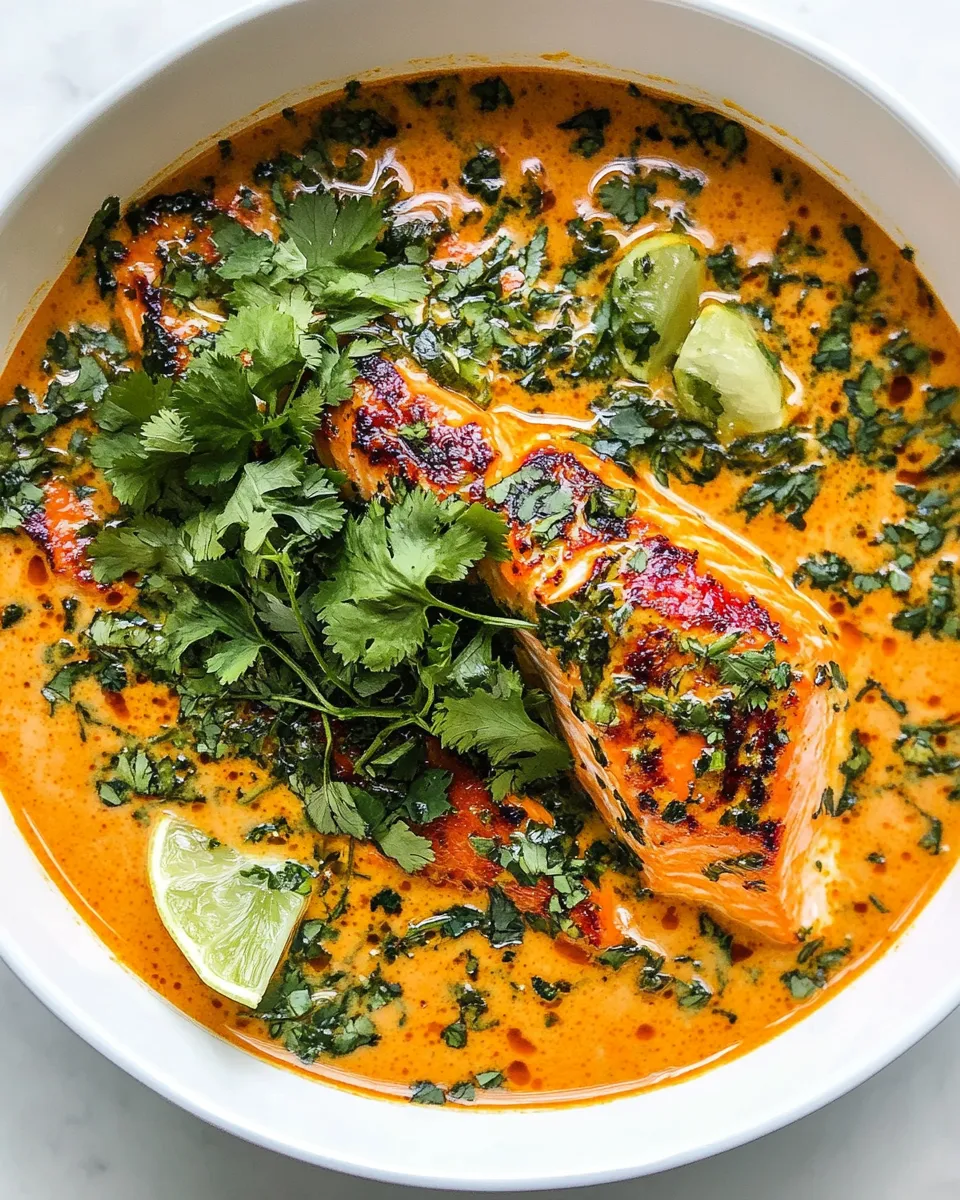
This method separates searing and saucing: it locks in flavor and texture. Searing the salmon first creates a lightly caramelized surface that stands up to the rich coconut sauce. Finishing the fish in the simmering sauce prevents overcooking while marrying flavors.
The timing is short, so you don’t need to babysit. The recipe uses simple, stable interactions — fat for browning, aromatics for depth, and a measured simmer to cook the veg without turning it to mush. Quantities are modest and scaled for a family or two servings, so you won’t be left with gallons of sauce to manage.
Finally, the flavored components are modular: if your curry paste is hot, reduce it; if it’s mild, add a touch more. The recipe gives you clear control points — sear time, simmer time, and final seasoning — which makes it consistent in every kitchen.
Substitutions by Category
- Protein — If you don’t have salmon, you can use firm white fish fillets (like halibut) with a slightly shorter second cook, or firm tofu for a vegetarian swap; adjust cook times so nothing overcooks.
- Coconut milk — Use light coconut milk to cut calories, but expect a thinner sauce; for body, add a splash of heavy cream or Greek yogurt off the heat (low heat only).
- Curry paste — Red curry paste gives this flavor profile. For milder heat use less, or substitute with store-bought panang or massaman paste for different profiles.
- Vegetables — Swap broccolini for regular broccoli, green beans, or baby bok choy. Use bell peppers instead of carrots for a sweeter bite.
- Herbs & acid — If you lack basil, mint or Thai basil are excellent. Substitute lime juice with a light squeeze of lemon in a pinch.
- Fish sauce — Omit for vegetarian version and add a teaspoon of soy sauce or tamari for salt and umami.
Tools of the Trade
- Heavy skillet (10–12 inch) — A stainless or cast-iron pan gives an even sear on the salmon.
- Fish spatula — Thin, flexible spatulas make flipping delicate fish easier and reduce breakage.
- Sharp knife and cutting board — For cleanly portioning salmon and prepping vegetables quickly.
- Measuring spoons — Small quantities like 1/2 teaspoon fish sauce and 1 teaspoon lime juice matter.
- Ladle or wooden spoon — For stirring the curry paste into the coconut milk without splashing.
Common Errors (and Fixes)
- Salmon sticks to the pan — Fix: Wait longer before flipping. The fish will release naturally when a proper sear has formed. Also use enough fat and a hot pan.
- Sauce is too thin — Fix: Simmer a few more minutes uncovered to reduce. Alternatively, whisk a small slurry of cornstarch and water and add a teaspoon at a time, cooking for a minute between additions.
- Too salty from fish sauce — Fix: Add fresh coconut milk or a splash more lime juice and a pinch of sugar to rebalance.
- Vegetables overcooked — Fix: Keep vegetables crisp by cutting them similarly sized and adding tender items later in the simmer.
- Undercooked salmon — Fix: Return the salmon to the pan as directed and give it the 2–3 minutes in the sauce; if still underdone, cover briefly off heat to finish carryover cooking.
Health-Conscious Tweaks
- Lower fat — Use light coconut milk and reduce butter to 1/2 tablespoon. Keep olive oil for searing. Expect a lighter mouthfeel.
- Lower sodium — Omit the fish sauce or replace with low-sodium soy sauce; reduce added salt and taste before serving.
- More vegetables — Bulk up with extra broccolini, thinly sliced zucchini, or snap peas to add fiber and volume without many calories.
- Serve smart — Spoon the curry over cauliflower rice or a modest portion of brown rice to keep the meal balanced and lower in refined carbs.
Recipe Notes & Chef’s Commentary
This recipe is forgiving, but I’ll push a couple of practical pointers. First, always pat the salmon dry. Moisture is the enemy of a good sear. Second, treat the curry paste like a spice concentrate: cook it briefly in the fat to release its oils and aromas before adding coconut milk. That single minute of stirring transforms raw paste into an integrated flavor base.
If your salmon fillets vary in thickness, start a thinner piece later in the sear or make pieces more uniform. When returning salmon to the sauce, nestle it gently; aggressive stirring can break the fillets. Use fresh herbs at the end — they lose their character if cooked for long.
If you use skin-on salmon and eat the skin, searing skin-side down first gives you a crisp texture and protects the flesh. If you don’t like skin, slide it off after the first sear as instructed.
How to Store & Reheat
- Refrigerate — Cool to room temperature then store in an airtight container for up to 3 days. The salmon will continue to firm as it chills.
- Freeze — The curry can be frozen for 1–2 months, though the texture of the salmon may change; freeze in meal-sized portions in a freezer-safe container.
- Reheat — Gently reheat in a skillet over low-medium heat with a splash of water or coconut milk to loosen the sauce. Heat just until warmed through to avoid drying the fish. Microwave works in a pinch but use low power and short bursts.
Troubleshooting Q&A
- Q: My curry tastes flat. What now? — A: Brighten with an extra squeeze of lime, a pinch more brown sugar to balance, or a few drops of fish sauce for umami.
- Q: The curry is too spicy. — A: Stir in extra coconut milk or a pinch of sugar to tame heat. Dairy (a small spoon of yogurt added off-heat) can help too, but it changes the flavor profile.
- Q: The salmon fell apart when I flipped it. — A: Let it sear longer so it releases naturally. Use a thin fish spatula and flip confidently but gently.
- Q: My vegetables are soggy. — A: Reduce simmer time or add them later. Quick-cooking vegetables should stay tender-crisp for texture contrast.
The Last Word
Salmon Coconut Curry (Thai Inspired) is the sort of dish that feels indulgent but is quick to pull together. It rewards attention to simple techniques — dry fish, hot pan, brief simmer — more than fancy ingredients. Keep the curry paste and herbs honest, taste as you go, and treat the final herb and lime finish as non-negotiable for brightness.
Make it your own: swap veggies, dial the heat, or serve over your favorite grain. It’s reliable, flexible, and wildly satisfying. If you try it, tell me what swaps you made — I love hearing how readers adapt recipes to their kitchens.
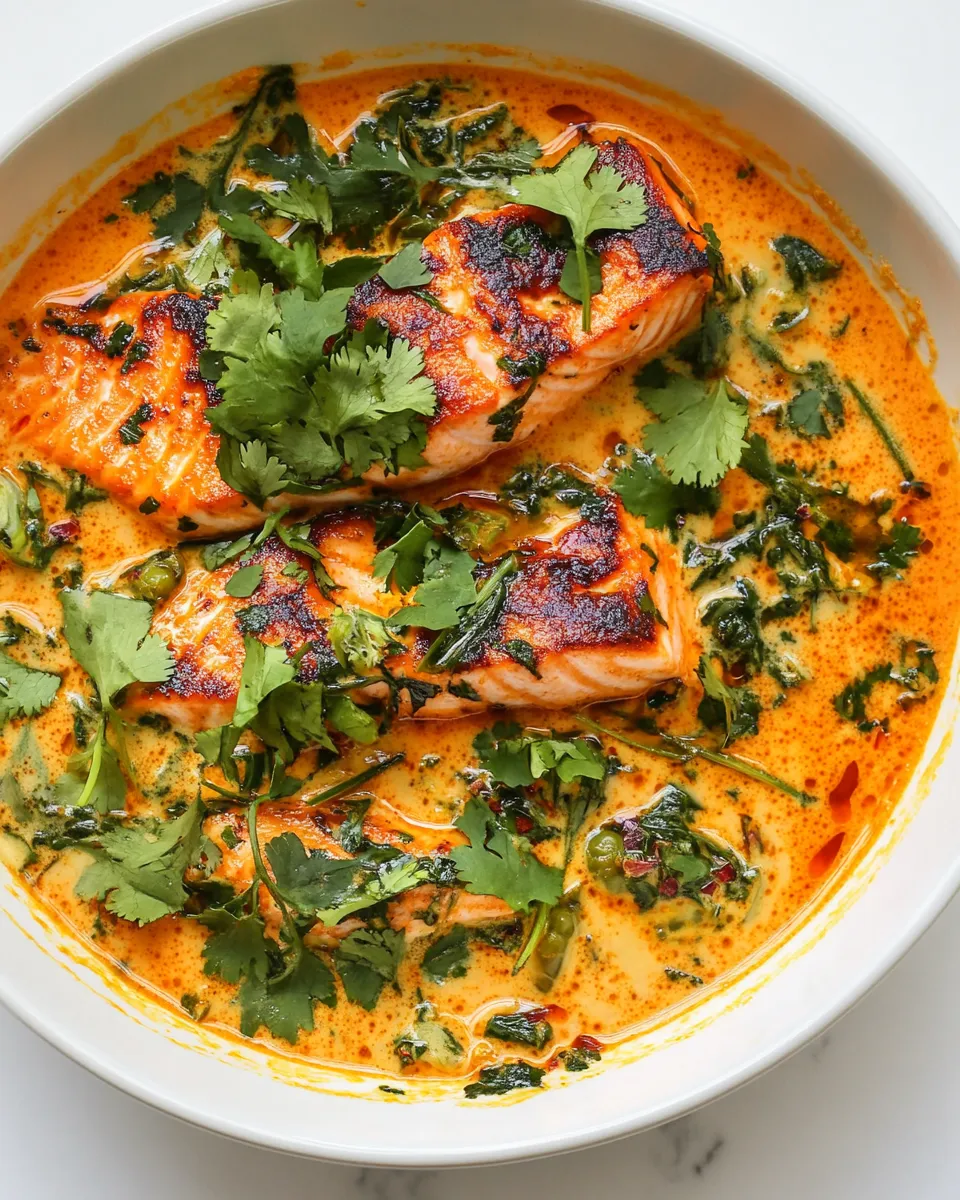
Salmon Coconut Curry (Thai Inspired)
Equipment
- Skillet
- Knife
- Cutting Board
- Spatula
- Paper Towels
- Plate
Ingredients
Ingredients
- 1 poundfresh salmon
- Salt & pepperto taste
- 1 tablespoonolive oil
- 1 tablespoonbutter
- 1/2 mediumonionchopped
- 2 clovesgarlicminced
- 2 heaping tablespoonsThai red curry paste
- 1/2 teaspoonfish sauce optional but recommended, see note
- 1 13.5 ounce canfull-fat coconut milk
- 1/2 teaspoonbrown sugar
- 1/2 cupmatchstick cut carrots
- 1 heaping cupchopped broccolini
- 1 teaspoonlime juice
- 2 tablespoonstorn/chopped fresh basil
- 2 tablespoonschopped fresh cilantro
Instructions
Instructions
- Cut the 1 pound fresh salmon into 4 equal pieces. Pat both sides dry with paper towels and season both sides with salt and pepper to taste.
- Heat a skillet over medium-high heat. Add 1 tablespoon olive oil and 1 tablespoon butter and let the pan heat for a minute or two, until the butter has melted and the fats are shimmering.
- Place the salmon in the skillet skin-side down (if the fillets have skin). Cook without moving for 5 minutes.
- Flip the salmon and cook for another 2–3 minutes, until the fish is almost cooked through. If the salmon sticks when you try to flip it, give it a little longer to release naturally; do not force it.
- Transfer the salmon to a plate. If you prefer not to eat the skin, slide the skin off now before returning the salmon to the pan later.
- Spoon most of the fat out of the skillet, leaving about 1 tablespoon of oil/butter in the pan.
- Add 1/2 medium chopped onion to the skillet and sauté about 3 minutes, until the onion is softened and beginning to brown. Stir in 2 minced garlic cloves and 2 heaping tablespoons Thai red curry paste and cook, stirring constantly, for 1 minute.
- Pour in 1/2 teaspoon fish sauce (optional), 1 (13.5 ounce) can full-fat coconut milk, and 1/2 teaspoon brown sugar. Add 1/2 cup matchstick-cut carrots and 1 heaping cup chopped broccolini. Stir to combine.
- Bring the sauce to a gentle simmer (small bubbles), then cook about 5 minutes, until the vegetables are tender-crisp (cook a little longer if you prefer softer vegetables).
- Stir in 1 teaspoon lime juice. Nestle the cooked salmon pieces back into the sauce and heat for 2–3 minutes, just until the salmon is warmed through.
- Taste and adjust seasoning with more salt and pepper if needed. Sprinkle 2 tablespoons torn/chopped fresh basil and 2 tablespoons chopped fresh cilantro over the dish and serve immediately.
Notes
If you don’t want to buy fish sauce just for this recipe, you can swap with soy sauce, but it won’t have quite the same effect. I always keep some in my fridge… it really enhances Asian-inspired cooking!
You can chop (julienne) your own carrots vs. using the pre-cut kind that I did and use broccoli instead of broccolini… just be sure to cut everything very small.
This recipe is also in chapter 4 of theSalt & Lavender: Everyday Essentialscookbook.