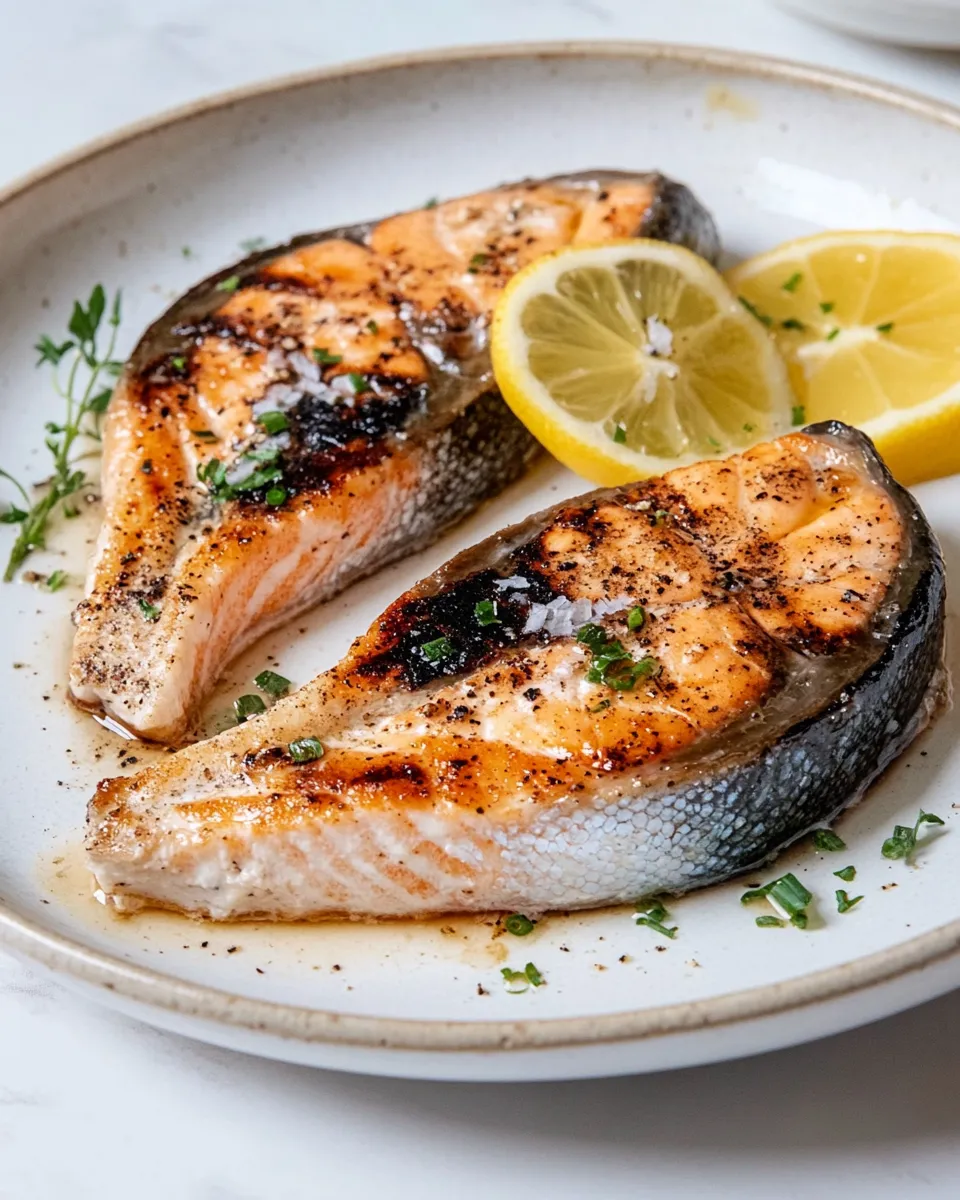
I like salmon because it cooks quickly and rarely goes wrong when you treat it simply. This Salmon Steak method gives you a crisp, golden exterior and tender, flaky flesh inside with a glossy, garlicky butter finish. I keep it on the weeknight rotation because it takes minimal hands-on time and feels special on the plate.
The technique is straightforward: dry the fish, season lightly, sear in hot oil, then flip and baste with butter and garlic. A final squeeze of lemon brightens everything. No complicated marinades, no long waits—just direct heat and a short, confident finish.
Below you’ll find the ingredient checklist, step-by-step directions drawn from the exact method I use, and practical tips to avoid common mistakes. Read through if you want clarity, or jump straight to the directions and get cooking.
Ingredient Checklist
Ingredients
- 2 salmon steaks (1-inch thick, about 6 ounces each) — Pat dry to promote browning and help the seasoning stick.
- 3/4 teaspoon sea salt — Seasons the fish evenly; use measured salt for balance.
- 1/4 teaspoon black pepper — A light grind to add background warmth without overpowering.
- 1 1/2 tablespoons olive oil — Provides a hot, stable surface for searing; heat until it shimmers.
- 1 tablespoon unsalted butter — Added after flipping to baste and add richness.
- 1 tablespoon fresh lemon juice (juice of 1/2 lemon) — Squeezed over the finished fish for brightness.
- 1 teaspoon minced garlic — Added to the butter when you flip to infuse the basting liquid.
Directions: Salmon Steak
- Pat 2 salmon steaks (about 1-inch thick, ~6 ounces each) dry with paper towels and season both sides evenly with 3/4 teaspoon sea salt and 1/4 teaspoon black pepper.
- Heat 1 1/2 tablespoons olive oil in a nonstick skillet over medium-high heat until the oil shimmers.
- Carefully place the salmon steaks in the skillet (leave space between them) and cook undisturbed for about 4 minutes, until the first side is golden and crisp.
- Flip the salmon steaks using a spatula or tongs. Immediately add 1 tablespoon unsalted butter and 1 teaspoon minced garlic to the skillet.
- As the butter melts, tilt the pan and spoon the melted butter and garlic over the salmon (baste) while cooking for an additional 4 minutes, or until cooked to your desired doneness.
- Remove the skillet from the heat, squeeze 1 tablespoon fresh lemon juice (juice of 1/2 lemon) over the salmon, and serve immediately.
Why It’s My Go-To
This method is reliable and fast. It gives a crisp exterior without drying the interior because you sear first and then finish with butter and gentle basting. The flavors are simple—salt, pepper, garlic, butter, and lemon—so the salmon itself shines. I use it when I want a meal that feels put-together but doesn’t wreck the evening with fuss.
Another reason I reach for this approach is consistency. Two minutes too long or too short can make a difference, but following the times above and using a fingertip press or a quick flake test keeps results predictable. The butter-and-garlic baste lifts the fish visually and flavor-wise, turning a quick pan-cook into something that looks and tastes like you took your time.
International Equivalents
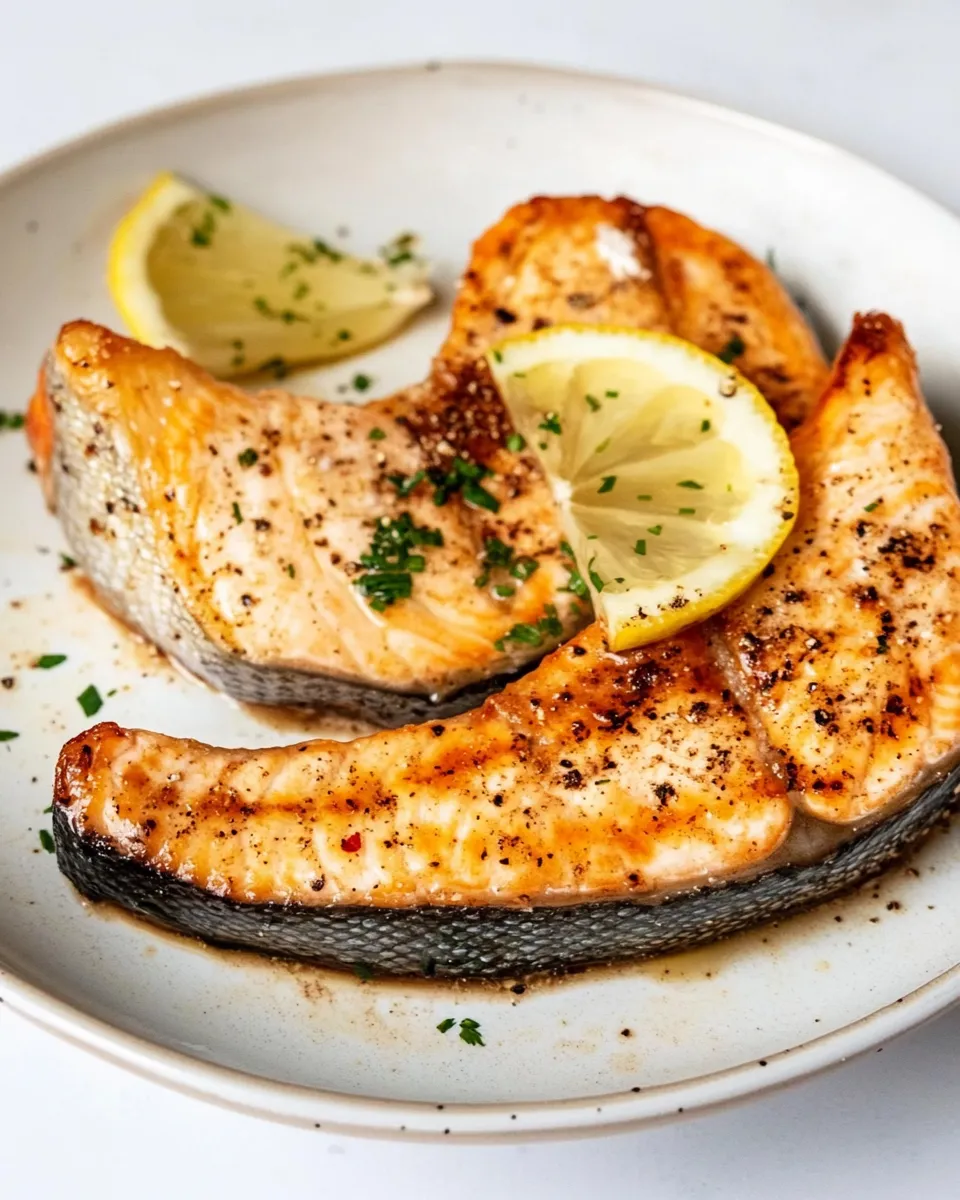
Across cuisines, the principle is the same: high-heat sear, finish with aromatics and acid. Think pan-seared salmon in French bistros, or a simple Mediterranean pan-roast served with lemon and olive oil. In many kitchens the butter basting mirrors techniques used for fish and meat alike—what changes is the seasoning profile, not the core method.
If you travel mentally to northern Europe, you’ll see similar salmon preparations with dill and mustard; in coastal Mediterranean spots you’ll find olive oil, lemon, and herbs. The sear-and-baste approach translates easily if you want to add regional accents later—just keep the cooking times and heat technique the same.
What You’ll Need (Gear)
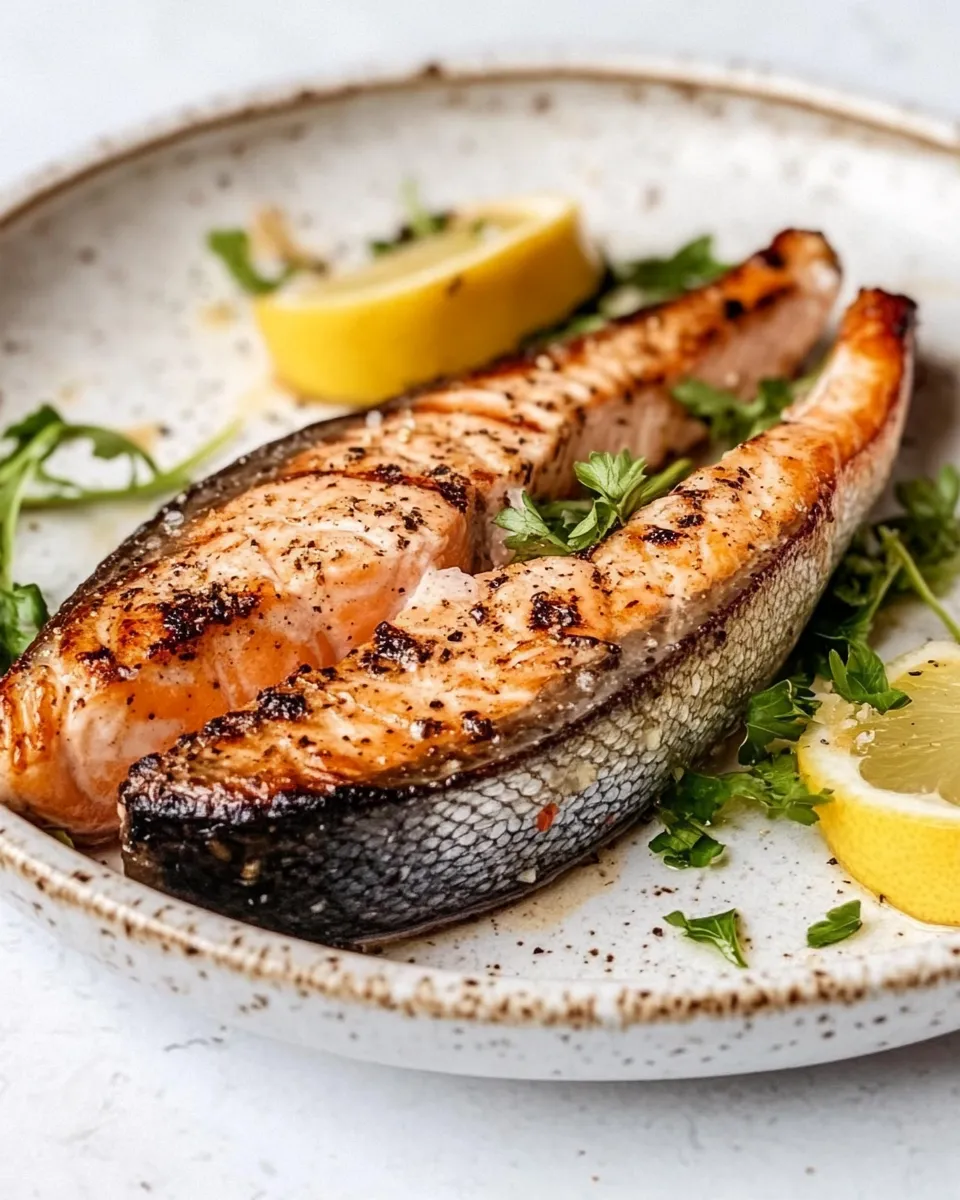
- Nonstick skillet (10–12 inch recommended) — gives a predictable sear and easy release.
- Spatula or tongs — for a confident flip without tearing the fish.
- Paper towels — to pat the salmon dry; this small step is crucial for browning.
- Measuring spoons — for accurate salt, pepper, oil, and butter amounts.
- Knife and cutting board — for handling the lemon and any garnishes.
- Small bowl or cup — to hold the minced garlic or lemon juice if you prep ahead.
- Serving plates warmed briefly — optional, but keeps the fish hot as you plate.
Missteps & Fixes
Common Mistakes
- Overcrowding the pan — the fish steams instead of searing, so leave space between steaks.
- Skipping the dry step — wet skin or flesh prevents a crisp crust; always pat dry.
- Using too-low heat — you won’t get that golden crust. Heat the oil until it shimmers first.
- Adding butter too early — butter can brown and burn if added before the flip on higher heat.
Quick Fixes
- If the crust isn’t developing, raise the heat slightly and give the fish more time undisturbed; a quick flip and return to medium-high will help.
- If the garlic browns or burns, remove the pan from the heat immediately and finish by spooning the remaining butter over the fish; burnt garlic is bitter and should be discarded.
- If your salmon overcooks, slice it thin and use as a warm topping for grain bowls or salads where residual moisture is less obvious.
Holiday-Friendly Variations
When you want to dress this recipe up for a holiday or special dinner, focus on presentation and a small finishing touch rather than overhauling the method. Serve the steaks on a bed of buttered roasted vegetables or alongside a warm grain pilaf. Add a scattering of fresh herbs at the end for color and aroma.
To make plating feel more festive, place the salmon on a long platter, spoon the garlicky butter from the pan over each steak, and finish with a wedge of lemon for guests to squeeze. Small, elegant sides—simple roasted asparagus or glazed carrots—bring the meal into holiday territory without complicating the cook.
Method to the Madness
The approach uses three simple ideas: dry for browning, hot oil for searing, then butter for flavor and sheen. Drying the fish is the quiet step that makes the most difference. Moisture is the enemy of a crust; removing it allows Maillard reactions to occur, producing that desirable golden color and slightly nutty flavor on the surface.
Oil tolerates higher temperatures and creates an even cooking surface. The initial 4-minute undisturbed sear sets the crust. Flipping and introducing butter at that point lowers the skillet’s smoke point slightly while adding depth. Basting with melted butter infused by garlic ensures even coating and adds both flavor and moisture right at the end of cooking, which helps the interior stay tender.
Keep It Fresh: Storage Guide
Leftover cooked salmon will keep well in the refrigerator for up to two days when stored in an airtight container. Cool it to room temperature (no more than two hours out of the pan) before refrigerating. Reheat gently—either in a low oven (300°F / 150°C) for a few minutes or briefly in a skillet over low heat—so you don’t dry it out.
Raw salmon steaks should be used within one to two days of purchase if refrigerated. For longer storage, wrap tightly and freeze; properly wrapped salmon keeps for a few months in the freezer. Thaw overnight in the refrigerator before cooking, then proceed with the recipe as written.
Your Top Questions
Can I use salmon fillets instead of steaks?
Yes. Fillets cook similarly but may need slightly less time depending on thickness. Keep the same approach: dry, season, sear undisturbed, flip, add butter and garlic, baste, and finish with lemon.
How do I know when it’s done?
Use the flake test: press gently with a fork—properly cooked salmon will flake along the muscle lines but still look moist. For a more precise check, a thermometer should read about 125–130°F (52–54°C) for medium-rare to medium, taken at the thickest part.
Can I make this ahead?
You can cook the salmon ahead and reheat gently, but it’s best served immediately after cooking for the best crust and texture. If you must prepare ahead, slightly undercook and finish in a hot pan or oven before serving.
What if I don’t have a nonstick skillet?
A well-seasoned stainless steel or cast-iron skillet will work. Just ensure it’s properly heated and use enough oil to prevent sticking. Be slightly gentler when flipping to avoid tearing the fish.
Final Bite
This Salmon Steak method is about respecting the fish and keeping the process simple. Dry it, season it, sear it, baste it, and finish with lemon. It’s fast, forgiving, and consistently satisfying—perfect for busy weeknights and easy enough for guests. Cook with confidence, trust the timing, and enjoy the bright, buttery finish every time.
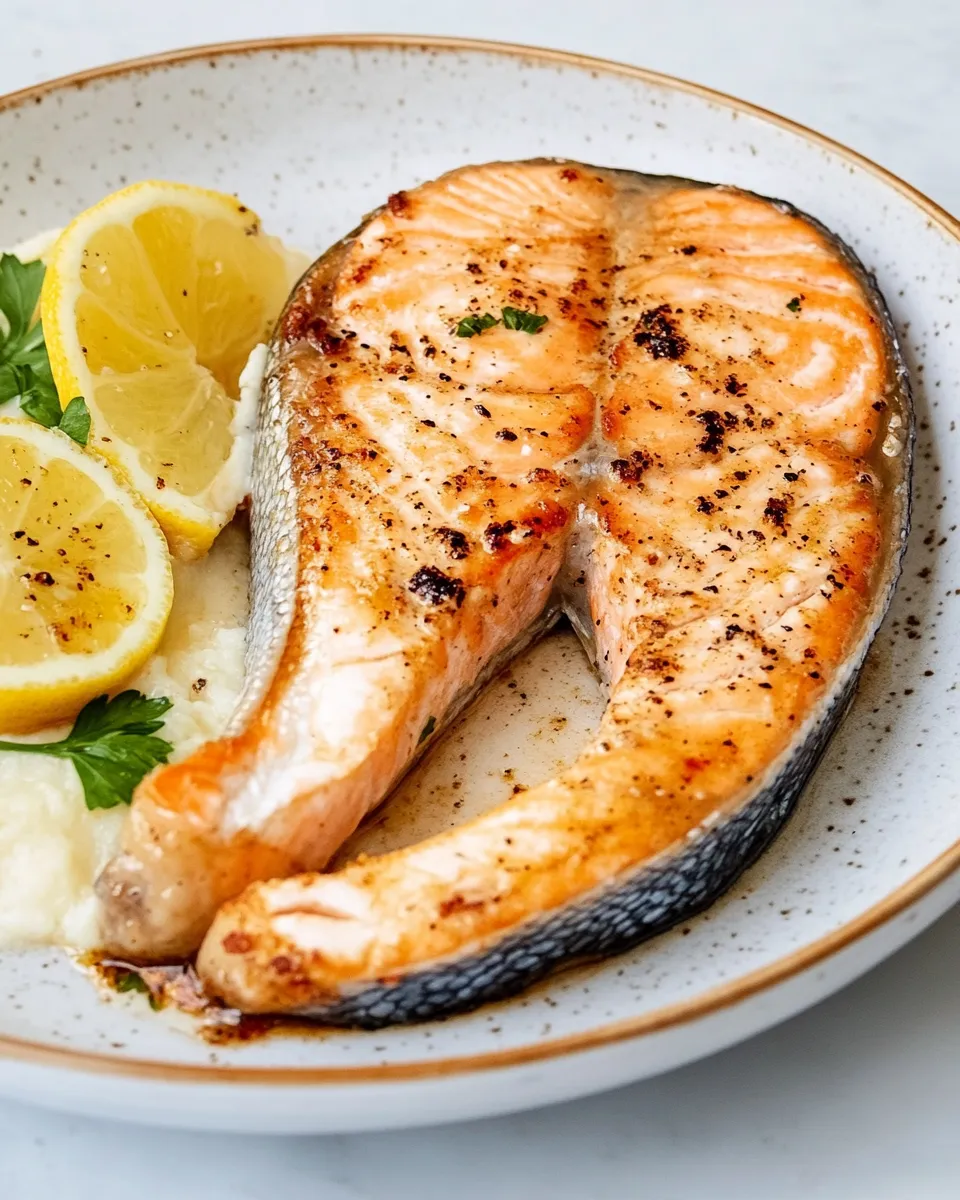
Salmon Steak Recipe
Equipment
- nonstick skillet
- Spatula
- Tongs
- Paper Towels
Ingredients
Ingredients
- 2 salmon steaks1-inch thick about 6 ounces each
- 3/4 teaspoonsea salt
- 1/4 teaspoonblack pepper
- 1 1/2 tablespoonsolive oil
- 1 tablespoonunsalted butter
- 1 tablespoonfresh lemon juicejuice of 1/2 lemon
- 1 teaspoonminced garlic
Instructions
Instructions
- Pat 2 salmon steaks (about 1-inch thick, ~6 ounces each) dry with paper towels and season both sides evenly with 3/4 teaspoon sea salt and 1/4 teaspoon black pepper.
- Heat 1 1/2 tablespoons olive oil in a nonstick skillet over medium-high heat until the oil shimmers.
- Carefully place the salmon steaks in the skillet (leave space between them) and cook undisturbed for about 4 minutes, until the first side is golden and crisp.
- Flip the salmon steaks using a spatula or tongs. Immediately add 1 tablespoon unsalted butter and 1 teaspoon minced garlic to the skillet.
- As the butter melts, tilt the pan and spoon the melted butter and garlic over the salmon (baste) while cooking for an additional 4 minutes, or until cooked to your desired doneness.
- Remove the skillet from the heat, squeeze 1 tablespoon fresh lemon juice (juice of 1/2 lemon) over the salmon, and serve immediately.