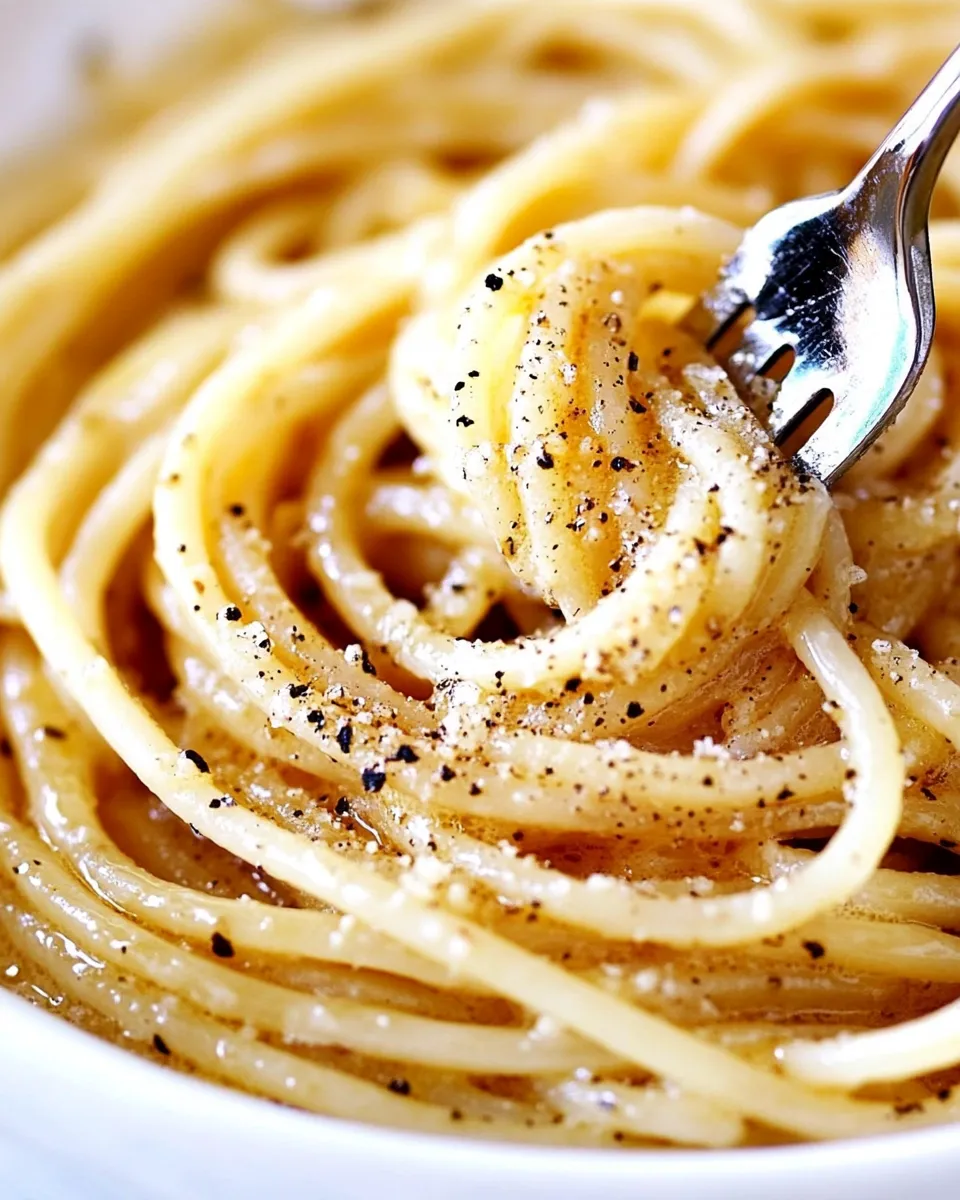
I make cacio e pepe in my kitchen at least once a month. It’s one of those dishes that looks like little more than pasta, cheese, and pepper on paper — and yet, when you get the technique right, it becomes something silky, bright, and utterly addictive. No long shopping lists. No precise timing for dozens of components. Just a handful of ingredients executed well.
This recipe focuses on technique and restraint. The balance is everything: the water you reserve, the way the butter and oil bloom the pepper, the temperature when you add the cheese. Follow those steps and you’ll have a sauce that clings to each strand without turning gluey.
Below you’ll find the exact ingredient list and a step-by-step guide that respects traditional flavors while giving practical, kitchen-tested notes. Read the tips, gather your tools, and don’t rush the emulsification step — that’s where good becomes great.
Gather These Ingredients
- 8 ounces spaghetti — the base of the dish; you may substitute bucatini for a slightly different mouthfeel.
- 1 teaspoon salt — for the pasta water; seasons the pasta from within.
- 3 tablespoons unsalted butter — gives the sauce richness and helps bind the cheese.
- 1 tablespoon extra virgin olive oil — combines with butter to carry the pepper flavor and smooth the sauce.
- 50 turns freshly-cracked coarse black pepper (1 teaspoon) — the star spice; bloom it in fat to release its aroma.
- 1 1/2 cups finely freshly-grated Pecorino Romano — use Pecorino Romano, not Parmesan; finely grate for faster melting and a silkier sauce.
Cacio e Pepe: Step-by-Step Guide
- Bring 2 quarts (8 cups) water to a boil in a Dutch oven or a wide stockpot. Uncover, stir in 1 teaspoon salt (for the pasta water), then add 8 ounces spaghetti (you may substitute bucatini). Cook, stirring often, until the pasta is just barely al dente (usually a few minutes less than the package directions).
- While the pasta cooks, melt 3 tablespoons unsalted butter with 1 tablespoon extra virgin olive oil in a large skillet over medium heat. Add 50 turns freshly-cracked coarse black pepper (1 teaspoon) and cook, stirring, for 1 minute to bloom the pepper. Remove the skillet from the heat and set it aside until the pasta is done.
- When the pasta is just al dente, reserve 1 1/4 cups of the cooking water, then drain the pasta in a colander and keep the pasta warm.
- Off the heat, slowly whisk 1 cup of the reserved pasta water into the butter–pepper mixture in the skillet. Let the mixture stand for 3 minutes.
- Gradually whisk in 1 1/2 cups finely freshly-grated Pecorino Romano (NOT Parmesan), a little at a time, until combined. Return the skillet to the lowest heat and whisk constantly until the cheese is fully melted and the sauce is smooth. If the sauce is too thick, add more reserved pasta water a few tablespoons at a time to loosen.
- Add about half of the drained pasta to the skillet and stir or toss to coat the pasta evenly. Add the remaining pasta and continue tossing until all strands are evenly coated and the sauce is creamy, adding any remaining reserved pasta water as needed to achieve the desired consistency.
- Taste and adjust seasoning if desired (more freshly-cracked coarse black pepper or a bit more salt). Serve immediately.
Why This Cacio e Pepe Stands Out
It’s deceptively simple. The lifts in flavor come from technique rather than complexity. Blooming the pepper in butter and oil wakes up its aromatic oils; the reserved pasta water, rich in starch, is the only binder you need to make cheese turn into sauce. Freshly-grated Pecorino Romano gives a sharp, tangy backbone that melts into a glossy coating.
This version uses butter plus olive oil for extra silkiness and a touch of richness that mimics traditional cheesemaker practices without overpowering the pepper. Also, using a low heat when melting the cheese keeps the proteins from seizing and the sauce from becoming gritty — that one choice makes the difference between clumpy pasta and a silken finish.
What to Use Instead
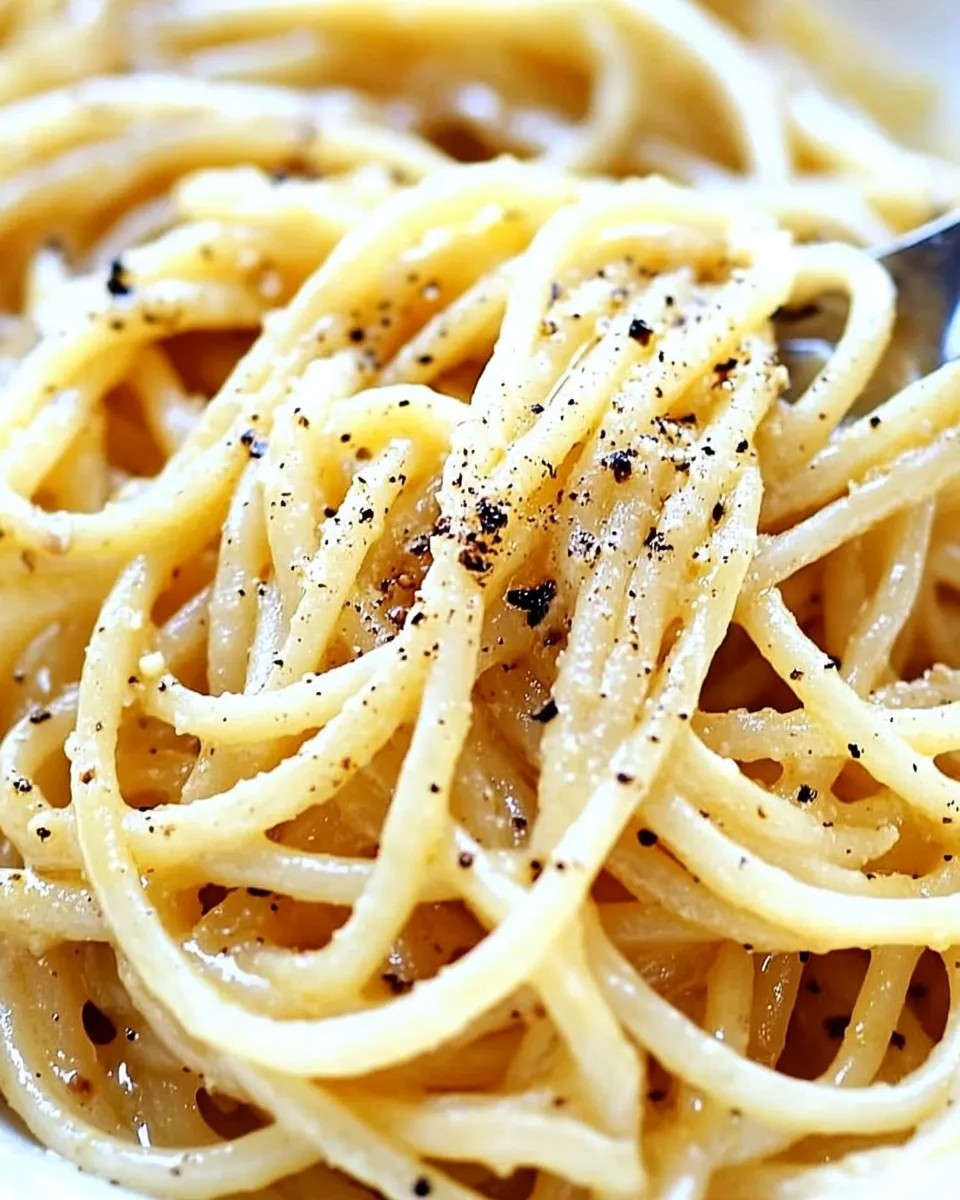
- Spaghetti — substitute with bucatini if you want a slightly chewier center; both hold the sauce well.
- Pecorino Romano — if you must substitute, use a sharp, aged sheep’s milk cheese, but know it will change the flavor profile; do not use Parmesan if you want classic cacio e pepe.
- Butter + olive oil — you can omit butter for an olive oil–only version, but the texture will be a bit lighter and less luxurious.
Equipment at a Glance
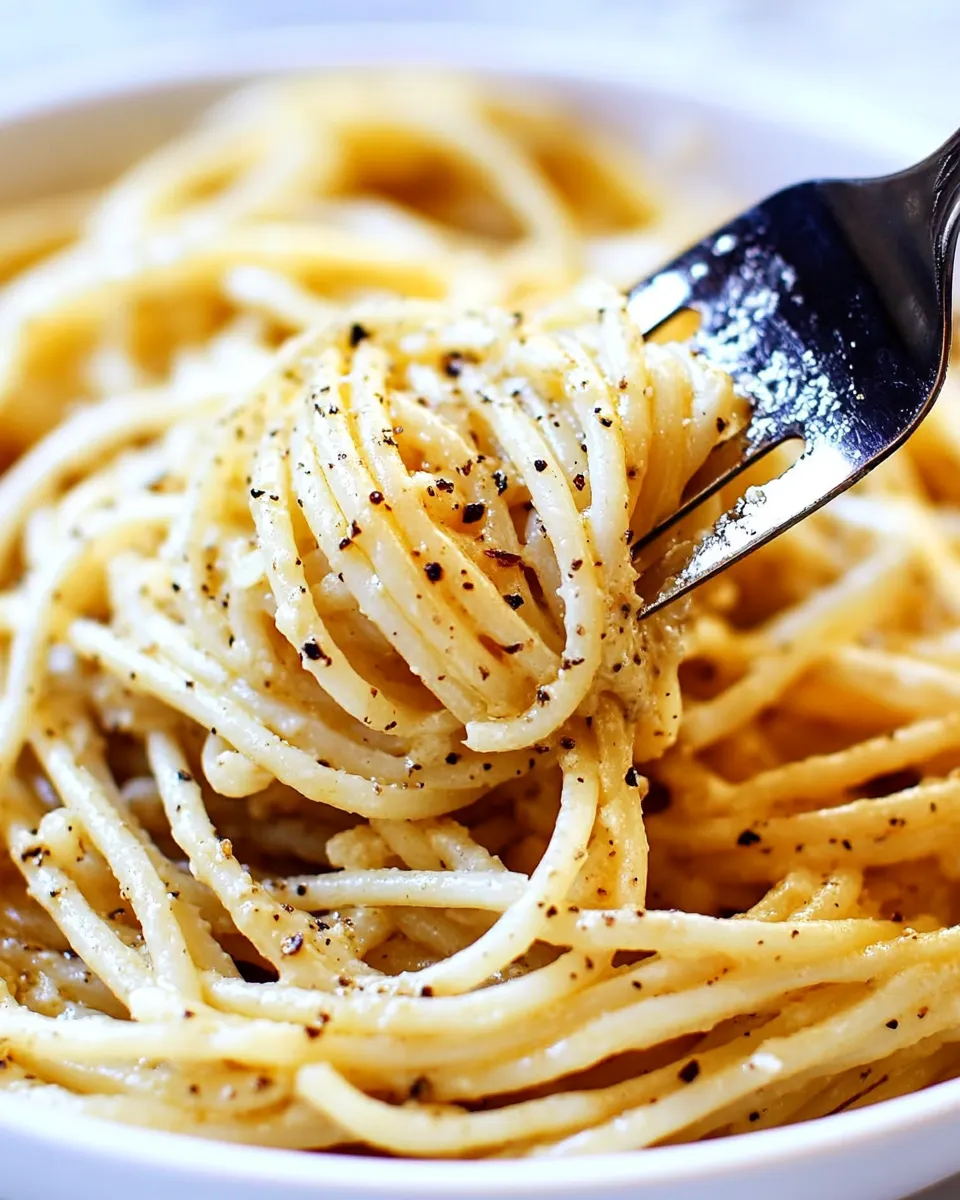
Essential
- Dutch oven or wide stockpot — for cooking pasta in plenty of boiling water.
- Large skillet — wide enough to toss the pasta comfortably with the sauce.
- Colander — to drain the pasta quickly while keeping it warm.
- Fine grater or Microplane — for finely grating Pecorino so it melts smoothly.
- Measuring tools — spoons and cups to match the recipe amounts precisely.
Nice to Have
- Tongs or long-handled spoon — for tossing pasta without breaking strands.
- Heatproof whisk — helpful when emulsifying the cheese into the water–butter mixture.
Avoid These Mistakes
There are a few easy ways to ruin this dish, and they’re all avoidable.
- Don’t overcook the pasta. If it’s too soft you’ll lose structure and the sauce won’t cling properly.
- Don’t add cheese to very hot pan without enough water. High heat and dry conditions make cheese seize into grainy clumps instead of becoming a silky sauce.
- Don’t skip reserving enough pasta water. You need that starchy liquid to emulsify the cheese and reach the right consistency.
- Don’t use pre-grated Pecorino. It often contains anti-caking agents and won’t melt as smoothly as freshly-grated cheese.
Seasonal Ingredient Swaps
Cacio e pepe is a minimalist dish, but you can nudge it seasonally without masking the core flavors.
- Spring — add a scatter of blanched peas for color and a sweet pop, tossed in at the last second.
- Summer — finish with a few shavings of lemon zest for brightness; use sparingly so the pepper and Pecorino remain dominant.
- Fall — a small handful of toasted walnuts can add texture; pulse them lightly so they don’t overwhelm.
- Winter — fold in sautéed mushrooms for an earthy, warming variation.
Cook’s Commentary
I treat the cooking water like an ingredient, not a bystander. Starch from the pasta is the glue that brings fat and cheese together into a sauce. That’s why the reserved 1 1/4 cups matter — you’ll use only what you need, but having it on hand means you never skimp on emulsion.
Also, measure your Pecorino by volume in this recipe: 1 1/2 cups finely grated. Finely grating lets the cheese melt uniformly. If you grate coarsely, you’ll need more heat and more stirring, which risks breaking the sauce.
Save It for Later
Cacio e pepe is best eaten immediately; the sauce changes texture as it cools. If you have leftovers, reheat gently with a splash of water or milk in a skillet over low heat, stirring constantly until the sauce loosens. Avoid the microwave when possible — it can make the cheese separate.
For make-ahead planning: cook the pasta about 30 seconds under al dente, toss with a touch of olive oil to prevent sticking, and refrigerate. Reheat in a skillet with reserved pasta water or a couple tablespoons of hot water and finish with freshly-grated Pecorino and cracked pepper.
Top Questions & Answers
- Can I use Parmesan instead of Pecorino? — Traditional cacio e pepe uses Pecorino Romano (the recipe specifies NOT Parmesan). Parmesan is milder and changes the intended sharp, salty profile; if you use it, expect a different taste and potentially a different melting behavior.
- How do I fix a grainy sauce? — Chill the pan briefly, add a few tablespoons more hot pasta water off the heat, and whisk vigorously. Graininess usually means the cheese overheated or lacked enough starchy water to emulsify.
- Is butter traditional? — Butter isn’t in every classic Roman recipe, but it helps create a silkier mouthfeel and is included here for texture. You can omit it if you prefer olive oil only.
- How much pepper is too much? — The recipe lists 50 turns of a grinder (about 1 teaspoon). Taste as you go; freshly-cracked pepper is bold, so add more only if you want a sharper bite.
- Can I make this gluten-free? — Yes, use a sturdy gluten-free spaghetti that behaves like wheat pasta. Cooking times and starch release may differ, so adjust reserved water accordingly.
That’s a Wrap
Cacio e pepe rewards attention more than effort. Watch your pasta, bloom the pepper, and be patient when you emulsify the cheese. The result is a simple plate that tastes sophisticated because the components are treated with care.
If you try this version, start by noting how the sauce behaves as you add cheese — that will teach you the rhythm for next time. Serve it hot, serve it immediately, and don’t forget an extra grind of pepper at the table.
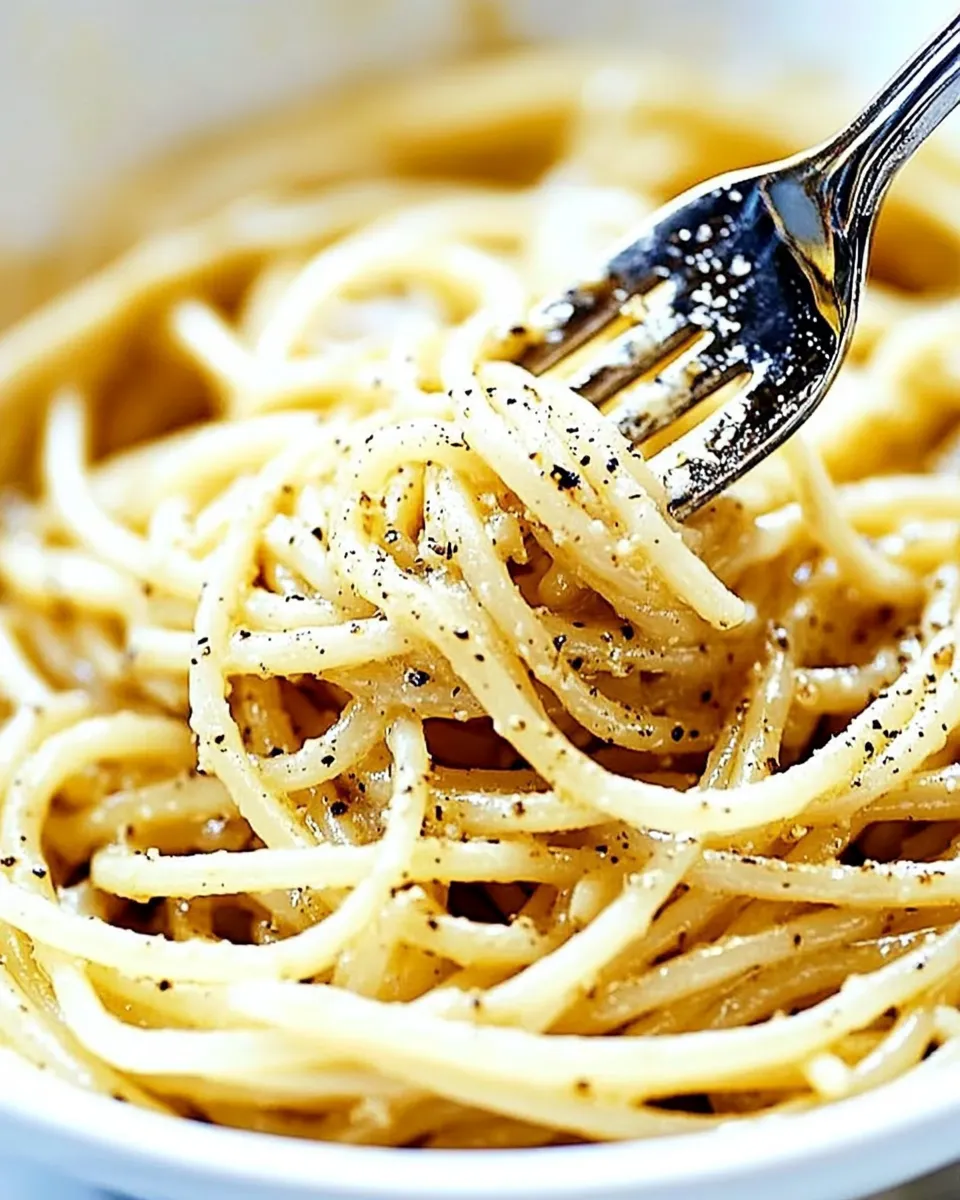
The Best Cacio e Pepe Recipe
Equipment
- Dutch oven or wide stockpot
- Large Skillet
- Colander
- Whisk
Ingredients
Ingredients
- 8 ouncesspaghettimay sub bucatini
- 1 teaspoonsalt for pasta water
- 3 tablespoonsunsalted butter
- 1 tablespoonextra virgin olive oil
- 50 turns freshly-cracked coarse black pepper 1 teaspoon
- 1 1/2 cupsfinely freshly-grated Pecorino RomanoNOT Parmesan
Instructions
Instructions
- Bring 2 quarts (8 cups) water to a boil in a Dutch oven or a wide stockpot. Uncover, stir in 1 teaspoon salt (for the pasta water), then add 8 ounces spaghetti (you may substitute bucatini). Cook, stirring often, until the pasta is just barely al dente (usually a few minutes less than the package directions).
- While the pasta cooks, melt 3 tablespoons unsalted butter with 1 tablespoon extra virgin olive oil in a large skillet over medium heat. Add 50 turns freshly-cracked coarse black pepper (1 teaspoon) and cook, stirring, for 1 minute to bloom the pepper. Remove the skillet from the heat and set it aside until the pasta is done.
- When the pasta is just al dente, reserve 1 1/4 cups of the cooking water, then drain the pasta in a colander and keep the pasta warm.
- Off the heat, slowly whisk 1 cup of the reserved pasta water into the butter–pepper mixture in the skillet. Let the mixture stand for 3 minutes.
- Gradually whisk in 1 1/2 cups finely freshly-grated Pecorino Romano (NOT Parmesan), a little at a time, until combined. Return the skillet to the lowest heat and whisk constantly until the cheese is fully melted and the sauce is smooth. If the sauce is too thick, add more reserved pasta water a few tablespoons at a time to loosen.
- Add about half of the drained pasta to the skillet and stir or toss to coat the pasta evenly. Add the remaining pasta and continue tossing until all strands are evenly coated and the sauce is creamy, adding any remaining reserved pasta water as needed to achieve the desired consistency.
- Taste and adjust seasoning if desired (more freshly-cracked coarse black pepper or a bit more salt). Serve immediately.
Notes
Grate cheese yourself.Freshly-grated Pecorino Romano is a MUST in this Cacio e Pepe recipe. If you use pre-grated cheese, your sauce will by clumpy. Pre-packaged cheeses are coated with anti-clumping chemicals which inhibit them from melting beautifully.
Grate cheese first.The freshly grated cheese needs to be added to the hot water/butter mixture minutes after the water is added – there is no time to stop and grate your cheese, so take care to grate your cheese before you begin cooking. You can grate the cheese while the pasta water is coming to a boil but that’s as close as I’d cut it.
Use finely grated cheese.Grate your cheese on the finest holes of your cheese grater, the small, prickly side of the box grater. We want to produce powdery Pecorino Romano that looks like what comes in the store-bought containers with the green lid. Cheese that’s grated on larger holes will clump because it takes the cheese longer to melt and the larger amount of surface area allows for more clinging potential.
Do NOT adjust the amount of water for cooking the pasta.The extra starchy pasta water is critical to the success of this Cacio e Pepe recipe. Do NOT increase the amount of water or it will become less starchy.
Don’t reserve pasta water early.The pasta water will become increasingly starchy as it cooks with the pasta so it is critical to not reserve the water before the pasta is done cooking and releasing starch.
Salt water.Salting the pasta water infuses the pasta and the water with flavor which translates to more flavorful Cacio e Pepe.
Stir pasta frequently while it cooks.Because we are cooking the pasta in less water than normal, make sure to stir the pasta frequently while cooking so that it doesn’t stick to the pot, this includes multi-tasking while you melt the butter and sauté the pepper.
Don’t overcook pasta.Just like clumpy cheese can ruin Cacio e Pepe, so can mushy pasta. Make sure to cook your pasta just until barley al dente, meaning it has a bite, this is usually a couple minutes before the box says – so set your timer accordingly. You want to avoid over-cooking the pasta because it will continue to cook a little when combined with the sauce.
How do you know when pasta is done?The only way to know when your pasta is done is to taste it! I remove a strand of pasta with a slotted spoon, rinse it in cool water and then taste. Don’t be tempted to bite into pasta straight from the boiling pot-you will burn your tongue!
Let pasta water cool.Allowing the pasta water to cool for 3 minutes before adding it to the butter prevents it from being too hot when the cheese is added which can cause the cheese to seize. Instead, resting the water and then gradually melting the cheese over low heat provides a seamless, gradual melting process.
Use a large enough pan.Use a pan that is large enough to eventually hold all of the ingredients, including the pasta, with wiggle room to comfortable twirl and toss without whipping sauce everywhere.
Use freshly cracked pepper.Please do NOT use pre-ground pepper. Unlike pre-ground pepper, freshly coarsely ground pepper has not been oxidized, or exposed to oxygen, which means it has a richer flavor and tastes worlds better than ground pepper. Its coarse texture also adds the peppery heat we love in Cacio e Pepe.
Toast pepper first, don’t add after.The pepper should be added directly to the butter and olive oil. Toasting the pepper infuses the sauce with even pepper flavor whereas adding pepper after will not result in as deep of flavor and it will seem like an unevenly distributed after thought as opposed to being one with the sauce.
Don’t add cheese all at once.Slowly whisking the cheese into the sauce a little at a time will help the cheese melt more evenly because it has more liquid to surround it instead of being slammed against surrounding cheese.
Don’t confuse cheese not melting with clumping.Your cheese will not magically, instantaneously melt into glossy seduction as soon as it hits the butter/water which is perfectly okay – it will not stay this way. The cheese will gradually melt as you whisk constantly over low heat.
Continue to whisk until cheese is melted.Your cheese might take more or less than 5 minutes to melt depending on the actual heat of the sauce, quality of cheese and size of pan. The important thing is to continue to whisk until the cheese has melted – as long or as little time as required.
Thin sauce if needed.If the pasta seems dry after it is combined with the sauce, stir in additional pasta water just a little at a time.
Thicken sauce if needed.If the sauce is still too wet/runny after you add the pasta, gently simmer just until it has reduced enough to cling to the pasta.
Let the pasta rest before serving.Letting the dish rest briefly before serving allows he flavors to develop and the sauce to thicken.