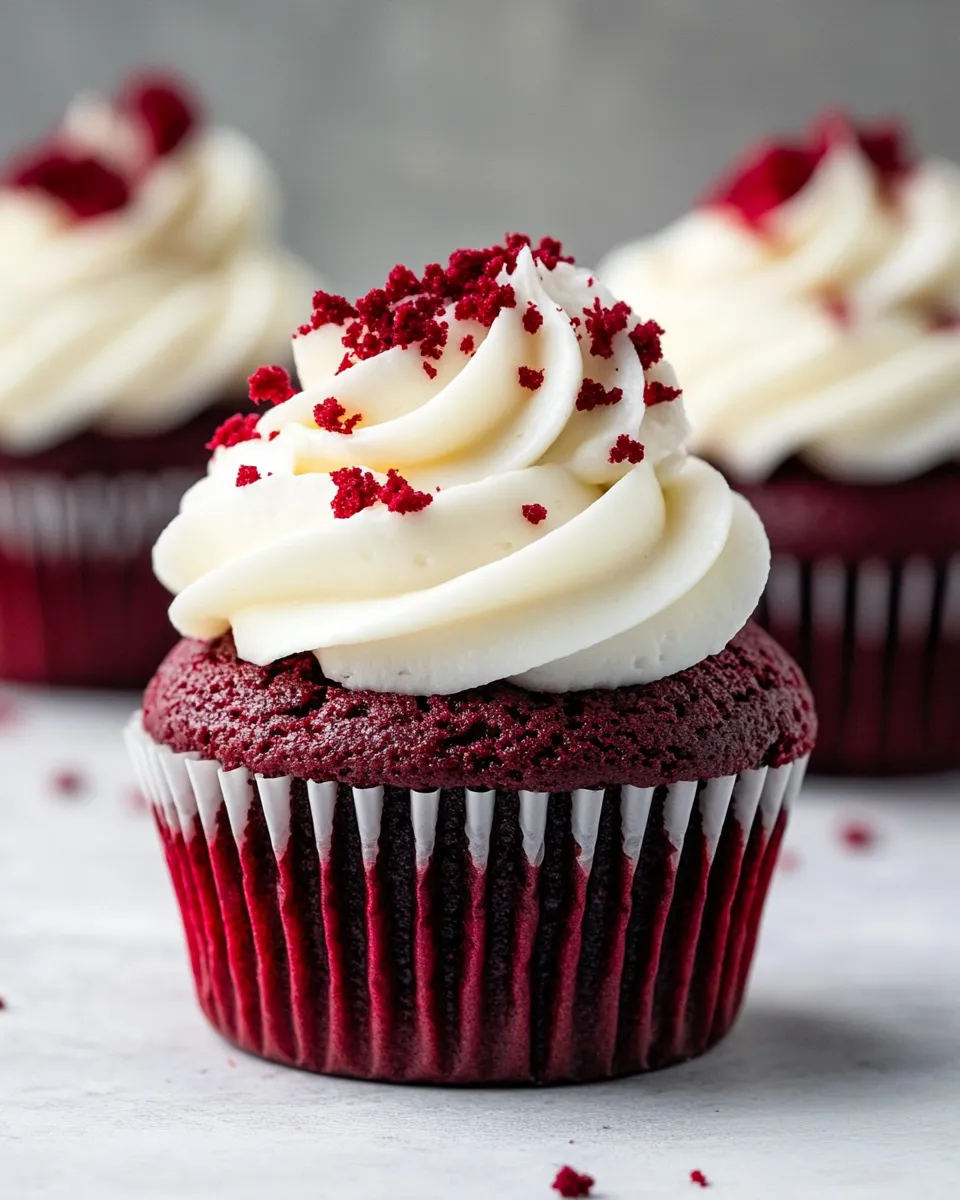
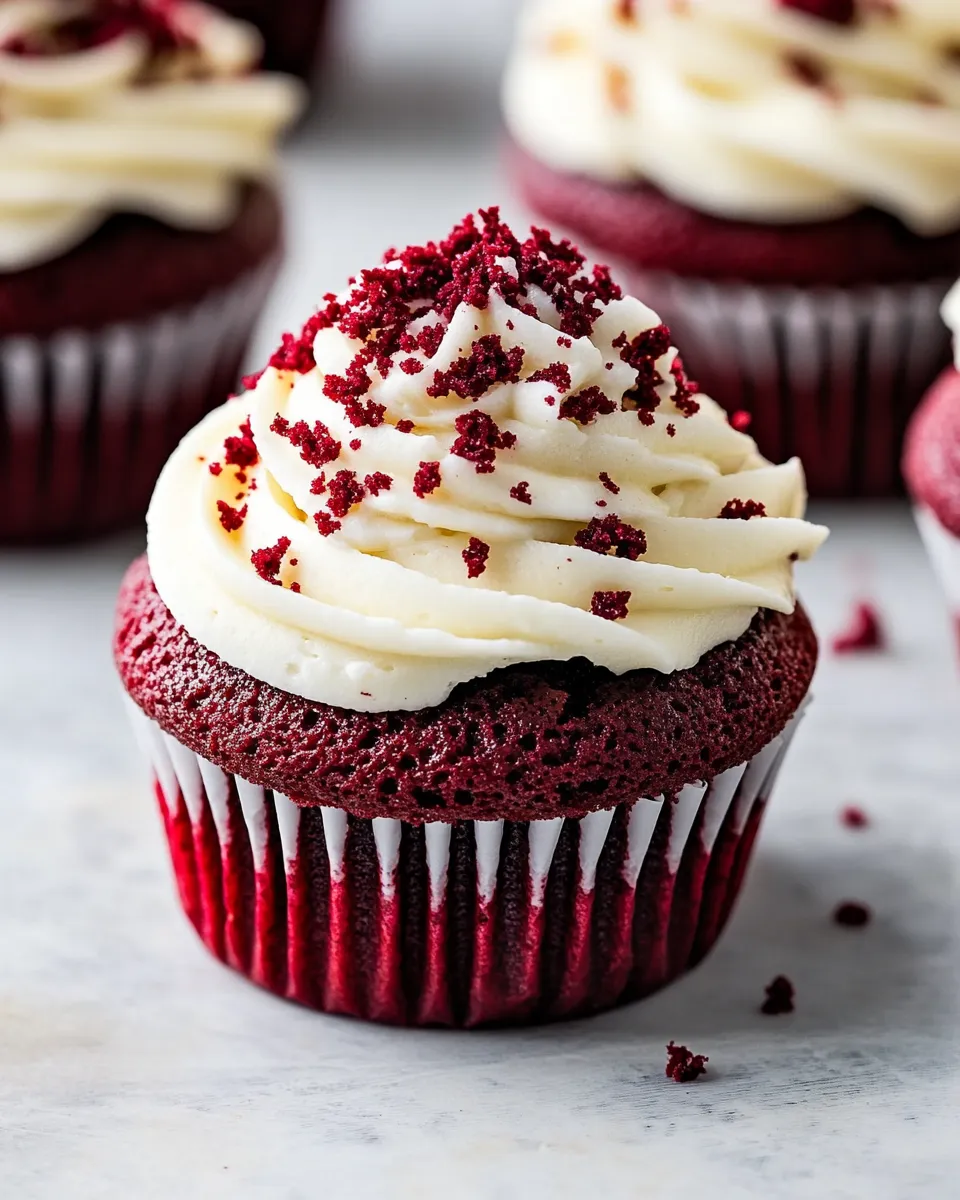
Red velvet cupcakes are one of those classics that look dressed up for a party but don’t ask for a lot of fuss in the kitchen. These are the cupcakes I reach for when I want something tender, slightly chocolatey, and bright enough to make a wedge of frosting feel like the main event. The recipe below produces consistently even crumb and a smooth, tangy cream cheese frosting that holds up for piping or spreading.
I developed this version to be reliable in busy home kitchens: clear steps, minimal temperature drama, and room-temperature ingredients where it counts. Follow the instructions in order and you’ll get cupcakes that rise properly, stay moist, and pair perfectly with a cream cheese frosting that isn’t too sweet or runny.
I’ll walk you through what to gather, the exact step-by-step build, what can go wrong, and sensible swaps for specific diets. Read straight through before you start, then bake confidently.
What You’ll Gather
Ingredients
- 1 1/4 cup all-purpose flour — provides the cupcake structure; measure properly (spoon-and-level).
- 3/4 teaspoon baking soda — adds lift and reacts with the acidic buttermilk.
- 1/2 teaspoon baking powder — extra rise and lightness.
- 2 tablespoons Unsweetened cocoa powder — gives the subtle chocolate note that defines red velvet.
- 3/4 cup granulated sugar — sweetens and tenderizes the crumb.
- 1/4 teaspoon salt — balances sweetness and enhances flavor.
- 3/4 cup buttermilk (room temperature) — acidity for flavor and tenderness; warm to room temp for even mixing.
- 1/2 cup vegetable oil — keeps cupcakes moist and soft.
- 1 large egg (room temperature) — binds and helps structure.
- 1/2 teaspoon white vinegar — brightens flavor and reacts with leavening.
- 1 teaspoon vanilla extract — flavor for the batter.
- 1 tablespoon liquid red food coloring — gives the classic red hue; liquid works here with the wet ingredients.
- 1/2 cup unsalted butter (room temperature) — for the frosting; should be soft but not greasy.
- 4 Ounces cream cheese (room temperature) — the frosting base; room temp ensures a smooth texture.
- 1 pinch salt — in the frosting to balance sweetness.
- 1 teaspoon vanilla extract — for the frosting’s flavor.
- 2 1/4 cup powdered sugar — sweetens and thickens the frosting; add gradually.
- 1/2 tablespoon Milk, plus more if needed — adjusts frosting consistency; add only a little at a time.
Build (Red Velvet Cupcakes with Cream Cheese Frosting) Step by Step
- Preheat oven to 350°F. Spray a muffin pan with pan spray and line with cupcake liners; set aside.
- In a medium bowl sift together 1 1/4 cup all-purpose flour, 2 tablespoons unsweetened cocoa powder, 3/4 teaspoon baking soda, and 1/2 teaspoon baking powder. Add 3/4 cup granulated sugar and 1/4 teaspoon salt and whisk to combine. Set aside.
- In a large bowl whisk together 3/4 cup buttermilk (room temperature), 1/2 cup vegetable oil, 1 large egg (room temperature), 1/2 teaspoon white vinegar, 1 teaspoon vanilla extract, and 1 tablespoon liquid red food coloring until well combined.
- Add the dry flour mixture to the wet ingredients and whisk until smooth, scraping the bowl as needed and making sure no dry streaks remain.
- Scoop the batter into the prepared liners, filling each about 2/3 full.
- Bake for 18–20 minutes, or until the centers are set and spring back when gently pressed. Remove from the oven.
- Let cupcakes cool in the pan for about 5 minutes, then transfer to a wire rack to cool completely before frosting.
- To make the frosting: in a large bowl beat 1/2 cup unsalted butter and 4 Ounces cream cheese (both room temperature) until smooth. Add 1 pinch salt and 1 teaspoon vanilla extract and beat to combine.
- With the mixer on low, add 2 1/4 cup powdered sugar one cup at a time (the last addition will be 1/4 cup), beating well after each addition and scraping the bowl as needed, until smooth.
- If the frosting is too thick, add 1/2 tablespoon Milk, then add more Milk only if needed, and beat until you reach the desired spreading or piping consistency. For piping, keep the frosting thick enough to hold its shape.
- Frost the completely cooled cupcakes as desired.
Why This Recipe Is Reliable
This recipe balances acidity, fat, and leavening in predictable proportions. The buttermilk and vinegar react with the baking soda to give lift without overworking the batter. The combination of baking powder and baking soda avoids flat, dense results while keeping crumb tender. Using oil instead of butter in the batter ensures cupcakes stay moist for days.
The frosting recipe is just as intentional. Room-temperature butter and cream cheese beat together into a smooth base; powdered sugar added gradually prevents a gritty texture. A small splash of milk lets you tune the consistency without making it runny. The measured approach here cuts down on the two most common frosting failures: graininess and weeping.
Low-Carb/Keto Alternatives
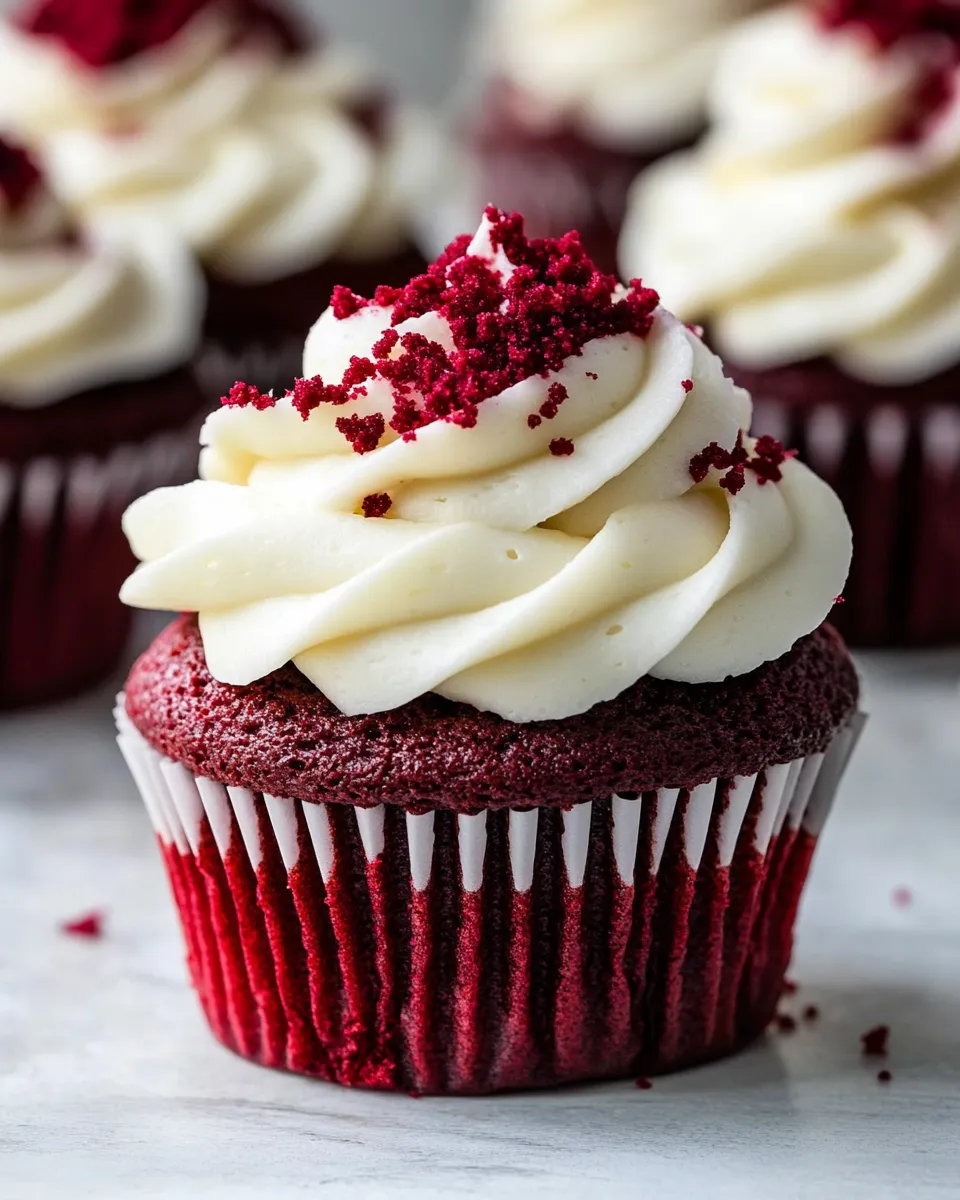
If you’re adapting these cupcakes for a low-carb or keto diet, the change requires a few swaps and an acceptance of texture differences. Use almond flour or a blend designed for baking in place of part or all-purpose flour. Replace granulated sugar and powdered sugar with fine granular erythritol or allulose blends made for baking — powdered versions work best in frostings. Coconut flour absorbs a lot of liquid, so if you use it, reduce quantity and increase eggs or liquid; start with a tested low-carb cupcake recipe as a baseline.
For the frosting, a cream cheese base still works well. Sweeten it with a powdered sweetener meant for frostings and adjust thickness with a little heavy cream instead of milk if you prefer. Keep in mind color and crumb will differ from the original, and liquid red coloring may impact sweetener taste slightly; gel colors are often more concentrated.
What’s in the Gear List
- muffin/cupcake pan — standard 12-cup works best for portion control.
- cupcake liners — prevent sticking and make cupcakes easy to transport.
- measuring cups and spoons — accurate dry and liquid measures matter here.
- sifter or fine-mesh sieve — for the cocoa and flour mix to avoid lumps.
- large and medium mixing bowls — keep wet and dry ingredients separate until mixing.
- wire rack — cool cupcakes evenly to avoid soggy bottoms.
- electric mixer or sturdy whisk — an electric mixer speeds frosting prep.
- rubber spatula — for scraping the bowl clean and folding batter gently.
- piping bag and tips (optional) — if you want swirls and decorative piping.
Avoid These Mistakes
- Overmixing the batter — whisk until no dry streaks remain, then stop. Overmixing develops gluten and makes cupcakes tough.
- Using cold ingredients — room-temperature buttermilk and egg encourage even mixing and prevent a broken batter.
- Adding all powdered sugar at once to the frosting — this can make it lumpy or send clouds of sugar everywhere. Add gradually.
- Frosting warm cupcakes — frost only when fully cool to avoid melting the frosting.
- Skipping the liner or insufficient spray — cupcakes can stick; liners plus a light pan spray reduce loss and mess.
- Relying on color alone — don’t over-sweeten or overwork the batter chasing a red color; flavor and texture matter more than intensity of hue.
Holiday-Friendly Variations
Red velvet cupcakes are a natural for holidays with a splash of color. For Valentine’s Day or Christmas, pipe on rosettes of cream cheese frosting and top with freeze-dried raspberry powder or chopped pistachios for contrast. For a Fourth of July platter, add a small dollop of whipped cream and scatter fresh berries.
To make a richer holiday version, fold a tablespoon of melted white chocolate into the frosting once it’s slightly cooled and well combined, or top each cupcake with a small piece of dark chocolate for a bittersweet pop. Keep measurements of the base recipe the same; these are finishing touches that enhance flavor without altering structure.
Cook’s Commentary
I bake these cupcakes a lot because they strike a perfect balance between celebration and practicality. The batter is forgiving—it’s not precise like macarons—so it’s a good recipe to make when you want impressive results without tension. I prefer liquid red food coloring for a smooth, even color in the batter; gel color works too and you’ll need less of it.
My trick for perfectly even domes is to fill liners consistently and tap the pan lightly once before baking to release any trapped air. Also, cool them briefly in the pan—about five minutes—so they set, then finish cooling on the rack to avoid trapping steam and making the bottoms soggy. For frosting, always taste as you go. Cream cheese can vary in salt and tang; adjust the pinch of salt and vanilla to suit what you like.
Keep-It-Fresh Plan
Store unfrosted cupcakes at room temperature in an airtight container for up to 2 days. Once frosted, refrigerate in a covered container; the cream cheese frosting keeps best chilled. Bring to room temperature before serving for softer texture—about 20–30 minutes from the fridge.
For longer storage, freeze unfrosted cupcakes (fully cooled) in a single layer on a baking sheet until solid, then transfer to a heavy-duty freezer bag for up to 2 months. Thaw in the refrigerator overnight, then bring to room temperature and frost. You can also freeze frosted cupcakes for short stretches if they’re tightly wrapped, but texture of the frosting can shift slightly on thaw.
Questions People Ask
- Can I use gel color instead of liquid? Yes. Gel is more concentrated, so use less to reach your preferred shade. It won’t affect the batter’s liquid balance the way some liquid colors can, but start small and add until you get the color you want.
- Why is the batter thin? This recipe uses oil and buttermilk, which yield a thinner batter than butter-based cakes. That’s normal and responsible for a moist crumb.
- Can I make a cake from this? You can adapt the batter to a cake pan, but bake time and temperature will change. A shallow sheet cake will bake faster; a deep cake pan will take longer. Use a toothpick test to confirm doneness.
- How do I make a more vibrant red? Increase the food coloring slightly or use a concentrated gel color. Remember that overly coloring can slightly change flavor and texture, so add sparingly.
- My frosting is runny — how fix? Chill it briefly, then re-whip. If still soft, add a small amount of powdered sugar to stabilize, or refrigerate until it firms up.
In Closing
These Red Velvet Cupcakes with Cream Cheese Frosting are straightforward, dependable, and perfect for gatherings large and small. Stick to room-temperature ingredients, measure carefully, and take your time with the frosting steps. The result is a tender cupcake with a tangy, smooth frosting that looks beautiful and tastes even better.
Make a test batch once, note what your oven does, and you’ll repeat this recipe for birthdays, holidays, and every time you want a small, celebratory treat. Happy baking.
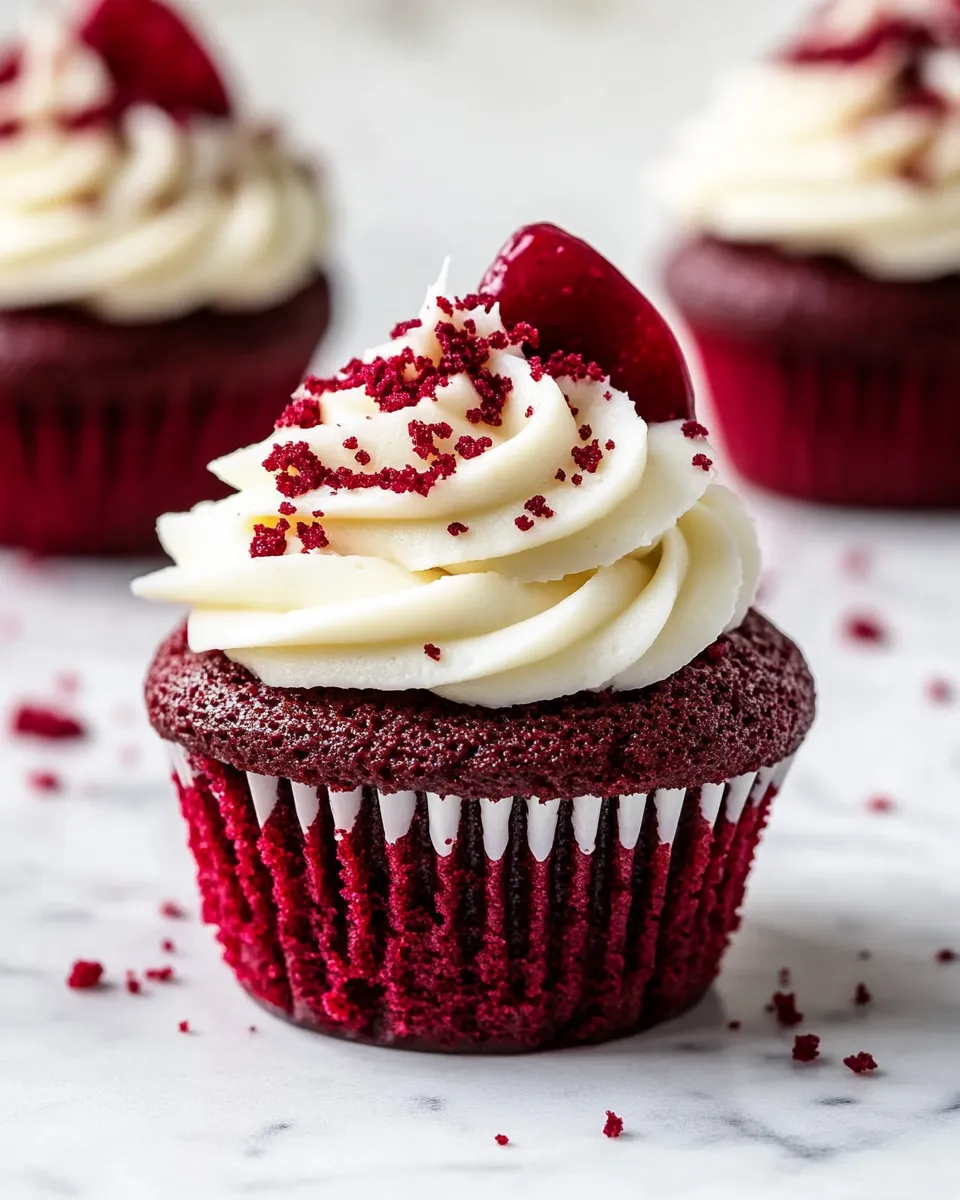
The BEST Red Velvet Cupcakes with Cream Cheese Frosting
Equipment
- Muffin pan
- Cupcake liners
- Medium Bowl
- Large Bowl
- Sifter
- Mixer
- Measuring Cups
- Measuring Spoons
- Wire Rack
- Spatula
Ingredients
Ingredients
- 1 1/4 cupall-purpose flour
- 3/4 teaspoonbaking soda
- 1/2 teaspoonbaking powder
- 2 tablespoonsUnsweetened cocoa powder
- 3/4 cupgranulated sugar
- 1/4 teaspoonsalt
- 3/4 cupbuttermilkroom temperature
- 1/2 cupvegetable oil
- 1 large eggroom temperature
- 1/2 teaspoonwhite vinegar
- 1 teaspoonvanilla extract
- 1 tablespoonliquid red food coloring
- 1/2 cupunsalted butterroom temperature
- 4 Ouncescream cheeseroom temperature
- 1 pinchsalt
- 1 teaspoonvanilla extract
- 2 1/4 cuppowdered sugar
- 1/2 tablespoonMilkplus more if needed
Instructions
Instructions
- Preheat oven to 350°F. Spray a muffin pan with pan spray and line with cupcake liners; set aside.
- In a medium bowl sift together 1 1/4 cup all-purpose flour, 2 tablespoons unsweetened cocoa powder, 3/4 teaspoon baking soda, and 1/2 teaspoon baking powder. Add 3/4 cup granulated sugar and 1/4 teaspoon salt and whisk to combine. Set aside.
- In a large bowl whisk together 3/4 cup buttermilk (room temperature), 1/2 cup vegetable oil, 1 large egg (room temperature), 1/2 teaspoon white vinegar, 1 teaspoon vanilla extract, and 1 tablespoon liquid red food coloring until well combined.
- Add the dry flour mixture to the wet ingredients and whisk until smooth, scraping the bowl as needed and making sure no dry streaks remain.
- Scoop the batter into the prepared liners, filling each about 2/3 full.
- Bake for 18–20 minutes, or until the centers are set and spring back when gently pressed. Remove from the oven.
- Let cupcakes cool in the pan for about 5 minutes, then transfer to a wire rack to cool completely before frosting.
- To make the frosting: in a large bowl beat 1/2 cup unsalted butter and 4 Ounces cream cheese (both room temperature) until smooth. Add 1 pinch salt and 1 teaspoon vanilla extract and beat to combine.
- With the mixer on low, add 2 1/4 cup powdered sugar one cup at a time (the last addition will be 1/4 cup), beating well after each addition and scraping the bowl as needed, until smooth.
- If the frosting is too thick, add 1/2 tablespoon Milk, then add more Milk only if needed, and beat until you reach the desired spreading or piping consistency. For piping, keep the frosting thick enough to hold its shape.
- Frost the completely cooled cupcakes as desired.
Notes
Updated on January 27, 2023
Originally Posted on February 3, 2017