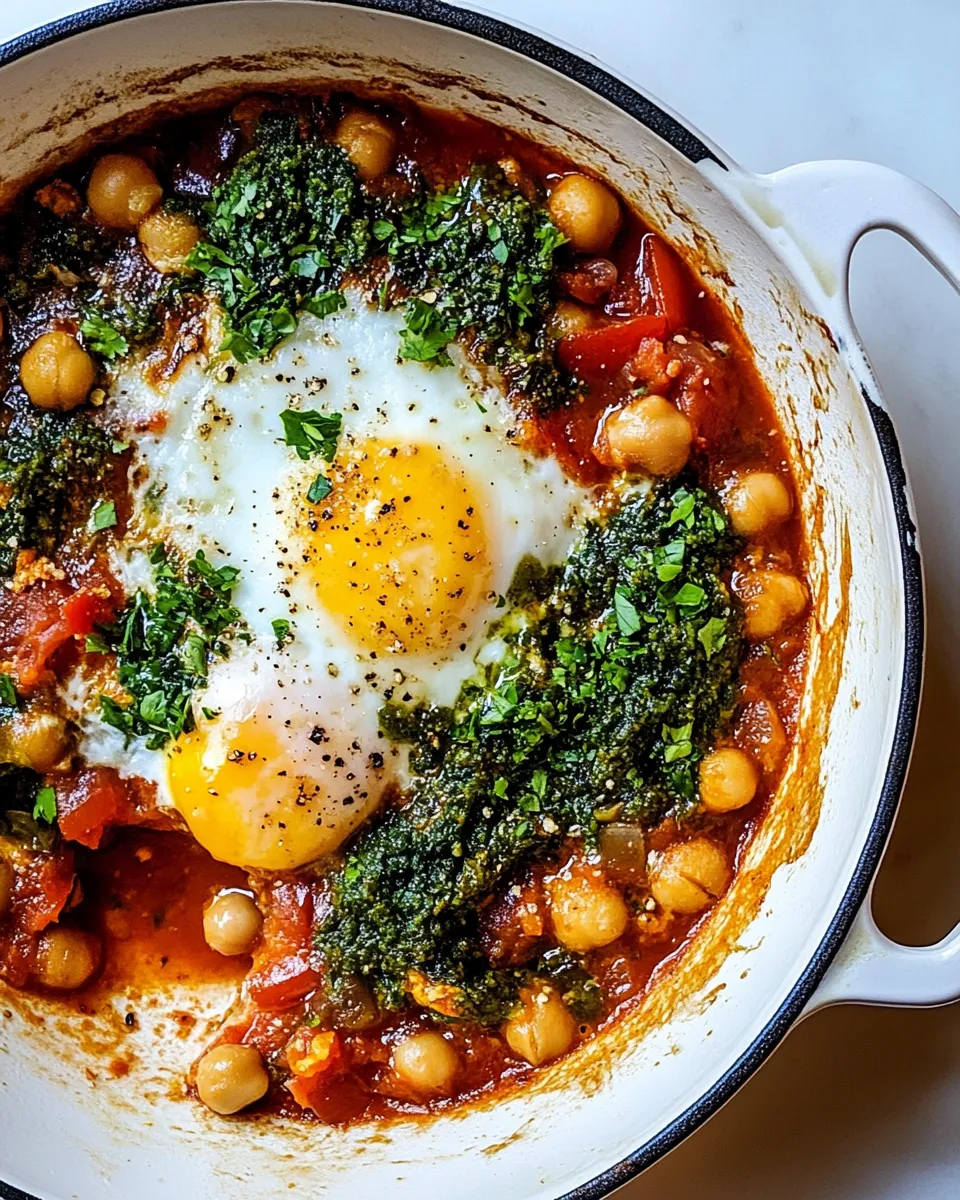
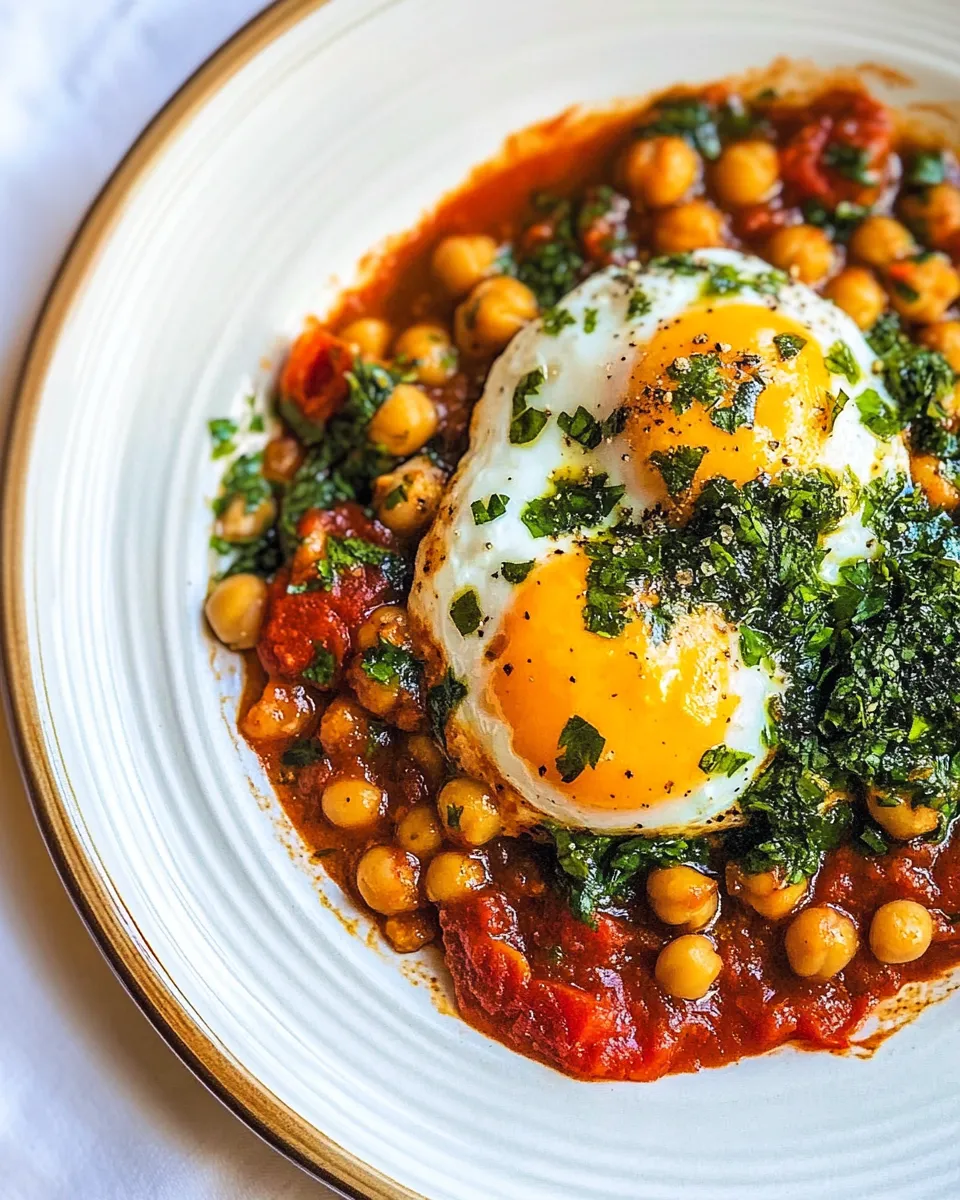
This shakshuka is the kind of weeknight dinner I reach for when I want something comforting, fast, and reliably satisfying. The tomato sauce simmers until it turns bright and rich, chickpeas add hearty texture, and eggs are poached right in the pan so cleanup stays easy. It’s a single-skillet meal that feels homey but also a little special.
I like this version because it holds up whether you make it for one, a partner, or a small crowd. The spices are straightforward — cumin, paprika, a touch of crushed red pepper — and they play off the tomatoes and chickpeas in a way that keeps the dish balanced. You can keep it mild or nudge it toward smoky and spicy depending on whether you add the optional harissa.
Below you’ll find everything you need: the exact ingredient list I use, the step-by-step process to get perfectly set whites and runny yolks (or firmer yolks if you prefer), and practical tips for storage, reheating, and easy swaps. No fuss, just clear steps and helpful notes so your shakshuka turns out great every time.
Gather These Ingredients
- 2 tablespoons olive oil — for sautéing the aromatics and starting the sauce.
- 1 medium onion, peeled and diced — provides sweetness and body; dice uniformly for even cooking.
- 3 cloves garlic, peeled and minced — adds aromatic depth; mince finely so it blooms into the sauce.
- 1 1/2 teaspoons kosher or sea salt — seasons the entire dish; taste and adjust as needed.
- 1 teaspoon ground cumin — brings warmth and earthiness to the tomato base.
- 1 teaspoon paprika (preferably smoked) — gives color and a gentle smoky note; use smoked if you want deeper flavor.
- 1 teaspoon freshly ground black pepper — adds peppery bite; grind fresh if possible.
- 1/2 teaspoon crushed red pepper flakes — for heat; reduce if you prefer milder dishes.
- Two 15-ounce (400 g) cans crushed or diced tomatoes — the tomato backbone of the sauce; crushed yields a smoother texture, diced keeps more bite.
- 1 1/2 tablespoons tomato paste — concentrates tomato flavor and helps thicken the sauce.
- 2–3 teaspoons harissa (optional) — adds smokiness and fermented chili heat if you want it spicier.
- 2 teaspoons brown sugar or honey — balances the acidity of the tomatoes.
- 1 3/4 cups (280 g) cooked chickpeas, from one 15-ounce/400 g can drained and rinsed, or chickpeas you’ve cooked from dried — provides protein, texture, and a creamy bite when simmered.
- 5–6 eggs — cracked into wells in the sauce to poach; use 5 for smaller appetites or 6 if feeding more people.
Cooking (Tomato and Chickpea Shakshuka): The Process
- Heat 2 tablespoons olive oil in a wide skillet (at least 10 inches/25 cm) with a lid over medium heat until the oil shimmers.
- Add the 1 medium onion (peeled and diced) and the 3 cloves garlic (peeled and minced). Cook, stirring frequently, until the onion is soft and translucent, about 3 to 4 minutes.
- Add 1 1/2 teaspoons kosher or sea salt, 1 teaspoon ground cumin, 1 teaspoon paprika (preferably smoked), 1 teaspoon freshly ground black pepper, and 1/2 teaspoon crushed red pepper flakes. Stir for about 10 seconds to bloom the spices.
- Add the two 15-ounce (400 g) cans crushed or diced tomatoes with their juices, 1 1/2 tablespoons tomato paste, 2–3 teaspoons harissa (optional), and 2 teaspoons brown sugar or honey. Stir to combine and cook for 5 minutes, stirring occasionally.
- Add 1 3/4 cups (280 g) cooked chickpeas (if using canned chickpeas, drain and rinse them first). Continue to cook, stirring occasionally, about 10 minutes more, until the sauce has thickened—when you lift a big spoonful of sauce and drop it back, it should hold its shape.
- Use a spoon to make 5 or 6 indentations (wells) in the sauce, matching the number of eggs you will use.
- Crack one egg into each indentation (using 5–6 eggs). If any egg white strays, gently drag it into the sauce with the spoon so each egg sits in its well.
- Reduce the heat to medium-low, cover the skillet, and cook the eggs to your liking: about 3 to 4 minutes for very soft yolks, or about 6 to 8 minutes for firmer yolks. Check the eggs and continue cooking a little longer if needed; they are done when the whites are set and the yolks reach your preferred doneness.
- Remove the skillet from the heat and serve immediately.
Reasons to Love (Tomato and Chickpea Shakshuka)
This recipe hits a lot of marks: flavor, texture, speed, and flexibility. The tomatoes provide bright acidity and richness; tomato paste and a short simmer concentrate that flavor. Chickpeas add heft so the dish feels like a full meal rather than just eggs and sauce.
It’s forgiving. The sauce can sit on low heat for a few extra minutes while you prep sides or toast bread. The eggs are poached gently in the sauce, which means you don’t need to fuss with separate pots. And because the spices are simple and familiar, it’s easy to adjust: add more harissa for heat, or skip it for a kid-friendly version.
Finally, it scales well. Use a larger skillet and a few more cans of tomato if you want to feed a crowd. The basic method — sauté aromatics, bloom spices, build the tomato sauce, stir in chickpeas, and poach eggs — remains the same.
Low-Carb/Keto Alternatives
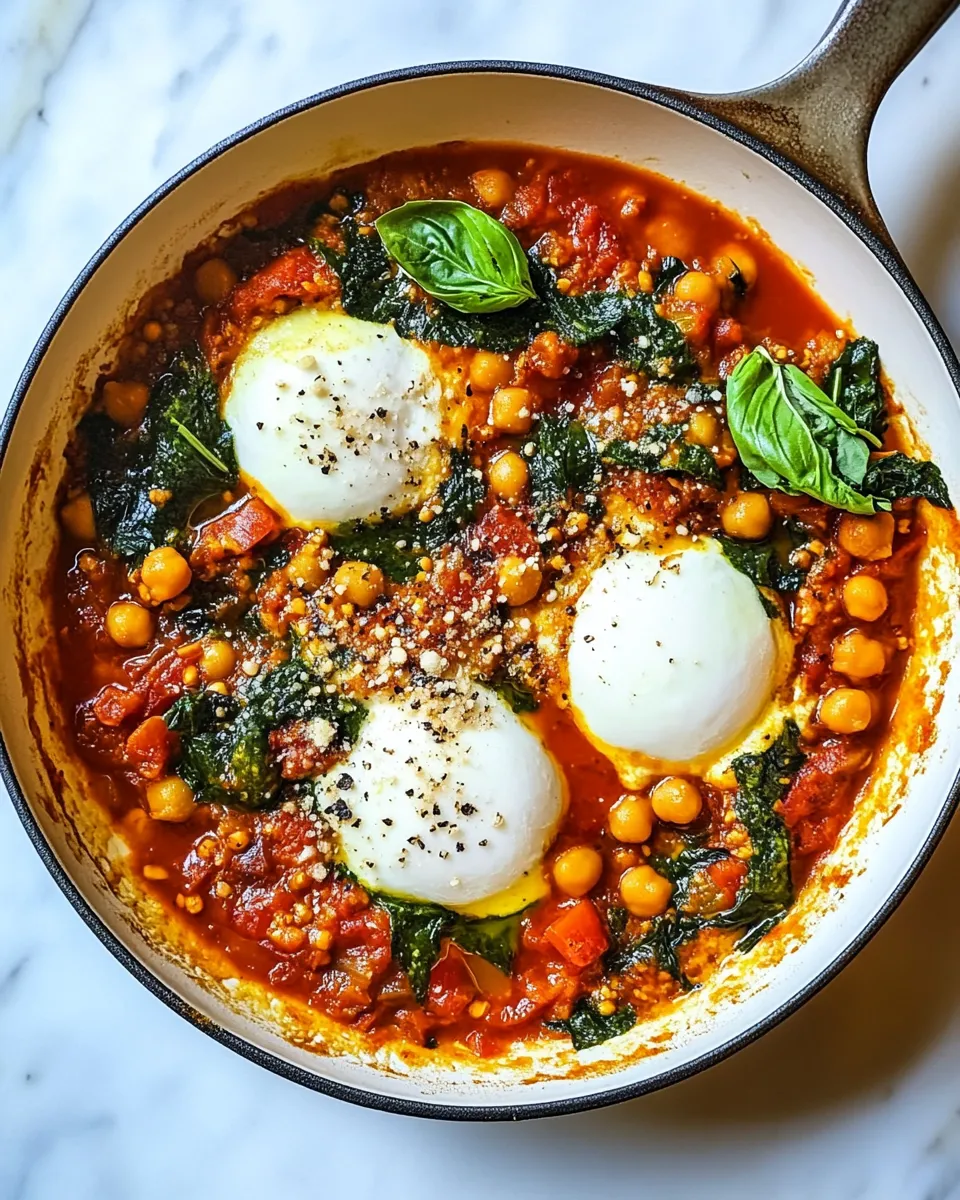
Chickpeas are the main carb source here. If you’re aiming for low-carb or keto, you can reduce or omit them. For body and texture without the starch, try adding extra eggs (careful with the pan space) or include low-carb vegetables that hold up to simmering, like chopped cauliflower florets or diced zucchini. Sauté them briefly with the onions so they absorb the spices and soften before you add the tomatoes.
Another option is to keep a small portion of chickpeas for texture and bulk, and bulk up the rest with leafy greens like baby spinach stirred in at the end just to wilt. That lowers the net carbs while keeping the mouthfeel varied.
Prep & Cook Tools
- Wide skillet (at least 10 inches / 25 cm) with a lid — necessary for even sauce distribution and for covering to cook the eggs.
- Wooden spoon or heatproof spatula — for stirring and making wells for the eggs.
- Can opener — for the tomato and (optional) chickpea cans.
- Measuring spoons — to get the spices and tomato paste right.
- Small bowl or ramekin for cracking eggs — optional but helpful to avoid shells and to place eggs gently into the wells.
- Colander (if using canned chickpeas) — to drain and rinse chickpeas cleanly.
Slip-Ups to Skip
Don’t rush the onion and garlic stage. If the onion isn’t soft and translucent you’ll miss that foundational sweetness. Stir frequently and take the full 3–4 minutes. Under-cooked aromatics give a raw, sharp edge to the sauce.
A common mistake is adding the eggs too soon or making wells that are too shallow. Make clear indentations and let the sauce thicken first; if the sauce is watery the eggs will spread and cook unevenly.
Also, don’t skimp on salt. The tomatoes and chickpeas need seasoning to sing. Add the 1 1/2 teaspoons of kosher or sea salt as directed, then taste the finished sauce before serving and adjust if necessary.
How to Make It Lighter
To reduce calories without losing flavor, use less oil at the start: 1 tablespoon will still sauté the aromatics, though you’ll want to stir more often to prevent sticking. Use low-sodium canned tomatoes and cut the brown sugar or honey to 1 teaspoon if you’re watching sugar.
Replace some of the chickpeas with extra vegetables — shredded cabbage, thinly sliced mushrooms, or grated carrot will add bulk without as many calories. They’ll also add moisture and subtle sweetness so you can reduce the added sweetener.
Notes on Ingredients
Canned tomatoes: crushed vs diced is mostly texture. Crushed tomatoes make a smoother sauce that clings to the chickpeas and eggs; diced tomatoes give distinct chunks. Either works. If your tomatoes taste very acidic, increase the brown sugar or honey slightly to balance.
Chickpeas: If you use canned chickpeas, drain and rinse them to remove the canning liquid and any excess sodium. If you cook chickpeas from dried, use the 1 3/4 cups (280 g) cooked weight as listed. That amount gives good bite without overpowering the pan.
Harissa: Optional but impactful. Start with 2 teaspoons if you want a hint of spice; use 3 teaspoons for more heat. You can always stir in additional harissa at the table if some eaters want extra kick.
Storage & Reheat Guide
Cool leftovers to room temperature within two hours, then transfer to an airtight container and refrigerate for up to 3 days. The tomatoes and chickpeas hold up well; the eggs will continue to firm up in the fridge, and the yolks may become fully set.
To reheat, warm gently on the stovetop over low heat, covered, until just heated through. If you prefer a runny yolk when serving leftovers, reheat the sauce and chickpeas separately, then crack fresh eggs into the warmed sauce and cover to poach for a few minutes.
For longer storage, freeze the tomato-chickpea base (without the eggs) in a freezer-safe container for up to 3 months. Thaw overnight in the fridge and reheat on the stovetop before poaching fresh eggs.
Common Questions
Can I make this vegan? Yes. Skip the eggs and increase the chickpeas or add firm tofu cubes toward the end of cooking. Keep in mind texture and mouthfeel will change; adding a splash of olive oil or a tablespoon of tahini at the end helps round the sauce.
How do I know when the eggs are done? The whites should be set and opaque. For very soft yolks, aim for 3–4 minutes covered at medium-low; for jammy or firmer yolks, 6–8 minutes. Use a spoon to gently nudge a white if you’re unsure — it should feel set, not runny.
My sauce is too thin. What now? Simmer it a little longer, uncovered, until it reduces and thickens. Stir occasionally so the bottom doesn’t stick. Adding the tomato paste early in the simmer helps thicken the sauce while concentrating flavor.
Can I use fresh tomatoes? You can, but you’ll need to cook them down longer to reach the same concentrated flavor and thickness as canned tomatoes. Peel and chop ripe tomatoes, then simmer until they break down and the liquid reduces.
How many people does this serve? With 5–6 eggs and the quantities listed, it comfortably serves 3–4 people as a main with a side like bread or salad, or 2–3 for heartier appetites.
Wrap-Up
Tomato and Chickpea Shakshuka is a reliable, flavorful skillet meal that’s perfect for any time you want something simple but satisfying. Follow the steps above, take your time with the aromatics and sauce reduction, and don’t be afraid to adjust the heat with harissa or red pepper flakes to suit your taste. It’s a dish that rewards a little attention and then does the rest on its own.
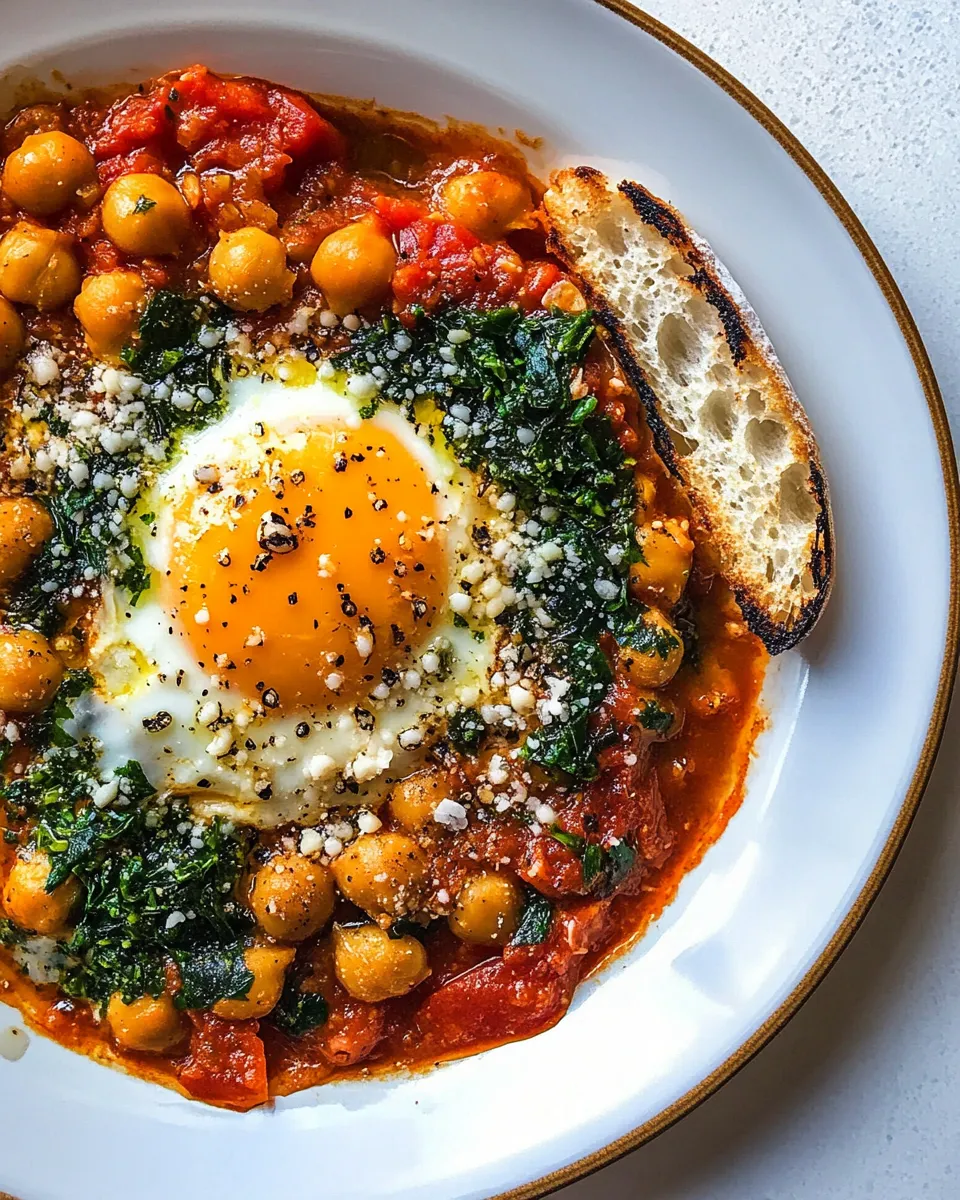
Tomato and Chickpea Shakshuka
Equipment
- wide skillet (10-inch / 25 cm) with lid
- Spoon
Ingredients
Ingredients
- 2 tablespoonsolive oil
- 1 mediumonion peeled and diced
- 3 clovesgarlic peeled and minced
- 1 1/2 teaspoonskosher or sea salt
- 1 teaspoonground cumin
- 1 teaspoonpaprika (preferably smoked)
- 1 teaspoonfreshly ground black pepper
- 1/2 teaspooncrushed red pepper flakes
- Two15-ounce 400 gcans crushed or diced tomatoes
- 1 1/2 tablespoonstomato paste
- 2-3 teaspoonsharissa (optional)
- 2 teaspoonsbrown sugar or honey
- 1 3/4 cups 280 gcooked chickpeas, from one 15-ounce/400 g can of chickpeas drained and rinsed, or chickpeas you've cooked from dried
- 5-6 eggs
Instructions
Instructions
- Heat 2 tablespoons olive oil in a wide skillet (at least 10 inches/25 cm) with a lid over medium heat until the oil shimmers.
- Add the 1 medium onion (peeled and diced) and the 3 cloves garlic (peeled and minced). Cook, stirring frequently, until the onion is soft and translucent, about 3 to 4 minutes.
- Add 1 1/2 teaspoons kosher or sea salt, 1 teaspoon ground cumin, 1 teaspoon paprika (preferably smoked), 1 teaspoon freshly ground black pepper, and 1/2 teaspoon crushed red pepper flakes. Stir for about 10 seconds to bloom the spices.
- Add the two 15-ounce (400 g) cans crushed or diced tomatoes with their juices, 1 1/2 tablespoons tomato paste, 2–3 teaspoons harissa (optional), and 2 teaspoons brown sugar or honey. Stir to combine and cook for 5 minutes, stirring occasionally.
- Add 1 3/4 cups (280 g) cooked chickpeas (if using canned chickpeas, drain and rinse them first). Continue to cook, stirring occasionally, about 10 minutes more, until the sauce has thickened—when you lift a big spoonful of sauce and drop it back, it should hold its shape.
- Use a spoon to make 5 or 6 indentations (wells) in the sauce, matching the number of eggs you will use.
- Crack one egg into each indentation (using 5–6 eggs). If any egg white strays, gently drag it into the sauce with the spoon so each egg sits in its well.
- Reduce the heat to medium-low, cover the skillet, and cook the eggs to your liking: about 3 to 4 minutes for very soft yolks, or about 6 to 8 minutes for firmer yolks. Check the eggs and continue cooking a little longer if needed; they are done when the whites are set and the yolks reach your preferred doneness.
- Remove the skillet from the heat and serve immediately.
Notes
Serving
: Serve the Shakshuka with
Mint Zhoug
, if desired. If you don't have an herb sauce, you can strew a little chopped parsley over the top, to brighten things up. Crusty bread or flatbread is a good accompaniment to scoop up the flavorful sauce.
Storage
: You can make the sauce up to through step 2 and refrigerate it, then finish the Shakshuka later. The sauce will keep for a few days in the refrigerator. And yes, you can freeze it too. If you just want to make two servings of Shakshuka, just cook two eggs in the sauce. When it's done, spoon out the two portions (and enjoy them!) then store the rest of the sauce in the refrigerator for the next batch. It likely will have thickened a bit more than you want, so thin it with some water before cooking with it a second time.