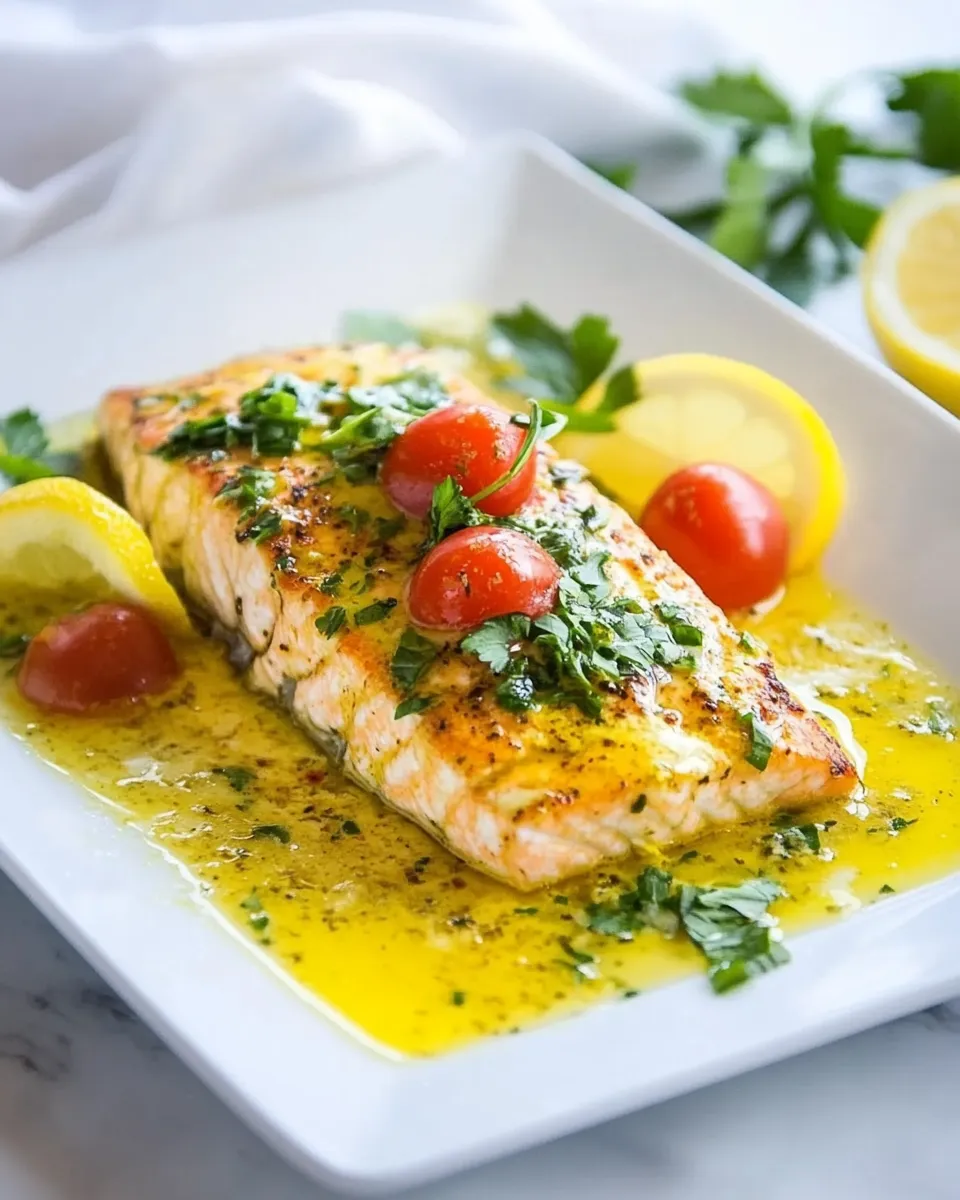
This is a straightforward, bright salmon recipe that leans on a few pantry staples and a small trick: grating very cold butter over the fillets so the butter melts and braises the fish as it bakes. The result is glossy, golden-tinted salmon with a gentle turmeric warmth and an obvious lemon lift. It feels special without being fussy—perfect for a weeknight or a simple dinner with guests.
I like this for its honesty: short ingredient list, minimal hands-on time, and predictable results. The steps are precise, and the flavors are easy to adjust depending on what you have. If you want something that looks plated and tastes like you spent more time on it than you actually did, this hits the mark.
Below you’ll find exactly what to buy, the ingredient list formatted from the recipe source, the oven method step-by-step, plus troubleshooting, tool suggestions, and ways to adapt it for your goals—healthier swaps, faster prep, or dinner-party plating. Read through once, then cook.
What to Buy
Shop for even-thickness, skin-on salmon fillets—about 1 1/2 inches thick is the target. A single lemon and a small jar of turmeric and dried thyme will carry you through multiple uses, so they’re worth having on hand. Buy salted butter and chill it until very firm (or freeze it briefly) so it can be grated over the fillets as instructed.
Plan to have aluminum foil or parchment for covering the pan, and standard pantry salt. If you prefer a lower-sodium approach, buy unsalted butter and increase seasoning carefully at the end.
Ingredients
- 4 whole fresh, skin-on salmon fillets, cut about 1 1/2 inches thick — main protein; choose fillets of similar thickness so they cook evenly.
- 1/2 cup salted butter, very cold or frozen, plus more for greasing pan — provides browning, richness, and a braising liquid; freezing makes it easy to grate.
- 1 tablespoon dried thyme — aromatic herb that pairs well with lemon and fish.
- 1 teaspoon turmeric — gives color and a subtle earthy note.
- 1/2 teaspoon salt — seasons the fillets; adjust to taste if using extra-salty butter.
- 1 whole large ripe yellow lemon, cut into rounds and then halved (see below) — provides acidity and bright, fresh flavor when roasted on top of the fish.
Cooking (Uri Buri Lemon Turmeric Salmon): The Process
- Preheat oven to 400°F (200°C). Grease the bottom of a baking sheet with a thin layer of the salted butter.
- Rinse the salmon fillets and pat them dry with paper towels. Place the fillets skin side down on the buttered baking sheet, spacing them evenly.
- Slice the lemon into 4 thin rounds, remove any seeds, then cut each round in half so you have 8 lemon halves.
- In a small bowl, stir together the dried thyme, turmeric, and salt until evenly combined.
- Sprinkle the spice mixture evenly over the top (flesh side) of all four salmon fillets.
- Place two lemon halves on top of each salmon fillet.
- Grate the very cold or frozen 1/2 cup salted butter evenly over the tops of the fillets. If grating is difficult, thinly slice the butter and distribute the slices evenly.
- Cover the baking sheet with aluminum foil or parchment and bake in the preheated oven 15–20 minutes, or until the salmon reaches your desired doneness. Cook time will vary with fillet thickness—cut into the center of the thickest fillet to check doneness.
- Remove the pan from the oven, uncover, and spoon the melted butter and juices from the tray over the fillets. Serve immediately.
Why Cooks Rave About It
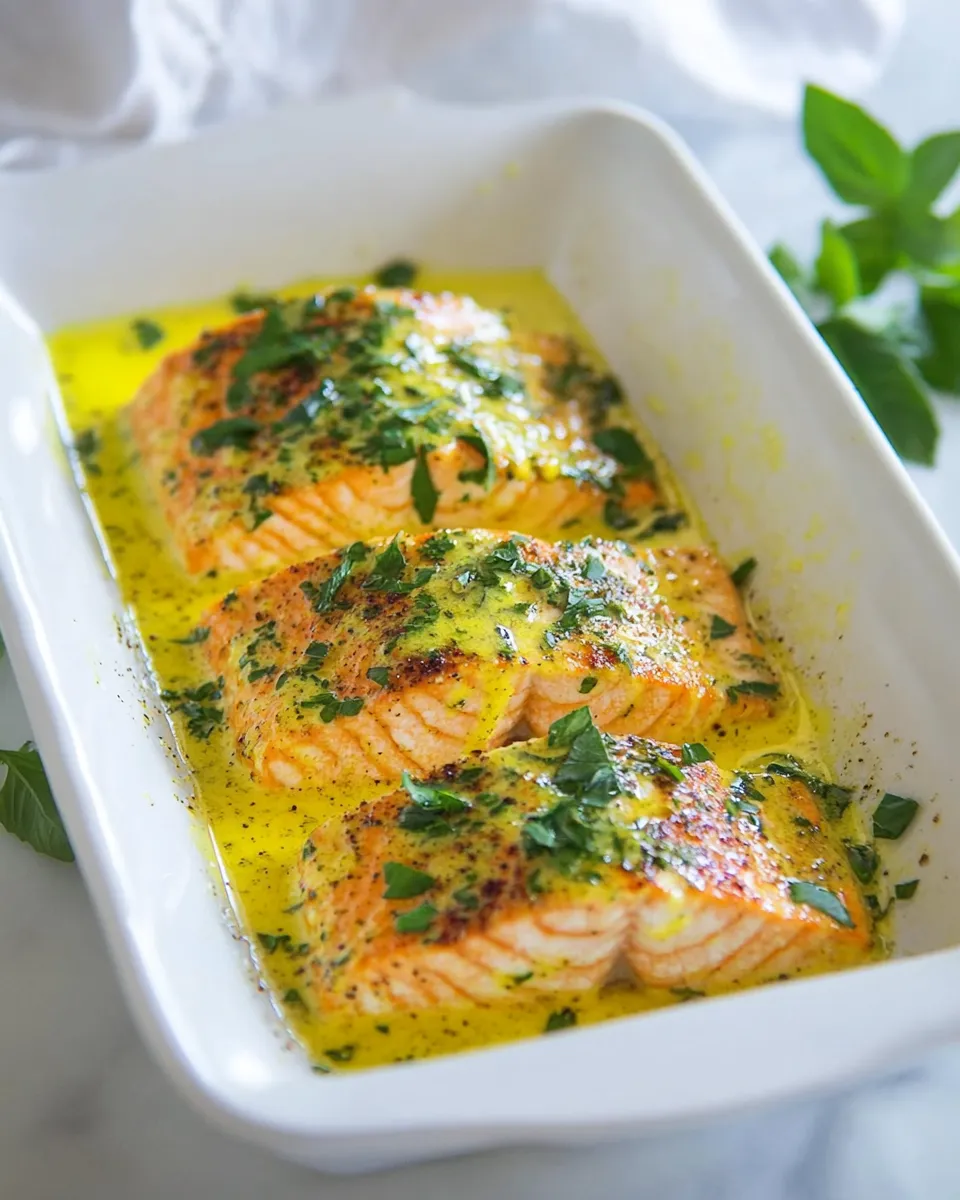
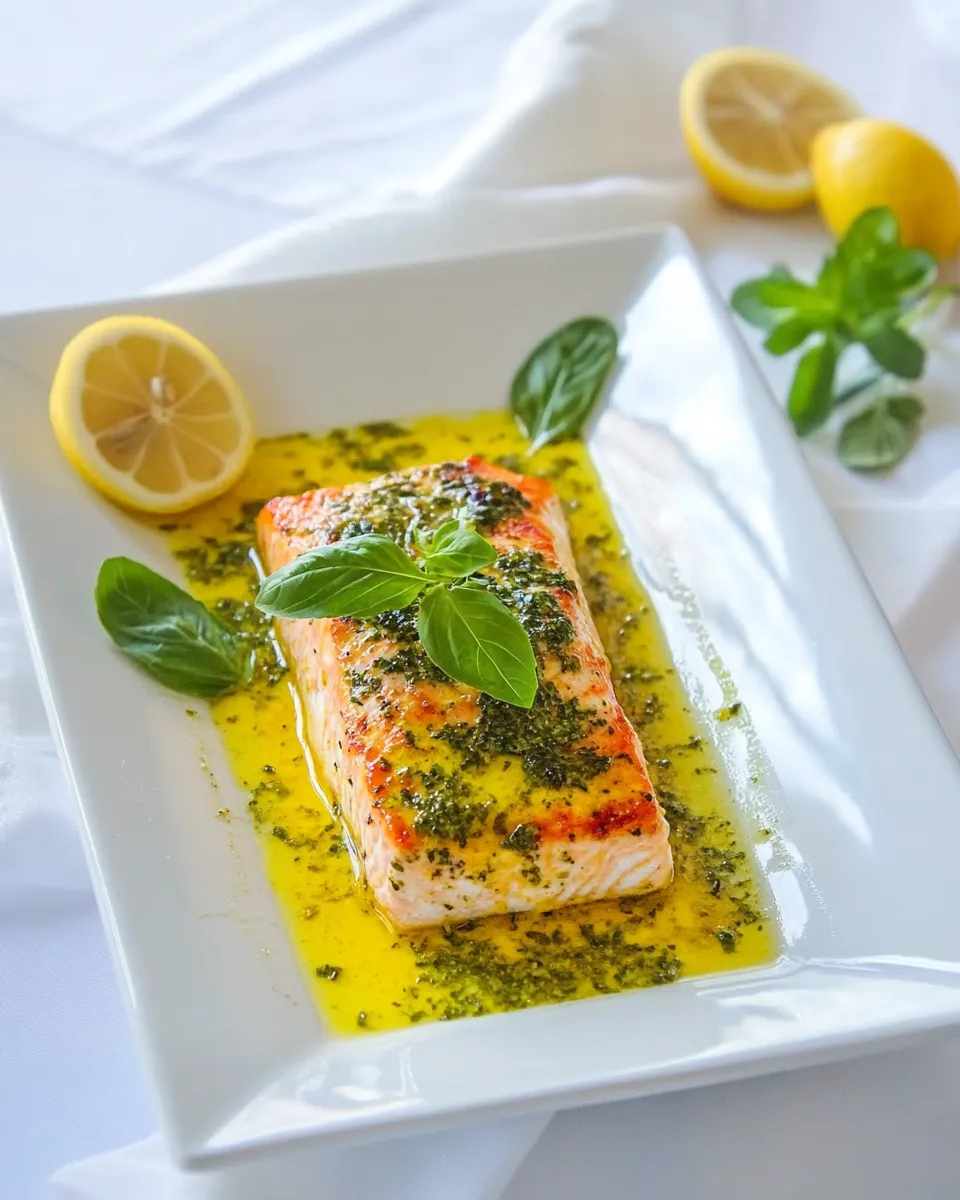
This recipe is satisfying because it balances texture and flavor with very little effort. The skin-on fillet keeps the fish intact and moist while the grated butter creates a glossy finish that carries the turmeric’s golden color. The lemon halves roast on the flesh, releasing juice and caramelized brightness directly into the buttery juices; you get citrus without needing an extra squeeze at the end.
It’s forgiving. Timing can shift a few minutes either way depending on your oven and fillet thickness, yet the butter bath helps prevent the fish from drying out. The thyme and turmeric form a simple, distinctive flavor profile that’s both familiar and interesting—enough to feel elevated but not so unusual it alienates dinner guests.
Ingredient Flex Options
If you want to reduce salt
Use unsalted butter and raise the final seasoning slightly if needed. Remember the recipe calls for 1/2 teaspoon salt; adjust after tasting the finished fish.
Make it dairy-free
Do not invent ingredients—this recipe relies on the grated cold butter as a technique. If you must avoid dairy, consider a different braising approach: use a mixture of olive oil and a tablespoon or two of cold coconut oil (note: this changes flavor and is not part of the original ingredient set).
Swap herbs or adjust spice
Dried thyme is in the original list; you can use more or less to taste. A pinch more turmeric increases color and earthiness, but keep the 1 teaspoon baseline for balance.
Essential Tools for Success
- Sharp paper towels — for properly drying the fillets before seasoning.
- Baking sheet with low rim — provides enough room for juices without crowding the fillets.
- Box grater or microplane — to grate very cold or frozen butter; a clean, dry grater is essential for even distribution.
- Small mixing bowl and spoon — to combine thyme, turmeric, and salt.
- Aluminum foil or parchment — required to cover the pan while baking as the recipe instructs.
Errors to Dodge
Don’t skip patting the salmon dry. Moisture on the surface prevents the spices and butter from properly clinging and can create steaming rather than roasting. Also, don’t try to grate warm butter—if it softens, thin slices are the fallback, but cold/frozen butter is the intent for even, melt-first contact.
Avoid overcooking. The window in the recipe is 15–20 minutes—start checking at 15 for fillets around 1 1/2 inches thick. Cut into the thickest part to assess doneness; you want it opaque and flaky but still moist. If your fillets are thinner, reduce time.
Fit It to Your Goals
Quick weeknight dinner
Prep takes about 10 minutes once the butter is firm. Use the grated-butter method and skip any garnish. Serve with a simple green salad or steamed rice for a balanced meal.
Entertaining
Bake as directed and serve each fillet on a warm plate with a spoonful of the buttery juices drizzled over. Add a lemon wedge and a scattering of fresh herbs if you like—thyme or parsley work well. Guests often appreciate the dramatic presentation of the lemon halves roasted on top.
Lower-calorie approach
The recipe is butter-forward by design. To reduce calories, you could reduce the butter slightly, but be aware this will affect the final texture and gloss. If reducing, taste and adjust final seasoning to compensate.
Pro Perspective
Professional cooks appreciate this recipe because it uses heat and fat to coax flavor efficiently. The grated or thinly sliced frozen butter technique ensures a relatively even distribution that melts into the fillet rather than pooling at the edges. A pro tip: if you want a touch more caramelization on top, remove the foil for the final 2–3 minutes and switch to the broiler briefly—but watch carefully to avoid burning the turmeric or lemon.
Also, allow fillets to rest for a minute after removing from the oven before plating. Spoon those juices over the fish while the heat is still high; it makes for a glossy finish and carries the lemon-turmeric-thyme flavors into each bite.
Freezer-Friendly Notes
Raw, seasoned fish is not ideal to freeze with butter and lemon already applied. If you plan ahead, freeze plain, well-wrapped salmon fillets and thaw in the refrigerator before following this recipe. Do not freeze the prepared, butter-grated pans if you want to maintain the texture the recipe delivers.
If you have leftover cooked salmon, cool it quickly, place in an airtight container, and freeze for up to one month. Reheat gently in a low oven covered with foil to avoid drying the fish, then spoon any reserved butter juices over it. Note that texture will change after freezing and reheating.
Troubleshooting Q&A
Q: My butter melted and pooled—what happened?
A: If the butter pools, the fillets may have been uneven or the butter too soft when applied. Ensure the butter is very cold or briefly frozen so it can be grated. Also spread butter thinly across the pan before placing fish to capture juices.
Q: The fish felt dry—how to prevent this?
A: Overcooking is the most common cause. Check the thickest fillet at 15 minutes. The butter and lemon help retain moisture, but thickness and oven variance matter. Rest briefly and spoon juices back over the fillet for extra moisture.
Q: The lemon flavor is too strong or too weak—can I adjust?
A: Yes. Remove the lemon halves before serving if you want less roasted lemon on the fish. To boost brightness, add a light squeeze of fresh lemon juice at the end, but try a small amount first so it doesn’t overpower.
Serve & Enjoy
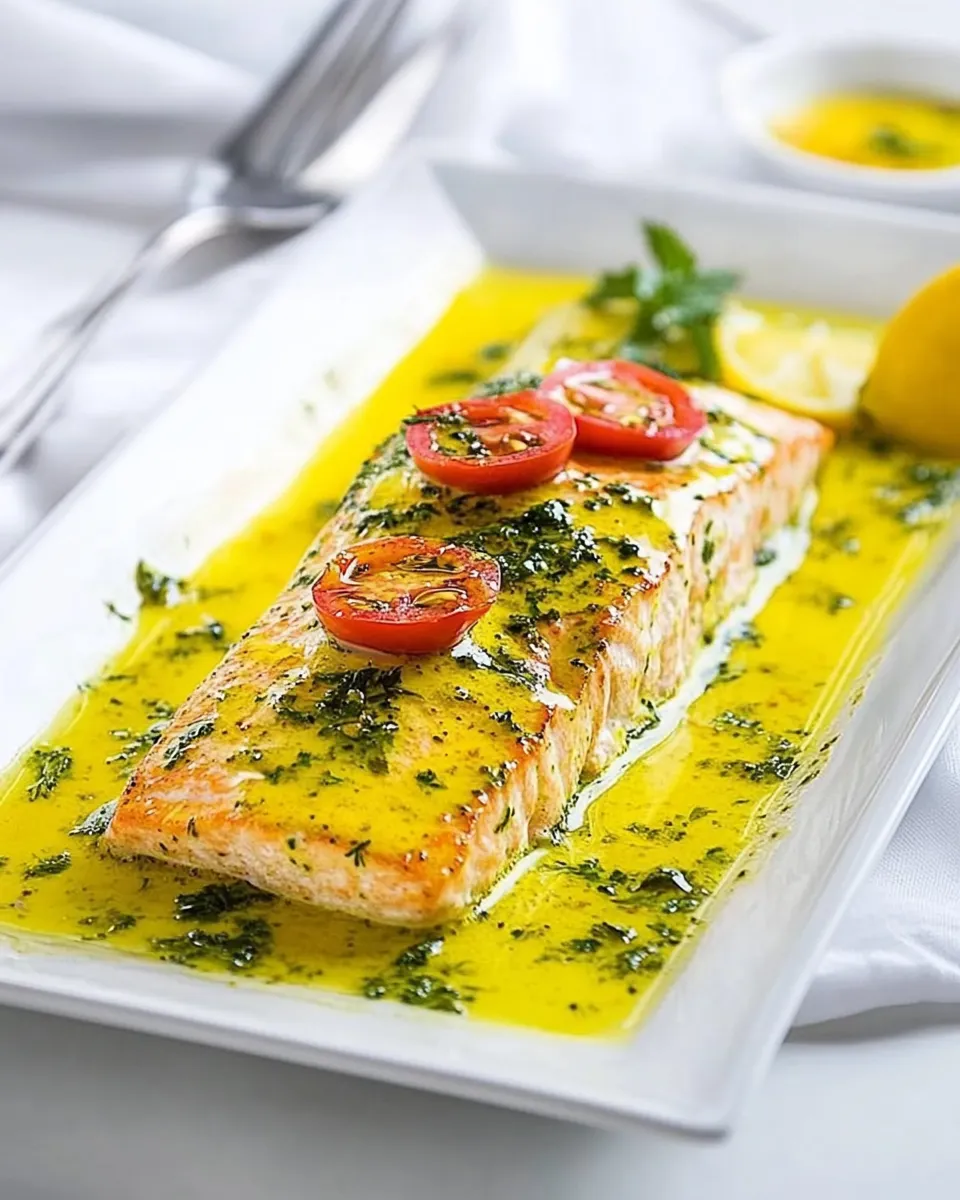
Plate each salmon fillet skin side down and spoon the hot melted butter and tray juices over the top. Serve with simple sides that absorb the sauce—roasted potatoes, buttered rice, or a crisp green vegetable like asparagus or snap peas. Lemon halves on top make for a pretty and functional garnish; guests can squeeze or discard as they prefer.
Eat it while it’s warm. The butter will set as it cools; that glossy mouthfeel is best straight from the oven. This recipe yields a restaurant-worthy plate with minimal effort—reliable, flavorful, and memorable.
Uri Buri Lemon Turmeric Salmon
Equipment
- Baking Sheet
- Small Bowl
- Grater
- Knife
- aluminum foil or parchment
Ingredients
Ingredients
- 4 wholefresh skin-on salmon fillets, cut about 1 1/2 inches thick
- 1/2 cupsalted butter very cold or frozen, plus more for greasing pan
- 1 tablespoondried thyme
- 1 teaspoonturmeric
- 1/2 teaspoonsalt
- 1 wholelarge ripe yellow lemon cut into rounds and then halved (see below)
Instructions
Instructions
- Preheat oven to 400°F (200°C). Grease the bottom of a baking sheet with a thin layer of the salted butter.
- Rinse the salmon fillets and pat them dry with paper towels. Place the fillets skin side down on the buttered baking sheet, spacing them evenly.
- Slice the lemon into 4 thin rounds, remove any seeds, then cut each round in half so you have 8 lemon halves.
- In a small bowl, stir together the dried thyme, turmeric, and salt until evenly combined.
- Sprinkle the spice mixture evenly over the top (flesh side) of all four salmon fillets.
- Place two lemon halves on top of each salmon fillet.
- Grate the very cold or frozen 1/2 cup salted butter evenly over the tops of the fillets. If grating is difficult, thinly slice the butter and distribute the slices evenly.
- Cover the baking sheet with aluminum foil or parchment and bake in the preheated oven 15–20 minutes, or until the salmon reaches your desired doneness. Cook time will vary with fillet thickness—cut into the center of the thickest fillet to check doneness.
- Remove the pan from the oven, uncover, and spoon the melted butter and juices from the tray over the fillets. Serve immediately.
Notes
You will also need: Shallow baking pan, grater, foil or parchment