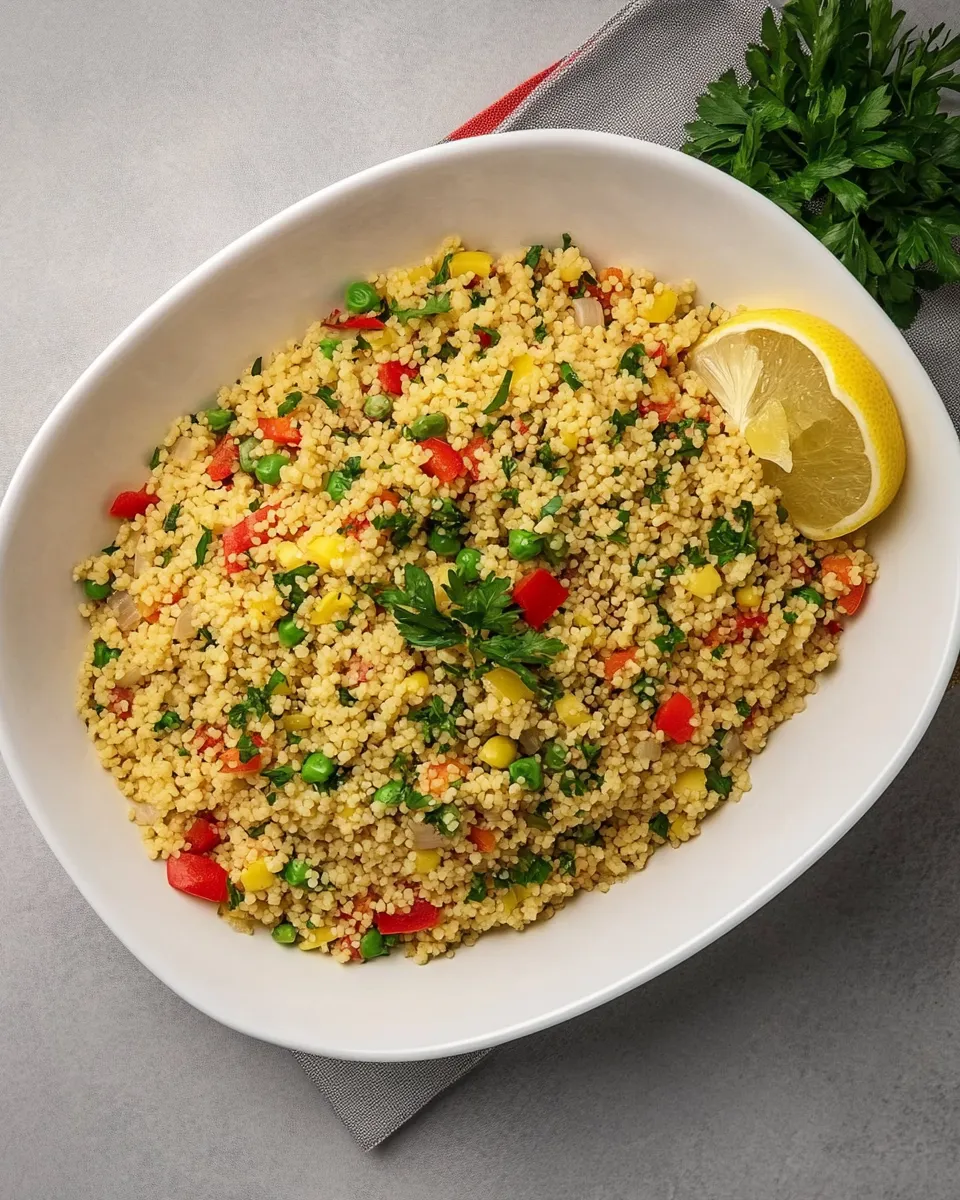
I love a meal that feels composed but doesn’t demand a full day in the kitchen. This Vegetarian Couscous is exactly that: bright, textural, and forgiving. It comes together quickly, uses pantry-friendly ingredients, and delivers warm, satisfying bites without meat. I make it when I want something cozy and light, or when guests arrive and I need a reliable, colorful dish to set on the table.
The recipe relies on simple techniques—sautéing aromatics, toasting vegetables, and letting couscous absorb a flavorful broth. Little choices make a big difference: the bite of leeks, the sweetness of grilled peppers, and the tender chew of eggplant. Each element has a job to do, and they combine into a balanced, vegetarian main or a hearty side.
Below you’ll find the ingredient breakdown, exact cooking process, swap ideas, storage tips, and common mistakes to avoid. Read it through once, then dive in. The method is clear, and the result is dependable.
Ingredients at a Glance
- 1 garlic clove — crushed; provides the base aroma and quick flavor lift.
- 1/8 cup extra virgin olive oil — the fat for sautéing and finishing; split between cooking and finishing for shine.
- 1/2 cup grilled peppers — bottled, coarsely chopped; add a smoky-sweet note and color.
- 1/2 cup leeks — coarsely chopped; milder than onions and add a sweet, oniony backbone.
- 1 cup carrots — diced, 1 medium carrot more or less; offer sweetness and texture.
- 1 cup zucchini — diced, 1 medium zucchini more or less; keeps the dish light and tender.
- 1 cup eggplant — diced, 1/2 medium eggplant more or less; soaks up oil and flavor for depth.
- 1 1/4 cups couscous — dry; the grainy base that absorbs the broth and carries the vegetables.
- 2 cups vegetable broth — the cooking liquid; choose a reasonably seasoned broth for the best result.
- 1/8 teaspoon ground black pepper — for gentle warmth; adjust to taste.
- parsley — fresh, finely chopped; sprinkled at the end for freshness and color.
Cooking (Vegetarian Couscous): The Process
- Heat a large saucepan over medium heat and add half of the extra virgin olive oil. Add the crushed garlic and sauté, stirring, until fragrant and lightly golden (about 30–60 seconds).
- Add the coarsely chopped grilled peppers and toss for 2 minutes.
- Add the coarsely chopped leeks, diced carrots, diced zucchini, diced eggplant, and the ground black pepper. Cook, stirring occasionally, for about 8 minutes, until the vegetables are softened and slightly toasted.
- Add the dry couscous and toss with the vegetables for 1 minute to coat the grains in oil and vegetables.
- Pour in the vegetable broth, bring to a gentle simmer, cover the pan, reduce the heat to low–medium, and cook for 5 minutes or until the broth is completely absorbed by the couscous.
- Turn off the heat. Drizzle the remaining extra virgin olive oil over the couscous and gently fluff the mixture with a fork to separate the grains.
- Sprinkle the finely chopped parsley over the couscous and serve.
What Sets This Recipe Apart
This Vegetarian Couscous centers on texture and balance rather than complex spices. The use of bottled grilled peppers gives a concentrated smoky sweetness without extra cooking steps. Sautéing the vegetables until slightly toasted develops a light caramelization that lifts the whole dish. The couscous gets a quick toast in the pan so each grain picks up flavor before absorbing the broth; that little extra step prevents a clumpy final texture.
The recipe is designed to be flexible and fast. It reads like a composed vegetable sauté with couscous folded in, so you get the feel of a composed salad and the comfort of a warm grain dish in one. It works equally well as a weeknight main or as a side for a larger spread.
Swap Guide
Keep proportions similar when swapping to maintain balance. Here are practical, tested swaps that preserve the spirit of the dish.
- Grilled peppers — swap for roasted red peppers you roast yourself or use a jarred variety with similar smoky sweetness.
- Leeks — substitute with a small shallot or half a sweet onion, sliced thinly; leeks are milder, so reduce cooking time slightly if using onion.
- Carrots — use sweet potato cubes for more sweetness and body; they will take slightly longer to soften, so cut smaller.
- Zucchini — try yellow summer squash or diced bell pepper for different textures.
- Eggplant — sub with mushrooms for umami and a meaty texture; brown them well to concentrate flavor.
- Couscous — if you prefer a different grain, use quick-cooking bulgur or fine freekeh, but adjust liquid and cooking times accordingly.
- Vegetable broth — stock or a strong herbal infusion will work; the key is a flavorful cooking liquid.
Hardware & Gadgets
You don’t need special tools for this one. A few practical items make the process smoother and faster.
- Large saucepan with a lid — big enough to cook the vegetables and couscous together without crowding.
- Wooden spoon or sturdy spatula — for stirring and toasting the vegetables without breaking them up.
- Sharp chef’s knife and cutting board — for quick, consistent dice.
- Fork — to fluff the couscous at the end, separating grains gently.
Mistakes That Ruin Vegetarian Couscous
Couscous is forgiving, but a few missteps create a lackluster result. Avoid these common errors.
- Overcrowding the pan — crowding prevents vegetables from toasting. If the vegetables steam instead of browning, they’ll be soft but flavorless. Cook in batches if necessary.
- Skipping the initial garlic fry — that quick 30–60 seconds in oil releases essential aroma. If you skip it, the dish will miss its aromatic base.
- Adding couscous too early or not toasting it — tossing the dry couscous with the vegetables for a minute coats each grain and prevents clumping. Skip this and the texture becomes gummy.
- Using a weak broth — the broth is the main seasoning for the couscous. A bland broth makes the whole dish flat; use a seasoned vegetable broth or supplement with a touch of salt if needed.
- Not letting the broth fully absorb — remove the lid too soon or keep the heat too high and the result can be unevenly cooked couscous. Let it absorb gently.
Make It Year-Round
This dish adapts well to seasonal shifts. In summer, play up the fresh produce. In winter, rely more on preserved and roasted ingredients.
Summer: Use fresh roasted bell peppers and small zucchini for quick cooking. Add a handful of cherry tomatoes at the end for brightness.
Fall/Winter: Use jarred or roasted peppers and add diced, roasted root vegetables for heartiness. Swap some parsley for chopped flat-leaf parsley mixed with a little lemon zest to brighten the deeper winter flavors.
Insider Tips
Small adjustments make a big difference. Follow these practical notes from repeated cookings.
- Heat the pan well before adding oil. A properly warmed pan gives immediate sizzle and helps the garlic bloom without burning.
- Use half the oil up front and the rest as a finishing drizzle. That keeps the couscous glossy without being greasy.
- Keep vegetable pieces uniform in size. Even dice ensures even cooking—bite-sized cubes work best.
- After the couscous absorbs the broth, let it rest, covered, for a minute with the heat off. The residual steam evens out the texture.
- Fluff gently with a fork rather than stirring vigorously. You want separate grains, not mashed ones.
Best Ways to Store
Cool the couscous to room temperature before refrigerating. Transfer to an airtight container and refrigerate for up to 3–4 days. The flavors often meld and improve overnight.
To reheat: warm gently in a skillet with a splash of vegetable broth or water to loosen the grains, stirring until heated through. Avoid microwaving until piping hot, as it can dry the couscous; if you do use a microwave, cover loosely and add a teaspoon of liquid per serving.
For freezing: I don’t recommend freezing this dish. The texture of the vegetables and couscous degrades after freezing and thawing. If you must, freeze only once, and accept some textural change on thawing.
FAQ
Can I use instant couscous or pearl couscous?
Yes, but adjust cooking. Instant couscous will absorb liquid very quickly—reduce simmer time and check early. Pearl (Israeli) couscous needs more liquid and a longer simmer; cook it separately or increase broth and simmer time accordingly.
Do I need to salt the broth?
Taste the vegetable broth first. If it’s low-sodium or bland, add a pinch of salt as the vegetables cook so the entire dish seasons evenly. Remember that bottled roasted peppers can be salty too, so taste before adding.
Can I make this gluten-free?
Traditional couscous is made from wheat, so it’s not gluten-free. Substitute with gluten-free quick-cooking grains like millet or quinoa, adjusting liquid and cooking times to the chosen grain.
How do I keep the couscous from clumping?
Toast the dry couscous briefly in the pan, make sure there’s enough oil coating the grains, and fluff gently with a fork after the broth is absorbed. Proper toasting and gentle fluffing prevent clumps.
Can I serve this cold?
Absolutely. Chill the prepared couscous and serve as a room-temperature salad. Add a splash of lemon juice and a drizzle of olive oil before serving to freshen the flavors.
Make It Tonight
Time this for a weeknight: about 25–30 minutes from start to finish. Prep the vegetables while the pan heats. Sauté the garlic and peppers first, then add the other vegetables, couscous, and broth. Five minutes under the lid is all it takes for the couscous to plump and harmonize with the vegetables.
Serve it straight from the pan, garnished with the chopped parsley. Pair with a crisp green salad or a simple yogurt sauce for a cool contrast. Leftovers make a terrific lunch or a base for a grain bowl—top with toasted nuts, a spoonful of feta, or a fried egg if you’re not strictly vegetarian.
Make a pot tonight. It’s forgiving, homey, and full of honest flavor—exactly the kind of dish I turn to again and again.
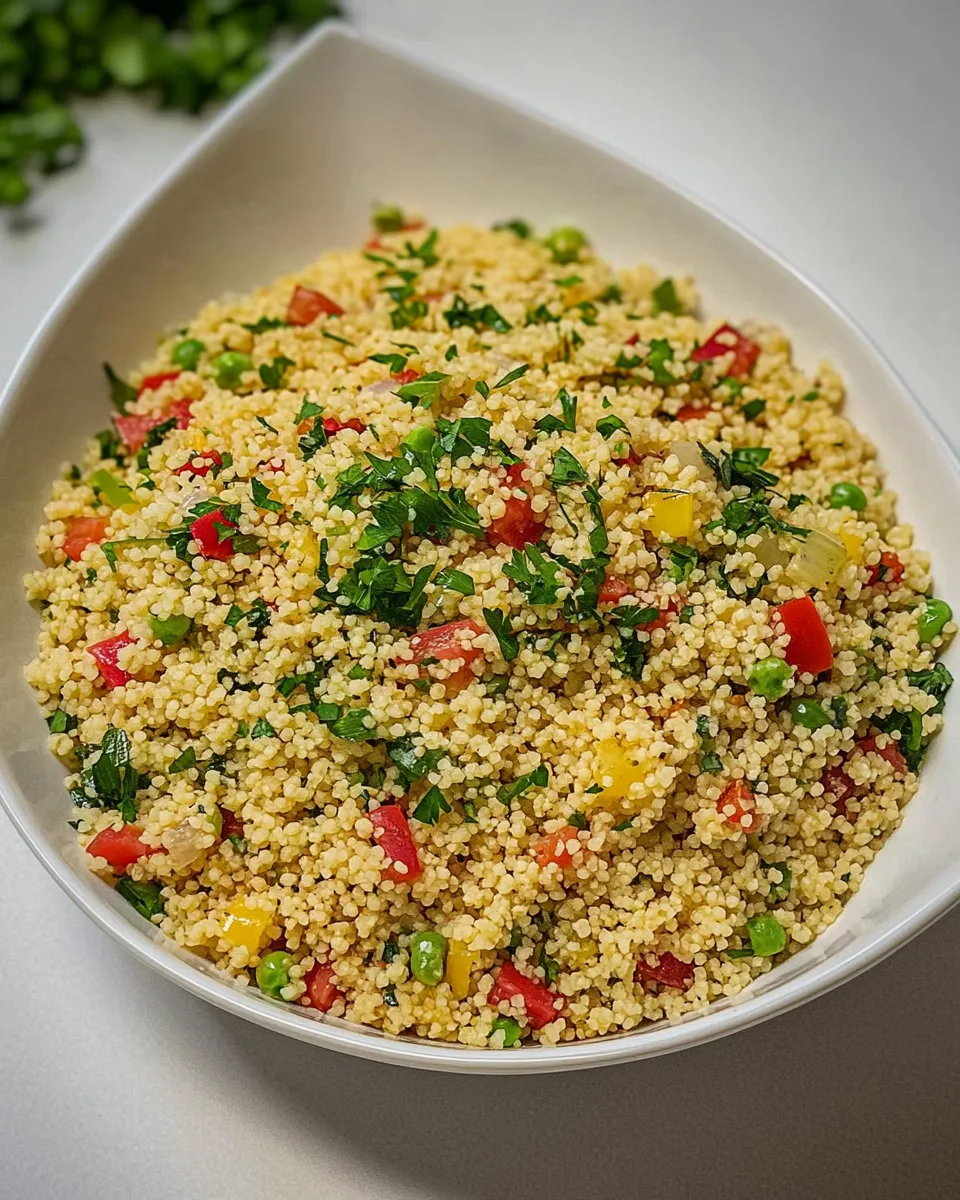
Vegetarian Couscous
Equipment
- Large saucepan
- Lid
- Fork
Ingredients
Ingredients
- 1 garlic clovecrushed
- 1/8 cupextra virgin olive oil
- 1/2 cupgrilled peppersbottled coarsely chopped
- 1/2 cupleekscoarsely chopped
- 1 cupcarrotsdiced 1 medium carrot more or less
- 1 cupzucchinidiced 1 medium zucchini more or less
- 1 cupeggplantdiced 1/2 medium eggplant more or less
- 1 1/4 cupscouscousdry
- 2 cupsvegetable broth
- 1/8 teaspoonground black pepper
- parsleyfresh finely chopped
Instructions
Instructions
- Heat a large saucepan over medium heat and add half of the extra virgin olive oil. Add the crushed garlic and sauté, stirring, until fragrant and lightly golden (about 30–60 seconds).
- Add the coarsely chopped grilled peppers and toss for 2 minutes.
- Add the coarsely chopped leeks, diced carrots, diced zucchini, diced eggplant, and the ground black pepper. Cook, stirring occasionally, for about 8 minutes, until the vegetables are softened and slightly toasted.
- Add the dry couscous and toss with the vegetables for 1 minute to coat the grains in oil and vegetables.
- Pour in the vegetable broth, bring to a gentle simmer, cover the pan, reduce the heat to low–medium, and cook for 5 minutes or until the broth is completely absorbed by the couscous.
- Turn off the heat. Drizzle the remaining extra virgin olive oil over the couscous and gently fluff the mixture with a fork to separate the grains.
- Sprinkle the finely chopped parsley over the couscous and serve.