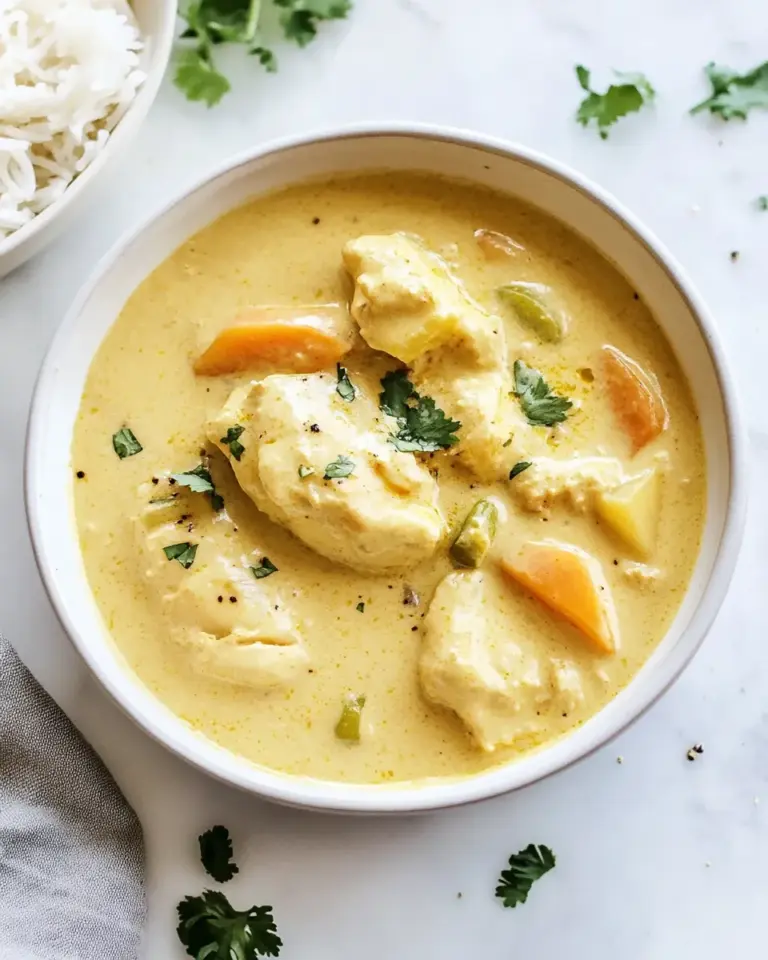
I fell for this dish the first time I stirred rice vermicelli into a glossy, fragrant coconut curry. It’s one of those weeknight-ready meals that still tastes like you’ve spent time on it — bright lime, warm curry, and just enough sweetness to make everyone at the table smile.
It’s forgiving, too. The recipe handles small swaps and timing variations without falling apart. You can prep the veg and noodles ahead, then finish everything in a single pan so dinner lands on the table fast and warm.
Below I lay out the ingredients as provided, the exact step-by-step method to follow, common fixes, and thoughtful swaps for different diets. Read through once, gather your mise en place, and you’ll have dinner humming in under 30 minutes.
Ingredients at a Glance
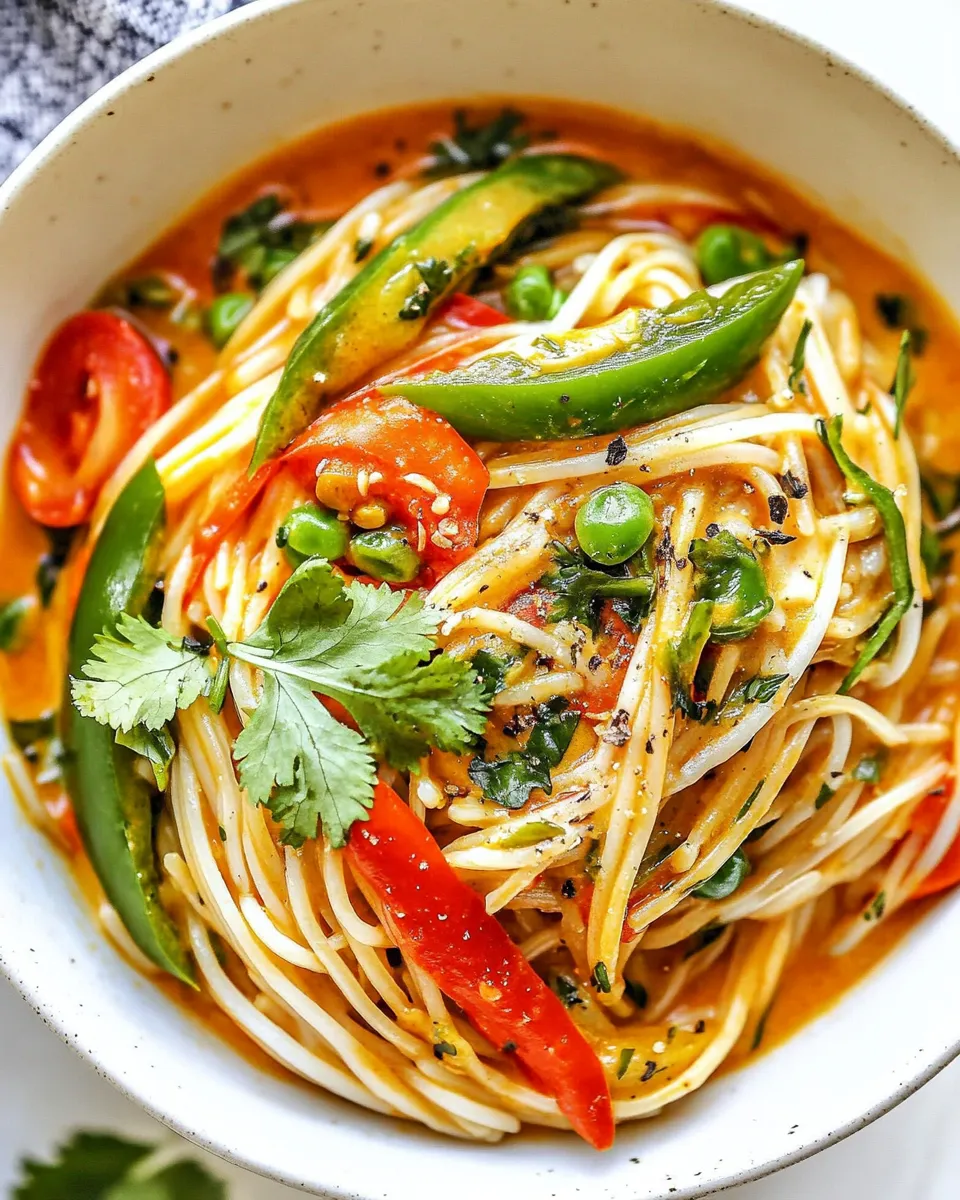
- 12oz. rice vermicelli noodles may sub linguine — The noodles are the vehicle for the sauce; soak until just al dente so they finish perfectly in the pan.
- 1 1/2 tablespoons olive oil — For sautéeing the chicken and aromatics; neutral olive oil works fine.
- 1 pound chicken thighs chopped into 1-inch pieces — Thighs stay juicy and hold up to the curry better than leaner cuts.
- 2 shallots chopped — Milder and sweeter than onions; they melt into the sauce and add depth.
- 3 tablespoons red curry paste — The central seasoning; choose a paste you like and adjust later if you want it milder or spicier.
- 2 bell peppers (red, yellow or orange) sliced ¼” thick — Add color and crunch; slice uniformly for even cooking.
- 1 small zucchini halved, sliced 1/4-1/2” thick — Keeps some bite and soaks up the sauce; avoid over-slicing or it becomes mushy.
- 2 teaspoons freshly grated ginger — Brightens the curry and cuts richness from the coconut milk.
- 4 garlic cloves minced — Builds savory backbone; don’t let it burn when cooking.
- 115 oz. canqualify coconut milk(I love Chaokoh) — Coconut milk provides the luscious sauce; use full-fat for richness.
- 1/2 tablespoon cornstarch — Helps the sauce thicken and cling to the noodles.
- 3 tablespoons lime juice — Acid to balance sweetness and fat; add to taste if you prefer brighter flavor.
- 2 tablespoons less sodium soy sauce — Salt and umami; reduced-sodium lets you control final seasoning.
- 2 tablespoon fish sauce — Adds salty depth and umami; use sparingly if you’re cautious about its potency.
- 2 tablespoon brown sugar — Balances heat and acidity; brown sugar gives a subtle molasses note.
- 1/4 tsp EACH salt, pepper — Baseline seasoning; adjust at the end after tasting.
- 1-2 tablespoons Asian chili sauce — For heat and a sweet-savory kick; add to your spice preference.
- 1/4 cup fresh Thai basil or Italian basil chopped (may sub ½ T dried) — Fresh basil folded in at the end brightens and lifts the curry.
Rice Noodles in Coconut Curry Sauce — Do This Next
- Place the rice vermicelli noodles in a large heatproof bowl and cover with boiling water. Soak according to package instructions just until al dente. Drain, rinse under cold water, and set aside.
- Heat the olive oil in a large saucepan over medium-high heat. Add the chopped chicken, chopped shallots, and red curry paste; cook, stirring occasionally, until the chicken is no longer pink.
- Add the sliced bell peppers, sliced zucchini, grated ginger, and minced garlic to the pan and sauté for 1 minute.
- Open the can of coconut milk. Pour in half of the coconut milk and stir to combine; reserve the remaining coconut milk for the next step.
- In a small bowl, whisk the reserved coconut milk together with the cornstarch until smooth. Add this mixture to the saucepan along with the lime juice, reduced-sodium soy sauce, fish sauce, brown sugar, salt, pepper, and Asian chili sauce. If using dried basil instead of fresh, add the dried basil now.
- Bring the sauce to a boil, then reduce the heat and simmer for about 5 minutes, or until the sauce thickens and the vegetables are crisp-tender.
- Stir in the chopped fresh basil in the last minute of cooking (if using fresh basil).
- Add the drained rice noodles to the pan and toss gently until the noodles are evenly coated with the coconut curry sauce and heated through.
- Serve immediately.
Why This Rice Noodles in Coconut Curry Sauce Stands Out
This dish balances creamy, spicy, sweet, and bright elements in a single, saucy bowl. Coconut milk and brown sugar give a silky, slightly sweet body; lime juice and basil cut through that richness with freshness. The red curry paste brings aromatic heat built from chilies, galangal, and lemongrass, and the fish sauce/soy sauce base layers in umami without overpowering.
Texturally it’s a pleasure: soft but toothsome rice noodles coated in a clingy curry, tender braised chicken, and crisp-tender vegetables. That contrast is what makes it feel special even when it’s a straightforward weeknight meal.
Low-Carb/Keto Alternatives
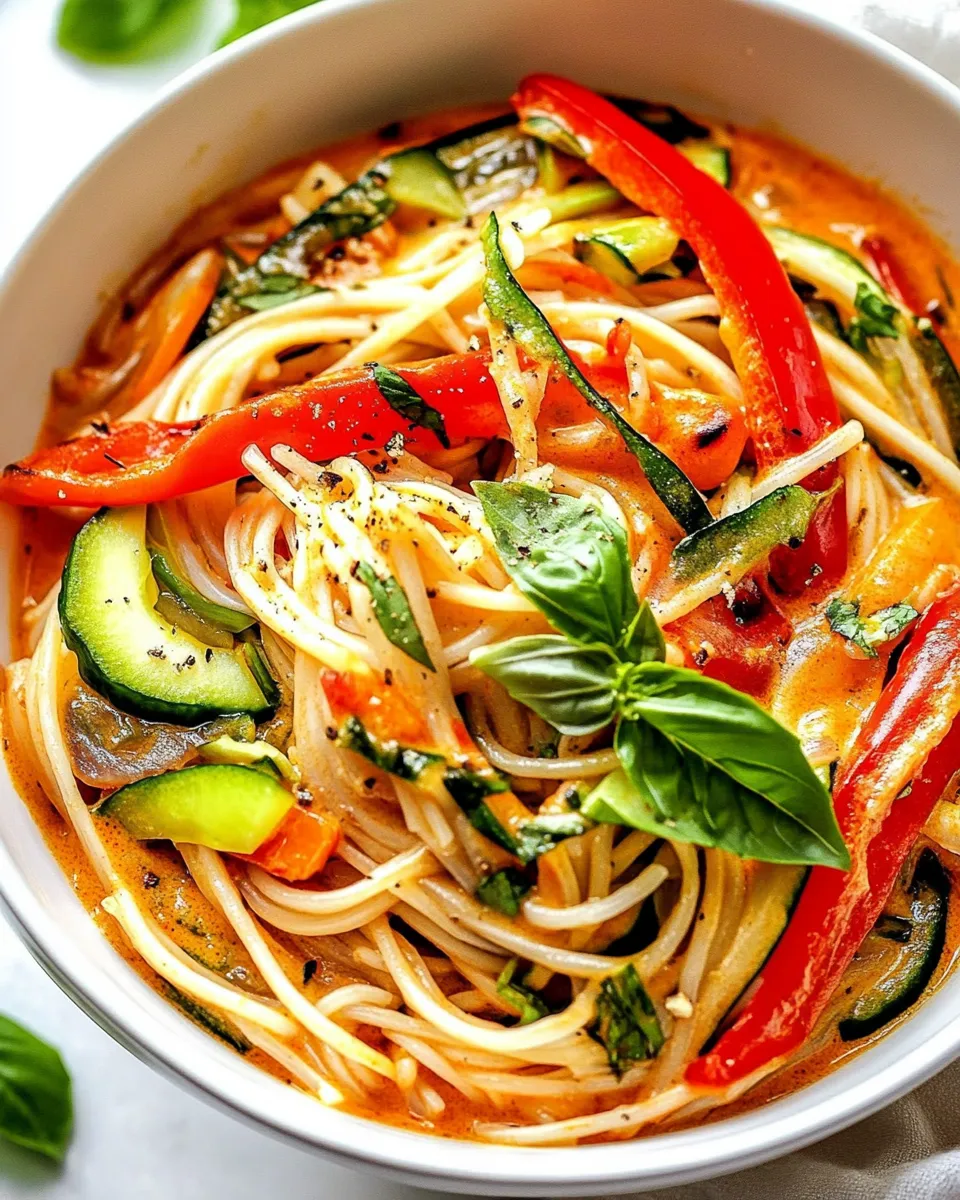
If you’re cutting carbs, swap the rice vermicelli for shirataki noodles (rinsed and dry-toasted) or spiralized vegetables like zucchini or daikon. Both absorb sauce well when warmed briefly — use the pan to combine and coat them so they pick up all the flavor. Reduce or omit the brown sugar to keep the carb count lower, and choose a low-carb sweetener if you still want a touch of sweetness.
What You’ll Need (Gear)
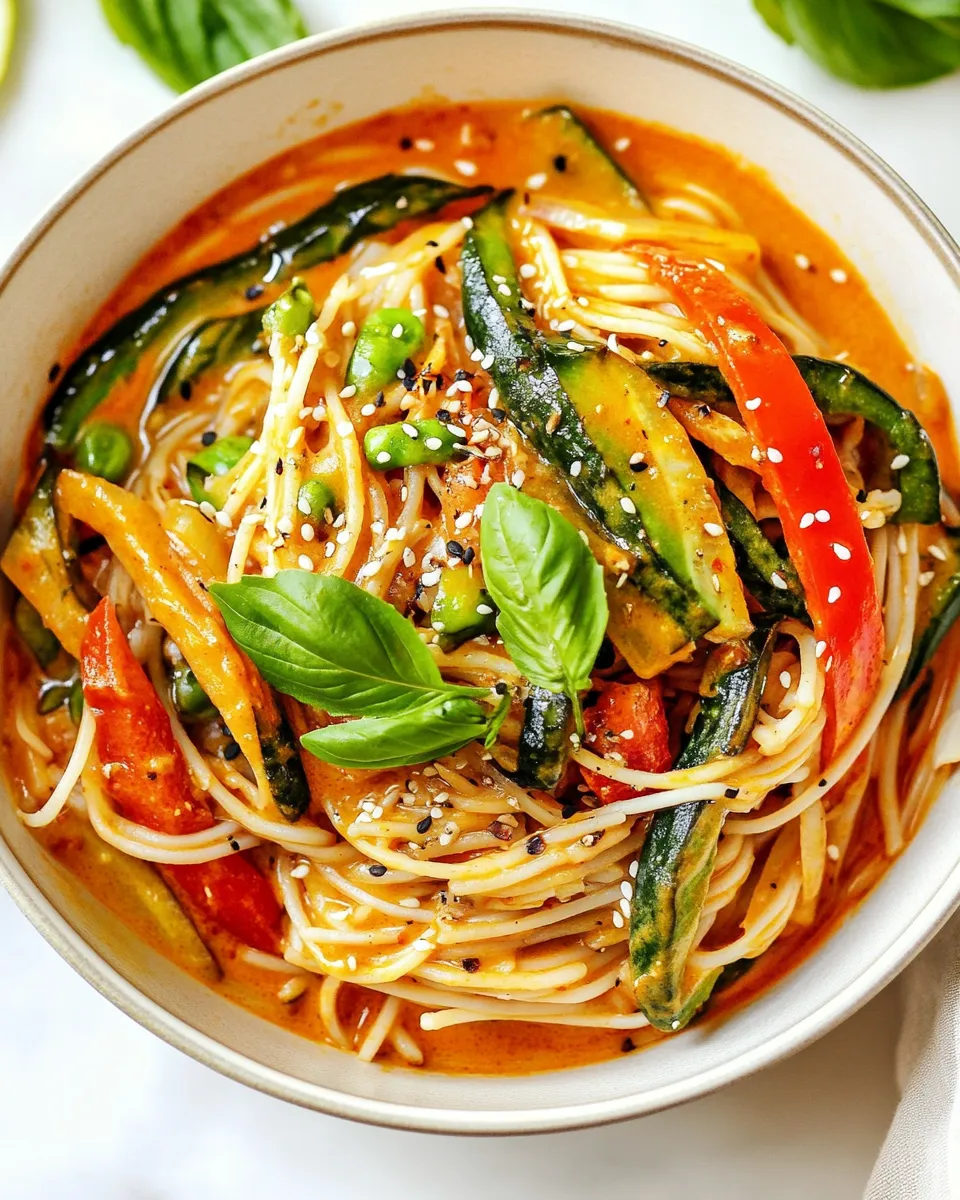
- Large heatproof bowl — For soaking the rice vermicelli in boiling water.
- Large saucepan or deep skillet — Big enough to cook the chicken, vegetables, and toss the noodles in the sauce comfortably.
- Small bowl or measuring cup — To whisk the reserved coconut milk and cornstarch.
- Sharp knife and cutting board — For uniform pieces of chicken and vegetables so everything cooks evenly.
- Tongs or chopsticks — Helpful when tossing noodles into the sauce without breaking them up.
- Measuring spoons and cups — To keep seasonings and liquids consistent.
Missteps & Fixes
Here are the most common things that go wrong and how to fix them:
- Noodles become mushy — That usually means they were over-soaked. Next time, shorten the soak and undercook slightly so they finish in the sauce during the final toss.
- Sauce is thin — Make sure you whisked the reserved coconut milk with the cornstarch thoroughly before adding. Simmer longer to reduce, or mix a touch more cornstarch with cold liquid and stir it in.
- Too salty or too fishy — Reduce fish sauce or soy sauce next time, and taste as you go. If it’s already too salty, add a squeeze more lime juice and a teaspoon of sugar to round the edge.
- Chicken is dry — Use thighs as specified; they tolerate higher heat better. If you must use breast, reduce the cooking time and remove when slightly underdone — it will finish in the sauce.
Variations for Dietary Needs
Vegetarian/Vegan: Swap the chicken for firm tofu or tempeh. Replace fish sauce with extra soy sauce and a splash of miso for umami, or use a vegan fish sauce alternative. Use full-fat coconut milk and keep the brown sugar — or swap for a vegan sweetener.
Gluten-Free: Rice noodles are naturally gluten-free, but swap the soy sauce for tamari or a certified gluten-free soy sauce to be safe.
Nut-Free: This recipe is naturally nut-free unless you choose to garnish with peanuts; avoid peanut toppings and use a neutral garnish like extra basil or sliced scallions.
Chef’s Rationale
I structured this recipe around a few principals: cook proteins and aromatics first so they build the base flavor; add sturdier vegetables early for even cooking; thin coconut milk in two stages so it integrates smoothly (half added to start, the rest whisked with cornstarch for thickening); and fold in fresh herbs at the finish to preserve brightness.
The two-stage coconut milk technique ensures a creamy mouthfeel without lumps and lets you control the final thickness. Keeping the noodles slightly underdone in their soak prevents them from collapsing when tossed in the hot sauce.
Make Ahead Like a Pro
To speed weeknight assembly, prep components separately:
- Noodles: Soak them, drain well, toss with a teaspoon of oil, and refrigerate up to a day. Reheat briefly in the sauce when ready to serve.
- Protein & vegetables: Chop and store separately. You can also cook the chicken and keep it refrigerated for up to 2 days, then reheat in the pan with the sauce.
- Sauce mixture: Whisk the reserved coconut milk and cornstarch together and keep in a small sealed container in the fridge. Bring to room temperature before adding to the hot pan.
Assemble and finish in a single pan in about 10 minutes once everything is prepped.
FAQ
Can I use dried basil? Yes — if you’re using dried basil, add it when you add the cornstarch mixture so it has time to rehydrate and release flavor. The recipe notes allow substituting ½ tablespoon dried for the fresh 1/4 cup.
What if I only have coconut milk powder or light coconut milk? Light coconut milk will thin the sauce; reduce simmer time to concentrate it more, or add a touch more cornstarch slurry. Coconut milk powder can work if reconstituted to a full-fat consistency.
Can I make this with shrimp or pork? Absolutely. Protein cooks at different rates — add shrimp toward the end so it doesn’t overcook; thinly sliced pork shoulder or tenderloin can be treated similarly to the chicken thighs but watch cooking time.
How spicy will this be? The heat depends on your red curry paste and Asian chili sauce. Start with the lower end (1 tablespoon Asian chili sauce) and taste; you can always add more at the end.
Before You Go
This is one of those reliably comforting, flexible dinners that rewards small adjustments. Taste as you go, freshen with lime and basil at the end, and don’t be afraid to tweak the heat and salt to suit your table. If you try a swap or make-ahead trick that worked especially well, I’d love to hear about it — little kitchen victories are the best part of sharing recipes.
Happy cooking — may your noodles be firm, your sauce silky, and your weeknights a little easier.
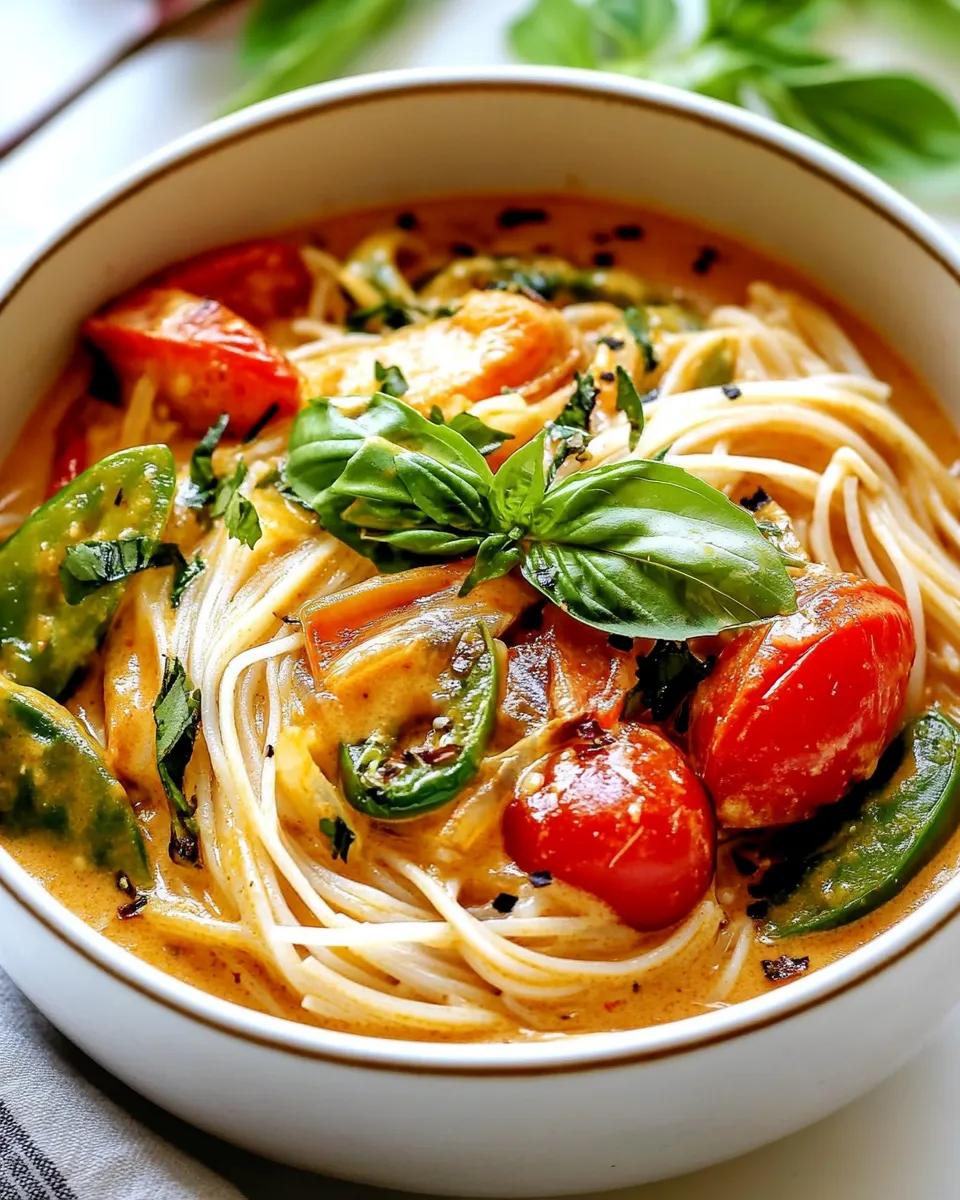
Rice Noodles in Coconut Curry Sauce
Ingredients
Ingredients
- 12 oz.rice vermicelli noodlesmay sub linguine
- 1 1/2 tablespoonsolive oil
- 1 poundchicken thighschopped into 1-inch pieces
- 2 shallotschopped
- 3 tablespoonsred curry paste
- 2 bell peppers red, yellow or orangesliced 1/4” thick
- 1 small zucchinihalved sliced 1/4-1/2” thick
- 2 teaspoonsfreshly grated ginger
- 4 garlic clovesminced
- 115 oz. canqualify coconut milk I love Chaokoh
- 1/2 tablespooncornstarch
- 3 tablespoonslime juice
- 2 tablespoonsless sodium soy sauce
- 2 tablespoonfish sauce
- 2 tablespoonbrown sugar
- 1/4 tsp EACHsalt pepper
- 1-2 tablespoonsAsian chili sauce
- 1/4 cupfresh Thai basil or Italian basilchopped may sub 1/2 T dried
Instructions
Instructions
- Place the rice vermicelli noodles in a large heatproof bowl and cover with boiling water. Soak according to package instructions just until al dente. Drain, rinse under cold water, and set aside.
- Heat the olive oil in a large saucepan over medium-high heat. Add the chopped chicken, chopped shallots, and red curry paste; cook, stirring occasionally, until the chicken is no longer pink.
- Add the sliced bell peppers, sliced zucchini, grated ginger, and minced garlic to the pan and sauté for 1 minute.
- Open the can of coconut milk. Pour in half of the coconut milk and stir to combine; reserve the remaining coconut milk for the next step.
- In a small bowl, whisk the reserved coconut milk together with the cornstarch until smooth. Add this mixture to the saucepan along with the lime juice, reduced-sodium soy sauce, fish sauce, brown sugar, salt, pepper, and Asian chili sauce. If using dried basil instead of fresh, add the dried basil now.
- Bring the sauce to a boil, then reduce the heat and simmer for about 5 minutes, or until the sauce thickens and the vegetables are crisp-tender.
- Stir in the chopped fresh basil in the last minute of cooking (if using fresh basil).
- Add the drained rice noodles to the pan and toss gently until the noodles are evenly coated with the coconut curry sauce and heated through.
- Serve immediately.
Notes
Rice noodles substitute.Linguine is the best pantry friendly substitute. It is similar in size but it doesn’t offer that delightful chewy texture and is prone to overcooking because it is so thin – so make sure you cook the pasta al dente as it will continue to cook when tossed in the sauce.
Not all red curry paste is created equal.Red curry pastes differ in spice level by brand. If using more mild Thai Kitchen, then I would start with 3 tablespoons; if using spicier Mae Ploy, you may want to start with 2 tablespoons or even 1 tablespoon if you are sensitive to heat.
Prep.These Rice Noodles come together very quickly once you start cooking, so you will want all of the aromatics and vegetables chopped before you start cooking.
Customize.Feel to customize the protein and veggies with your favorites.
Use a large saucepan.Alarge saucepanis ideal so you can make the entire dish in one pan without rice noodles flying everywhere.
Don’t overcook rice noodles.I recommend testing your noodles 2 minutes before the package recommends because you can’t undo sad, soggy noodles.
Stop rice noodles from cooking.If your noodles are done before your sauce is ready to receive them, rinse them in cool water to prevent them from continuing to cook. Don’t worry about the noodles being cold because the sauce will warm it right up once combined.
Prevent rice noodles from clumping.If you’re not using the noodles right away, toss them with a little sesame oil to prevent them from sticking together.
Use quality coconut milk.Set yourself up for success by using full-fatChaokoh coconut milk.It is 100X creamier than any other brand and mega flavorful.
Don’t overcook veggies.Don’t be tempted to cook the vegetables longer than instructed. They cook very quickly and will continue to cook in the sauce once removed from the heat.
Adjust to taste.Make this Rice Noodles recipe perfect for YOU! Make it more tangy, less tangy, sweeter, less sweet, saltier, less salty, spicier, less spicy, etc.
Noodles.Soak the noodles, rinse and drain, then toss with a drizzle of sesame oil. Store in an airtight container/plastic bag in the refrigerator for up to one week.
Chicken.Trim and chop the chicken and store in a plastic bag in the refrigerator.
Sauce.Whisk the sauce ingredients together and store it in an airtight container in the refrigerator.
Veggies.Chop the veggies, basil, garlic and ginger and store in separate baggies/containers in the refrigerator.
Cook!Within the next 48 hours, proceed with the recipe as outlined.
Storage:Rice Noodles should be stored in an airtight container in the refrigerator. When properly stored, they are good for up to four days.
Microwave:Transfer servings to a microwave-safe plate and cook for one minute, stir, then continue to heat at 30 second intervals until warmed through.
Stove:For larger portions, reheat noodles gently over medium-low heat in a large skillet until warmed through.