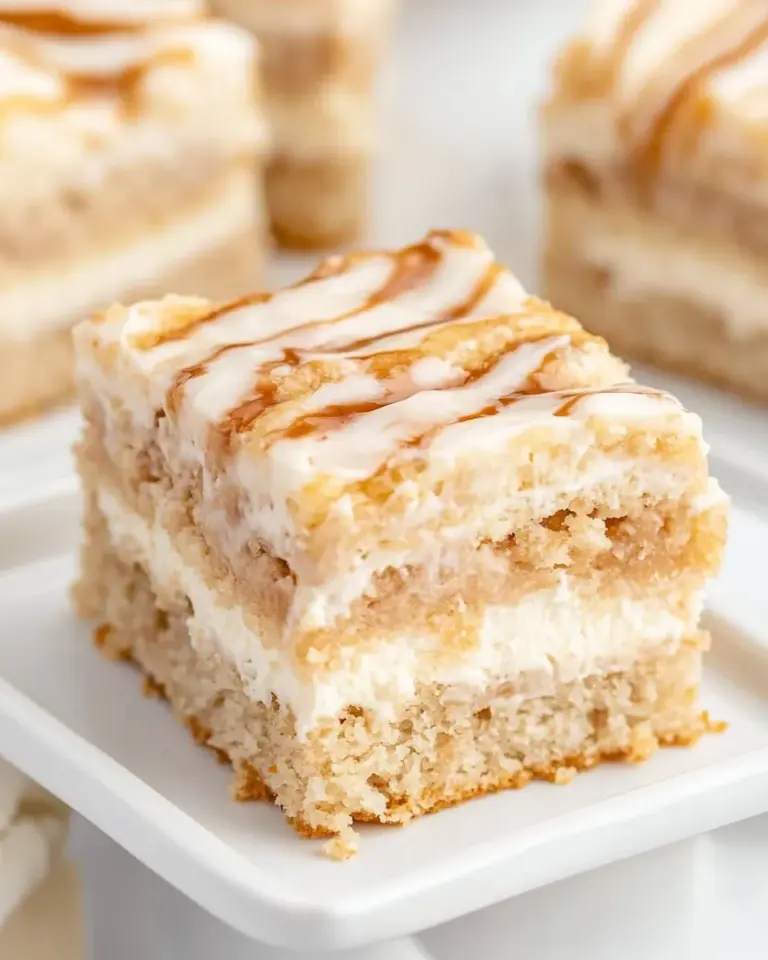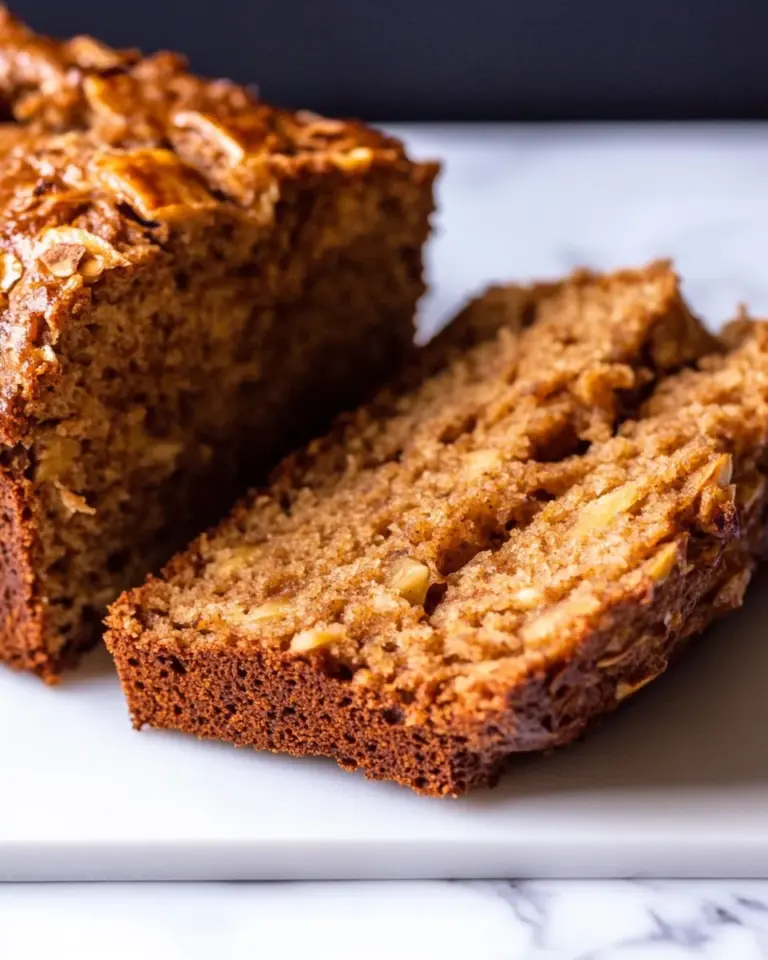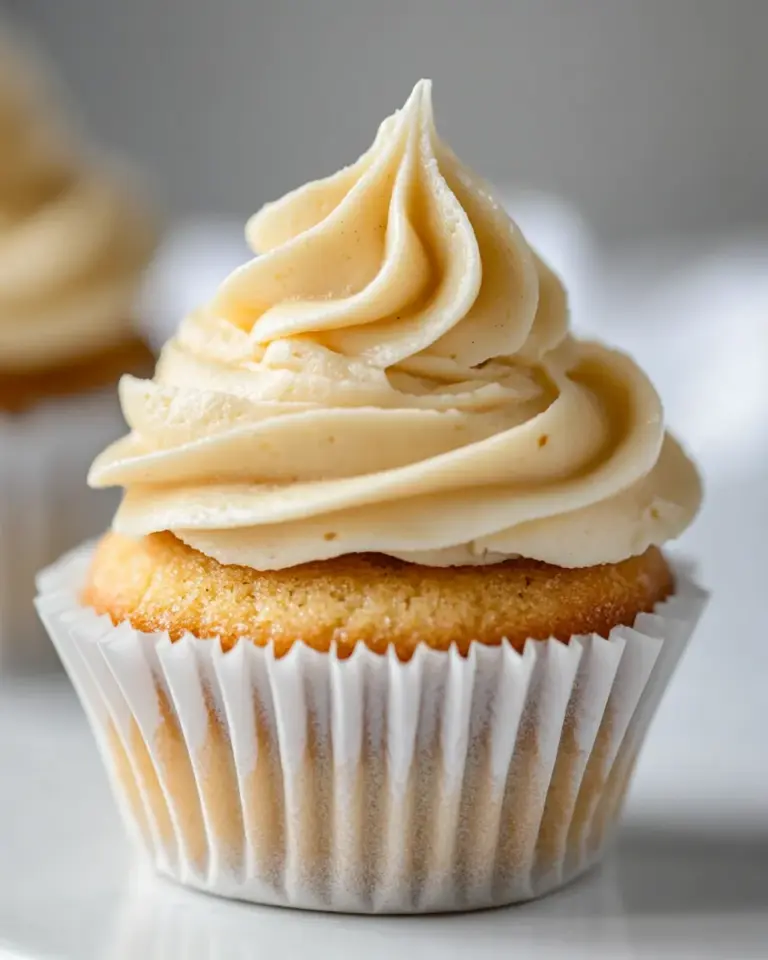
I make this Bundt Coffee Cake when I want something that feels special without demanding a whole afternoon. It’s the kind of cake that survives a busy morning, shows up beautifully at a small gathering, and still slices cleanly for toast the next day. I like how the swirls of cinnamon and walnut tuck into the batter, so every bite has soft cake and a little crunch.
This recipe is straightforward and forgiving. The batter is rich with sour cream and butter, which keeps the crumb tender and a touch dense—perfect with coffee. The step-by-step below sticks exactly to the method that works for me: careful layering, a well-prepared pan, and a quiet patience while it bakes for an hour.
Read through the Ingredients and the From Start to Finish section once before you begin. That way you know when to have the butter softened, the eggs at room temperature, and your pan ready. I’ll walk you through the why behind the choices, common mistakes to avoid, and simple swaps if you need them.
Ingredients
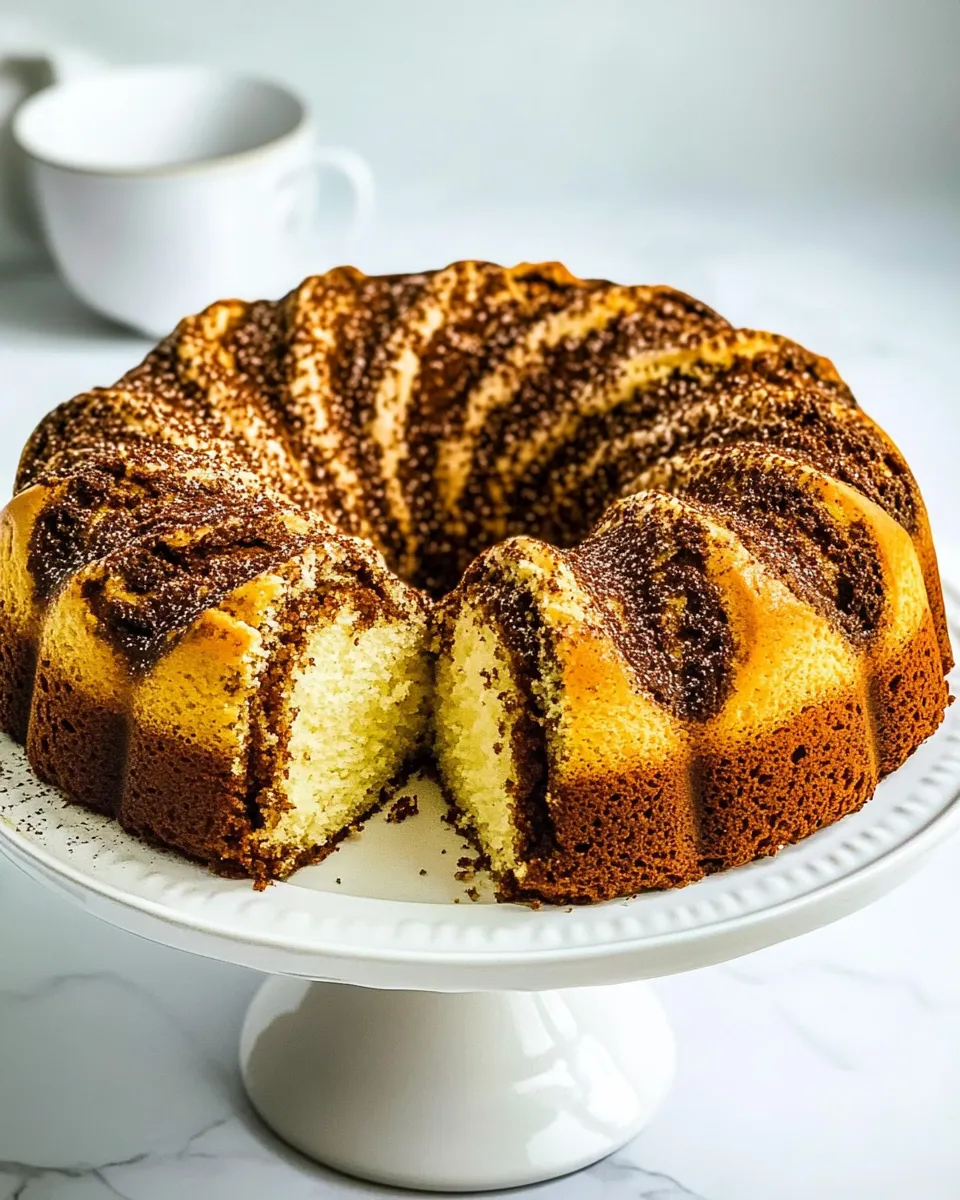
- 1 cup butter, softened — brings richness and helps create a tender crumb when creamed with sugar.
- 2 ¾ cups white sugar, divided — sweetens the cake; part goes into the batter, part into the cinnamon layer for texture and flavor contrast.
- 4 eggs, room temperature — provide structure and lift; room temperature eggs incorporate more smoothly.
- 2 teaspoons vanilla extract — rounds the flavor and complements the cinnamon without overpowering it.
- 3 cups all-purpose flour — the bulk of the cake’s structure; measure by spooning into the cup and leveling for accuracy.
- 2 teaspoons baking powder — helps the cake rise evenly; keep it fresh for best results.
- 1 teaspoon baking soda — works with the sour cream to give a balanced rise and tender crumb.
- 1 teaspoon salt — lifts the sweetness and tightens the flavors.
- 2 cups sour cream, full fat — adds moisture, richness, and a slight tang that balances the sugar.
- 2 Tablespoons ground cinnamon — the spice that defines the swirled layer; distribute evenly for consistent flavor.
- ½ cup chopped walnuts — adds texture and a toasty note; chop uniformly so they layer evenly.
The Essentials
Pan size: a 10-inch tube pan or Bundt pan. That size gives the cake room to rise and bake through without over-browning.
Oven temperature and time: 350°F for 60–70 minutes. The oven temp is steady and moderate; the longer bake time allows the dense batter to set without a raw center. Expect to test with a toothpick near the center for doneness.
What to have ready
- All ingredients measured and at the proper temperature (butter softened, eggs at room temperature).
- Your pan greased and floured—this is non-negotiable for clean release.
- An easy method to fold and layer the batter and cinnamon mixture cleanly into the pan.
From Start to Finish: Bundt Coffee Cake
- Preheat the oven to 350 degrees Fahrenheit. Grease and flour a 10-inch tube pan or Bundt pan; set aside.
- In a small bowl, combine ¾ cup white sugar, 2 Tablespoons ground cinnamon, and ½ cup chopped walnuts; set aside.
- In a large mixing bowl, cream 1 cup softened butter with 2 cups white sugar until light and fluffy.
- Add 4 eggs one at a time, beating well after each addition. Mix in 2 teaspoons vanilla extract.
- In a separate bowl, whisk together 3 cups all-purpose flour, 2 teaspoons baking powder, 1 teaspoon baking soda, and 1 teaspoon salt.
- Add the dry ingredients to the creamed mixture in three additions, alternating with the 2 cups sour cream, beginning and ending with the dry ingredients. Mix just until combined after each addition.
- Spoon one-third of the batter into the prepared pan, then sprinkle one-third of the cinnamon-sugar-walnut mixture evenly over the batter. Repeat two more times, finishing with the remaining batter and topping.
- Bake in the preheated oven for 60–70 minutes, or until a toothpick inserted near the center comes out clean.
- Cool the cake in the pan on a wire rack for 10 minutes, then invert onto the wire rack to remove the pan. Cool before slicing.
Why It Works Every Time
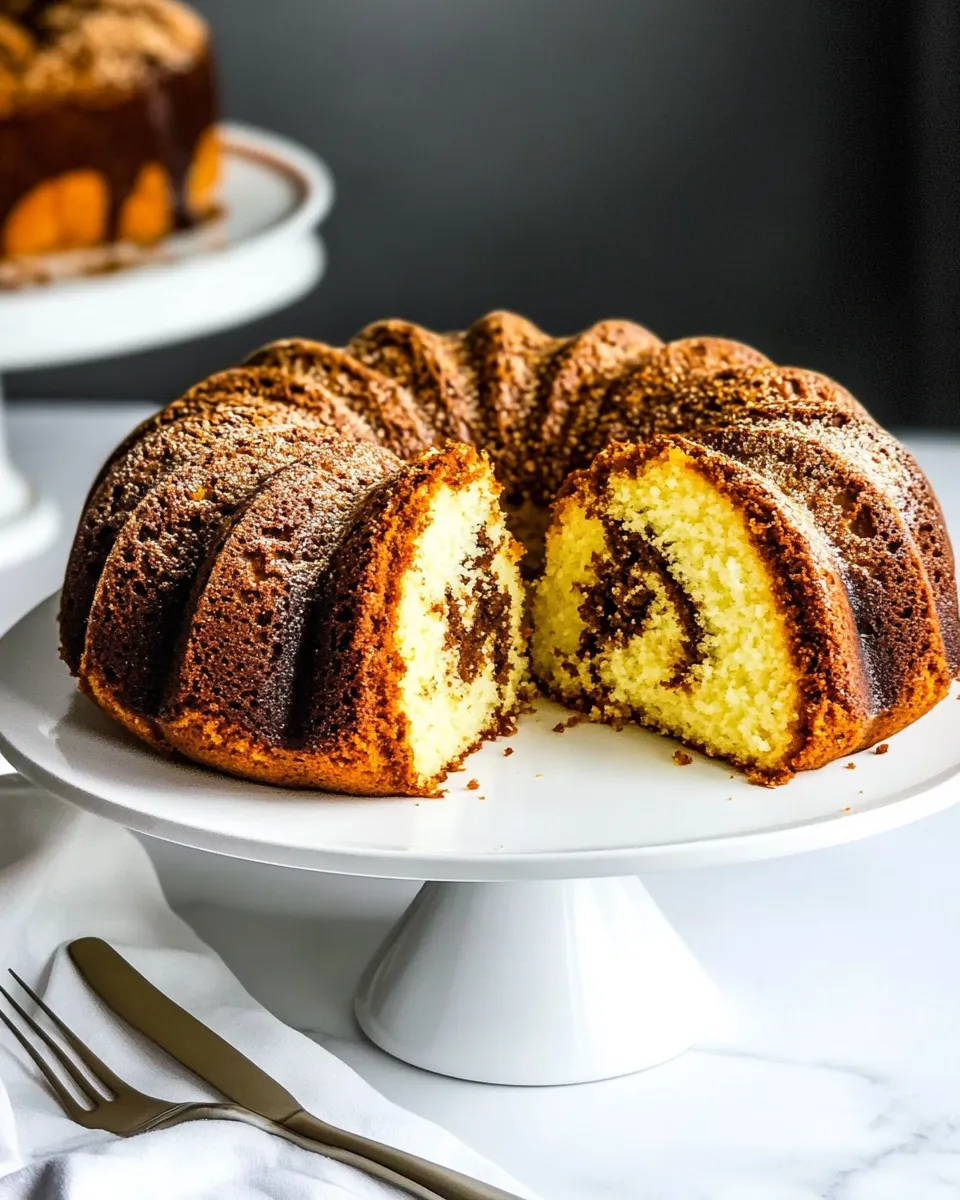
The method is simple and reliable because it balances fat, acid, and leaveners. Full-fat sour cream plus butter creates a moist, tender crumb that holds up to the layered cinnamon filling. The baking powder and baking soda work together: the powder provides steady leavening, while the soda reacts with the sour cream for lift and a fine texture.
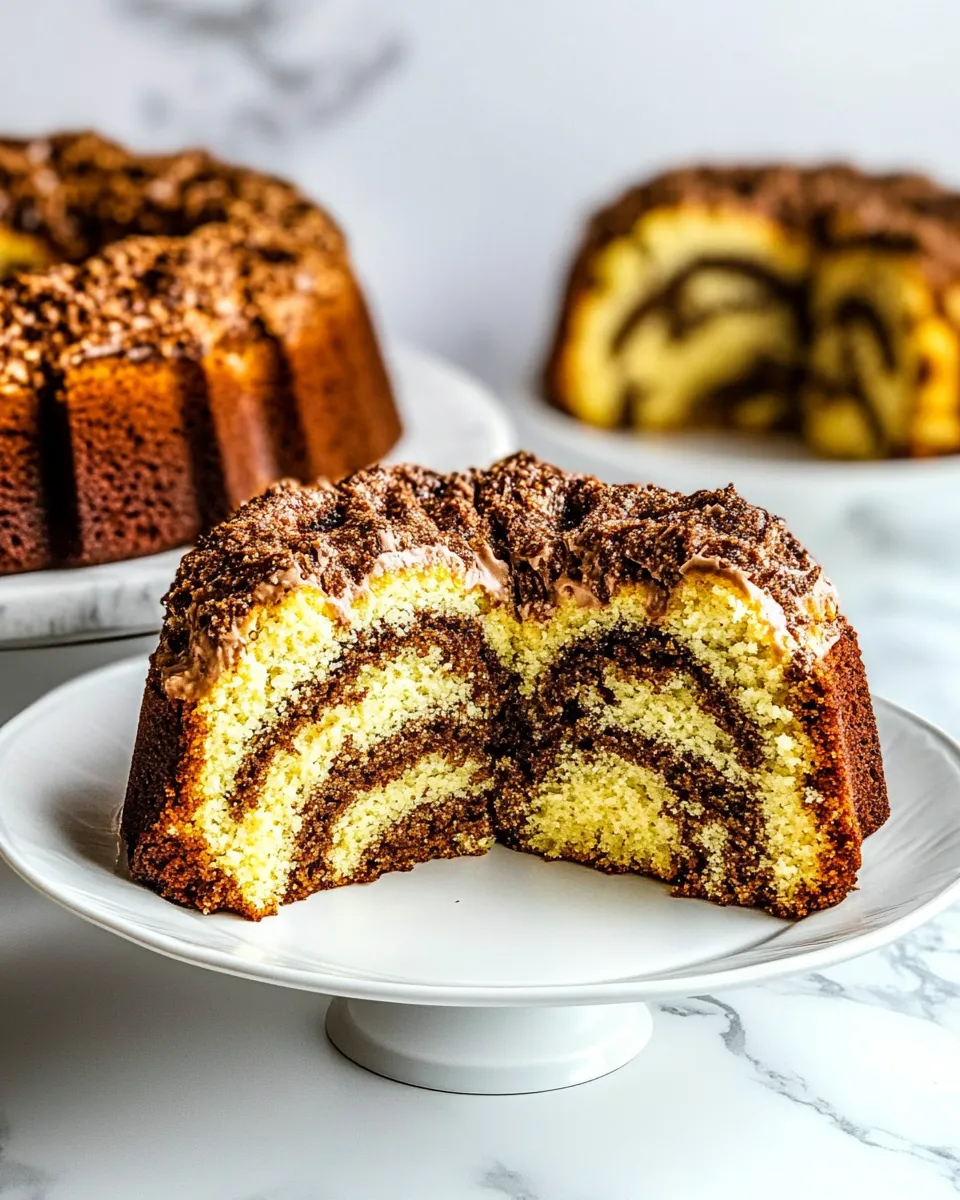
Layering the batter and cinnamon mixture prevents the filling from sinking to the bottom. By alternating in thirds you get even ribbons of flavor instead of a single dense streak. Greasing and flouring the pan ensures a clean release so the cake keeps its shape and those layers stay visible.
Swap Guide
Need substitutions? Keep them simple and ingredient-light.
- Walnuts: swap for pecans if you prefer a slightly sweeter, buttery nut. Use the same amount.
- Sour cream: plain full-fat Greek yogurt can replace sour cream for similar tang and texture, but I recommend full fat for best richness.
- Butter: use unsalted butter to control salt. If you must use salted, omit or reduce added salt by a pinch.
Don’t replace the eggs without a tested egg-free binder; this cake relies on eggs for structure. And avoid reducing sugar too much unless you also adjust the balance of the cinnamon layer—the filling’s sweetness is part of the cake’s character.
Equipment & Tools
- 10-inch tube pan or Bundt pan — essential for the right shape and bake.
- Large mixing bowl and a separate bowl for dry ingredients — for proper folding and mixing.
- Hand mixer or stand mixer — creaming the butter and sugar well gives the cake its lift.
- Wire rack — for cooling and preventing a soggy base when inverting the cake.
- Toothpick or thin skewer — to check doneness near the center.
Learn from These Mistakes
Here are the problems I’ve seen and how to avoid them.
- Undercreamed butter and sugar — if the mixture isn’t light and fluffy, the cake won’t have the right texture. Take time to cream until pale and aerated.
- Cold eggs — adding cold eggs can cause the batter to split or become lumpy. Let them sit at room temperature for 20–30 minutes first.
- Skipping flouring the pan — this is the most common reason for a cake that sticks. Grease thoroughly and dust with flour, tapping out excess.
- Baking at too high a temperature — the outside can brown before the center cooks. Stick to 350°F and check at the lower end of the time range.
- Overmixing after adding flour — mix just until combined. Overwork the batter and you’ll get a tougher crumb.
Fresh Takes Through the Year
Small changes keep this cake interesting across seasons without changing the method.
- Autumn: serve slightly warmed with a side of sliced apples or pear compote. No changes to the recipe necessary.
- Winter holidays: top with a dusting of fine sugar or a light glaze if you want something festive; do that after the cake cools completely.
- Spring and summer: keep it simple and serve with fresh berries or a dollop of plain whipped cream.
These are serving ideas only—none change the baked cake’s ingredients or cook time.
Testing Timeline
When I developed this into a reliable recipe I tested multiple pan sizes and baking times. What mattered most was the pan volume and how long it took the center to come to temperature.
- Test 1: standard 10-inch Bundt pan at 350°F — consistent internal doneness at about 65 minutes.
- Test 2: slight variations in oven racks — centering the pan gave the most even rise and browning.
- Test 3: different brands of sour cream — full-fat varieties performed the best for texture and flavor.
Use the toothpick test near the center. If it comes out with a few moist crumbs you’re done; if it’s wet batter, give it another 5–10 minutes and check again.
Save It for Later
Store the cake loosely covered at room temperature for up to two days. After that, wrap it tightly and refrigerate for up to five days. To freeze, wrap whole or sliced portions in plastic wrap and foil; freeze up to three months. Thaw in the fridge overnight and bring to room temperature before serving.
Your Questions, Answered
Q: Can I halve this recipe for a smaller pan?
A: This recipe is calibrated for a 10-inch pan. Halving requires recalculating volume and may change bake time and texture. If you need a smaller cake, use a tested recipe sized for that pan.
Q: My cake browned but was too moist in the center—what happened?
A: Your oven may run hot. Rotate the pan halfway through baking and check with a toothpick. If the exterior is browning too fast, tent the cake loosely with foil for the remaining bake time.
Q: Can I omit the nuts?
A: Yes. Omitting the walnuts will remove the texture contrast but the cinnamon-sugar layers still deliver flavor. If allergies are a concern, omit them entirely and keep the rest of the recipe the same.
See You at the Table
This Bundt Coffee Cake is the kind of recipe to keep in your back pocket. It’s dependable, pleasing to a crowd, and adaptable for seasonal serving. Follow the steps, pace yourself through the layering, and don’t rush the cooling. The reward is a tender cake with neat layers of cinnamon and walnut that pairs beautifully with a morning cup of coffee or an afternoon tea.
Make it once, and you’ll know the small, sensible tweaks that match your oven and taste. Then it becomes a go-to: practical, delicious, and warmly familiar.
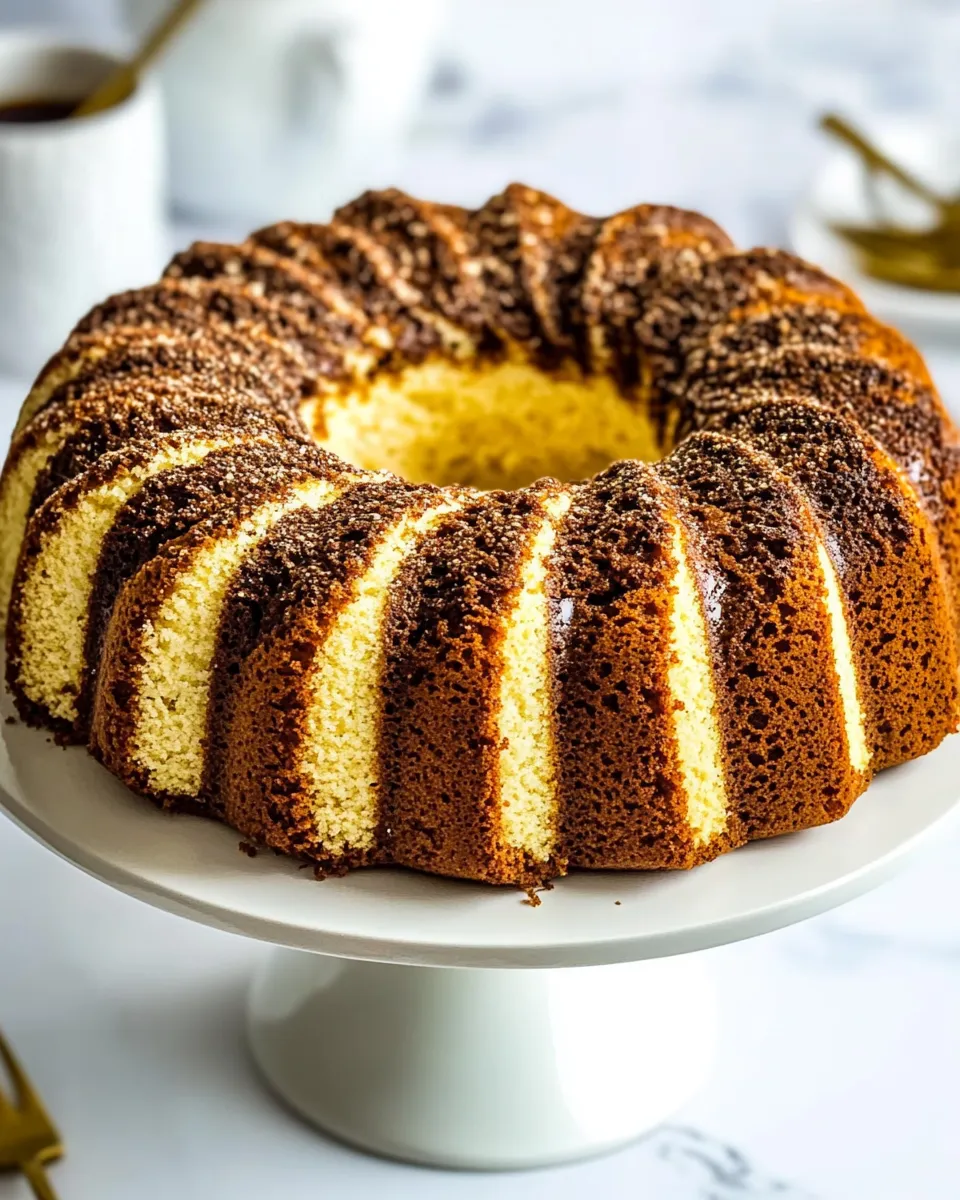
Bundt Coffee Cake
Equipment
- 10-inch tube pan or Bundt pan
- Small Bowl
- Large Mixing Bowl
- separate bowl
- Wire Rack
Ingredients
Ingredients
- 1 cupbuttersoftened
- 2 3/4 cupswhite sugardivided
- 4 eggsroom temperature
- 2 teaspoonsvanilla extract
- 3 cupsall-purpose flour
- 2 teaspoonsbaking powder
- 1 teaspoonbaking soda
- 1 teaspoonsalt
- 2 cupssour creamfull fat
- 2 Tablespoonsground cinnamon
- 1/2 cupchopped walnuts
Instructions
Instructions
- Preheat the oven to 350 degrees Fahrenheit. Grease and flour a 10-inch tube pan or Bundt pan; set aside.
- In a small bowl, combine ¾ cup white sugar, 2 Tablespoons ground cinnamon, and ½ cup chopped walnuts; set aside.
- In a large mixing bowl, cream 1 cup softened butter with 2 cups white sugar until light and fluffy.
- Add 4 eggs one at a time, beating well after each addition. Mix in 2 teaspoons vanilla extract.
- In a separate bowl, whisk together 3 cups all-purpose flour, 2 teaspoons baking powder, 1 teaspoon baking soda, and 1 teaspoon salt.
- Add the dry ingredients to the creamed mixture in three additions, alternating with the 2 cups sour cream, beginning and ending with the dry ingredients. Mix just until combined after each addition.
- Spoon one-third of the batter into the prepared pan, then sprinkle one-third of the cinnamon-sugar-walnut mixture evenly over the batter. Repeat two more times, finishing with the remaining batter and topping.
- Bake in the preheated oven for 60–70 minutes, or until a toothpick inserted near the center comes out clean.
- Cool the cake in the pan on a wire rack for 10 minutes, then invert onto the wire rack to remove the pan. Cool before slicing.
Notes
Tip for removing from the bundt pan:
First, make sure you grease and flour the pan before baking the cake. This will make it much easier to turn it out. When the cake has cooled for ten minutes, place the baking rack on top and then invert to turn the cake over in the pan. It should slide right out!
Optional Glaze:
Want to sweeten it up even more? Make a powdered sugar glaze to drizzle on top of it. Simply mix together 1 c. powdered sugar, 2 Tbsp milk and 1 tsp vanilla extract and drizzle of the top of cooled coffee cake.