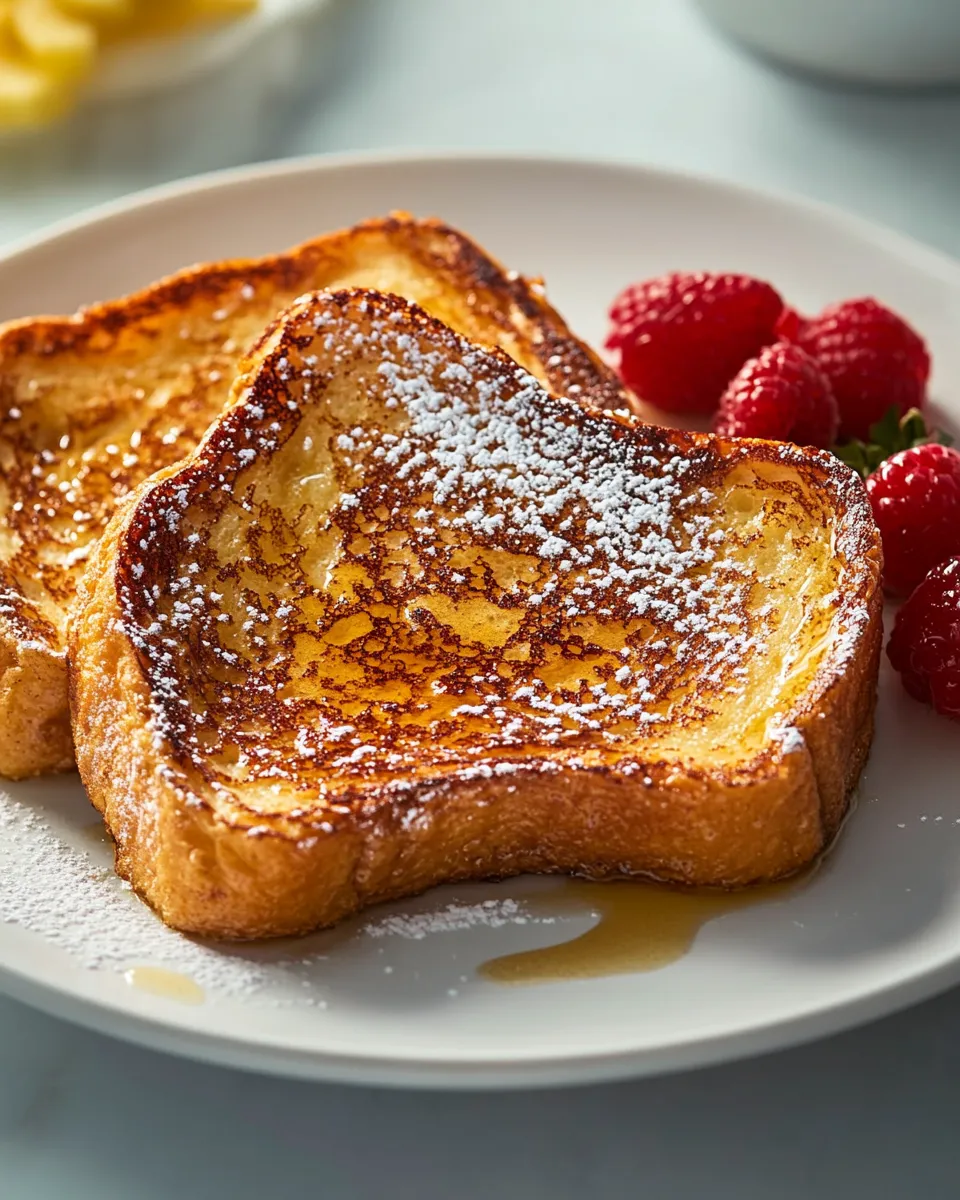
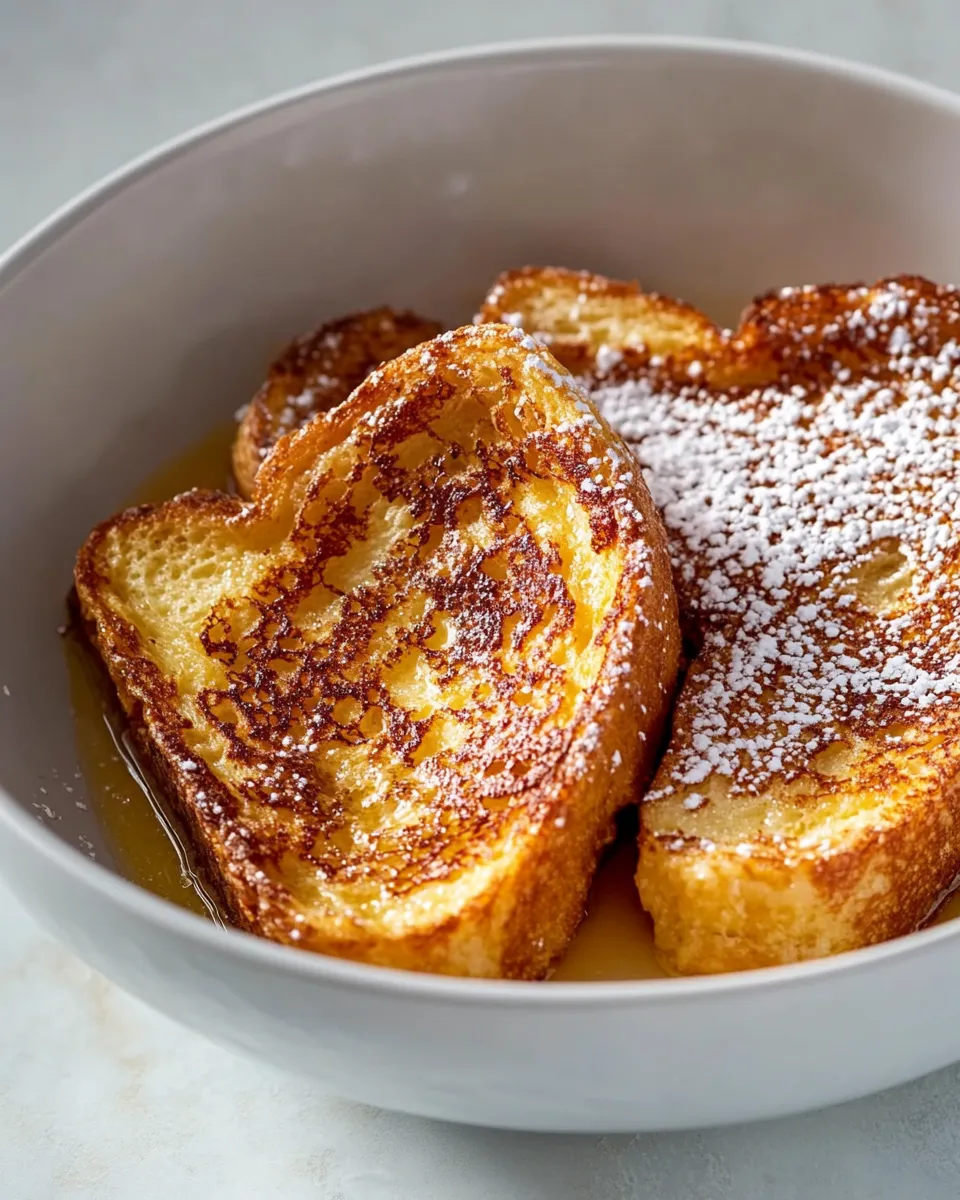
This is my favorite version of classic French toast — pain perdu — the kind that revives even the most stale loaf into something rich, tender, and slightly custardy. It’s straightforward, dependable, and built around a few simple choices: a soft, egg-rich brioche, a silky half-and-half custard, and plenty of butter for a golden crust. No gimmicks. Just reliable technique and delicious results.
I make this when I want breakfast to feel like an occasion without being fussy. The custard soaks in, the slices puff a little in the oven, and the finished pieces keep warm and crisp if you’re feeding a group. You can dress them up or keep them rustic — both work well here.
I’ll walk you through every step from slicing the loaf to serving, and I’ll address common slip-ups and swaps. Read the ingredients list, follow the order in the method, and you’ll have a plateful of warm, comforting French toast every time.
Ingredient List
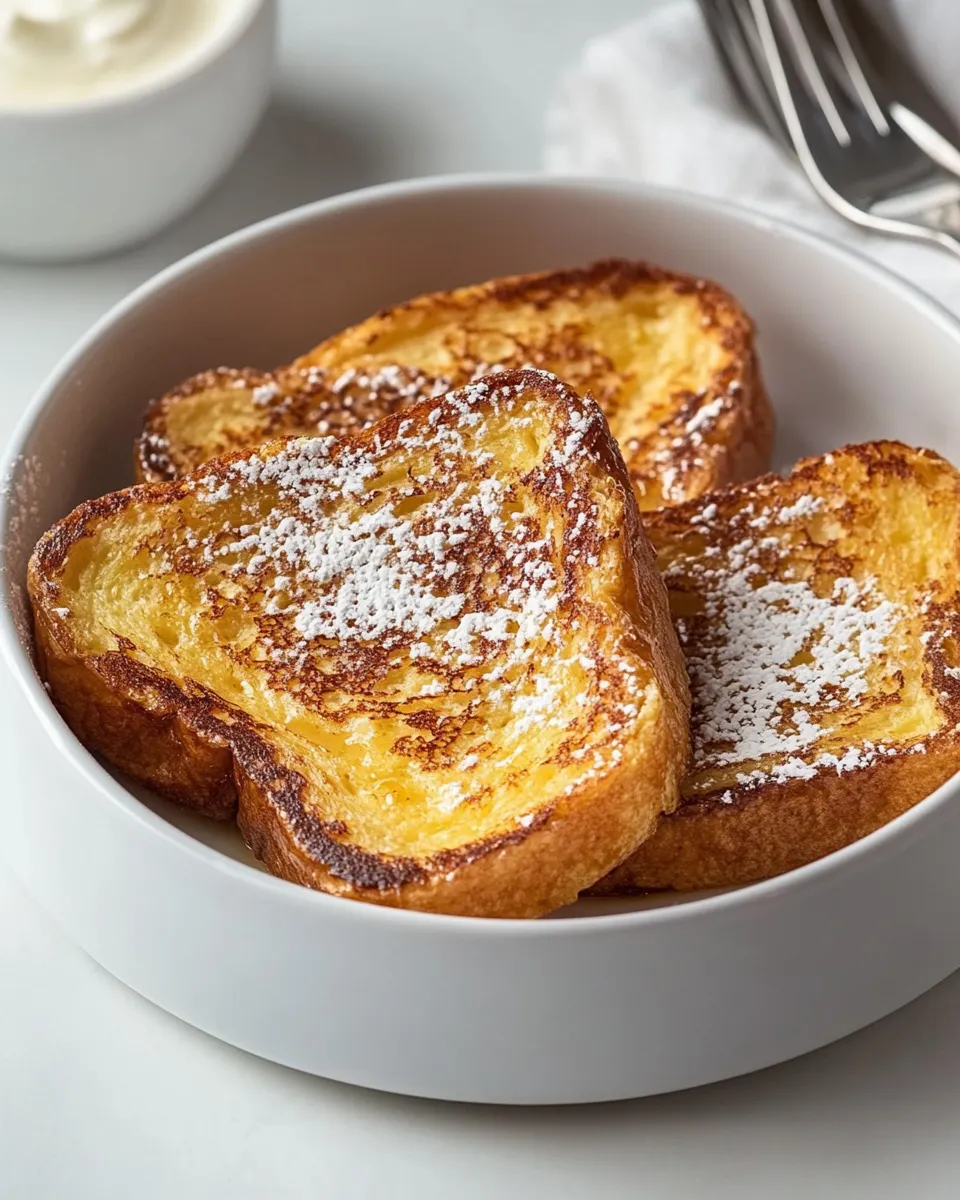
- 1 loaf brioche bread, unsliced — rich, eggy bread holds custard best; slice about 1-inch thick (see method).
- 3 cups half & half — gives a creamy custard without being too heavy; it’s the liquid base that bathes the bread.
- 5 egg yolks — add silkiness and richness; using yolks rather than whole eggs keeps the texture custardy.
- 1/2 cup granulated sugar — sweetens the custard; dissolves in the half & half for an even flavor.
- 1 teaspoon vanilla extract — aromatics lift the custard; pure vanilla makes a noticeable difference.
- 2 pinches salt — balances sweetness and enhances flavor; a little goes a long way.
- 6 tablespoons butter — for frying; adds brown, toasty flavor and helps create a golden crust.
- Possible Toppings: Toasted almonds, fresh berries, powdered sugar, maple syrup, caramel sauce, chocolate shavings — pick one or combine a few for contrast in texture and sweetness.
French Toast (Pain Perdu): From Prep to Plate
- Preheat the oven to 275°F. Place a large baking sheet in the oven or set it aside to use for keeping the cooked French toast warm.
- In a large bowl, whisk together 3 cups half & half, 5 egg yolks, 1/2 cup granulated sugar, 1 teaspoon vanilla extract, and 2 pinches salt until the sugar is fully dissolved.
- Use a serrated knife to slice the 1 loaf brioche (unsliced) into about 1-inch-thick slices.
- Heat a large skillet over medium heat. Add 1–2 tablespoons of the 6 tablespoons butter to the skillet and let it melt, coating the pan.
- Working in batches of 2–3 slices (so you do not overcrowd the skillet), soak each brioche slice in the custard for about 30–60 seconds, flipping once so both sides are fully saturated but the bread does not fall apart.
- Carefully transfer the soaked slices to the hot skillet and cook 2–3 minutes per side, until golden brown and cooked through. If they are browning too quickly, reduce the heat to medium-low.
- Move cooked slices to the baking sheet and place in the oven to keep warm; they may puff slightly the longer they rest.
- Wipe the skillet with a paper towel if the butter residue looks dark, then add more butter from the remaining 6 tablespoons as needed and continue cooking remaining batches, placing each finished batch on the baking sheet in the oven.
- When all slices are cooked, serve warm with any of the possible toppings: toasted almonds, fresh berries, powdered sugar, maple syrup, caramel sauce, or chocolate shavings.
Why It’s Crowd-Pleasing
This recipe balances richness and restraint. The half & half and egg yolks give a creamy, custardy interior while the hot, buttered skillet creates a lightly crisp exterior. Texture is everything here: tender inside, golden outside. That contrast is why people smile when they take the first bite.
It’s also versatile. You can feed a small family or scale up for brunch guests. The method keeps slices warm in the oven while you finish the pan, so timing becomes manageable without sacrificing quality. And the toppings let each person make their own plate — berries, nuts, syrup, or a dusting of powdered sugar all work well.
If You’re Out Of…
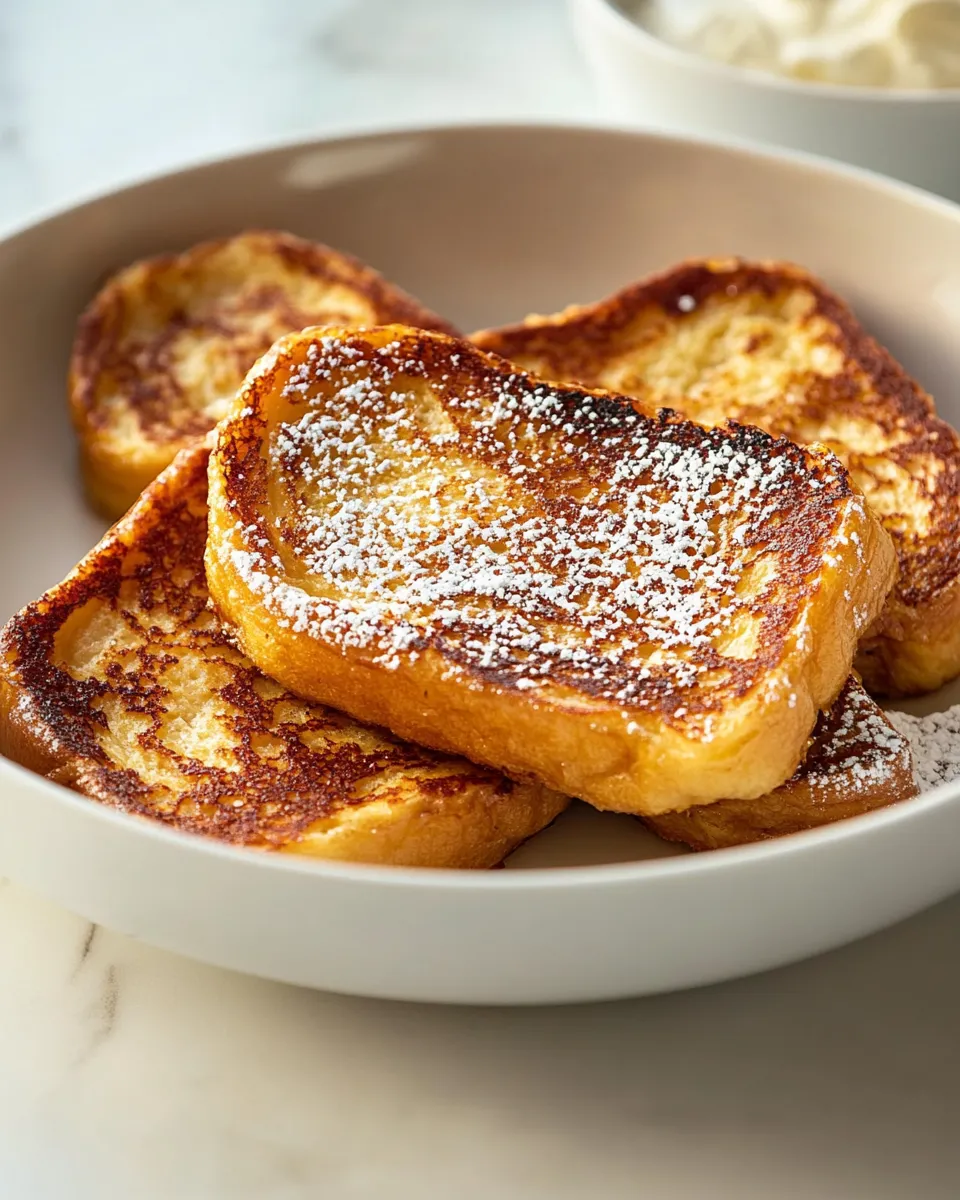
If you don’t have brioche: use another sturdy, slightly enriched bread like challah or a day-old pullman loaf. Avoid very lean breads (like plain sandwich white) — they will soak up too much custard and fall apart.
No half & half? Whole milk will work in a pinch, but the texture will be lighter. If you only have cream, use a mix of cream and milk to avoid overly heavy custard.
Out of egg yolks but have whole eggs: use whole eggs, but expect a slightly firmer set and less silkiness. Note: do not substitute liquid egg products or egg substitutes if you want identical texture.
Prep & Cook Tools
Must-have
- Large skillet (cast iron or heavy-bottomed) — holds heat and creates even browning.
- Large bowl — for whisking the custard.
- Serrated knife — for cleanly slicing the brioche without crushing it.
- Large baking sheet — to hold and keep the cooked slices warm in the oven.
Nice-to-have
- Tongs or a wide spatula — for flipping the soaked slices gently.
- Instant-read thermometer — to check pan temperature when you’re learning how quickly your skillet heats.
Slip-Ups to Skip
Don’t rush the soak. If you under-soak, the center stays dry. If you over-soak, particularly with softer breads, the slices will fall apart. The 30–60 second window in the method is your guideline — flip once and watch the bread soak visibly.
A common mistake is overheating the pan. Too hot and the exterior will brown before the custard cooks through. If the toast is browning too fast, lower the heat to medium-low and give the interior time to set. The recipe calls for a medium skillet temperature for a reason.
Finally, don’t crowd the skillet. Overcrowding drops the pan temperature and prevents proper browning. Cook in batches of 2–3 as directed, and replenish butter between batches to maintain flavor and color.
Adaptations for Special Diets
Vegetarian: This recipe is already vegetarian-friendly (no meat). Use plant-based butter to suit preferences, though flavor and browning may differ slightly.
Dairy-free: Use an unsweetened oat or cashew cream in place of half & half. Texture will be different — the finished custard will be less rich — but still satisfying. Use a neutral-tasting plant-based milk if cream alternatives aren’t available.
Lower sugar: Reduce the granulated sugar slightly if you prefer. Keep in mind the sugar helps with slight caramelization and flavor depth, so small reductions are fine but removing it entirely will change the profile.
Gluten-free: Use a sturdy gluten-free loaf formulated for toasting; some gluten-free breads crumble more, so slice carefully and shorten soak time if needed.
Little Things that Matter
Room temperature ingredients help. If your half & half is cold and your skillet is hot, the bread won’t warm through evenly. Let the half & half sit on the counter briefly while you slice the brioche.
Brush or wipe the skillet between batches if the butter is browning too far. The step to wipe the skillet is important — it prevents burnt butter bits from carrying over and making the next batch taste bitter.
Serve promptly. French toast is best warm. The texture shifts as it cools; the contrast between warm interior and crisp edge fades. If you must hold slices, the oven method in this recipe preserves texture and keeps everything ready to serve.
Refrigerate, Freeze, Reheat

Refrigerate: Store leftover slices in an airtight container in the refrigerator for up to 2 days. They will be softer after chilling.
Freeze: Flash-freeze individual slices on a sheet, then transfer to a freezer bag for up to 1 month. Wrap well to prevent freezer burn.
Reheat: For best results, reheat refrigerated or thawed frozen slices in a 350°F oven or toaster oven for 8–12 minutes until warmed through and the exterior re-crisps. Avoid microwaving if you want to retain caramelized edges; the microwave makes them limp.
French Toast (Pain Perdu) Q&A
Q: Can I make the custard ahead?
A: Yes — you can mix the custard and refrigerate it for up to 24 hours. Stir before using to re-incorporate any settled sugar. Soak the bread just before cooking to avoid overly soggy slices.
Q: Why only yolks and not whole eggs?
A: The recipe uses yolks to create a silkier, more custard-like interior. Whole eggs will firm the mixture more, giving a denser set. Both work; yolks produce a more luxurious texture.
Q: My toast is raw in the middle but browned outside. What went wrong?
A: Your pan is too hot. Lower the heat to medium-low, let the pan stabilize, and finish each side for a bit longer so the custard cooks through without burning the exterior.
Q: Can I use day-old brioche?
A: Yes. Slightly stale bread often performs better because it soaks up custard without collapsing. If the loaf is very fresh and soft, shorten the soak time slightly.
Bring It Home
This French toast is a dependable, comfort-food winner that works for a cozy weekend or a casual brunch. It has presence without fuss: an enriched custard, seared to a golden exterior, finished simply with your favorite toppings. Make the custard, slice the brioche, and work in small batches. The oven hold keeps everything warm and allows you to focus on plating. Serve with a drizzle of maple syrup or a scattering of fresh berries — either way, you’ll have a plate that feels thoughtful and satisfying.
Give it a try this weekend. Follow the method, respect the soak, and keep an eye on pan temperature. You’ll end up with classic Pain Perdu that’s rich, tender, and exactly what breakfast should be.
Best French Toast Recipe (Pain Perdu)
Equipment
- Oven
- Large baking sheet
- Large Bowl
- serrated knife
- Large Skillet
- Paper Towel
Ingredients
Ingredients
- 1 loafbrioche bread unsliced
- 3 cupshalf & half
- 5 egg yolks
- 1/2 cupsgranulated sugar
- 1 teaspoonvanilla extract
- 2 pinchessalt
- 6 tablespoonsbutter
- Possible Toppings:Toasted almonds fresh berries, powdered sugar, maple syrup, caramel sauce, chocolate shavings
Instructions
Instructions
- Preheat the oven to 275°F. Place a large baking sheet in the oven or set it aside to use for keeping the cooked French toast warm.
- In a large bowl, whisk together 3 cups half & half, 5 egg yolks, 1/2 cup granulated sugar, 1 teaspoon vanilla extract, and 2 pinches salt until the sugar is fully dissolved.
- Use a serrated knife to slice the 1 loaf brioche (unsliced) into about 1-inch-thick slices.
- Heat a large skillet over medium heat. Add 1–2 tablespoons of the 6 tablespoons butter to the skillet and let it melt, coating the pan.
- Working in batches of 2–3 slices (so you do not overcrowd the skillet), soak each brioche slice in the custard for about 30–60 seconds, flipping once so both sides are fully saturated but the bread does not fall apart.
- Carefully transfer the soaked slices to the hot skillet and cook 2–3 minutes per side, until golden brown and cooked through. If they are browning too quickly, reduce the heat to medium-low.
- Move cooked slices to the baking sheet and place in the oven to keep warm; they may puff slightly the longer they rest.
- Wipe the skillet with a paper towel if the butter residue looks dark, then add more butter from the remaining 6 tablespoons as needed and continue cooking remaining batches, placing each finished batch on the baking sheet in the oven.
- When all slices are cooked, serve warm with any of the possible toppings: toasted almonds, fresh berries, powdered sugar, maple syrup, caramel sauce, or chocolate shavings.
Notes
Perfect French Toast should be golden and crispy on the outside, and custard-like and pillowy in the center… But not raw.
Placing the pieces of French Toast in the oven under low heat, puffs them up a little and keeps the pieces from getting soggy over time. If you are worried about the French Toast being undercooked in the center, the oven also slowly finishes the French Toast off, so to speak. Don’t skip the oven step!