I love meringues because they are impossibly simple and endlessly rewarding. Crisp shells, a glossy sheen, and that airy melt-in-your-mouth finish — all from a handful of pantry staples and a bit of patience. This recipe is one I fall back on whenever I want a pretty, light cookie to serve with coffee or to tuck into gift boxes.
There’s no need to overcomplicate things. I’ll walk you through what to buy, how to prep, and every step in the oven so your meringues come out reliably crisp. Expect practical notes (what to watch for, and why each ingredient matters) rather than fluff. Let’s make a batch you’ll be proud to share.
These cookies are also forgiving in the sense that they require more attention to technique than fussy timing. If you follow the order here and keep your tools clean and dry, you’ll have excellent results even on a first try.
Your Shopping Guide
Buy the freshest eggs you can find and plan for a small batch: this recipe uses four large egg whites. You don’t need specialty sugar; regular granulated sugar will work, but superfine (caster) sugar dissolves more quickly if you have it. A small jar of vanilla extract rounds the flavor.
Beyond the ingredients, consider the small extras that make the process smoother: a reliable stand or hand mixer, parchment paper so the meringues release cleanly, and an oven thermometer to confirm your oven holds steady at 225°F. If you like piping neat shapes, pick up a piping bag and a large open star tip.
Ingredients
- 4 large egg whites, room temperature — room temp whites whip to greater volume; any yolk will deflate the foam.
- ½ teaspoon cream of tartar — stabilizes the egg whites so they hold their shape while baking.
- pinch salt — enhances sweetness and balances flavor.
- 1 cup sugar — provides structure and glossy finish; add slowly so it dissolves into the foam.
- 1 teaspoon vanilla extract — final flavor lift; stir in after peaks form to avoid deflating the meringue.
Meringue Cookies: How It’s Done
- Preheat the oven to 225°F. Line a baking sheet with parchment paper and place the oven rack in the center position.
- Make sure your mixing bowl and whisk/beaters are clean and completely dry. Separate the 4 large egg whites into the bowl, avoiding any yolk; let the whites sit at room temperature if they are not already.
- Add the ½ teaspoon cream of tartar and a pinch of salt to the egg whites. Begin beating on low speed until the mixture is foamy.
- Increase to high speed. Gradually add the 1 cup sugar, 1 tablespoon at a time, waiting about 15–20 seconds between each addition so the sugar can begin to dissolve.
- Continue beating on high until the meringue is thick, glossy, and holds stiff peaks. Check that the sugar is fully dissolved by rubbing a small amount between your fingertips — it should feel smooth, not gritty.
- Add the 1 teaspoon vanilla extract and mix just until the vanilla is incorporated.
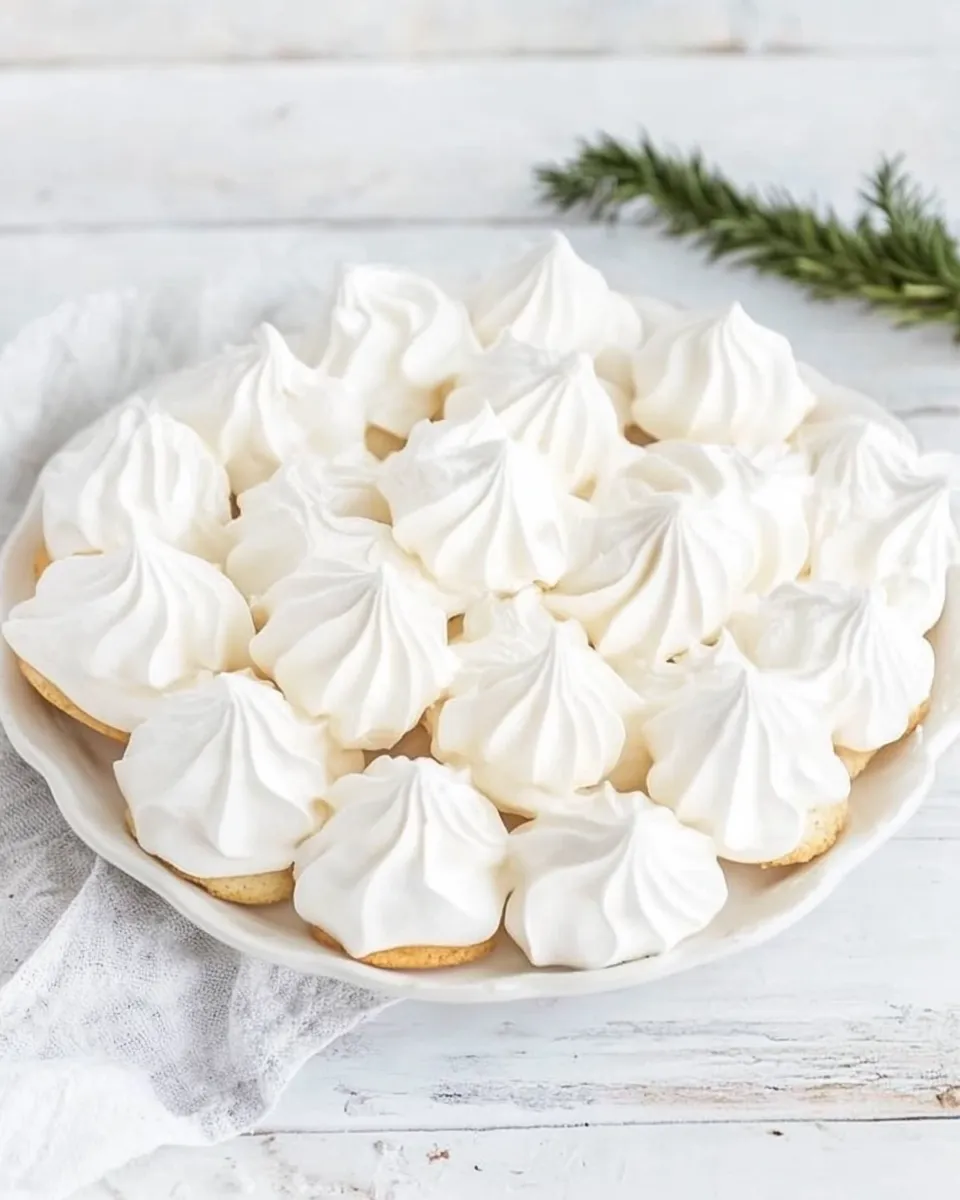
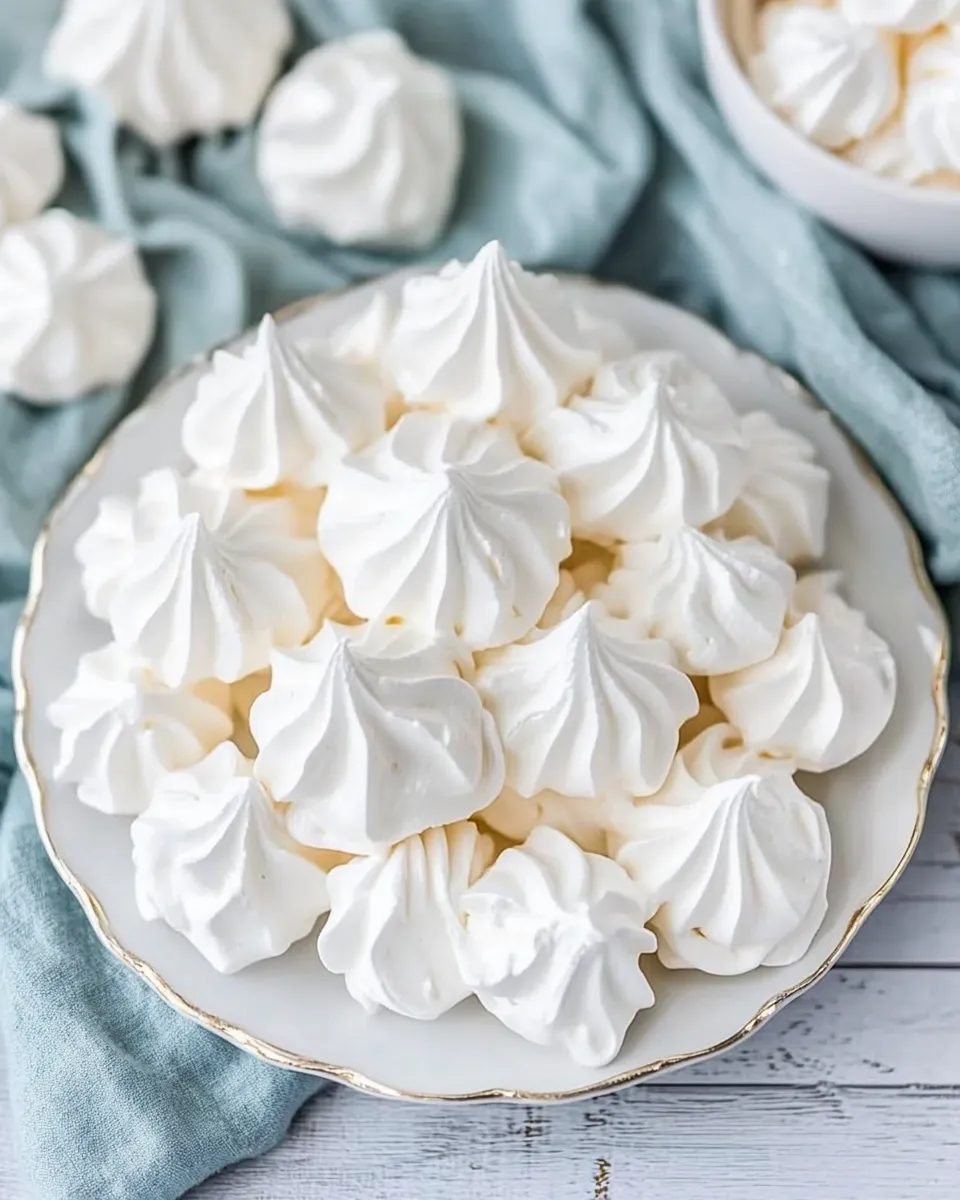
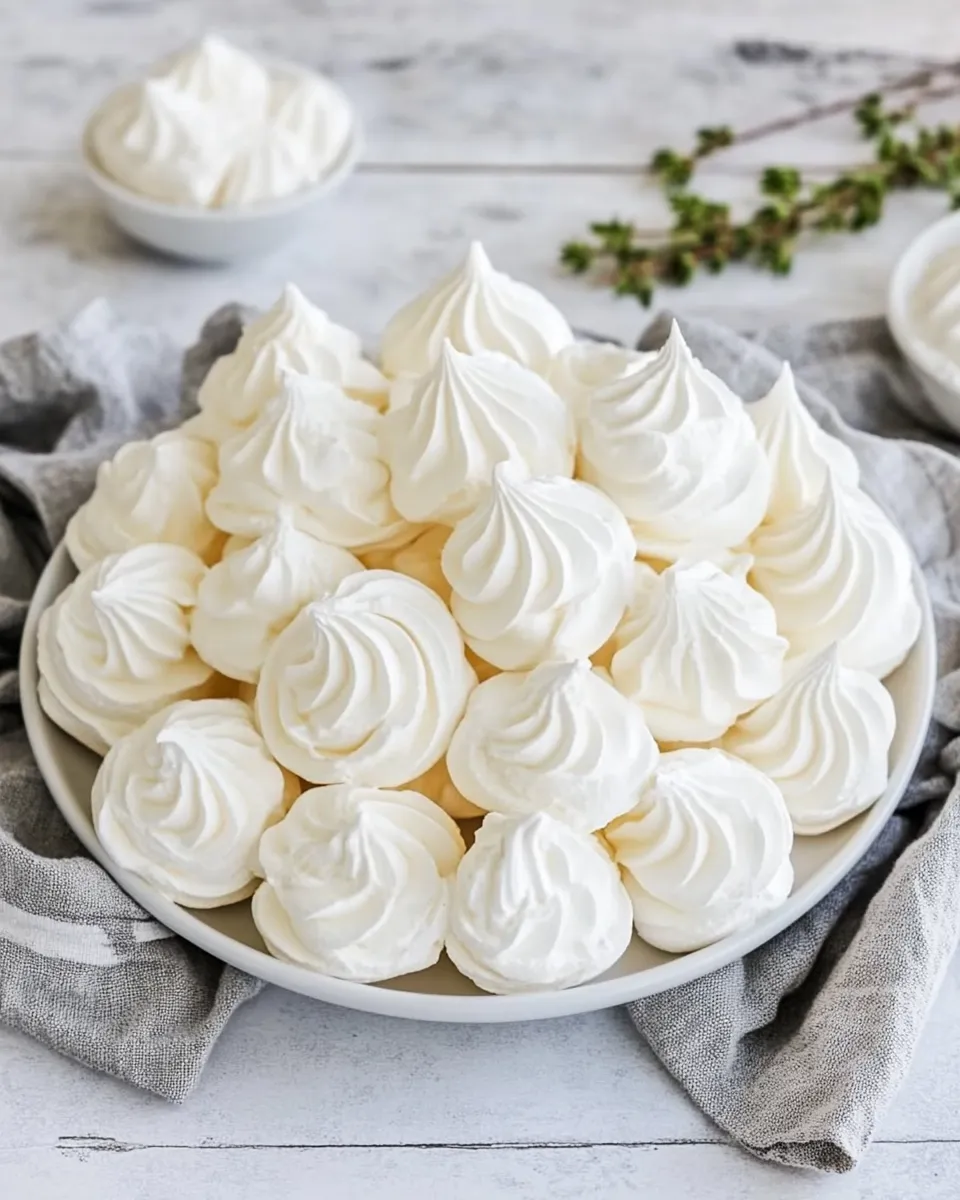
- Transfer the meringue to a piping bag fitted with a large open star tip (or spoon the mixture if you prefer). Pipe or spoon meringue shapes onto the prepared baking sheet, leaving 1½–2 inches between cookies.
- Bake on the center rack at 225°F for 1 hour.
- After 1 hour, turn off the oven and leave the meringues inside to cool completely for 1–2 hours before removing them.
- Once fully cool, store the meringue cookies in an airtight container at room temperature to keep them crisp. Note: if beads of moisture form on the meringues while baking, the oven temperature may be too low.
Why Cooks Rave About It
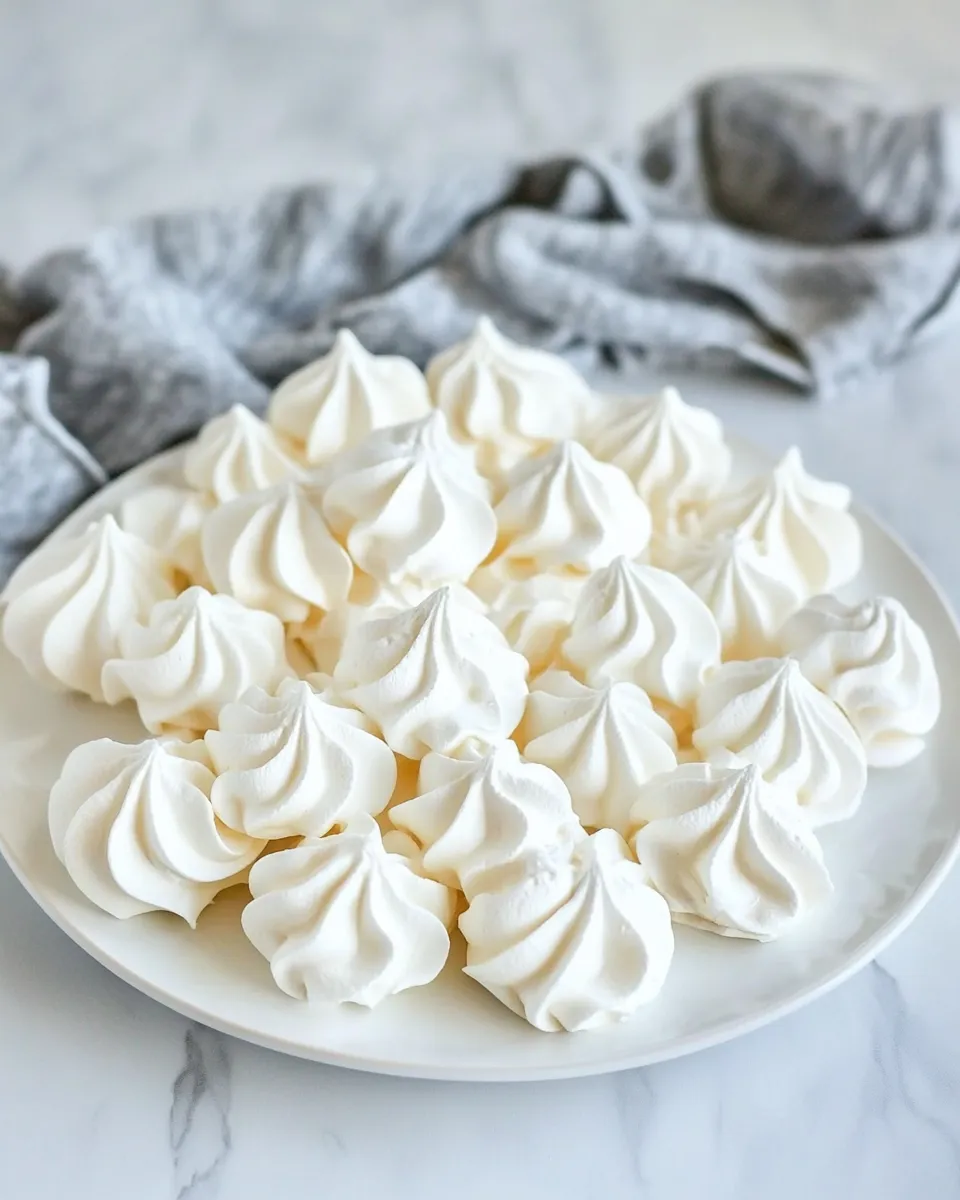
Meringue cookies are a showcase of technique over complexity. They require minimal ingredients but deliver dramatic texture — crisp exteriors and a light, almost marshmallowy interior when done perfectly. The contrast is unforgettable and makes them feel special despite the simplicity.
They’re great for last-minute dessert needs because they store well (when dry) and look elegant with very little effort. For home bakers, the satisfaction of transforming egg whites and sugar into glossy peaks is its own reward.
Ingredient Flex Options
Keep the core ingredients the same if you want predictable results: egg whites, cream of tartar, sugar, a pinch of salt, and vanilla. If you’re experimenting, here are conservative ways to vary without wrecking structure:
- Use superfine sugar if you have it — it dissolves faster and can produce a slightly silkier texture.
- Flavor: swap or blend the vanilla extract with a small amount of almond extract for a different profile, but add extracts sparingly so you don’t loosen the foam.
- Portion size: pipe smaller kisses if you want more bite-sized cookies and shorter bake times in practice (still follow the cooling-in-oven step).
Appliances & Accessories
These are the tools that make the job efficient and consistent.
- Stand mixer or electric hand mixer — a consistent high speed is essential for stiff peaks.
- Mixing bowl and beaters — stainless steel or glass bowls are best; ensure they’re spotless and bone dry.
- Piping bag and large open star tip — for pretty ridged cookies; a spoon works fine for casual mounds.
- Baking sheet and parchment paper — parchment prevents sticking and aids even browning.
- Oven thermometer — confirms the oven is truly holding 225°F; small shifts can affect drying.
Troubles You Can Avoid
Common problems and how to fix them
Grainy or weeping meringue: if the sugar hasn’t dissolved, the texture will be gritty. Add sugar slowly and check between fingertips for smoothness.
Collapsed meringue: any trace of yolk or a wet bowl will prevent whites from reaching stiff peaks. Use clean, dry equipment and separate eggs with care. Also, overbeating can cause the foam to break down — stop once stiff peaks form.
Sticky or soft centers after baking: this usually means the oven wasn’t dry enough or the meringues were removed too soon. Bake at the stated low temperature, then turn the oven off and let them cool inside completely for the recommended 1–2 hours to dry out fully.
Moisture beading on the surface: as the recipe notes, this suggests the oven temperature is too low and the meringues are sweating rather than drying. Check your oven thermometer and maintain a consistent 225°F.
Better-for-You Options
“Better-for-you” is relative here: these are sugar-based cookies built on egg whites. Still, you can make small adjustments to fit certain goals without changing the fundamental chemistry too much.
- Portion control — pipe smaller cookies to reduce sugar per serving.
- Pair with fresh fruit — serve a meringue alongside berries to add fiber and balance sweetness.
- Mindful gifting — pack smaller quantities so you (and recipients) can enjoy a treat without overindulging.
A note on safety: if serving to people with compromised immune systems or to pregnant guests, consider using pasteurized egg whites or consult a health professional. The recipe uses raw egg whites whipped and then fully dried in the oven, but personal comfort levels vary.
Pro Perspective
From years of making meringues: slow and steady wins. Adding sugar tablespoon by tablespoon is tedious, but it’s the difference between a glossy peak and a grainy bowl. Don’t rush this step.
When piping, practice a couple of test cookies on the parchment to dial in pressure. If you want perfectly uniform meringues, use a template under the parchment to guide spacing. Keep your oven door closed during the cool-down period to avoid temperature shocks that can crack the shells.
If you ever need truly uniform results, try weighing your sugar or using a scale for egg whites; consistency in measurements leads to consistent structure.
Cooling, Storing & Rewarming
Cooling is part of the bake. After 1 hour at 225°F, turn off the oven and leave the meringues inside for 1–2 hours to cool and dry completely. This slow cool prevents cracks and helps them set crisp.
Once fully cool, store the cookies in an airtight container at room temperature. Layer them between parchment if stacking. Keep them away from humid spaces; moisture is the enemy and will soften the shells. If they soften slightly, a short stint in a low oven (turned off) can help re-dry them, but expect some loss of pristine texture.
Avoid refrigeration — the cold, moist environment will make meringues sticky and chewy. Properly stored in a dry, airtight container, they will keep well for several days.
Meringue Cookies Q&A
Q: Can I make these ahead of time?
Yes. Bake and cool completely, then store in an airtight container at room temperature. They’re ideal for making a day or two ahead of serving.
Q: Can I color the meringues?
Yes, but use gel or powdered coloring sparingly. Too much liquid color can loosen the foam. Fold color in gently after seasoning and before piping.
Q: Are these vegan?
No. This recipe depends on egg whites for structure. Egg-free meringues exist (using alternatives like aquafaba), but that’s a different recipe with different proportions and techniques.
Q: My meringues browned or developed beads of moisture — what happened?
Beads of moisture usually mean the oven was too cool and the meringues didn’t dry properly. Browning indicates too much direct heat. Use an oven thermometer and aim for a steady 225°F on the center rack.
The Last Word
These meringue cookies prove that a few ingredients, handled with care, can make something special. Clean tools, patient sugar addition, and slow cooling are the three things I never skip. Follow the steps here and you’ll have glossy, crisp meringues that look as lovely as they taste.
If you try them, tell me how they turned out and what shape you piped — I love seeing people’s creativity with a basic recipe. Happy baking.
Easy Meringue Cookies
Equipment
- Oven
- Mixing Bowl
- Whisk or electric mixer
- Baking Sheet
- Parchment Paper
- Piping Bag (optional)
Ingredients
Ingredients
- 4 large egg whites room temperature
- 1/2 teaspooncream of tartar
- pinchsalt
- 1 cupsugar
- 1 teaspoonvanilla extract
Instructions
Instructions
- Preheat the oven to 225°F. Line a baking sheet with parchment paper and place the oven rack in the center position.
- Make sure your mixing bowl and whisk/beaters are clean and completely dry. Separate the 4 large egg whites into the bowl, avoiding any yolk; let the whites sit at room temperature if they are not already.
- Add the ½ teaspoon cream of tartar and a pinch of salt to the egg whites. Begin beating on low speed until the mixture is foamy.
- Increase to high speed. Gradually add the 1 cup sugar, 1 tablespoon at a time, waiting about 15–20 seconds between each addition so the sugar can begin to dissolve.
- Continue beating on high until the meringue is thick, glossy, and holds stiff peaks. Check that the sugar is fully dissolved by rubbing a small amount between your fingertips — it should feel smooth, not gritty.
- Add the 1 teaspoon vanilla extract and mix just until the vanilla is incorporated.
- Transfer the meringue to a piping bag fitted with a large open star tip (or spoon the mixture if you prefer). Pipe or spoon meringue shapes onto the prepared baking sheet, leaving 1½–2 inches between cookies.
- Bake on the center rack at 225°F for 1 hour.
- After 1 hour, turn off the oven and leave the meringues inside to cool completely for 1–2 hours before removing them.
- Once fully cool, store the meringue cookies in an airtight container at room temperature to keep them crisp. Note: if beads of moisture form on the meringues while baking, the oven temperature may be too low.
Notes
Use a large round tip to make smooth meringue kisses.
Use a large Ziploc with the corner snipped off if you don’t have a piping set.
Use a spoon to drop meringue mounds.