This is a straightforward, rustic loaf that sings of olive oil and fresh rosemary. It develops a crisp, golden crust and a tender crumb with just enough whole wheat to lend depth without heaviness. The method is forgiving, and the rewards are immediate: a fragrant loaf perfect for sandwiches, dipping, or simply tearing and eating warm.
I tested this recipe until the crust and crumb balanced the way I like—crispy exterior, springy interior, and an herb-forward scent. The dough is handled gently, with two rises that build flavor and strength without drama. If you can proof yeast, measure flour, and tolerate a little waiting, you’ll have bakery-level bread at home.
Below you’ll find a compact shopping and equipment guide, a precise ingredient list with notes, the step-by-step directions verbatim so you won’t miss any details, and practical troubleshooting. I write like I cook: clear, friendly, and useful.
What to Buy
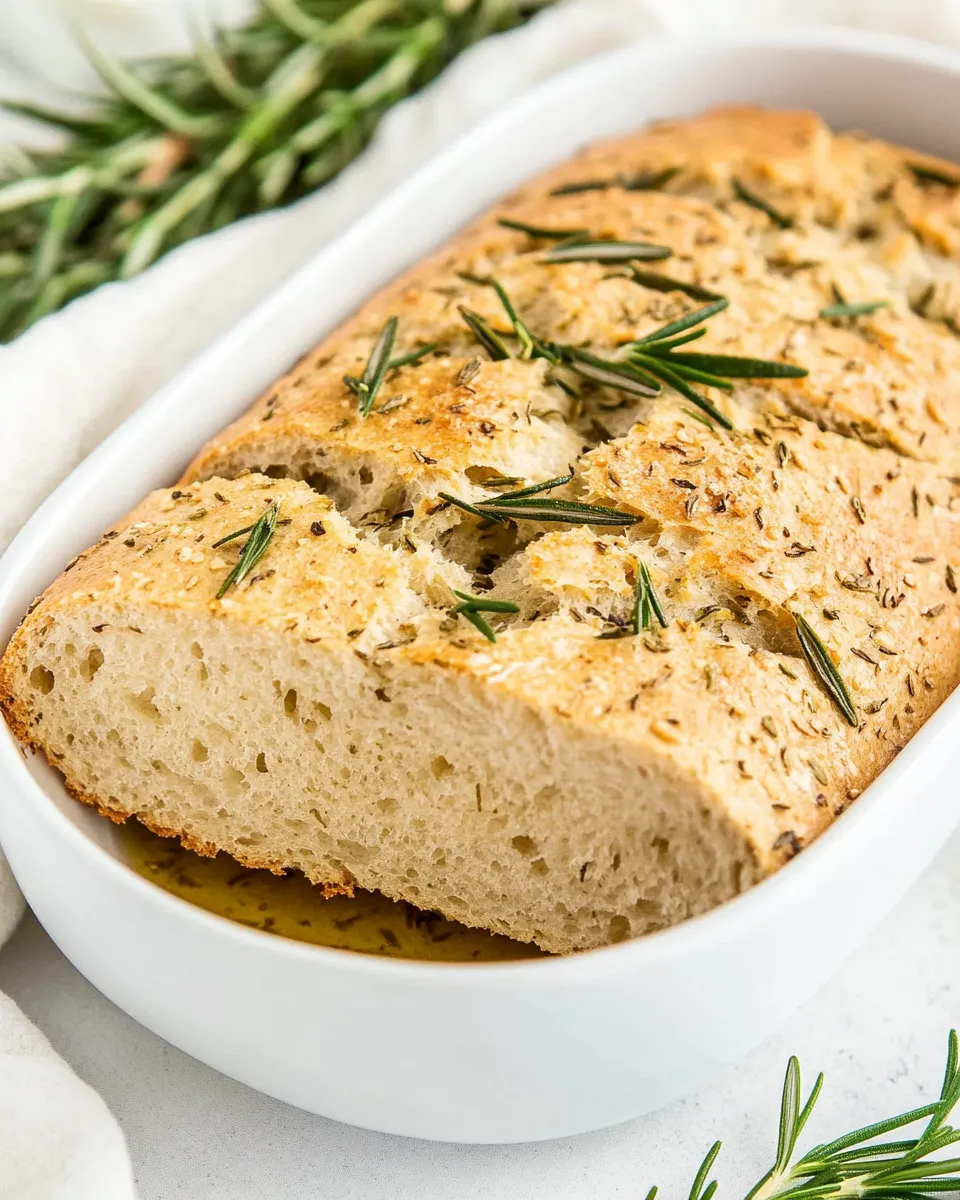
Stick to quality where it matters: a good extra virgin olive oil and fresh rosemary if you can manage it. For modest cost you’ll get much better flavor than with low-grade oil or dried herb alone. Buy a reliable active dry yeast packet unless you prefer to measure bulk yeast from a jar.
Other essentials: a digital thermometer (for dough and finished loaf), a sturdy bench scraper, parchment paper, and either a heavy Dutch oven with a lid or a pizza stone. These make the bake predictable and the crust consistently good.
Ingredients
- ¾cup warm water (100-110 F – I recommend taking the temp if you can!) — Activates the yeast; too hot will kill it, too cool slows it.
- 1 tablespoon honey — Feeds the yeast and adds gentle sweetness to balance whole-wheat notes.
- 1 packet active dry yeast 1 1/4 ounces or 2 1/4 teaspoons — The leavening agent; check expiry for reliable rise.
- 4 tablespoons extra virgin olive oil divided — Fat for tenderness and flavor; some goes into the dough, some brushes the baked loaf.
- 1 ¼ cups whole wheat flour — Adds nuttiness and structure; measure by spooning into the cup and leveling.
- 1 ¼ cups all-purpose flour plus extra for kneading — Balances the whole wheat for a lighter crumb; keep extra on hand for tacky dough.
- 1 tablespoon vital wheat gluten *optional, see notes — Optional to boost gluten strength when using whole wheat; skip if you prefer.
- 1 ½ tablespoons chopped fresh rosemary divided — Primary herb note; divided so some is in the dough and some is reserved for topping.
- 1 teaspoon kosher salt — Essential for flavor and to regulate yeast activity.
- ¼ teaspoon garlic powder — Background savory note.
- ¼ teaspoon dried oregano — Subtle Mediterranean herb layer.
- ¼ teaspoon dried basil — Rounds out the herb blend.
- ¼ teaspoon freshly ground black pepper — Mild heat and aromatics.
- Flaky sea salt such as maldon or fleur de sel — For finishing; adds crunch and highlights the olive oil.
Rosemary Olive Oil Bread Made Stepwise
- In a large bowl or the bowl of a stand mixer fitted with a dough hook, combine 3/4 cup warm water (100–110°F), 1 tablespoon honey, and 1 packet active dry yeast (1 1/4 ounces or 2 1/4 teaspoons). Stir once, then let sit undisturbed for 10 minutes to proof. The mixture should become foamy; if it does not, the yeast is not viable or the water temperature was wrong and you will need to start over.
- After the yeast is foamy, stir in 3 tablespoons extra virgin olive oil.
- In a separate bowl, whisk together 1 1/4 cups whole wheat flour, 1 1/4 cups all-purpose flour, and 1 tablespoon vital wheat gluten (if using). Stir in 1 tablespoon chopped fresh rosemary, 1 teaspoon kosher salt, 1/4 teaspoon garlic powder, 1/4 teaspoon dried oregano, 1/4 teaspoon dried basil, and 1/4 teaspoon freshly ground black pepper.
- Add the dry ingredients to the bowl with the yeast mixture. Stir by hand with a sturdy spoon until a rough dough forms, or mix with the dough hook on low speed until the dough pulls together into a ball. If the dough seems dry and does not hold together, sprinkle warm water over the top 1 tablespoon at a time until it holds together in a rough ball.
- Turn the dough out onto a lightly floured surface (use extra all-purpose flour as needed for dusting). Lightly flour your hands and begin kneading.
- Knead the dough by hand for about 10 minutes, or mix with the dough hook for about 8 minutes on medium-low, until the dough is smooth, elastic, and tacky to the touch but not overtly sticky. If the dough is too sticky, add additional all-purpose flour 1 tablespoon at a time, kneading or mixing completely between additions.
- Lightly coat a clean bowl with nonstick spray or a thin film of olive oil. Place the kneaded dough in the bowl, turning once to coat the top with oil. Cover the bowl and let the dough rise in a warm, draft-free place until nearly doubled in size, about 1 to 2 hours. (If your kitchen is cool, allow more time.)
- When the dough has nearly doubled, prepare a sheet of parchment paper lightly dusted with flour. Do not punch the dough down. Turn the dough out onto the parchment.
- Lightly flour your hands. Stretch the top edge of the dough away from you and fold it up and toward the center. Repeat with the bottom, left, and right edges so the dough forms a rough square.
- Using a spatula, bench scraper, or your hands, flip the dough so the folded side is down. Cup your hands around the dough and tuck the edges under to form a smooth round ball. Place the round seam-side down on the parchment.
- Cover the dough with a clean towel and let it rise again in a warm, draft-free place until nearly doubled in size, about 1 to 2 hours more.
- When the second rise is nearly finished, place a pizza stone or a Dutch oven (with lid) in the oven and preheat the oven to 400°F with the stone or Dutch oven inside.
- If you will bake in a Dutch oven, trim two opposite sides of the parchment to create handles and trim around the parchment so you can lift the bread with a sling. If using a pizza stone, you can leave the dough on the parchment to transfer it.
- With a sharp knife or bread lame, score an “X” about 1/4 inch deep on the top of the loaf.
- Using the parchment, gently transfer the dough onto the preheated pizza stone or lower it (with the parchment sling) into the preheated Dutch oven. Bake for 10 minutes.
- After 10 minutes, remove the bread from the oven. Brush the top with the remaining 1 tablespoon extra virgin olive oil, sprinkle the remaining 1/2 tablespoon chopped fresh rosemary evenly over the top, and add a pinch (or to taste) of flaky sea salt.
- Return the bread to the oven and bake 10 to 15 minutes more, until the internal temperature reaches 195°F on an instant-read thermometer. If you do not have a thermometer, the loaf should be golden brown and sound hollow when tapped on the bottom. If the crust is browning too quickly, loosely tent the loaf with foil.
- Remove the bread from the oven and transfer to a cooling rack. Let cool to almost room temperature before slicing and serving.
Why It Works Every Time
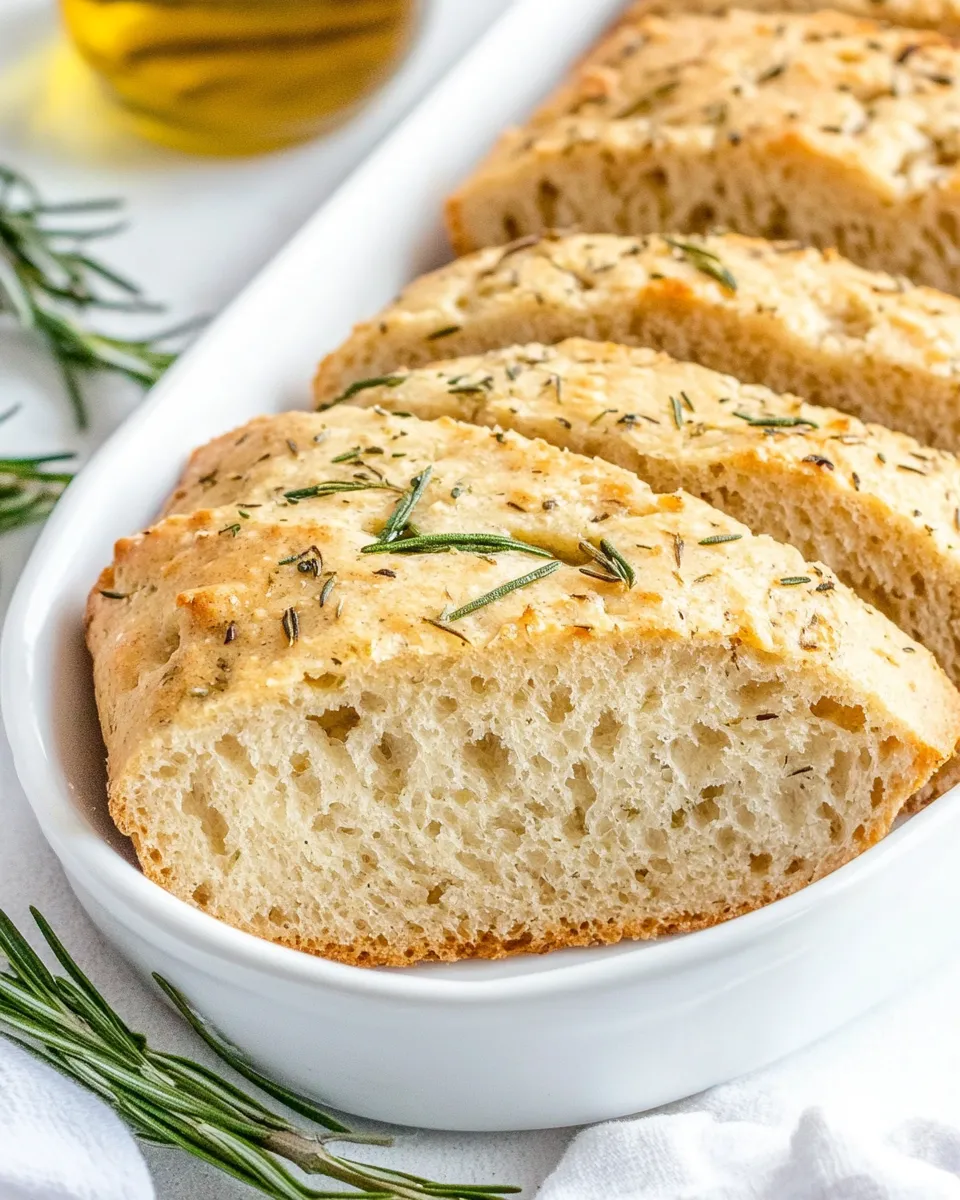
There are a few deliberate choices here that make success likely. Warm water and honey get the yeast active quickly, and the small amount of honey provides an immediate food source to ensure a vigorous initial rise. Dividing the olive oil—some in the dough, some brushed on top—gives soft crumb without losing the crisp crust.
The two-rise approach builds flavor and creates a good gluten matrix. The first rise develops gas and flavor; the second shapes the loaf and refines the surface tension so that the bread rises upward rather than spreading. Scoring directs expansion and gives a predictable oven spring.
Ingredient Flex Options
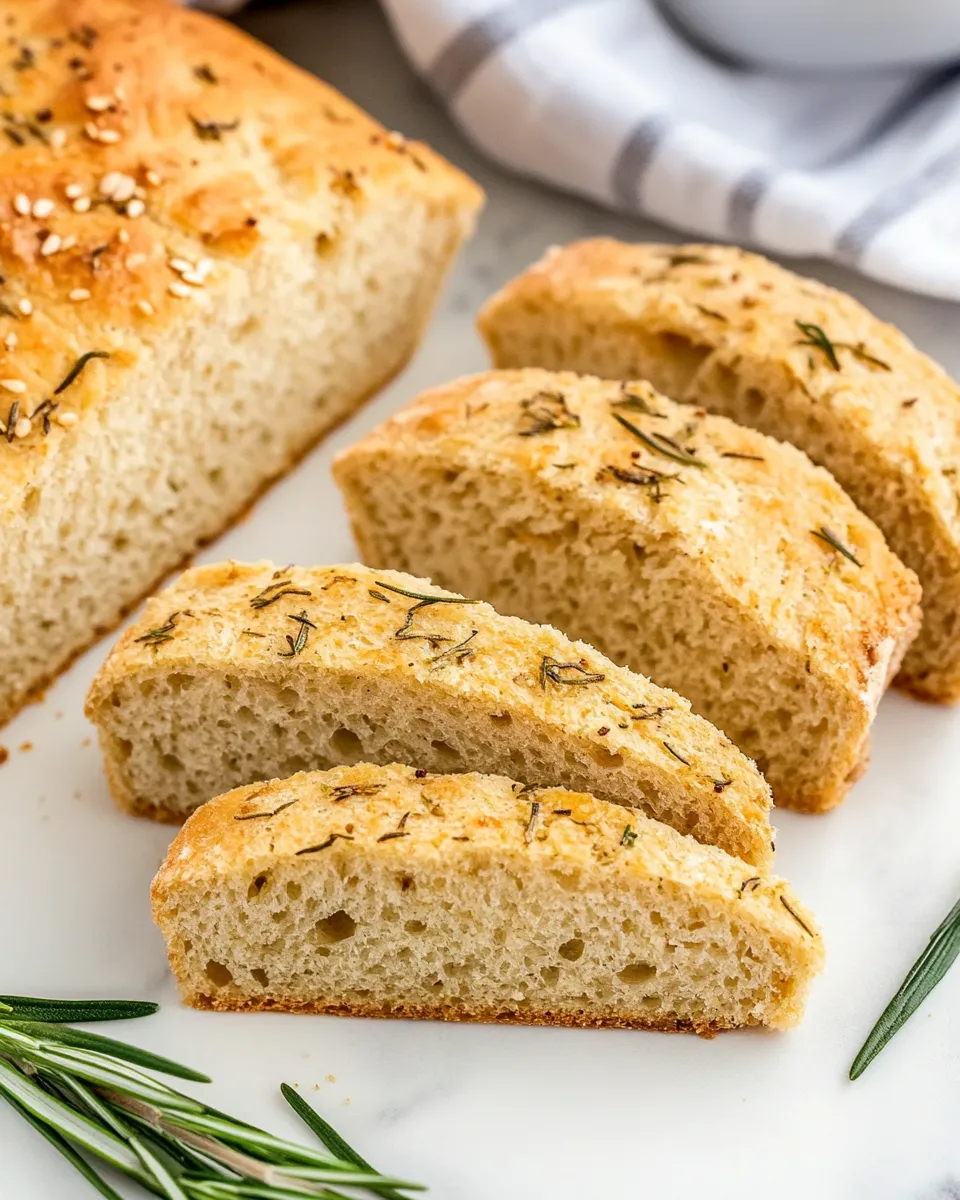
Keep the core ratios the same and you can make small swaps without wrecking the dough. You may omit the vital wheat gluten if you prefer a slightly denser whole-wheat presence; it’s labeled optional in the ingredient list. Dried herbs are already in the recipe—if you only have dried rosemary, reduce the quantity slightly (dried is more concentrated), but the supplied amounts use fresh rosemary primarily.
Honey is a gentle yeast enhancer; you can replace it with an equal amount of sugar or maple syrup if needed, though flavor will change subtly. The recipe is olive oil forward; switching to a neutral oil will alter the flavor profile, so I don’t recommend it if you want that Mediterranean note.
Equipment Breakdown
Good equipment cuts down guesswork. Here’s what I recommend:
- Digital instant-read thermometer — Confirms doneness at 195°F internally. Much more reliable than color alone.
- Stand mixer with dough hook (optional) — Speeds kneading and is easy on your hands. Knead by hand if you prefer.
- Pizza stone or Dutch oven — Both trap heat well. A Dutch oven is the most foolproof way to create steam and a blistered crust.
- Parchment paper and bench scraper — Parchment aids transfer and cleanup. A bench scraper helps shape and portion dough easily.
Common Errors (and Fixes)
My top fixes for home bakers:
- Yeast didn’t foam: Your water was likely too hot or too cool, or the yeast is old. Discard and start over with fresh yeast and temperature between 100–110°F.
- Dough is too sticky: Resist adding large amounts of flour at once. Add all-purpose flour 1 tablespoon at a time, kneading fully between additions until the dough is tacky but manageable.
- Dense loaf: Under-kneading or insufficient rise. Knead until smooth and elastic, and allow the full 1–2 hours per rise; a cooler kitchen needs more time.
- Crust browning too fast: Tent with foil and finish baking until the internal temp hits 195°F.
Seasonal Adaptations
Rosemary pairs well with many seasonal flavors. In fall and winter, a warm olive oil and rosemary loaf is lovely with roasted vegetables, stews, or a smear of soft cheese. In spring and summer, serve slices with tomatoes, fresh mozzarella, and a drizzle of extra virgin olive oil.
If you’re harvesting herbs, increase the fresh rosemary slightly and reduce other dried herbs to keep the flavor balanced. The bread’s simplicity makes it a year-round canvas for seasonal toppings.
Recipe Notes & Chef’s Commentary
I like this formula because it respects time without requiring technical skill. The dough is handled gently to preserve air pockets, so avoid aggressive deflation at shaping. Folding the dough to create surface tension is key to a pretty rise.
Vital wheat gluten is optional: use it when you want a slightly lighter crumb with higher whole-wheat content. If you omit it, you’ll still get an excellent loaf—just a touch denser.
Freezer-Friendly Notes
Cool the loaf completely, then wrap tightly in plastic wrap and foil before freezing for up to 3 months. Slice before freezing if you want to toast single servings. To refresh from frozen: unwrap, let thaw at room temperature, then heat in a 350°F oven for 10–12 minutes to restore the crust.
Your Questions, Answered
Q: Can I use instant yeast instead of active dry yeast?
A: Yes. If you use instant yeast, you can mix it directly with the dry ingredients and reduce the initial proof step; still use the same amount by weight (1 1/4 ounces). You may skip the 10-minute foam check, but watch the first rise for visual cues.
Q: How can I tell when the dough is kneaded enough?
A: It should be smooth, elastic, and slightly tacky but not sticky. It will pass the windowpane test (you can gently stretch a small piece into a thin, translucent sheet without tearing) if you want to be precise.
Q: My loaf sounds dense when tapped—what went wrong?
A: Either it needed more rise time or it was underbaked. Check the internal temperature; it should be about 195°F for this loaf. If underbaked, return to the oven and monitor closely.
Hungry for More?
If you enjoyed this rosemary olive oil loaf, try experimenting with the same method and different herbs or olives for savory variations. The two-rise, high-heat bake works beautifully with additions like roasted garlic or grated cheese folded in during shaping. Happy baking—there’s nothing like the smell of fresh bread to make a kitchen feel like home.
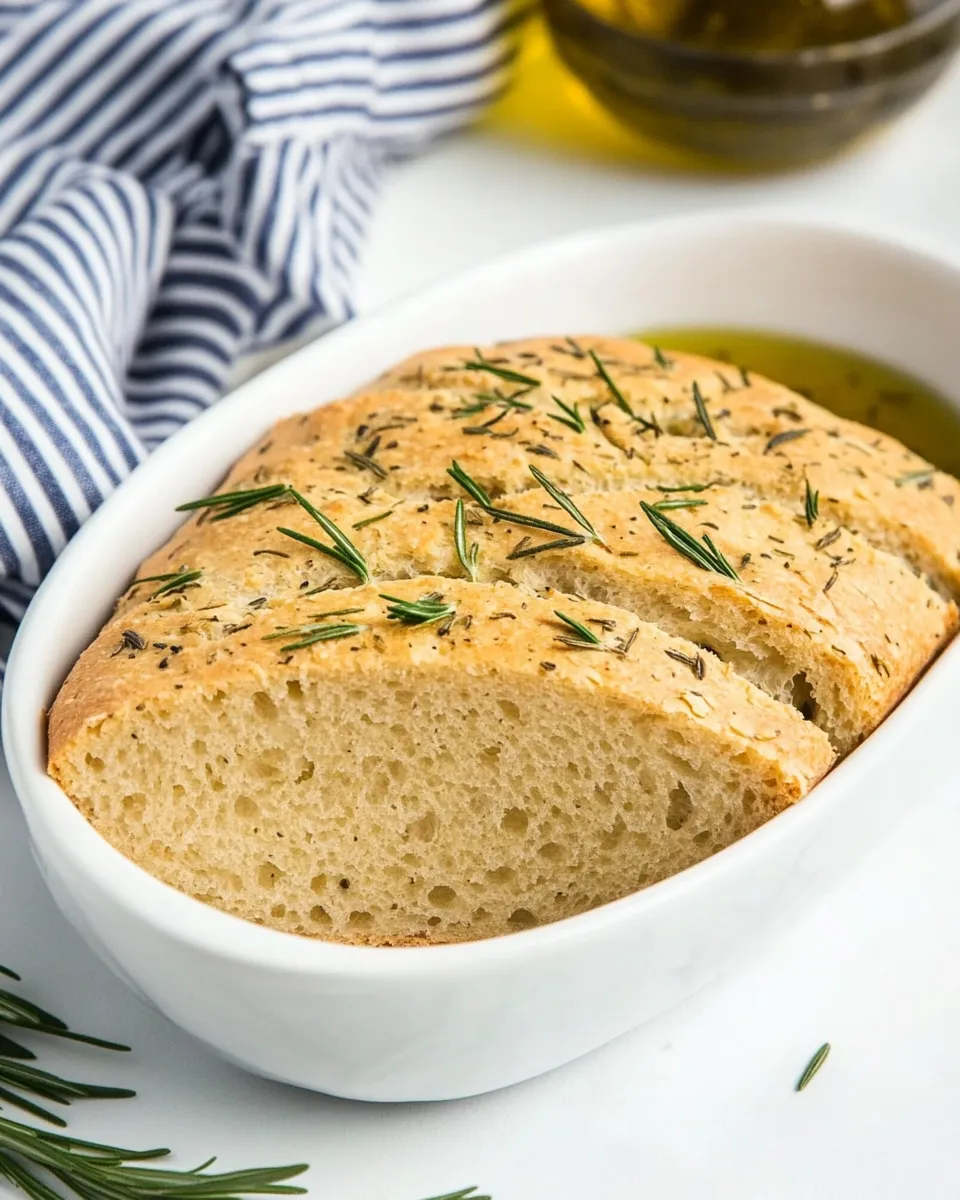
Rosemary Olive Oil Bread
Equipment
- Large Bowl
- Stand mixer
- dough hook
- Mixing Spoon
- Bench Scraper
- Parchment Paper
- Pizza stone
- Dutch Oven
- Oven
- Instant Read Thermometer
- Cooling rack
- Spatula
Ingredients
Ingredients
- 3/4 cupwarm water 100-110 F – I recommend taking the temp if you can!
- 1 tablespoonhoney
- 1 packetactive dry yeast1 1/4 ounces or 2 1/4 teaspoons
- 4 tablespoonsextra virgin olive oildivided
- 1 1/4 cupswhole wheat flour
- 1 1/4 cupsall-purpose flourplus extra for kneading
- 1 tablespoonvital wheat gluten*optional see notes
- 1 1/2 tablespoonschopped fresh rosemarydivided
- 1 teaspoonkosher salt
- 1/4 teaspoongarlic powder
- 1/4 teaspoondried oregano
- 1/4 teaspoondried basil
- 1/4 teaspoonfreshly ground black pepper
- Flaky sea saltsuch as maldon or fleur de sel
Instructions
Instructions
- In a large bowl or the bowl of a stand mixer fitted with a dough hook, combine 3/4 cup warm water (100–110°F), 1 tablespoon honey, and 1 packet active dry yeast (1 1/4 ounces or 2 1/4 teaspoons). Stir once, then let sit undisturbed for 10 minutes to proof. The mixture should become foamy; if it does not, the yeast is not viable or the water temperature was wrong and you will need to start over.
- After the yeast is foamy, stir in 3 tablespoons extra virgin olive oil.
- In a separate bowl, whisk together 1 1/4 cups whole wheat flour, 1 1/4 cups all-purpose flour, and 1 tablespoon vital wheat gluten (if using). Stir in 1 tablespoon chopped fresh rosemary, 1 teaspoon kosher salt, 1/4 teaspoon garlic powder, 1/4 teaspoon dried oregano, 1/4 teaspoon dried basil, and 1/4 teaspoon freshly ground black pepper.
- Add the dry ingredients to the bowl with the yeast mixture. Stir by hand with a sturdy spoon until a rough dough forms, or mix with the dough hook on low speed until the dough pulls together into a ball. If the dough seems dry and does not hold together, sprinkle warm water over the top 1 tablespoon at a time until it holds together in a rough ball.
- Turn the dough out onto a lightly floured surface (use extra all-purpose flour as needed for dusting). Lightly flour your hands and begin kneading.
- Knead the dough by hand for about 10 minutes, or mix with the dough hook for about 8 minutes on medium-low, until the dough is smooth, elastic, and tacky to the touch but not overtly sticky. If the dough is too sticky, add additional all-purpose flour 1 tablespoon at a time, kneading or mixing completely between additions.
- Lightly coat a clean bowl with nonstick spray or a thin film of olive oil. Place the kneaded dough in the bowl, turning once to coat the top with oil. Cover the bowl and let the dough rise in a warm, draft-free place until nearly doubled in size, about 1 to 2 hours. (If your kitchen is cool, allow more time.)
- When the dough has nearly doubled, prepare a sheet of parchment paper lightly dusted with flour. Do not punch the dough down. Turn the dough out onto the parchment.
- Lightly flour your hands. Stretch the top edge of the dough away from you and fold it up and toward the center. Repeat with the bottom, left, and right edges so the dough forms a rough square.
- Using a spatula, bench scraper, or your hands, flip the dough so the folded side is down. Cup your hands around the dough and tuck the edges under to form a smooth round ball. Place the round seam-side down on the parchment.
- Cover the dough with a clean towel and let it rise again in a warm, draft-free place until nearly doubled in size, about 1 to 2 hours more.
- When the second rise is nearly finished, place a pizza stone or a Dutch oven (with lid) in the oven and preheat the oven to 400°F with the stone or Dutch oven inside.
- If you will bake in a Dutch oven, trim two opposite sides of the parchment to create handles and trim around the parchment so you can lift the bread with a sling. If using a pizza stone, you can leave the dough on the parchment to transfer it.
- With a sharp knife or bread lame, score an “X” about 1/4 inch deep on the top of the loaf.
- Using the parchment, gently transfer the dough onto the preheated pizza stone or lower it (with the parchment sling) into the preheated Dutch oven. Bake for 10 minutes.
- After 10 minutes, remove the bread from the oven. Brush the top with the remaining 1 tablespoon extra virgin olive oil, sprinkle the remaining 1/2 tablespoon chopped fresh rosemary evenly over the top, and add a pinch (or to taste) of flaky sea salt.
- Return the bread to the oven and bake 10 to 15 minutes more, until the internal temperature reaches 195°F on an instant-read thermometer. If you do not have a thermometer, the loaf should be golden brown and sound hollow when tapped on the bottom. If the crust is browning too quickly, loosely tent the loaf with foil.
- Remove the bread from the oven and transfer to a cooling rack. Let cool to almost room temperature before slicing and serving.
Notes
Look for vital wheat gluten in the baking aisle of larger grocery stores or any specialty food store or you can find it onlinehere. You may also omit the vital gluten from the recipe entirely with good results.
TO STORE. Nothing beats fresh bread the day it is baked, but you can store leftover homemade bread at room temperature, wrapped tightly in plastic wrap or in a ziptop bag, 4 days.
TO REHEAT. Place slices in the toaster, or rewarm in a 300 degree-F oven for 5 to 10 minutes.