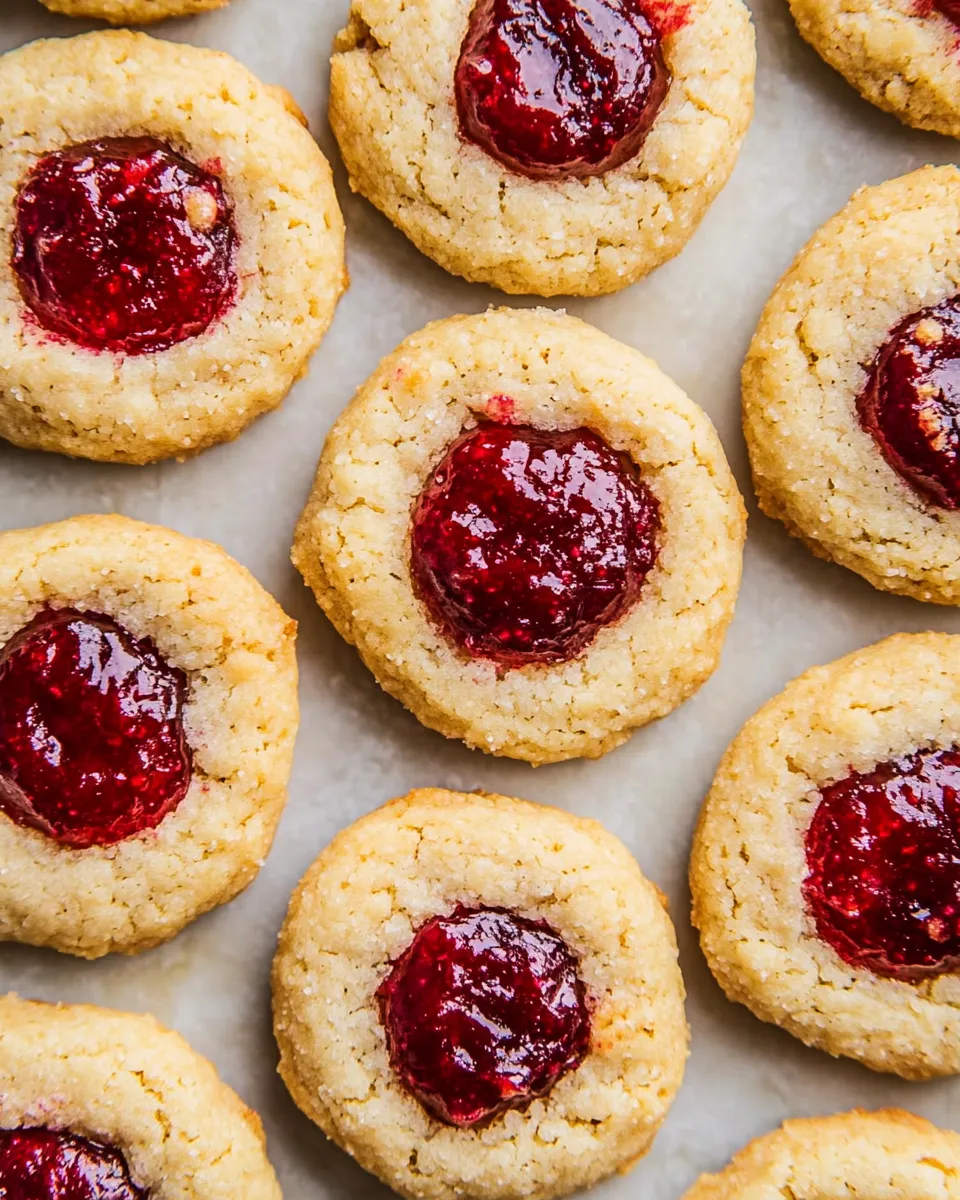
These thumbprint cookies are one of those recipes I keep coming back to when I want something reliably crisp at the edges, tender in the center, and not fussy to make. They feel made-for-gifting but are simple enough for an ordinary Tuesday afternoon. The texture comes from creamed butter and a single egg yolk, and the pecans give them a gentle toast-and-nutty background that plays well with bright raspberry jam.
I wrote this version after testing variations on spacing, jam quantity, and mixing order. The result: a dough that holds its shape, indents that stay put, and jam that doesn’t run. You don’t need anything exotic—just careful measuring, toasted pecans, and a steady hand when making the thumb indentations.
Follow the steps below exactly for predictable results. I’ll also walk you through why each choice matters, how to save money or swap ingredients, what equipment helps, and common mistakes to avoid so your batch turns out well the first time.
What You’ll Need
Ingredients
- 1 1/2cupunsalted butter,(3/4 lb) softened at room temperature — the base fat; soft but not melted lets you cream air into the dough.
- 1cupgranulated sugar — sweetens and helps with structure and browning.
- 1egg yolk,room temperature — adds richness and binds without making the dough cakey.
- 1tspvanilla extract — balances sweetness; little goes a long way.
- 3 1/3cupall-purpose flour,*measured correctly — the bulk of the structure; accurate measuring controls texture.
- 1/4tspfine sea salt — heightens flavor and balances the butter and jam.
- 1cuptoasted pecans,finely chopped — toasted for deeper flavor; texture and nutty note.
- 1cupraspberry jam — the filling; choose a good-quality jam for clean flavor.
Equipment
- Stand mixer with whisk and paddle attachments (or a hand mixer and sturdy bowl).
- Small cookie scoop or tablespoon for portioning.
- Two baking sheets and parchment paper.
- Wire rack for cooling.
- Spoon or piping bag for filling jam into indentations.
Step-by-Step: Thumbprint Cookies
- Preheat the oven to 350°F (175°C). Line two baking sheets with parchment paper.
- In a stand mixer fitted with the whisk attachment, beat the softened butter and granulated sugar on high speed for 2–3 minutes, until light and fluffy.
- Add the egg yolk and vanilla extract and beat just until combined.
- Switch to the paddle (flat beater) attachment. Add the all-purpose flour (3 1/3 cups, measured correctly), fine sea salt, and the finely chopped toasted pecans. Mix on low speed just until the dough comes together and no large streaks of flour remain, scraping down the sides of the bowl as needed. Do not overmix.
- Using a small cookie scoop or a spoon, portion about 1 tablespoon of dough per cookie. Roll each portion into a smooth ball and place the balls on the prepared baking sheets about 2 inches apart.
- Press an indentation into the center of each dough ball using your thumb or the back of a teaspoon. Press about halfway down through the dough ball but avoid breaking through the bottom.
- Fill each indentation with raspberry jam, taking care not to overfill so jam does not run over during baking.
- Bake in the preheated 350°F oven for 13–15 minutes, or until the edges of the cookies are just beginning to turn golden. If baking on two racks, rotate the pans halfway through baking for even browning.
- Remove the sheets from the oven and transfer the cookies to a wire rack to cool completely before serving.
Why This Recipe Is Reliable
Every ingredient and step is there to control texture and keep the cookies uniform. Creaming butter and sugar incorporates air, which lifts the cookie slightly and gives a tender crumb. Using only the egg yolk (not the white) keeps the center from becoming dry or overly cakey. The paddle attachment prevents overworking gluten once flour is added, so the cookies remain short and tender.
Toasted pecans are more than garnish. Toasting concentrates oils and deepens flavor so the nut bite isn’t lost in the sweetness. The specified flour measure—3 1/3 cups measured correctly—matters. Too much flour makes dry, dense cookies; too little and the dough can spread and collapse when you press the thumbprint.
Finally, the oven temperature and bake time are tuned to this dough composition. 350°F and 13–15 minutes give a lightly golden edge while keeping the centers soft. Rotating pans halfway when baking on two racks avoids hot spots and uneven browning.
Budget & Availability Swaps
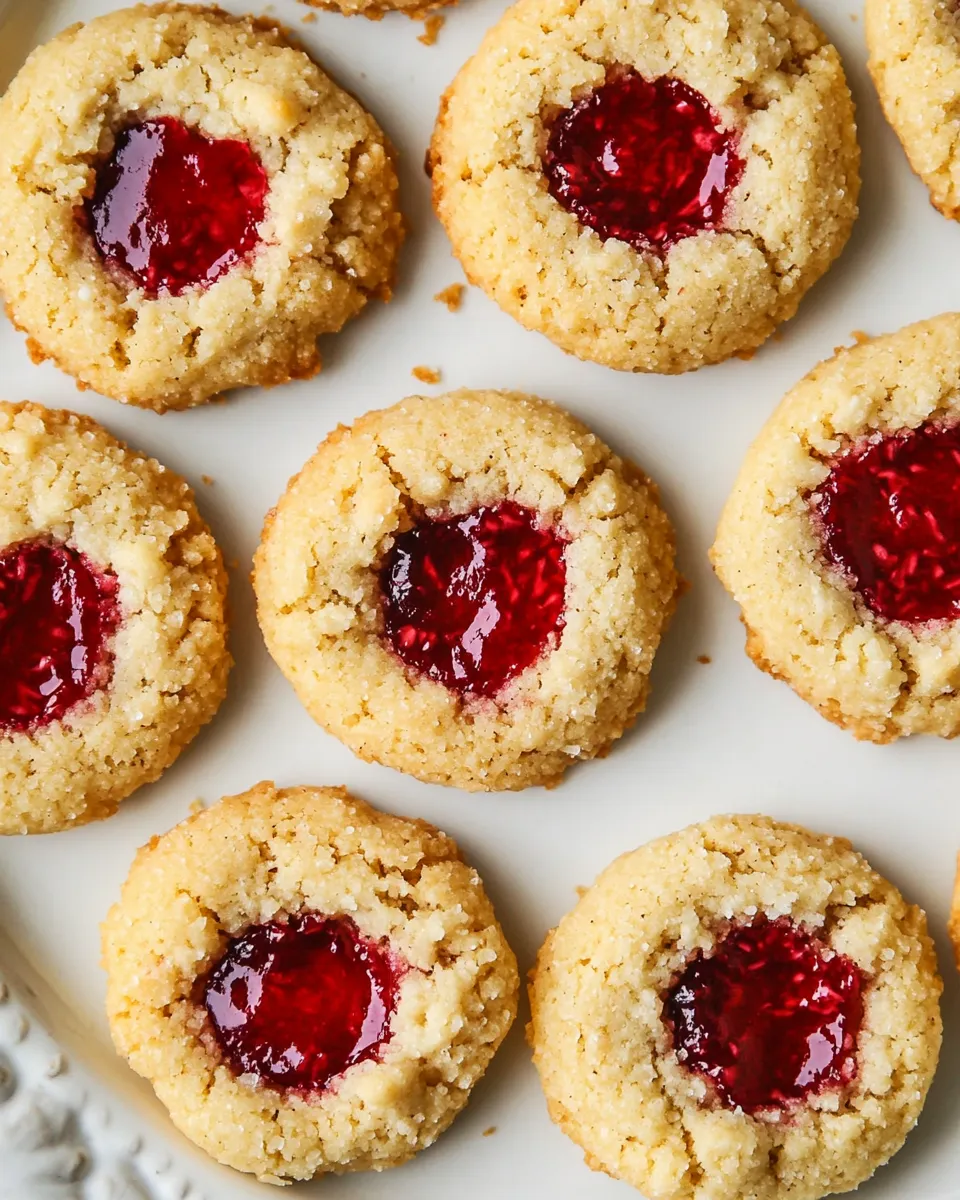
- Raspberry jam can be swapped for another fruit spread you already have—apricot, strawberry, or even a marmalade will work. Pick a jam that isn’t overly runny.
- If pecans are expensive or hard to find, substitute a more affordable chopped nut or seed, or omit them entirely and use a neutral flour-only dough. Toasting any replacement helps the flavor.
- If you don’t have vanilla extract, a small scrape of lemon zest will brighten the jam’s flavor, but use sparingly so it doesn’t dominate.
Hardware & Gadgets

You don’t need high-end tools, but a few items make this easy and consistent:
- Stand mixer — speeds up creaming and gives consistent texture. A handheld mixer works fine if you cream a little longer and keep the bowl steady.
- Cookie scoop — a 1-tablespoon scoop gives uniform cookies so they bake evenly and provide consistent indent size for jam.
- Parchment paper — prevents sticking and makes the baking sheet quick to clean. It also promotes even browning on the bottom.
- Wire rack — cools cookies fully without getting soggy on the bottom.
Don’t Do This
- Do not use melted butter. Warm or melted butter will change the dough’s texture and cause excessive spreading.
- Do not overmix after adding flour. Overworking creates gluten and leads to tough cookies.
- Do not overfill the indentations with jam. Overfilling lets jam bubble over and burn on the sheet, and it can make the cookie edges soggy.
- Do not press through the bottom when making the thumbprint. That will leak jam and compromise baking.
- Do not skip measuring flour correctly. Scoop-and-level or spoon flour into the cup and level it; don’t pack it down.
Variations for Dietary Needs
These are straight swaps and approach notes—test once to confirm results before making large batches for a special event.
- Nut-free: Omit the pecans and replace with an equal measure of rolled oats (pulse briefly in a food processor) or leave them out altogether for a simple butter-raspberry cookie.
- Gluten-free: Use a 1-to-1 gluten-free all-purpose flour blend measured the same way. Expect a slightly different texture; binding may be helped with a brief chill before shaping.
- Vegan: Replace butter with a high-quality vegan stick butter and use a commercial egg-yolk replacer or 2 tablespoons of aquafaba reduced slightly; results can vary, so test a small batch first.
Cook’s Commentary
I like these cookies because they’re tactile: rolling the dough into rounds and pressing the thumbprint is a small, satisfying ritual. When I test, I always toast the pecans on a sheet for 5–7 minutes at 350°F until they smell warm and nutty, then let them cool before chopping. That extra step lifts the overall flavor.
One subtle trick: if your dough feels too soft to roll, chill it 10–15 minutes. It should still be pliable but not greasy. The dough is forgiving, but small adjustments like slightly chilling or scooping evenly will produce a neater finished batch.
Also, use a good jam—quality matters here more than in many other baked goods. The filling is the highlight, so a jam with clear fruit flavor and moderate sugar will give the cleanest result.
Leftovers & Meal Prep
Store cooled cookies in an airtight container at room temperature for up to 4 days. Put parchment between layers to prevent sticking. For a week-long plan, you can freeze baked cookies in a single layer first, then transfer to a freezer-safe container; defrost on the counter for about 30 minutes before serving.
If you want to prep ahead, portion the dough into 1-tablespoon balls and freeze them on a tray. Once frozen, transfer the dough balls to a freezer bag. Bake from frozen, adding a minute or two to the bake time and check for that light golden edge.
Ask the Chef
- Q: Why only an egg yolk? A: The yolk gives richness and binds without making the cookie cakey. Whites would add extra protein and could toughen these delicate cookies.
- Q: Can I use a different jam? A: Yes. Choose something not too runny. Thicker preserves hold shape better while baking.
- Q: My jam bubbled over—what happened? A: You likely overfilled the wells. Use a scant teaspoon and leave a small rim of dough to seal it in.
- Q: My cookies spread too thin. A: Make sure the butter was softened but not warm, measure flour correctly, and avoid overbeating after adding flour.
Bring It to the Table
These cookies make a pretty, informal platter. Arrange them on a simple white plate or a sheet of parchment on a board. Add a few fresh raspberries or sprigs of mint for color if you like. They pair well with black coffee, a bright tea, or a glass of cold milk.
If you’re gifting, stack them in a small box with parchment separators and a ribbon. They’re sturdy enough for short transport and look lovely without extra fuss.
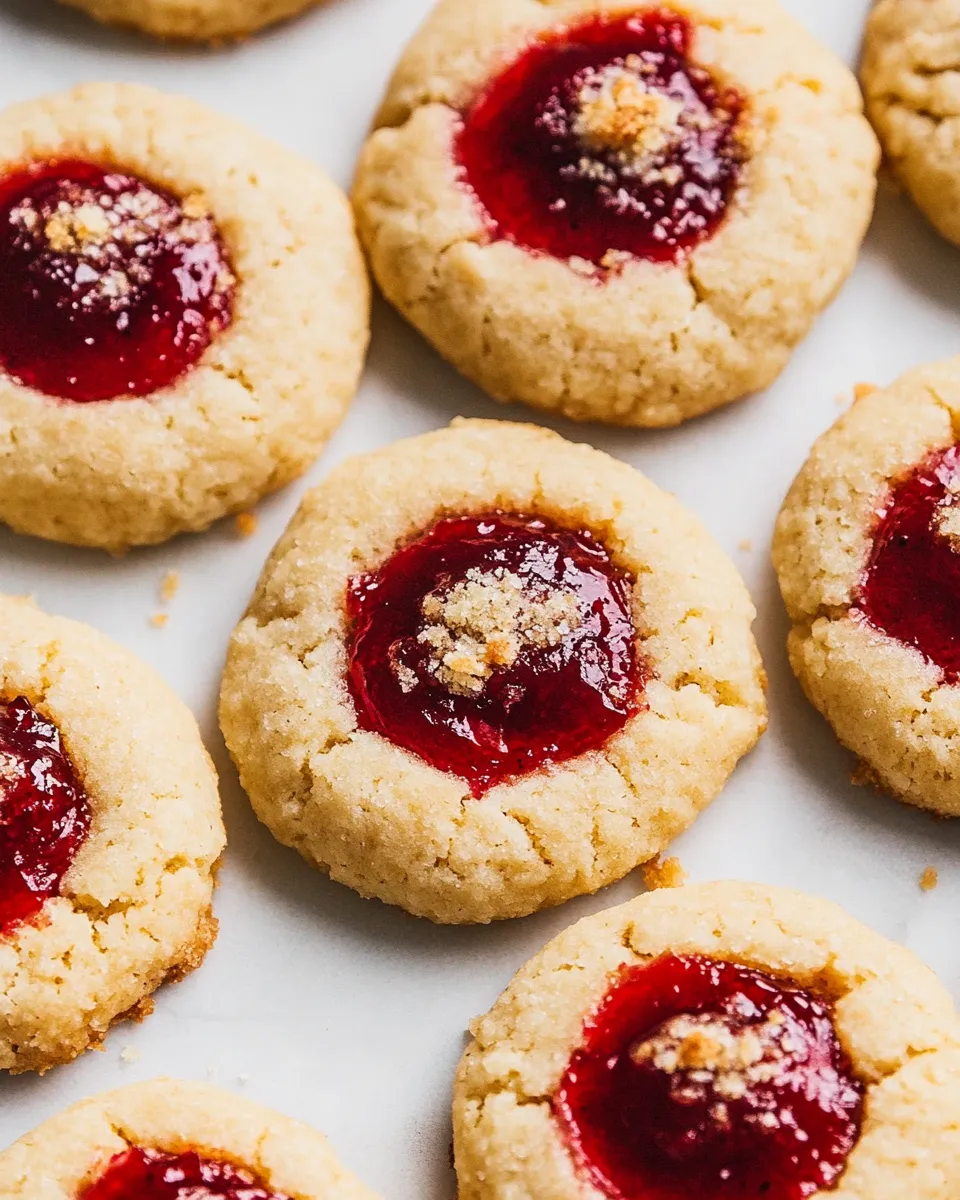
Thumbprint Cookies Recipe
Equipment
- Oven
- Stand mixer
- whisk attachment
- paddle (flat beater) attachment
- small cookie scoop
- Spoon
- Baking Sheets
- Parchment Paper
- Wire Rack
Ingredients
Ingredients
- 1 1/2 cupunsalted butter (3/4 lb) softened at room temperature
- 1 cupgranulated sugar
- 1 egg yolk room temperature
- 1 tspvanilla extract
- 3 1/3 cupall-purpose flour *measured correctly
- 1/4 tspfine sea salt
- 1 cuptoasted pecans finely chopped
- 1 cupraspberry jam
Instructions
Instructions
- Preheat the oven to 350°F (175°C). Line two baking sheets with parchment paper.
- In a stand mixer fitted with the whisk attachment, beat the softened butter and granulated sugar on high speed for 2–3 minutes, until light and fluffy.
- Add the egg yolk and vanilla extract and beat just until combined.
- Switch to the paddle (flat beater) attachment. Add the all-purpose flour (3 1/3 cups, measured correctly), fine sea salt, and the finely chopped toasted pecans. Mix on low speed just until the dough comes together and no large streaks of flour remain, scraping down the sides of the bowl as needed. Do not overmix.
- Using a small cookie scoop or a spoon, portion about 1 tablespoon of dough per cookie. Roll each portion into a smooth ball and place the balls on the prepared baking sheets about 2 inches apart.
- Press an indentation into the center of each dough ball using your thumb or the back of a teaspoon. Press about halfway down through the dough ball but avoid breaking through the bottom.
- Fill each indentation with raspberry jam, taking care not to overfill so jam does not run over during baking.
- Bake in the preheated 350°F oven for 13–15 minutes, or until the edges of the cookies are just beginning to turn golden. If baking on two racks, rotate the pans halfway through baking for even browning.
- Remove the sheets from the oven and transfer the cookies to a wire rack to cool completely before serving.